
LVN to BSN Azusa Pacific: Bridge Requirements, Costs, and Alternatives 2026
🎓 LVN to BSN Azusa Pacific explained: bridge requirements, prerequisites, timelines, costs, and alternatives for LVNs seeking an RN license and BSN.
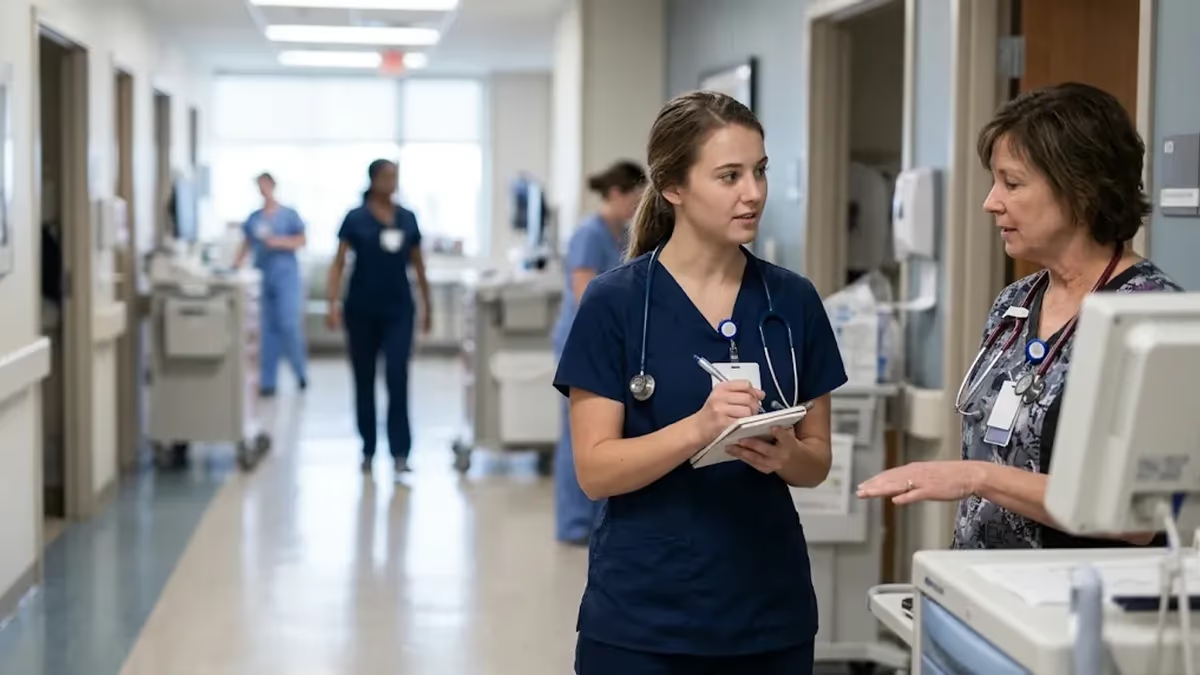
Searching for lvn to bsn azusa pacific usually means one thing: you are a licensed vocational nurse in California who wants a bachelor's degree, a higher paycheck, and the RN license that comes with both. Azusa Pacific University, a private Christian school in Los Angeles County, is one of the best-known nursing names in the region, so it is natural to start there. Before you apply anywhere, though, you need to understand how LVN bridge pathways actually work.
An LVN, or licensed vocational nurse, holds a state license earned through a roughly 12-to-18-month vocational program. California uses LVN where most other states use LPN, or licensed practical nurse. The work is real and valuable: medication administration, wound care, vital signs, and patient comfort under RN or physician supervision. The limits are also real. LVNs cannot perform comprehensive assessments or write care plans independently, and that ceiling is exactly why so many LVNs look toward a BSN.
A bridge program credits what you have already completed. Instead of starting from zero, you receive advanced placement, transfer credit for prerequisites, or both, and you finish in less time than a traditional four-year student. The exact shape of that credit varies by school. Some programs grant a block of credit for your LVN license. Others accept only individual courses, and some admit no LVNs at all. This variation is the single most important fact to keep in mind when comparing options.
Here is the honest picture for Azusa Pacific specifically. APU's nursing school is best known for its pre-licensure BSN, and program offerings, admission cycles, and credit policies change from year to year. We cannot promise that a dedicated LVN track exists today, so confirm directly with the admissions office. What this guide gives you is a framework: the requirements nearly every bridge asks for, the questions to ask APU, and the alternatives to compare if it is not the right fit.
The pathway matters because the career payoff is large. The Bureau of Labor Statistics reported a median annual wage of about $62,000 for licensed practical and vocational nurses in 2024, compared with roughly $93,600 for registered nurses. That is a gap of more than $30,000 a year. Over a 25-year career, moving from LVN to RN can mean hundreds of thousands of dollars in added earnings, before counting differences in overtime, shift differentials, and leadership opportunities.
There is also a credential argument. Many hospitals, especially those pursuing Magnet recognition, prefer or require a bachelor's degree for RN roles, and a BSN opens the door to case management, public health, informatics, and graduate study. If you want to understand how this fits the wider landscape, read our overview of the lvn to bsn bridge concept, which explains what the degree includes and why employers value it so highly.
Over the next sections you will find the numbers, the steps, the prerequisites, the pros and cons, a practical checklist, cost and timeline details, and study advice for the exams you will meet along the way. Read in order if you are just starting, or jump using the contents list. Either way, treat every figure here as a planning estimate and verify it against the current catalog of any school you consider before you commit money.
LVN to BSN Bridge by the Numbers
How the LVN to BSN Path Works, Step by Step
Confirm your license and eligibility
Finish prerequisites
Pass the entrance exam
Apply and secure funding
Complete nursing coursework and clinicals
Pass the NCLEX-RN and get licensed
Whatever school you choose, LVN bridge admission follows a familiar pattern. Expect to show an active, unencumbered LVN license in good standing, proof of high school graduation or equivalent, and a minimum cumulative GPA. Competitive programs commonly want a 3.0 or higher overall, and many weigh science grades more heavily than the total. Some also ask for one year of recent clinical work, so a gap in employment can quietly weaken an otherwise solid application.
Prerequisite courses are where most applicants lose time. Typical lists include anatomy with lab, physiology with lab, microbiology with lab, general or introductory chemistry, statistics, developmental psychology, English composition, and nutrition. Many schools require a grade of C or better, and some demand a B-minus in the sciences. Courses older than five to seven years, especially anatomy and physiology, are frequently rejected, which means a decade-old transcript may need refreshing.
Entrance testing is the next hurdle. Many nursing schools use the TEAS, published by ATI, which measures reading, math, science, and English and language usage. Others use the HESI A2. A score that clears the minimum may still miss the cut, because competitive cohorts rank applicants by points. Plan to study for several weeks and know the retake rules, since some schools cap attempts per year or only accept scores from the most recent two years.
General education matters too. A bachelor's degree typically totals around 120 semester units, and the bridge student must finish the non-nursing portion: communication, critical thinking, arts and humanities, and sometimes religion or theology at faith-based schools. A private university such as Azusa Pacific usually has its own core curriculum, so transfer credit may not map one-to-one. Request an unofficial transcript evaluation early, because an advisor can tell you which community college courses satisfy which requirements.
Documentation requirements are less glamorous but non-negotiable. Applicants usually submit official transcripts from every college attended, a current American Heart Association BLS provider card, immunization records, a background check, and a drug screen. Clinical sites often demand proof of vaccinations such as MMR, Tdap, varicella, hepatitis B, and annual influenza, plus a current tuberculosis test. Collect these early, since titers and multi-dose vaccine series can take months to complete.
Many applicants also submit a personal statement and letters of recommendation. Treat the statement as a practical argument, not a life story. Explain why you want the BSN, describe specific patient situations from your LVN work, and show that you understand the RN scope of practice. Recommenders who have directly supervised you, such as a charge nurse or director of nursing, carry far more weight than a general character reference from a friend.
Finally, ask each school a short list of direct questions. Does it accept LVNs for advanced placement, and how many credits are granted? Is admission rolling or cohort-based? What is the typical wait list? Are evening, weekend, or hybrid options available? What were the NCLEX-RN first-time pass rates for the last three years? Written answers beat verbal ones, and a school that dodges these questions is telling you something worth hearing.
LVN to BSN Bridge Options Compared
A direct LVN-to-BSN bridge admits licensed vocational nurses straight into a bachelor's program, usually granting advanced standing for fundamentals-level coursework. After prerequisites, you complete the remaining nursing sequence, including pathophysiology, pharmacology, medical-surgical, maternal-child, mental health, community health, and leadership, and graduate eligible for the NCLEX-RN. It is the fastest route to both the degree and the license when you can find a seat in one.
The tradeoff is scarcity and cost. Few schools offer true LVN-to-BSN tracks, cohorts are small, and competition for seats can be intense. Private universities may charge premium tuition. If Azusa Pacific or a similar school lists an LVN option, ask about the number of advanced-placement credits, the cohort start dates, and whether clinical placements are guaranteed or arranged by you. Those details separate smooth programs from stressful ones.
Is an LVN to BSN Bridge Worth It?
- +Credit for prior learning shortens the time to a bachelor's degree
- +RN median pay runs more than $30,000 above LVN pay
- +A BSN qualifies you for Magnet hospitals and leadership roles
- +Opens the door to graduate study such as NP, CRNA, and educator tracks
- +Broader scope: full assessments, care plans, and delegation authority
- +Your LVN experience gives you a head start in clinical judgment
- −Few schools offer true LVN-to-BSN tracks, so seats are scarce
- −Private universities can cost many times more than community colleges
- −Prerequisites may add a year or more if you start without college credit
- −Balancing clinicals, coursework, and work hours is exhausting
- −Credit transfer rules vary and are sometimes inconsistent
- −You must still pass the NCLEX-RN before practicing as an RN
Your LVN to BSN Azusa Pacific Application Checklist
- ✓Confirm your LVN license is active and in good standing.
- ✓Email Azusa Pacific admissions to ask if LVN advanced placement exists.
- ✓Request unofficial transcript evaluations from every college attended.
- ✓List each missing prerequisite and its expiration rules.
- ✓Register for the TEAS or HESI A2 and schedule study blocks.
- ✓Order official transcripts to be sent directly to each school.
- ✓Renew your BLS card and gather immunization records.
- ✓Ask two supervisors or instructors for recommendation letters.
- ✓File the FAFSA as soon as it opens each October.
- ✓Request your employer's tuition reimbursement policy in writing.
Ask for credit decisions in writing
Before paying for a single prerequisite, ask each school to confirm in writing how your LVN license and existing courses will be credited. A verbal answer from a busy front desk is not a guarantee, and a misunderstanding can cost a full semester and thousands of dollars.
Cost is where LVN bridge planning gets personal. Private universities charge far more per unit than public colleges, and the gap is dramatic. A California community college charges about $46 per unit for residents, so a 30-unit prerequisite load costs roughly $1,400 before books. A private university can charge several hundred dollars per unit or more, sometimes well over $1,000, which puts a full nursing sequence into five figures and sometimes beyond $100,000 for the whole degree.
Smart sequencing can cut that bill sharply. Many LVNs complete prerequisites and general education at a community college, then transfer into a university for the upper-division nursing courses only. Because California community colleges, the CSU system, and many private schools publish articulation agreements through ASSIST.org, you can see exactly which courses transfer. Taking the cheapest accepted version of anatomy, microbiology, and statistics may save $10,000 or more compared with buying every unit at the final school.
Financial aid is available, and LVNs often overlook it. File the FAFSA every year, since it unlocks federal Pell Grants, subsidized and unsubsidized loans, and work-study. In California, the Cal Grant and other state programs may apply at eligible schools. Private universities also award institutional scholarships, including nursing-specific awards. Deadlines come early, often in March for the following fall, so submit the FAFSA as soon as it opens on October 1 to stay competitive.
Employer support can be the largest source of funding. Many hospitals and skilled nursing chains offer tuition reimbursement ranging from $2,000 to $10,000 per year, often with a service commitment of one to two years after graduation. Some run tuition-free partnerships with specific schools. Ask human resources for the written policy before enrolling, because reimbursement is often paid after you finish a course with a passing grade, meaning you must front the cost and wait.
Timeline depends on how much credit transfers and whether you attend full-time. A well-prepared LVN with prerequisites done may finish an RN-eligible bridge in 12 to 24 months. Starting with only a vocational certificate and no college credits, the realistic total is closer to three to four years, because prerequisites and general education take time. Part-time students working 32 to 40 hours a week commonly stretch this by another year, which is perfectly acceptable if it protects your income.
Do not overlook the hidden costs. Budget for uniforms, a stethoscope, clinical shoes, background check fees, immunization titers, liability insurance, the NCLEX-RN registration fee of $200, and state licensing fees. Add transportation to clinical sites, which can sit 30 to 60 miles from campus, and childcare during unusual clinical hours. These extras commonly total $2,000 to $4,000 across a program and are rarely included in the advertised tuition number.
A simple budget exercise helps. List total required units, multiply by each school's per-unit cost, add fees, then subtract grants, scholarships, and employer support. Compare the net figure against the salary difference: if an RN earns $30,000 more per year than an LVN, a program with a net cost of $40,000 pays for itself in under two years of full-time RN work. That math makes even expensive options defensible, as long as you graduate and pass the NCLEX-RN.
Admission tracks, credit policies, tuition, and deadlines at any university change from year to year. Confirm current LVN eligibility, advanced placement, and application dates with Azusa Pacific's admissions office, and confirm that any program is approved by the California Board of Registered Nursing, before paying application fees.
Here is a detail that surprises many LVNs: finishing a bridge does not make you an RN. A BSN is an academic degree. The RN is a license, and you earn it by passing the NCLEX-RN, the national licensing exam administered by Pearson VUE for the National Council of State Boards of Nursing. Most bridge programs prepare you to sit for that exam, but you still have to apply, register, and pass before you can use the title.
The NCLEX-RN uses computerized adaptive testing, meaning each question adjusts to your performance. You answer between 85 and 150 questions, with a time limit of five hours, and the test stops when it determines with 95 percent confidence that you are above or below the passing standard. First-time pass rates for US-educated candidates have run roughly 88 to 91 percent in recent years, so preparation matters, but the exam is highly achievable.
Questions go beyond multiple choice. Expect select-all-that-apply items, ordered response, hot spots, fill-in-the-blank calculations, and Next Generation NCLEX case studies that test clinical judgment through six steps: recognize cues, analyze cues, prioritize hypotheses, generate solutions, take action, and evaluate outcomes. LVNs often find the content familiar but the reasoning style different, because the exam rewards prioritization and delegation decisions that RNs make more often than vocational nurses do.
In California, the Board of Registered Nursing handles RN licensure. You submit an application, fingerprints for a background check, official transcripts, and the fee, then receive an Authorization to Test. Processing can take several weeks, so apply as early as the board permits. Keep your LVN license active during all of this and renew it on schedule, since it lets you keep earning at a nursing wage while you finish your degree.
Working as an LVN during school is both a strength and a risk. Your clinical experience helps in class, and your employer may reimburse tuition. But exhaustion kills grades. Many successful students negotiate reduced hours during the semester, pick per-diem shifts around exams, or move to weekend-only schedules. Tell your supervisor early, and ask whether a transition arrangement is possible, such as an LVN position that converts to an RN role once you pass the exam.
After licensure, your options expand quickly. New RNs with a BSN can work in hospitals, clinics, home health, schools, public health agencies, and telehealth. Specialty tracks such as medical-surgical, emergency, labor and delivery, and critical care often prefer a bachelor's degree. Starting pay for new RNs in many California metro areas exceeds $100,000 annually, though cost of living varies widely. Your LVN history is a differentiator, since managers value nurses who understand the fundamentals deeply.
Long-term, the BSN keeps further doors open. Master's and doctoral programs, including nurse practitioner, nurse anesthesia, and nurse educator tracks, all require a bachelor's degree first. If graduate study interests you, our guide to BSN to NP programs lays out the pathways, though you should finish the bridge before planning that step. For now, focus on one milestone at a time: prerequisites, admission, coursework, the NCLEX-RN, and then your first RN job.
Start with a one-page plan. Write down your target start date, the schools you will contact, each prerequisite you still need, and a monthly savings figure. Working backward from an application deadline turns a vague ambition into dated tasks. Most bridge applicants wait too long to begin, then discover that a missing chemistry course adds a full semester. A simple spreadsheet with one row per school and columns for deadlines, costs, and credit rules prevents most of these surprises.
Book an advising appointment before you spend money on classes. Bring unofficial transcripts and a copy of your LVN license and certificate of completion. Ask the advisor to put in writing which of your courses will transfer, how the LVN credit is treated, and what a realistic completion date looks like. Advisors change and policies shift, so an emailed summary protects you if a later dispute arises over credits or requirements.
Study smart for the science prerequisites. Anatomy and physiology is the course that eliminates the most applicants, so treat it as a full-time commitment even if you take it part-time. Use active recall: flashcards, labeling blank diagrams, and explaining pathways aloud. Review within 24 hours of each lecture, and schedule weekly practice quizzes. Aim for an A, because a B in A&P can drop you below competitive cutoffs on an admission point system.
Practice questions are the most efficient tool for both coursework and the NCLEX-RN. Instead of rereading chapters, answer questions, read every rationale, and track weak areas. Our free BSN practice tests on fundamentals, community and public health, and maternal-newborn nursing let you test yourself between shifts. Aim for 20 to 30 questions a day, review wrong answers in the same sitting, and gradually shift toward timed sets that mimic real exam pressure.
Build a support system early. Tell family exactly what your schedule will look like, because clinical rotations can demand 12-hour days, early mornings, and weekends. Find one or two classmates to study with, ideally from your cohort, and a mentor who has finished the bridge. Many programs have student nurse associations, tutoring centers, and simulation labs. Use them. Students who ask for help in week two rarely need rescue in week twelve.
Protect your health and finances during the program. Sleep seven hours when you can, since sleep deprivation damages memory and clinical judgment. Keep an emergency fund of at least one month of expenses, because unplanned car repairs and childcare costs derail more students than difficult courses do. If money runs short, talk to the financial aid office before dropping a class, as withdrawals can affect aid eligibility and extend your graduation date.
Finally, keep perspective. Plenty of LVNs have walked this road while working, parenting, studying, and passing. If Azusa Pacific proves to be the right fit, great. If it is not, the same careful preparation applies to community colleges, CSU campuses, and online RN completion programs. Choose the option that fits your budget and schedule, verify its approval status with the California Board of Registered Nursing, and then commit fully to finishing.
BSN Questions and Answers

What Is a BSN in Nursing? Complete Guide to the Degree, Cost, and Career

Online Accelerated BSN Programs: A Practical Guide
BSN to NP Programs: Pathways from Bachelor's of Nursing to Nurse Practitioner, Program Types, Costs, and Career Outcomes

Capella RN to BSN: Full Guide to FlexPath, Cost, and Timeline

How to Get a BSN: Four Paths to Your Nursing Degree
How this page was made: written with AI tools and published by Nathan Beja, founder of Practice Test Geeks, who is responsible for its content. We have not yet matched this exam's facts to an official source, so confirm fees, dates and rules with the exam body. Not reviewed by a subject-matter expert. Editorial policy