
Cheapest BSN Programs in the US: How to Earn Your Nursing Degree Without Breaking the Bank
Find the cheapest BSN programs in the US. Compare tuition, online options, and financial aid to earn your nursing degree affordably. 🎓
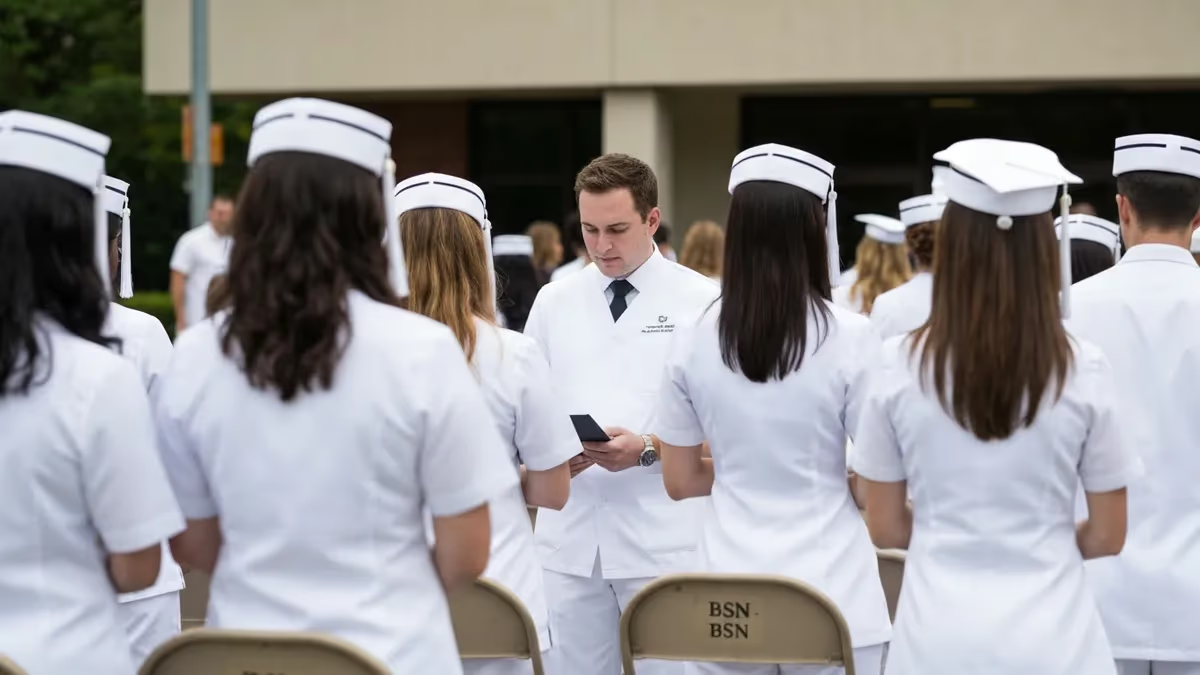
Finding the cheapest BSN programs is one of the smartest financial decisions a future nurse can make. A Bachelor of Science in Nursing opens doors to higher salaries, greater career mobility, and leadership roles that an associate degree simply cannot unlock. Yet tuition costs vary wildly — from under $8,000 per year at public in-state institutions to more than $55,000 annually at private universities. Knowing where to look and what to compare can save you tens of thousands of dollars over the course of your education.
The good news is that affordability does not mean sacrificing quality. Many of the least expensive BSN programs in the country hold full CCNE or ACEN accreditation, boast strong NCLEX-RN pass rates, and have produced thousands of working nurses employed across every major healthcare system in the United States. Public state universities, community-college-to-university pathways, and online bridge programs have made it possible to earn a respected BSN at a fraction of the cost of flagship or private nursing schools.
Before diving into specific programs and strategies, it helps to understand what drives tuition differences. Public universities receive state subsidies that allow them to charge significantly lower tuition to in-state residents. Online programs eliminate campus overhead, passing savings to students. Regional universities and historically black colleges and universities (HBCUs) often feature tuition well below national averages while maintaining rigorous, accredited curricula. Understanding these structural factors helps you target your search efficiently.
Financial aid layers on top of tuition to reduce your actual out-of-pocket cost even further. Federal Pell Grants, institutional scholarships, nursing-specific grants through the HRSA Nurse Corps program, and employer tuition reimbursement for working RNs can slash your net cost dramatically. Some students attending affordable public programs walk away with total debt under $15,000 — a figure that nurses earning median salaries of $81,000 or more can pay off quickly.
This guide will walk you through the most affordable BSN pathways available in 2026, covering traditional four-year programs, RN-to-BSN completion tracks, and accelerated options. We will break down what to look for in terms of accreditation, clinical hour requirements, and financial aid availability. We will also explain how in-state residency, regional tuition compacts, and hybrid formats affect your bottom line so you can make a fully informed decision.
It is equally important to think about return on investment. The cheapest program is not always the most financially wise choice if it lacks proper accreditation or has a low NCLEX pass rate, because both factors affect your ability to get licensed and employed. This guide helps you balance cost with quality so your degree functions as a true career launcher rather than an expensive credential with diminishing returns.
Whether you are a high school graduate mapping out your four-year plan, a working LPN or CNA ready to advance, or an RN holding an associate degree looking to cheapest bsn programs through a bridge track, this comprehensive resource will give you the data and frameworks you need to enroll in an affordable, high-quality BSN program that sets your nursing career on a strong financial footing from day one.
Cheap BSN Programs by the Numbers

Most Affordable BSN Program Types
The most widely accessible low-cost option. State-funded universities charge in-state residents significantly reduced tuition — often $6,000–$12,000 per year. Programs are fully accredited and include clinical rotations at regional hospitals and health centers.
Designed for working RNs with an ADN or diploma. Many programs cost under $15,000 total, can be completed in 12–18 months, and allow students to fulfill clinical requirements at their current workplace. High-value path for employed nurses.
Some states allow students to complete the first two years at a low-cost community college before transferring into a university nursing program. This pathway can cut total BSN costs by 30–50 percent compared to starting at a four-year university.
Programs like the Western Undergraduate Exchange (WUE) and Southern Regional Education Board (SREB) Academic Common Market allow eligible students to attend out-of-state schools at reduced tuition, expanding affordable options beyond your home state.
Many major health systems offer tuition reimbursement or tuition-free BSN completion for employees. Programs affiliated with hospital networks like HCA Healthcare or Kaiser Permanente can make a BSN nearly cost-free for qualifying workers.
When comparing the cheapest BSN programs across the United States, several public universities consistently appear at the top of affordability rankings. Western Governors University (WGU) offers a competency-based RN-to-BSN program with a flat-rate tuition model of approximately $4,755 per six-month term, making it one of the most cost-effective options for working nurses nationwide. Because students progress at their own pace, those who dedicate extra time can complete the degree faster and pay less overall.
University of North Dakota, University of Wyoming, and South Dakota State University regularly appear on affordability lists with annual in-state tuition ranging from $7,500 to $10,000 for their traditional BSN tracks. These programs offer strong clinical networks in their respective states and maintain CCNE accreditation. Graduates consistently report NCLEX pass rates above the national average, demonstrating that low cost does not translate to lower academic rigor or clinical preparation.
In the Southeast, programs at the University of Arkansas, Mississippi University for Women, and Georgia College and State University charge in-state tuition under $9,000 per year for their nursing programs. These schools often feature smaller class sizes and dedicated faculty who provide individualized mentorship throughout the clinical rotation process. For students willing to establish in-state residency, the savings over four years can exceed $60,000 compared to private nursing schools.
Online-focused institutions have dramatically expanded access to affordable BSN education. Arizona State University's online RN-to-BSN program, offered at roughly $9,800 total for most students, combines the prestige of a major research university with the flexibility of asynchronous coursework. Programs at SUNY Empire State University and the University of Texas Rio Grande Valley similarly offer competitive online tuition with recognized accreditation from CCNE.
HBCUs deserve special mention in any discussion of affordable BSN education. Schools like North Carolina A&T State University, Howard University's College of Nursing, and Prairie View A&M University offer accredited BSN programs with tuition structures that prioritize access. These institutions also offer strong scholarship ecosystems specifically targeting nursing students, and many have formal articulation agreements with regional hospital systems that help clinical placements and post-graduation employment.
For students in the Midwest, Purdue University Global's online RN-to-BSN and Ferris State University's nursing programs offer strong value propositions. Indiana State University's nursing program regularly ranks as one of the most affordable in the region, with annual in-state costs around $8,900 including program fees. The university maintains partnerships with Terre Haute Regional Hospital and other Indiana health systems, ensuring clinical slots are available without long waitlists.
Understanding regional accreditation compacts is essential when evaluating programs outside your home state. The Nurse Licensure Compact (NLC) now includes 41 states, meaning nurses licensed in one compact state can practice in all others without obtaining additional licenses. Choosing a program in a compact state adds long-term career flexibility — a factor worth weighing alongside tuition cost when making your final enrollment decision about the most affordable path to your nursing career.
Tuition, Financial Aid, and Funding Strategies for Affordable BSN Programs
Federal financial aid is the first funding source every BSN student should exhaust. The Free Application for Federal Student Aid (FAFSA) unlocks Pell Grants of up to $7,395 per year for qualifying students, Federal Direct Subsidized Loans at fixed interest rates, and work-study funding. Nursing students should also investigate the HRSA Nurse Corps Scholarship Program, which covers tuition, fees, and a monthly stipend in exchange for two years of service at a Critical Shortage Facility after graduation.
Beyond standard FAFSA aid, the Indian Health Service Scholarship and NHSC Scholarships offer similar service-for-tuition exchanges targeting underserved communities. State-level nursing workforce programs in Texas, California, New York, and Florida provide additional grants ranging from $2,000 to $10,000 annually. Students who stack federal grants with institutional and state-level aid frequently reduce their net annual cost to under $3,000 at public universities, making even the cheapest programs essentially free after aid is applied.
Pros and Cons of Choosing the Cheapest BSN Programs
- +Dramatically lower student debt allows faster financial independence after graduation
- +In-state public programs often have strong regional hospital relationships for clinical placements
- +Online RN-to-BSN completion allows continued full-time employment during the degree
- +Accredited affordable programs produce graduates who pass NCLEX at similar rates to expensive schools
- +Lower cost enables nurses to pursue advanced degrees (MSN, DNP) sooner without compounding debt
- +Employer tuition benefits combined with affordable tuition can make the degree nearly free
- −In-state tuition advantage requires establishing residency, which may involve a waiting period of 12 months
- −High-demand affordable programs often have limited enrollment capacity with competitive waitlists
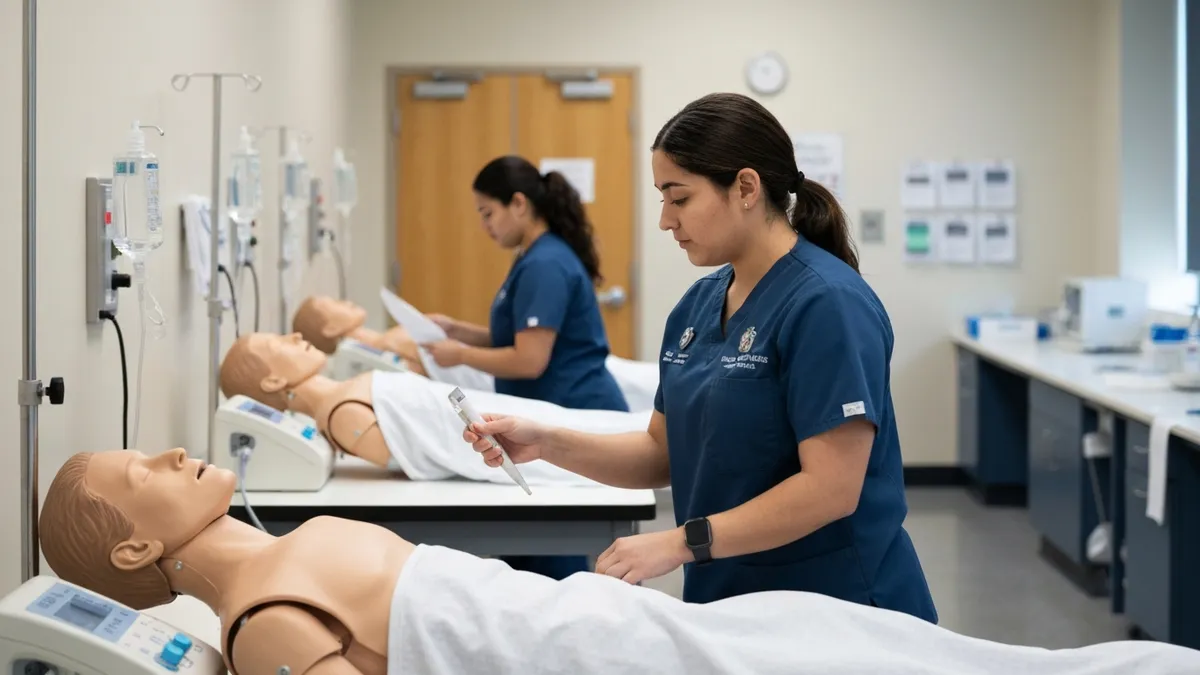
- −Some budget programs offer fewer elective specialization tracks or simulation lab hours
- −Online programs require strong self-discipline and time management without in-person structure
- −Rural or lower-cost campuses may have fewer networking opportunities with major urban hospital systems
- −Community college pathway can take longer overall if articulation agreements are not carefully pre-planned
Pros and Cons at a Glance
| Pros | Cons |
|---|---|
| Dramatically lower student debt allows faster financial independence after graduation | High-demand affordable programs often have limited enrollment capacity with competitive waitlists |
| In-state public programs often have strong regional hospital relationships for clinical placements | Some budget programs offer fewer elective specialization tracks or simulation lab hours |
| Online RN-to-BSN completion allows continued full-time employment during the degree | Online programs require strong self-discipline and time management without in-person structure |
| Accredited affordable programs produce graduates who pass NCLEX at similar rates to expensive schools | Rural or lower-cost campuses may have fewer networking opportunities with major urban hospital systems |
| Lower cost enables nurses to pursue advanced degrees (MSN, DNP) sooner without compounding debt | Community college pathway can take longer overall if articulation agreements are not carefully pre-planned |
Checklist: How to Choose the Right Affordable BSN Program
- ✓Verify the program holds CCNE or ACEN accreditation before applying.
- ✓Compare in-state vs. out-of-state tuition, including all mandatory fees and clinical costs.
- ✓Research the program's most recent NCLEX-RN first-time pass rate (aim for 85% or higher).
- ✓Complete the FAFSA as early as October 1 to maximize federal grant and loan eligibility.
- ✓Ask each school for its net price calculator output, not just the published tuition figure.
- ✓Confirm whether your employer offers tuition reimbursement and which schools it approves.
- ✓Investigate state-specific nursing scholarship and grant programs in your home state.
- ✓Check whether the program's clinical sites align with your intended specialty (pediatrics, ICU, community health).
- ✓Evaluate credit transfer policies if you have prior college coursework or an ADN credential.
- ✓Confirm the program's graduation rate and average time-to-completion before enrolling.
- ✓Look up whether the state participates in the Nurse Licensure Compact for future practice flexibility.
- ✓Read reviews on Nursing School Radar and NCLEX forums to gauge student satisfaction and support quality.
Net Cost, Not Sticker Price, Is What Matters
The published tuition of a program is almost never what students actually pay. After applying Pell Grants, institutional scholarships, employer reimbursement, and state aid, a program advertising $12,000/year in tuition may cost a qualifying student under $2,000 out of pocket. Always request a personalized net price estimate from each school's financial aid office and compare those figures — not the sticker prices — when making your final enrollment decision.
The debate between online and in-person affordable BSN programs is one of the most common questions prospective students face. Both formats have distinct financial and logistical profiles, and the right choice depends heavily on your current employment status, learning style, geographic location, and clinical experience level. Understanding the structural differences between these formats helps you make a decision grounded in realistic expectations rather than marketing materials.
Online BSN programs — particularly the RN-to-BSN completion track — are inherently cost-efficient because they eliminate housing, commuting, and campus-fee expenses that add thousands to in-person programs. Schools like WGU, University of Texas at Arlington's online nursing program, and SUNY Empire State's RN-to-BSN track have built their entire enrollment model around serving working nurses who cannot attend traditional daytime classes. These programs typically allow clinical hours to be completed at the student's current place of employment, supervised by a preceptor, which means zero travel and zero schedule disruption for full-time RNs.
However, online programs require a level of self-direction that not all students thrive with. Without scheduled class times and in-person accountability, procrastination can extend program timelines and increase total tuition paid. Online students also miss the informal mentorship that occurs naturally between classmates during simulation labs and study sessions. For students who have never worked in a clinical environment, an online-only format without structured simulation may feel insufficiently immersive, particularly for high-acuity specialty content.
Traditional in-person public university programs offer structure, direct faculty mentorship, and access to simulation centers with high-fidelity mannequins and real-time feedback. Regional state schools like University of North Dakota, Arkansas State University, and Pittsburg State University in Kansas maintain small cohorts where professors know students by name and clinical coordinator networks are tightly managed. For pre-licensure students entering nursing with no prior healthcare experience, this structured environment can be invaluable in building confidence and competence before entering live clinical settings.
Hybrid programs represent a middle path that many students find ideal. These programs deliver didactic content asynchronously online while requiring students to attend in-person simulation labs and clinical intensives on specific scheduled weekends. University of Wyoming's accelerated nursing track and several community college partnership programs operate on hybrid models that combine online flexibility with structured hands-on training. The hybrid format also tends to produce strong peer cohort bonds because students meet repeatedly over the program duration.
Cost comparison between formats requires looking beyond tuition. Online programs that appear cheaper upfront may charge per-credit technology fees, proctoring fees for online exams, and clinical coordination fees that add $1,000–$3,000 annually to the advertised rate. In-person programs on public campuses may include student activity fees, parking, and lab kit costs. Request a complete estimated Cost of Attendance (COA) budget from every program's financial aid office and use that figure — which includes living expenses, transportation, and book costs — for true apples-to-apples comparison.
Employment compatibility is the final major variable. A nurse currently earning $62,000 per year who chooses an online program to maintain full-time employment will earn significantly more over the course of the degree than a student who quits work to attend a traditional in-person program full-time, even if the online program costs slightly more per credit. Factor in your opportunity cost — the income you forgo by reducing work hours — as part of your total financial analysis when evaluating which BSN format is truly most affordable for your specific situation.

Before enrolling in any BSN program based on its low tuition, confirm that it holds active accreditation from CCNE (Commission on Collegiate Nursing Education) or ACEN (Accreditation Commission for Education in Nursing). Graduating from a non-accredited program can prevent you from sitting for the NCLEX-RN in some states, make you ineligible for federal loan repayment programs, and bar you from graduate nursing school admission. Verify accreditation status directly on the CCNE or ACEN website — never rely solely on a school's marketing materials.
Maximizing the value of an affordable BSN program goes beyond just selecting the lowest-cost institution. Once enrolled, strategic decisions about course load, clinical site selection, professional networking, and licensure preparation will determine whether your investment translates into a strong career launch. Students who treat their BSN as a holistic investment — not just a credential — consistently achieve better outcomes regardless of which school they attend.
Clinical site selection is one of the most consequential decisions you will make during your BSN program. Many affordable regional programs allow students some degree of input into which hospitals or health systems host their clinical rotations. Prioritizing placements at Level I trauma centers, magnet-designated hospitals, or specialty units aligned with your career interests accomplishes two things simultaneously: it builds clinical skills in high-demand environments and creates the professional relationships that often lead directly to job offers. Students who rotate through facilities where they hope to eventually work have a measurable advantage in the hiring process.
Professional certifications earned during or immediately after your BSN program can significantly increase your starting salary and differentiate you in competitive job markets. Certifications like Basic Life Support (BLS), Advanced Cardiovascular Life Support (ACLS), and Pediatric Advanced Life Support (PALS) are relatively low-cost to obtain and are expected or required by most acute care employers. Specialty certifications like CCRN (critical care) or CEN (emergency nursing) require 1–2 years of experience post-graduation but should be part of your longer-term planning from the start of your BSN journey.
Nursing organizations at the student level offer networking and scholarship opportunities that many BSN students overlook. The National Student Nurses' Association (NSNA) charges under $40 per year for membership and provides access to national conferences, a job board, and a scholarship program that distributes over $150,000 annually. State-level nursing student associations frequently co-host events with major regional hospital systems, creating informal networking opportunities that can be more impactful than a formal resume submission through an online portal.
NCLEX preparation should begin in earnest during the final semester of your BSN program, not after graduation. Students who use high-quality practice question banks throughout their final clinical year consistently demonstrate higher first-time pass rates. Platforms like UWorld, NCLEX Mastery, and ATI Comprehensive Predictor exams help identify content gaps early enough to address them before the licensing exam. Passing NCLEX on the first attempt is itself a financial consideration — a failed attempt costs $200 to retake in most states, plus the delayed income from weeks of additional preparation.
Salary negotiation is a skill nursing students rarely prepare for but should. Research salary benchmarks for your target region, specialty, and facility type before your first post-graduation job interview. Websites like Glassdoor, the BLS Occupational Employment Statistics database, and state nursing workforce data provide reliable reference points. BSN-prepared nurses should be negotiating starting salaries $3,000–$7,000 higher than ADN counterparts in most markets, and those who come to interviews with data to support their request routinely succeed in securing those higher offers.
Finally, consider mapping out a long-term education plan even before your BSN is complete. If MSN or DNP is on your horizon, choosing a BSN program with articulation agreements to graduate programs at the same or partner institution can save significant time and money. Many universities offer seamless BSN-to-MSN pathways that eliminate redundant coursework and allow students to begin graduate prerequisites in their final BSN semester. Planning this trajectory early means your affordable BSN becomes the foundation of a multi-degree strategy that maximizes career earnings over a 30-year nursing career.
Once you have selected an affordable BSN program and secured your funding, the most important factor determining your outcomes is how effectively you use the time inside the program. Students who treat their BSN as a purely academic exercise — attending clinicals minimally, avoiding extracurriculars, and cramming only for exams — graduate with the same credential as those who engage deeply, but with dramatically fewer career advantages. The practical strategies in this section will help you extract maximum value from every month of your enrollment.
Time management is the foundational skill that separates students who thrive in affordable BSN programs from those who struggle. Online and hybrid programs in particular demand rigorous self-scheduling. Use digital tools like Google Calendar or Notion to block study time weekly, set submission reminders two days before actual deadlines, and allocate specific hours for NCLEX practice questions every week rather than saving practice for the final semester. Students who integrate consistent daily practice — even 20–30 questions per session — build pattern recognition that translates directly to exam performance.
Establishing strong relationships with faculty during your BSN program pays dividends that persist long after graduation. Professors who know your work ethic and professional goals can write compelling recommendation letters for graduate school applications, connect you with job leads through their clinical networks, and serve as informal mentors during difficult rotations. Office hours are chronically underused by nursing students at all institution types — visiting faculty twice per month positions you as a serious student and opens conversational doors that purely transactional interactions never create.
Simulation labs, even when they feel repetitive or low-stakes, deserve your full engagement. Research consistently shows that students who approach simulation with the same psychological seriousness they bring to real clinical environments develop sharper clinical judgment and faster response patterns under pressure. If your program allows additional simulation lab access beyond what is scheduled, use it. Practice inserting IVs, running through sepsis protocols, and responding to deteriorating patient scenarios in the simulated environment where mistakes have no real-world consequences.
Building a professional portfolio during your BSN is a habit that few students develop but nearly all wish they had started earlier. A portfolio documenting your clinical rotations, specialty experiences, any research or capstone projects, awards, and certifications gives you a concrete artifact to present during job interviews and graduate school applications. Platforms like LinkedIn and Nurse.com also support professional profile development that employers actively search, and having a complete, professional nursing profile before graduation puts you ahead of peers who scramble to build one after receiving a job offer.
Finally, use your final clinical rotation strategically. Most BSN programs offer students some input into their capstone or final-semester placement, and the wisest students use this opportunity to rotate in the exact specialty and facility type where they want their first nursing job. A final rotation in a pediatric ICU at a children's hospital, for instance, serves as both an audition and a networking event.
Preceptors who see a student's performance firsthand routinely recommend them to nurse managers and colleagues, creating a pathway to employment that no job application website can replicate. Approaching your final rotation as a months-long professional interview is perhaps the highest-yield strategy available to any BSN student in their last semester.
Sample BSN - Degree Bachelor of Science in Nursing Practice Questions
Try these questions from our free BSN - Degree Bachelor of Science in Nursing practice tests. The correct answer and an explanation follow each question.
Under the HIPAA Privacy Rule, which action is permissible without patient authorization?
- A. Sharing records with an employer for job screening
- B. Disclosing PHI to law enforcement for a court order
- C. Selling patient data to a pharmaceutical company
- D. Providing records to a friend of the patient
Answer: B. Disclosing PHI to law enforcement for a court order
HIPAA permits disclosure of PHI to law enforcement when required by a court order or subpoena.
Which action by a nursing assistant (NA) during morning care requires the RN to intervene immediately?
- A. The NA assists the patient to the bathroom using a gait belt
- B. The NA performs oral care on an unconscious patient with the head of bed flat
- C. The NA obtains a routine blood pressure on a stable patient
- D. The NA records the patient's oral fluid intake on the I&O sheet
Answer: B. The NA performs oral care on an unconscious patient with the head of bed flat
Performing oral care with the head of bed flat on an unconscious patient creates a high aspiration risk and requires immediate intervention.
A patient taking lithium carbonate reports nausea, tremors, and confusion. The nurse suspects lithium toxicity. What is the priority nursing action?
- A. Hold the next dose and obtain a serum lithium level
- B. Administer an antiemetic for nausea relief
- C. Encourage increased fluid intake and salt intake
- D. Reassure the patient that these are expected side effects
Answer: A. Hold the next dose and obtain a serum lithium level
Signs of lithium toxicity require immediately holding the dose and checking the serum level to confirm and guide treatment.
A patient with a history of COPD is admitted with an acute exacerbation. The nurse notes an SpO2 of 85% and respiratory rate of 28 breaths/min. What is the priority nursing action?
- A. Apply supplemental oxygen at 2 L/min via nasal cannula and reassess
- B. Administer oxygen at 100% via non-rebreather mask immediately
- C. Prepare for immediate endotracheal intubation
- D. Obtain an ABG and wait for results before intervening
Answer: A. Apply supplemental oxygen at 2 L/min via nasal cannula and reassess
COPD patients depend on hypoxic drive; low-flow oxygen (1–2 L/min) corrects dangerous hypoxemia without suppressing respiratory drive.
Take the full BSN - Degree Bachelor of Science in Nursing practice test
BSN Questions and Answers

Accelerated BSN Programs: Requirements, Cost, and Timeline
ADN to BSN Online: Bridge Programs and Costs Complete Guide

Accelerated BSN Programs by Location: Complete US Guide With Canada Comparison for 2026

Accredited BSN Programs: Complete Guide to CCNE and ACEN Nursing Degrees in 2026

BSN RN: What It Is, Salary, and Why It Matters in 2026
About the Author

Registered Nurse & Healthcare Educator
Johns Hopkins University School of NursingDr. Sarah Mitchell is a board-certified registered nurse with over 15 years of clinical and academic experience. She completed her PhD in Nursing Science at Johns Hopkins University and has taught NCLEX preparation and clinical skills courses for nursing students across the United States. Her research focuses on evidence-based exam preparation strategies for healthcare certification candidates.