
CBP COACA BPA Logical Reasoning Test: Complete Study Guide & Practice
Master the CBP COACA BPA logical reasoning test with expert tips, practice questions, and a full study plan. ✅ Start preparing today!

The CBP COACA BPA logical reasoning test is one of the most demanding hurdles in the entire Border Patrol Agent hiring process. Administered as part of CBP's Cognitive Ability and Competency Assessment (COACA), this exam evaluates how well candidates can analyze information, detect patterns, draw valid conclusions, and make sound decisions under timed pressure. Understanding what the test covers — and practicing systematically — is the single greatest predictor of whether you will advance past this screening stage and toward a conditional offer of employment.
Unlike knowledge-based exams that reward memorization, the logical reasoning section of the COACA tests raw cognitive processing speed and accuracy. CBP uses these scores to predict on-the-job judgment in ambiguous, high-stakes situations that Border Patrol Agents encounter daily at ports of entry, checkpoints, and remote patrol zones. A candidate who masters logical reasoning signals to CBP that they can process complex information quickly, weigh competing evidence, and act decisively — skills that are non-negotiable in federal law enforcement.
Many applicants underestimate the difficulty of this assessment because it does not require specific law enforcement knowledge. In reality, the absence of content-knowledge shortcuts makes the test harder for unprepared candidates. You cannot rely on familiarity with immigration statutes or patrol procedures to carry you through; every point must be earned through precise analytical thinking. Candidates who have not practiced formal logical reasoning tasks often run out of time on sections they could otherwise answer correctly with adequate preparation.
The COACA is delivered remotely through a proctored online platform, which adds its own layer of stress. Technical issues, webcam monitoring, and an unfamiliar interface can all disrupt your focus. Practicing under timed, simulated conditions before your test date helps you build the mental stamina and environmental familiarity needed to perform at your peak when the stakes are real. Test-like practice sessions also help you identify your weak question types — whether deductive, inductive, or abstract reasoning — so you can allocate study time wisely.
The cbp coaca bpa logical reasoning test sits within a broader hiring pipeline that includes a background investigation, medical evaluation, polygraph, physical fitness test, and structured interview. Logical reasoning scores, however, are among the earliest filters. Candidates who score below CBP's minimum threshold are typically disqualified before reaching any of those later stages, making this one assessment you cannot afford to treat lightly.
This guide covers everything you need to succeed: the exact format of the logical reasoning sections, the most common question types, time-management strategies, scoring thresholds, and a structured week-by-week study plan. Whether you have two weeks or two months before your scheduled exam, the frameworks and practice resources here will help you approach test day with genuine confidence rather than anxious uncertainty.
Use this page as your central hub for COACA logical reasoning preparation. Bookmark it, work through every section, and take the linked practice quizzes after you review each concept area. Consistent, deliberate practice over several weeks is far more effective than cramming the night before — a truth that applies to virtually every high-stakes cognitive assessment, and especially to one designed by federal psychometricians to resist last-minute test-gaming strategies.
CBP COACA Logical Reasoning by the Numbers

COACA Exam Format & Structure
| Section | Questions | Time | Weight | Notes |
|---|---|---|---|---|
| Logical Reasoning | 60 | 75 min | 40% | Deductive, inductive, abstract reasoning |
| Arithmetic Reasoning | 30 | 36 min | 20% | Word problems, ratios, rates |
| Writing Skills | 30 | 30 min | 20% | Grammar, punctuation, sentence structure |
| Situational Judgment | 30 | 39 min | 20% | Behavioral scenarios, agent decision-making |
| Total | 150 | 3 hours | 100% |
The logical reasoning section of the CBP COACA is divided into four distinct question formats, each testing a different facet of analytical thinking. Deductive reasoning questions present a set of premises — usually two or three statements — and ask you to identify which conclusion must logically follow. These questions reward precision: a conclusion that is probably true or usually true is not acceptable; only conclusions that are necessarily and always true earn credit. Candidates who confuse plausibility with logical necessity consistently miss these questions.
Inductive reasoning questions flip the logic direction. Rather than moving from general rules to specific conclusions, inductive items ask you to observe specific examples and identify the broader rule or pattern they illustrate. A typical item might describe three or four scenarios — such as a series of cargo manifests with anomalies — and ask which general principle best explains all of them. Strong inductive reasoners notice subtle regularities that others overlook, a skill that directly mirrors real BPA fieldwork where agents piece together behavioral cues to identify potential threats.
Abstract reasoning (also called diagrammatic or spatial reasoning) presents sequences of shapes, symbols, or matrices and asks you to identify the missing element or the next item in the series. These questions measure fluid intelligence — the ability to reason with entirely unfamiliar material when no prior knowledge applies. Abstract reasoning scores are among the most stable predictors of training performance, which is why CBP weights this sub-section heavily in its overall scoring model.
Pattern recognition questions overlap somewhat with abstract reasoning but focus specifically on numerical or alphanumeric sequences. You might see a series like 3, 7, 15, 31, __ and need to identify the rule (each term is doubled and then increased by one) to find the missing value. At first glance, these appear to be math questions, but the underlying skill being measured is logical pattern detection, not arithmetic computation. Fast, accurate pattern recognition is essential for completing the section within the allotted time.
One of the most important tactical insights for the COACA logical reasoning section is understanding that difficulty increases within each sub-section. The first several questions in each block are typically straightforward and designed to establish a baseline. As you progress, complexity increases and answer choices become more deliberately deceptive. Many candidates burn disproportionate time on early, easier questions and then rush through the harder items at the end where the score differentiation actually happens. Practicing with timed question sets helps you calibrate your pacing instincts.
A second critical tactic involves process of elimination. On deductive questions especially, CBP test designers include answer choices that are tempting but technically unsupported by the stated premises. Instead of searching for the right answer from the start, train yourself to disqualify wrong answers first. Eliminate any choice that introduces information not present in the premises, overgeneralizes, or requires an unstated assumption. This approach is slower initially but dramatically increases accuracy once internalized through practice.
Candidates often ask whether guessing is penalized on the COACA. The current CBP scoring methodology does not apply a penalty for incorrect answers, which means leaving any question blank is always suboptimal. If you are running short on time, use your remaining seconds to make an educated guess rather than submitting a blank response. Eliminating even one clearly wrong answer before guessing improves your odds from 25% to roughly 33%, a meaningful edge across sixty questions.
Study Strategies by Logical Reasoning Question Type
Deductive reasoning mastery starts with understanding the strict rules of logical validity. Practice identifying syllogisms — two-premise arguments — and testing conclusions against the premises alone, ignoring real-world knowledge. A premise stating "all agents carry radios" combined with "Carlos is an agent" allows only one valid conclusion: Carlos carries a radio. Any conclusion that goes beyond what the premises guarantee, even if true in real life, must be rejected during the test.
Effective study techniques for deductive questions include Euler circles (drawing circles to represent category memberships) and formal if-then mapping. Spend at least two full weeks practicing syllogisms before your exam, aiming for accuracy above 90% before shifting focus to speed. Use timed drills of 15 questions in 18 minutes to simulate actual test pacing. The most common error — assuming that a valid-sounding conclusion is necessarily supported — disappears with structured practice and deliberate self-correction after each drill session.
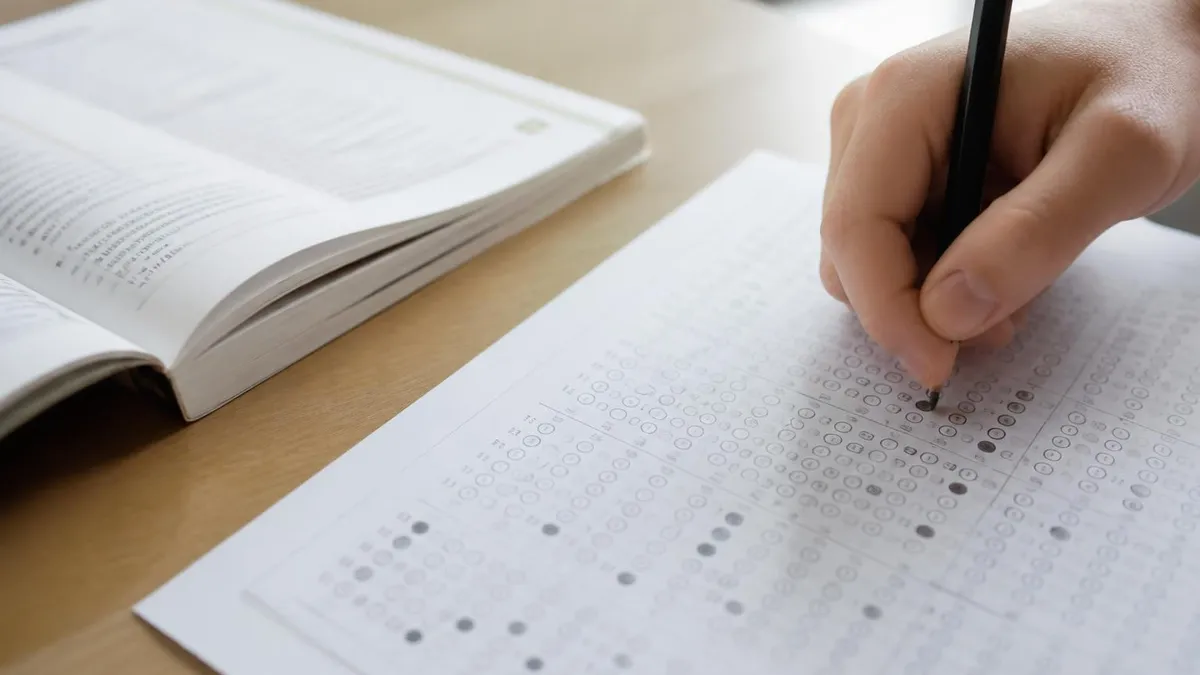
Preparing for the COACA Logical Reasoning: Structured Study vs. Winging It
- +Structured practice significantly raises deductive accuracy within 3–4 weeks
- +Timed drills build the pacing instincts needed to finish all 60 questions
- +Targeted weakness training on abstract reasoning yields fast score gains
- +Full-length simulations reduce test-day anxiety and environmental unfamiliarity
- +Process-of-elimination habits formed in practice transfer directly to test day
- +Consistent preparation reduces the likelihood of needing to wait 180 days to retest
- −Logical reasoning skills improve slowly without deliberate, structured practice methods
- −Generic study guides often omit COACA-specific question formats and weighting
- −Over-relying on timed pressure without accuracy work leads to fast, careless errors
- −Abstract reasoning improvement requires high question volume that feels monotonous
- −Test-day technical issues (proctoring software, webcam) can disrupt even prepared candidates
- −A single low COACA score can delay the entire hiring process by six months or more
Pros and Cons at a Glance
| Pros | Cons |
|---|---|
| Targeted weakness training on abstract reasoning yields fast score gains | Logical reasoning skills improve slowly without deliberate, structured practice methods |
| Full-length simulations reduce test-day anxiety and environmental unfamiliarity | Generic study guides often omit COACA-specific question formats and weighting |
| Process-of-elimination habits formed in practice transfer directly to test day | Over-relying on timed pressure without accuracy work leads to fast, careless errors |
COACA Logical Reasoning Preparation Checklist
- ✓Download and review the official CBP COACA candidate information guide before studying
- ✓Complete a diagnostic practice test to establish your baseline logical reasoning score
- ✓Identify your two weakest question types and schedule daily targeted drills for each
- ✓Practice at least 20 deductive syllogisms per session using premise-only reasoning
- ✓Work through 30+ abstract reasoning matrix puzzles weekly to build transformation fluency
- ✓Run timed 15-question drills at 75 seconds per question to calibrate natural pacing
- ✓Complete at least three full-length 60-question timed simulations before your exam date
- ✓Review every missed question immediately and write out why each wrong answer fails logically
- ✓Test your proctoring software setup 48 hours before the exam to prevent technical surprises
- ✓Practice a 5-minute breathing and focus routine to use immediately before beginning the exam

The 180-Day Retake Rule Changes Your Risk Calculation
CBP enforces a mandatory 180-day waiting period before candidates may retake the COACA after a failed attempt. This six-month delay can push your entire hiring timeline back by a year or more when combined with background investigation scheduling. Investing four to six weeks of serious preparation before your first attempt is not just good strategy — it is the most efficient use of your time in the entire application process.
Understanding how CBP scores the COACA and what threshold you need to hit is essential context for calibrating your preparation goals. CBP does not publicly release exact passing scores, but based on candidate reports and OPM guidelines governing federal law enforcement hiring, a competitive logical reasoning performance is generally understood to require a score at or above the 70th percentile of the test-taking population. Candidates who score in the top 30% are reliably advanced; those scoring between the 50th and 70th percentiles may advance depending on the volume of applicants in a given hiring cycle.
The COACA is norm-referenced, meaning your score is calculated relative to all other candidates who took the same form of the exam. This has a critical practical implication: passing is not simply about answering a fixed percentage of questions correctly. You must outperform a meaningful portion of a self-selected, motivated applicant pool — other people who also want to become Border Patrol Agents and who have also prepared to some degree. The competition effect makes preparation even more important, because an unprepared candidate is not just failing against an abstract standard but actively losing ground to rivals who have practiced.
CBP combines COACA logical reasoning scores with performance on the other three sections — arithmetic reasoning, writing skills, and situational judgment — to produce a composite score. However, logical reasoning is widely considered the most heavily weighted component and the one most likely to disqualify candidates who perform poorly. Some hiring officials have indicated that a very strong performance in situational judgment can partially offset a mediocre logical reasoning score, but this offset is limited, and the safest strategy remains maximizing logical reasoning performance directly.
Candidates who complete training at the Border Patrol Academy in Artesia, New Mexico, later report that the analytical thinking skills tested by the COACA are directly applicable to daily field operations. Route analysis, sign-cutting interpretation, intelligence brief synthesis, and smuggling pattern detection all draw on the same deductive and inductive reasoning frameworks that the COACA assesses. Agents who scored well on the COACA tend to advance more quickly through the Academy curriculum, suggesting the test has real predictive validity beyond simply filtering applicants.
Pass rates for the COACA across all sections are estimated between 50% and 60% of test-takers, based on publicly available information about federal law enforcement cognitive assessments. Logical reasoning specifically may have a somewhat lower individual pass rate, as candidates with strong situational judgment or writing skills but weaker analytical reasoning can fail the composite standard on the strength of logical reasoning deficits alone. This data reinforces the importance of treating logical reasoning as the primary preparation priority rather than dividing study time equally across all four sections.
One underappreciated factor in COACA scoring is the impact of test anxiety on logical reasoning specifically. Research on cognitive performance under stress consistently shows that high-stakes testing reduces working memory capacity — exactly the cognitive resource most needed for complex logical operations. Candidates who have practiced under simulated test conditions experience lower cortisol spikes on actual test day, allowing their true logical ability to surface rather than being masked by anxiety-induced performance decrements. This is another reason why full-length simulation practice is not optional for serious candidates.
For candidates who are retaking the COACA after a prior unsuccessful attempt, the strategic calculus changes. Rather than a general preparation approach, retakers benefit from a targeted analysis of their prior performance. If CBP provides any score breakdown by section — or if you can estimate which sections dragged your composite score down — focus the majority of your 180-day preparation period on those specific areas. Returning to the exam with a systematically improved logical reasoning baseline, combined with solid preparation across the other three sections, produces the highest probability of clearing the threshold on a second attempt.
CBP schedules COACA exam slots on a first-come, first-served basis, and many candidates rush to book the earliest available date. Scheduling too soon — before you have completed structured logical reasoning practice and at least two full-length timed simulations — substantially increases your risk of triggering the 180-day retake delay. Request a date that gives you adequate preparation time; a few extra weeks of prep now is far less costly than a six-month wait to try again.
On test day itself, the environment and logistics of the proctored COACA will directly affect your logical reasoning performance if you have not prepared for them. The exam is delivered via a third-party remote proctoring platform — typically one that requires a webcam, microphone, and a clean, private workspace.
Log into the platform at least 30 minutes before your scheduled start time to complete the technical verification process, which includes scanning your ID, doing a 360-degree room scan, and confirming your system meets the software requirements. Technical failures during this setup phase cause significant stress that bleeds directly into early exam performance.
Your physical state on test day matters more than most candidates acknowledge. Sleep deprivation of even two hours reduces logical reasoning accuracy measurably in laboratory conditions. Prioritize a full night's sleep both two nights before and the night before your exam — the two-nights-prior rest is often more influential than the immediate pre-exam night, because deep sleep consolidates the memory of practice patterns you have been building throughout your preparation period.
Avoid alcohol for at least 48 hours before testing and limit caffeine to your normal intake rather than dramatically increasing it, which can improve anxiety and impair fine motor performance on timed tasks.
Nutrition timing also deserves attention. Eat a moderate meal containing complex carbohydrates and protein approximately 90 minutes before your exam start time. This window allows digestion to normalize before the cognitive demand peaks while ensuring blood glucose levels are stable throughout the test. Avoid heavy, high-fat meals that divert blood flow to the digestive system and impair alertness, and do not test on an empty stomach, which produces distracting hunger sensations and mild cognitive impairment in the final exam hour.
During the exam, monitor your time actively. The COACA platform typically displays a countdown clock; check it at the end of every 15-question block and adjust your pace if you are running ahead or behind the 75-seconds-per-question average. If you find yourself stuck on a particularly complex deductive question, deploy the two-pass strategy: mark it, move on, and return after completing the easier items. A confident, steady pace through answerable questions is more valuable than a heroic effort to solve one difficult item that costs you three easier points.
Between logical reasoning sub-sections or after completing any major block, take 15 to 20 seconds for a deliberate mental reset. Close your eyes briefly, take three slow breaths, and consciously release any tension from the previous section before beginning the next. This micro-recovery technique is supported by attentional control research and is standard practice among high-stakes test-takers across medical licensing, legal bar exams, and military officer selection assessments. It costs almost no time and measurably improves focus quality in subsequent question blocks.
If technical problems occur mid-exam — a camera freeze, browser crash, or connectivity drop — do not panic. Immediately document the issue with a screenshot if possible, then contact the proctoring support line provided in your exam confirmation email. CBP's testing partners have protocols for mid-exam technical failures, and most incidents can be resolved without invalidating your session. Knowing this in advance prevents the catastrophizing response that turns a minor technical glitch into a complete cognitive derailment that affects your remaining performance.
After completing the exam, you will typically receive a preliminary score notification within minutes. If you advance, the next steps in the BPA hiring process — background investigation, medical evaluation, polygraph, physical fitness test, and structured interview — will be scheduled through your USAJOBS application portal. Begin preparing for those subsequent stages immediately rather than waiting, since the overall hiring timeline from initial COACA to Academy start can span twelve to eighteen months, and each stage requires its own focused preparation effort.
Building a structured, week-by-week study plan is the most reliable way to ensure you accumulate enough deliberate practice before your COACA exam date. For candidates with four weeks of preparation time, the following framework has been validated by test-prep research and adapted for the specific demands of the CBP logical reasoning assessment. Candidates with more time should extend Phase 1 and Phase 2 rather than compressing Phase 3, as additional high-volume practice in foundational question types produces compounding accuracy gains.
During Week 1, focus entirely on diagnosis and concept building. Take a full-length, timed diagnostic test to establish your starting percentile across all four question types. Spend the remainder of the week studying the rules of formal logic — syllogism validity, conditional reasoning, contrapositives, and common logical fallacies. Do not prioritize speed during Week 1; accuracy and conceptual understanding are the only goals. Aim to complete 100 to 120 practice questions total, reviewing every incorrect response in detail before moving to the next session.
In Week 2, shift to targeted drilling by question type. Allocate two study sessions per day: one focused exclusively on your weakest question type and one mixing all four types in a timed format. By the end of Week 2, your accuracy on deductive and inductive questions should consistently exceed 80% under untimed conditions. Begin introducing time constraints during Week 2 — not at full exam speed, but at approximately 90 seconds per question — to start building the automatic pattern recognition that replaces deliberate analysis during the actual exam.
Week 3 is your speed-building and stamina phase. Move to full exam-speed drills (75 seconds per question) across all question types. Complete at least two full-length 60-question timed simulations this week, scoring them rigorously and logging your performance by question type and difficulty level. Identify the specific item formats where you still consistently lose time or make errors and dedicate 15-minute targeted micro-drills to those formats each morning. Mental stamina exercises — like working through 30 questions without any breaks — prepare your cognitive endurance for the full exam experience.
During Week 4, transition to maintenance and simulation mode. Do not introduce new question types or study techniques this week; the goal is to consolidate what you have built and arrive at test day fully rested and confident. Complete one final full-length simulation at the start of the week, then shift to lighter daily review sessions of 20 to 30 questions.
In the final 48 hours before your exam, do no intensive practice at all. A brief 15-minute review of your personal notes on common error patterns is sufficient — your brain needs rest more than it needs additional input at this stage.
Supplementary resources can enhance any of these weekly phases. Official CBP and OPM preparation guides provide the most accurate representation of actual COACA question formats and should be used as the foundation of your material. Third-party logical reasoning books — particularly those designed for LSAT, GMAT, or military officer selection preparation — contain high-quality deductive and inductive reasoning questions that are comparable in difficulty to COACA items. Abstract reasoning practice books used by UK civil service candidates are especially useful for matrix and spatial reasoning sub-sections.
Study groups can be a double-edged resource for COACA logical reasoning preparation. Discussing deductive arguments and pattern-recognition strategies with other candidates can accelerate conceptual understanding and help you identify blind spots in your reasoning approach. However, the actual exam is entirely individual, and group work should never replace solo timed practice sessions. The brain needs to build its own fast, automatic reasoning pathways through personal repetition — watching someone else solve a logical puzzle efficiently does not transfer those pathways to your own neural architecture.
Finally, remember that the COACA logical reasoning test is not the only analytical challenge in the BPA hiring pipeline. The structured interview includes scenario-based questions that require on-the-spot logical reasoning about law enforcement situations, and the polygraph examination involves responding to questions in a pressure environment that demands clear, coherent thinking. The analytical discipline you build during COACA preparation — systematic evidence evaluation, controlled reasoning under time pressure, resistance to cognitive shortcuts — will serve you throughout every stage of the hiring process and throughout your career as a Border Patrol Agent.
Sample BPA - Border Patrol Agent Practice Questions
Try these questions from our free BPA - Border Patrol Agent practice tests. The correct answer and an explanation follow each question.
Which fitness test is part of the Border Patrol Agent pre-employment physical fitness assessment?
- A. Olympic weightlifting total
- B. The Physical Efficiency Battery (PEB)
- C. The FBI Physical Fitness Test
- D. The Army Combat Fitness Test (ACFT)
Answer: B. The Physical Efficiency Battery (PEB)
CBP uses the Physical Efficiency Battery (PEB), which includes a sit-and-reach, maximum push-ups, maximum sit-ups, and a 1.5-mile run.
Border Patrol Agents must complete a medical examination with which federal entity before appointment?
- A. The Department of Veterans Affairs
- B. CBP's Occupational Health and Safety office following Office of Personnel Management (OPM) standards
- C. The Centers for Disease Control and Prevention
- D. The Department of Defense Medical Evaluation Board
Answer: B. CBP's Occupational Health and Safety office following Office of Personnel Management (OPM) standards
Pre-employment medical examinations for federal law enforcement are conducted per OPM standards administered through CBP's occupational health resources.
Which documentation practice is most critical when seizing contraband to ensure its admissibility in court?
- A. Photographing items without formal labeling
- B. Recording only the total weight of the seizure
- C. Maintaining a complete inventory with witness signatures and secure evidence storage
- D. Informally logging items in a personal notebook
Answer: C. Maintaining a complete inventory with witness signatures and secure evidence storage
A complete chain-of-custody record—including itemized inventory, witness signatures, and secure storage—is legally required to preserve evidence integrity for prosecution.
An agent must make a logical decision based on the following statement: 'If a traveler is coming from a country with a high risk of contagious diseases, they must undergo additional health screening. 'Which of the following would be a correct deduction?
- A. All travelers must undergo health screening.
- B. Health screening is not necessary unless the risk o contagious disease is high
- C. A traveler from a high-risk country does not require screening if they have no symptoms.
- D. A traveler from a high-risk country must undergo additional health screening.
Answer: D. A traveler from a high-risk country must undergo additional health screening.
The conditional statement directly says travelers from high-risk countries must undergo additional health screening, so that deduction follows logically without adding or removing any conditions. 'All travelers must undergo screening' overgeneralizes beyond what the statement says. The claim that screening is unnecessary below high risk is the contrapositive misread, and the symptom-based exception is never mentioned in the original statement.
BPA Questions and Answers

Do Border Patrol Agents Have to Speak Spanish? Language Requirements Explained
Border Patrol Agent Jobs: How to Become a BPA in 2026

Are Most Border Patrol Agents Hispanic? BPA Demographics Explained
How to Become a Border Patrol Agent: Requirements, Exam, and Hiring Process
Border Patrol Agent Career: How Many Border Patrol Agents Are There?
About the Author

Educational Psychologist & Academic Test Preparation Expert
Columbia University Teachers CollegeDr. Lisa Patel holds a Doctorate in Education from Columbia University Teachers College and has spent 17 years researching standardized test design and academic assessment. She has developed preparation programs for SAT, ACT, GRE, LSAT, UCAT, and numerous professional licensing exams, helping students of all backgrounds achieve their target scores.
Join the Discussion
Connect with other students preparing for this exam. Share tips, ask questions, and get advice from people who have been there.
View discussion (8 replies)