
Books by Border Patrol Agents: Essential Reading for BPA Candidates 2026 October
Discover books by border patrol agents that reveal real experiences & help you prep for the BPA exam. 📚 Insider knowledge for serious candidates.

A book by a border patrol agent offers something no study guide can replicate: the raw, unfiltered perspective of someone who has lived the job. These memoirs, field accounts, and investigative narratives reveal what the U.S. Border Patrol actually looks like from the inside — the relentless pressure, the moral complexity, the physical demands, and the quiet pride that comes from protecting the nation's boundaries. For candidates preparing to enter the BPA ranks, these books provide context that transforms abstract exam topics into lived reality.
Reading first-person accounts written by former and current agents gives prospective hires a significant psychological advantage. When you understand why certain protocols exist — why agents must document encounters precisely, why situational awareness is drilled relentlessly, why Spanish proficiency matters so deeply in the field — you approach your preparation with genuine motivation rather than mechanical memorization. This deeper understanding translates into better performance on the written examination and during the oral assessment panel.
The books written by agents span a wide range of experiences. Some focus on the tactical side: tracking methods, apprehension procedures, and the dangerous confrontations that define high-risk patrol shifts. Others examine the bureaucratic and political environment surrounding border enforcement, exploring how policy decisions made in Washington ripple outward to affect the daily decisions of agents working remote desert sectors. Both perspectives are invaluable for candidates who want to understand the full scope of what they are signing up for.
Many candidates overlook the narrative literature surrounding the Border Patrol, focusing exclusively on practice tests and study manuals. That is a strategic mistake. Interview panels and background investigators often ask candidates why they want this career, what they understand about the mission, and how they envision handling morally difficult situations in the field. Candidates who have read deeply about the profession speak with a credibility and specificity that interviewers immediately notice and respect.
The insights embedded in border patrol memoirs also help candidates calibrate their expectations. The job is genuinely demanding in ways that no job listing fully communicates. Agents work rotating shifts in extreme weather conditions, often in remote locations with limited backup. They navigate complex legal requirements around detainment, search, and use of force. They interact daily with desperate individuals, hardened criminals, and everything in between. Books written by those who have done this work for years convey these realities honestly and without sugarcoating.
Beyond individual memoirs, a growing body of journalistic and academic literature draws on agent interviews, internal documents, and policy analysis to examine the Border Patrol as an institution. These texts help candidates understand the agency's history, its evolving mission since the post-9/11 era, and the ongoing debates about its role and methods. Candidates who engage with this broader literature demonstrate intellectual seriousness that distinguishes them in a competitive applicant pool. If you want to learn about the border patrol agent book of language requirements, understanding the cultural context behind Spanish proficiency is equally important.
This article surveys the most important books written by or about Border Patrol agents, explains what each one offers the serious candidate, and provides guidance on how to integrate this reading into a structured preparation plan that maximizes your chances of passing the BPA exam and succeeding in the hiring process from start to finish.
Border Patrol Agent Books & Career by the Numbers

Top Books Written by or About Border Patrol Agents
A detailed account of life on the Southwest border, covering tracking techniques, migrant encounters, and the physical toll of remote desert patrol. Written from firsthand experience across multiple sectors, this type of memoir gives candidates unmatched operational context for their preparation.
A journalistic account drawing on agent interviews and field reporting that examines the human cost on both sides of border enforcement. Candidates gain crucial perspective on the moral complexity agents navigate daily, preparing them for panel interview questions about ethics and judgment.
Focused on the counternarcotics mission, this category of agent account covers cartel tactics, tunnel detection, and the high-stakes work of stopping contraband flow. Understanding drug interdiction operations directly supports BPA exam content on law enforcement procedures and detection techniques.
An academic-journalist hybrid drawing on extensive agent interviews to examine the culture, politics, and daily grind of the U.S. Border Patrol as an institution. Candidates preparing for background investigations and interviews benefit enormously from understanding the agency's internal culture and values.
Published materials from Customs and Border Protection that outline the hiring process, physical standards, and exam expectations. While not written as memoirs, these official guides represent the agency's own voice on what it seeks in candidates and complement narrative accounts effectively.
Understanding what books by border patrol agents teach about the BPA examination begins with recognizing the exam's structure. The CBP Officer Entrance Exam — sometimes called the COACA — tests logical reasoning, arithmetic skills, and writing abilities. But the background investigation and oral interview panels go far beyond these mechanical assessments. Interviewers probe deeply into candidates' character, judgment, and understanding of what border enforcement actually demands. Books written by agents directly inform this deeper layer of evaluation.
When an agent-authored memoir describes a checkpoint encounter where a traveler's behavior seemed suspicious but the legal threshold for detention had not been met, that real-world scenario captures the essence of what oral interview questions probe. Panels frequently present candidates with hypothetical situations involving legal ambiguity, use-of-force decisions, or conflicting orders from supervisors. Candidates who have read widely about how working agents actually navigate these situations respond with the kind of nuanced, specific answers that score highly on assessment rubrics.
The Spanish language component of the BPA examination is another area where agent literature provides critical context. Many memoirs written by agents serving in Southwest border sectors describe the practical reality of conducting field interviews, taking statements from witnesses, and communicating instructions in high-stress situations — all in Spanish. Understanding why Spanish proficiency is tested, not merely that it is tested, motivates candidates to invest genuine effort in language preparation rather than treating it as a bureaucratic checkbox to satisfy.
Books about the BPA also illuminate the physical and psychological demands of the job in ways that help candidates understand the fitness standards. Former agents describe multi-mile foot pursuits across rough terrain, extended shifts standing in extreme heat or cold, and the sustained mental alertness required during long surveillance operations. Reading these accounts before starting physical training gives candidates a concrete image of the fitness level they are genuinely working toward, which research consistently shows improves adherence to training programs.
Agent memoirs also provide invaluable context for the background investigation phase of the hiring process, which is one of the most consequential and least understood steps. Former agents who have written about their careers often describe the investigation process in detail — what investigators look for, how they verify financial history, what prior associations can raise flags, and how candidates should approach the polygraph examination. This institutional knowledge is rarely compiled in any official source and can help candidates avoid inadvertent missteps during a process that disqualifies a significant percentage of applicants.
The written accounts also help candidates understand the agency's core values and how those values show up in daily decision-making. The Border Patrol's mission involves elements that can create tension: enforcing immigration law strictly while treating all individuals with basic dignity, following orders from supervisors while exercising independent judgment in dynamic field situations, and representing federal law enforcement while working in communities where the agency's presence is sometimes controversial. Agent-authored literature helps candidates develop a mature, thoughtful framework for navigating these tensions before they ever arrive at an interview panel.
For candidates who want to connect their reading directly to exam preparation, the background investigation quizzes available on this site provide structured practice that complements the contextual knowledge gained from agent literature. The combination of lived-experience narratives and targeted practice questions creates a preparation strategy that covers both the cognitive and character dimensions of the BPA selection process comprehensively.
Key Themes in Border Patrol Agent Books
Books focusing on field operations detail the tactical realities of border enforcement — sign-cutting techniques for tracking footprints across desert terrain, the use of sensors and cameras to detect crossings in remote areas, and the coordination required when multiple agents converge on an apprehension. These accounts describe the physical environment in visceral terms: 115-degree summer heat in the Sonoran Desert, flash floods in canyon sectors, and the complete darkness of night operations where agents rely on night-vision equipment and radio coordination.
Candidates who study field operations narratives gain a concrete mental model of what the job actually demands minute to minute. This translates directly into more authentic answers during oral interviews, where panels test whether candidates understand the operational realities they will face. Agents who write about their field experience consistently emphasize that the job's physical and mental challenges are inseparable — success in the field requires both peak physical conditioning and disciplined situational awareness maintained across long, demanding shifts in difficult environments.

Benefits and Limitations of Learning from Agent Books
- +Provides authentic, first-person context that official study guides cannot replicate
- +Helps candidates prepare specific, credible answers for oral interview panels
- +Reveals the genuine physical and psychological demands before you commit to the career
- +Explains why specific protocols and training standards exist, improving retention
- +Prepares candidates for background investigation by describing what investigators examine
- +Builds genuine motivation by connecting exam preparation to real career outcomes
- −Individual agent perspectives may not represent current agency-wide policies or practices
- −Some memoirs focus on specific sectors or eras that may not reflect your likely posting
- −Reading narratives takes significant time away from targeted exam practice and physical training
- −Older books may describe outdated technology, procedures, or legal frameworks
- −Some accounts reflect a particular political viewpoint that may skew institutional perspective
- −Narrative accounts rarely provide the structured, testable knowledge that exam prep requires
Pros and Cons at a Glance
| Pros | Cons |
|---|---|
| Provides authentic, first-person context that official study guides cannot replicate | Individual agent perspectives may not represent current agency-wide policies or practices |
| Helps candidates prepare specific, credible answers for oral interview panels | Some memoirs focus on specific sectors or eras that may not reflect your likely posting |
| Reveals the genuine physical and psychological demands before you commit to the career | Reading narratives takes significant time away from targeted exam practice and physical training |
| Explains why specific protocols and training standards exist, improving retention | Older books may describe outdated technology, procedures, or legal frameworks |
| Prepares candidates for background investigation by describing what investigators examine | Some accounts reflect a particular political viewpoint that may skew institutional perspective |
| Builds genuine motivation by connecting exam preparation to real career outcomes | Narrative accounts rarely provide the structured, testable knowledge that exam prep requires |
BPA Candidate Reading and Preparation Checklist
- ✓Read at least two full-length memoirs written by former or current Border Patrol agents before your interview
- ✓Take notes on specific field scenarios described by agents and think through how you would have handled each situation
- ✓Research the current CBP mission statement and compare it to how agents describe the job in their books
- ✓Study the Spanish language sections in agent memoirs to understand the practical contexts where bilingual skills matter most
- ✓Review any agent accounts of the background investigation process to understand what investigators examine and prioritize
- ✓Identify three to five examples from your reading that illustrate professional integrity, sound judgment, or effective teamwork
- ✓Complete all six BPA practice quizzes on this site to combine narrative knowledge with structured exam preparation
- ✓Cross-reference book descriptions of physical training demands with the official CBP fitness test standards
- ✓Review agent descriptions of drug interdiction operations before taking the contraband interdiction practice quizzes
- ✓Prepare a clear, specific answer to the interview question: 'What do you know about what this job actually involves on a daily basis?'
Interview Panels Reward Candidates Who Have Done Real Research
Background investigators and oral panel members consistently report that the most impressive candidates can speak specifically about the realities of border patrol work — not just recite the job description. Reading books written by actual agents, then connecting those insights to your own experience and values, is one of the most effective ways to distinguish yourself in a competitive BPA applicant pool numbering in the thousands.
Integrating books by border patrol agents into your preparation strategy requires some intentionality about timing and method. Most BPA candidates have a preparation window of three to six months between submitting their application and completing the full hiring process. During that period, attempting to read five or six full-length books while also completing physical conditioning, language study, and exam practice is unrealistic. A smarter approach is to select two or three books strategically based on your specific preparation gaps.
If your weakest area is the oral interview and background investigation phase, prioritize memoirs that describe the hiring process itself and the character qualities that experienced agents believe define successful BPA officers. Former agents who write about their own hiring experiences, or who explicitly reflect on what they wish they had known before entering the process, provide the most directly applicable preparation material for this stage of your candidacy.
If your preparation gap is in understanding the operational mission — the actual work of border enforcement — prioritize field accounts that describe patrol operations, apprehension procedures, and the interaction between individual agents and the chain of command. These books build the operational mental model that helps candidates answer situational judgment questions on the written examination and respond credibly to scenario-based questions during oral assessments.
For candidates whose gap is language — particularly Spanish proficiency — agent memoirs set in Southwest border sectors provide authentic exposure to the bilingual contexts that define field work in those areas. Reading about conversations conducted in Spanish, commands given at vehicle checkpoints, and witness statements taken from Spanish-speaking individuals reinforces the practical, communicative nature of the language requirement in ways that textbook study alone cannot achieve.
Time management is the critical variable. A reasonable approach for most candidates is to dedicate three to four hours per week to reading during the preparation period, treating it as a complement to — not a substitute for — practice testing, physical training, and language study. At that pace, a candidate can realistically complete two substantial books during a four-month preparation window while still investing adequate time in the structured, measurable preparation that directly affects examination scores.
Journaling while reading is a technique that experienced test-takers recommend for converting passive reading into active preparation. When you encounter a scenario in an agent memoir that resonates with a question type from your practice exams, write a brief note connecting the two. When an agent describes a value or judgment call that aligns with something from your own professional or personal history, document that connection. These notes become the raw material for the specific, authentic interview answers that distinguish top-tier candidates.
The drug and contraband interdiction quizzes available on this platform are particularly well-suited to complement agent literature focused on that mission area. The combination of narrative understanding — knowing why certain detection techniques matter and what real interdiction operations look like — with the structured, multiple-choice practice provided by these quizzes creates a comprehensive preparation approach that reinforces knowledge from both directions simultaneously.

Some widely-cited border patrol memoirs were written before significant policy shifts in the post-2010 era, including changes to use-of-force guidelines, asylum processing procedures, and technology deployment. Treat books published before 2015 as valuable for cultural and operational context, but always verify current policy details through official CBP sources before citing them in interviews or using them to guide your understanding of current procedures.
The final preparation insights drawn from agent literature center on a theme that appears consistently across nearly every memoir and field account: the job rewards people who combine physical toughness with intellectual humility. The most respected agents described in these books are not the ones who were fastest or strongest, but the ones who remained curious, kept learning, and stayed open to feedback from more experienced colleagues. This is a quality that interview panels actively look for and that candidates can explicitly signal through the specificity and depth of their preparation.
Agent books also consistently emphasize the importance of integrity during the hiring process itself. Background investigators are professionally trained to detect inconsistencies between what candidates report on their Standard Form 86 and what their acquaintances, former employers, and financial records reveal. Multiple agent memoirs describe watching promising candidates disqualified not because of genuinely disqualifying history, but because they minimized or misrepresented past issues that, disclosed honestly, would have been manageable. The consistent advice from agents who have observed this process: disclose everything and let investigators make the assessment.
Understanding the team dynamics of border patrol work is another insight that agent literature provides with particular clarity. The BPA is not a job where individual heroics are the defining feature. It is a team environment where communication, reliability, and trust between agents are the foundation of operational safety. Candidates who can speak specifically about how they have functioned in team environments under pressure — drawing on concrete examples from their own history — demonstrate the kind of interpersonal competency that the hiring process is specifically designed to evaluate.
The physical preparation insights from agent memoirs are equally valuable. Former agents who write about their training describe the academy physical regimen in detail: daily runs, obstacle courses, defensive tactics training, and the demanding combination of physical exertion and cognitive load that characterizes patrol work. Candidates who begin serious physical conditioning early — ideally six or more months before their scheduled academy date — arrive with the physical reserve needed to perform well when the full demands of training are imposed simultaneously.
Books written by agents also illuminate the geographic diversity of the border patrol mission in ways that help candidates think realistically about where they might serve. The Southwest land border sectors — Tucson, El Paso, Rio Grande Valley, San Diego — handle the highest volumes of activity and are the postings most candidates will encounter.
But the BPA also operates on the northern border with Canada, at coastal sectors, and at interior checkpoints. Candidates who demonstrate awareness of this geographic scope signal a genuine understanding of the agency's full mission rather than a narrow focus on the most publicized areas of operation.
For candidates wondering how to connect their reading to the formal exam preparation process, the structured quizzes available on this platform provide the ideal bridge. After reading about the background investigation process in an agent memoir, completing the background investigation practice questions on this site converts narrative understanding into testable knowledge. After reading about drug interdiction operations in a field account, the contraband interdiction quizzes provide immediate feedback on whether you have absorbed the relevant operational knowledge accurately and completely.
The strongest BPA candidates combine the depth of insight that comes from reading first-person agent accounts with the disciplined, measurable preparation that practice testing provides. Neither approach alone is sufficient. Books give you the why; practice tests give you the what. The combination gives you the comprehensive preparation that the BPA selection process, in all its rigor and complexity, genuinely demands from the candidates who ultimately earn a position in the agency.
The practical takeaway from surveying the literature written by and about border patrol agents is straightforward: the candidates who invest in understanding this career deeply before pursuing it are consistently better prepared than those who treat the process as a purely mechanical exercise in passing tests and meeting requirements. The BPA hiring process is deliberately designed to be difficult, and the difficulty serves a purpose — it selects for people who combine genuine commitment with the capacity to handle real operational demands.
Start your book selection with a memoir that covers the Southwest border sectors, since those postings are statistically most likely for new agents and the operational environment there — extreme heat, mountainous terrain, high encounter volumes — is the most demanding. Look specifically for accounts that describe the first year of service, when new agents are absorbing institutional culture, building field skills, and proving themselves to experienced partners. The challenges of that first year are the ones your preparation should most directly address.
Supplement your memoir reading with at least one journalistic or academic account that examines the BPA as an institution. These texts provide the policy context and historical perspective that help candidates understand why the agency operates as it does, what debates surround its methods, and how it has evolved since its founding in 1924. Candidates who can speak intelligently about the agency's history and mission demonstrate the kind of informed commitment that distinguishes serious applicants from casual ones.
Use your reading to develop a personal philosophy about the BPA mission that you can articulate clearly and specifically in interviews. Panel members ask candidates variations of the question: why do you want this job specifically, rather than a different law enforcement career? Candidates who have read widely about the BPA — including the difficult and morally complex aspects of the work — can answer this question with the kind of nuanced, honest specificity that demonstrates genuine understanding rather than rehearsed enthusiasm.
Connect your reading explicitly to your personal background and experience. If you have military service, look for agent memoirs that describe how veterans transition into BPA work and what they find familiar or surprising. If you have experience in social services, emergency response, or another helping profession, look for accounts that describe how agents balance enforcement responsibilities with humanitarian concerns. These connections make your interview answers specific to your actual history rather than generic.
Finally, remember that the books written by border patrol agents are ultimately stories of people who chose a demanding, consequential career and found ways to perform it with professional integrity over many years.
The most enduring insight from this literature is not tactical or procedural — it is the consistent demonstration that the BPA attracts and retains people who find genuine meaning in the work of protecting the nation's boundaries and the communities that depend on that protection. That sense of purpose is what sustains agents through the difficult years and what the hiring process is ultimately trying to identify in every candidate who applies.
Your preparation journey should reflect that same sense of purpose. Read the books. Complete the practice tests. Train your body. Study the language. And approach every stage of the process as a genuine expression of your readiness for a career that will challenge and reward you in equal measure for as long as you serve.
Sample BPA - Border Patrol Agent Practice Questions
Try these questions from our free BPA - Border Patrol Agent practice tests. The correct answer and an explanation follow each question.
All sworn Border Patrol Agents carry official credentials. Officer Reyes carries official credentials. What is the correct logical conclusion?
- A. Officer Reyes is definitely a sworn Border Patrol Agent
- B. No definitive conclusion can be drawn about Officer Reyes
- C. Officer Reyes is a supervisor
- D. Officer Reyes completed advanced training
Answer: B. No definitive conclusion can be drawn about Officer Reyes
This is the logical fallacy of affirming the consequent — having credentials does not exclusively prove Agent status.
Which federal entity conducts background investigations for Border Patrol Agent candidates?
- A. The FBI's National Security Division
- B. The Defense Counterintelligence and Security Agency (DCSA) or CBP's internal investigators
- C. The CIA's Office of Security
- D. State-level police departments
Answer: B. The Defense Counterintelligence and Security Agency (DCSA) or CBP's internal investigators
Background investigations for federal employment, including CBP, are conducted by DCSA (for national security positions) or by CBP's Office of Professional Responsibility investigators.
What advantage does thermal imaging technology provide to Border Patrol Agents during nighttime operations?
- A. It allows agents to read documents in darkness
- B. It detects heat signatures emitted by humans and animals regardless of light conditions
- C. It provides GPS coordinates of detected individuals
- D. It translates radio communications automatically
Answer: B. It detects heat signatures emitted by humans and animals regardless of light conditions
Thermal imagers detect infrared heat emitted by living bodies, allowing agents to locate individuals in complete darkness or through dense vegetation.
What is the primary hazard of fentanyl exposure for Border Patrol agents during a drug seizure?
- A. It can cause overdose through skin contact or inhalation without deliberate ingestion
- B. It has a toxic odor detectable at safe distances
- C. It reacts violently with oxygen in the air
- D. It is only dangerous if consumed in large quantities
Answer: A. It can cause overdose through skin contact or inhalation without deliberate ingestion
Fentanyl can cause life-threatening overdose through dermal absorption or accidental inhalation, requiring agents to use PPE before handling any suspected fentanyl.
BPA Questions and Answers

Do Border Patrol Agents Have to Speak Spanish? Language Requirements Explained

Border Patrol Agent Job Review: Duties, Pay, and What to Expect
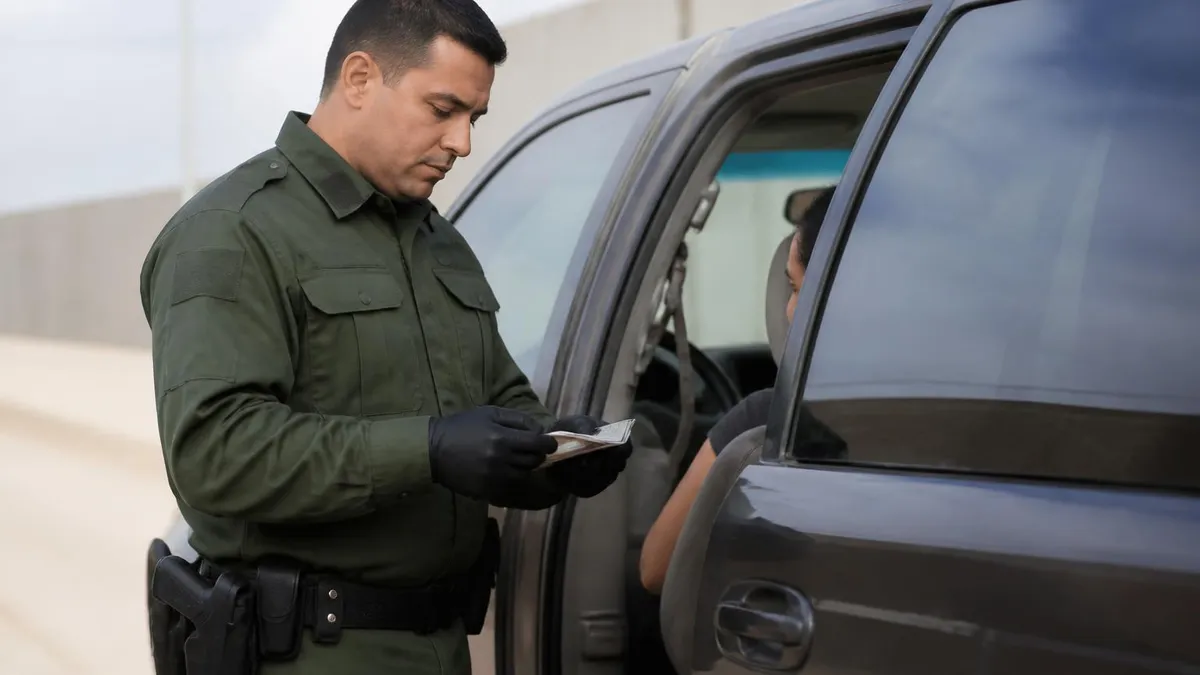
Border Patrol Agent Jobs: How to Become a BPA in 2026

CBP COACA BPA Logical Reasoning Test: Complete Study Guide & Practice

Border Patrol Agent vs Police Officer: Key Differences in Duties, Pay, and Career Path
About the Author

Educational Psychologist & Academic Test Preparation Expert
Columbia University Teachers CollegeDr. Lisa Patel holds a Doctorate in Education from Columbia University Teachers College and has spent 17 years researching standardized test design and academic assessment. She has developed preparation programs for SAT, ACT, GRE, LSAT, UCAT, and numerous professional licensing exams, helping students of all backgrounds achieve their target scores.
Join the Discussion
Connect with other students preparing for this exam. Share tips, ask questions, and get advice from people who have been there.
View discussion (8 replies)