
How to Get a Boating License in Missouri: Complete 2026 Guide
Learn how to get a boating license in Missouri — age rules, approved courses, costs & exam tips. ✅ Complete 2026 step-by-step guide.
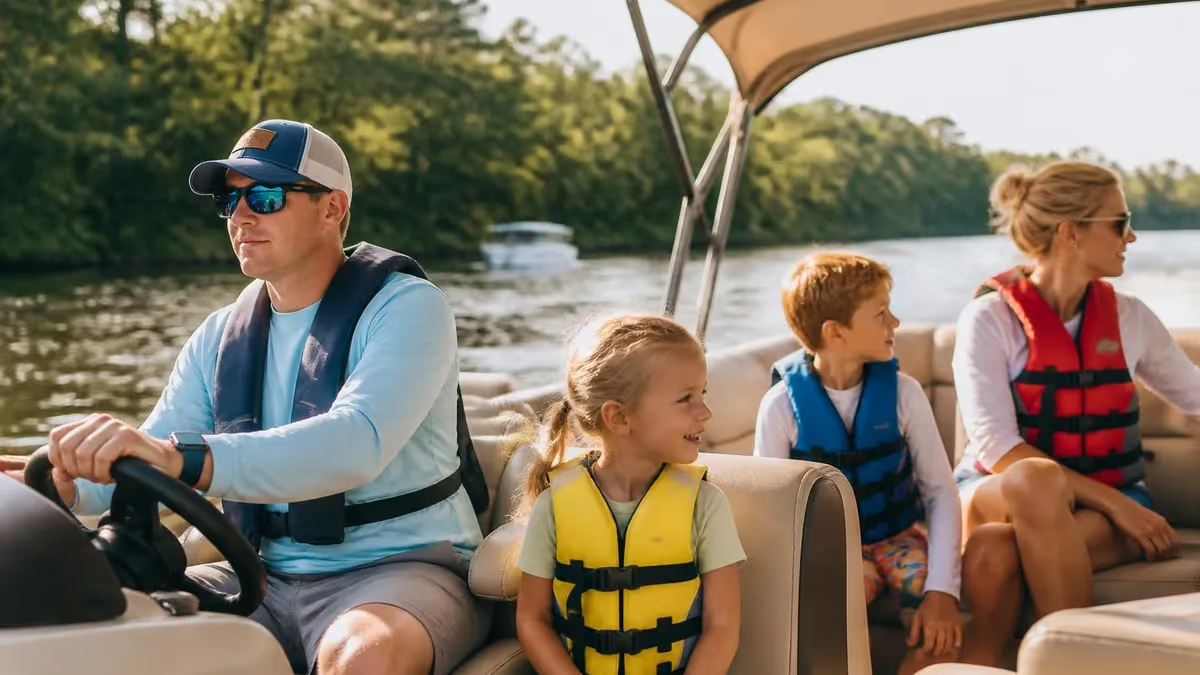
If you're wondering how to get a boating license in Missouri, you're in the right place. Missouri is home to more than 1,000 lakes and stretches of the Missouri and Mississippi rivers, making it one of the most boat-friendly states in the country. Whether you're piloting a bass boat on Lake of the Ozarks or cruising a pontoon down the Meramec River, Missouri law requires anyone born on or after January 1, 1984, to carry a valid Boating Safety Education Certificate before operating a motorized vessel. Knowing the exact steps keeps you legal and, more importantly, safe on the water.
The process for earning your Missouri boating certificate is straightforward, but there are several details that catch first-timers off guard — things like which course providers the state approves, how old you must be to operate different types of boats unsupervised, and what identification you need to bring to a proctored exam. This guide walks you through every requirement so you can get certified as efficiently as possible. We also compare Missouri's rules to neighboring states because many boaters travel across state lines and need to know whether their home-state certificate transfers.
Unlike states such as Florida, where a california boating license requirement structure is often compared, Missouri uses a one-time education certificate rather than a periodically renewed license. Once you complete your approved course and pass the proctored exam, your certificate is valid for life — no renewals, no re-testing. That lifetime validity makes the upfront time investment especially worthwhile. Most students who study consistently report completing the required coursework in two to four days before sitting for the exam.
Boating safety education in Missouri is administered through the Missouri State Highway Patrol (MSHP), which partners with the National Association of State Boating Law Administrators (NASBLA) to ensure all approved courses meet a national standard. The MSHP maintains a list of approved course providers on its website, and you must use one of these providers to receive a certificate the state will recognize. Taking an unapproved online course — even from a reputable vendor — will not satisfy Missouri's legal requirement and could result in a fine if you're stopped on the water.
Missouri also has specific age-based rules that govern who can operate a boat and under what conditions. Boaters aged 14 and 15 may operate a motorized vessel if they hold a valid Boating Safety Education Certificate, but only if a person aged 18 or older is physically present on board. Boaters aged 16 and 17 who hold a certificate may operate independently. Children under 14 may operate a motorized boat only when directly supervised by a certificate-holding adult who is at least 18. Understanding these age tiers prevents common compliance mistakes that can result in fines of up to $1,000.
The written exam itself consists of 50 multiple-choice questions drawn from Missouri's boating laws, navigation rules, safety equipment requirements, and emergency procedures. You need a score of at least 70 percent — 35 correct answers — to pass. If you fail on your first attempt, most course providers allow one or two retakes, often on the same day. The exam is not timed in a strict sense, though most test centers allocate roughly 90 minutes. Thorough preparation with practice questions significantly improves first-attempt pass rates, so it pays to use quality study resources before you walk into the testing room.
Beyond the legal requirement, completing a boating safety course makes you a genuinely better and more confident mariner. Courses cover not just Missouri-specific rules but also universal topics like reading navigational charts, understanding right-of-way on busy waterways, proper anchoring techniques, and how to handle emergencies such as capsizing, engine failure, and sudden thunderstorms. Missouri's lakes and rivers can see rapidly changing weather, and the skills you learn in a certified course may one day save your life or the lives of your passengers.
Free Boating License Test Study Tools
Interactive Boating License Test resources on PracticeTestGeeks, free to start:
- Boating License Test flashcards — review key terms and concepts card by card
- Boating License Test study guide — topic-by-topic overview of what the exam covers
- Boating License Test cheat sheet — one-page printable summary for last-minute review
Missouri Boating License by the Numbers
Key Facts at a Glance
| Item | Value | Details |
|---|---|---|
| Exam Questions | 50 | 70% passing score required |
| Certificate Validity | Life | No renewals needed |
| Minimum Age to Operate | 14+ | With adult aboard; 16+ independently |
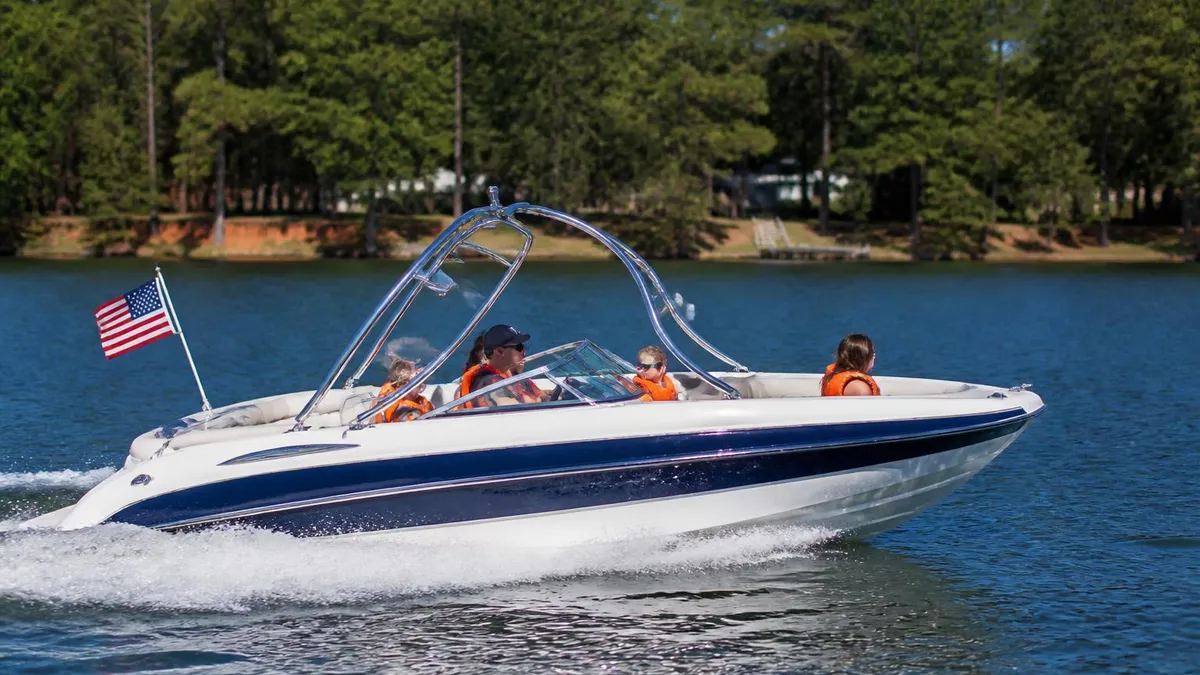
Step-by-Step: How to Get Your Missouri Boating Certificate
Confirm You Need a Certificate
Choose an MSHP-Approved Course
Complete the Course Content
Pass the Proctored Final Exam
Receive Your Certificate
Carry Your Certificate On Board
Choosing the right approved course is the single most important decision you'll make in the certification process. Missouri accepts courses from several providers, but the two most widely used online platforms are Boat Ed (operated by Kalkomey Enterprises) and Boater Exam. Both are NASBLA-approved and have been vetted by the Missouri State Highway Patrol. Boat Ed's Missouri-specific course includes state-law chapters, animated videos, and interactive quizzes after each module. Boater Exam offers a similar structure with a strong focus on visual aids and scenario-based questions that mirror what you'll encounter on the proctored final exam.
In-person classroom courses are also available through the U.S. Coast Guard Auxiliary and U.S. Power Squadrons. These courses typically run over a weekend — often Friday evening plus all day Saturday — and include live instruction, printed materials, and the proctored exam at the end of the second session. Many students prefer the classroom format because instructors can answer questions in real time and provide local knowledge about specific Missouri waterways. These courses are often free or very low cost, though they require you to commit to a set schedule rather than studying at your own pace.
Regardless of which course format you choose, the most effective study strategy is to take notes as you progress through the content rather than passively clicking through screens or listening without engagement.
Missouri's exam includes several questions about specific numerical thresholds — for example, the legal blood-alcohol limit for boating (0.08 percent, same as driving), the required distance from shore when operating a personal watercraft at high speed, and the number of feet you must stay away from a marked swim area. These numbers are easy to confuse under exam pressure unless you've written them down and reviewed them multiple times.
Practice tests are arguably the most powerful study tool available. The MSHP does not publish its exact question bank, but NASBLA-compliant practice questions closely mirror the style and difficulty of real Missouri exam items. PracticeTestGeeks offers free practice quizzes specifically designed for boating certification exams. Students who complete at least three to five full practice tests before their proctored exam consistently report higher first-attempt pass rates. The pattern-recognition you develop by practicing helps you work through tricky phrasing on the real exam rather than second-guessing yourself.
One area that surprises many test-takers is the weight given to emergency procedures on the Missouri exam. Questions about what to do when a passenger falls overboard, how to signal distress, the proper way to re-board after capsizing, and the protocols for responding to a fire aboard account for roughly 15 to 20 percent of the total question pool. These scenarios are tested because emergency situations are where inexperienced boaters make the most dangerous mistakes. Study the emergency procedures chapters as thoroughly as you study navigation rules — both categories carry significant point weight on the exam.
If you're curious how Missouri stacks up against neighboring states, the requirements are largely comparable. The tennessee boating license program, for instance, also requires NASBLA-approved education and a proctored exam, but Tennessee sets the mandatory age threshold at born on or after January 1, 1989 — five years later than Missouri. Kentucky and Illinois have similarly structured programs. Understanding these differences matters for boaters who frequently cross state lines, since Missouri's certificate is recognized in most states through NASBLA reciprocity agreements, but you should always verify with each state's boating authority before assuming reciprocity applies.
Study scheduling matters more than raw hours invested. Research on retention shows that distributing study over several days produces significantly better long-term recall than a single marathon session.
A practical approach for Missouri certification is to spend 60 to 90 minutes per day for four consecutive days covering one major topic area per session: Missouri laws on day one, navigation rules and buoy systems on day two, safety equipment requirements on day three, and emergency procedures plus a full practice test on day four. This distributed approach ensures you arrive at the proctored exam with fresh, well-organized knowledge rather than an overloaded, fatigued mind.
Missouri Boating License vs. Other States: What You Need to Know
The florida boating license requirement applies to anyone born on or after January 1, 1988, who operates a motorized vessel with 10 horsepower or more. Florida uses a similar NASBLA-approved course-and-exam structure, and a boating license florida certificate is recognized in Missouri through reciprocity. However, Florida's exam has a higher question count in some provider versions, and the state is stricter about personal watercraft age requirements — operators must be at least 14 and hold a certificate to ride a Jet Ski.
Missouri boaters who plan to visit Florida's coastal waters should note that Florida adds specific saltwater navigation content not covered in Missouri's inland-focused curriculum. Topics like tidal awareness, inlet navigation, and saltwater weather patterns may appear on Florida-specific practice tests even if they are not on Missouri's exam. If you plan to boat frequently in Florida, supplementing your Missouri study materials with Florida-specific content is a smart precaution. Both states' certificates are valid for life once issued, which is a significant advantage over states that require periodic renewal.
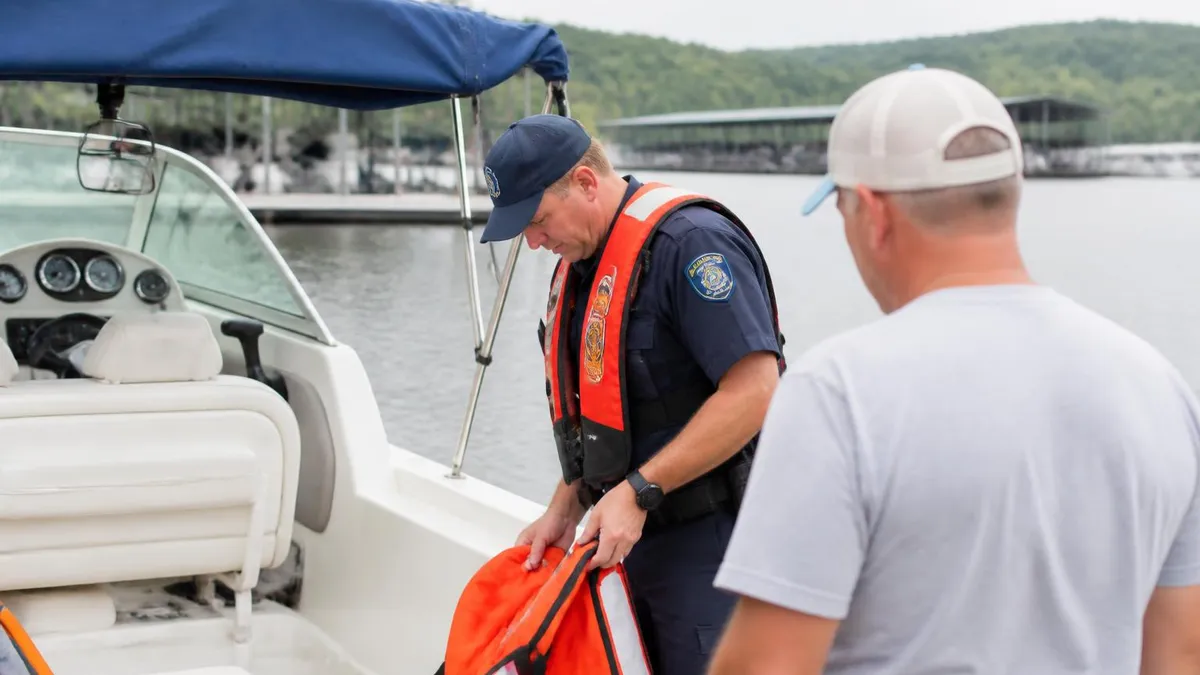
Online vs. Classroom Boating Course: Which Is Right for You?
- +Study at your own pace — log in and out anytime, no set schedule to keep
- +Immediate access from any device — laptop, tablet, or smartphone
- +Most online platforms include unlimited practice quizzes with instant feedback
- +Typically lower cost than in-person courses, often $30–$50 for the full program
- +Progress is automatically saved so you never lose completed modules
- +Available year-round with no waiting for the next scheduled class session
- −No live instructor to answer questions or clarify confusing material in real time
- −Requires self-discipline — it's easy to rush through modules without absorbing content
- −Proctored exam still requires traveling to an approved testing center in most cases
- −Screen-based learning may be less engaging for visual or hands-on learners
- −Technical issues like browser compatibility or slow internet can interrupt sessions
- −Less opportunity to network with local boaters who know Missouri's specific waterways
Missouri Boating Certification Exam Day Checklist
- ✓Bring a valid government-issued photo ID such as a driver's license or passport.
- ✓Carry your course completion certificate or confirmation number from your online provider.
- ✓Arrive at least 15 minutes early to complete any required paperwork before testing begins.
- ✓Leave your phone in your car or bag — electronic devices are prohibited during the proctored exam.
- ✓Bring a light jacket or layer, as testing rooms are often air-conditioned to a cooler temperature.
- ✓Review your most-missed practice test topics the morning of the exam, focusing on numbers and thresholds.
- ✓Eat a balanced meal before the exam — hunger and low blood sugar impair concentration significantly.
- ✓Bring a bottle of water to stay hydrated during the exam session.
- ✓Read each question on the exam fully before selecting an answer to avoid misreading tricky phrasing.
- ✓If you finish early, use remaining time to review flagged or uncertain answers before submitting.
Your Missouri Certificate Never Expires
Unlike a driver's license or many professional certifications, Missouri's Boating Safety Education Certificate is valid for your entire lifetime once issued. You never need to renew it, retest, or pay recurring fees — making the one-time investment of time and money especially valuable for anyone who plans to boat in Missouri for years to come.
Understanding the full cost of Missouri boating certification helps you budget appropriately and avoid surprise expenses. The course fee is typically the largest single cost. Online courses through approved providers like Boat Ed run approximately $34.95 for the full Missouri course, which includes all study materials and one attempt at the online portion of the exam. In-person courses offered by the U.S. Coast Guard Auxiliary are frequently free, though they require you to commit to a fixed class schedule, typically a weekend. Some community colleges and recreation departments also offer affordable in-person sessions during spring months when demand peaks.
The proctored exam fee is separate from the course fee at many providers and typically ranges from $10 to $25 depending on the testing location. Some providers bundle the course and proctored exam together into a single flat fee, which simplifies budgeting.
After passing, Missouri does not charge a separate state fee for issuing the Boating Safety Education Certificate — the certificate is provided at no additional cost through the MSHP. This stands in contrast to some states that charge a licensing fee on top of course and exam costs, making Missouri's total certification cost relatively affordable at $35 to $60 for most students using online courses.
If you fail the proctored exam on your first attempt, most testing centers charge a retake fee ranging from $5 to $15. Some providers allow one free retake within 24 hours, so it's worth asking about the retake policy before you sit for the exam. To minimize the risk of needing a retake — and the associated cost and inconvenience — invest your preparation time in full-length practice tests rather than skimming the course content. Students who average above 80 percent on at least three full practice tests before their proctored exam have a very high first-attempt pass rate.
Equipment costs are worth factoring in as well, though they apply to boating generally rather than the certification process specifically. Missouri law requires all vessels to carry a Coast Guard-approved life jacket for each person on board, plus a throwable Type IV device for boats over 16 feet. Vessels operating after dark must have proper navigation lights.
A fire extinguisher is required on motorized boats with enclosed compartments. An air horn or other sound-producing device is required for boats over 16 feet. These items are not part of the certification exam cost, but you'll need them before you can legally take your boat out after certification.
Many new boaters are also curious about insurance costs. While Missouri does not legally require boat insurance, nearly all marina operators require proof of liability coverage before renting a slip, and most lenders require it if you finance your boat. Typical liability-only boat insurance in Missouri runs $150 to $300 per year for an average recreational vessel, with full coverage (including hull damage) costing $400 to $800 annually depending on the boat's value. Completing your boating safety course can sometimes earn you a discount on boat insurance premiums — check with your insurer before purchasing a policy.
For young boaters aged 14 to 17, the certification process is largely the same as for adults, with one key difference: a parent or guardian must typically sign the enrollment form for minors taking online courses. Some in-person providers have additional parental consent paperwork. The course content and exam are identical regardless of age, which means 14-year-olds are held to the same knowledge standard as adults.
This is intentional — Missouri's boating safety data shows that young operators who are properly educated have significantly lower accident rates than their uncertified peers, and the rigorous standard reflects the seriousness of operating a motorized vessel on public waterways.
Missouri also offers a Junior Boater Safety Certificate for children aged 10 to 13 who want to begin learning boating safety concepts before they are old enough to operate independently. This certificate is not required by law and does not confer operating privileges, but it provides an excellent educational foundation and can be completed through several approved youth programs.
The Missouri Department of Conservation and the Missouri State Highway Patrol both sponsor youth boating safety events throughout the state each spring, often offering free Junior Boater certification to participants. These programs are a great way to get the whole family engaged with boating safety at an early age.
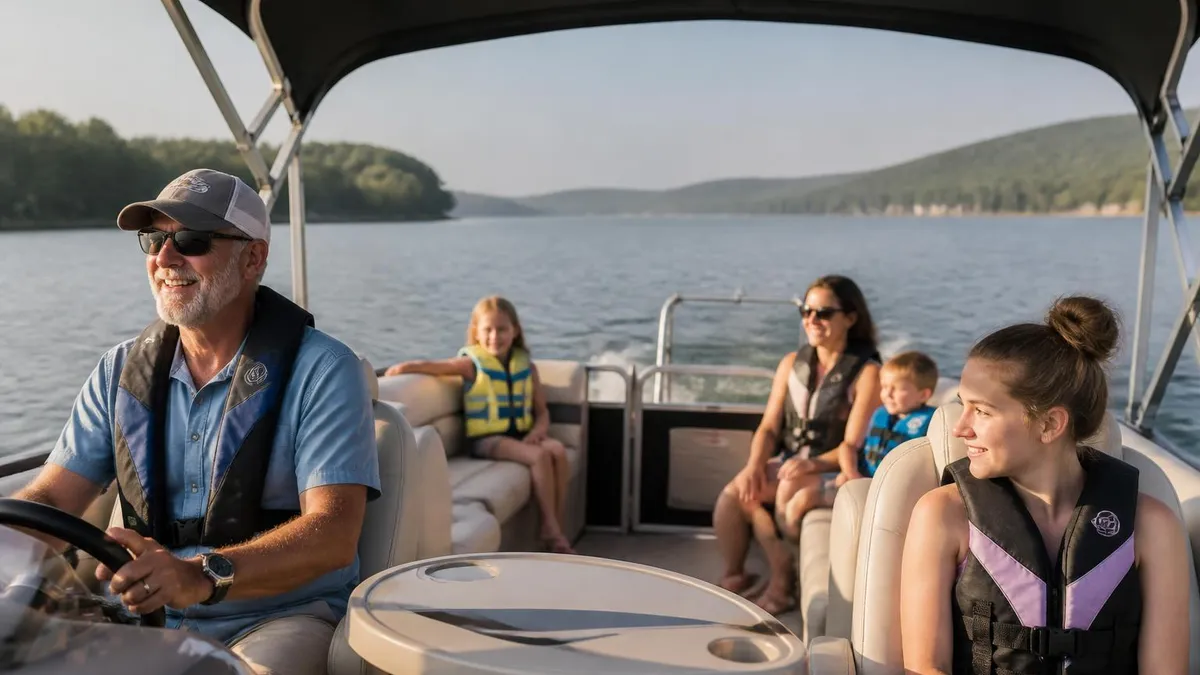
Missouri law makes it a Class B misdemeanor to operate a motorized vessel without the required Boating Safety Education Certificate if you were born on or after January 1, 1984. Fines can reach $1,000, and repeat violations may result in suspension of boating privileges. Water patrol officers routinely conduct certification checks on Missouri's busy lakes, especially on holiday weekends. Always carry your physical certificate on board — a phone photo is not legally sufficient.
Once you have your Missouri Boating Safety Education Certificate in hand, understanding your ongoing legal obligations is essential for staying compliant every time you head out on the water. Missouri law requires you to have the physical certificate on board whenever you operate a motorized vessel — not just in your wallet at home.
The certificate must be available for inspection by Missouri Water Patrol officers on demand. If you lose your certificate, contact the MSHP to request a replacement. Replacements are typically issued at no cost or for a small administrative fee and can take two to three weeks to arrive by mail, so request one well before your next boating season.
Registration and titling are separate from certification and are also required in Missouri. Every motorized vessel and any sailboat over 12 feet in length must be registered with the Missouri Department of Revenue. Registration fees vary by vessel length and type, starting at roughly $14 for boats under 16 feet and increasing with vessel size.
Registration must be renewed annually, unlike the lifetime certification certificate. You are required to display your registration numbers on the bow of the vessel in a specific format: block letters at least three inches high, in a color that contrasts with the hull, separated from any other numbers or letters by a hyphen or space.
Missouri's boating laws also impose several operational rules that many new boaters are unaware of. The no-wake speed limit within 150 feet of shore, docks, swimming areas, or moored vessels is strictly enforced on most Missouri lakes. Personal watercraft (Jet Skis, WaveRunners) are additionally prohibited from operating within 100 feet of a stationary vessel or person in the water.
The legal blood-alcohol limit for boating in Missouri is 0.08 percent, identical to the driving limit, and Missouri Water Patrol officers can and do conduct sobriety checks on the water. A Boating While Intoxicated (BWI) conviction carries penalties similar to a DWI, including fines, possible jail time, and revocation of boating privileges.
If you're wondering whether your Missouri certificate is valid when you do you have to have license to drive a boat in another state, the answer depends on that state's reciprocity policy. Most states that are members of NASBLA recognize certificates from other member states, which includes Missouri.
However, a few states — most notably California, which has its own mandatory Boater Card program — may require you to obtain their state-specific certificate even if you already hold a valid Missouri certificate. Before boating in a new state, always verify that state's current reciprocity policy with its boating law administrator, as policies can change year to year.
Missouri also has specific rules about required safety equipment that go beyond what the certification course covers at a summary level. All Missouri boats must carry a whistle or horn audible for at least half a mile, a visual distress signal (flares for nighttime operation), and a fire extinguisher if the boat has an enclosed engine compartment or sleeping area.
Boats with installed fuel tanks must have a ventilation system meeting Coast Guard specifications. Houseboats and vessels with heads (marine toilets) must have a Coast Guard-approved Type I, II, or III marine sanitation device. Violating equipment requirements can result in fines separate from any certification-related penalties.
Anchoring etiquette and overnight mooring rules are another area where new boaters sometimes run into trouble. In Missouri, you cannot anchor a vessel in a navigable channel or in a way that obstructs other traffic. On Table Rock Lake and some other Corps of Engineers impoundments, there are designated no-anchoring zones and specific rules about how far from shore you must anchor in certain coves.
Mooring overnight at a Corps of Engineers recreation area typically requires a fee and may have a maximum consecutive-night limit. Reading the specific rules for each body of water you plan to visit — rather than assuming all Missouri lakes have the same rules — is a hallmark of a responsible, well-prepared boater.
The Missouri State Highway Patrol Water Patrol Division patrols all of Missouri's major waterways throughout the boating season, which runs roughly from Memorial Day through Labor Day at peak intensity, though year-round patrols occur on larger lakes. Officers check for certification, registration, equipment, and sobriety. They also respond to accidents, assist stranded boaters, and conduct search-and-rescue operations. Building a respectful, collaborative relationship with water patrol starts with being fully certified, properly equipped, and operating your vessel responsibly — exactly the outcome that Missouri's boating safety education program is designed to produce.
Preparing effectively for the Missouri boating exam requires more than just reading through course materials once. The most successful test-takers treat the proctored exam like a genuine high-stakes test and prepare accordingly, even though the material is not overly complex. One of the most effective strategies is to immediately take a baseline practice test before you start any formal studying.
This diagnostic pass reveals which topic areas you already understand from general knowledge and which ones require concentrated attention. Spending equal time on every chapter when you're already strong in some areas is an inefficient use of your limited study time.
Navigation buoy systems — the red and green markers, lateral buoys, non-lateral markers, and regulatory buoys — are a topic where many test-takers lose unnecessary points. The red-right-returning rule (keep red markers on your right when returning from open water) is intuitive for coastal boaters but can be confusing for inland lake boaters who don't have a clear concept of what 'returning' means on a landlocked reservoir.
Missouri's course explains this concept in context of inland waterways, but reviewing additional visual aids — pictures of actual buoy configurations — helps cement the concept far better than text descriptions alone. Most course providers include these visual aids in their modules, so make sure you engage with them rather than clicking past.
The section on personal flotation devices (PFDs) deserves particular study attention because Missouri's exam asks several questions about PFD types, carriage requirements, and proper fit. Missouri law requires a Coast Guard-approved Type I, II, III, or V PFD for every person on board, with Type I preferred for offshore use and Type III most common for recreational boating.
Children under 7 must wear an approved PFD at all times when on an open deck or cockpit. All throwable Type IV PFDs must be immediately accessible and cannot be stored under a seat cushion or behind a closed hatch — a common mistake that exam questions specifically test.
Time management during the proctored exam is rarely a problem because most test-takers finish well within the allotted time, but pacing yourself is still worth thinking about. Read every question fully and carefully before reading the answer choices — the question stem often contains clues that rule out two or three of the four options before you even consider the answers.
Be especially careful with negatively worded questions like 'Which of the following is NOT required?' — these are easy to misread when you're moving quickly. When you're unsure of an answer, use process of elimination to narrow the field to two options, then make your best informed choice rather than skipping and coming back, which can create anxiety and rush you at the end.
If you have the opportunity to visit a Missouri lake or river before your exam, do it — even as a passenger. Seeing real navigation markers, observing how boat operators interact in congested areas, watching how water conditions change with wind, and noticing the equipment different vessels carry turns abstract course content into concrete, memorable experience.
Many students report that one afternoon on the water as a passenger made the navigation and safety equipment chapters click in a way that hours of online reading had not. Real-world context is a powerful memory anchor that serves you well both on the exam and in actual boating situations.
After passing your exam, consider joining a local boating club or the U.S. Power Squadrons chapter nearest to you. These organizations offer advanced seamanship courses — covering topics like weather routing, GPS navigation, and offshore safety — that go well beyond what the mandatory certification course covers. The Power Squadrons' America's Boating Course and follow-on courses are widely respected and taught by experienced volunteer instructors who know Missouri's specific waterways. Many experienced Missouri boaters take an advanced course every few years simply to stay sharp and learn about new regulations or equipment technologies that have emerged since their original certification.
Finally, take the time to do a thorough pre-departure safety check every single time you take your boat out — not just when you feel like it or when someone new is aboard. Check that all life jackets are accessible and in good condition, verify that fire extinguishers are charged, test navigation lights before any evening trip, and check the weather forecast from a reliable marine source rather than a generic weather app.
The few minutes this takes can make the difference between a great day on the water and a preventable emergency. Missouri's boating safety education program gives you the knowledge — consistent pre-departure habits put that knowledge to work every time you cast off the dock lines.
Sample Boating License Test Practice Questions
Try these questions from our free Boating License Test practice tests. The correct answer and an explanation follow each question.
What is the safest action if you see towering, dark cumulonimbus clouds building in the distance while boating?
- A. Continue on your planned course
- B. Head to the nearest safe harbor immediately
- C. Anchor in open water and wait
- D. Increase speed to outrun the clouds
Answer: B. Head to the nearest safe harbor immediately
Cumulonimbus clouds signal thunderstorms, so returning to shore or shelter promptly is the safest choice.
What is the primary danger of lightning while you are boating on open water?
- A. It attracts fish to the surface
- B. Your boat may be the tallest object and attract a strike
- C. It cools the water dangerously
- D. It improves radio reception
Answer: B. Your boat may be the tallest object and attract a strike
On open water a boat is often the highest point, making it more likely to be struck by lightning.
What must you do if you are involved in a boating accident that results in injury or significant property damage?
- A. Only report to local police
- B. File an accident report with the state boating authority within the required time frame
- C. Call your insurance company only
- D. No reporting is required for recreational boating accidents
Answer: B. File an accident report with the state boating authority within the required time frame
State law requires filing an accident report with the state boating authority when accidents involve death, injury, or property damage exceeding a threshold (typically $2,000).
What is the most common cause of boating fatalities?
- A. Fire
- B. Drowning from not wearing a life jacket
- C. Carbon monoxide
- D. Propeller strikes
Answer: B. Drowning from not wearing a life jacket
Most boating deaths are drownings, and the majority of victims were not wearing a life jacket.
Boating License Questions and Answers
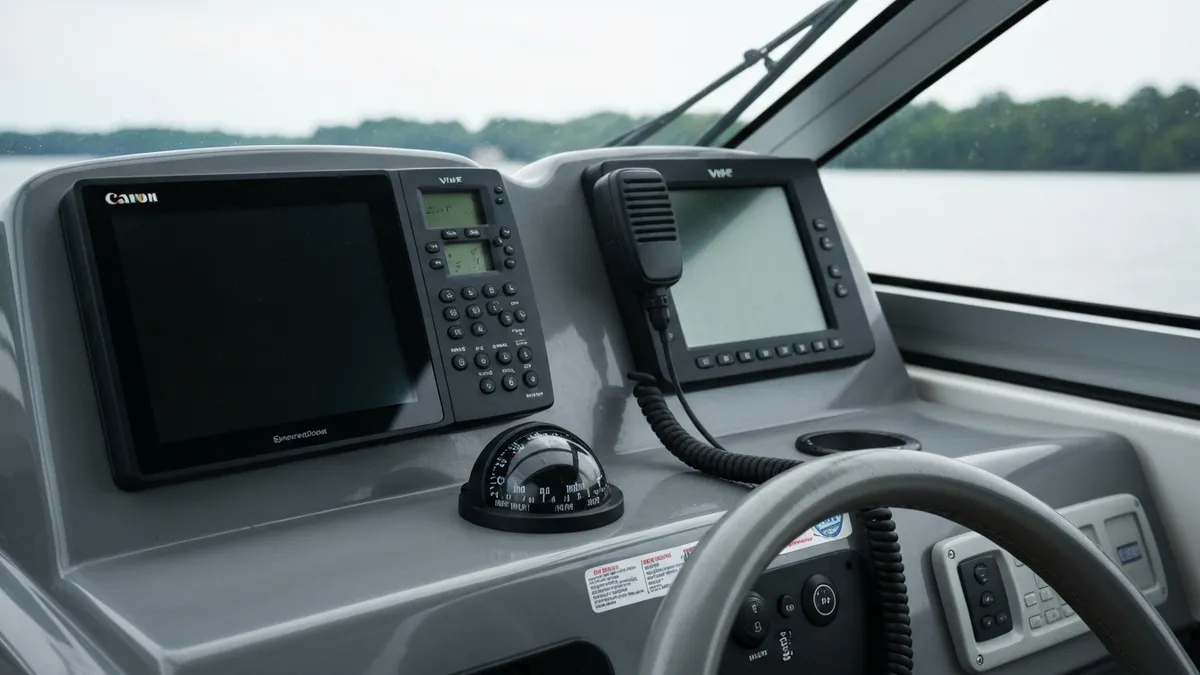
Tennessee Boating License 2026 — Requirements, Age & How to Get One
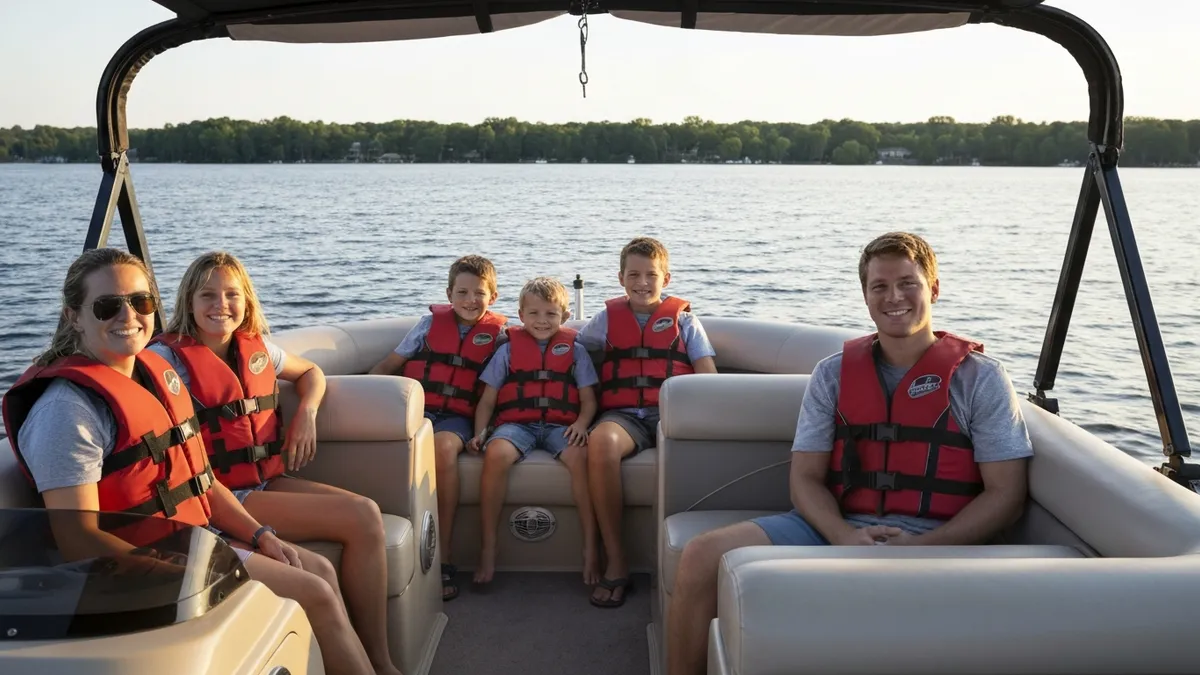
MN Boat License: Who Needs One & How to Get Certified
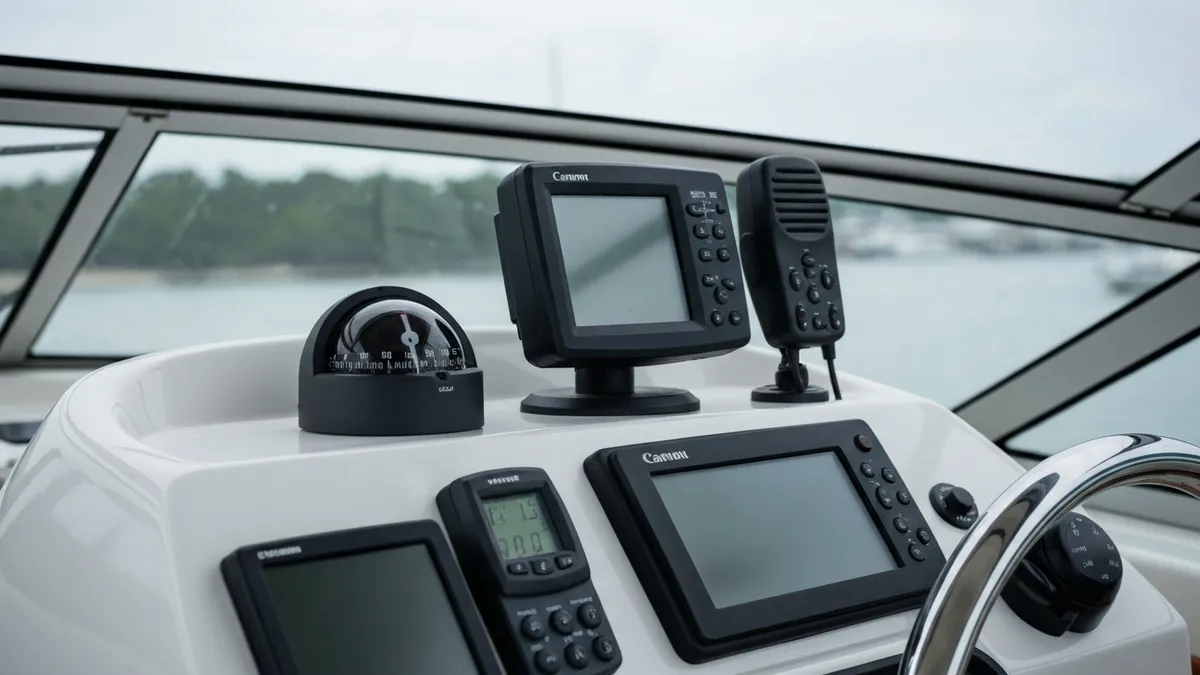
Do You Need a License to Drive a Boat? State-by-State Guide 2026

Wisconsin Boating License Requirements 2026 — Age, Safety Course & How to Get Certified

How to Get a Boating License in Alabama: Complete 2026 Guide
About the Author
Master Mariner & Maritime Certification Specialist
Massachusetts Maritime AcademyCaptain David Harrington is a US Coast Guard licensed Master Mariner with a Bachelor of Science in Marine Transportation from Massachusetts Maritime Academy. He has 22 years of deep-sea and coastal navigation experience aboard commercial vessels and specializes in preparing maritime candidates for USCG licensing exams, STCW certification, dynamic positioning (DPO), and officer-of-the-watch qualifications.
Join the Discussion
Connect with other students preparing for this exam. Share tips, ask questions, and get advice from people who have been there.
View discussion (6 replies)