
BMV Appointment Ohio: Complete Guide to Scheduling, Locations, and What to Bring in 2026 October
BMV appointment Ohio guide: 💡 schedule online, find deputy registrars, required documents, fees, wait times, and same-day walk-in tips for 2026 October.

Booking a BMV appointment Ohio residents can actually use has become a smart move in 2026, especially with deputy registrar offices serving millions of customers each year across the state. Whether you need to renew a driver license, transfer a title, get a Real ID, or take the knowledge exam, scheduling ahead can cut your wait time from over an hour down to under fifteen minutes. The Ohio Bureau of Motor Vehicles overhauled its online scheduling portal in 2023, and the system now supports nearly every transaction type you might need at a local office.
Ohio operates a unique two-tier BMV system that confuses many residents. Deputy registrar agencies handle registrations, titles, and license renewals, while driver license examination stations administer knowledge tests, road tests, and CDL exams. Knowing which office to book at saves a wasted trip, and the online appointment tool at bmv.ohio.gov filters locations by transaction type automatically. Most residents need a deputy registrar for routine business and a separate examination station only for testing.
The appointment system works best when you understand what documents the BMV requires before you arrive. Ohio is a Real ID state, and federal enforcement at airports tightened on May 7, 2025, which means most drivers renewing in 2026 will want a Real ID-compliant card. That requires bringing original documents proving identity, Social Security number, Ohio residency, and any name changes. Showing up without the right paperwork is the single biggest reason appointments fail.
Wait times vary dramatically by location and time of day. Urban offices in Columbus, Cleveland, Cincinnati, and Toledo see the heaviest traffic between 11 a.m. and 2 p.m., while suburban and rural deputy registrars often have walk-in slots open before 10 a.m. on Tuesday through Thursday. The state publishes real-time wait estimates on its website, and many deputy registrars now display live queue counts on Google Maps location pages. Smart scheduling means picking the right office, not just the closest one.
Costs for a BMV appointment Ohio drivers face depend entirely on the transaction. A standard four-year license renewal runs $26.50, a Real ID upgrade is the same price as a standard card, and a duplicate license replacement costs around $25.75. Vehicle registration renewals start at $34.50 for passenger cars but climb higher for hybrids, electric vehicles, and commercial plates. Knowing the fee schedule before you arrive prevents surprises at the counter, and most offices accept cash, check, debit, and credit cards with a small convenience fee on credit.
This guide walks you through every step of the BMV appointment process in Ohio, from picking the right office and gathering documents to understanding fee schedules, knowledge test requirements, and same-day walk-in options. We also cover what to do if you miss your appointment, how to reschedule, and which transactions you can complete online without visiting an office at all. By the end, you will know exactly how to handle any BMV task with minimal time at a counter.
If you are renewing a license or going for a first-time permit, practicing for the knowledge test ahead of your visit can save a second trip. The Ohio knowledge exam covers 40 questions on road rules, signs, and safe driving practices, and you need 30 correct to pass. A solid practice routine in the week before your appointment turns a stressful test into a routine stop, and free practice questions are available below to help you prepare efficiently.
Ohio BMV by the Numbers
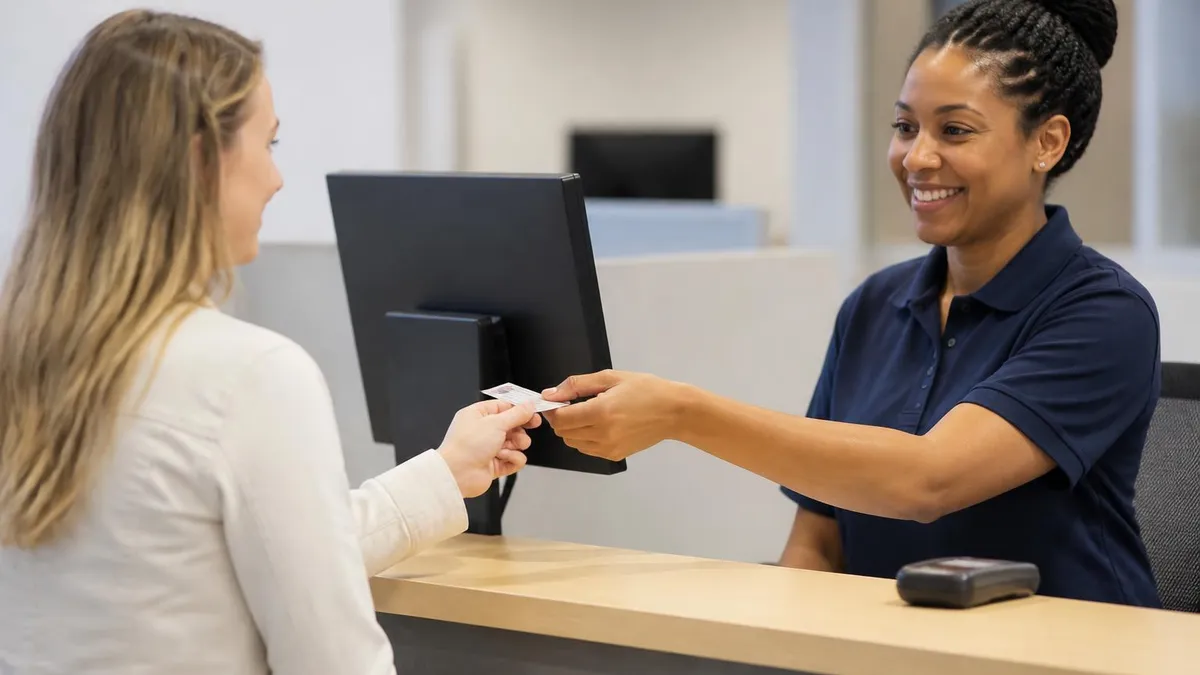
How to Schedule Your BMV Appointment in Ohio
Visit the Official BMV Portal
Choose Transaction Type
Pick Office and Time Slot
Gather Required Documents
Arrive 10 Minutes Early
Document preparation is the single most important step for any BMV appointment Ohio residents schedule, and getting it right the first time matters more than the appointment slot itself. The state follows federal Real ID Act guidelines, which means you need original or certified documents in four categories: proof of identity, proof of Social Security number, two proofs of Ohio residency, and proof of any legal name change. Bringing the wrong documents or photocopies instead of originals results in a wasted trip every single time.
For proof of identity, the BMV accepts a valid U.S. passport, certified birth certificate with raised seal, certificate of citizenship, or permanent resident card. Hospital birth certificates and souvenir copies are not accepted. If you were born outside Ohio, you can request a certified copy from your birth state vital records office, which typically takes one to two weeks. Plan ahead, since rush shipping cannot fix a missed appointment.
Social Security number proof requires a Social Security card, a W-2 form, a 1099 form, or a paystub showing your full SSN. The card itself does not need to be original, but the document must show your full nine-digit number along with your name as it appears on other identity documents. Many applicants forget this category because it feels redundant, but the BMV verifies it electronically against federal databases during your visit.
Proof of Ohio residency requires two separate documents from approved categories: utility bills, bank statements, mortgage documents, lease agreements, voter registration cards, or recent payroll stubs showing your home address. Both documents must be dated within the last 60 days for most categories, and both must show the same Ohio street address that will appear on your license. P.O. boxes are not acceptable as your primary address, though you can list one as a mailing address.
If your name has changed through marriage, divorce, or court order, you also need certified copies of every name-change document linking your birth name to your current legal name. A bride who married, divorced, and remarried needs three documents: original marriage certificate, divorce decree, and second marriage certificate. Missing even one link in the chain results in denial. The same rule applies if you legally changed your name through court petition.
For vehicle-related transactions, document requirements differ entirely. Title transfers require the original title signed by the seller, a notarized bill of sale if the purchase price is not on the title, and proof of insurance. Vehicle registrations need the title or memorandum certificate, current odometer reading, and proof of Ohio insurance. Out-of-state title transfers also require an inspection from a deputy registrar or law enforcement agency before you visit. For driving rule preparation before any test, the DMV Sign Test resource covers the regulatory and warning signs that appear most often on Ohio knowledge exams.
One often-overlooked requirement applies to anyone under 18: parental consent and proof of school enrollment. Ohio law requires teen applicants to bring a signed consent form from a parent or guardian, plus a school attendance form showing they are enrolled and not chronically absent. Homeschool students need a certified attendance affidavit from their educational program. Without these documents, the BMV will not issue a temporary instruction permit or probationary license regardless of test scores.
BMV Practice Test Questions
Prepare for the BMV - Test exam with our free practice test modules. Each quiz covers key topics to help you pass on your first try.
BMV Basic BMV Practice
BMV Exam Questions covering Basic BMV Practice. Master BMV Test concepts for certification prep.
BMV Alcohol, Drugs, and Impaired Driving Laws
Free BMV Practice Test featuring Alcohol, Drugs, and Impaired Driving Laws. Improve your BMV Exam score with mock test prep.
BMV Licensing Requirements
BMV Mock Exam on BMV Licensing Requirements. BMV Study Guide questions to pass on your first try.
BMV Traffic Laws
BMV Test Prep for BMV Traffic Laws. Practice BMV Quiz questions and boost your score.
BMV Vehicle Operations
BMV Questions and Answers on BMV Vehicle Operations. Free BMV practice for exam readiness.
BMV Parking, Right-of-Way, and Intersections
BMV Mock Test covering Parking, Right-of-Way, and Intersections. Online BMV Test practice with instant feedback.
BMV Road Signs and Markings
Free BMV Quiz on Road Signs and Markings. BMV Exam prep questions with detailed explanations.
BMV Safe Driving and Hazard Awareness
BMV Practice Questions for Safe Driving and Hazard Awareness. Build confidence for your BMV certification exam.
BMV Office Types and Locations Across Ohio
Deputy registrar agencies are the workhorses of the Ohio BMV system, handling vehicle registrations, title transfers, license renewals, address changes, and Real ID applications. There are roughly 187 of these offices across all 88 counties, operated by private contractors under state oversight. They cannot administer driving tests but can issue duplicate licenses, process organ donor registrations, and accept payment for reinstatement fees on suspended licenses.
Hours vary by location, but most deputy registrars open Monday through Friday from 8 a.m. to 5 p.m., with select offices offering Saturday morning hours until noon. Larger urban deputy registrars in Columbus, Cleveland, and Cincinnati often have extended weeknight hours one or two days per week. Always confirm hours on the official BMV locator before your visit, since holidays and weather closures are common in winter months.

Scheduled Appointment vs Walk-In: Which Is Better?
- +Guaranteed time slot with minimal waiting at the counter
- +Real-time confirmation email with reminder notifications
- +Filter offices by transaction type so you avoid wrong-location trips
- +Easy rescheduling through the same portal if conflicts arise
- +Document checklist appears during booking so you arrive prepared
- +Some offices reserve specific counters for appointment customers
- −Limited slots in popular urban offices during peak weeks
- −Cannot book within 24 hours at most locations
- −Missing the appointment by 15 minutes usually requires rebooking
- −Some transactions like vehicle inspections cannot be scheduled
- −Out-of-state title transfers may need pre-visit inspection first
- −Saturday slots fill up two to three weeks in advance
Pros and Cons at a Glance
| Pros | Cons |
|---|---|
| Guaranteed time slot with minimal waiting at the counter | Limited slots in popular urban offices during peak weeks |
| Real-time confirmation email with reminder notifications | Some transactions like vehicle inspections cannot be scheduled |
| Filter offices by transaction type so you avoid wrong-location trips | Out-of-state title transfers may need pre-visit inspection first |
| Easy rescheduling through the same portal if conflicts arise | Saturday slots fill up two to three weeks in advance |
Pre-Appointment Checklist for Your Ohio BMV Visit
- ✓Confirm your appointment time and confirmation number 24 hours before
- ✓Gather original documents for identity, SSN, and two residency proofs
- ✓Bring certified name-change documents if applicable, no photocopies
- ✓Have your current driver license or state ID ready at the counter
- ✓Prepare payment by cash, check, debit card, or credit card
- ✓Print or save the BMV document checklist for your specific transaction
- ✓Verify your vehicle insurance card is current and shows Ohio coverage
- ✓Practice the knowledge test if your appointment includes an exam
- ✓Plan to arrive at least ten minutes before your scheduled slot
- ✓Check weather and traffic conditions, especially during winter months
- ✓Review the office address since some deputy registrars share buildings
- ✓Have a backup payment method in case primary card fails verification
Federal Enforcement Is Already Active
Since May 7, 2025, TSA agents at every U.S. airport require a Real ID-compliant license, passport, or other federally accepted ID to board domestic flights. Ohio licenses with the gold star in the upper-right corner are Real ID compliant. If your current license does not have the star and you fly within the United States, schedule your BMV appointment now rather than waiting until renewal time. Standard licenses still work for driving but not for flying.
Understanding fees ahead of your BMV appointment Ohio visit helps you arrive with the right payment method and prevents the awkward moment of being short at the counter. The state publishes a complete fee schedule on its website, but the totals can change based on your county, vehicle type, and any special endorsements you need. Always budget five to ten dollars above the listed fee to account for credit card convenience charges, late penalty additions, and optional services like premium plates or expedited mailing.
For driver license transactions, a standard four-year license renewal costs $26.50 for drivers ages 21 to 64. Seniors 65 and older pay a reduced rate of $20.50 for a two-year license. Real ID upgrades cost the same as standard licenses, so there is no penalty for federal compliance. Duplicate licenses for lost or stolen cards cost $25.75, and name or address changes printed on a new card also cost $25.75. Knowledge test fees are $24.00 and include up to two retests within thirty days.
Road test fees vary by license class. The standard Class D road test is $24.50, motorcycle endorsement tests are $30.00, and CDL skills tests range from $35.00 to $50.00 depending on commercial class. If you fail and need to retake, each subsequent attempt requires a new appointment and a new fee. Most applicants budget $75 to $100 total for license issuance, expecting one knowledge test, one road test, and the license itself, even though most pass on the first attempt and pay less.
Vehicle registration fees start at $34.50 for passenger cars in counties without permissive taxes, but most counties add $5 to $30 in local permissive fees. Trucks, vans, and SUVs over 4,000 pounds pay tiered weight-based fees. Hybrid vehicles add a $100 annual surcharge, and fully electric vehicles add $200. Specialty plates like military, collegiate, or organizational plates add $25 to $50 above standard registration. Late renewal penalties start at $20 and grow if you drive on an expired registration.
Title transfers cost $15.00 for the title certificate itself, plus a $5 fee for the application processing. If sales tax applies because you purchased a vehicle, you pay 5.75% to 8.0% depending on your county. Tax is calculated on the purchase price unless the BMV believes the listed price is below market value, in which case they use NADA fair market value. Gift transfers between immediate family members avoid sales tax but still require the same title and processing fees plus a notarized gift affidavit.
Reinstatement fees for suspended licenses depend entirely on the violation. A standard non-payment suspension is $40 to reinstate, while an OVI reinstatement runs $475 plus required SR-22 insurance for three to five years. Multiple suspensions stack, meaning a driver with three separate suspensions pays all three reinstatement fees plus any underlying court costs. The BMV cannot waive these fees, but the Reinstatement Fee Amnesty Program occasionally offers payment plans for eligible drivers with hardship circumstances.
Payment methods at deputy registrar offices include cash, personal check with valid Ohio ID, debit cards from any U.S. bank, and major credit cards including Visa, Mastercard, Discover, and American Express. Credit cards typically incur a 2.25% convenience fee, so for large transactions like title transfers with sales tax, paying by debit or check saves real money. Some smaller deputy registrars in rural counties still operate cash-preferred and may add a higher convenience fee for cards.
If you arrive more than 15 minutes late to your scheduled BMV appointment, most offices will mark you as a no-show and require you to either wait as a walk-in or reschedule entirely. Repeated no-shows from the same email or phone number can temporarily block your ability to book future appointments online. Always call the office directly if you anticipate being late, since some locations grant grace periods on a case-by-case basis.
Wait times at Ohio BMV offices follow predictable patterns that smart customers can exploit to minimize their time at the counter. Mondays are the worst day statewide because Friday closures push business into the start of the week, and the day after any federal holiday sees similar surges. Tuesday through Thursday mornings between 8 a.m. and 10 a.m. consistently show the shortest wait times at deputy registrar offices, often under ten minutes for walk-ins and nearly instant for appointment holders.
Lunch hour from 11:30 a.m. to 1:30 p.m. is universally crowded as office workers try to squeeze in BMV business during their break. Afternoon waits typically grow throughout the day until closing, with the last hour before close being surprisingly busy as people race to finish errands. If your schedule allows it, the sweet spot is Wednesday at 8:30 a.m., when staff is fresh, systems are reset, and most procrastinators have not yet arrived. This time slot regularly sees under-five-minute waits even at busy urban offices.
Same-day walk-ins remain possible at every Ohio deputy registrar, though some offices stop accepting new walk-ins thirty minutes before close to ensure they finish on time. If you absolutely cannot book ahead, calling the office before driving over saves time, since most locations can tell you the current wait length and whether they are accepting new customers. The state also operates a wait-time estimator on bmv.ohio.gov that updates every fifteen minutes based on real-time data from each office.
For knowledge tests and road tests at examination stations, scheduling matters far more than at deputy registrars. Knowledge tests accept walk-ins but require an open testing terminal, which means urban stations frequently turn walk-ins away during peak hours. Road tests are appointment-only at every station, and slots in spring and summer fill three to four weeks in advance because of teen driver volume. If you fail a road test, you can immediately rebook online but the soonest available slot may be a week or more out.
Multiple-transaction visits work well at deputy registrars because most offices can handle several services in one queue position. You can renew your license, transfer a title, and update an address in a single visit without separate appointments, as long as you have documents and payment for all three. This consolidation strategy saves driving time and reduces overall counter exposure, especially helpful if you live far from the nearest office. Mention all transactions when you check in so staff can prepare paperwork in advance.
Some less obvious time-saving tricks include using mobile check-in features at select offices, signing up for SMS queue notifications so you can wait in your car, and downloading and pre-filling forms from the BMV website before arrival. Filled forms speed up the counter interaction by minutes, especially for complex transactions like title transfers or commercial registrations. The Hours of Ohio BMV resource provides current operating hours and helps you choose the best time window for your visit.
Special situations like military overseas renewals, out-of-country returns, and medical hardship cases sometimes qualify for priority handling. Active-duty military members can renew by mail or online from any location worldwide, and family members can sometimes complete transactions on their behalf with a notarized power of attorney. Ohio also operates a homebound services program for residents physically unable to visit an office, though this requires medical documentation and weeks of advance notice to schedule a mobile visit.
Practical preparation in the days before your Ohio BMV appointment makes the difference between a smooth fifteen-minute visit and a frustrating multi-hour ordeal. Start by re-reading your confirmation email the night before to confirm the office address, slot time, and required documents. Many appointments fail simply because customers drove to the wrong of several offices in the same city, or arrived at a deputy registrar when their transaction actually required an examination station. Five minutes of verification saves hours of rebooking.
Organize your documents in a folder or large envelope rather than scattered in a bag or wallet. Place identity documents on top, residency proofs in the middle, and any supporting items like name-change certificates at the bottom. This order matches how counter staff verify documents and shaves real time off your visit. If any document is damaged, water-stained, or has a torn corner, request a fresh certified copy in advance because the BMV can refuse documents they cannot clearly authenticate.
If your appointment includes a knowledge test, prepare strategically rather than cramming the night before. Ohio's 40-question test draws from the Digest of Ohio Motor Vehicle Laws, and four to six hours of focused practice across one or two weeks produces better results than ten hours the day before. Free online practice tests mirror the actual question format, and many include explanations for wrong answers so you learn the underlying rule rather than memorizing answers that may not appear on your specific test.
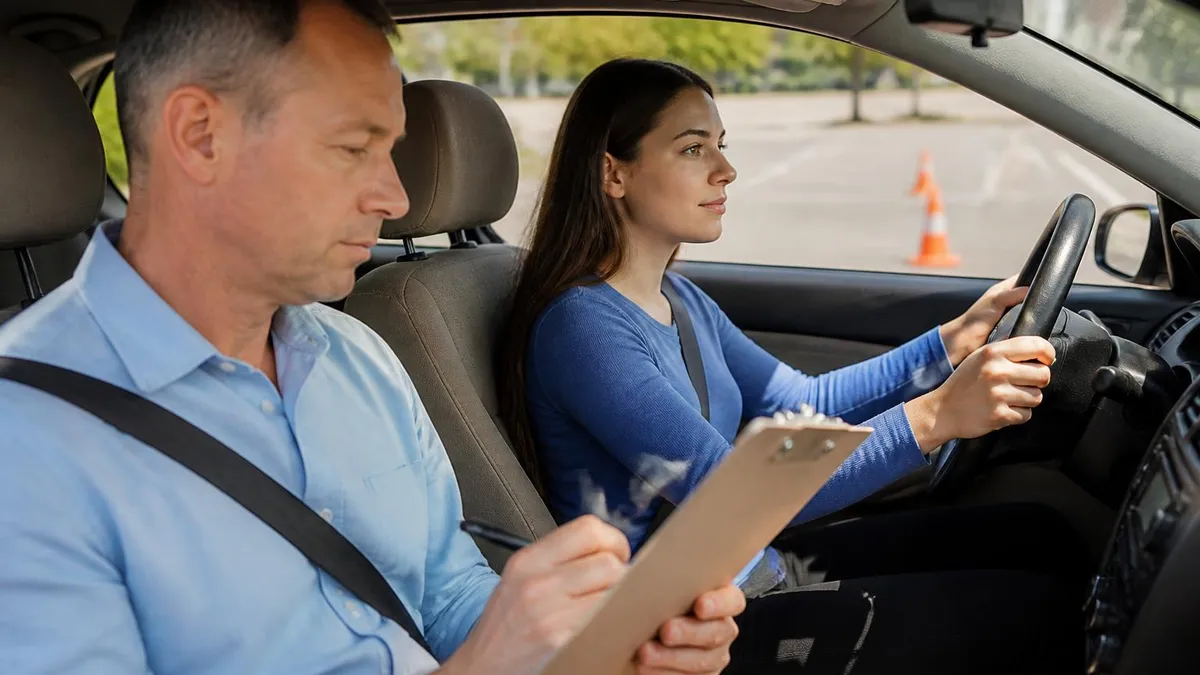
For road test appointments, the vehicle you bring matters as much as your driving skill. Ohio requires the test vehicle to have current registration, valid insurance, working seat belts for both occupants, functional brake and turn signal lights, and no warning indicators illuminated on the dashboard. A check-engine light alone can disqualify your car before you even pull out of the parking lot. Some applicants rent test-ready vehicles from local driving schools when their personal car would fail inspection.
Dress and behavior at the office matter more than people realize. Examiners and counter staff are professionals, but they appreciate basic courtesy, eye contact, and patience. Phones should be silenced during identity verification, since calls and texts mid-transaction slow the counter. If you are bringing children, plan for them to wait quietly, since most BMV offices have limited seating and no entertainment. Some appointments take longer than the slot estimates, especially for first-time Real ID conversions, so plan your day accordingly.
If you have any concerns about an upcoming test or transaction, the BMV customer service line at 844-644-6268 can answer questions before your visit. They cannot reschedule appointments by phone for online-booked slots, but they can confirm document requirements, explain unusual situations like out-of-state transfers, and direct you to the right office type. Foreign-language speakers should ask about translator availability since not every office has bilingual staff on every shift.
Finally, treat your BMV visit as an opportunity to update everything at once rather than splitting transactions across multiple trips. If you are there for license renewal, also update your address if it changed, add an organ donor designation if you want one, and pay any outstanding registration renewals. This consolidation approach turns one appointment into a year's worth of administrative work completed in fifteen minutes, freeing your future weekends from BMV errands. With the right preparation and timing, the Ohio BMV is one of the most efficient state agencies you will deal with all year.
Sample BMV Practice Questions
Try these questions from our free BMV practice tests. The correct answer and an explanation follow each question.
What is required to prove Ohio residency at the BMV?
- A. Two documents showing your name and address
- B. A passport only
- C. A birth certificate
- D. A single utility bill from any state
Answer: A. Two documents showing your name and address
The BMV requires two proofs of Ohio residency showing name and current address.
What is the proper hand signal for a left turn?
- A. Arm extended straight out
- B. Arm bent upward at the elbow
- C. Arm bent downward at the elbow
- D. Arm waving up and down
Answer: A. Arm extended straight out
A left turn is signaled with the arm extended straight out horizontally.
What does a solid yellow line next to a broken yellow line mean for the driver on the broken-line side?
- A. Passing is allowed when safe
- B. Passing is never allowed
- C. The road is closed ahead
- D. You must reduce speed by half
Answer: A. Passing is allowed when safe
A driver on the broken-line side may pass when it is safe to do so.
What is the recommended following distance under good conditions?
- A. At least a 3-second gap
- B. One car length
- C. Half a second
- D. Ten car lengths always
Answer: A. At least a 3-second gap
The 3-second rule gives enough time to react and stop safely under normal conditions.
BMV Questions and Answers
Driver Test Car Rental in Gastonia, NC: Complete BMV Road Test Vehicle Guide
Hours of Ohio BMV: Complete Guide to Office Hours, Locations, and Visit Planning
DMV Sign Test
Will You Be Disqualified From DMV Testing Area for Cheating? Complete Guide to BMV Test Integrity Rules

Nebraska DMV Practice Test: Pass Your NE Driver License Exam
About the Author
Licensed Driving Instructor & DMV Test Specialist
Penn State UniversityRobert J. Williams graduated from Penn State University with a degree in Transportation Management and has spent 20 years as a certified driving instructor and DMV examiner consultant. He has personally coached thousands of applicants through written knowledge tests, skills assessments, and commercial driver licensing programs across more than 30 states.
Join the Discussion
Connect with other students preparing for this exam. Share tips, ask questions, and get advice from people who have been there.
View discussion (9 replies)