
Driving Test Appointments: Complete Guide to Scheduling, Preparing, and Passing Your BMV Road Exam
Driving test appointments made simple. Learn how to schedule, 🎯 prepare, and pass your BMV road exam with proven tips, checklists, and practice questions.

Booking driving test appointments is one of the most stressful steps on the road to becoming a licensed driver, and it does not have to be. Whether you are a teen working toward your first license, a new resident transferring an out-of-state credential, or an adult retaking the exam after a lapse, the appointment system at your local BMV office determines when you can finally show what you have learned behind the wheel. Understanding how the scheduling system works gives you a major advantage before you even start the engine.
Across the United States, demand for road tests has grown sharply since 2021, when pandemic backlogs collided with a surge of new drivers entering the system. In many states, the wait time between booking and your actual road test now ranges from two weeks in rural counties to more than ten weeks in busy metro areas. That gap matters because the date you secure will directly influence how much practice time you have, when your permit expires, and how quickly you can begin driving solo or commuting to work.
The good news is that the BMV appointment process follows a predictable pattern in nearly every state. You log into an online portal, choose a testing location, pick a date and time window, pay any associated fees, and receive a confirmation email or text. The harder part is knowing which locations have the shortest waits, which time slots cancel most often, and how to position yourself to grab a freshly released opening before someone else snaps it up. Strategy matters as much as preparation.
This guide walks you through every part of the journey, from your first login attempt to the moment the examiner signs your pass slip. You will learn how to find earlier openings, what documents to bring, which mistakes cause automatic failure, and how practice tests dramatically improve your odds. We will also cover what happens if you miss your appointment, how rescheduling works, and how to handle anxiety on test day so it does not sabotage months of practice.
If you are still building up your knowledge of road signs, right-of-way rules, and traffic laws, free quizzes are one of the smartest ways to fill the gap between study sessions. The questions on the written portion of the BMV exam closely mirror the topics examiners watch for during the road test, including yielding, lane discipline, and speed control. Pairing knowledge review with behind-the-wheel practice produces the highest first-attempt pass rates in every state-level study available.
By the end of this article, you will know exactly how to schedule with confidence, what to do in the hours before the examiner gets in your car, and how to recover gracefully if something goes wrong. The driving test is not a trick, and the appointment process is not a mystery. With the right plan, you can walk into the BMV ready to drive away with a license in hand.
Let us start with the numbers that define the modern road test landscape, then move through the scheduling steps, the test itself, and the long list of small habits that separate first-time passers from those who must rebook.
Driving Test Appointments by the Numbers
How the BMV Appointment Process Works
Confirm Eligibility
Create Online Account
Search Available Locations
Select Date and Time
Pay and Confirm
Receive Reminders
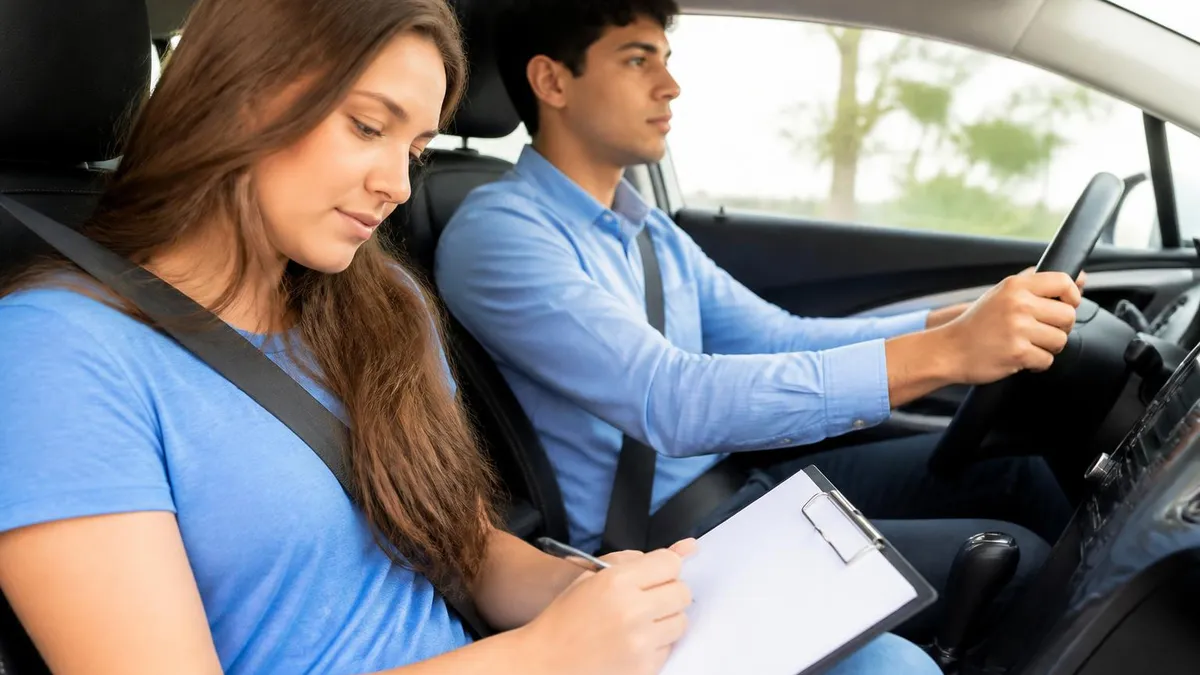
Booking driving test appointments online has replaced the old walk-in lines at most BMV offices, and the change has been almost universally positive for applicants who plan ahead. The online systems show real-time availability, allow you to compare multiple locations side by side, and let you reschedule without paying a second fee in most states. The main challenge is that popular dates fill within minutes of release, especially on Fridays, weekends, and the days right after school holidays.
The smartest approach is to start your search the moment you become eligible. In states like Ohio, Indiana, and Michigan, the BMV releases new appointment slots on a rolling basis, often opening up dates 60 to 90 days in advance. Setting a calendar reminder for the exact moment new slots typically appear, usually early morning on weekdays, gives you the first pick. Refreshing the portal at 7:00 a.m. on a Tuesday has helped countless applicants find openings that disappear by lunch.
Geographic flexibility is your secret weapon. If your closest BMV office shows nothing available for ten weeks, expanding your search radius by just 30 miles can reveal openings within seven days. Smaller offices in surrounding counties have shorter waiting lists, friendlier examiners, and quieter testing routes. The license you earn at a rural office is identical to one earned downtown, and many applicants report feeling more relaxed on the simpler routes used outside city centers.
Cancellation watching is another underused tactic. Up to 20 percent of all driving test appointments are canceled or rescheduled within 48 hours of the original date. By checking the portal once each morning and once each evening, you can often snag a slot weeks earlier than your original booking. Some states even offer a waitlist feature that automatically notifies you when an earlier slot opens at your preferred location.
Before you commit to a date, make sure you have access to a vehicle that meets all BMV requirements. The car must be registered, insured, and free of warning lights on the dashboard. Brake lights, turn signals, the horn, and the windshield wipers will all be inspected before the examiner allows the test to begin. If you do not own a suitable car, a driver test car rental service can provide a vehicle along with insurance coverage specifically for the road exam.
Pay attention to your permit expiration date when picking a test slot. Many states will not allow a road test on a permit that expires within 30 days, even if you are otherwise eligible. If your permit is close to expiring, renew it before booking to avoid losing your appointment fee. Some BMVs also enforce a holding period after permit renewal, so verify both dates carefully before paying.
Finally, double-check the appointment confirmation as soon as it arrives. Examiners are strict about start times, and arriving even five minutes late can result in forfeiture of your slot and fee. Save the confirmation to your phone, screenshot it as a backup, and print a paper copy. Confirm the testing center's exact address because some BMV branches share buildings with other agencies and the testing entrance may be on a different side.
BMV Practice Test Questions
Prepare for the BMV - Test exam with our free practice test modules. Each quiz covers key topics to help you pass on your first try.
BMV Basic BMV Practice
BMV Exam Questions covering Basic BMV Practice. Master BMV Test concepts for certification prep.
BMV Alcohol, Drugs, and Impaired Driving Laws
Free BMV Practice Test featuring Alcohol, Drugs, and Impaired Driving Laws. Improve your BMV Exam score with mock test prep.
BMV Licensing Requirements
BMV Mock Exam on BMV Licensing Requirements. BMV Study Guide questions to pass on your first try.
BMV Traffic Laws
BMV Test Prep for BMV Traffic Laws. Practice BMV Quiz questions and boost your score.
BMV Vehicle Operations
BMV Questions and Answers on BMV Vehicle Operations. Free BMV practice for exam readiness.
BMV Parking, Right-of-Way, and Intersections
BMV Mock Test covering Parking, Right-of-Way, and Intersections. Online BMV Test practice with instant feedback.
BMV Road Signs and Markings
Free BMV Quiz on Road Signs and Markings. BMV Exam prep questions with detailed explanations.
BMV Safe Driving and Hazard Awareness
BMV Practice Questions for Safe Driving and Hazard Awareness. Build confidence for your BMV certification exam.
What the Road Test Actually Measures
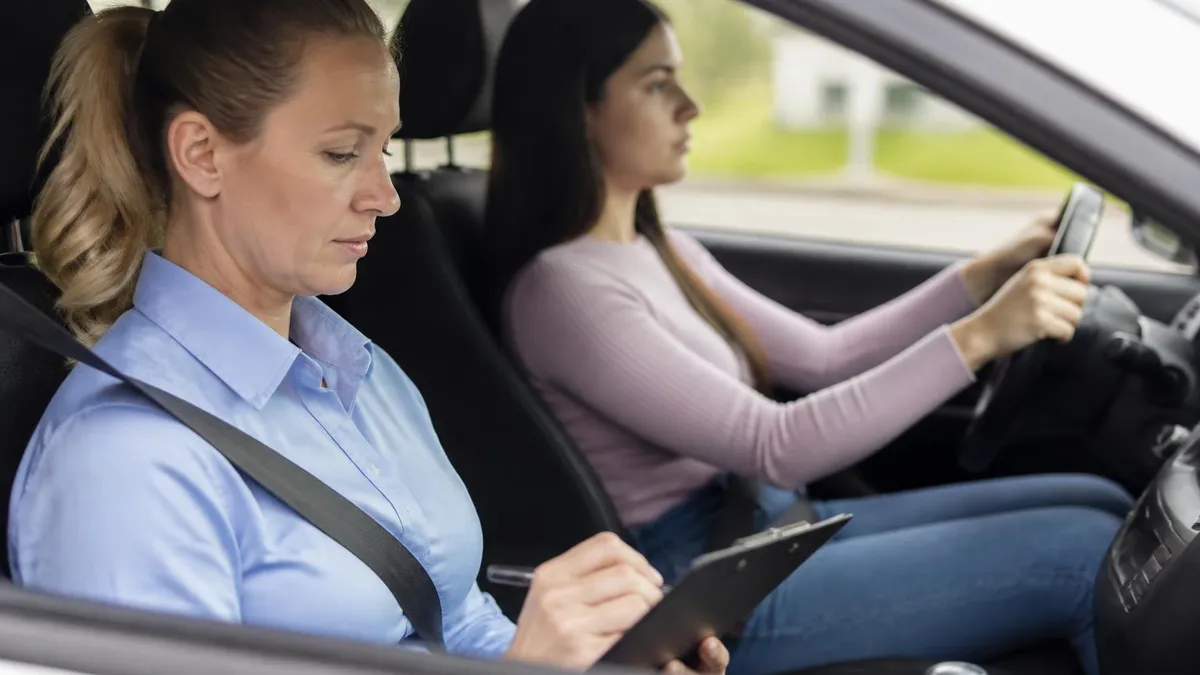
Vehicle control covers smooth starts, controlled stops, proper steering, and accurate use of the gas and brake pedals. Examiners watch for jerky acceleration, hard braking, and any moments when you appear to lose confidence in handling the car. Practicing in parking lots before your scheduled appointment helps build the muscle memory required for these basics, and most failing applicants lose points here long before they reach the more advanced portions.
The examiner will also evaluate your three-point turn, parallel parking when required, and your ability to back up in a straight line. These maneuvers are graded on smoothness, awareness of surroundings, and whether you check mirrors and blind spots correctly. Many states no longer require parallel parking, but every state still tests reversing skills. Confirm what your specific BMV office requires before the appointment so you can practice the right combination of moves.
Should You Book the Earliest Available Slot?
- +You finish the licensing process sooner and gain solo driving privileges
- +Less time for nerves to build between booking and the actual test
- +You retain recent knowledge from your permit study sessions
- +Fewer chances for life events to disrupt your testing plans
- +Earlier appointments often happen during quieter traffic hours
- +Insurance discounts and work commute benefits begin sooner
- −Limited time to practice complex maneuvers like parallel parking
- −Higher risk of failing if you have not logged enough supervised hours
- −Less opportunity to drive in adverse weather conditions for experience
- −Examiner routes may include intersections you have never practiced
- −Permit holding period requirements may make early booking impossible
- −Rebooking after a fail can add weeks to your timeline anyway
Pros and Cons at a Glance
| Pros | Cons |
|---|---|
| You finish the licensing process sooner and gain solo driving privileges | Limited time to practice complex maneuvers like parallel parking |
| Less time for nerves to build between booking and the actual test | Higher risk of failing if you have not logged enough supervised hours |
| You retain recent knowledge from your permit study sessions | Less opportunity to drive in adverse weather conditions for experience |
| Fewer chances for life events to disrupt your testing plans | Examiner routes may include intersections you have never practiced |
| Earlier appointments often happen during quieter traffic hours | Permit holding period requirements may make early booking impossible |
| Insurance discounts and work commute benefits begin sooner | Rebooking after a fail can add weeks to your timeline anyway |
Driving Test Appointment Day Checklist
- ✓Bring your valid learner's permit and a second form of ID
- ✓Carry the vehicle's current registration and proof of insurance
- ✓Confirm headlights, brake lights, turn signals, and horn all work
- ✓Clean the windshield, mirrors, and side windows for full visibility
- ✓Fill the gas tank to at least half so it does not run low mid-test
- ✓Adjust seat, mirrors, and steering wheel before the examiner enters
- ✓Silence your phone and remove any items dangling from the mirror
- ✓Arrive at least 20 minutes early to complete check-in paperwork
- ✓Bring your appointment confirmation printed and saved to your phone
- ✓Have a backup driver licensed and present in case of a vehicle issue
Check the BMV portal twice daily at off-peak hours
Applicants who refresh appointment portals at 6:30 a.m. and 9:00 p.m. report securing slots up to four weeks earlier than the originally posted dates. Cancellations are processed in real time, and most last-minute openings disappear within minutes of being released, so persistence and timing matter more than luck.
Automatic failures during driving test appointments fall into a short, predictable list, and avoiding every item on that list dramatically improves your odds of passing on the first try. The most common cause is a rolling stop at a stop sign or red light, sometimes called a California stop. Even if traffic is clear and the road appears empty, the examiner expects a full three-second stop with the wheels completely motionless before you proceed. Roll through once and the test ends immediately, regardless of how well you have driven up to that point.
Speeding is the second most frequent cause of instant failure. Examiners often choose routes that include sudden speed limit changes, such as transitions from 45 mph zones into 25 mph residential blocks. Missing one of these signs and continuing at the higher speed can end the test in seconds. Use your eyes constantly to scan for new posted limits, and assume the limit has dropped any time you enter a residential area, a school zone, or a road that visibly narrows.
Failing to yield is another common automatic failure. The classic example happens at four-way stops where two cars arrive at the same time. The driver on the right has the right of way, but anxious test-takers often hesitate, accelerate, or stop again in the middle of the intersection. Practice four-way stops repeatedly with a parent or instructor until your reactions become automatic. The examiner is watching for confident, decisive moves rather than hesitation.
Lane changes without head checks are silent killers on the scoring sheet. Mirror checks alone are not enough in most states because they do not cover blind spots. The examiner wants to see your head turn briefly toward the lane you are entering, even if your mirrors appear to show a clear path. This small habit signals defensive driving and awareness, two qualities that examiners weight heavily in their scoring rubrics.
School bus violations end tests instantly in every state. When a school bus stops with its red lights flashing and the stop arm extended, all traffic in both directions must stop unless separated by a physical median. Many applicants fail because they assume the rule only applies to traffic behind the bus. Memorize your state's specific school bus rules during your written test prep, because the road test examiner will absolutely test you if a school bus appears during the drive.
The final major category involves striking objects, curbs, or other vehicles. Even a light tap of a cone during parallel parking or a curb bump during a three-point turn typically ends the test. Practice these maneuvers in empty parking lots using cones or chalk lines until you can complete them without any contact. Slow, controlled movement is always better than quick, confident-looking attempts that result in contact.
Knowing these failure triggers in advance is half the battle. Most applicants who fail report being surprised by the specific rule they violated, even though every item on this list appears clearly in the state driver handbook. Reading the handbook the week before your appointment is a high-value time investment that catches habits you may not realize you have.
Failing to show up for a scheduled driving test appointment typically forfeits your fee and adds you to a 14-day cooldown period before rebooking. In some states, a second no-show triggers a 60-day waiting period and may require additional documentation to reschedule.
Preparing for driving test appointments is about more than logging hours behind the wheel. The applicants with the highest first-attempt pass rates combine deliberate practice with mental rehearsal and a deep familiarity with their state's specific scoring criteria. They treat the weeks leading up to the test as a focused training block rather than casual driving. This shift in mindset is often the difference between passing on the first try and joining the 46 percent who must rebook.
Start by reviewing the official driver handbook from cover to cover at least twice before your appointment. The handbook contains the exact rules your examiner uses to score you, and many of those rules are not intuitive. For example, the required following distance, the proper procedure at a flashing yellow light, and the rules for entering a roundabout vary significantly by state. Reading the handbook eliminates surprise during the test and gives you the vocabulary to think clearly under pressure.
Drive the actual route around your testing center several times before your appointment. Most BMV offices use a limited set of testing routes, typically within a two-mile radius of the testing center. Driving these streets in advance lets you anticipate every traffic signal, every confusing intersection, and every speed limit change. Some applicants even park near the testing center on a normal day and walk the route to identify potential hazards or unusual signage.
Practice in conditions similar to your appointment time. If your test is at 10:00 a.m. on a Thursday, drive at that exact time during the prior week. Traffic patterns, sun glare, and even school zone activation times vary by hour and day. Matching practice conditions to test conditions reduces unexpected stressors on the actual day. Sun in your eyes at an unfamiliar angle has caused more than one applicant to miss a critical sign during testing.
Take care of your physical and mental state in the 24 hours before your appointment. Sleep at least eight hours, eat a balanced breakfast, and avoid excessive caffeine. Anxiety is the number one performance killer on test day, and a tired, hungry brain processes information far more slowly. If you typically perform well in the morning, request a morning slot. If you are sharper after lunch, target early afternoon. Self-awareness about your peak performance time is a quiet competitive advantage.
Build a relationship with your testing vehicle. Spend the final week of practice driving exclusively in the car you will use during the exam. Learn its exact braking distance, the position of every control, and how it handles in tight turns. If you plan to use a bmv office hours location's rental option or a friend's car, spend at least a few hours in that specific vehicle before the test. Surprises about controls or pedal feel can wreck your timing during critical maneuvers.
Finally, rehearse mentally the night before. Visualize arriving on time, completing the pre-drive inspection, executing a clean three-point turn, and shaking hands with the examiner after a successful test. This kind of visualization is used by athletes and surgeons because it primes the brain to perform familiar movements under pressure. Spend ten minutes the night before walking through the test in your mind, and you will feel noticeably calmer when the moment arrives.
The final hours before driving test appointments can make or break months of preparation, and a simple morning routine helps lock in everything you have practiced. Wake up early enough to avoid rushing. Eat a real breakfast that includes protein because blood sugar swings affect focus and reaction time. Dress in layers because BMV testing centers often run hot or cold, and physical discomfort during check-in adds an unnecessary layer of stress to an already nervous morning.
Arrive at the testing center 20 to 30 minutes before your scheduled slot. This buffer covers unexpected traffic, parking confusion, and the surprisingly long line that sometimes forms inside the office. Use the extra time to walk around the vehicle one more time, checking that all lights work, the tires look properly inflated, and nothing inside the car is loose. Examiners notice when applicants present a well-maintained, clean vehicle and are sometimes slightly more lenient on borderline scoring.
When the examiner approaches your car, greet them politely, introduce yourself, and follow their lead. They will typically ask you to demonstrate hand signals, identify dashboard warning lights, and operate the windshield wipers and defroster. These pre-drive checks are scored, so review them in advance. Many applicants lose points before the car even moves because they cannot locate the rear defroster button or do not know the hand signal for a right turn.
During the drive, follow the examiner's instructions exactly. If they say turn at the next street, do not turn at the current one even if it seems easier. If you do not understand an instruction, ask for clarification. Examiners would rather repeat themselves than watch you guess. Stay relaxed by breathing steadily, keeping both hands on the wheel in the nine-and-three position, and checking your mirrors every five to eight seconds as part of a continuous scanning habit.
If you make a mistake, do not let it spiral into more mistakes. A single minor error rarely fails you, but the panic that follows can cause three more in the next minute. Take a slow breath, refocus on the next instruction, and drive the remainder of the route with confidence. Examiners frequently report that applicants who recover gracefully from one error often pass overall, while those who freeze or apologize repeatedly almost always fail.
If you pass, the examiner will sign your scoring sheet and direct you back inside to complete licensing paperwork. You will typically take a vision test, sit for the license photo, and pay the licensing fee. The whole post-test process usually takes 30 to 60 minutes depending on office volume. Some states issue a temporary paper license on the spot and mail the permanent card within two weeks. Others provide the full plastic card the same day.
If you do not pass, the examiner will explain which errors led to the result and what to focus on for next time. Most states allow rebooking after a waiting period of one to seven days. Use that time productively. Identify the specific maneuvers or rules you missed, drill them with a supervised driver, and rebook the moment new slots open. Many applicants pass on the second attempt because they know exactly what to expect and have practiced the precise skills they needed to improve.
Sample BMV Practice Questions
Try these questions from our free BMV practice tests. The correct answer and an explanation follow each question.
On a road with a solid yellow line on your side, you may:
- A. Not pass another vehicle
- B. Pass if the road is clear
- C. Pass only large trucks
- D. Pass at any speed
Answer: A. Not pass another vehicle
A solid yellow line on your side of the center means passing is prohibited.
What does a solid yellow line on your side of the road mean?
- A. No passing — you cannot cross this line to pass another vehicle
- B. Passing is allowed with caution
- C. The lane is for emergency vehicles only
- D. The road is under construction
Answer: A. No passing — you cannot cross this line to pass another vehicle
A solid yellow line on your side means passing is prohibited in your direction. A broken yellow line means passing is allowed if safe. Double solid yellow lines mean no passing in either direction.
When driving on a city road without posted speed limit signs, you should not go faster than ___.
- A. 30 mph
- B. 25 mph
- C. 35 mph
- D. 20 mph
Answer: B. 25 mph
In Ohio, if there are no posted speed limit signs on a city road, the default statutory speed limit is 25 mph. This general rule applies to urban districts and helps ensure safety in areas with higher pedestrian traffic and potential intersections. Drivers should always be aware of the default limits when specific signs are absent.
What is the correct action when a school bus stops with its red lights flashing on a two-lane road?
- A. Pass on the left carefully
- B. Stop in both directions
- C. Slow to 10 mph and pass
- D. Only oncoming traffic must stop
Answer: B. Stop in both directions
On a two-lane road, traffic in both directions must stop when a school bus displays flashing red lights.
BMV Questions and Answers
Driver Test Car Rental in Gastonia, NC: Complete BMV Road Test Vehicle Guide
Hours of Ohio BMV: Complete Guide to Office Hours, Locations, and Visit Planning
DMV Sign Test
Will You Be Disqualified From DMV Testing Area for Cheating? Complete Guide to BMV Test Integrity Rules

Nebraska DMV Practice Test: Pass Your NE Driver License Exam
About the Author
Licensed Driving Instructor & DMV Test Specialist
Penn State UniversityRobert J. Williams graduated from Penn State University with a degree in Transportation Management and has spent 20 years as a certified driving instructor and DMV examiner consultant. He has personally coached thousands of applicants through written knowledge tests, skills assessments, and commercial driver licensing programs across more than 30 states.
Join the Discussion
Connect with other students preparing for this exam. Share tips, ask questions, and get advice from people who have been there.
View discussion (9 replies)