
What Is Bartending? A Complete Guide to the Craft, Career, and Certification
What is bartending? Discover the skills, salary, certification, and career path behind this dynamic hospitality profession. 🎯

If you have ever wondered what is bartending beyond just pouring drinks, the answer is far richer than most people expect. Bartending is a skilled hospitality profession that combines mixology, customer service, time management, legal responsibility, and business acumen into one fast-paced, guest-facing role. Whether you work at a dive bar, a five-star hotel lounge, or a craft cocktail speakeasy, the core demands of the job remain surprisingly consistent and surprisingly demanding.
At its most fundamental level, bartending means preparing and serving alcoholic and non-alcoholic beverages to guests in a licensed establishment. But the day-to-day reality goes well beyond that definition. A professional bartender must memorize hundreds of recipes, manage a physical workspace with precision, read the emotional temperature of a room, handle cash and credit transactions accurately, and comply with strict federal and state liquor laws — all simultaneously, often while music is blaring and a dozen customers are competing for attention.
The history of bartending in the United States stretches back to the colonial tavern keepers of the 1600s and accelerated dramatically during the cocktail renaissance of the mid-1800s, when bartenders like Jerry Thomas began publishing cocktail books and treating drink-making as an art form. That tradition continued through Prohibition, the post-war cocktail era, and the modern craft bartending movement that exploded in cities like New York, Chicago, and San Francisco after 2000. Today's bartenders are the direct heirs of that rich cultural lineage.
From a career perspective, bartending offers an unusual combination of low barrier to entry and high ceiling for advancement. An entry-level barback can move into a full bartender role within months at many establishments, yet a seasoned mixologist at a top-tier venue can command a six-figure income when tips are factored in. The U.S. Bureau of Labor Statistics estimates that there are approximately 670,000 bartending jobs in the country, with demand projected to grow as the hospitality industry continues its post-pandemic recovery.
Certification and training have become increasingly important differentiators in the bartending job market. While no single federal license is required to bartend, many states mandate Responsible Beverage Service (RBS) training or equivalent alcohol awareness certification before a bartender can legally serve. Beyond legal requirements, voluntary certifications from organizations like the United States Bartenders Guild (USBG) or the BarSmarts program signal to employers that a candidate is serious about the craft and possesses validated knowledge in areas like spirits production, cocktail history, and bar management.
The physical environment of bartending is worth understanding before you commit to the career. Most bartenders stand for eight to ten hours per shift on hard floors, frequently lift kegs and cases weighing fifty pounds or more, and work in environments that are loud, hot near the kitchen, and sometimes poorly ventilated. Wrist and shoulder strain are occupational hazards, and cuts from glassware are routine. That said, the social energy of a well-run bar is genuinely exhilarating for the right personality, and many bartenders describe the job as one of the most engaging and human-centered careers they can imagine.
This guide is designed to give you a thorough, honest, and practical introduction to the bartending profession. Whether you are considering bartending as a career, studying for a certification exam, or simply curious about what the people behind the bar actually know and do, the sections that follow will walk you through every major dimension of the craft — from the core skills and daily responsibilities to salary expectations, certification pathways, and the legal framework that governs alcohol service in the United States.
Bartending in the U.S. by the Numbers

Core Skills Every Bartender Must Master
Bartenders must know hundreds of classic and contemporary cocktail recipes by memory, including the correct spirits, proportions, glassware, and garnishes. Speed and consistency are equally important — a well-made drink delivered slowly loses the guest.
Reading guests, managing difficult situations, building rapport quickly, and keeping a positive demeanor under pressure are non-negotiable skills. The best bartenders make every guest feel like the most important person in the room.
Accurately ringing up orders, making correct change, processing card transactions, and reconciling your drawer at end of shift are essential daily tasks. Errors here cost both the bartender and the establishment real money.
Understanding pour costs, tracking bottle usage, rotating stock properly, and minimizing waste directly affects a bar's profitability. Many certification exams heavily test this knowledge area.
Recognizing intoxication signs, cutting off guests legally and safely, checking IDs, and understanding dram shop liability are legal and ethical imperatives. Failure here can result in license revocation and criminal charges.
Training pathways into bartending are more varied today than at any point in the profession's history, and understanding your options is essential to choosing the route that best matches your timeline, budget, and career goals. The most traditional path is on-the-job training, where a new hire starts as a barback — restocking bottles, clearing glassware, and watching the bartenders work — before gradually being given their own station to run. This apprenticeship model can take anywhere from three months to over a year, depending on the establishment and the individual's learning pace.
Bartending schools offer an accelerated alternative, typically compressing essential skills into a two-to-eight-week intensive program. Costs at accredited bartending schools in major U.S. cities range from approximately $400 to $1,500 depending on program length and location. The best schools include mock bar setups, speed drills, recipe memorization exercises, and sometimes job placement assistance. Critics of the bartending school model argue that the hands-on experience of a real service environment cannot be replicated in a classroom, but for candidates who need to demonstrate baseline competence quickly, these programs can be genuinely valuable.
Community college hospitality programs represent a third pathway, offering accredited coursework in food and beverage management, mixology, and even sommelier studies over the course of a semester or a full academic year. These programs tend to attract students who plan to move into bar management, beverage director roles, or restaurant ownership, rather than those seeking immediate floor work. The credential from an accredited institution can carry more weight with larger hotel chains and fine dining groups that have formal HR screening processes.
Certification programs from national organizations add a layer of validated professional credibility on top of whatever training pathway you choose. The TIPS (Training for Intervention ProcedureS) certification and ServSafe Alcohol program are widely recognized responsible beverage service credentials that many employers require before a new bartender's first shift. The USBG's BarSmarts program goes deeper, covering spirits production, cocktail history, sensory evaluation, and bar operations in a way that prepares candidates for advanced roles in craft cocktail bars and hotel beverage programs.
State-specific licensing requirements add another layer of complexity to the training landscape. California's AB 1221 law, which took effect in 2022, requires all alcohol servers to complete a state-approved RBS training program and pass a certification exam administered through the California Department of Alcoholic Beverage Control. Texas, Florida, New York, and Illinois all have their own variations of server training requirements, ranging from voluntary best practices to mandatory certification. Researching your specific state's requirements before beginning work is not optional — it is a legal necessity in most markets.
Online training has expanded dramatically since 2020, and a significant portion of RBS and mixology coursework is now available through self-paced digital platforms. The California ABC's RBS exam, for example, can be taken online through any approved training provider. While online training is convenient and often less expensive than in-person programs, many experienced bartenders and bar managers argue that tactile skills — proper pouring technique, shaker handling, speed building — cannot be genuinely developed without hands-on practice, and that online-only training should be supplemented with real bar experience as quickly as possible.
Advanced certification programs like the Cicerone Certification Program (focused on beer service) and the Court of Master Sommeliers (focused on wine) represent specialty credentials that complement general bartending knowledge for bartenders working in craft beer bars, wine bars, or restaurants with extensive beverage programs. While these certifications are not traditional bartending credentials, they signal deep product knowledge in specific categories and can significantly increase earning potential at establishments where those categories are central to the business model.
Types of Bartending Environments Explained
High-volume bars — including nightclubs, sports bars, and busy neighborhood taverns — prioritize speed above almost everything else. Bartenders in these environments may serve 200 or more guests per hour during peak periods, which means drink recipes are simplified, signature cocktails are pre-batched, and every movement behind the bar is optimized for efficiency. Strong memory, fast pouring technique, and the ability to manage a crowded rail without losing composure are the defining skills in this setting.
Financially, high-volume bars often produce the highest tip income for individual bartenders, particularly on weekend nights when covers are strong and guests are in a spending mood. However, the physical toll is significant — eight-hour shifts at a busy nightclub bar involve constant motion, shouting over music, and almost no downtime between orders. Burnout rates are higher in this segment than in lower-volume environments, which is something to weigh carefully before committing to this type of venue as a long-term home.

Pros and Cons of Bartending as a Career
- +Flexible scheduling that accommodates daytime commitments, school, or creative pursuits
- +Cash income from tips is immediate and can be substantial on busy shifts
- +Low barrier to entry — bartending jobs are accessible without a college degree
- +Highly social and dynamic work environment with genuine human connection daily
- +Transferable skills in customer service, multitasking, and conflict resolution
- +Career advancement pathways into bar management, beverage direction, and ownership
- −Late-night and weekend hours conflict with conventional social schedules
- −Income is unpredictable and fluctuates with venue traffic and seasonal patterns
- −Physical demands include prolonged standing, heavy lifting, and repetitive motion injuries
- −Exposure to alcohol and substance use can create personal health risks over time
- −Legal liability is significant — serving an intoxicated guest can result in criminal charges
- −Limited employer-provided benefits in most independent bar and restaurant settings
Pros and Cons at a Glance
| Pros | Cons |
|---|---|
| Flexible scheduling that accommodates daytime commitments, school, or creative pursuits | Late-night and weekend hours conflict with conventional social schedules |
| Cash income from tips is immediate and can be substantial on busy shifts | Income is unpredictable and fluctuates with venue traffic and seasonal patterns |
| Low barrier to entry — bartending jobs are accessible without a college degree | Physical demands include prolonged standing, heavy lifting, and repetitive motion injuries |
| Highly social and dynamic work environment with genuine human connection daily | Exposure to alcohol and substance use can create personal health risks over time |
| Transferable skills in customer service, multitasking, and conflict resolution | Legal liability is significant — serving an intoxicated guest can result in criminal charges |
| Career advancement pathways into bar management, beverage direction, and ownership | Limited employer-provided benefits in most independent bar and restaurant settings |
Bartending Career Readiness Checklist
- ✓Complete a state-approved Responsible Beverage Service (RBS) training program before your first shift.
- ✓Memorize the recipes and proper glassware for at least 50 classic cocktails before applying to jobs.
- ✓Practice your free-pour technique until you can consistently measure 1.5 oz without a jigger.
- ✓Obtain your state food handler's card if required by your local health department.
- ✓Build a basic understanding of beer styles, wine varietals, and major spirits categories.
- ✓Learn how to use the most common point-of-sale (POS) systems, including Toast and Aloha.
- ✓Study your state's specific dram shop liability laws and ID-checking requirements.
- ✓Research the bar inventory and cost control fundamentals that appear on certification exams.
- ✓Shadow an experienced bartender for at least one full shift before starting your first solo bar job.
- ✓Create a professional resume that highlights customer service experience even if bar-specific experience is limited.
Your First Year Behind the Bar Defines Your Career Trajectory
Industry data consistently shows that bartenders who invest in formal certification and structured training within their first twelve months of employment earn 23% more on average over the following five years than those who rely on on-the-job experience alone. The habits, product knowledge, and legal awareness you develop early become the foundation every future role is built on — treat your first year as an intensive professional apprenticeship, not just a job.
Understanding salary expectations is one of the most practically important things any prospective bartender can do before committing to the career. The numbers vary enormously depending on geography, venue type, and individual experience, but the Bureau of Labor Statistics reports a national median hourly wage of approximately $15.44 for bartenders, which translates to a base annual salary of around $32,000 for full-time work. However, that figure captures only the reported wage component and dramatically understates actual earnings for most working bartenders.
Tips are the financial engine of the bartending career. In high-volume urban venues, experienced bartenders routinely earn $200 to $500 in tips per shift on weekends, which can push annual take-home earnings well above $80,000 in markets like New York, Los Angeles, Miami, and Chicago. Even in mid-sized markets, a skilled bartender at a busy restaurant or hotel bar can expect tip income that doubles or triples the base hourly wage. Cash tipping, while declining as more transactions move to cards, remains a significant part of the compensation equation at most venues.
Geography is one of the strongest predictors of bartending income. Bartenders in Manhattan, San Francisco, and Honolulu earn median wages that are substantially higher than the national figure, while those in rural areas of the South and Midwest may earn closer to the national median with less tip supplementation.
State minimum wage laws for tipped workers also create enormous variation — some states like California do not allow a separate tipped minimum wage, meaning bartenders earn the full state minimum ($16 per hour in 2024) before tips, while others like Georgia set the tipped minimum as low as $2.13 per hour.
Career advancement in bartending follows several distinct tracks depending on the individual's goals and interests. The most direct advancement path runs from barback to bartender to bar supervisor to bar manager to beverage director or general manager. Each step up the management ladder typically brings a higher base salary and more predictable hours, but at the cost of reduced tip income. A bar manager at a mid-scale venue might earn $55,000 to $75,000 annually in combined salary and bonus, while a beverage director at a luxury hotel property can command $90,000 to $130,000.
Brand ambassador roles represent one of the more lucrative lateral moves available to experienced bartenders with strong industry networks and communication skills. Spirits companies, beer producers, and beverage distributors regularly hire former bartenders as brand representatives who travel to accounts, conduct product trainings, and represent the brand at industry events and competitions. Salaries for brand ambassador roles typically range from $60,000 to $100,000 plus expenses, and the role often includes perks like vehicle allowances and international travel to distilleries and production facilities.
Competition bartending has emerged as both a prestige marker and a genuine financial opportunity for elite-level mixologists. Events like the Bacardi Legacy Global Cocktail Competition, the Diageo World Class competition, and the Tales of the Cocktail Spirited Awards attract hundreds of competitors annually and offer prize money, product deals, and international recognition. Winning or placing highly in a major competition can transform a bartender's career trajectory overnight, opening doors to consulting, brand partnerships, and media opportunities that were previously inaccessible.
Entrepreneurial bartenders increasingly use their skills and industry relationships to launch mobile bartending businesses, cocktail catering services, bar consulting practices, and even their own brands of spirits, bitters, or mixers. The startup costs for a mobile bartending operation are relatively low — equipment, licensing, and a vehicle — while the revenue potential is high given that private events, weddings, and corporate functions often pay $500 to $2,000 or more for bartending services per event. The entrepreneurial path requires business skills that complement the craft, but the potential for financial independence is genuine and achievable for motivated individuals.

Alcohol service regulations at the state and county level are amended regularly, and what was legal practice twelve months ago may now carry a fine or license suspension. Always verify your current state's RBS requirements, ID-checking standards, and hours-of-service regulations through your state's Alcoholic Beverage Control board before starting a new position — do not rely on training from a previous employer in a different jurisdiction or from an outdated certification program.
The legal framework surrounding alcohol service in the United States is one of the most complex regulatory environments any service industry professional will ever navigate, and a thorough understanding of it is not optional for anyone who wants to bartend professionally and safely. The foundation of U.S. alcohol law is the 21st Amendment to the Constitution, which repealed Prohibition in 1933 and granted individual states broad authority to regulate the manufacture, sale, and distribution of alcoholic beverages within their borders. This is why alcohol laws vary so dramatically from state to state and even from county to county.
The Three-Tier System is the structural backbone of how alcohol reaches a bar in most states. Under this system, manufacturers (breweries, distilleries, and wineries) must sell to licensed distributors, who in turn sell to licensed retailers (including bars and restaurants). Direct sales from manufacturer to retailer are prohibited in most states, which means a bar cannot simply call a distillery and order a case of bourbon — they must purchase through an approved distributor. Understanding this system is important for bartenders who take on inventory ordering responsibilities or who move into bar management roles.
Dram shop liability laws are perhaps the most practically important legal concept for working bartenders. Under dram shop statutes, which exist in approximately 43 states, a bar or bartender can be held civilly and sometimes criminally liable for damages caused by a guest who was served alcohol while visibly intoxicated and then injured themselves or others.
The most common scenario is a drunk driving accident, but dram shop claims can also arise from bar fights, slip-and-fall incidents, and other alcohol-related harms. The financial exposure for establishments and individual bartenders can be devastating, with jury awards in major dram shop cases sometimes exceeding $1 million.
ID verification requirements vary by state but share a common federal baseline: it is illegal to sell alcohol to anyone under the age of 21 in the United States. The most commonly accepted forms of ID include state-issued driver's licenses and identification cards, U.S. passports, U.S. military identification, and permanent resident cards. Many states allow bartenders to use electronic ID scanning devices to verify authenticity, and some states have adopted vertical-format IDs for customers under 21 to make age identification faster and more reliable. When in doubt, the professional standard is to require ID from anyone who appears under 30.
Liquor licenses are the legal authorization that allows a bar or restaurant to serve alcohol, and understanding the basics of how they work protects both the establishment and the individual bartender. Licenses are issued by state and sometimes local authorities, are categorized by the type of alcohol that can be served and the type of establishment, and carry conditions that must be maintained to keep the license in good standing.
Common license conditions include hours-of-service restrictions, food service requirements, and prohibitions on certain promotional activities. A bartender whose actions cause a license violation — serving after hours, allowing a minor to drink — can be personally fined and can expose their employer to license suspension or revocation.
Responsible Beverage Service (RBS) training programs teach bartenders how to recognize the behavioral and physiological signs of intoxication, how to decline service diplomatically without escalating a confrontation, and what steps to take when a guest needs to be removed from the premises.
The key signs of impairment that RBS programs train bartenders to recognize include slurred speech, glassy or bloodshot eyes, impaired coordination, unusual aggression or emotional volatility, and excessive ordering pace relative to apparent body weight and elapsed time. Recognizing these signs early and acting proactively is always safer and legally sounder than waiting until a guest is obviously incapacitated.
The legal landscape also extends to the increasingly common area of cannabis-infused beverages, which present novel compliance challenges in states where recreational marijuana is legal. At the time of this writing, federal law still prohibits the sale of alcohol and THC in the same product, which means bars cannot legally serve cannabis cocktails made with infused spirits in most jurisdictions.
However, cannabis lounges that serve non-alcoholic infused beverages are emerging in states like California and Colorado, and some industry observers predict that the regulatory line between alcohol and cannabis service will continue to evolve. Bartenders who stay current on these developments will be well-positioned as the legal landscape shifts.
Building a sustainable and rewarding bartending career requires more than technical skill — it requires intentional professional development, a strong industry network, and the kind of self-awareness that allows you to identify which segment of the industry is the best match for your personality and goals. The bartenders who thrive over a five-to-ten-year arc are those who treat the profession as a craft to be mastered rather than a temporary means to an end, and who invest in their own growth even when the immediate financial returns are not visible.
Networking within the hospitality industry is genuinely important, and the United States Bartenders Guild is the most established professional organization through which to do it. USBG chapters operate in most major U.S. cities and host educational events, brand tastings, competition training sessions, and social events that bring together working professionals across all segments of the industry. Joining your local chapter and showing up consistently is one of the most effective career investments a bartender can make, particularly in the early years when reputation and referrals are the primary hiring drivers.
Building a strong drink repertoire takes time, and the most effective strategy is systematic rather than random. Start with the foundational families of cocktails — sours, slings, old-fashioneds, fizzes, and flips — and understand the structural logic behind each family before branching into variations and originals. Once you understand that a sour is simply a spirit plus citrus plus sweetener in a roughly 2:3/4:3/4 ratio, you can build hundreds of variations from that template without memorizing each one individually. This structural approach to recipe knowledge is what separates truly skilled bartenders from those who have merely memorized a menu.
Speed and consistency practice should be part of any serious bartender's routine. Experienced bar coaches recommend timing yourself regularly on standard builds — how long does it take you to build a Negroni, strain it, and garnish it? How about a whiskey sour with an egg white? Tracking your times and working to reduce them systematically, the way a musician practices scales, builds the kind of muscle memory that holds up under the pressure of a slammed bar. Many bartenders use water or juice in at-home practice sessions to develop speed without wasting spirits.
Palate development is a dimension of bartending skill that receives less attention than it deserves. A bartender who cannot critically evaluate what is in their glass cannot adjust recipes intelligently, catch quality problems with products, or guide guests toward spirits and cocktails that match their stated preferences. Regular structured tasting — blind flights of similar spirits, side-by-side comparisons of cocktail variations, deliberate exploration of ingredient categories you are less familiar with — develops the sensory vocabulary that makes a bartender a genuine consultant rather than a menu reader.
Continuing education should be a permanent feature of a professional bartender's career rather than something that happens only during the training phase. The beverage industry evolves continuously, with new spirits categories gaining mainstream acceptance, new production techniques changing what familiar categories taste like, and new cocktail trends arriving from international markets. Subscription to industry publications like Imbibe Magazine and Punch, attendance at regional and national trade shows like Tales of the Cocktail, and participation in brand education programs offered by distributor representatives all contribute to keeping your knowledge current and relevant.
Finally, take care of your body and your mental health with the same seriousness you bring to the craft itself. The hospitality industry has disproportionately high rates of substance use, sleep disruption, and occupational injury, and the culture of late nights and free-flowing alcohol creates real risks for people who are not intentional about their boundaries.
Many of the industry's most respected veterans cite a deliberate decision to prioritize their physical and mental well-being as the single most important factor in their ability to sustain a long and successful career behind the bar. The best bartenders are in it for the long run, and longevity requires looking after yourself as carefully as you look after your guests.
Sample Bartender Certification Practice Questions
Try these questions from our free Bartender Certification practice tests. The correct answer and an explanation follow each question.
What is the best approach when a customer cannot decide what to drink?
- A. Tell the customer to look at the menu and come back when ready
- B. Ask guiding questions about flavor preferences and make a personalized recommendation
- C. Simply pour the house special and walk away
- D. Wait silently until the customer decides
Answer: B. Ask guiding questions about flavor preferences and make a personalized recommendation
Asking about flavor preferences (sweet, sour, spirit strength) allows the bartender to make a tailored recommendation, enhancing the guest experience and demonstrating expertise.
A guest tells you, "I'm not sure what I want, but I'd like something refreshing." What is the most effective first question to ask to help guide them to a drink they will enjoy?
- A. "Should I just surprise you?"
- B. "What kind of spirits do you typically enjoy, like vodka, rum, or gin?"
- C. "How much are you looking to spend on a drink?"
- D. "Do you prefer shaken or stirred cocktails?"
Answer: B. "What kind of spirits do you typically enjoy, like vodka, rum, or gin?"
The most critical piece of information for a recommendation is the customer's preferred base spirit. This allows the bartender to narrow down the possibilities and suggest specific cocktails (like a Tom Collins for gin, a Moscow Mule for vodka, etc.) that fit the "refreshing" criteria.
What is a 'tab' in bar operations?
- A. A customer loyalty program
- B. A running account where a customer's drinks are recorded and settled at the end of their visit
- C. A type of draft beer system
- D. A style of speed rail organization
Answer: B. A running account where a customer's drinks are recorded and settled at the end of their visit
A tab is an open running account that allows customers to order drinks throughout the evening and pay the total amount at the end of their visit.
A patron presents an ID that appears to have an altered date of birth. What should a bartender do?
- A. Refuse service and confiscate or decline to return the ID per state law
- B. Accept it if the photo looks like the customer
- C. Call the police immediately in all cases
- D. Ask the patron to return with a different ID and serve them in the meantime
Answer: A. Refuse service and confiscate or decline to return the ID per state law
A bartender should refuse service when an ID appears tampered with or altered. Depending on state law, bartenders may be permitted or required to confiscate the ID. Serving a minor on a fake ID can result in serious legal penalties.
Bartender Bartender Questions and Answers
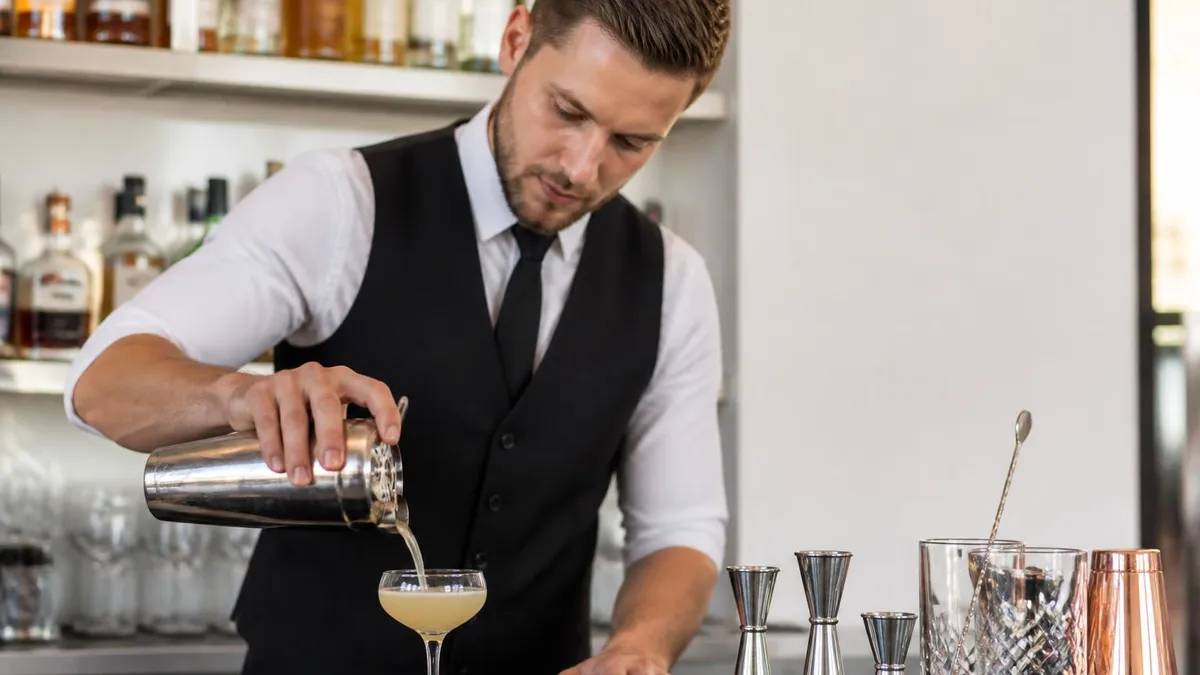
Bartending Classes Near Me: How to Find, Compare, and Choose the Right Local Training Program in 2026
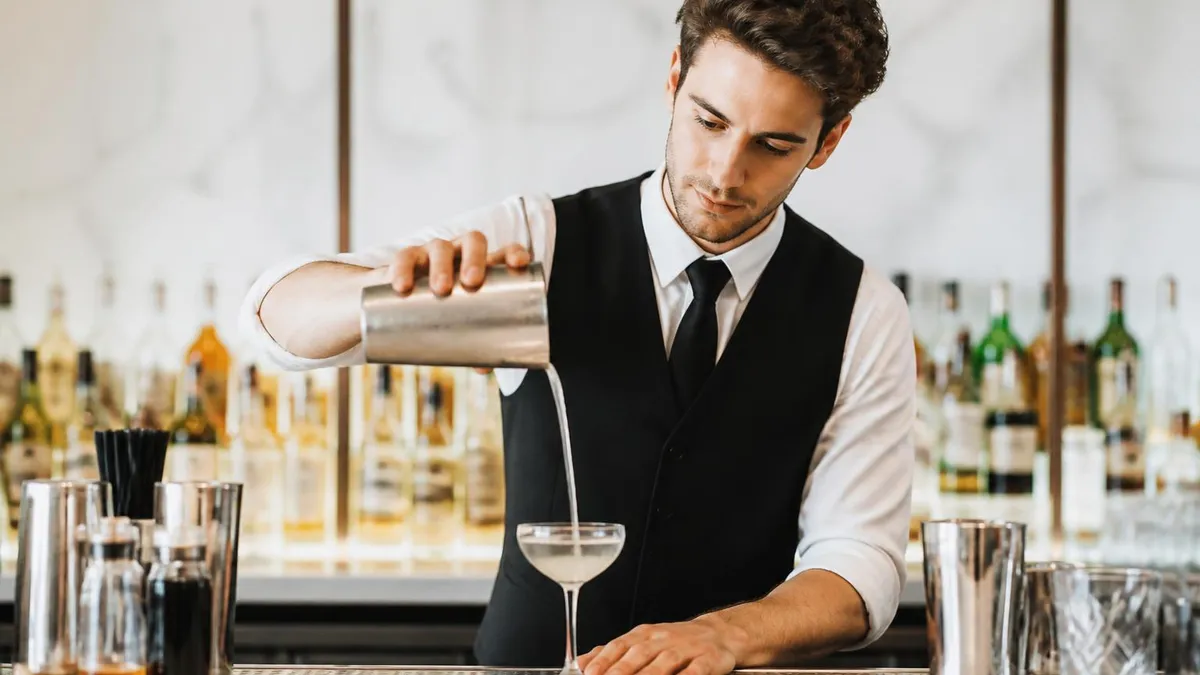
How to Become a Bartender by State: Complete Requirements Guide for All 50 States

Did Ed Gein Really Kill the Bartender? The True Crime Myth vs. Bartending Reality
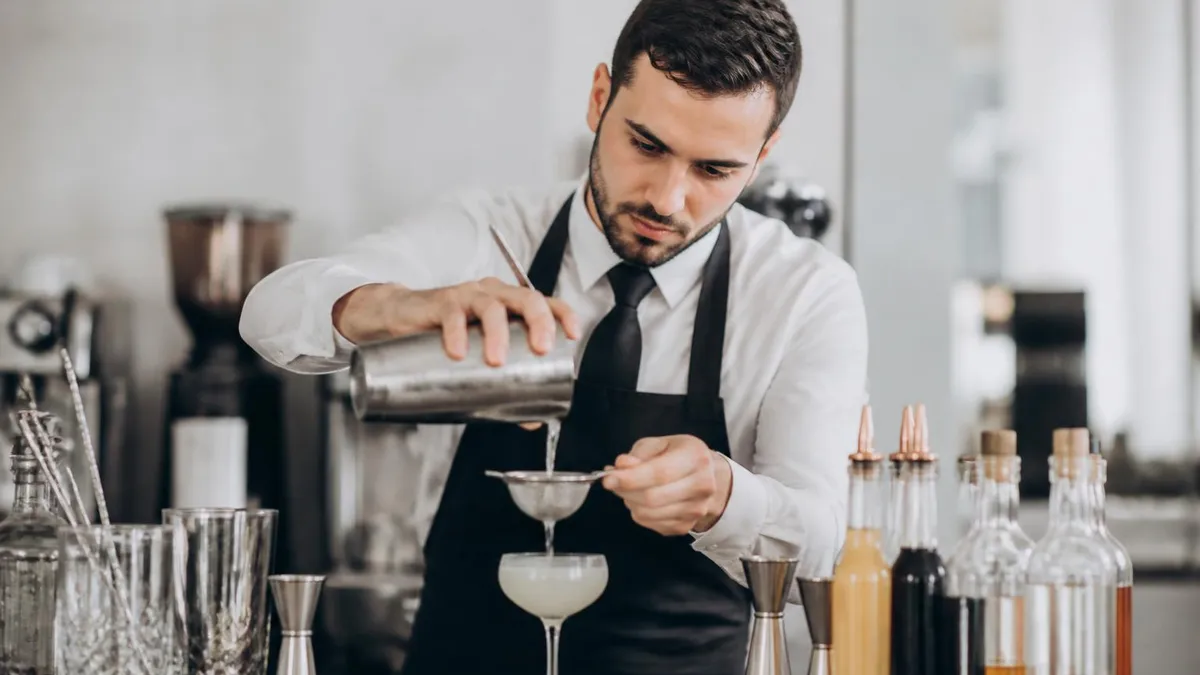
Mobile Bartending Names: 200+ Ideas to Brand Your Cocktail Business in 2026
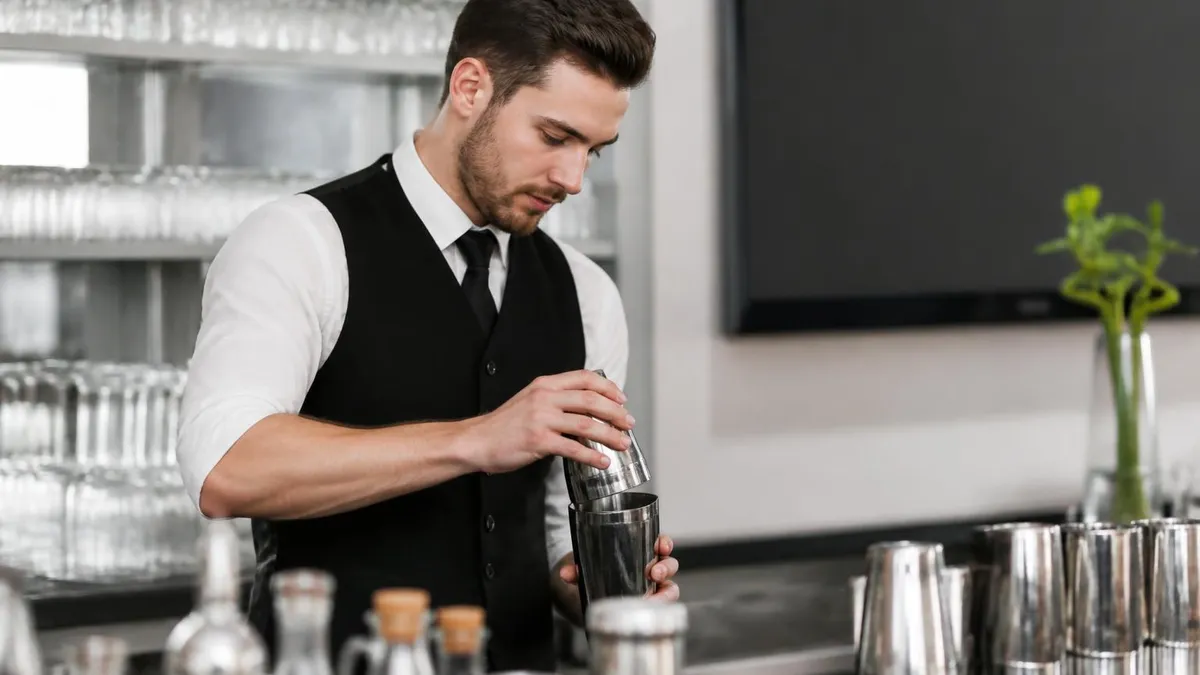
Bartender Salary Maryland: Complete Pay Guide by City, Venue, and Experience for 2026
About the Author
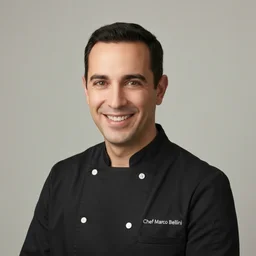
Executive Chef & Culinary Arts Certification Educator
Culinary Institute of AmericaChef Marco Bellini is a Certified Executive Chef and graduate of the Culinary Institute of America with over 20 years of professional kitchen experience in Michelin-recognized restaurants. He teaches culinary arts certification, food safety, and hospitality exam preparation, having guided thousands of culinary students through their ServSafe, ProStart, and professional chef certifications.
Join the Discussion
Connect with other students preparing for this exam. Share tips, ask questions, and get advice from people who have been there.
View discussion (7 replies)