
Bartending Courses Online: The Complete Training Guide for Aspiring Bartenders in 2026 September
Explore the best bartending courses online for 2026 September. Compare programs, costs, certifications & career paths. 🎯 Start your bartending career today.

Bartending courses online have completely transformed how Americans break into one of the most social and financially rewarding careers in the hospitality industry. Just a few years ago, aspiring bartenders had limited options: enroll in an expensive brick-and-mortar bartending school, shadow a working bartender for months, or simply learn on the job with no formal training. Today, a growing roster of accredited and employer-respected digital programs lets you master cocktail recipes, bar management principles, and responsible alcohol service from anywhere in the country.
The demand for skilled, certified bartenders is stronger than ever heading into 2026. The U.S. Bureau of Labor Statistics projects steady growth in food service and drinking establishments, and many hiring managers now specifically screen for candidates who have completed some form of structured training. Whether you are targeting a high-volume sports bar, an upscale craft cocktail lounge, or a private event catering operation, having a recognized certificate on your resume signals professionalism and reduces the onboarding burden for employers who would otherwise spend weeks teaching basics.
One of the most compelling reasons to pursue bartending courses online is the sheer flexibility they provide. Unlike in-person programs that lock you into a rigid Monday-through-Friday schedule at a fixed location, digital courses let you study at midnight after your current shift, squeeze in modules during a lunch break, or binge an entire weekend of content when you have time off. Most platforms save your progress automatically, so you never lose ground if life gets busy between study sessions.
Cost is another major differentiator between online and traditional bartending education. A physical bartending school in a major metro area can run anywhere from $400 to $1,500 or more when you factor in tuition, supplies, and commuting expenses. By contrast, reputable online programs often cost between $25 and $200 for lifetime access to their full curriculum, including video demonstrations, written modules, downloadable cheat sheets, and final certification exams. Some platforms even offer free trial access to introductory content so you can evaluate quality before spending a dollar.
Quality varies widely across online bartending programs, so knowing what to look for is critical before you enroll. The best courses cover a curriculum that mirrors real-world bar operations: liquor categories and brand hierarchies, classic and contemporary cocktail recipes, proper pouring technique and jigger measurements, garnish preparation, speed and efficiency under pressure, upselling strategies, and the legal landscape of alcohol service including dram shop liability and responsible service laws that vary by state.
Responsible alcohol service training deserves special attention because it is not just a resume booster — in many states it is legally required before you can work behind a bar. Programs like ServSafe Alcohol, TIPS (Training for Intervention Procedures), and the National Restaurant Association's certification courses are widely recognized by employers and accepted by state licensing boards. Completing one of these accredited programs alongside a general bartending curriculum gives you a powerfully complete credential package that dramatically improves your hiring prospects.
This guide walks you through everything you need to know about online bartending education in 2026: how to evaluate programs, what the best curricula include, realistic cost breakdowns, how online training compares to in-person alternatives, and how to use practice tests and study tools to lock in your knowledge before your first real shift. Whether you are a complete beginner or an experienced server looking to move behind the bar, this is the roadmap you need.
Online Bartending Education by the Numbers

What Online Bartending Programs Cover
Learn the six base spirits — vodka, gin, rum, tequila, whiskey, and brandy — plus liqueurs, bitters, and syrups. Top courses include tasting notes, brand hierarchies, and how to build cocktails with proper ratios and technique.
Understand inventory control, cost-per-pour calculations, speed pouring, bar setup and breakdown, cash handling, POS system basics, and how to manage a full well bar efficiently during high-volume rushes.
State-compliant training on recognizing intoxication, checking IDs, refusing service legally, dram shop liability, and documenting incidents. Many employers require this before your first shift behind the bar.
Advanced modules on showmanship, upselling premium spirits, building rapport with guests, handling difficult customers, and creating memorable experiences that drive repeat business and higher tip percentages.
Navigate liquor regulations, state-specific licensing requirements, hours-of-service laws, and federal rules. Critical knowledge for bartenders who want to manage bars or open their own establishments in the future.
Choosing the right online bartending course comes down to five key factors: curriculum depth, instructor credentials, accreditation or employer recognition, practical components, and post-course support. A bargain-priced course that skips responsible service training or glosses over bar math is not actually a bargain — it leaves dangerous gaps in your knowledge and may not satisfy state employer requirements. Before enrolling, request a full syllabus and verify that the course covers both hands-on technique and the legal and operational dimensions of bartending.
Instructor credentials matter enormously in this field. Look for courses taught by working bartenders with verifiable industry experience: current or former competition mixologists, bar managers from recognizable establishments, or TIPS-certified trainers who bring real compliance knowledge to the screen. Many platforms post instructor bios prominently; if a course does not identify its instructors or lists only generic credentials, treat that as a red flag. The best instructors demonstrate techniques on camera in a live bar environment, not just narrate over static slides.
Accreditation and employer recognition are not the same thing, but both matter. Formal accreditation from educational bodies is relatively rare in bartending education, but employer recognition is widespread for specific certifications. The most universally respected credentials are ServSafe Alcohol and TIPS, both of which are accepted in virtually every state and recognized by major hospitality employers from hotel chains to independent restaurants. If a course does not lead to one of these certifications, verify that its certificate carries weight with the specific employers you are targeting in your region.
Practical components separate good online courses from great ones. While you obviously cannot pour drinks through a screen, the best digital programs supplement video instruction with interactive exercises: virtual bar simulations, timed recipe recall quizzes, pour measurement drills using household items, and downloadable recipe cards you can practice with in your own kitchen. Some premium platforms even mail you a practice kit — a jigger, shaker, and small sample bottles — so you can execute techniques physically while following along with video lessons.
Post-course support is an often-overlooked differentiator. Top programs offer job placement assistance, resume templates tailored to bartending roles, access to private alumni communities where members share job leads and industry news, and ongoing access to updated course content as regulations and cocktail trends evolve. A few platforms even maintain relationships with regional hospitality employers and actively refer certified graduates when openings arise, giving you a meaningful leg up on applicants who simply walked in off the street.
Reading verified student reviews on third-party platforms like Trustpilot, Reddit's r/bartenders community, and hospitality job boards gives you unfiltered signal about a program's real-world value. Pay particular attention to reviews from people who were actively job-seeking when they enrolled and can speak to whether the certificate helped them land their first role. Reviews that only mention how enjoyable the videos were without addressing employment outcomes are less useful than reviews that describe actual hiring experiences after graduation.
Finally, factor in the learning format that matches your retention style. Video-heavy courses work well for visual learners who want to see techniques demonstrated in real time. Text-and-quiz platforms suit structured learners who prefer reading and immediate knowledge checks. Hybrid programs that combine both formats alongside live virtual office hours with an instructor tend to produce the highest retention rates and the most confident graduates. Take advantage of free trials wherever available to identify which format clicks before committing your tuition dollars.
Online vs. In-Person Bartending Training: A Full Comparison
Online bartending courses typically cost between $25 and $200, compared to $400 to $1,500 or more for in-person programs at physical schools. This dramatic cost difference makes online training accessible to career changers, students, and hospitality workers who cannot afford extended time away from their current jobs. Most digital platforms offer lifetime access, meaning you revisit content after your first shift when real questions emerge.
Flexibility is arguably the strongest advantage of online formats. You set the schedule entirely around your existing commitments — morning, midnight, weekends, or scattered fifteen-minute sessions throughout the week. There are no late fees for missing a class, no commute costs, and no geographic limitation. A bartending candidate in rural Montana has access to the exact same curriculum as one in Manhattan, often at a fraction of the total cost when travel and accommodation are factored in.

Online Bartending Courses: Pros and Cons
- +Study on your own schedule with no fixed class times or commuting
- +Course costs are 70-90% lower than physical bartending schools
- +Lifetime access lets you review content after you start working
- +Nationally recognized certifications like TIPS and ServSafe are available online
- +Access to the same curriculum regardless of your geographic location
- +Many platforms offer job placement support and alumni networking communities
- −Hands-on pouring practice requires self-discipline to execute at home
- −Some employers in specific markets still prefer in-person school credentials
- −No live instructor present to correct physical technique in real time
- −Certificate quality varies widely; low-quality programs waste time and money
- −Self-paced structure requires strong personal motivation to complete the course
- −Virtual simulations cannot fully replicate the pressure of a real Friday night rush
Online Bartending Certification Checklist: Before You Start Your First Shift
- ✓Complete a nationally recognized responsible alcohol service course such as TIPS or ServSafe Alcohol.
- ✓Finish at least one comprehensive online bartending curriculum covering all six base spirits and 50+ classic recipes.
- ✓Practice free-pouring technique at home using water until you can consistently pour 1.5 oz in 3 seconds.
- ✓Memorize the top 30 most-ordered cocktails by recipe, glass type, and garnish without referencing notes.
- ✓Study your state's specific liquor laws including legal serving hours, ID verification requirements, and dram shop liability.
- ✓Download and review a bar inventory spreadsheet so you understand par levels, variance, and ordering cycles.
- ✓Complete at least two full-length practice certification exams to identify and close knowledge gaps before testing.
- ✓Shadow a working bartender for at least one full service shift to observe real-world pace and customer dynamics.
- ✓Prepare a one-page resume highlighting your certification, any relevant customer service experience, and soft skills.
- ✓Research the specific license or permit your target state requires and submit your application before accepting a job offer.
The TIPS Certification Is Accepted in All 50 States
TIPS (Training for Intervention Procedures) is the most universally recognized responsible alcohol service certification in the United States, accepted by employers in all 50 states and required by law in 17 of them. Completing TIPS online takes approximately 3 to 4 hours and costs around $35 — making it one of the highest-ROI investments any aspiring bartender can make before their first job interview.
The cost and return on investment calculation for online bartending education is one of the most favorable in any entry-level career training category. When you compare a $150 online certification package against a $900 in-person bartending school, and both lead to a bartending job paying $45,000 to $75,000 annually including tips, the online route delivers an identically positive career outcome at a fraction of the upfront financial commitment. The payback period for a premium online course is often less than one week of actual bartending wages.
Breaking down the typical cost structure of a complete online bartending education helps you budget realistically. A responsible alcohol service certification like TIPS or ServSafe Alcohol runs $25 to $45. A comprehensive mixology and bar operations course from a reputable platform costs $50 to $150. Optional supplementary purchases — a practice jigger set, cocktail shaker, and recipe cards — add another $20 to $40. Your total investment for a credential-complete, practice-ready bartending education lands between $95 and $235 in the vast majority of cases.
Compare that investment against the earning trajectory of a working bartender. Entry-level bartenders in casual dining settings typically earn $12 to $18 per hour plus tips, bringing total compensation to $35,000 to $50,000 annually. Bartenders in upscale cocktail bars, hotel lounges, and fine dining establishments consistently earn $55,000 to $85,000 when tips are included, with top performers in high-traffic urban venues sometimes exceeding $100,000. The online course pays for itself on your very first shift and continues delivering returns for your entire career.
State-specific licensing fees add to the total cost picture and vary considerably across the country. Some states — California, New York, and Florida among them — impose no specific bartender licensing fee beyond the employer's general liquor license. Others require individual server permits costing $15 to $75 annually. A handful of states mandate completion of state-approved training programs as a condition of employment, which means your online course selection must meet specific criteria to satisfy the legal requirement. Always verify your state's current rules before investing in any program.
Continuing education costs are worth factoring into your long-term budget as well. TIPS certification renews every three years at roughly the same cost as the initial course. ServSafe Alcohol renews every five years. Some states additionally require periodic refresher training on updated liquor laws. Budgeting $50 to $100 every few years for recertification is a minor expense relative to your ongoing earning power, and many employers cover recertification costs for valued staff members once you are established in a role.
The hidden financial benefit of online training is the income you protect by not interrupting your current employment. A full-time in-person bartending school often runs two to four weeks of daily classes, requiring you to reduce or eliminate hours at your current job. Online courses let you maintain full-time income while studying, meaning the real total cost comparison is not just tuition — it is tuition plus the wages you would have forfeited. Factoring in this opportunity cost makes online programs even more financially compelling for working adults making a career transition.
Scholarship and assistance programs occasionally offset online bartending course costs for qualifying candidates. The Restaurant Opportunities Centers United, some state workforce development agencies, and certain union-affiliated hospitality training programs offer partial reimbursements or free enrollment to low-income applicants. Checking with your state's Department of Labor workforce development office before paying out of pocket is a 15-minute investment that could eliminate your tuition cost entirely.

In states including Utah, Alaska, and several others, only programs explicitly approved by the state liquor control authority satisfy the legal requirement for alcohol server training. Completing an unapproved online course — even from a reputable national provider — will not satisfy the legal mandate and may result in your employer facing a compliance violation. Always verify your state's approved program list at your state liquor control board's official website before enrolling.
Building a successful bartending career after completing your online certification requires a strategic job search approach, not just dropping a resume at every bar in your city. Your first step is targeting establishments that align with your training level and career ambitions. High-volume sports bars and casual chain restaurants are typically the most accessible entry points for newly certified bartenders — they prioritize speed and reliability over advanced mixology skills, and their training programs are robust enough to develop your technique further on the job.
Your resume for bartending jobs should lead with your certifications front and center, not buried under work history. List TIPS or ServSafe Alcohol certification with the expiration date, your online course completion certificate with the issuing organization, and any customer service or hospitality experience you have regardless of whether it was behind a bar. Hiring managers in the hospitality industry spend an average of six seconds scanning an initial resume — your certifications need to be immediately visible in the top third of the page to clear the first cut.
The cover letter or in-person introduction is where your personality becomes your differentiator. Bartending is fundamentally a guest experience role, and hiring managers are acutely attuned to how candidates present themselves, communicate, and carry energy in the room. Being warm, direct, and genuinely enthusiastic about the specific establishment you are applying to — mentioning a menu item you researched, referencing a cocktail program detail you noticed during a visit — signals that you are not just mass-applying but are specifically interested in their venue.
Starting as a barback is a time-honored and highly effective path into bartending that many online graduates overlook because they feel overqualified. Barbacks stock ice, replenish glassware, cut garnishes, and support bartenders during service — work that sounds unglamorous but provides invaluable exposure to real bar operations at full speed. Most establishments promote reliable, eager barbacks to bartender roles within three to six months, and the transition comes with a complete understanding of that bar's specific systems, menu, and culture that no course can replicate.
Networking within the local hospitality community accelerates your career timeline considerably. Attending industry events, joining your city's chapter of the United States Bartenders' Guild, following local bar managers on social media, and visiting establishments as a customer to build genuine relationships with working bartenders all generate opportunities that never appear on job boards. The hospitality industry runs substantially on trust and personal referrals — a recommendation from a respected bartender carries more weight with a hiring manager than an unsolicited cold application from a stranger.
Competitive cocktail culture offers an additional career development pathway that many bartenders discover only after they have been working for a year or two. Local and regional cocktail competitions — hosted by spirit brands, industry publications, and trade organizations — provide opportunities to showcase creativity, build a public professional profile, and network with the most influential figures in your regional bar scene. Winning or even placing in a recognized competition can vault an emerging bartender into consideration for positions at the most respected establishments in a market.
Long-term career development in bartending increasingly includes management track ambitions for many practitioners. Bar managers, beverage directors, and general managers of food and beverage operations command salaries of $60,000 to $120,000 or more in major markets. The foundational knowledge you build in your online courses — inventory management, cost control, liquor law compliance — becomes directly applicable to these senior roles. Many bar managers explicitly cite their early investment in structured education as the factor that differentiated them from peer bartenders who plateaued at the hourly level.
Maximizing your performance on bartending certification exams requires a study approach that goes beyond simply reading the course material once and hoping for the best. The most effective technique — validated consistently across professional certification contexts — is active recall practice: testing yourself on material rather than passively re-reading it. Flashcards covering cocktail recipes, liquor law definitions, and bar math formulas activate retrieval pathways in your brain that passive reading never reaches, and the research on spaced repetition shows that information tested at expanding intervals is retained dramatically longer than information reviewed at fixed intervals.
Bar math is the section of most certification exams that surprises new students most. Questions on pour cost percentages, bottle cost per ounce, waste variance calculations, and inventory reconciliation require both formula memorization and numerical fluency. A pour cost percentage is calculated as the cost of liquor used divided by the revenue generated from that liquor, expressed as a percentage — ideally between 18% and 24% in a well-managed bar. Practicing these calculations with real numbers until the formulas become reflexive is essential preparation for both the exam and the actual job.
Liquor law questions present a different kind of challenge because the relevant regulations exist at three distinct levels — federal, state, and local — and the correct answer on a certification exam often depends on which jurisdiction's law the question is testing. The federal level primarily addresses production standards, labeling requirements, and interstate commerce rules.
State law governs licensing, hours of service, responsible service training mandates, and dram shop liability. Local ordinances further restrict hours, proximity to schools or churches, and outdoor service areas. Understanding this three-tier structure prevents the common exam mistake of applying state rules to questions about federal jurisdiction or vice versa.
Time management during a certification exam is a skill that practice tests build systematically. Most bartending certification exams allocate approximately one to two minutes per question, which sounds generous until you hit a complex inventory calculation or a multi-step liquor law scenario that requires careful reading and reasoning. Students who practice with timed simulations consistently score higher than those who study the same amount of content without timing themselves — they enter the real exam with a calibrated internal clock that prevents time panic in the final minutes.
Sleep and nutrition in the 48 hours before a certification exam have a measurable impact on cognitive performance that many students underestimate. Neurological research consistently demonstrates that sleep consolidates memory and strengthens recall, meaning the content you studied yesterday is more accessible to your brain after eight hours of sleep than after a six-hour cram session the night before the test.
Eating a balanced meal with stable blood sugar two hours before an exam prevents the energy crashes that derail concentration during lengthy testing sessions. These physiological factors are not soft advice — they are evidence-backed performance variables under your direct control.
After passing your certification exam, the practical work of translating textbook knowledge into real-world speed begins. The gap between knowing a Negroni recipe intellectually and building one smoothly during a fifteen-deep bar rush is closed by repetition, feedback, and deliberate practice.
Set up a practice station at home with water in labeled bottles and drill building your twenty most common cocktails until the sequence of actions — chill glass, build in the right order, stir or shake correctly, strain, garnish, present — becomes entirely automatic. Automaticity is what frees your attention during real service to focus on guests rather than on what your hands are doing.
The bartending community is notably generous with knowledge sharing, and tapping into that culture is one of the highest-leverage investments a new bartender can make. YouTube channels run by working bartenders and competitive mixologists provide free demonstrations of advanced techniques, regional style guides, and frank discussions of what actually happens during service that no formal curriculum covers. Following these creators, engaging with their communities, and applying their practical tips alongside your formal training creates a learning ecosystem that continues developing your skills long after your online course is complete.
Bartender Bartender Questions and Answers

Bartending Classes Near Me: How to Find, Compare, and Choose the Right Local Training Program in 2026

How to Become a Bartender by State: Complete Requirements Guide for All 50 States

Did Ed Gein Really Kill the Bartender? The True Crime Myth vs. Bartending Reality

Mobile Bartending Names: 200+ Ideas to Brand Your Cocktail Business in 2026

Bartender Salary Maryland: Complete Pay Guide by City, Venue, and Experience for 2026
About the Author
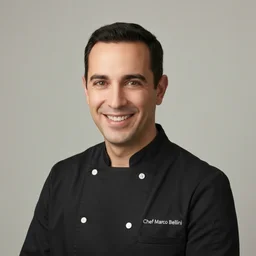
Executive Chef & Culinary Arts Certification Educator
Culinary Institute of AmericaChef Marco Bellini is a Certified Executive Chef and graduate of the Culinary Institute of America with over 20 years of professional kitchen experience in Michelin-recognized restaurants. He teaches culinary arts certification, food safety, and hospitality exam preparation, having guided thousands of culinary students through their ServSafe, ProStart, and professional chef certifications.
Join the Discussion
Connect with other students preparing for this exam. Share tips, ask questions, and get advice from people who have been there.
View discussion (7 replies)