
Bartender Essentials: The Complete Guide to Tools, Skills, and Certification
Master bartender essentials — tools, techniques, laws & certification tips. Your complete guide to launching a bartending career. 🎯

Understanding bartender essentials is the first step toward building a successful, long-lasting career behind the bar. Whether you are just starting out or preparing for your bartender certification exam, mastering the foundational tools, techniques, and legal knowledge separates good bartenders from great ones. The bar industry in the United States employs over 650,000 people, and employers consistently report that candidates who demonstrate solid knowledge of equipment, drink recipes, and liquor regulations get hired faster and earn more in tips from day one.
The modern bartender's role extends far beyond simply mixing drinks. Today's bar professionals are expected to manage inventory, control costs, understand state-specific liquor laws, recognize signs of intoxication, and deliver an exceptional guest experience — all simultaneously. According to the Bureau of Labor Statistics, the median annual wage for bartenders in the U.S. is approximately $30,000 in base pay, but skilled bartenders in high-traffic venues can earn $60,000 to over $100,000 per year when tips are factored in. The gap between those income levels almost always comes down to professional knowledge and certification.
Bartending certification programs have grown significantly over the past decade. Programs accredited by the American Bartenders Association and other recognized bodies now offer structured curricula covering spirit categories, cocktail technique, bar math, and responsible alcohol service. Completing a certification course — and passing the associated exam — signals to hiring managers that you are serious about the craft and invested in professional development. Many states even require a responsible beverage service certificate before you can legally pour alcohol in a commercial establishment.
Your foundational toolkit as a bartender begins with understanding the physical equipment in your workspace. A proper bar setup includes shakers (Boston and cobbler styles), jiggers, strainers (Hawthorne, Julep, and fine-mesh), bar spoons, muddlers, channel knives, vegetable peelers, and a reliable bottle opener and corkscrew. Knowing not just what each tool is, but when and how to use it correctly, is what the certification exam tests — and what experienced guests notice immediately when they watch you work.
Beyond equipment, speed and accuracy are measured by your knowledge of classic cocktail ratios and build sequences. The standard sour formula (two parts spirit, one part citrus, three-quarters part sweetener) underlies dozens of drinks. Understanding the difference between stirring and shaking — and why you stir spirit-forward drinks like Manhattans while shaking sours and dairy-based cocktails — reflects a level of technical literacy that separates certified professionals from self-taught hobbyists. These principles are heavily tested on bar certification exams across the country.
Cost control and inventory management round out the core of what certification programs assess. A bartender who free-pours generously might seem friendly, but over-pouring by just a quarter-ounce per drink can eliminate the bar's entire profit margin on that pour. Learning to use jiggers consistently, track par levels, calculate pour costs, and conduct weekly inventory counts protects the business's bottom line and demonstrates the kind of professional accountability that managers reward with promotions and raises.
This guide walks through every dimension of bartender essentials — from the equipment list and spirit categories to liquor law compliance and exam preparation strategies — so you can approach your certification with confidence and hit the floor running on your very first shift as a licensed bar professional.
Bartender Essentials by the Numbers
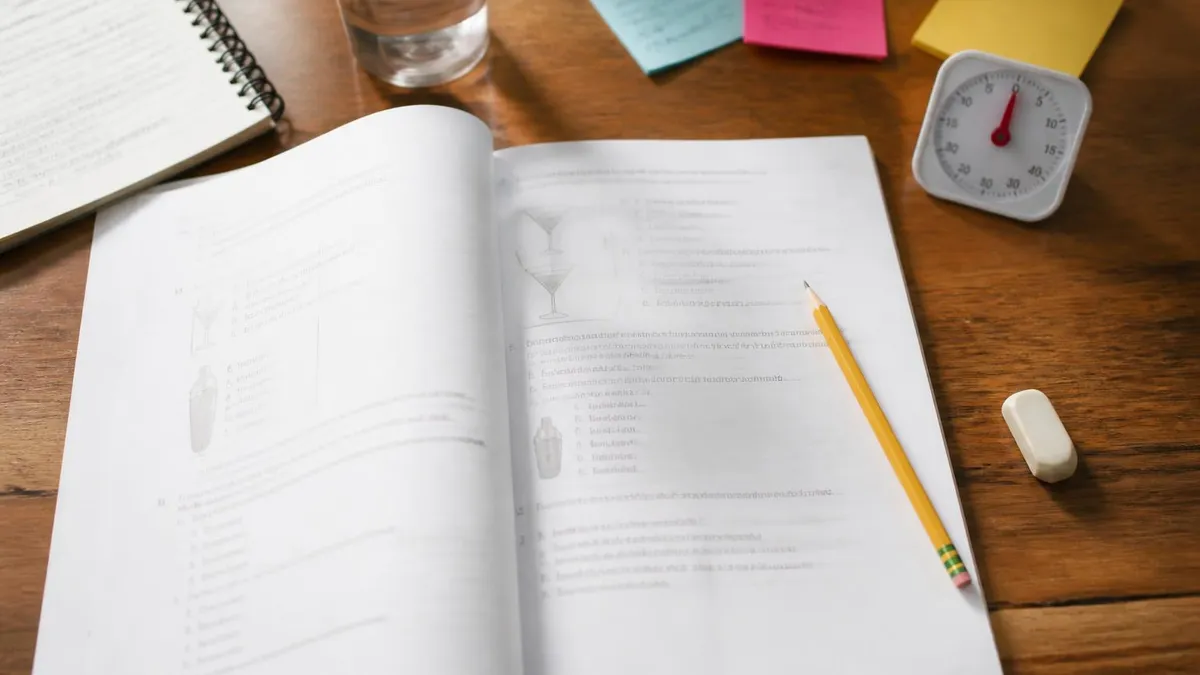
Essential Bar Tools Every Bartender Must Master
The Boston shaker (two-piece tin and glass) and cobbler shaker (three-piece with built-in strainer) are the workhorses of cocktail making. Boston shakers are preferred by professionals for speed and capacity; cobblers are beginner-friendly but slower under volume.
Accurate measurement is the backbone of consistent, profitable bartending. A standard jigger measures 1.5 oz on one side and 0.75 oz on the other. Many bars also use 1 oz and 2 oz jiggers. Consistent jigger use reduces over-pouring and keeps pour costs on target.
The Hawthorne strainer (with its coiled spring) fits tin shakers for cocktails shaken over ice. The Julep strainer is used for stirred, spirit-forward drinks served over a single large ice cube. A fine-mesh strainer catches small ice chips and fruit pulp for a refined presentation.
A long-handled bar spoon (ideally 40 cm) allows proper circular stirring technique without bruising ice. Muddlers extract essential oils and juices from herbs, citrus, and fruit. Channel knives and vegetable peelers create citrus twists that add aroma and visual elegance to finished cocktails.
A well-organized speed rail — holding your highest-volume spirits at hip level — is a professional efficiency multiplier. Standard rail placement puts well vodka, gin, rum, tequila, bourbon, and scotch in a predictable order so bartenders can grab bottles by feel without breaking eye contact with guests.
The six core spirit categories form the backbone of every bar's back-bar inventory and the foundation of virtually every cocktail examination you will encounter during certification. These categories are: vodka, gin, rum, tequila and mezcal, whiskey (including bourbon, rye, Scotch, Irish, and Japanese expressions), and brandy/cognac. Each category has distinctive production methods, flavor profiles, and classic cocktail applications that certification exams test in considerable depth. Understanding how distillation proof, aging vessels, and grain or fruit mash bills influence the final spirit is essential knowledge for a modern bar professional.
Vodka is the most-consumed spirit category in the United States by volume, appearing in everything from the Cosmopolitan and Moscow Mule to countless proprietary house cocktails. While vodka is defined by its neutrality — distilled to 95% ABV or higher and then diluted — quality differences between brands do emerge, particularly in mouthfeel and the character of any residual grain or potato notes.
On the certification exam, vodka questions typically focus on production standards, ABV requirements set by the TTB, and common cocktail builds like the Vodka Martini (2 oz vodka, 0.5 oz dry vermouth, garnished with olive or lemon twist).
Gin is vodka's botanical cousin, redistilled with a blend of botanicals where juniper must predominate by law in the United States and European Union. London Dry, Old Tom, Plymouth, and contemporary American craft gins each bring different botanical profiles and sweetness levels to cocktails. The Negroni (equal parts gin, sweet vermouth, and Campari) and the classic Gin & Tonic are among the most frequently tested gin cocktails on bartending certification exams, along with the Tom Collins, Gimlet, and Aviation.
Rum's diversity is one of the most complex topics in bartending education. Produced from sugarcane juice or molasses, rum spans a spectrum from light Puerto Rican styles to funky Jamaican rums, rich Barbadian expressions, and aged Agricole rums from Martinique that carry an AOC designation. Light rum appears in Daiquiris and Mojitos; dark and aged rums shine in the Dark and Stormy, Painkiller, and various tiki cocktails. Certification exams frequently test rum's geographic production regions and the distinction between column-distilled and pot-distilled styles.
Whiskey represents perhaps the widest category on any bartending exam. Bourbon must be produced in the United States from a mash of at least 51% corn, aged in new charred oak containers, and distilled to no more than 160 proof. Rye whiskey substitutes rye grain as the primary mash ingredient. Scotch must be distilled in Scotland and aged a minimum of three years, with Single Malt, Blended Malt, Single Grain, Blended Grain, and Blended Scotch as the five official sub-categories. These legal definitions appear directly on certification exams as multiple-choice questions about production requirements.
Tequila and mezcal have surged in American market share over the past decade, making them increasingly prominent on certification exams and bar menus. Tequila must be produced in specific Mexican states from blue agave (Agave tequilana Weber), while mezcal can use multiple agave varieties and is produced in a broader geographic region, often with pit-roasting that creates its characteristic smoky flavor. Blanco, reposado (aged 2 to 12 months in oak), and añejo (aged 1 to 3 years) are the primary tequila age classifications, with extra añejo representing spirits aged over three years.
Brandy and cognac round out the six major spirit categories. Cognac is a brandy produced in the Cognac region of France from specific grape varieties, double-distilled in copper pot stills, and aged in Limousin oak. VS (at least 2 years), VSOP (at least 4 years), and XO (at least 10 years) are the official age designations. The Sidecar, Brandy Alexander, and Pisco Sour are common brandy-category cocktails tested in certification programs, alongside American apple brandies like Laird's Applejack that hold a special place in United States cocktail history.
Bar Inventory, Cost Control & Business Math
Pour cost is calculated by dividing the cost of the spirit used in a drink by the drink's selling price, then multiplying by 100 to get a percentage. Industry standard targets range from 18% to 22% for spirits and 20% to 28% for beer and wine. A well-managed bar tracks pour cost weekly, comparing actual usage against theoretical usage based on sales data. When actual pour cost exceeds theoretical, it signals over-pouring, spillage, theft, or unrecorded comps that need immediate investigation.
Consistent jigger use is the single most effective way to control pour cost on the floor. Studies of high-volume bars have shown that switching from free-pouring to jigger-measured pours reduces spirit usage by 10% to 25% without any change in guest satisfaction. Many bar managers conduct periodic spot-checks by bottle-weighing spirits before and after a shift, comparing weight differences to the number of drinks sold in the POS system. Bartenders who understand this process — and why it matters — are trusted with more responsibility and advancement opportunities.

Pursuing Bartender Certification: Is It Worth It?
- +Higher starting pay — certified bartenders average $3–$5 more per hour in starting wages at competitive establishments
- +Faster hiring — certification signals professionalism and reduces employer training risk and onboarding time
- +Legal compliance knowledge — understanding TIPS and RBS requirements protects you from personal liability if a guest causes harm after service
- +Career advancement — lead bartender and bar manager roles overwhelmingly go to candidates with formal credentials
- +Expanded cocktail knowledge — structured programs cover spirit categories, classic recipes, and technique far beyond self-study
- +Networking opportunities — certification programs connect you with industry professionals, mentors, and potential employers in your local market
- −Upfront cost — quality bartending programs range from $300 to $1,500 in tuition, which is a significant investment before earning a paycheck
- −Time commitment — most accredited programs run 8 to 12 weeks with evening or weekend schedules that conflict with existing jobs
- −Not always legally required — many states allow uncertified bartenders to work, making some employers indifferent to certification status
- −Quality varies by program — not all bartending schools are equal; some offer certificates with little employer recognition or industry credibility
- −Practical experience still required — certification alone does not substitute for hundreds of hours behind a real bar developing speed and muscle memory
- −Certification expires — responsible service certifications like TIPS and ServSafe Alcohol require renewal every three years, adding recurring cost
Pros and Cons at a Glance
| Pros | Cons |
|---|---|
| Faster hiring — certification signals professionalism and reduces employer training risk and onboarding time | Not always legally required — many states allow uncertified bartenders to work, making some employers indifferent to certification status |
| Legal compliance knowledge — understanding TIPS and RBS requirements protects you from personal liability if a guest causes harm after service | Quality varies by program — not all bartending schools are equal; some offer certificates with little employer recognition or industry credibility |
| Career advancement — lead bartender and bar manager roles overwhelmingly go to candidates with formal credentials | Practical experience still required — certification alone does not substitute for hundreds of hours behind a real bar developing speed and muscle memory |
| Expanded cocktail knowledge — structured programs cover spirit categories, classic recipes, and technique far beyond self-study | Certification expires — responsible service certifications like TIPS and ServSafe Alcohol require renewal every three years, adding recurring cost |
Bartender Certification Exam Preparation Checklist
- ✓Study the legal drinking age (21) and acceptable forms of ID in your state, including military IDs, passports, and state-issued driver's licenses.
- ✓Memorize the standard jigger measurements: 0.5 oz, 0.75 oz, 1 oz, 1.5 oz, and 2 oz and when each is used in cocktail recipes.
- ✓Learn the IBA official cocktail list and be able to build at least 50 classic cocktails from memory by ingredient and method.
- ✓Practice the pour cost formula: (ingredient cost ÷ selling price) × 100, and calculate examples until it becomes automatic.
- ✓Review your state's specific dram shop liability laws and understand when a bartender can be held legally responsible for guest behavior.
- ✓Study the TTB legal definitions for bourbon, rye whiskey, vodka, gin, rum, and brandy including minimum ABV requirements and production rules.
- ✓Practice identifying signs of intoxication: slurred speech, lack of coordination, bloodshot eyes, loud or aggressive behavior, and odor of alcohol.
- ✓Learn the FIFO inventory method (First In, First Out) and why it matters for product freshness and accurate cost accounting.
- ✓Review proper glassware types — rocks glass, highball, coupe, martini, wine, pint, flute, snifter — and which cocktails are served in each.
- ✓Take at least three full-length practice exams under timed conditions before your scheduled certification test date.
Liquor Law Questions Account for Up to 30% of Most Certification Exams
Many candidates focus exclusively on cocktail recipes and spirit knowledge, but dram shop liability, responsible service protocols, and state-specific liquor regulations consistently represent the largest single topic cluster on bartender certification exams. Dedicate at least one-third of your total study time to legal and compliance content — it is the difference between passing comfortably and retaking the exam at additional cost.
Liquor laws in the United States operate on a complex three-tier system that every certified bartender must understand. The three tiers are: producers and importers at the top, licensed distributors in the middle, and licensed retailers (including bars and restaurants) at the bottom. This system was established after the repeal of Prohibition in 1933 to prevent the vertical monopolies and tied-house arrangements that had created significant social problems in the pre-Prohibition era. Bartenders working in licensed establishments operate at the third tier and are directly subject to their state's Alcohol Beverage Control (ABC) agency regulations.
Dram shop liability is one of the most legally consequential concepts covered in bartending certification programs. Under dram shop laws, a bar or individual bartender can be held civilly liable for damages caused by a visibly intoxicated guest who was served alcohol and subsequently harmed themselves or others. All 50 states have some form of dram shop statute, though the specific standards of proof and liability limits vary significantly. In some states like Texas, injured third parties can sue both the establishment and the server personally. Understanding this creates a strong professional incentive to refuse service responsibly.
Age verification is a non-negotiable legal requirement in every U.S. jurisdiction. The National Minimum Drinking Age Act of 1984 established 21 as the legal drinking age nationwide, tied to federal highway funding. Bartenders are expected to check identification for any guest who appears to be under 30 — a standard known as the «30-and-under» rule in most training programs. Acceptable forms of ID typically include state driver's licenses and ID cards, U.S. passports, military identification cards, and permanent resident cards. Photocopied or expired IDs are never acceptable.
Responsible Beverage Service (RBS) training programs such as TIPS (Training for Intervention ProcedureS), ServSafe Alcohol, and TAM (Techniques of Alcohol Management) are recognized across the industry and often required by state law. California, for instance, enacted AB 1221 requiring all servers and bartenders to complete a state-approved RBS training program by a specific compliance deadline. These programs teach practical intervention skills: how to approach an intoxicated guest, how to offer non-alcoholic alternatives, how to call a cab or rideshare service, and how to document refusal of service in case of future legal proceedings.
Last-drink liability is a particularly high-stakes area of liquor law that certification exams test in scenario-based questions. If a bartender serves a guest what turns out to be their last drink before a DUI accident, the bartender and establishment may face civil liability even if the guest showed subtle signs of intoxication rather than obvious ones. Courts have ruled that bartenders are held to a professional standard of observation — meaning a trained bartender should notice behavioral cues that a layperson might miss. This professional standard is why certification carries legal weight in liability proceedings.
Hours of operation laws and special event permit requirements represent another dimension of liquor law coverage on certification exams. Most states restrict alcohol sales to specific hours — typically between 7:00 AM and 2:00 AM, though these windows vary significantly by state and municipality. Special events like private parties, festivals, and temporary outdoor service often require separate catering permits or banquet licenses. Bartenders working catered events need to understand that their personal certification does not automatically authorize service — the event organizer must hold the appropriate temporary license or permit for service to be legal.
Minors in licensed establishments create additional legal considerations beyond simply not serving them alcohol. Many states prohibit minors from being in bar areas entirely after certain hours, while others allow minors in establishments that derive most of their revenue from food service. The on-premise versus off-premise distinction matters as well: liquor stores have different ID verification standards and sale hours than bars and restaurants. Certified bartenders who understand these distinctions can advise management on compliance and avoid costly ABC violations that can result in fines, license suspension, or permanent revocation of the establishment's liquor license.

Under dram shop laws in most U.S. states, individual bartenders can face personal civil lawsuits if they serve a visibly intoxicated guest who subsequently causes injury or death. Your employer's liquor liability insurance may not fully cover you as an individual defendant. Document refused service in writing whenever possible, and never feel pressured by a manager or guest to continue serving someone who shows signs of intoxication.
Career growth in bartending follows a relatively predictable trajectory for professionals who invest in certification and consistent skill development. The entry-level path typically begins with a barback position — the support role responsible for restocking ice, beer, and supplies, washing glassware, and keeping the bar clean during service. Most working bartenders spent at least six months to a year as a barback before earning a shift at the stick, and this apprenticeship period is invaluable for observing experienced bartenders manage volume, handle difficult guests, and build efficient workflows under pressure.
From bartender, the natural advancement path leads to lead bartender, then bar manager or beverage director, and eventually to ownership, consulting, or brand ambassador work. Lead bartenders typically earn 15% to 25% more than junior staff and take on additional responsibilities like training new hires, ordering product, and managing the weekly schedule. The most common qualification managers look for when promoting to lead is a combination of technical competency, certification credentials, and demonstrated reliability over at least 12 to 18 months of consistent service without incidents.
Bar managers in major U.S. cities command salaries between $45,000 and $80,000 annually, with beverage directors at hotel groups or multi-location restaurant chains earning $90,000 to $130,000 or more. These senior roles require deep knowledge of purchasing and vendor relationships, budget management, staff development, and menu design — skills that are introduced in advanced certification programs and refined through years of floor experience. Building relationships with spirit brand representatives early in your career opens doors to educational seminars, free product samples, and eventually brand ambassador or sales representative opportunities that offer high pay and travel benefits.
Specialization is an increasingly viable career path for ambitious bartenders. Becoming a Certified Sommelier through the Court of Master Sommeliers, earning a WSET (Wine and Spirit Education Trust) Level 3 or 4 qualification, or pursuing the title of Master Distiller can dramatically expand your earning potential and professional reputation.
Mixologists who specialize in cocktail menu development are hired as consultants by restaurant groups launching new concepts, earning project fees of $5,000 to $25,000 per engagement. Competition bartending — through events like the Diageo World Class competition or Bacardi Legacy — offers prize money, international recognition, and sponsorship opportunities for the very best.
Geographic location has a significant impact on bartender earnings. Cities with thriving hospitality industries and high costs of living pay substantially more. Bartenders in New York City, San Francisco, Las Vegas, and Miami consistently report the highest total compensation, often exceeding $80,000 annually when tips are included.
Conversely, bartenders in rural markets or smaller cities may earn $35,000 to $45,000. The seasonality of tourist destinations like ski resorts or beach communities creates opportunities to earn at peak rates for five to six months and either travel or work a secondary job in the off-season — a lifestyle that many bartending professionals actively choose and enjoy.
Side income streams are common in the bartending profession and can meaningfully supplement regular wages. Private event bartending, cocktail class instruction, content creation on social media platforms focused on cocktail education, and consulting for home bar enthusiasts all generate additional revenue for skilled bartenders with strong personal brands. Building a reputation as a knowledgeable and personable professional — one who guests seek out specifically — typically translates to higher tips, more referrals for private events, and eventually the kind of professional reputation that allows you to work on your own terms rather than someone else's schedule.
The long-term financial picture for committed bar professionals is genuinely attractive. While the starting hourly wage is modest, the combination of tips, advancement opportunities, side income, and the relatively low barrier to entry compared to other high-earning professions makes bartending one of the most accessible paths to a six-figure income for people without a four-year college degree. Investing in bartender essentials education, earning your certification, and approaching the craft with genuine professionalism are the levers that determine where on that income spectrum you ultimately land.
Practical preparation for your bartender certification exam begins weeks before the test date, not the night before. The most effective study strategies combine spaced repetition for memorizing spirit definitions and cocktail recipes with scenario-based practice for the legal and responsible service questions that require applied judgment rather than simple recall. Flashcard systems like Anki, which uses proven spaced repetition algorithms, work exceptionally well for cocktail builds, spirit production rules, and ABV requirements — all content that rewards repeated exposure over time rather than cramming sessions.
Practice exams are the single most valuable preparation tool available. Taking full-length timed practice tests under realistic conditions accomplishes several things simultaneously: it reveals content gaps you need to revisit, builds the mental stamina required to sustain concentration over a multi-hour exam, familiarizes you with the question format and phrasing style, and reduces test-day anxiety by making the exam format feel familiar. The practice tests available through PracticeTestGeeks cover bar inventory, cost control, and liquor law — the three content areas most heavily weighted on certification exams.
Building a physical practice routine alongside your study sessions accelerates skill development in ways that reading alone cannot. Set up a practice bar station at home with a Boston shaker, jigger, bar spoon, and strainer. Practice building the 20 most common cocktails until your hands move through the process automatically. Time yourself: a professional bartender should be able to build a Margarita, Whiskey Sour, or Old Fashioned in under 90 seconds during a busy service rush. Physical repetition creates muscle memory that complements your knowledge and makes you visibly more competent to hiring managers during working interviews.
Group study with other certification candidates offers benefits beyond shared notes. Teaching a concept to someone else is one of the most reliable ways to identify and fix gaps in your own understanding. Explaining why bourbon must be aged in new charred oak, or walking through the calculation of a pour cost percentage, forces you to articulate your knowledge clearly rather than assuming you understand it. Many bartending schools organize study groups in the weeks before exam dates; if yours does not, seek out industry forums or local hospitality networking groups where candidates connect informally.
Rest, nutrition, and physical readiness matter more for exam performance than most candidates acknowledge. Arriving at a multi-hour certification exam after an overnight bar shift — as many candidates in the industry are tempted to do — significantly impairs recall and decision-making on scenario-based questions. If possible, schedule your exam on a day off or after adequate sleep.
Eating a balanced meal two to three hours before the test sustains blood glucose at levels that support concentration. These logistics seem obvious but are frequently overlooked by candidates who invest heavily in content knowledge and neglect the physical conditions that allow that knowledge to perform.
Reviewing official state-specific guidelines immediately before your exam is time well spent. Liquor law regulations vary meaningfully between states — California's RBS requirements differ from those in Texas, which differ from New York's. If your certification is state-specific rather than nationally accredited, the exam will test the laws of your state. Download your state ABC agency's server training guidelines and read them cover to cover at least once. Cross-reference with your certification program's curriculum to confirm all state-specific content is covered in your materials or supplement with official sources where gaps exist.
After passing your certification exam, the learning should not stop. The best bartenders treat professional development as a continuous practice rather than a one-time credential. Attend industry seminars hosted by spirit brands, visit distilleries and breweries when traveling, read publications like Imbibe Magazine and The Bar Times, and follow respected figures in the craft cocktail community.
The bar industry evolves constantly — new spirit categories emerge, classic cocktails get reinterpreted, and guest expectations shift. Bartenders who stay curious and engaged with the craft remain relevant and in-demand throughout their careers, while those who stop learning after certification stagnate within a few years of entering the profession.
Sample Bartender Certification Practice Questions
Try these questions from our free Bartender Certification practice tests. The correct answer and an explanation follow each question.
What is the base ingredient of traditional Calvados?
- A. Grapes
- B. Plums
- C. Apples and/or pears
- D. Grain
Answer: C. Apples and/or pears
Calvados is a French apple (and sometimes pear) brandy from the Normandy region, distilled from fermented apple and/or pear cider and aged in oak barrels.
At what temperature must a bar's three-compartment sink's hot water rinse reach to meet sanitation standards?
- A. 110°F (43°C)
- B. 140°F (60°C)
- C. 170°F (77°C)
- D. 212°F (100°C)
Answer: B. 140°F (60°C)
The hot water rinse in a three-compartment sink must reach at least 140°F (60°C) per most health code standards to effectively kill bacteria on washed items.
What is the role of bitters in a cocktail?
- A. To sweeten the drink
- B. To add sourness
- C. To provide a concentrated burst of flavor and aroma
- D. To increase the alcohol content
Answer: C. To provide a concentrated burst of flavor and aroma
Bitters are highly concentrated alcoholic extracts infused with botanicals, herbs, spices, and fruit peels. In cocktails, they are used in small dashes to add complexity, balance flavors, and enhance the aroma, acting much like a seasoning for drinks. They typically introduce bitter, aromatic, or spicy notes rather than sweetness or sourness, rounding out the overall taste profile.
What is the primary function of the long, twisted or spiraled handle on a bar spoon?
- A. To measure a standard 1/2 ounce pour
- B. To break up large ice cubes more effectively
- C. To provide a better grip and facilitate a smooth, rolling stir
- D. To chill the handle of the spoon for faster cooling
Answer: C. To provide a better grip and facilitate a smooth, rolling stir
The twisted or spiraled handle of a bar spoon is designed to be held between the fingers, allowing the bartender to roll it smoothly and effortlessly around the inside of the mixing glass. This creates a vortex that chills and dilutes the drink with minimal agitation.
Bartender Bartender Questions and Answers
Bartending Classes Near Me: How to Find, Compare, and Choose the Right Local Training Program in 2026
How to Become a Bartender by State: Complete Requirements Guide for All 50 States

Did Ed Gein Really Kill the Bartender? The True Crime Myth vs. Bartending Reality
Mobile Bartending Names: 200+ Ideas to Brand Your Cocktail Business in 2026
Bartender Salary Maryland: Complete Pay Guide by City, Venue, and Experience for 2026
About the Author
Executive Chef & Culinary Arts Certification Educator
Culinary Institute of AmericaChef Marco Bellini is a Certified Executive Chef and graduate of the Culinary Institute of America with over 20 years of professional kitchen experience in Michelin-recognized restaurants. He teaches culinary arts certification, food safety, and hospitality exam preparation, having guided thousands of culinary students through their ServSafe, ProStart, and professional chef certifications.
Join the Discussion
Connect with other students preparing for this exam. Share tips, ask questions, and get advice from people who have been there.
View discussion (7 replies)