

Barbicide Test Practice Test
Updated October 2026Facts verified Oct 30, 2026 against King Research
Keeping salons, barbershops, and spas clean and safe is key. The Barbicide Certification is the top choice for infection control. This guide offers expert advice and detailed prep to help you ace the Barbicide Certification exam. Barbicide, a top disinfectant since 1947, is the standard for salon safety. The certification teaches you about dilution, application, and safety with Barbicide products. Knowing these basics is vital for cosmetologists to follow rules and protect everyone's health. Practice with the free Barbicide practice test on PracticeTestGeeks (7 questions with answer explanations).
If you're exploring other specialized certification resources, consider reviewing the 310t practice test to broaden your familiarity with structured testing formats used across trade and licensing exams.
Candidates preparing for sanitation and safety credentials often benefit from sampling adjacent material, such as the 313D practice test, which reinforces the methodical approach needed for multiple-choice assessments.
- The Barbicide Certification course and exam are offered completely free of charge.[1]
- The Barbicide Certification is delivered as a free self-paced online course taking less than an hour to complete.[2]
- The Barbicide Certification is open to anyone in the professional beauty industry who values salon, spa, or barbershop infection control.[3]
Numbers in brackets link to the official sources listed under Sources & last verified. Dates that have passed are removed automatically.
Barbicide Test Exam at a Glance
| Item | Detail | Source · Verified |
|---|---|---|
| Exam fee | Free[1] | King Research · Oct 30, 2026 |
| Delivery | Free self-paced online course (under 1 hour) with certificate[2] | barbicide.com · Oct 30, 2026 |
| Eligibility | Anyone in the Professional Beauty Industry[3] | King Research · Oct 30, 2026 |
What changed for Barbicide Test in 2026
Free Barbicide Test Study Tools
Interactive Barbicide Test resources on PracticeTestGeeks, free to start:
- Barbicide Test Bloodborne Pathogens 1 — 7 questions with answer explanations
- Barbicide Test flashcards — review key terms and concepts card by card
- Barbicide Test study guide — topic-by-topic overview of what the exam covers
- Barbicide Test cheat sheet — one-page printable summary for last-minute review
According to King Research, “This program is designed for anyone in the Professional Beauty Industry who believes that infection control is one of the most important concepts in the salon, spa or barbershop.”[3]
Barbicide Test Practice Test Questions
Prepare for the Barbicide Test exam with our free practice test modules. Each quiz covers key topics to help you pass on your first try.
Barbicide Test Allergen Management
Barbicide Test Exam Questions covering Allergen Management. Master Barbicide Test Test concepts for certification prep.
Barbicide Test Chemical Safety and Handling
Free Barbicide Test Practice Test featuring Barbicide Test Chemical Safety and Handling. Improve your Barbicide Test Exam score with mock test prep.
Barbicide Test Disinfection Levels and Met...
Barbicide Test Mock Exam on Barbicide Test Disinfection Levels and Methods. Barbicide Test Study Guide questions to pass on your first try.
Barbicide Test Bloodborne Pathogens
Barbicide Test Test Prep for Bloodborne Pathogens. Practice Barbicide Test Quiz questions and boost your score.
Barbicide Test Cleaning and Sanitizing
Barbicide Test Questions and Answers on Cleaning and Sanitizing. Free Barbicide Test practice for exam readiness.
Barbicide Test Cross-Contamination Prevention
Barbicide Test Mock Test covering Cross-Contamination Prevention. Online Barbicide Test Test practice with instant feedback.
Barbicide Test HACCP Principles
Free Barbicide Test Quiz on HACCP Principles. Barbicide Test Exam prep questions with detailed explanations.
Barbicide Test Personal Hygiene
Barbicide Test Practice Questions for Personal Hygiene. Build confidence for your Barbicide Test certification exam.
Barbicide Test Pest Control
Barbicide Test Test Online for Pest Control. Free practice with instant results and feedback.
Barbicide Test Regulatory Compliance
Barbicide Test Study Material on Regulatory Compliance. Prepare effectively with real exam-style questions.
Barbicide Test Temperature Control
Free Barbicide Test Test covering Temperature Control. Practice and track your Barbicide Test exam readiness.
Barbicide Test Barbicide Infection Control
Barbicide Test Exam Questions covering Barbicide Infection Control. Master Barbicide Test Test concepts for certification prep.
Barbicide Test Barbicide Proper Use of Bar...
Free Barbicide Test Practice Test featuring Barbicide Proper Use of Barbicide. Improve your Barbicide Test Exam score with mock test prep.
Worked examples: how to reason through Barbicide Test questions
These are practice questions written for this site, not questions from the real exam. Each explanation shows why the right answer is right and why the others are wrong.
Example 1
Question: In a salon setting, how are bloodborne pathogens most commonly transmitted?
- Through the air when a client coughs or sneezes
- Through direct skin-to-skin contact during massage
- Through contact with blood via cuts, nicks, or contaminated tools
- Through sharing combs and brushes
Answer: C. Through contact with blood via cuts, nicks, or contaminated tools
Explanation:
The correct answer is contact with blood through cuts, nicks or contaminated tools. Bloodborne pathogens live in blood, so they need a way into the body, and a break in the skin from a razor, a shears nick or a dirty implement provides it. Coughing and sneezing spread airborne germs, but that is not how these pathogens usually travel. Ordinary skin-to-skin contact, such as during a massage, does not carry them when the skin is intact. Sharing combs and brushes can spread other problems, such as lice, but it is not the usual route for bloodborne pathogens. The rule to remember: if a tool can break the skin, treat any blood on it as an exposure risk. Clean and disinfect that tool, or discard it if it cannot be disinfected, before the next client.
Example 2
Question: What does the abbreviation 'BBP' stand for in salon and barbershop safety?
- Basic Beauty Procedures
- Bloodborne Pathogens
- Body-Based Precautions
- Bacterial Barrier Protection
Answer: B. Bloodborne Pathogens
Explanation:
BBP stands for Bloodborne Pathogens, which are microorganisms in human blood that can cause disease when passed to another person. The other options sound plausible, but none is a real safety term. Basic Beauty Procedures describes routine services, not a hazard. Body-Based Precautions and Bacterial Barrier Protection borrow words from infection control and combine them into names nobody uses. When you meet an abbreviation on a safety question, expand it from the hazard it names, here the pathogen carried in blood, rather than choosing the answer that merely sounds like a rule or a procedure. Learning the common abbreviations early also makes later questions on exposure and cleanup easier to read.
Example 3
Question: What record-keeping requirement supports haccp principles compliance?
- Records are only needed during health inspections
- Maintain ongoing logs for temperatures, cleaning schedules, supplier verification, and corrective actions
- Record-keeping is optional for small operations
- Keep records for one week only
Answer: B. Maintain ongoing logs for temperatures, cleaning schedules, supplier verification, and corrective actions
Explanation:
The correct answer is to keep ongoing logs for temperatures, cleaning schedules, supplier verification and corrective actions. Records show that controls are working all the time, not only on a bad day. Keeping records only for health inspections is wrong because a log written just before an inspection proves nothing. Calling record-keeping optional for small operations is wrong because the duty follows the process, not the size of the business. Keeping records for a single week is wrong because a short history cannot show a pattern or support a corrective action. The rule to remember: if you did a safety task, write it down when you do it, and keep the record available for review. The same habit applies to cleaning and disinfection logs in a salon.
How to use these practice tests
Start with the official course, since the certificate comes from it. Take it once at a steady pace and keep notes on any term you could not explain aloud, such as cleaning versus disinfecting.
Then use the practice sets. Begin with the infection control and understanding disinfection sets, then move to proper use of Barbicide, cleaning and sanitizing, and bloodborne pathogens. Answer each question before you read the explanation. For every miss, write the rule in a sentence of your own, not the answer letter.
Treat the food-safety sets, such as HACCP principles, allergen management, temperature control and pest control, as optional extra practice. Their ideas about records and cross-contamination carry over, but they are not the main topic.
- Redo the sets you missed the most after a day or so.
- Practise explaining each wrong option, not only the right one.
- Read the course again, focusing on your weak areas, before you take the test.
Check the official site for the exact format and rules, because our questions are written by us and do not predict real wording.
Key Takeaways
Free Barbicide Practice Test Online
- Barbicide Certification ensures proper infection control and safety in salons, barbershops, and spas.
- The certification covers essential topics like dilution ratios, application methods, and safety protocols for Barbicide products.
- Passing the Barbicide Certification exam demonstrates compliance with industry regulations and a commitment to client and staff safety.
- Barbicide is effective against a range of pathogens, including HIV-1, Hepatitis B, Hepatitis C, MRSA, and Influenza.
- This study guide provides expert tips and step-by-step guidance to help you prepare and succeed in the Barbicide Certification exam.
Understanding Barbicide Certification Fundamentals
Getting Barbicide certified is key for those in cosmetology and barbering. It means following strict infection control rules and using barbicide concentrate right. This keeps work areas safe and clean. Knowing what's needed and how to do it is crucial.
- ✓Confirm your exam appointment and location
- ✓Bring required identification documents
- ✓Arrive 30 minutes early to check in
- ✓Read each question carefully before answering
- ✓Flag difficult questions and return to them later
- ✓Manage your time — don't spend too long on one question
- ✓Review flagged questions before submitting
Essential Equipment and Supplies
You'll need Barbicide Concentrate, spray bottles, and wipes for certification. Also, products like Clippercide and Ship-Shape cleaners are good to use. They help keep everything clean and germ-free.
Proper Dilution and Application Methods
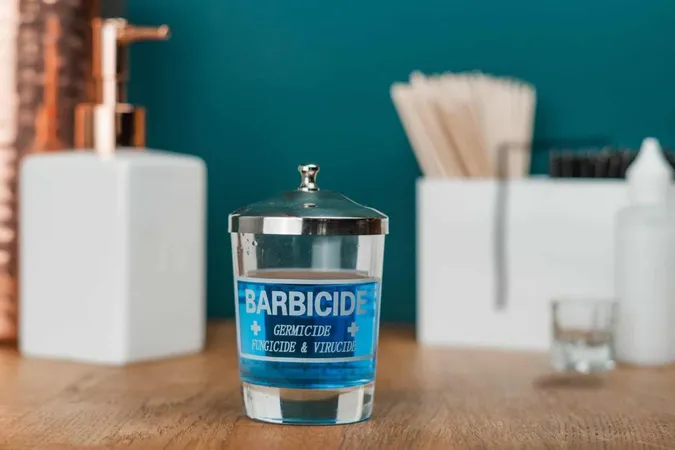
It's important to mix the Barbicide Concentrate correctly. Use ¼ cup (2oz) of concentrate in 4 cups (32oz) of water. You can soak, spray, or wipe surfaces. But, no matter how you apply it, leave it on for 10 minutes for soaking and spraying. Wipes need 2-4 minutes to disinfect well.
Safety Protocols and Best Practices
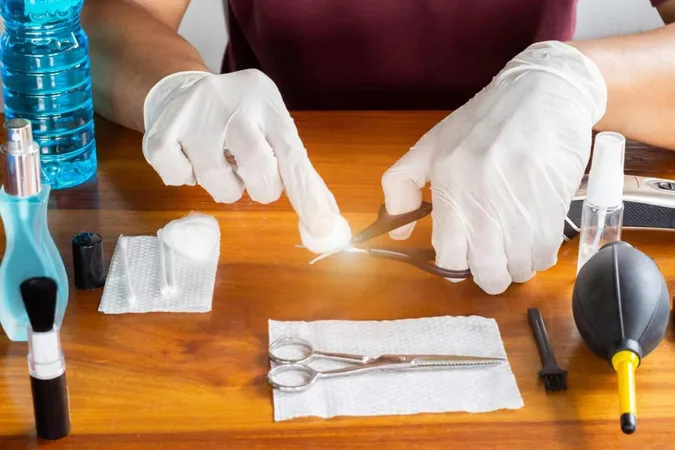
Keeping safe and following state board rules is a must. This means making fresh Barbicide solution every day and storing tools right. Always follow EPA guidelines for disinfectants. Clean before you disinfect, use EPA-registered products, and follow local laws for your field.

Professional Infection Control and Barbicide Certification
Keeping a clean and safe space is key in the grooming world. The Barbicide Certification teaches salon pros how to keep things clean. This ensures everyone's health.
The core of the program is using Barbicide right. You learn how to mix and apply it to kill germs fast. For example, Barbicide RTU Spray can kill COVID-19 in 30 seconds.
The course also teaches important safety habits. This includes washing hands well, wearing PPE, and managing appointments. These steps keep the salon safe and make clients feel secure.
Getting a cosmetology license is just the start. The Barbicide Certification makes you a pro at keeping things clean. It shows you care about health and safety.
| Key Benefits of Barbicide Certification | Feedback from Industry Professionals |
|---|---|
|
|
How to Get Your Barbicide Certification Online
Barbicide certification is a free credential offered through the Barbicide COVID-19 Certification course hosted by King Research, the maker of Barbicide disinfectant. The course takes roughly 20-30 minutes to complete and covers proper dilution ratios (2 ounces per 32 ounces of water), immersion times (minimum 10 minutes), and cross-contamination prevention in salon settings.
Printable Barbicide Certificate
After passing the final assessment with a score of 80% or higher, you can download and print a personalized certificate bearing your name and completion date. Many state boards and salon owners accept this certificate as proof of sanitation training, though it does not replace a state cosmetology or barbering license.
Conclusion
The Barbicide Certification is key for keeping the beauty industry clean and safe. It teaches professionals how to use Barbicide products right. This ensures they follow all state and federal rules.
As the beauty world faces new challenges, like COVID-19, Barbicide Certification is more important than ever. It shows beauty workers care about their clients' safety. This builds trust and helps the industry grow.
Keeping the beauty industry clean and safe is crucial. The Barbicide Certification program helps beauty pros do just that. It lets them provide top-notch, safe, and compliant services to their clients.
Sources & last verified
- King Research — exam fee (official source). “BARBICIDE® Certification (English) Course The original! Since 2012, the BARBICIDE® Certification has certified thousands of beauty industry professionals in infection control consistent with the current…” Verified Oct 30, 2026 · source checked Oct 30, 2026.
- barbicide.com — delivery (official source). “Complete the FREE Course that takes less than an hour earning you a portfolio-ready certificate showing your dedication to infection control in salons, spas, and…” Verified Oct 30, 2026 · source checked Oct 30, 2026.
- King Research — eligibility (official source). “This program is designed for anyone in the Professional Beauty Industry who believes that infection control is one of the most important concepts in the…” Verified Oct 30, 2026 · source checked Oct 30, 2026.
How we verify: editorial & fact-checking policy. Report an error: contact us.
Barbicide Test: Pros and Cons
- +Barbicide Test certification validates expertise recognized by employers nationwide
- +Certified professionals typically earn 15-20% higher salaries
- +Opens doors to advanced positions and leadership roles
- +Demonstrates commitment to professional standards and ethics
- +Builds a strong professional network through certification communities
- −Exam preparation typically requires 2-4 months of dedicated study
- −Certification and exam fees can range from $150-$500+
- −Must complete continuing education to maintain active certification
- −Pass rates vary — thorough preparation is essential for success
- −Some certifications require prerequisite experience or education
Sample Barbicide Test Practice Questions
Try these questions from our free Barbicide Test practice tests. The correct answer and an explanation follow each question.
Which of the following is a high-level disinfectant?
- A. Soap and water
- B. Alcohol
- C. Barbicide
- D. Hydrogen peroxide
Answer: C. Barbicide
Barbicide is an EPA-registered hospital-grade disinfectant specifically formulated for use in salons and barbershops. It is classified as a high-level disinfectant because it is effective against a broad spectrum of bacteria, viruses, and fungi on non-porous surfaces. This makes it a crucial tool for preventing the spread of infections through contaminated tools and equipment.
What record-keeping requirement supports cross-contamination prevention compliance?
- A. Records are only needed during health inspections
- B. Maintain ongoing logs for temperatures, cleaning schedules, supplier verification, and corrective actions
- C. Record-keeping is optional for small operations
- D. Keep records for one week only
Answer: B. Maintain ongoing logs for temperatures, cleaning schedules, supplier verification, and corrective actions
Ongoing documentation of temperatures, cleaning, suppliers, and corrective actions demonstrates due diligence and regulatory compliance.
What should be done with tools and implements after they are disinfected in Barbicide?
- A. Leave them in the Barbicide solution until the next client
- B. Use them immediately without drying
- C. Dry them with a clean towel or allow them to air dry
- D. Store them in the Barbicide solution for longer disinfection
Answer: C. Dry them with a clean towel or allow them to air dry
After the required contact time in Barbicide, tools must be removed, rinsed with clean water to remove any disinfectant residue, and then thoroughly dried. Drying can be done with a clean, disinfected towel or by allowing them to air dry. Once dry, they should be stored in a clean, closed container to prevent recontamination and ensure they are ready for safe use with the next client.
What should be done with towels and linens after each use in a salon?
- A. Reuse them without washing
- B. Wash them thoroughly and dry them before reusing
- C. Only wash them once a week
- D. Leave them in the client’s chair
Answer: B. Wash them thoroughly and dry them before reusing
Towels and linens are porous materials that can easily harbor bacteria, viruses, and fungi after use, posing a significant risk of cross-contamination. To prevent the spread of infections, all used towels and linens must be laundered thoroughly with hot water and detergent, then dried completely, before being used again. This ensures they are clean and hygienic for each new client.
Barbicide Test Questions and Answers
How this page was made: written with AI tools and published by Nathan Beja, founder of Practice Test Geeks, who is responsible for its content. Exam facts are checked against the official sources listed below. Not reviewed by a subject-matter expert. Editorial policy
Sources & references
Exam facts on this page (fees, format, dates, passing scores) are checked against these official sources; the date is our last check. Editorial policy
- barbicide.thinkific.com — Eligibility, fees · verified Oct 2026
- barbicide.com — Test delivery · verified Oct 2026