

BARB Practice Test
Updated October 2026Facts verified Oct 30, 2026 against British Army
The BARB (British Army Recruit Battery) Test is a computer-based exam. It’s used by the British Army to check if potential soldiers are a good fit. This test is the first hurdle for those wanting to join the army, focusing on critical thinking and problem-solving. These skills are key for many jobs in the military. Practice with the free BARB - British Army Recruit Battery practice test on PracticeTestGeeks (100+ questions with answer explanations).
This test looks at how fast you can understand things and make logical decisions. It puts you under time pressure to see how you perform. Even if you don’t score high, the test will help guide you to roles that suit your abilities best.
- The British Army Cognitive Test (ACT) is made up of 5 sub-tests.[1]
- The British Army recruit cognitive ability test is taken on a computer during the 3-day / 2-night soldier assessment.[2]
- Candidates receive their British Army Assessment Centre results at the end of their stay.[2]
Numbers in brackets link to the official sources listed under Sources & last verified. Dates that have passed are removed automatically.
BARB Exam at a Glance
| Item | Detail | Source · Verified |
|---|---|---|
| Number of questions | 5 sub-tests[1] | practicequestions.mindmill.co.uk · Oct 30, 2026 |
| Delivery | Computer-based, at the Army Assessment Centre (3 days / 2 nights)[2] | British Army · Oct 29, 2026 |
| Score release | At the end of the Assessment Centre stay[2] | British Army · Oct 29, 2026 |
What changed for BARB in 2026
Free BARB - British Army Recruit Battery Study Tools
Interactive BARB - British Army Recruit Battery resources on PracticeTestGeeks, free to start:
- Free BARB Numerical Ability Questions and Answers — 11 questions with instant scoring and answer explanations
- BARB - British Army Recruit Battery flashcards — review key terms and concepts card by card
- BARB - British Army Recruit Battery study guide — topic-by-topic overview of what the exam covers
- BARB - British Army Recruit Battery cheat sheet — one-page printable summary for last-minute review
According to British Army, “The ACT is made up of 5 sub-tests – you will find some easier than others.”[1]
BARB Practice Test Questions
Prepare for the BARB - British Army Recruit Battery exam with our free practice test modules. Each quiz covers key topics to help you pass on your first try.
BARB Distance Speed and Time
BARB Exam Questions covering Distance Speed and Time. Master BARB Test concepts for certification prep.
BARB Letter Checking
Free BARB Practice Test featuring Letter Checking. Improve your BARB Exam score with mock test prep.
BARB Mechanical Comprehension
BARB Mock Exam on Mechanical Comprehension. BARB Study Guide questions to pass on your first try.
BARB Word Association
BARB Mock Test covering Word Association. Online BARB Test practice with instant feedback.
Worked examples: how to reason through BARB questions
These are practice questions written for this site, not questions from the real exam. Each explanation shows why the right answer is right and why the others are wrong.
Example 1
Question: Three engineers each repair 8 vehicles per day. How many vehicles do they repair in 5 days?
- 100
- 130
- 120
- 110
Answer: C. 120
Explanation:
The correct answer is C, 120. Three engineers each repair 8 vehicles per day, so find the team's output for a single day first (3 × 8), then multiply by the 5 days. Only option C follows from 3 × 8 × 5.
Options A (100) and D (110) are round-looking totals that do not come from any step of the working, so they tempt people who estimate. Option B (130) is close in size but also does not match the calculation. Distractors in work-rate questions often sit near the true answer, which punishes rushing.
The rule to remember: combine everyone's rate into a daily total, then multiply by the number of days, and check the answer is in the unit the question asks for, here vehicles. Write each step down instead of estimating.
Example 2
Question: Two objects are connected by a rope over a frictionless pulley. Object A weighs 8 kg and Object B weighs 5 kg. Which way will the system move?
- Object B descends
- They remain stationary
- Object A descends
- They oscillate indefinitely
Answer: C. Object A descends
Explanation:
The correct answer is C, Object A descends. With a rope over a frictionless pulley, the heavier object pulls the lighter one up. Object A weighs 8 kg and Object B weighs 5 kg, so A goes down and B goes up.
Option A is wrong because B would only descend if it were the heavier object. Option B is wrong because a system stays still only when the two sides are balanced, and 8 kg against 5 kg is not balanced. Option D is wrong because oscillation needs something that pulls the system back, such as a spring. A simple pulley with unequal weights just accelerates in one direction until something stops it.
The rule to remember: the heavier side goes down, the lighter side goes up, and equal weights balance. Frictionless means nothing resists that motion.
Example 3
Question: Which word is most closely associated with 'TERRAIN'?
- WEATHER
- LANDSCAPE
- EQUIPMENT
- PERSONNEL
Answer: B. LANDSCAPE
Explanation:
The correct answer is B. TERRAIN describes the physical features of an area of ground, and option B is the word that names the same thing from a slightly different angle. When you read both words, they describe the same kind of thing.
Option A, WEATHER, is related to the outdoors but describes the atmosphere and conditions above the ground, not the ground itself. Option C, EQUIPMENT, is what people carry or use, so it describes objects rather than a place. Option D, PERSONNEL, means the people in a unit, which is again a different category from a physical area.
The rule to remember: ask what category the target word belongs to, then choose the option that sits in that same category. Words that merely appear in the same setting, such as weather and terrain in a field exercise, are a common trap.
How to use these practice tests
Start with the official British Army soldier assessment page so you know what the day involves and what the Army says about the test. Note anything you are unsure about and put it to your recruiter, because details can vary by role.
Next, take one practice set from each topic once, without time pressure, just to see where you stand. The topics are Numerical Ability, Distance, Speed and Time, Work Rate, Reasoning, Odd One Out, Letter Checking, Mechanical Comprehension, Word Association and Structure.
After that, spend most of your time on the areas where you made the most mistakes. For every wrong answer, read the explanation and write down the rule in your own words. Repeat the same set a few days later to see whether the rule stuck.
In the final days, practise on a computer screen in a quiet room, as the real test is computer-based, and keep sessions short enough that you stay alert. Rest matters more than a last cram.
Key Takeaways
Free BARB Practice Test Online
- The BARB test is a computer-based psychometric assessment used by the British Army to evaluate potential recruits.
- The test measures an applicant’s analytical and problem-solving skills, which are essential for various army roles.
- The BARB test results determine eligibility for the recruitment process and inform the selection of suitable army roles for the candidate.
- Achieving a higher score on the BARB test can open up a wider range of career opportunities within the British Army.
- Preparation and practice are crucial to perform well on the BARB test and increase the chances of securing a desired army position.
What Is Being Assessed in the BARB Test?
Introduction to the BARB Test
The BARB (British Army Recruit Battery) test is a key part of the British Army’s selection process. It helps find out if a potential soldier can tackle complex problems. It looks at important skills like verbal reasoning, numerical reasoning, and spatial awareness. These skills are needed for many roles in the army.
This test checks how well you can think critically and solve problems under pressure. There are different parts, each focusing on a unique skill:
- Reasoning: Tests if you can use logic to solve problems.
- Letter Checking: Gauges your attention to detail and spot mistakes quickly.
- Number Fluency: Looks at your math and data interpretation skills.
- Word Rules: Measures your understanding of language patterns and relationships.
- Deductive Reasoning: Assesses your ability to make logical conclusions from facts.
By looking at these skills, the British Army can pick the right people for its many jobs. It makes sure new soldiers can handle the challenges of military life.
For the BARB test, it’s a good idea to practice with online practice tests. This way, you’ll get familiar with the test’s style and questions. Military aptitude tests and British Army guides can also offer tips and help you do well in the BARB test.

BARB Test Structure and Format
The BARB (British Army Recruit Battery) test checks a person’s thinking skills using a computer. It has five parts, each testing a different area of a candidate’s mind. This helps the British Army see if someone has what it takes to do well.
These are the sections in the BARB test:
- Reasoning: Candidates need to solve problems and think logically here.
- Letter Checking: This test looks at how fast and accurate a candidate can spot errors.
- Number Distance: It evaluates a candidate’s math reasoning.
- Odd One Out: Candidates must figure out patterns and differences.
- Symbol Rotation: This part is all about understanding shapes and how they change.
In the BARB test, there’s about 30 minutes to answer all the questions. Candidates should be quick and right with their answers. The test happens at the local Army Careers Centre. There, candidates get a practice round and see example questions before the real test starts.
The BARB test is very important for joining the British Army. It checks if a person has the right mind for military work. After the test, the General Training Index (GTI) helps the Army place candidates in jobs that fit their skills best.
Along with the BARB test, candidates also take a Literacy test and a Numeracy test. These check reading, writing, and math skills. It’s to make sure new recruits can talk, understand, and do what’s needed in the Army.
It’s smart for candidates to practice with the online tests on the British Army site. This way, they get used to the BARB, Literacy, and Numeracy tests. Good preparation can help candidates do well and get the Army job they want.
How Is the BARB Test Scored?
BARB (British Army Recruit Battery) Test Scoring and Roles
The BARB test in the British Army looks at how well you do and how quickly you finish. Your final score is called the General Trainability Index (GTI). To move ahead in the British Army’s process, you need a GTI score of at least 26.
Depending on your GTI score, you might qualify for different army jobs. Higher scores open the door to more special or higher-level roles. The top GTI score you can get is 60. You’re allowed up to three tries, but you must wait 28 days between each. Your test results are good for 24 months, giving you time to consider different army roles.
The BARB test is made up of five parts. Each one aims to see how well you think, which is key for military work:
- Error Detection Test: Checks how fast you find mistakes in information.
- Orientation Test: Sees how quick you are to remember and think logically under stress.
- Number Fluency Test: Tests your math and memory skills.
- Word Rules Test: Looks at how well you understand rules for words in a sentence.
- Deductive Reasoning Test: Measures your ability to make logical conclusions.
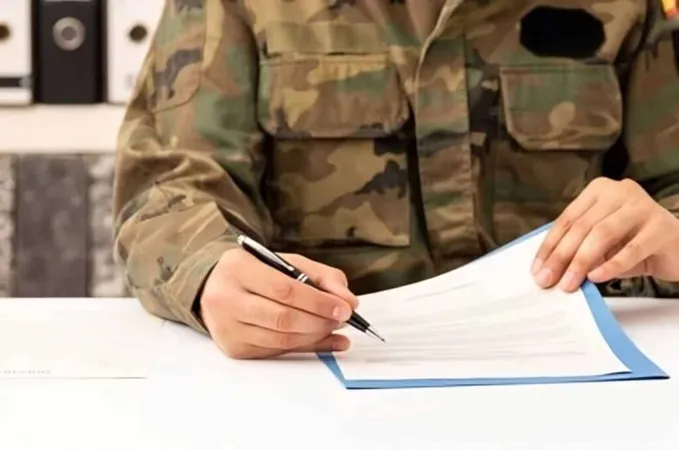
British Army also has literacy, math, and technical tests tailored to job requirements. Getting better at thinking quickly, remembering, and problem-solving can help you do well on the BARB test.

BARB: Pros and Cons
- +BARB exam preparation strengthens your knowledge across all domains
- +Passing the exam proves competency to employers and clients
- +Study materials and practice tests are widely available
- +Exam-based credentials are portable across states and employers
- +Clear exam objectives help focus your study plan effectively
- −Exam anxiety can affect performance — practice tests help reduce it
- −Registration fees are non-refundable if you miss your test date
- −Limited retake opportunities may apply with waiting periods
- −Exam content updates periodically — use current study materials
- −Testing center availability may require advance scheduling
Pros and Cons at a Glance
| Pros | Cons |
|---|---|
| BARB exam preparation strengthens your knowledge across all domains | Exam anxiety can affect performance — practice tests help reduce it |
| Passing the exam proves competency to employers and clients | Registration fees are non-refundable if you miss your test date |
| Study materials and practice tests are widely available | Limited retake opportunities may apply with waiting periods |
| Exam-based credentials are portable across states and employers | Exam content updates periodically — use current study materials |
| Clear exam objectives help focus your study plan effectively | Testing center availability may require advance scheduling |
Sample BARB - British Army Recruit Battery Practice Questions
Try these questions from our free BARB - British Army Recruit Battery practice tests. The correct answer and an explanation follow each question.
Statement: 'Some recruits passed the BARB test. Sarah is a recruit.' Conclusion: 'Sarah passed the BARB test.' Is the conclusion true?
- A. Yes
- B. No
- C. Cannot say
- D. False only if Sarah failed
Answer: C. Cannot say
Because only 'some' recruits passed, we cannot determine whether Sarah was one of them.
Statement: 'Some army bases have a swimming pool. Base Bravo is an army base.' Conclusion: 'Base Bravo has a swimming pool.' Is the conclusion true?
- A. Yes
- B. No
- C. Cannot say
- D. Only in warm climates
Answer: C. Cannot say
'Some' bases have pools, but we do not know whether Base Bravo is one of them.
What skill does the BARB Odd One Out subtest primarily measure?
- A. Numerical computation
- B. Vocabulary breadth
- C. Ability to identify patterns and categorise items
- D. Reaction speed
Answer: C. Ability to identify patterns and categorise items
The Odd One Out subtest assesses how quickly you can spot the item that does not fit a common category.
In the BARB Reasoning subtest, what type of thinking is primarily assessed?
- A. Numerical calculation
- B. Deductive logical reasoning
- C. Creative problem solving
- D. Vocabulary range
Answer: B. Deductive logical reasoning
The Reasoning subtest assesses whether you can apply logical rules to reach valid conclusions.
Take the full BARB - British Army Recruit Battery practice test
(BARB) British Army Recruit Battery Questions and Answers
Sources & last verified
- practicequestions.mindmill.co.uk — number of questions (official source). “The ACT is made up of 5 sub-tests – you will find some easier than others.” Verified Oct 30, 2026 · source checked Oct 30, 2026.
- British Army — delivery, score release (official source). “Taken on a computer, this is designed to measure your soldier potential.” Verified Oct 29, 2026.
How we verify: editorial & fact-checking policy. Report an error: contact us.
How this page was made: written with AI tools and published by Nathan Beja, founder of Practice Test Geeks, who is responsible for its content. Exam facts are checked against the official sources listed below. Not reviewed by a subject-matter expert. Editorial policy
Sources & references
Exam facts on this page (fees, format, dates, passing scores) are checked against these official sources; the date is our last check. Editorial policy
- practicequestions.mindmill.co.uk — Exam format · verified Oct 2026
- jobs.army.mod.uk — Test delivery, score release · verified Oct 2026