
2026 October Bar Exam: Complete Guide to Format, Prep, and Pass Rates
Complete guide to the 2026 October bar exam: format, schedule, pass rates, study tips, and what every candidate needs to know before exam day. 📗

The July 2025 bar exam is one of the most anticipated and consequential testing events of the year for law school graduates across the United States. Administered by individual state boards over two grueling days in late July, this examination serves as the final gateway between years of legal education and the privilege of practicing law. Whether you are a first-time taker or returning after a prior attempt, understanding exactly what to expect from the July 2025 administration can make the difference between passing and facing another six-month wait.
Understanding what is the bar exam at its core helps candidates approach preparation with the right mindset. The exam tests a broad spectrum of legal knowledge — from constitutional law and contracts to evidence, torts, and criminal procedure — across both multiple-choice and written formats. The Uniform Bar Examination (UBE), now adopted by 41 jurisdictions, standardizes much of the testing content, although individual states may layer on additional state-specific components that require separate preparation strategies.
The July 2025 administration follows a schedule that places Day 1 on Tuesday, July 29, and Day 2 on Wednesday, July 30, 2025. Day 1 focuses on the Multistate Essay Examination (MEE) and the Multistate Performance Test (MPT), while Day 2 is dedicated entirely to the Multistate Bar Examination (MBE). Candidates sitting in UBE jurisdictions will receive a portable score that can be transferred to other adopting jurisdictions, giving July 2025 passers considerable geographic flexibility in where they ultimately seek licensure.
Pass rates for the July administration historically run higher than the February sitting, largely because the July cohort is dominated by recent May and June law school graduates who are coming directly out of full-time bar prep courses. According to the National Conference of Bar Examiners (NCBE), the national first-time pass rate for July sittings typically hovers between 58 and 64 percent, though state-by-state variance is significant — California regularly posts pass rates in the low-to-mid forties, while some smaller states exceed 80 percent for first-time takers.
Preparation timelines vary widely depending on individual circumstances, but most bar prep experts recommend beginning a structured study program at least ten weeks before the exam. For July 2025, that means a start date no later than mid-May. Candidates who rely on passive review — simply watching lecture videos without active recall practice — consistently underperform compared to those who integrate timed practice questions, essay writing, and simulated MPT sessions from the very beginning of their prep period.
The bar exam landscape has also been shaped by high-profile public interest in recent years, partly driven by celebrity attempts that drew broad media coverage. Curiosity about the exam's difficulty, structure, and accessibility has never been higher, and that cultural visibility has translated into a growing number of resources, study communities, and online forums where candidates exchange strategies, share bar exam questions, and support one another through the intense preparation process.
This guide is designed to give July 2025 candidates a comprehensive, practical roadmap — covering exam format, scoring, jurisdiction-specific considerations, study schedules, and the most effective preparation strategies available. Whether you are focused on the MBE's 200 multiple-choice questions or honing your issue-spotting skills for MEE essays, the pages ahead will give you the clarity and direction you need to walk into July 29 with confidence.
July 2025 Bar Exam by the Numbers

July 2025 Bar Exam Format
| Section | Questions | Time | Weight | Notes |
|---|---|---|---|---|
| Multistate Essay Examination (MEE) | 6 | 3 hrs | 30% | Day 1 AM — 30 min per essay |
| Multistate Performance Test (MPT) | 2 | 3 hrs (90 min each) | 20% | Day 1 PM — lawyering skills tasks |
| Multistate Bar Examination (MBE) | 200 | 6 hrs | 50% | Day 2 — 100 questions per session |
| State-Specific Component | 1 | Varies | Varies | Non-UBE jurisdictions only |
| Total | 209 | 12 hours | 100% |
The Multistate Bar Examination is the backbone of the two-day bar exam experience and carries 50 percent of a UBE candidate's total score. Spread across two three-hour sessions on Day 2, the MBE presents 200 multiple-choice questions — 175 scored and 25 unscored pretest items — drawn from seven subject areas: Civil Procedure, Constitutional Law, Contracts, Criminal Law and Procedure, Evidence, Real Property, and Torts.
The NCBE weights each subject equally, though the precise number of questions per subject can vary slightly from administration to administration. Mastering all seven subjects at a high level, rather than specializing deeply in a few, is the most reliable path to a strong MBE score.
The Multistate Essay Examination consists of six 30-minute essay prompts administered during the morning session of Day 1. MEE subjects expand beyond the seven MBE topics to include Business Associations, Conflict of Laws, Family Law, Federal Civil Procedure, Trusts and Estates, Secured Transactions, and UCC Article 9. Graders use jurisdiction-specific rubrics, but all UBE jurisdictions standardize MEE scoring through the NCBE's centralized process. Strong MEE performance requires clear issue-spotting, logical IRAC analysis, and disciplined time management — a candidate who spends 45 minutes on one essay and rushes the remaining five will underperform even with superior legal knowledge.
The Multistate Performance Test rounds out Day 1 with two 90-minute tasks that simulate real-world lawyering assignments. Unlike the MBE or MEE, the MPT does not require any outside legal knowledge — all governing law is provided in the File and Library materials included in each task. Common MPT formats include persuasive briefs, objective memoranda, client letters, and demand letters. Graders assess analytical organization, accurate synthesis of provided authority, and professional writing quality. Many candidates underestimate the MPT and dedicate insufficient prep time to it, yet a strong MPT performance can meaningfully offset a mediocre MBE score.
Scoring under the UBE framework blends these three components — 50 percent MBE, 30 percent MEE, and 20 percent MPT — into a single scaled score that ranges from 0 to 400. Most UBE jurisdictions set their passing threshold at 266, though some states require higher scores. New York, for example, set its UBE passing score at 266, while Alaska requires only 260. Understanding your target jurisdiction's passing score before beginning preparation is essential for calibrating your study goals and benchmarking your practice exam performance throughout the prep period.
Non-UBE jurisdictions — Louisiana, California, and a handful of others — administer their own state-specific exams that may include different formats, additional essay components, or entirely separate multiple-choice banks. California, the most competitive state bar in the country, administers its own 200-question multiple-choice test called the California Bar Exam and has historically maintained a passing score around 1440 on its own scale. Candidates sitting in California face unique subject-matter requirements, including California-specific civil procedure rules and community property law, that require targeted preparation beyond standard UBE materials.
For candidates concerned about whether they are barred from exam eligibility, most states require proof of graduation from an ABA-accredited law school, a completed character and fitness review, and a timely application submitted months before the exam date. Missing an application deadline — which for July 2025 typically falls in late April or early May depending on the jurisdiction — can result in being locked out of the July sitting entirely, pushing candidates to the February 2026 administration instead.
Practice questions are among the most valuable tools available to bar exam candidates regardless of their target jurisdiction. Working through authentic, exam-style MBE questions builds pattern recognition, reinforces rule statements, and trains the time management instincts needed to sustain accuracy across 100 questions in three hours. Most successful candidates complete between 1,500 and 2,500 practice MBE questions over their preparation period, using their performance data to identify weak subjects for focused review.
Bar Exam Questions: Subject-Area Deep Dives
The seven MBE subjects tested on the July 2025 bar exam each demand a different preparation approach. Contracts and Torts tend to reward strong rule memorization and systematic issue-spotting, while Constitutional Law and Civil Procedure require understanding complex doctrinal frameworks and their interplay. Evidence, with its dense Federal Rules of Evidence structure, rewards candidates who practice question-based application rather than pure reading. Criminal Law and Procedure bridges substantive crimes with constitutional Fourth, Fifth, and Sixth Amendment protections, making it one of the most conceptually layered MBE subjects.
Real Property consistently ranks among the most challenging MBE subjects for candidates who did not take a dedicated property course or who studied in a jurisdiction with significantly different property rules than the common law backdrop tested on the exam. Future interests, Rule Against Perpetuities, landlord-tenant law, and recording acts are perennially high-yield topics. Allocating proportional study time based on both subject difficulty and question volume — rather than personal preference — is the most effective strategy for maximizing MBE performance across all seven tested areas.
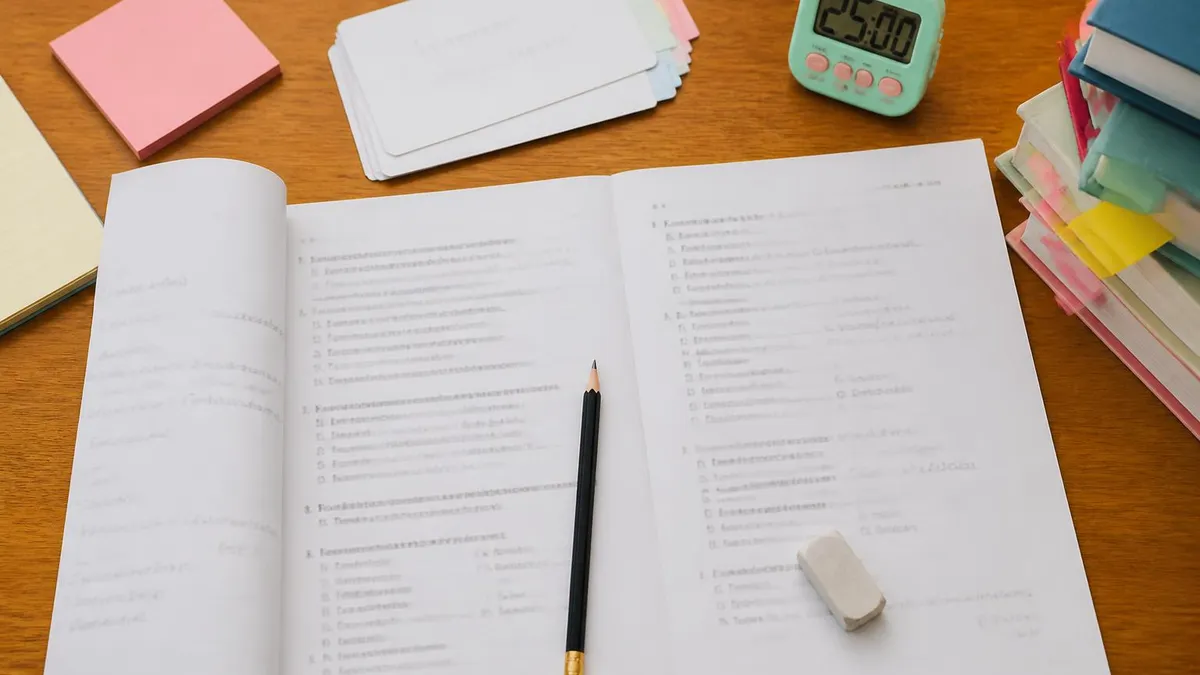
July vs. February Bar Exam: Which Sitting Is Right for You?
- +Higher national pass rates — July first-time takers average 58–64% vs. roughly 40% in February
- +Fresh knowledge retention from recent law school graduation and full-time bar prep courses
- +Larger cohort means more study groups, online communities, and peer support resources
- +UBE score portability lets July passers seek licensure in multiple states simultaneously
- +More bar prep course options and scheduled review courses aligned with the July timeline
- +Earlier admission to the bar allows faster entry into employment and practice
- −Intense competition among recent graduates creates a high-stress, high-stakes environment
- −Limited recovery time if you graduate in May and the exam is in late July — roughly 10 weeks
- −Summer heat and fatigue can compound mental exhaustion during a two-day exam stretch
- −High-stakes July pressure increases test anxiety for candidates prone to performance stress
- −Application deadlines typically fall in April or May, leaving little time if you miss them
- −California's July pass rate remains among the lowest in the country even for first-time takers
July 2025 Bar Exam Preparation Checklist
- ✓Submit your bar exam application to your target jurisdiction before the April or May 2025 deadline.
- ✓Complete the character and fitness questionnaire accurately and thoroughly — omissions can cause delays.
- ✓Purchase or access a full-service bar prep course (Barbri, Themis, Kaplan, or Adaptibar) by early May.
- ✓Complete at least 1,500 timed MBE practice questions before July 28, tracking accuracy by subject.
- ✓Write at least one full MEE essay response per week under 30-minute timed conditions from the start of prep.
- ✓Practice at least four complete MPT tasks under 90-minute timed conditions before exam week.
- ✓Review NCBE-released past MEE questions and model answers for each of the 13 possible essay subjects.
- ✓Identify your two weakest MBE subjects by Week 6 and dedicate extra daily review time to close the gap.
- ✓Book your exam-site hotel early — accommodations near testing centers fill quickly for the July sitting.
- ✓Confirm your exam admission ticket, photo ID requirements, and approved materials list two weeks before the exam.

Active Recall Beats Passive Review — Every Time
Research on bar exam outcomes consistently shows that candidates who spend the majority of their prep time on active practice — answering timed questions, writing essays, and self-testing — significantly outperform those who rely on passive review such as re-reading outlines or rewatching lectures. Aim for a 70/30 split: 70 percent active practice, 30 percent content review, starting from Week 1 of your preparation.
Pass rates for the July 2025 bar exam will be shaped by several factors unique to this administration cycle, including changes to the NCBE's MBE question bank, evolving scoring methodologies, and the overall academic profile of the July 2025 testing cohort. The NCBE periodically updates and retires questions from its pool, meaning that while historical pass rate trends provide useful benchmarks, candidates should not assume the July 2025 difficulty level will precisely mirror prior years. Staying informed through NCBE announcements and law school bar prep offices is the best way to track any material changes to the July 2025 administration.
National aggregate data from the NCBE shows that the overall bar passage rate — combining first-time and repeat takers — for July sittings typically falls between 55 and 60 percent. First-time takers from ABA-accredited law schools consistently outperform repeat takers, with first-time passage rates often exceeding 70 percent at highly ranked law schools. However, schools at the lower end of the bar passage spectrum send graduates into July with first-time pass rates below 50 percent, underscoring how significantly law school preparation shapes individual outcomes before a single bar prep question is ever answered.
State-by-state pass rates reveal dramatic geographic variation that candidates should factor into their jurisdiction selection strategy. Wisconsin operates a diploma privilege program allowing graduates of Wisconsin's two ABA-accredited law schools to be admitted without taking the bar exam, though this privilege is not extended to out-of-state graduates.
At the other extreme, California's July pass rate for all takers rarely exceeds 50 percent, and first-time takers from California law schools average only slightly higher. States like Iowa, Montana, and North Dakota have historically posted July first-time pass rates above 80 percent, making them attractive options for candidates with portable UBE scores seeking the smoothest path to initial licensure.
Discussions about bar passage, study strategies, and scoring are remarkably active on platforms like Reddit, where the bar exam reddit community has grown into one of the largest peer support networks for bar candidates. Subreddits dedicated to bar prep feature real-time threads during exam week, post-exam score release celebrations and commiserations, and year-round advice on everything from choosing between prep courses to managing exam-day anxiety. While not a substitute for structured preparation, these communities provide invaluable emotional support and crowd-sourced practical wisdom that many candidates find indispensable during the isolation of an intensive study period.
The conversation around high-profile bar exam attempts — including considerable public interest in the kim kardashian bar exam journey — has helped demystify the examination and highlight the accessibility of legal practice to those willing to put in the work. Kardashian's decision to pursue legal licensure through California's law reader program, which allows candidates without a traditional law degree to sit for the bar after supervised legal study, drew enormous attention to alternative pathways to bar admission and sparked broader conversations about who gets to become a lawyer and under what conditions.
The supreme court bar exam results and the admission processes at the highest levels of the legal profession also generate significant public curiosity. Admission to the U.S. Supreme Court bar is a separate ceremonial process from state bar admission, but it symbolizes the apex of professional legal standing and reflects the gravity of the examination process that begins with passing a state bar exam.
Understanding the full arc — from sitting for the July exam to eventual admission before the nation's highest court — gives candidates a motivating sense of the long-term significance of the steps they are taking right now.
Scoring transparency has improved significantly over the past decade. The NCBE now provides detailed score reports that break down MBE performance by subject area, giving candidates who must retake the exam precise data on where their weaknesses lie. This diagnostic capability means that a failed July 2025 attempt, while disappointing, is not a dead end — it is a detailed roadmap for February 2026 preparation. Candidates who analyze their score reports carefully and restructure their prep around identified weaknesses tend to see significant score improvements on subsequent administrations.
Most jurisdictions set their July 2025 bar exam application deadlines between late March and early May 2025. Missing your state's deadline means waiting until the February 2026 sitting — a six-month delay that can affect employment offers, loan repayment timelines, and career trajectory. Check your target jurisdiction's bar admission office website immediately and calendar the deadline with a two-week buffer to allow time for gathering transcripts, character and fitness materials, and any required certifications from your law school.
The final weeks of July 2025 bar exam preparation require a deliberate shift from content acquisition to performance optimization. Candidates who are still reading new outlines or watching new lecture content in the final two weeks before the exam are likely spreading themselves too thin. By late July, your preparation energy should flow almost entirely into timed practice under realistic exam conditions — simulating the actual two-day experience as closely as possible, including the physical demands of sitting for six hours of MBE questions on Day 2.
One of the most underappreciated aspects of final-week preparation is sleep and physical regulation. Neuroscience research on high-stakes cognitive performance consistently shows that sleep deprivation — even two to three days of shortened sleep before a major exam — measurably reduces recall accuracy, processing speed, and decision-making quality. Candidates who pull all-nighters in the final days before July 29 are actively undermining the knowledge they spent weeks building. Protecting seven to eight hours of sleep per night during exam week is not laziness; it is a performance strategy.
Logistics planning in the final week can prevent avoidable disasters on exam day. Confirm your testing center address, parking options, and check-in time well in advance. Many testing centers require candidates to arrive 30 to 45 minutes before the session start to complete check-in procedures, store prohibited items, and settle into their seats. Arriving late or flustered to a bar exam session is a preventable source of performance impairment — treat the commute to the testing center as part of the exam itself and plan accordingly.
Nutrition and hydration on exam days are logistical details that many candidates overlook until the morning of the exam. Testing centers typically allow candidates to bring snacks and water for breaks, and the physical and cognitive demands of a six-hour MBE session make strategic fueling important. Complex carbohydrates and protein in the morning, with a light, familiar meal the night before, tend to support sustained cognitive performance better than heavy, unfamiliar foods that might cause digestive discomfort mid-exam. Avoid dramatically changing your diet during exam week — stick to foods your body already knows.
Answer strategy on the MBE deserves careful attention in the final prep phase. Most bar prep experts recommend reading each question stem carefully before looking at the answer choices, identifying the precise legal issue being tested, formulating a tentative answer, and then selecting the answer that best matches your analysis.
Candidates who read all four answer choices simultaneously without first identifying the issue tend to be more susceptible to attractive-but-wrong distractors. For questions where you are genuinely uncertain, eliminating obviously wrong choices and selecting the best remaining option — rather than leaving any question blank — is always the right approach since the MBE does not penalize wrong answers.
Essay writing strategy on MEE Day deserves equal attention. Time allocation across the six essays is critical — 30 minutes per essay is a hard constraint, and candidates who budget carefully and move on even when they feel their analysis is incomplete will almost always outperform those who write brilliantly on three essays and skip or rush the remaining three. A mediocre analysis of all six issues earns more total points than a perfect analysis of three issues with nothing written for the other three.
For candidates preparing for jurisdiction-specific components beyond the UBE, the final weeks should include targeted review of any state-specific subjects or formats unique to their target state. California candidates, for example, must prepare for the California-specific essay topics and the California-specific performance test format alongside the standard MBE preparation. Ignoring state-specific components until the last moment is one of the most common and costly mistakes candidates make in the final stretch of July bar prep.
Building and sustaining exam-day mental resilience is a skill that deserves as much deliberate practice as rule memorization or essay writing. Candidates who have never experienced simulated exam-day pressure — the ticking clock, the unfamiliar question phrasings, the cumulative fatigue of hours of sustained focus — are at a disadvantage compared to those who have rehearsed these conditions repeatedly during preparation. Scheduling at least two full-length practice exams that replicate both Days 1 and 2 in real time is one of the highest-value investments any July 2025 candidate can make in the final four weeks of prep.
Mental reset strategies between sessions are equally important. The break between Day 1's MEE/MPT and Day 2's MBE is typically an overnight gap, giving candidates approximately 14 to 16 hours to recover, eat, sleep, and recalibrate. Using that evening productively — light review of commonly tested MBE rules, a healthy meal, early sleep — without spiraling into anxiety about the next day is a crucial performance skill. Candidates who spend the Day 1 evening catastrophizing about their essay performance or cramming new material tend to arrive at Day 2's MBE in a worse cognitive state than those who rest deliberately.
The community aspect of bar preparation has never been more strong. Online study groups, Discord servers, subreddit communities, and law school alumni networks create a dense ecosystem of peer support that candidates can tap throughout their preparation journey.
While community support is valuable, candidates must also guard against the trap of over-comparing their progress to others — the reddit bar exam community is full of horror stories and success stories that may or may not reflect the actual experience of the broader testing cohort. Use community resources for practical tips and emotional support, but anchor your preparation to your own data and your own progress benchmarks.
Post-exam score releases typically occur in late October or early November for the July sitting, depending on the jurisdiction. The waiting period between exam day and score release is one of the most psychologically challenging parts of the bar exam experience. Candidates who have lined up employment contingent on passing need to communicate proactively with their employers about the release timeline. Many law firms and legal employers have seen this cycle dozens of times and are experienced in working with conditional-hire associates through the waiting period. Transparency and communication with employers during this period is far better than silence.
Repeat takers returning for the July 2025 sitting after an unsuccessful prior attempt face a different set of challenges and opportunities than first-time takers. The data on repeat takers is clear: candidates who significantly restructure their preparation approach — rather than simply doing more of what they did before — achieve dramatically higher retake pass rates. This often means switching bar prep courses, working with a private bar prep tutor, addressing specific weak subjects identified in their prior score report, and confronting any underlying issues with test anxiety or time management that contributed to the prior failure.
The investment of time, effort, and financial resources required to pass the bar exam is significant by any measure. Application fees, bar prep course costs, and the opportunity cost of 10 to 12 weeks of intensive full-time study add up to a substantial commitment.
But the long-term return on that investment — access to a licensed legal career with median annual salaries exceeding $120,000 and upper-quartile earnings well above $200,000 — makes the bar exam one of the most economically consequential professional licensing tests in the United States. Approaching July 2025 with that long-term perspective can help sustain motivation through the inevitable difficult stretches of bar preparation.
Every candidate who walks into the July 2025 bar exam carries a unique combination of law school preparation, study habits, life circumstances, and personal resilience.
There is no single formula that guarantees passage, but there is a consistent pattern among those who succeed: they start early, they practice actively, they take care of their physical and mental health, and they approach the exam with a clear strategy rather than hoping that accumulated knowledge alone will carry them through. July 29 and 30, 2025 are fixed dates — the preparation you do between now and then is the only variable you can control.
Bar Questions and Answers


About the Author
Attorney & Bar Exam Preparation Specialist
Yale Law SchoolJames R. Hargrove is a practicing attorney and legal educator with a Juris Doctor from Yale Law School and an LLM in Constitutional Law. With over a decade of experience coaching bar exam candidates across multiple jurisdictions, he specializes in MBE strategy, state-specific essay preparation, and multistate performance test techniques.