
How Many Times Did JFK Jr. Take the Bar Exam? The Full Story Behind His Famous Struggle
How many times did JFK Jr. take the bar exam? 🎯 The full story, lessons learned, and how today's candidates can avoid the same fate.

The question of how many times did JFK Jr. take the bar exam has fascinated Americans for decades, blending celebrity culture with the very real pressures of one of the most demanding professional licensing tests in the country. John F. Kennedy Jr., son of President John F. Kennedy, failed the New York bar exam twice before finally passing on his third attempt in 1990.
His struggles humanized a man who had been placed on a near-mythological pedestal since childhood, and his journey through the bar exam process remains one of the most discussed stories in American legal history. If you want to understand what the bar exam really demands, his story is the perfect starting point.
The bar exam is not merely a formality for law school graduates — it is a rigorous, multi-day assessment that tests candidates on a wide breadth of legal subjects, from constitutional law and contracts to criminal procedure and evidence. Passing requires months of disciplined preparation, and even brilliant minds can stumble. JFK Jr. graduated from New York University School of Law in 1989, yet he still found the New York bar exam to be an exceptionally steep challenge, a fact that surprised many observers at the time but resonates deeply with anyone who has sat for the exam themselves.
His first attempt in July 1988, taken before he had even completed his law degree, ended in failure. His second attempt in February 1989 also fell short. By the time he sat for the exam a third time in July 1990, the pressure was immense and widely publicized. The New York tabloids had dubbed him "The Hunk Who Flunked," a headline that followed him mercilessly.
His eventual pass was not just a personal victory but a public one, demonstrating that persistence and preparation could overcome even the most public of setbacks. You can practice bar exam questions to see firsthand what this kind of pressure demands.
What makes JFK Jr.'s bar exam story so enduring is what it reveals about the nature of the exam itself. The bar exam does not care about your last name, your family's legacy, or your alma mater. It tests specific legal knowledge and applied analytical skills under strict time constraints. Many candidates who struggle on their first or second attempt ultimately go on to become exceptional attorneys. The exam is designed to be difficult, and pass rates in many states hover well below 60 percent for first-time takers, meaning failure is far more common than most people realize.
Today, bar exam discussions are everywhere — from law school classrooms to bar exam reddit threads where candidates share study strategies, vent frustrations, and celebrate victories. The internet has transformed the way candidates prepare, giving access to community support, free resources, and detailed pass rate data that previous generations simply did not have. JFK Jr.'s era had none of these tools, making his eventual success all the more meaningful when viewed through a modern lens.
Understanding the history of famous bar exam struggles also helps demystify what is often an anxiety-inducing process. Kim Kardashian's ongoing effort to pass the California bar exam through reading the law rather than attending law school has similarly captured public attention in recent years, showing that the bar exam continues to fascinate well beyond the legal profession. These stories collectively reinforce a powerful truth: the bar exam is hard for everyone, regardless of background, and preparing strategically is the only reliable path to success.
This article covers everything you need to know about JFK Jr.'s bar exam journey, the structure and difficulty of the modern bar exam, strategies top candidates use to pass, and how you can apply these lessons to your own preparation. Whether you are a first-time taker or approaching a retake, the insights here will help you approach the bar exam with the clarity and confidence it demands.
JFK Jr. and the Bar Exam by the Numbers
Key Facts at a Glance
| Item | Value | Details |
|---|---|---|
| Attempts JFK Jr. Needed | 3 | Passed on third try in 1990 |
| Duration of Bar Exam | 2 Days | Most states, including NY and CA |
| MBE Questions | 200+ | Multiple choice section alone |

JFK Jr.'s Bar Exam Journey: A Step-by-Step Timeline
July 1988 — First Attempt (Fail)
February 1989 — Second Attempt (Fail)
1989–1990 — Intensive Preparation Period
July 1990 — Third Attempt (Pass)
Legacy: Lessons for Modern Bar Candidates
Understanding what the bar exam actually is helps contextualize why even highly educated, intelligent people like JFK Jr. can struggle with it. The bar exam is a standardized licensing examination that law school graduates must pass in order to practice law in a given state. It is administered by each state's bar association or board of bar examiners, and the format, difficulty, and passing score can vary considerably from state to state. In most jurisdictions, the exam spans two full days and covers a sweeping range of legal topics that candidates must master simultaneously.
The most widely administered version today is the Uniform Bar Exam, or UBE, which is accepted in over 40 jurisdictions and allows candidates to transfer their scores across participating states. The UBE consists of three components: the Multistate Bar Examination (MBE), a 200-question multiple-choice test administered over an entire day; the Multistate Essay Examination (MEE), which tests written legal analysis; and the Multistate Performance Test (MPT), which assesses practical lawyering skills.
Each component is weighted, and candidates must achieve a combined scaled score above the jurisdiction's passing threshold. Reviewing bar exam sample questions is one of the best ways to familiarize yourself with these formats before exam day.
The bar exam questions themselves are designed to be nuanced and occasionally counterintuitive. The MBE in particular is notorious for answer choices that all seem plausible on the surface, requiring candidates to identify not just a correct answer but the most correct answer under the specific legal rule being tested. This distinction trips up many candidates who feel confident in their knowledge of the law but have not practiced applying it under timed, high-pressure conditions. Practice testing is therefore not supplementary — it is essential.
The California bar exam deserves special mention because it has historically been among the most difficult in the country. The california bar exam uses a different structure than the UBE, including California-specific essay topics and a higher volume of essay questions.
Pass rates in California have historically ranged from the low 30s to the low 50s depending on the administration, making it a genuine test of endurance and legal mastery. High-profile candidates like Kim Kardashian, who chose to pursue the law through California's "reading the law" apprenticeship pathway rather than law school, have brought fresh public attention to the California bar's particular challenges.
Kim Kardashian's bar exam journey is in many ways a modern echo of JFK Jr.'s. She failed the "baby bar" — the First-Year Law Students' Examination — multiple times before passing on her fourth attempt in 2021. Her public documentation of the process on social media, including the emotional toll of repeated failures, generated enormous discussion about the bar exam's demands and what preparation truly requires. Like Kennedy before her, her perseverance became a story about resilience rather than failure, and it reignited public interest in what the bar exam actually tests.
One major shift since JFK Jr.'s era is the volume of community resources available to bar candidates. Communities like bar exam reddit threads attract thousands of participants who share study schedules, debate the best prep courses, post about their emotional struggles, and celebrate passing scores. These communities have democratized bar prep knowledge in ways that were simply not possible in 1988 or 1990. A candidate preparing today has access to an unprecedented breadth of peer experience, free sample questions, and data-driven insights about which subjects are most likely to appear on upcoming administrations.
Despite all these resources, the bar exam remains a formidable challenge. The breadth of material — typically covering 14 or more substantive legal subjects — means that candidates cannot simply master one area and hope for the best. A coherent, comprehensive study plan covering all tested subjects, with targeted reinforcement of weak areas identified through practice testing, is the approach that consistently produces the best outcomes. The lesson from JFK Jr., Kim Kardashian, and countless less-famous candidates is the same: the bar exam rewards those who prepare systematically and do not give up after a setback.
What Is the Bar Exam — Format, Difficulty, and Results
The bar exam typically spans two days and includes three core components on the UBE: the 200-question Multistate Bar Examination (MBE), which is entirely multiple choice and administered over one full day; the Multistate Essay Examination (MEE), which requires candidates to write analytical legal essays across six subjects in three hours; and the Multistate Performance Test (MPT), a practical lawyering task that simulates real-world legal work using a fictional case file.
Non-UBE states like California use modified formats that include state-specific essay questions and, in California's case, an additional performance test component. Total exam time across both days typically runs between twelve and fifteen hours of active testing, not counting breaks. Candidates are expected to demonstrate both memorized legal rules and the ability to apply them fluidly under significant time pressure, making stamina and pacing as important as raw knowledge during the actual exam.

Retaking the Bar Exam: Honest Pros and Cons
- +Most states allow unlimited retakes, so a failed attempt is never a permanent disqualification
- +Score breakdowns from failed attempts give you precise data on which subjects need the most work
- +Retakers typically have a deeper familiarity with exam format and timing pressure going into subsequent attempts
- +Many successful attorneys failed the bar at least once — the experience builds resilience and self-knowledge
- +Bar prep courses specifically designed for retakers offer more targeted, efficient review strategies
- +Passing on a retake demonstrates persistence and determination, qualities that matter enormously in legal careers
- −Retaking delays bar admission and can postpone the start of your legal career by six months or more
- −The emotional and psychological toll of failure and extended preparation can be severe and long-lasting
- −Repeat bar prep courses and exam fees add significant financial cost on top of existing law school debt
- −Some employers and judicial clerkship programs view multiple failed attempts negatively during hiring
- −The extended study period can strain personal relationships, finances, and overall mental health
- −Waiting for retake results while peers begin their careers can create intense feelings of anxiety and isolation
Bar Exam Preparation Checklist: 10 Steps Before Exam Day
- ✓Enroll in a structured bar prep course (Barbri, Themis, Kaplan, or equivalent) at least 10 weeks before exam day.
- ✓Create a weekly study schedule that allocates time to all tested subjects, not just your strongest areas.
- ✓Complete at least 1,500 to 2,000 MBE practice questions under timed conditions before the exam.
- ✓Write at least two full-length practice essays per MEE subject tested in your jurisdiction.
- ✓Complete at least three full MPT practice tasks to develop your file-reading and writing speed.
- ✓Take at least two full simulated two-day bar exams under realistic testing conditions.
- ✓Review your missed MBE questions by subject to identify patterns in your weak areas.
- ✓Memorize concise legal rules for all major bar exam subjects using flashcards or condensed outlines.
- ✓Research your state's specific bar exam format, passing score, and subject emphasis before beginning prep.
- ✓Address test anxiety proactively — use mindfulness, structured breaks, and peer communities to manage stress.
Failure Is More Common Than You Think — And More Survivable
JFK Jr.'s bar exam failures remind us that even highly educated, privileged, and well-resourced candidates can fail — and still go on to distinguished careers. The bar exam pass rate for all takers nationally hovers between 45 and 60 percent in most states, meaning nearly half of everyone who sits walks out without a passing score. What separates eventual success from repeated failure is almost always the quality of the preparation strategy on the retake, not raw intelligence or law school prestige.
When JFK Jr. finally passed the bar exam on his third attempt in July 1990, his success was covered extensively by the press. What received less coverage was the specific nature of the preparation changes he made between his second and third attempts. By most accounts, Kennedy committed to a far more rigorous and structured study regimen during the months leading up to his third sitting.
He reduced his public social commitments, worked methodically through bar prep materials, and focused particular attention on the analytical writing components that are widely considered among the most demanding parts of the New York bar exam.
The lesson here is one that every retaker needs to internalize: doing the same thing and expecting a different result is not a strategy. Candidates who fail the bar exam once and then simply repeat their prior study approach without diagnosing what went wrong are statistically unlikely to pass on the next attempt.
A genuine diagnosis requires reviewing your score breakdown by subject area, honestly assessing whether your study hours were productive or merely logged, and identifying whether your exam-day performance reflected a knowledge gap, a timing problem, or an issue with how you read and applied legal rules under pressure.
Timing is one of the most underappreciated dimensions of bar exam performance. The MBE requires candidates to answer 200 questions in two separate three-hour sessions, which works out to approximately 1.8 minutes per question — an extremely tight pace when questions involve complex multi-party fact patterns with subtly different answer choices. Many candidates who know the law well still run out of time because they spend too long on difficult questions early in the session, leaving insufficient time for later questions that might have been comparatively straightforward. Pacing practice under real time pressure is essential, not optional.
The essay components present a different but equally real challenge. MEE essays reward candidates who write in a structured, rule-issue-analysis-conclusion (IRAC) format, clearly stating the applicable legal rule before analyzing how it applies to the specific facts presented. Candidates who write discursively — demonstrating general legal knowledge without cleanly organizing their analysis — typically score lower even when their underlying legal understanding is sound. Practice writing timed essays and reviewing model answers is the most effective way to internalize the format that bar examiners reward.
For candidates in states like New York that administer the UBE, the supreme court bar exam results and NCBE score data published after each administration provide a useful benchmark. The NCBE releases median MBE scores, scaled score distributions, and jurisdictional pass rates that candidates can use to calibrate their practice scores and assess their relative readiness. If your practice MBE scores are consistently near or above your state's median, your analytical skills are likely in the right range — though essay performance and the specific subjects tested in your jurisdiction also matter significantly for your overall scaled score.
The bar exam's written components have evolved over the years, and modern bar examiners are increasingly focused on practical lawyering skills rather than purely doctrinal memorization. The Multistate Performance Test, in particular, asks candidates to act as a first-year associate might: reading a file of case materials, identifying the relevant legal question, and producing a document — a memo, a brief, a client letter — that demonstrates clear, organized legal thinking. This section rewards candidates who have developed good legal writing habits throughout law school and who practice working efficiently with unfamiliar materials under time pressure.
Understanding all of this context helps explain why even the most academically accomplished law school graduates can struggle on the bar exam. JFK Jr. graduated from a well-regarded law school, had access to excellent resources, and had demonstrated the intellectual capacity to earn his law degree.
His initial failures were not a reflection of his potential as a lawyer but of his preparation strategy and, perhaps, the psychological weight of taking one of the country's hardest professional exams under an extraordinary spotlight of public attention. His story is ultimately one of adaptation — recognizing that a different approach was needed and executing on it with discipline and persistence.

Most state bar examiners enforce firm registration deadlines months before the July and February exam administrations, with late fees that can add hundreds of dollars for applications submitted after the standard deadline. If you are planning a retake or sitting for the first time, confirm your jurisdiction's registration window immediately — some states close applications more than four months before the exam date. Missing the deadline means waiting an entire additional cycle, adding six months to your timeline before you can practice law.
The state-by-state variation in bar exam format, difficulty, and pass rates is something every candidate needs to understand before committing to a preparation strategy. The Uniform Bar Exam has significantly standardized the process in the 40-plus jurisdictions that have adopted it, but important differences remain. Some UBE states set their passing threshold at a scaled score of 260, while others require 266 or higher. A score that passes in one state may fall short in another, which matters enormously for candidates who are weighing interstate portability of their bar scores.
The California bar exam remains the most distinctive and in many ways the most demanding non-UBE administration in the country. California tests candidates on additional state-specific subjects, requires more essay questions, and has historically maintained one of the lowest pass rates nationally. For a comprehensive look at how performance data breaks down in one of the country's largest bar exam administrations, reviewing california bar exam results from recent cycles provides invaluable context about what score ranges are needed to pass and how first-time and repeat takers compare.
Ohio's bar exam is another interesting case study in state-level variation. Ohio adopted the UBE in 2020 and has seen notable shifts in its pass rates as a result of the transition. The February administration in Ohio, like in most states, draws a higher proportion of repeat takers and historically posts a lower pass rate than the July sitting. Candidates preparing for the Ohio bar can use nationally published MBE score data to benchmark their practice performance, since the MBE component is identical across all UBE jurisdictions and provides the most direct point of comparison.
Tennessee's bar exam provides yet another data point in understanding how bar results vary across the country. Tennessee adopted the UBE in 2021, joining a majority of states in standardizing their examinations. The Tennessee bar has historically produced pass rates that sit near the national median for first-time takers, though February administrations consistently trail the July results.
Candidates preparing for any state's bar exam should research that state's specific historical pass rate data, identify which jurisdictions accept UBE score transfers if interstate portability is a consideration, and build their study plan with the specific passing threshold they need to achieve in mind.
One important structural feature of the bar exam that candidates frequently underestimate is the role of the written components relative to the MBE. In many UBE jurisdictions, the MEE and MPT together account for 50 percent of the total scaled score, with the MBE contributing the other half.
This means that a candidate who performs brilliantly on the multiple-choice MBE but poorly on written components can still fail, just as a candidate with strong essay skills can fail if their MBE performance is significantly below the passing threshold. A genuinely balanced preparation strategy — not one that simply maximizes MBE practice at the expense of writing — is necessary to pass the UBE reliably.
The barred from exam concept — being prohibited from taking the bar exam or from continued retakes — is a reality in a small number of jurisdictions that cap the number of attempts. Most states do not impose such restrictions, but candidates should verify their state's specific rules before beginning a retake cycle.
In states with attempt limits, failing on a final permitted attempt has severe professional consequences, potentially requiring the candidate to petition for an exception or to seek bar admission in a different state. This is a relatively rare situation, but it underscores the importance of approaching each attempt with the seriousness and preparation it deserves rather than treating any sitting as a low-stakes rehearsal.
For candidates weighing where to sit for the bar, the UBE's score portability is a genuine strategic advantage. A candidate who passes the UBE in Missouri with a score of 270 can apply that score toward admission in New York — which requires a 266 — without retaking the exam, simply by completing New York's character and fitness process.
This has made UBE jurisdictions increasingly popular for candidates who anticipate practicing in multiple states over the course of their careers. Understanding the architecture of score portability is part of the strategic bar exam preparation that modern candidates need to undertake well before their first sitting date.
The practical lessons from JFK Jr.'s bar exam experience translate directly into actionable preparation strategies for modern candidates. The first and most important lesson is this: do not underestimate the exam, regardless of your academic credentials or law school ranking. The bar exam tests a specific skill set — rapid recall, applied legal analysis, and disciplined writing under time pressure — that law school does not fully develop on its own. Dedicated bar prep is not optional; it is the foundation of a successful first attempt.
The second lesson is about the relationship between practice questions and real performance. JFK Jr. had limited access to the kind of large-scale practice question banks that modern candidates take for granted. Today, candidates can work through thousands of officially released and simulated MBE questions, compare their performance against national norms, and identify weak subject areas weeks before the exam. This data-driven approach to preparation is one of the most significant advantages modern candidates have over their predecessors, and it should be exploited fully throughout the study period.
Third, the emotional dimension of bar prep is real and should be managed proactively rather than ignored. Candidates preparing for a retake after a failed attempt face unique psychological challenges — self-doubt, embarrassment, anxiety about peers who have already begun practicing, and fear of failing again. Building a support system, whether through friends, family, a bar prep coach, or an online community, is not a sign of weakness. It is a smart risk-management strategy that keeps candidates functioning at a high level through a ten-to-twelve week study period that is genuinely grueling even under the best circumstances.
Fourth, time management during the actual exam is a skill that must be practiced in advance. The bar exam does not reward the smartest candidate — it rewards the most prepared candidate who can also execute reliably under timed pressure. Simulating the exam under real-time conditions, including the discomfort of sitting for three hours without breaks and writing quickly under pressure, is an essential part of preparation that many candidates skip because it is uncomfortable. Do not skip it. The simulation is what converts knowledge into performance.
Fifth, understand the scoring system in your jurisdiction before you begin your prep. Different states weight the MBE, MEE, and MPT differently, and some jurisdictions also test state-specific subjects that are not covered by the UBE materials. A candidate who does not know whether their state gives more weight to essays or multiple choice is preparing without a clear target. Spend time before your first study week reviewing your jurisdiction's bar exam structure, the subjects tested, the passing score, and any state-specific components that require additional preparation beyond the standard UBE curriculum.
Sixth, finish your preparation with a review of the ny bole bar exam results for recent administrations to understand what score range you need and how your practice scores compare. The ny bole bar exam results from prior cycles provide concrete benchmarks that help candidates assess their readiness rather than relying on gut feeling alone. Objective data about where you stand relative to the passing threshold is far more useful than subjective confidence, especially in the final weeks of preparation when anxiety tends to distort self-assessment in either direction.
Finally, remember that passing the bar exam is the beginning of a legal career, not the end of a learning process. JFK Jr. went on to become an assistant district attorney in Manhattan after passing, earning a reputation among colleagues as a hardworking and capable prosecutor. His bar exam struggles became a footnote rather than a defining characteristic.
For every candidate facing a difficult first sitting or a disheartening retake, his story offers a durable reminder: what matters most is not how many times you sit, but whether you ultimately do the work required to pass and the work required to serve your clients and your community well once you do.
Sample Bar Exam Practice Questions
Try these questions from our free Bar Exam practice tests. The correct answer and an explanation follow each question.
Which Constitutional clause requires that states honor and give full faith and credit to the laws and judicial proceedings of other states?
- A. Supremacy Clause.
- B. Full Faith and Credit Clause.
- C. Privileges and Immunities Clause.
- D. Establishment Clause.
Answer: B. Full Faith and Credit Clause.
The Full Faith and Credit Clause, located in Article IV, Section 1 of the U.S. Constitution, requires states to respect the "public Acts, Records, and judicial Proceedings of every other State." This means that states must generally honor and enforce the laws, court decisions, and public records of other states. Its purpose is to promote national unity and prevent individuals from relitigating issues already decided in another state.
Under the Federal Rules of Civil Procedure, a defendant must be served with a summons and complaint within how many days after the complaint is filed?
- A. 30 days
- B. 60 days
- C. 90 days
- D. 120 days
Answer: C. 90 days
FRCP Rule 4(m) provides that if a defendant is not served within 90 days after the complaint is filed, the court must dismiss the action without prejudice against that defendant, or order that service be made within a specified time.
A state need NOT give full faith and credit to a sister-state judgment if:
- A. The judgment is for a large monetary amount the forum considers excessive
- B. The rendering court lacked personal or subject matter jurisdiction
- C. The rendering court applied law different from the forum's substantive law
- D. The losing party can demonstrate the decision was incorrect on the merits
Answer: B. The rendering court lacked personal or subject matter jurisdiction
Full faith and credit does not require enforcement of a judgment rendered by a court that lacked subject matter or personal jurisdiction; jurisdictional defects are a recognized defense.
The Full Faith and Credit Clause of the U.S. Constitution primarily requires states to:
- A. Apply another state's substantive law in all cases
- B. Recognize and enforce valid judgments from sister states
- C. Follow another state's choice-of-law rules
- D. Apply federal common law to all interstate disputes
Answer: B. Recognize and enforce valid judgments from sister states
The Full Faith and Credit Clause requires each state to honor the judicial proceedings of every other state, including final judgments.
Bar Questions and Answers

TN Bar Exam Results: Everything You Need to Know About Tennessee's Bar Exam

Ohio Bar Exam: Complete Guide to Requirements, Format, and How to Pass
Bar Exam Practice Test PDF (Free Printable 2026)

UBE Bar Exam: Structure, Scores, States, and How to Pass

NCBE Bar Exam Results: What They Mean and How to Use Them to Pass
About the Author
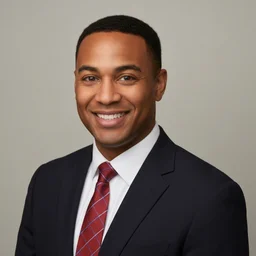
Attorney & Bar Exam Preparation Specialist
Yale Law SchoolJames R. Hargrove is a practicing attorney and legal educator with a Juris Doctor from Yale Law School and an LLM in Constitutional Law. With over a decade of experience coaching bar exam candidates across multiple jurisdictions, he specializes in MBE strategy, state-specific essay preparation, and multistate performance test techniques.