
AZSCI Test Prep: Your Complete Arizona Science Study Guide 2026 September
Master AZSCI test prep with our complete Arizona science study guide. Practice tests, study schedules, and expert tips. 🏆 Start free today!

If you are serious about conquering your AZSCI test prep, you have come to the right place. The Arizona Science Standards assessment — commonly called the AZSCI — measures how well students understand and apply scientific reasoning across life science, physical science, earth and space science, and the practices of science.
Each year, thousands of Arizona students sit for this exam, and those who prepare strategically with focused study materials consistently outperform those who rely on classroom review alone. Whether you are preparing for the first time or retaking the assessment to strengthen your score, a structured approach makes all the difference between frustration and confidence on test day.
Arizona has quietly become one of the most exciting states in the nation for science education, and that richness shows up directly in the AZSCI content. Students who visit the Arizona Science Center in downtown Phoenix often discover how hands-on exhibits — from geology displays to physics demonstrations — mirror the very concepts tested on the assessment.
Understanding the real-world application of science principles, rather than just memorizing definitions, is exactly the mindset the AZSCI rewards. The test asks you to analyze data, evaluate evidence, and construct arguments, so passive review simply does not cut it when the stakes are high.
One of the most powerful study strategies is combining an aasa sample test with targeted content review. When you simulate real test conditions — timed sections, unfamiliar graphs, and multi-step data interpretation — you train your brain to perform under pressure rather than in the comfortable, low-stakes environment of flipping through notes. Practice tests reveal your weak spots before the real exam does, giving you exactly the information you need to redirect your remaining study hours toward the highest-yield topics.
The AZSCI does not test isolated facts. Instead, it challenges you to think like a scientist. You will encounter passages describing experiments, data tables showing environmental measurements, graphs comparing variables, and scenarios asking you to identify flaws in a classmate's reasoning. These tasks reflect the same skills that famous scientists use every day — from astronomers mapping dark sky park locations across Arizona to environmental researchers studying atmospheric patterns over the Sonoran Desert. Connecting exam content to real Arizona science contexts helps abstract concepts stick in long-term memory.
Many students underestimate the science practices strand of the AZSCI, focusing almost entirely on content knowledge while neglecting skills like planning investigations, analyzing data, and arguing from evidence. This is a critical mistake. Science practices questions often account for the largest share of points on the assessment, and they require a different kind of preparation than content review. You need to practice reading data displays carefully, identifying independent and dependent variables, recognizing valid versus invalid conclusions, and crafting evidence-based explanations using precise scientific vocabulary.
Arizona's unique natural environment offers rich context for AZSCI content. The state is home to some of the nation's best opportunities for stargazing near me searches to resolve into unforgettable nights under genuinely dark skies, reflecting Arizona's commitment to preserving its astronomical heritage. From the telescopes at Kitt Peak to the dark sky ordinances protecting Flagstaff, Arizona's scientific culture runs deep. Students who connect their AZSCI preparation to this broader scientific identity — rather than treating the test as an isolated hurdle — tend to develop stronger intrinsic motivation and more durable conceptual understanding throughout their study period.
This guide will walk you through every critical dimension of AZSCI preparation: the exam's format and scoring, the most heavily tested concepts, a realistic study schedule, proven test-taking strategies, and the best free practice resources available right now. By the time you finish reading, you will have a clear action plan and the confidence that comes from knowing exactly what the AZSCI expects — and exactly how to deliver it.
AZSCI Assessment by the Numbers

AZSCI Study Schedule: 8-Week Prep Plan
- ▸Take a full-length AZSCI practice test under timed conditions
- ▸Score your results and categorize errors by domain
- ▸Review the Arizona Academic Standards for Science document
- ▸Create a personal study calendar for the remaining 7 weeks
- ▸Review cell structure, function, and division
- ▸Study Mendelian genetics and heredity patterns
- ▸Analyze ecosystem relationships and energy flow
- ▸Complete 20 AZSCI data analysis practice questions
- ▸Review states of matter and physical versus chemical changes
- ▸Study force, motion, and Newton's laws with real examples
- ▸Analyze energy transformation diagrams and data tables
- ▸Practice identifying variables in physics experiments
- ▸Study plate tectonics, rock cycles, and weathering processes
- ▸Review atmospheric layers and weather pattern drivers
- ▸Connect Arizona stargazing and dark sky science to astronomy content
- ▸Practice reading topographic maps and climate graphs
- ▸Practice identifying independent, dependent, and controlled variables
- ▸Analyze graphs, tables, and data displays from past exams
- ▸Write evidence-based explanations using claim-evidence-reasoning
- ▸Complete full timed data analysis question sets
- ▸Practice evaluating experimental conclusions for validity
- ▸Identify flaws, limitations, and alternative explanations in scenarios
- ▸Review common scientific argument structures and vocabulary
- ▸Complete argument-from-evidence practice question sets
- ▸Retake the week-1 diagnostic to measure growth
- ▸Focus 60% of study time on your two lowest-scoring domains
- ▸Review all incorrect answers from weeks 2-6 practice sets
- ▸Practice under exam timing with two consecutive timed sessions
- ▸Take one final full-length practice test
- ▸Review key vocabulary, formulas, and scientific constants
- ▸Prepare all logistics: test location, ID, arrival time
- ▸Rest well the night before — sleep consolidates memory
Understanding what the AZSCI actually tests is the single most important step in building an effective study plan. The Arizona Academic Standards for Science organize content into four major domains: Life and Environmental Science, Physical Science, Earth and Space Science, and the Practices and Crosscutting Concepts strand.
Most students are surprised to learn that the science practices strand is not a minor add-on — it is woven throughout every question on the assessment and often determines whether a student scores proficient or advanced rather than merely approaching standard. Knowing the content but not knowing how to reason about it scientifically is like knowing every ingredient in a recipe but not knowing how to cook.
Life Science on the AZSCI covers a broad range from cell biology through genetics, evolution, and ecology. Expect questions about how cells obtain and use energy, how genetic information is transmitted across generations, how populations change over time through natural selection, and how organisms interact within Arizona's diverse ecosystems — from the Sonoran Desert to the ponderosa pine forests of the Mogollon Rim. Students often struggle most with genetics questions, particularly those requiring them to interpret Punnett squares or predict phenotype ratios from given genotype data. Practicing these calculations with real data tables is far more effective than reading explanations.
Physical Science content on the AZSCI spans matter, chemical and physical changes, energy, forces, and waves. Questions in this domain frequently present data from laboratory experiments — for example, a table showing how the temperature of a substance changes over time as heat is applied, or a graph comparing the speed of an object under different force conditions.
The key skill the AZSCI assesses here is not just knowing the law of conservation of energy, but being able to identify it in action within a specific scenario, explain why it applies, and recognize what would violate it. This kind of analytical thinking takes deliberate practice to develop.
Earth and Space Science is where Arizona's extraordinary natural landscape becomes a genuine study asset. The state's geology — from the Grand Canyon's exposed rock layers to the volcanic fields near Flagstaff — illustrates rock cycle and plate tectonic concepts far better than any textbook diagram.
The AZSCI often uses Arizona-specific contexts in its scenarios, so students who are familiar with local geography and climate patterns have a meaningful advantage. Arizona is also a global leader in astronomy, with world-class observatories taking advantage of the state's dark skies. Students exploring aasa practice test materials will find earth and space science questions that connect directly to these Arizona scientific traditions.
The Crosscutting Concepts strand is perhaps the most underappreciated dimension of AZSCI preparation. These are the big-picture ideas that cut across all scientific disciplines: patterns, cause and effect, scale and proportion, systems and system models, energy and matter flows, structure and function, and stability and change.
AZSCI questions frequently ask students to apply a crosscutting concept explicitly — for example, identifying the scale difference between a cell and an organism, or explaining why a change in one part of an ecosystem causes cascading effects in other parts. Students who can fluently apply these concepts to unfamiliar scenarios earn the highest scores.
Constructed response questions deserve special attention in your AZSCI test prep routine. Unlike multiple choice items where process of elimination can rescue a shaky answer, constructed response questions demand that you communicate your scientific reasoning in writing. Arizona's scoring rubrics reward responses that include a clear claim, specific evidence drawn from the provided data or scenario, and explicit reasoning explaining why the evidence supports the claim. This claim-evidence-reasoning structure — often called CER — is a framework worth drilling until it becomes automatic, because it structures your thinking as well as your writing under pressure.
One underutilized resource for content review is the network of scientific institutions across Arizona. Whether you are exploring exhibits at the Arizona Science Center, learning about telescope technology from university programs, or reading about how Arizona researchers study atmospheric phenomena, these real-world science connections reinforce your AZSCI preparation in ways that passive textbook review cannot. Arizona's scientific community is world-class, and the AZSCI is designed to assess whether students are ready to participate in that community as informed, reasoning members of a scientifically literate society.
Famous Scientists and Arizona Science Connections
The Arizona Science Center in downtown Phoenix is one of the premier hands-on science institutions in the Southwest, offering exhibits that directly mirror AZSCI content areas. From interactive physics stations exploring force and motion to life science displays on genetics and ecosystems, the center provides experiential learning opportunities that help abstract concepts become concrete and memorable. Students who engage with these exhibits — whether in person or through the center's digital resources — often find that AZSCI data analysis questions feel more intuitive because they have already seen science reasoning applied in a real museum context.
For AZSCI test prep purposes, the Arizona Science Center's programming around earth and environmental science is particularly valuable. Exhibits exploring Arizona's desert ecosystem, water cycle dynamics, and geological formations give students firsthand exposure to the kinds of scientific scenarios the AZSCI uses as question contexts. When you have seen a real fossil record display or touched actual rock samples from different geological periods, answering a question about rock cycle stages or fossil evidence for evolution becomes significantly less abstract. The center also hosts educator programs aligned with Arizona academic standards, making it an excellent supplement to formal classroom preparation.
AZSCI Test Prep: Structured Study vs. Last-Minute Review
- +Structured prep over 8-12 weeks builds genuine conceptual understanding rather than surface-level familiarity
- +Spaced practice across multiple sessions dramatically improves long-term retention of complex science content
- +Early diagnostic testing identifies weak areas before it is too late to address them systematically
- +Timed practice under exam conditions reduces test anxiety and builds performance confidence
- +Content review connected to real Arizona science contexts — dark sky parks, the Arizona Science Center, university research — creates memorable learning anchors
- +Practicing constructed response with claim-evidence-reasoning develops scientific writing skills that benefit beyond the AZSCI
- −Eight to twelve weeks of structured prep requires sustained discipline and consistent daily or weekly effort
- −Students with full class schedules may struggle to find 8-12 hours per week for dedicated science preparation
- −Over-reliance on practice tests without content review can reinforce misunderstandings rather than correct them
- −High-quality AZSCI prep materials vary widely in accuracy and alignment with current Arizona standards
- −Constructed response practice requires someone to evaluate your answers — self-study has limits without feedback
- −Last-minute cramming significantly reduces retention and increases performance anxiety on test day
AZSCI Test Prep Checklist: 10 Must-Do Steps
- ✓Download and read the official Arizona Academic Standards for Science document to understand exactly what the AZSCI tests.
- ✓Take a full-length diagnostic practice test in timed conditions during week one of your prep period.
- ✓Categorize every incorrect answer by domain and question type to identify your highest-priority weak areas.
- ✓Create a weekly study schedule that allocates more time to your weakest domains without abandoning your stronger areas.
- ✓Practice claim-evidence-reasoning written responses at least three times per week using authentic AZSCI scenarios.
- ✓Study data displays — graphs, tables, diagrams — daily, focusing on identifying patterns and outliers quickly.
- ✓Connect earth and space science content to real Arizona contexts like dark sky parks, geological formations, and university research.
- ✓Complete at least two full sets of argument-from-evidence practice questions before your exam date.
- ✓Review crosscutting concepts explicitly and practice applying each one to unfamiliar scenarios across different content domains.
- ✓Take a final full-length timed practice test in the week before your exam and review every answer — correct and incorrect.

Science Practices Questions Carry Disproportionate Weight
Many students spend 80% of their AZSCI prep time on content knowledge and only 20% on science practices — but the practices strand is woven into nearly every question. Students who flip this ratio in their final two weeks of prep and focus intensively on data analysis, argument from evidence, and experimental design consistently see the largest score gains. Prioritize reasoning skills, not just facts.
Arizona's extraordinary scientific landscape provides one of the richest possible contexts for making AZSCI content meaningful. Few states can match Arizona's combination of geological diversity, astronomical heritage, ecological complexity, and research university presence. The University of Arizona in Tucson is a global leader in optical astronomy, atmospheric science, environmental science, and medical research.
Students preparing for the AZSCI who take time to explore what Arizona's scientists actually study — even briefly, through reading or virtual tours — discover that the skills the exam assesses are exactly the skills that professional scientists use every day in Arizona laboratories, observatories, and field sites.
The university of metaphysical sciences sedona arizona represents one end of Arizona's diverse intellectual landscape — a state that takes seriously both empirical scientific inquiry and broader questions about meaning, nature, and human experience. Sedona itself, with its striking red rock formations, offers a natural classroom for geology content directly relevant to the AZSCI.
The exposed layers of sandstone, limestone, and shale in the red rocks are a living textbook of sedimentary processes, erosion, and geological time — concepts that appear regularly in AZSCI earth and space science questions. Understanding how these formations developed over hundreds of millions of years, through the same rock cycle processes described in Arizona academic standards, transforms a tourist destination into a study resource.
For students interested in a darker sky experience during their AZSCI preparation, Arizona offers world-class opportunities that double as astronomy education. The Kartchner Caverns near Benson demonstrate geological cave formation processes. The Meteor Crater near Winslow provides a perfect case study in impact geology and evidence-based scientific investigation. The Petrified Forest National Park preserves 225-million-year-old logs as fossils, illustrating preservation processes and geological timescales in stunning detail. Each of these sites connects directly to AZSCI earth and space science content while providing the kind of sensory, memorable experience that makes abstract concepts concrete and durable in long-term memory.
Atmospheric science is another area where Arizona punches well above its weight nationally. The University of Arizona's atmospheric science programs study monsoon dynamics, dust storm formation, air quality, and climate change impacts on the Southwest — all topics with direct connections to AZSCI earth science content.
Arizona's dramatic summer monsoon season is one of the most studied regional weather phenomena in North America, offering real-world data about moisture transport, convection, precipitation, and weather prediction that maps directly onto AZSCI weather and climate questions. Students who follow local weather science reporting during monsoon season often find that AZSCI meteorology questions feel intuitive rather than mysterious.
Life science content on the AZSCI is particularly rich when viewed through an Arizona ecological lens. The Sonoran Desert is one of the most biodiverse desert ecosystems on Earth, home to over 2,000 plant species, 550 bird species, and countless reptile, mammal, and insect species adapted to extreme heat and seasonal drought.
Understanding how saguaro cacti store water, how Gila woodpeckers create nesting cavities that are subsequently used by elf owls, or how roadrunners regulate body temperature through behavioral thermoregulation — these are not just interesting facts but illustrations of adaptation, interdependence, and ecosystem function that AZSCI questions assess directly. Arizona's biodiversity makes ecology come alive in ways that classroom instruction alone cannot match.
Dedicated azsci test prep resources that connect content to Arizona's scientific institutions help students build what cognitive scientists call elaborative encoding — connecting new information to existing knowledge structures in ways that make it easier to retrieve under pressure.
When you know that real University of Arizona astronomers use the same data analysis skills you are practicing for the AZSCI, the exam stops feeling like an arbitrary obstacle and starts feeling like an invitation to participate in Arizona's rich scientific tradition. This shift in framing — from test as hurdle to test as entry point — can meaningfully change how students approach their preparation and how they perform on exam day.
Physical science content also benefits from Arizona connections. The state's copper mining industry illustrates chemical reactions, ore processing, and materials science at industrial scale. Solar energy installations across Arizona demonstrate photovoltaic technology and energy transformation concepts. The Colorado River system illustrates fluid dynamics, erosion, and water resource management. Each of these real-world contexts gives you a mental hook for physical science concepts that pure textbook study cannot provide, and the AZSCI's tendency to use real-world scenarios means that students with richer contextual knowledge have a genuine advantage when they encounter unfamiliar questions on test day.
Many students prepare exclusively with multiple choice practice questions and arrive at the AZSCI unprepared for constructed response items. These open-ended questions require you to write a complete scientific explanation using claim-evidence-reasoning structure, and they cannot be answered by process of elimination. Skipping written response practice is one of the most common and costly AZSCI preparation mistakes. Budget at least 20% of your study time for written scientific reasoning practice.
Test day strategy is a dimension of AZSCI preparation that many students underestimate until they are sitting in the testing room wishing they had thought about it more carefully. The AZSCI is administered in two sessions, and managing your energy, attention, and time across both sessions is a skill that requires deliberate practice — not just good intentions.
Students who have simulated real two-session testing during preparation perform noticeably better at managing the mental fatigue that naturally accumulates across several hours of concentrated scientific reasoning. Your physical and mental state on test day is a variable you can optimize, and optimizing it starts weeks before the exam.
Time management within each AZSCI session deserves a specific strategy. Many students make the mistake of spending too long on difficult questions early in the session, leaving themselves rushed or out of time for easier questions at the end. A better approach is to move through the test at a steady pace, marking difficult questions and returning to them after you have answered everything you know confidently.
This approach guarantees that you collect all the easy points first before investing additional time in harder items. During practice tests, track which question types take you longest and develop reliable time benchmarks so that you can pace yourself accurately during the real exam.
For data analysis and graphical interpretation questions — some of the most common question types on the AZSCI — develop a consistent reading routine that you apply every time. Before reading the question, look at the data display: identify what the axes represent, note the units of measurement, observe the scale, and look for trends, outliers, or unusual patterns.
Then read the question and the answer choices. This approach prevents the common error of reading the question first and then looking at the graph with confirmation bias — unconsciously seeking data that supports your initial guess rather than objectively analyzing what the data actually shows.
Argument from evidence questions require a different strategy. These questions often present a scientific claim and ask you to evaluate whether the provided evidence supports or refutes it, or to identify which additional data would strengthen or weaken the argument.
The key skill here is logical reasoning rather than content recall — you are being asked whether the evidence is sufficient, relevant, and logically connected to the claim, not whether the claim is true based on your background knowledge. Students who approach these questions as logic puzzles rather than content knowledge checks perform significantly better, especially when the scenarios involve unfamiliar topics where background knowledge provides no advantage.
Constructed response scoring on the AZSCI follows specific rubrics that reward completeness and precision. A three-point constructed response item typically awards one point for a clear claim, one point for specific evidence drawn from the provided scenario or data, and one point for reasoning that explicitly connects the evidence to the claim.
Students who know this structure before entering the exam can ensure they include all three components even when time pressure tempts them to write brief, incomplete answers. Practicing with the exact rubric criteria during preparation makes the structure automatic so that you execute it reliably under exam conditions rather than having to remember it consciously while also managing time and content demands.
The night before your AZSCI, resist the temptation to cram. Sleep is not a luxury during exam preparation — it is a biological necessity for memory consolidation. Research consistently shows that the brain processes and strengthens newly learned information during sleep, and that sleep deprivation impairs exactly the kind of working memory and executive function you need for data analysis, argument evaluation, and constructed response writing.
A well-rested brain performing at 90% efficiency will outperform a sleep-deprived brain performing at 70% efficiency even if the exhausted student spent those extra hours studying. The best thing you can do the night before your AZSCI is eat a good meal, review your key vocabulary lightly, and sleep for a full eight hours.
Finally, remember that your AZSCI score is not a permanent verdict on your scientific ability — it is a measurement of your preparation at a specific point in time. Students who approach the exam with this perspective tend to perform better because they are not paralyzed by the fear of failure.
If you have followed a structured preparation plan, practiced with authentic materials, connected content to real Arizona science contexts, and developed your scientific reasoning skills deliberately, you have done the work. Walk into the testing room knowing that you have prepared well, read every question carefully, manage your time strategically, and trust the reasoning skills you have built through weeks of deliberate practice.
Practical test prep tips separate students who feel ready on exam day from those who feel anxious despite months of study. The most effective AZSCI preparation is not simply about accumulating hours of review — it is about making each study hour as productive as possible through deliberate practice, active recall, and honest self-assessment.
Students who study passively — rereading notes, watching videos without pausing to test themselves, reviewing material they already know — log impressive study hours but see disappointing score gains. Active study strategies that force your brain to retrieve and apply information produce dramatically better results in the same amount of time.
Interleaved practice — mixing questions from different content domains within a single study session rather than blocking all life science review followed by all physical science review — is one of the most powerful and underused AZSCI study techniques. Research in cognitive science consistently shows that interleaving produces stronger long-term retention and better transfer of learning to novel scenarios than blocked practice does. Since the AZSCI presents questions from different domains in mixed order throughout the exam, preparing with interleaved practice more closely simulates real testing conditions and builds the mental flexibility to switch between scientific reasoning contexts fluidly.
Vocabulary is a lever that many students underestimate in AZSCI test prep. Scientific precision matters on this assessment — a student who understands the difference between a hypothesis and a theory, between correlation and causation, between independent and dependent variables, between accuracy and precision will consistently interpret questions more accurately and write more creditworthy constructed responses than a student who has only fuzzy intuitions about these terms.
Building a robust scientific vocabulary through active use — writing sentences, explaining concepts aloud, defining terms without looking at your notes — is one of the highest-yield investments you can make in the final weeks of AZSCI preparation.
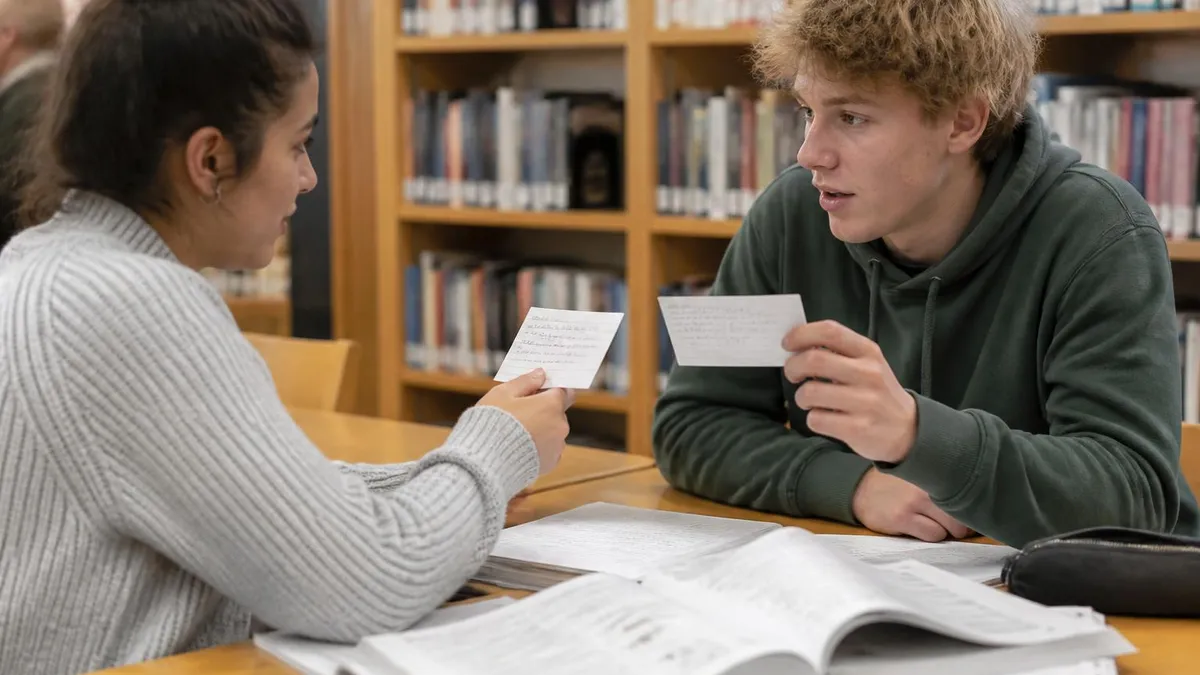
Study groups can be powerful AZSCI preparation tools when organized effectively, but they can also become social events that feel productive without actually building the skills the exam assesses. The most effective science study groups use structured protocols: each member explains a concept to the group without notes, the group evaluates the explanation for accuracy and completeness, and errors are corrected collaboratively. This teaching-and-feedback cycle activates the kind of deep processing that makes information stick. If your study group is spending most of its time comparing notes, you are probably not getting the maximum benefit from the time invested.
Digital resources for AZSCI test prep have expanded significantly in recent years, but quality varies enormously. The most valuable resources are those directly aligned with current Arizona Academic Standards for Science — which were revised most recently to reflect the Next Generation Science Standards framework — rather than older resources aligned with previous standards.
Questions that reflect outdated standards may test the wrong content or use outdated vocabulary, and practicing with misaligned materials can actually mislead your preparation by suggesting you are strong in areas where the current exam assesses different skills. Always verify that practice materials explicitly state alignment with current Arizona standards before investing significant time in them.
Peer explanation is one of the most effective — and most underused — AZSCI study techniques available to students. When you explain a scientific concept to someone else, you are forced to organize your knowledge, identify gaps in your understanding, and find language precise enough to communicate accurately.
The process of teaching reveals exactly what you actually understand versus what you merely recognize when you see it. If you cannot explain why natural selection produces adaptation without looking at your notes, you do not fully understand it yet — and that gap will show up on the AZSCI when you encounter an unfamiliar scenario that requires you to apply the concept rather than just recognize it.
In the final days before your AZSCI, shift from learning new content to consolidating and organizing what you already know. Create a one-page summary of the most important concepts in each domain — not to memorize verbatim, but to impose structure on your knowledge and identify any remaining gaps while there is still time to address them.
Review your most frequently missed question types one more time. Practice two or three constructed response questions to ensure the claim-evidence-reasoning structure is fully automatic. Then trust your preparation, get good sleep, eat a solid breakfast on test day, and bring your full scientific reasoning ability to every question on the assessment.
AZSCI Questions and Answers
Arizona Science Practice Test

30-Day AZSCI Study Plan — Pass on Your First Try

University of Arizona Optical Science: Famous Scientists, Stargazing, and Arizona Science Exploration

University of Arizona Atmospheric Science: Dark Skies, Stargazing, and Arizona Science Exploration

University of Arizona Nutritional Science: Famous Scientists, Arizona Science Center, and AZSCI Test Prep
About the Author

Educational Psychologist & Academic Test Preparation Expert
Columbia University Teachers CollegeDr. Lisa Patel holds a Doctorate in Education from Columbia University Teachers College and has spent 17 years researching standardized test design and academic assessment. She has developed preparation programs for SAT, ACT, GRE, LSAT, UCAT, and numerous professional licensing exams, helping students of all backgrounds achieve their target scores.
Join the Discussion
Connect with other students preparing for this exam. Share tips, ask questions, and get advice from people who have been there.
View discussion (8 replies)