
Arizona Science Standards: Everything You Need to Know for AZSCI 2026 October
Master arizona science standards with our complete AZSCI guide. 🟢 Covers exam format, study tips, stargazing resources, and free practice tests.

The arizona science center and the broader scientific landscape of Arizona have long inspired educators, students, and curious minds alike. Understanding the arizona science standards is essential for every student preparing for the AZSCI exam, whether you are in middle school or high school. These state-adopted standards outline precisely what students must know about life science, physical science, and earth and space science. They form the backbone of every question on the AZSCI assessment, and mastering them gives you a clear roadmap toward test-day success and beyond.
Arizona's science standards are built around three interconnected pillars: disciplinary core ideas, science and engineering practices, and crosscutting concepts. Each pillar reinforces the others, so learning one naturally strengthens your understanding of the rest. Disciplinary core ideas cover the factual content — the laws of motion, cell biology, ecosystem dynamics, and geological processes. Science and engineering practices teach you to think like a scientist, forming hypotheses, designing experiments, and interpreting data. Crosscutting concepts like patterns, cause and effect, and energy flow tie everything together across subject areas.
When most people think about famous scientists associated with Arizona, they picture astronomers peering through telescopes at Kitt Peak or geologists mapping the Grand Canyon's ancient strata. Arizona's unique geography and climate — from desert lowlands to high-altitude plateaus — make it one of the most scientifically rich states in the country. Students who engage with these local contexts find that abstract standards become vivid and memorable. The same curiosity that drove famous scientists throughout history is the curiosity the AZSCI standards are designed to cultivate in every Arizona classroom.
Beyond academics, Arizona's scientific community offers remarkable hands-on learning environments. The arizona science center in Phoenix is a world-class facility where students can explore interactive exhibits covering physics, biology, and astronomy. Planetarium shows there introduce concepts that map directly onto earth and space science standards. Field trips to places like Meteor Crater, Biosphere 2, or Lowell Observatory allow students to witness scientific principles in action. Connecting classroom learning to real Arizona institutions deepens comprehension in ways that textbooks alone rarely achieve.
One lesser-known but increasingly popular dimension of Arizona's scientific culture is its exceptional stargazing opportunities. The state boasts some of the darkest skies in the contiguous United States, earning recognition from the International Dark-Sky Association. Communities in southeastern Arizona have worked to reduce light pollution, creating conditions rivaling the most celebrated stargazing destinations on earth. For students studying earth and space science standards, experiencing a dark sky firsthand — watching the Milky Way arc across the horizon — turns abstract concepts about stellar classification and cosmic distance into unforgettable lived knowledge.
The arizona science standards tested on the AZSCI are organized into performance expectations that describe what students should be able to do, not just what they should know. This distinction matters enormously for exam preparation. Rather than memorizing isolated facts, you need to practice applying knowledge to novel scenarios, analyzing data sets, evaluating competing explanations, and constructing evidence-based arguments. Every question on the exam is anchored to a specific performance expectation, so understanding the standards structure also tells you exactly what cognitive tasks you will face on test day.
This comprehensive guide walks you through every dimension of the arizona science standards — from the formal exam structure to practical study strategies, from local scientific resources to the interdisciplinary connections that make Arizona a uniquely inspiring place to learn science. Whether you are a student beginning your preparation months in advance or someone looking for a focused last-week review, you will find actionable information here that directly supports your success on the AZSCI assessment and your growth as a scientific thinker.
Arizona Science Standards by the Numbers
Key Facts at a Glance
| Item | Value | Details |
|---|---|---|
| Core Science Domains | 3 | Life, Physical, Earth & Space |
| Minimum Passing Score | 75% | Required for AZSCI certification |
| AZSCI Exam Duration | 3.5 hrs | Including all sections |
The Three Pillars of Arizona Science Standards
The factual and conceptual content of science divided into life science, physical science, and earth and space science. Students must demonstrate mastery of biological processes, physical laws, geological timescales, and astronomical phenomena covered across all grade levels.
Eight practices modeled on what real scientists and engineers do: asking questions, planning investigations, analyzing data, using mathematical thinking, constructing explanations, and engaging in argument from evidence. The AZSCI exam tests these practices directly through scenario-based questions.
Seven big ideas that connect all science disciplines — patterns, cause and effect, scale, systems, energy and matter, structure and function, and stability. Recognizing these concepts in unfamiliar contexts is a hallmark of scientific literacy and appears throughout the AZSCI assessment.
Specific statements describing what students must be able to do by the end of a grade band. They integrate core ideas, practices, and crosscutting concepts into assessable tasks. Understanding performance expectations lets you predict exactly what types of questions will appear on the exam.
Arizona is home to a remarkable ecosystem of scientific institutions that support students learning the state's science standards. The arizona science center in Phoenix stands as the flagship destination, offering more than 300 interactive exhibits spanning physical science, life science, and earth science — the same three domains tested on the AZSCI exam.
Its IMAX theater screens films that explore deep-sea biology, astrophysics, and climate science with visual intensity no textbook can replicate. Students who visit during the school year often report that concepts they had struggled to grasp in the classroom suddenly clicked after a hands-on encounter at the center.
Beyond Phoenix, the university of metaphysical sciences sedona arizona and other higher education institutions scattered across the state contribute to a vibrant intellectual community. Arizona State University operates multiple research centers studying everything from astrobiology to materials science, many of which publish free educational resources aligned to state standards. The University of Arizona in Tucson hosts one of the world's leading astronomy departments and operates public telescope viewing nights that are free to the community. These universities in arizona are not just degree-granting institutions — they are engines of discovery that shape the scientific questions Arizona students learn to investigate.
Hunter safety programs in Arizona illustrate how science education extends beyond the traditional classroom. A hunter safety course and hunters education programs incorporate wildlife biology, ecosystem management, and environmental ethics — all concepts rooted in the life science domain of the arizona science standards. Students who complete a hunters education course learn to identify species, understand population dynamics, and recognize the role of apex predators in maintaining ecosystem balance. These practical applications of biological principles reinforce standards-aligned knowledge in memorable, real-world contexts that connect science to stewardship of Arizona's extraordinary natural heritage.
Biosphere 2, located in Oracle, Arizona, is one of the most unique scientific facilities in the world. Originally built as a closed ecological experiment, it now serves as a living laboratory for the University of Arizona, studying how ecosystems respond to climate change, water scarcity, and atmospheric shifts. Students who visit or study its research learn about systems thinking, biogeochemical cycles, and the complexity of ecological interdependence — all crosscutting concepts embedded in the arizona science standards. The facility offers student programs that align directly with high school life and earth science performance expectations.
The Lowell Observatory in Flagstaff is another treasure. Founded in 1894, it is where Pluto was discovered and where pioneering research on galaxy recession velocities was conducted — research that underpins our current understanding of the expanding universe. For students studying earth and space science standards, a visit to Lowell bridges historical scientific achievement with modern astronomy. The observatory offers student programs during the academic year that cover stellar classification, spectroscopy, and the scientific process itself. Understanding how famous scientists like Clyde Tombaugh worked methodically through observation and inference helps students internalize the scientific practices that the AZSCI tests.
Meteor Crater, east of Flagstaff on Interstate 40, provides an unparalleled lesson in planetary geology and impact dynamics. The crater's formation approximately 50,000 years ago illustrates concepts including kinetic energy transfer, geological dating, and the relationship between cosmic events and Earth's surface history. Students learning about earth and space science standards can see with their own eyes how an extraterrestrial object reshaped a landscape in an instant, making the abstract standard about interactions between Earth systems and the solar system entirely tangible. Field experiences like this transform passive learners into engaged scientific observers.
The Arizona-Sonora Desert Museum near Tucson blends zoo, botanical garden, and natural history museum into a seamless learning environment. Students encounter desert-adapted species, observe geological formations native to the Sonoran Desert, and learn about water cycles in arid ecosystems.
Every exhibit connects to at least one performance expectation in the life or earth science domains of the arizona science standards. For students whose AZSCI preparation has become overly abstract, a visit to this institution — or even a careful review of its freely available online resources — can reground their understanding in the concrete ecological realities of the state they call home.
Best Places to Stargaze in Arizona — Earth Science in Action
Arizona is internationally recognized for its exceptional dark skies. The town of Sedona holds an International Dark Sky Community designation, and the Chiricahua Mountains in southeastern Arizona are considered among the best places to stargaze in the entire western hemisphere. Oracle State Park near Tucson offers monthly star parties where rangers guide visitors through constellations, planetary observation, and telescope use. These locations give students direct sensory experience with concepts covered in the earth and space science domain of the arizona science standards, from stellar magnitude to celestial navigation.
The Flagstaff Dark Skies Coalition has worked for decades to limit light pollution in the Flagstaff metro area, making it one of the first cities in the world to receive International Dark Sky City status. When searching for stargazing near me or star gazing near me, Arizona residents are fortunate to have world-class sites within a short drive. A darker sky means higher-resolution views of nebulae, star clusters, and the galactic core. Students who observe the night sky regularly develop an intuitive understanding of stellar distance, light-year measurements, and the electromagnetic spectrum that translates directly into higher scores on AZSCI earth and space science questions.

Arizona Science Standards: Strengths and Challenges for AZSCI Students
- +Standards are organized around clear performance expectations, making exam content predictable
- +Three-dimensional learning integrates content, practices, and concepts so studying one area reinforces others
- +Arizona's unique geography provides real-world examples for nearly every standard
- +Abundant local scientific institutions offer free or low-cost resources aligned to standards
- +Dark sky resources make earth and space science standards uniquely accessible in Arizona
- +Hunter safety and outdoor education programs reinforce life science standards through practical application
- −The three-dimensional framework requires deeper understanding than simple memorization strategies
- −Performance expectations can feel abstract without hands-on lab or field experience
- −Coverage across life, physical, and earth science is broad, making comprehensive review time-intensive
- −Some schools have limited lab equipment, making it harder to experience science and engineering practices
- −Urban light pollution in Phoenix and Tucson reduces direct stargazing access for many students
- −Crosscutting concepts require students to transfer learning across domains, which demands higher-order thinking
AZSCI Exam Preparation Checklist — Arizona Science Standards
- ✓Download the official Arizona Science Standards document and review all high school performance expectations
- ✓Map each AZSCI practice test question to a specific performance expectation to identify your weakest domains
- ✓Complete at least one full-length timed practice test under realistic exam conditions
- ✓Visit or virtually explore the Arizona Science Center's online resources for interactive standards review
- ✓Practice analyzing at least 20 data tables and graphs drawn from real scientific studies
- ✓Study the eight science and engineering practices until you can name and describe each from memory
- ✓Review all seven crosscutting concepts and identify two examples of each from Arizona's natural environment
- ✓Complete a hunters education module or wildlife biology resource to reinforce life science ecosystem concepts
- ✓Use stargazing apps or observatory programs to reinforce earth and space science performance expectations
- ✓Take targeted practice quizzes for each AZSCI domain until you consistently score above 80 percent
Performance Expectations Are Your Secret Roadmap
Every AZSCI question is anchored to a specific performance expectation in the Arizona Science Standards. Students who study the performance expectations directly — rather than just reading their textbook — can predict with high accuracy what the exam will ask. Print the standards document, highlight the expectations for your grade band, and use them as a checklist to guide your practice test sessions.
Effective study strategies for the arizona science standards go far beyond passive reading. Research in cognitive science consistently shows that active retrieval practice — the process of pulling information from memory rather than simply reviewing it — produces dramatically better long-term retention than re-reading notes or highlighting text.
For AZSCI preparation, this means taking practice tests early and often, starting weeks before your exam date, not just in the final days. Each time you struggle to recall a concept and then look it up, your brain encodes that information more deeply than if you had simply read it without the retrieval attempt.
Interleaving is another evidence-based strategy particularly well-suited to the three-domain structure of the arizona science standards. Rather than spending an entire week on life science, then switching entirely to physical science, interleave topics throughout each study session. Spend thirty minutes on cellular respiration, then pivot to Newton's laws, then review plate tectonics, then return to a different biological concept. This mixing initially feels harder and slower, but it trains your brain to distinguish between domains and apply the correct frameworks in novel contexts — exactly what the AZSCI exam demands when it presents unfamiliar scientific scenarios.
Elaborative interrogation strengthens comprehension of the crosscutting concepts. When you encounter a new fact — for instance, that predators regulate prey populations in an ecosystem — ask yourself why this happens, how it happens, and what would change if the predator were removed. These "why" and "how" questions force you to connect new information to prior knowledge, building the web of understanding that the science and engineering practices domain requires. Students who habitually ask deeper questions while studying tend to perform significantly better on scenario-based AZSCI questions than students who focus on memorizing surface-level facts.
Spaced repetition scheduling is a time-tested technique that aligns perfectly with a multi-week AZSCI study plan. Review new material shortly after first learning it, then again after a few days, then again after a week, then after two weeks. Each successive review at a longer interval strengthens the memory trace more than massed practice sessions clustered together.
Free tools like Anki allow you to create digital flashcards for performance expectations, vocabulary terms, and key scientific concepts, then automatically schedule reviews at optimal intervals. Students who use spaced repetition systems for eight to twelve weeks consistently outperform those who cram in the final week.
Visual learning tools complement text-based study particularly well for the earth and space science domain, which involves spatial relationships difficult to grasp from words alone. Drawing diagrams of the rock cycle, sketching tectonic plate boundaries, mapping constellations, or tracing the water cycle from ocean evaporation through atmospheric transport to precipitation reinforces spatial understanding in ways that reading cannot. The arizona science center, Lowell Observatory, and Biosphere 2 all offer free diagram resources and visual explainers online. Incorporating these into your study routine addresses multiple learning modalities and solidifies understanding of concepts that commonly appear on the AZSCI exam.
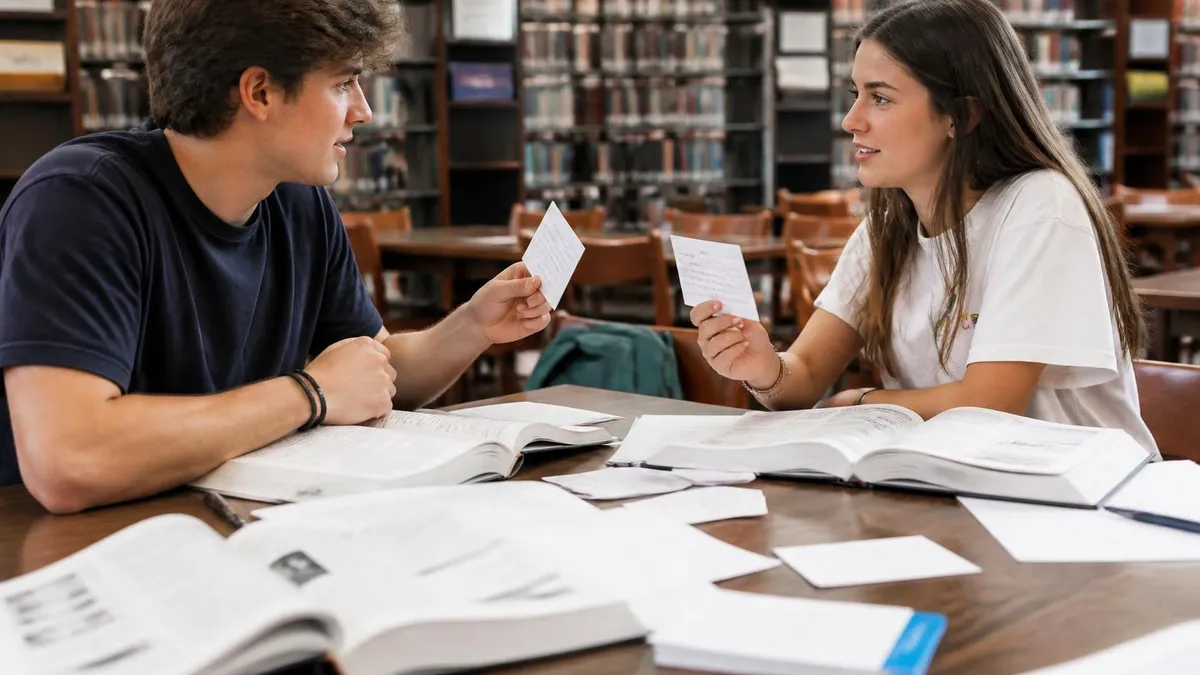
Study groups, when structured properly, amplify individual preparation. The key is to use group sessions for active tasks — quizzing each other on performance expectations, debating the interpretation of data scenarios, co-constructing explanations of complex processes — rather than passively reviewing notes together.
Explaining a concept to a peer is one of the most powerful learning activities available, because it forces you to identify gaps in your own understanding that passive review would leave hidden. If you cannot explain photosynthesis, the electromagnetic spectrum, or continental drift clearly enough for a classmate to understand it, you do not yet know it well enough to answer AZSCI questions about it under time pressure.
Mock exam simulations deserve a dedicated session at least once per week during your final month of preparation. Set a timer for the full exam duration, work through an entire practice test without pausing, and then carefully review every wrong answer before moving on. Pay particular attention to questions you answered correctly through guessing — understanding why the correct answer is correct matters as much as getting the point.
Treat each practice exam as diagnostic data about your readiness, identifying which performance expectations still need work and which domains are already secure. This systematic approach to practice testing is the most reliable predictor of AZSCI success available to any student.

Many students focus entirely on content knowledge — cell biology, Newton's laws, geological timescales — while neglecting the eight science and engineering practices that account for a substantial portion of AZSCI questions. Questions about experimental design, data analysis, and argument from evidence require practiced skills, not just memorized facts. Begin practicing these skills at least six weeks before your exam date, using real scientific scenarios rather than generic textbook examples.
The physical science domain of the arizona science standards covers an impressive breadth of content that students often underestimate until they encounter the full scope of AZSCI practice questions. Matter and its interactions form one major thread, requiring students to understand atomic structure, chemical bonding, conservation of mass, and the behavior of substances during physical and chemical changes.
Motion and stability form another thread, covering forces, Newton's three laws, momentum, and the mathematical relationships that govern how objects accelerate under net forces. Energy constitutes the third major physical science thread, including kinetic and potential energy, energy transfer and transformation, waves, and the electromagnetic spectrum from radio waves through visible light to gamma radiation.
Life science standards on the AZSCI span from molecular biology through ecosystem ecology, demanding that students integrate knowledge across scales from DNA to biomes. At the molecular level, students must understand how DNA encodes information, how proteins are synthesized and how they carry out cellular functions, and how mutations arise and propagate through populations over evolutionary time.
At the cellular level, students need to explain how cells obtain and use energy through photosynthesis and cellular respiration, how cells divide through mitosis and meiosis, and how multicellular organisms coordinate the specialized functions of different cell types through communication systems. At the ecological level, students must analyze food webs, nutrient cycles, population dynamics, and the cascading effects of environmental disturbances on ecosystem stability.
Earth and space science standards present the most overtly interdisciplinary content in the arizona science standards framework, weaving together geology, meteorology, oceanography, and astronomy into a coherent picture of Earth as a dynamic planetary system. Students must explain how plate tectonics drives the rock cycle, shapes mountain ranges, generates earthquakes and volcanic eruptions, and has redistributed continents over billions of years.
Weather and climate standards require understanding atmospheric circulation, ocean currents, the water cycle, and the mechanisms driving long-term climate change. Space science standards ask students to explain the life cycles of stars, the structure of the solar system, the evidence for the Big Bang, and the methods astronomers use to measure cosmic distances — distances so vast they make the Grand Canyon look like a sidewalk crack.
The connections between the three science domains are where the crosscutting concepts become most visible and most powerful. Energy, for example, is a crosscutting concept that appears in physical science as kinetic and potential energy, in life science as the chemical energy stored in ATP and released during cellular metabolism, and in earth science as the solar energy driving atmospheric circulation and the geothermal energy powering plate tectonics.
When students recognize energy as a unifying thread across all three domains, they build a more integrated mental model of science that makes both memorization easier and novel-scenario reasoning more natural. AZSCI questions frequently exploit these connections by presenting scenarios that blend domains in ways students who studied each in isolation find disorienting.
Argument from evidence is arguably the most important science and engineering practice assessed on the AZSCI because it mirrors what professional scientists actually do. A scientific argument has three components: a claim (a statement about what is true), evidence (data that supports or refutes the claim), and reasoning (an explanation of why the evidence supports the claim using scientific principles). Students who practice constructing and evaluating arguments in this structured format find that AZSCI questions asking them to assess competing hypotheses, identify the strongest evidence, or critique a flawed experimental conclusion suddenly feel manageable.
The argument from evidence practice also directly reinforces the ability to distinguish between correlation and causation — a critical thinking skill tested repeatedly across multiple AZSCI domains.
Mathematical thinking and computational reasoning appear more prominently in the physical science domain than in life or earth science, but they are present throughout all three. Students must be comfortable converting between units, interpreting slope on a graph as a rate of change, calculating percentages and ratios in experimental data, and applying formulas for force, acceleration, wave frequency, and energy.
Importantly, AZSCI does not reward memorizing every formula in isolation — it rewards understanding when and why each formula applies, which is a fundamentally different cognitive skill. Students who practice choosing the right mathematical tool for a given physical scenario consistently outperform those who drill formulas without understanding their underlying physical meaning and domain of validity.
The earth and space science domain also integrates deeply with geography, history, and environmental science in ways that make interdisciplinary study particularly rewarding. The history of plate tectonic theory itself is a lesson in how scientific consensus changes when compelling evidence accumulates — a crosscutting concept about the nature of science.
Alfred Wegener's original continental drift hypothesis was dismissed for decades before seafloor spreading data from the 1950s and 1960s provided the mechanistic explanation that transformed his observation into accepted theory. This scientific detective story illustrates how the practice of argument from evidence operates at the frontier of knowledge, giving students a narrative framework for understanding why the science and engineering practices matter beyond passing an exam.
In the final weeks before the AZSCI exam, strategic prioritization becomes more important than comprehensive coverage. Begin by reviewing your practice test results from the past several weeks and ranking your performance by domain and by science and engineering practice. Double down on your two or three weakest areas while maintaining what you have already mastered with brief daily review. There is diminishing marginal return on studying content you already understand well, and the highest gains almost always come from focused work on genuine weak spots identified through diagnostic testing rather than intuition or self-assessment.
Time management during the actual exam is a skill that deserves explicit practice. Work through practice tests with a stopwatch to develop a reliable sense of how long each question type takes. Straightforward recall questions should take roughly one minute; data analysis and experimental design questions may require two to three minutes of careful reading and reasoning.
Develop a decision rule for when to move on — if you have spent two minutes on a question without confidence, mark it and continue. Returning to marked questions with fresh eyes after completing the rest of the section often unlocks insights that direct continued effort would not.
The night before the AZSCI exam, resist the temptation to cram additional content. Instead, spend thirty minutes reviewing your personal summary of the performance expectations you have identified as your strongest — the areas where you feel genuine mastery. This light positive review activates relevant knowledge networks without inducing the anxiety that cramming unfamiliar material reliably produces.
Prepare your materials, confirm your exam location and start time, eat a nutritious dinner, and get a full night of sleep. The research on sleep and memory consolidation is unambiguous: the brain literally replays and strengthens newly learned material during deep sleep stages, making a good night's rest one of the most powerful study tools available the night before any high-stakes assessment.
Morning-of routines matter more than most students realize. Eat a balanced breakfast that includes protein and complex carbohydrates to sustain mental energy across the full exam duration. Avoid high-sugar foods that produce an energy spike followed by a cognitive crash mid-exam. Arrive at the testing center early enough to settle in, review your admission documents, and take several slow, deliberate breaths before the exam begins.
Moderate pre-exam stress is actually beneficial — it sharpens focus and speeds reaction time. But chronic anxiety that persists into the exam itself impairs working memory, which is precisely the cognitive resource most heavily recruited by data analysis and argument-from-evidence questions.
During the exam, read every question stem twice before looking at the answer choices. AZSCI questions are carefully worded, and misreading a single word — confusing "which best explains" with "which disproves," for example — can lead you to the wrong answer even when you know the content perfectly. Pay special attention to questions that include graphs, tables, or diagrams: always identify the axes, units, and trend before attempting to answer.
Many incorrect answer choices are plausible-sounding but contradict what the data actually shows. The ability to anchor your reasoning in the specific evidence provided — rather than your prior assumptions about what should be true — is the hallmark of a student who has truly mastered the science and engineering practices.
After the exam, regardless of how you feel about your performance, take time to reflect on which question types felt easiest and which felt most challenging. This reflection is valuable whether you are waiting for your scores or considering a retake. Students who engage in this kind of metacognitive review after each practice exam — and after the real exam — consistently show greater learning gains over time than students who simply move on without analysis.
Science is fundamentally a reflective discipline, built on the iterative cycle of observation, inference, testing, and revision. Approaching your own exam preparation the same way you approach a scientific investigation is, in the deepest sense, what the arizona science standards are designed to cultivate.
Finally, remember that the arizona science standards serve a purpose larger than exam performance. They represent a carefully considered vision of what it means to be a scientifically literate citizen in the twenty-first century. The habits of mind they develop — careful observation, evidence-based reasoning, quantitative thinking, intellectual humility, and collaborative problem-solving — are the same habits that will serve you in every career and every dimension of civic life.
Whether you go on to study medicine, engineering, environmental policy, agriculture, education, or any other field, the thinking skills embedded in these standards are your most durable intellectual tools. Pass the AZSCI exam with confidence, and carry those tools forward.
AZSCI Questions and Answers


About the Author

Educational Psychologist & Academic Test Preparation Expert
Columbia University Teachers CollegeDr. Lisa Patel holds a Doctorate in Education from Columbia University Teachers College and has spent 17 years researching standardized test design and academic assessment. She has developed preparation programs for SAT, ACT, GRE, LSAT, UCAT, and numerous professional licensing exams, helping students of all backgrounds achieve their target scores.
Join the Discussion
Connect with other students preparing for this exam. Share tips, ask questions, and get advice from people who have been there.
View discussion (8 replies)