
Anatomy and Physiology Textbook: Top Picks and Buying Guide 2026 October
❓ Anatomy and physiology textbook guide — top titles like Tortora, Marieb, Saladin and Martini, atlas pairings, OpenStax free option and study strategy.
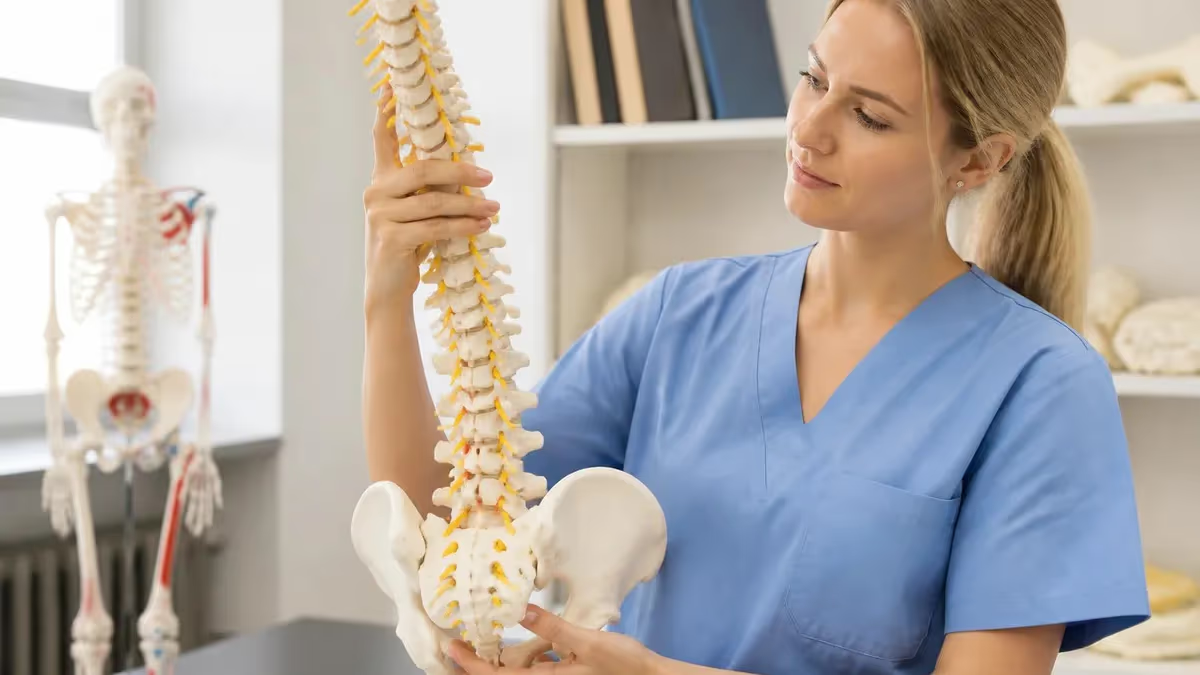
The right anatomy and physiology textbook makes the difference between absorbing the material easily and struggling through every chapter. The subject is dense — 2,000-page comprehensive textbooks cover hundreds of structures, dozens of body systems, thousands of physiological processes and the connections between them. The textbook you choose anchors months or years of study, so picking one that matches your learning style and program requirements is one of the more consequential decisions early in any health-care or biology-related education path.
The major comprehensive anatomy and physiology textbooks for U.S. undergraduate and allied-health programs are well-established. Tortora's Principles of Anatomy and Physiology is the most widely adopted across nursing and allied-health programs. Marieb's Human Anatomy and Physiology is the second most common, particularly favored at community colleges and four-year nursing programs. Saladin's Anatomy and Physiology: The Unity of Form and Function offers a more integrated approach popular with pre-med and biology students. Martini's Fundamentals of Anatomy and Physiology rounds out the four major comprehensive options.
For more focused anatomy work, Gray's Anatomy for Students has become the standard medical-school anatomy textbook for the past 20 years. Netter's Atlas of Human Anatomy is the universal pictorial atlas paired with whatever primary textbook a student uses. The combination of a comprehensive A&P textbook plus Gray's or Netter's for visual reference covers the typical study needs across nursing, pre-med, dental, PA and similar health-profession programs. The pairing is so common that many program reading lists name both.
This guide explains what to consider when choosing an anatomy and physiology textbook — the four main comprehensive options and their strengths, the role of atlases and pictorial references, online supplements like 3D anatomy apps, the used-versus-new-versus-digital cost trade-off, the free OpenStax alternative for budget-conscious students, and the study strategies that combine textbook reading with active learning to actually retain the material across a long course.
Anatomy textbook in 30 seconds
The four main comprehensive A&P textbooks are Tortora (most widely adopted in nursing), Marieb (community colleges and nursing), Saladin (pre-med and biology) and Martini. Pair with Gray's Anatomy for Students and/or Netter's Atlas for visual reference. OpenStax Anatomy and Physiology is a free open-source alternative covering most undergraduate needs. New textbooks cost $200 to $400; used and rental options run $30 to $150. Digital subscriptions through Pearson, McGraw-Hill and Wiley provide cheaper options with embedded study tools.
Tortora's Principles of Anatomy and Physiology, currently in its 16th edition, is the most adopted A&P textbook across U.S. nursing and allied-health programs. The text is detailed but accessible, with clear illustrations and consistent chapter structure across body systems. Each chapter follows a similar pattern — introduction, structure, function, clinical applications, chapter review. The clinical case studies and the focus on health-profession applications fit the audience well. Cost runs $200 to $300 new, $50 to $150 used.
Marieb's Human Anatomy and Physiology, currently in its 12th edition, is widely used at community colleges and four-year nursing programs. The text emphasizes clarity over detail, with strong illustrations and pedagogical features (chapter outlines, learning objectives, in-text quizzes) that help newer students. Marieb is sometimes preferred for nursing programs where students are also taking many other courses simultaneously and need a more readable rather than encyclopedic A&P text. Cost is similar to Tortora.
Saladin's Anatomy and Physiology: The Unity of Form and Function, currently in its 9th edition, is the choice at many pre-med and biology programs. The text emphasizes physiological mechanisms and the unifying principles connecting structure and function more deeply than the more applied texts. Pre-med students preparing for the MCAT often prefer Saladin because the depth aligns with the level the MCAT tests. Saladin is more challenging than Tortora or Marieb but also more rewarding for students who genuinely want to understand the underlying biology.
Martini's Fundamentals of Anatomy and Physiology, currently in its 12th edition, is the fourth major option. The text is well-illustrated and well-organized, with strong online supplemental content through the Mastering A&P platform. Martini sits between Marieb (most accessible) and Saladin (most challenging) in difficulty. Many programs adopt Martini for its balance of readability and depth plus the strong online learning platform. Cost is similar to the other three major options.
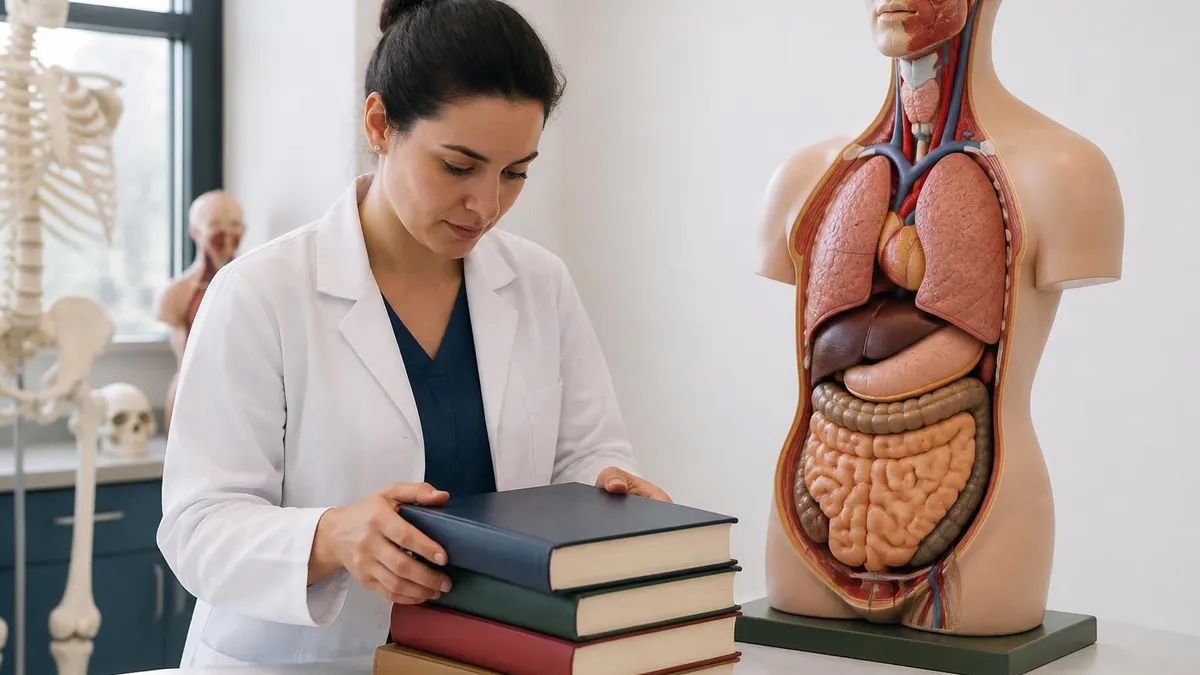
Top comprehensive A&P textbooks
Most widely adopted across U.S. nursing and allied-health programs. 16th edition current. Detailed but accessible with clinical case studies and health-profession focus. Strong illustrations and consistent chapter structure. New $200-$300, used $50-$150. Industry standard for nursing programs at the bachelor's degree level.
Common at community colleges and four-year nursing programs. 12th edition current. Emphasizes clarity over encyclopedic detail. Strong pedagogical features (learning objectives, in-text quizzes, chapter outlines). Preferred for students who need a readable rather than overwhelming A&P text alongside other coursework.
Pre-med and biology program standard. 9th edition current. Emphasizes physiological mechanisms and integrative principles. More challenging than Tortora or Marieb but better aligned with MCAT-level depth. Pre-med students preparing for medical school admission often prefer Saladin's depth and integration.
Fourth major comprehensive option. 12th edition current. Sits between Marieb and Saladin in difficulty with strong online supplements through Mastering A&P. Balanced choice for programs valuing readability plus depth plus the digital learning platform integration. Common across diverse undergraduate program types.
Atlases serve a different purpose than the comprehensive textbooks. An atlas focuses on visual reference — labeled illustrations of every structure, often without the substantial physiology content of a primary textbook. Atlases are used alongside the primary textbook, not instead of it. Frank Netter's Atlas of Human Anatomy is the universal standard, often called "Netter" by students and faculty alike. The illustrations are hand-drawn medical art that has become the visual vocabulary for understanding human anatomy across decades of medical education.
Gray's Anatomy for Students is a hybrid — a primary textbook focused entirely on anatomy (without the physiology component) that includes substantial atlas-quality illustrations. Currently in its 5th edition, Gray's for Students has become the standard medical-school anatomy textbook over the past 20 years, replacing the older Gray's Anatomy that was more reference than teaching text. Many medical and health-profession programs assign Gray's for Students alongside Netter's Atlas for the dual benefit of integrated text plus pictorial reference.
Rohen's Color Atlas of Anatomy is the cadaver-photograph alternative to Netter's hand-drawn illustrations. Rohen's photographs of dissected human cadavers show what real anatomy looks like in the lab rather than the idealized drawings of Netter. Some programs prefer Rohen's because students working in cadaver labs benefit from seeing photographs that match what they actually encounter. Programs without cadaver labs often stick with Netter's drawings as more visually clear teaching aids.
For specialized study of specific systems, dedicated texts cover individual body systems in greater depth than the comprehensive A&P textbooks. Berne and Levy Physiology, Costanzo's Physiology and Boron's Medical Physiology cover physiology specifically at the medical-school level. Moore's Clinically Oriented Anatomy is a stronger anatomy alternative to Gray's for medical students. These specialized texts are typically not the primary textbook for undergraduate A&P courses but serve as references for students going deeper.
Choosing by program type
Tortora and Marieb are the two most common adoptions for nursing A&P courses. Tortora at four-year BSN programs; Marieb at community colleges and ADN programs. Both cover the material at appropriate depth for nursing practice. Combine with a basic atlas (Netter or Rohen) for visual reference. The textbook plus atlas combination runs $300 to $500 new but used options bring the cost substantially lower.
OpenStax Anatomy and Physiology, published by Rice University, is the leading free open-source A&P textbook. Available at openstax.org as free PDF download, free web-based reading and inexpensive print copy ($55 to $80), the OpenStax text covers undergraduate A&P at quality comparable to the major commercial textbooks. Faculty at hundreds of community colleges and four-year programs have adopted OpenStax as their primary text, saving students hundreds of dollars per course. The content is updated periodically through the OpenStax editorial process.
For students whose program assigns a commercial textbook but who want to save money, OpenStax serves as a useful supplemental resource even when the primary text is required by the syllabus. Reading OpenStax alongside the assigned text reinforces the material from a slightly different presentation angle. The free price means students can have OpenStax as a permanent reference even after the course ends, when they may have sold the assigned commercial textbook to recoup costs.
For students considering used textbooks, the savings are substantial. A new Tortora 16th edition runs $200 to $300; a used 14th or 15th edition runs $30 to $80. The content differences between adjacent editions are typically minor — chapter reorganizations, updated terminology in a few areas, refreshed clinical cases. Students using a 1 to 2 edition older textbook follow alongside their classmates with no meaningful learning disadvantage. The cost saving per textbook is real money for most students.
For digital options, the textbook publishers offer subscription-based access through their respective online platforms. Pearson MyLab and Mastering A&P, McGraw-Hill Connect, Wiley Plus and similar platforms include the digital textbook plus interactive exercises, animated tutorials and practice quizzes for $80 to $150 per semester. The digital subscriptions are typically required by program if the program uses the online homework platform; check with the program before paying for a separate textbook copy.
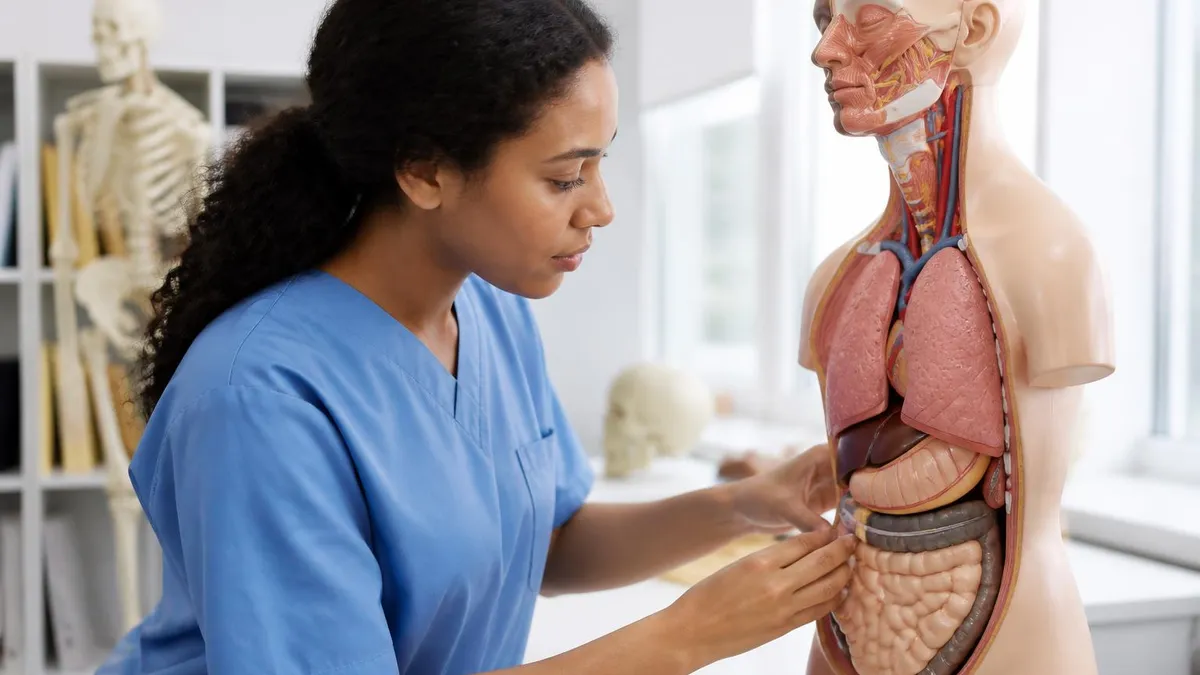
Programs that use the publisher's online homework platform (Mastering A&P, Connect, Wiley Plus) typically require the current edition because the access code is tied to that edition. Buying an older used edition saves money on the textbook but does not provide the access code needed for graded online assignments. Always confirm with your program whether you need the current edition with access code or whether an older edition is acceptable. The right answer depends on how the course is structured.
Online anatomy supplements have transformed how students study anatomy. Visible Body, BioDigital Human, Complete Anatomy and similar 3D anatomy apps let students rotate, dissect and explore detailed 3D models of every body system. The interactive 3D experience is qualitatively different from static 2D illustrations and helps with spatial understanding that flat images struggle to convey. Subscription pricing typically runs $30 to $80 per year; some apps offer free limited tiers and student discounts.
For specific body systems, Kenhub and Anatomy.app provide detailed online courses combining text, illustrations and quizzes. Khan Academy's free anatomy videos cover most undergraduate topics at introductory level. Acland's DVD Atlas of Human Anatomy is a classic video resource showing real cadaver dissections with clear narration; many programs include Acland's videos as part of cadaver lab preparation. Each supplemental resource serves a different learning style; mixing two or three across a course produces stronger retention than relying on the textbook alone.
Quizlet and Anki flashcard sets for A&P are abundantly available. Pre-built decks aligned with each major textbook chapter cover hundreds of structures and processes per chapter. Quizlet is web-based and free for basic use; Anki is open-source and free with optional paid mobile apps. Spaced repetition flashcard study is one of the most effective techniques for memorizing the substantial vocabulary of anatomy and physiology. Daily 20-30 minute Anki sessions across the semester produce dramatically better retention than cramming the night before exams.
YouTube channels like CrashCourse Anatomy and Physiology, Ninja Nerd, Armando Hasudungan and others provide free video explanations of A&P topics. The video format works well for students who learn through watching demonstrations rather than reading text. Combine YouTube viewing with textbook reading and active note-taking; the multimodal approach reinforces concepts through different cognitive channels. Most successful A&P students use 2 to 4 different learning resources rather than relying solely on the assigned textbook.
Choosing an A&P textbook checklist
- ✓Confirm the textbook required or recommended by your specific program
- ✓Check whether the program requires the current edition or accepts older editions
- ✓Verify whether you need the online homework platform access code
- ✓Compare new, used, rental and digital pricing options
- ✓Consider OpenStax as a free supplement or primary text
- ✓Pair the primary textbook with an atlas (Netter, Rohen or Gray's)
- ✓Add a 3D anatomy app subscription for spatial learning
- ✓Build or download Anki/Quizlet flashcard decks aligned with the textbook
- ✓Plan a study schedule combining textbook with multiple supplemental resources
For study strategies that produce genuine retention, the consensus across A&P students and educators is that passive reading alone is insufficient. The textbook reading must be paired with active study techniques — writing summaries in your own words, drawing labeled diagrams from memory, working through chapter review questions, teaching the material to a study partner, completing flashcard decks. The textbook provides the structured information; active engagement converts that information into durable knowledge.
For pre-reading the textbook chapter before lecture, the technique pays off in lecture comprehension. Skim the chapter the night before the corresponding lecture to get the broad picture and identify key terminology. During lecture, the unfamiliar terms are now familiar, and the lecturer's explanations build on the foundation rather than introducing it. Post-lecture, return to the textbook for a more thorough read with the lecture context to anchor the details. The pre-during-post approach produces deeper learning than reading after lecture only.
For the cumulative review strategy, build review sessions into the schedule from the first chapter rather than waiting for finals. A weekly 1-hour review session covering everything learned to date keeps earlier material accessible. By the end of the semester the cumulative review has reinforced material 10+ times and the final exam preparation requires polishing rather than relearning. Most students who struggle with A&P fail to review consistently; the material is voluminous enough that single-pass reading produces genuine forgetting within weeks.
For the exam preparation strategy, mock exams using textbook chapter review questions plus publisher test banks plus past exam questions from your specific program reveal weak areas while there is still time to address them. Take a full mock exam 1-2 weeks before each real exam, identify the questions you got wrong, return to the textbook for those specific topics. The cycle of mock exam plus targeted review produces the most predictable strong performance on real exams.
For students at the start of an A&P course wondering whether to spend time on the textbook at all (versus relying on lecture notes and online resources), the answer is yes — but selectively. The textbook is the structured comprehensive reference that anchors learning across the semester. Skipping it produces gaps that emerge on exams. Reading every word is overkill. The right balance is structured engagement — pre-reading chapter outlines and key terms, focused reading on topics emphasized in lecture or homework, careful study of figures and tables, and using the chapter review questions for self-assessment.
For graduate-level health programs (medical school, dental school, PA, nursing master's), the textbooks above are typically supplemental rather than primary. Medical school anatomy uses Gray's for Students or Moore's Clinically Oriented Anatomy as primary plus Netter's Atlas. Medical physiology uses Costanzo, Berne and Levy or Boron. The undergraduate-level Tortora and Marieb texts are reference rather than primary at the graduate level. Plan your textbook progression as your career advances rather than expecting a single text to serve every level.

A&P textbook quick reference
Companion atlases and references
The universal pictorial atlas in medical and health-profession education. Hand-drawn illustrations by Frank Netter that have become the visual vocabulary of anatomy. Currently in its 8th edition. Cost $80 to $130 new, less used. Pair with any comprehensive A&P textbook for visual reference. Most-recommended atlas across U.S. programs.
Photographs of dissected human cadavers rather than illustrations. Strong choice for programs with cadaver labs because students see structures the way they appear in the lab. 9th edition current. Cost $80 to $120. Some students prefer the realism over Netter's idealized drawings; others find the cadaver photographs harder to learn from initially.
Standard medical-school anatomy textbook combining narrative text with substantial atlas-quality illustrations. 5th edition current. Cost $80 to $130. Often paired with Netter's Atlas as the standard medical anatomy curriculum. More accessible than the older Gray's Anatomy reference but still detailed enough for medical-level learning.
3D interactive anatomy software for spatial exploration. Visible Body's Human Anatomy Atlas is the most popular subscription. BioDigital Human offers free tier for basic exploration. Subscription pricing $30 to $80 per year. The 3D rotation and dissection capabilities help with spatial understanding that 2D atlases cannot fully convey.
For students wondering whether to buy or rent textbooks, the calculation depends on long-term use. Textbooks you will reference during clinical rotations, board exam preparation or future graduate study justify buying — Tortora or Saladin or Marieb plus Netter often serve as references for years after the original course. Textbooks for one-time use can be rented or used-purchased to save money. Many bookstores and Amazon offer rental at 30% to 50% of new purchase price for the semester or year.
For students considering selling textbooks after the course ends, the buyback prices typically run 20% to 40% of new purchase price. Selling at a campus bookstore is convenient but produces the lowest return. Selling on Amazon Marketplace, eBay or to other students directly produces higher returns but requires more effort.
Some students keep textbooks until they are no longer current edition (1 to 3 years) and only sell when the resale value is depreciating fast. The value of having the reference available often exceeds the modest resale revenue available through campus bookstore buyback programs at semester end or peer-to-peer resale through online channels like Amazon Marketplace and similar resale sites.
Anatomy and Physiology: Pros and Cons
- +Anatomy and Physiology credential is recognized by employers and industry professionals
- +Higher earning potential compared to non-credentialed peers
- +Expanded career opportunities and professional advancement
- +Structured learning path builds comprehensive knowledge
- +Professional development that stays current with industry standards
- −Preparation requires significant time and study commitment
- −Associated costs for exams, materials, and renewal fees
- −Continuing education needed to maintain credentials
- −Competition for advanced positions can be challenging
- −Requirements and standards may vary by state or region
Pros and Cons at a Glance
| Pros | Cons |
|---|---|
| Anatomy and Physiology credential is recognized by employers and industry professionals | Preparation requires significant time and study commitment |
| Higher earning potential compared to non-credentialed peers | Associated costs for exams, materials, and renewal fees |
| Expanded career opportunities and professional advancement | Continuing education needed to maintain credentials |
| Structured learning path builds comprehensive knowledge | Competition for advanced positions can be challenging |
| Professional development that stays current with industry standards | Requirements and standards may vary by state or region |
Sample Anatomy and Physiology Practice Questions
Try these questions from our free Anatomy and Physiology practice tests. The correct answer and an explanation follow each question.
What is the foundational principle of assessment and evaluation in the Anatomy and Physiology field?
- A. Maximizing personal advancement
- B. Maintaining competence, integrity, and service to stakeholders
- C. Following the easiest path available
- D. Avoiding all challenging situations
Answer: B. Maintaining competence, integrity, and service to stakeholders
The foundational principles of assessment and evaluation in Anatomy and Physiology center on maintaining competence, integrity, and quality service.
What is the foundational principle of applied methods and techniques in the Anatomy and Physiology field?
- A. Maximizing personal advancement
- B. Maintaining competence, integrity, and service to stakeholders
- C. Following the easiest path available
- D. Avoiding all challenging situations
Answer: B. Maintaining competence, integrity, and service to stakeholders
The foundational principles of applied methods and techniques in Anatomy and Physiology center on maintaining competence, integrity, and quality service.
What is the foundational principle of industry best practices in the Anatomy and Physiology field?
- A. Maximizing personal advancement
- B. Maintaining competence, integrity, and service to stakeholders
- C. Following the easiest path available
- D. Avoiding all challenging situations
Answer: B. Maintaining competence, integrity, and service to stakeholders
The foundational principles of industry best practices in Anatomy and Physiology center on maintaining competence, integrity, and quality service.
What is the foundational principle of continuing education requirements in the Anatomy and Physiology field?
- A. Maximizing personal advancement
- B. Maintaining competence, integrity, and service to stakeholders
- C. Following the easiest path available
- D. Avoiding all challenging situations
Answer: B. Maintaining competence, integrity, and service to stakeholders
The foundational principles of continuing education requirements in Anatomy and Physiology center on maintaining competence, integrity, and quality service.
ANATOMY Questions and Answers
About the Author

Educational Psychologist & Academic Test Preparation Expert
Columbia University Teachers CollegeDr. Lisa Patel holds a Doctorate in Education from Columbia University Teachers College and has spent 17 years researching standardized test design and academic assessment. She has developed preparation programs for SAT, ACT, GRE, LSAT, UCAT, and numerous professional licensing exams, helping students of all backgrounds achieve their target scores.