
Afoqt Verbal Score: Minimums, Percentiles, and How to Raise Yours 2026
🎯 Your afoqt verbal score is a 1–99 percentile; officer applicants need at least 15. See how scoring works and how to raise yours.
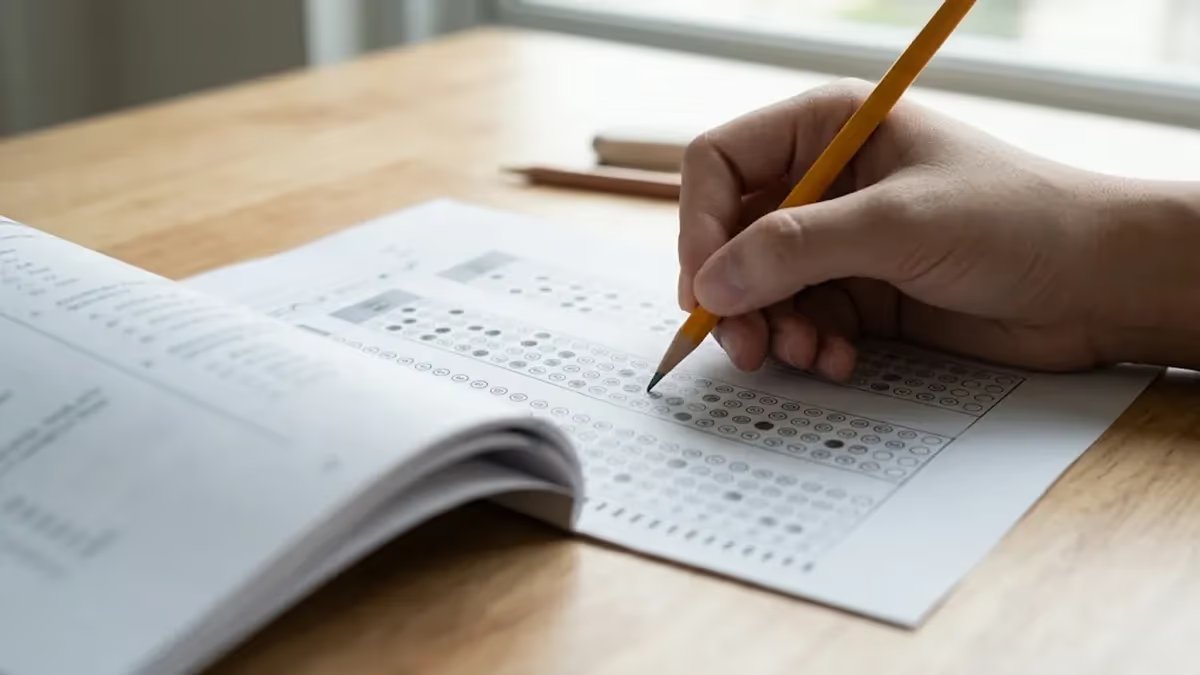
Your AFOQT verbal score is a percentile from 1 to 99 that compares your Verbal composite, built mainly from the Verbal Analogies and Word Knowledge subtests, with a reference group of officer applicants. Officer applicants need at least the 15th percentile to qualify, but competitive candidates usually score far higher.
Afoqt Verbal Score: Key Facts (Updated November 2026)
| Fact | Details | Source |
|---|---|---|
| Who must test | Applicants for any line officer training program, plus all pilot (including RPA), Combat Support Officer and air battle manager applicants | Department of the Air Force, DAFMAN 36-2664 |
| Format | Two versions of the test, each with 12 subtests | Department of the Air Force, DAFMAN 36-2664 |
| Score scale | Percentile composites from 1 to 99, including a Verbal composite | Department of the Air Force, DAFMAN 36-2664 |
| Verbal minimum | 15th percentile on the Verbal composite for officer applicants | Department of the Air Force, DAFMAN 36-2664 |
| Score release | Posted to the AFPC Testing Office website within 1 week of AFPC receiving the answer sheets | Department of the Air Force, DAFMAN 36-2664 |
| Score validity | T1/T2 and T7/T8 scores do not expire; the best composite from any attempt is the score of record | Department of the Air Force, DAFMAN 36-2664 |
| Pilot add-on | The Test of Basic Aviation Skills (TBAS) allows only three administrations, at least 90 days apart | Department of the Air Force, DAFMAN 36-2664 |
What Is the AFOQT Verbal Section and Why Does It Matter?
The Air Force Officer Qualifying Test, commonly shortened to afoqt, reports several composite scores, and Verbal is the one applicants most often underestimate. Pilot hopefuls obsess over the Pilot composite, yet every line officer candidate must clear the Verbal and Quantitative minimums before a selection board looks at anything else. A weak verbal result can sink an otherwise strong package, because boards read Verbal and Academic Aptitude alongside your GPA, degree, and leadership record.
The verbal portion of the exam measures how well you handle words, relationships between ideas, and written passages. Verbal Analogies asks you to spot the relationship between a pair of words and apply it to a new pair. Word Knowledge tests vocabulary through synonym-style questions. Reading Comprehension, which also feeds the Academic Aptitude composite, asks you to extract meaning from short passages. Together they show whether you can absorb dense manuals, briefings, and regulations quickly.
Your score is not the number of questions you answered correctly. Each subtest produces a raw score, which is converted into a percentile that compares you with a reference group of applicants. A percentile of 50 means you performed better than half that group. Because the conversion depends on the test form and norm group, chasing raw counts can mislead you, and the percentile on your official report is the only number that actually counts.
Most candidates quickly ask what number they should aim for. The official floor is low, but the practical target is much higher. Applicants who receive offers for rated and highly competitive career fields typically post Verbal percentiles well into the 60s, 70s, or above, while the minimum simply keeps your application alive. Setting a goal early, before you buy a single book, makes every later study decision easier and more focused.
This guide explains how the verbal composite is calculated, what the subtests look like, which minimums apply, and how to raise your result with a realistic study plan. You will also find a table of verified facts from the governing Air Force manual, tips for using an afoqt practice test to track progress, and answers to the questions applicants ask most often. Read it in order, or jump to the section you need.
One caution before we begin: percentile conversions on unofficial practice materials are estimates. They are useful for spotting trends and weaknesses, but they cannot promise the exact figure you will see on your official report. Use practice results to guide your study hours, not to predict your final number to the decimal, and always confirm current rules with your recruiter or the official manual before making decisions.
What Are the Key AFOQT Verbal Score Numbers?
What Subtests Make Up the AFOQT Verbal Section?
| Section | Questions | Time | Weight | Notes |
|---|---|---|---|---|
| Verbal Analogies | 25 | 8 min | Verbal composite | Match the relationship between word pairs |
| Word Knowledge | 25 | 5 min | Verbal composite | Synonym-style vocabulary questions |
| Reading Comprehension | 25 | 18 min | Academic Aptitude | Short passages with detail and inference questions |
| Total | 75 | 31 min | 100% |
How Is the AFOQT Verbal Score Calculated?
AFOQT scoring starts with a raw score on each subtest, which is simply the number of questions you answered correctly. There is no penalty for wrong answers, so a blank bubble can never help you. The raw score is then converted to a percentile using tables tied to your test form. Each percentile shows the share of the reference group you outperformed, which is why a raw score of 20 on one subtest can mean something different from a 20 on another.
The Verbal composite combines the converted results of the Verbal Analogies and Word Knowledge subtests into one percentile between 1 and 99. Because the composite blends two different skills, a lopsided performance is partly masked. An applicant who aces Word Knowledge but struggles with analogies can still land near the middle of the scale. That also means one bad subtest does not doom you, although it drags the combined figure down more than most people expect.
Many candidates confuse composite scores with subtest results, so it helps to keep the vocabulary straight. Subtests are the individual timed sections. Composites are the combined percentiles used for qualification and selection, such as Pilot, Air Battle Manager, Academic Aptitude, Verbal, and Quantitative. When recruiters or boards discuss your afoqt scores, they almost always mean these composites, not your raw answers. Knowing which number matters stops you from wasting study time.
Consider a realistic example. Suppose you answer 18 of 25 Word Knowledge questions correctly and 14 of 25 Verbal Analogies questions correctly. Those raw scores convert to percentiles that depend on the form, and the Verbal composite lands somewhere between them. If your combined percentile is 62, you outperformed roughly 62 percent of the reference group, comfortably above the 15th percentile floor, yet possibly short of what a competitive rated board expects. Always check your own report instead of guessing.
Here is where goals come in. A minimum score only gets you considered, while a competitive score gets you selected. To decide how high to aim, read what is a good score on the afoqt and compare it with the career field you want. Pilot and combat-focused paths lean heavily on their own composites, whereas many non-rated paths place more weight on Verbal and Academic Aptitude, so your target should reflect your specific path rather than a generic number.
Finally, remember that scores are recorded and reused. AFOQT T1/T2 and T7/T8 scores do not expire, and the best composite from any attempt serves as your score of record. That policy rewards a careful second attempt, but it also means a rushed first attempt can cost you a retest slot. Treat every sitting as a real opportunity, build your baseline with an afoqt practice test first, and schedule the exam only once your practice trend is stable.
How Do AFOQT Practice Tests Show Your Verbal Score?
Every afoqt practice test you take should end with a raw score for each verbal subtest. Count your correct answers, then compare the number with the conversion chart that comes with the test, if one is provided. Be skeptical of any chart that promises exact percentiles, because the official reference group and form-specific tables are not published for practice materials. Treat the result as an estimate and look for trends rather than a single magic number.
A better habit is to track your raw score on the same subtest across several attempts. If your Word Knowledge raw score moves from 14 to 17 to 20 over three weeks, that trend matters more than any converted percentile. Add the time you finished with, because finishing early with many errors points to careless reading, while running out of time points to pacing. Record both numbers in a notebook or spreadsheet after every single session.
Is It Worth Focusing on Your AFOQT Verbal Score?
- +Verbal is a required officer qualification composite
- +Vocabulary skills improve steadily with daily study
- +Strong verbal results lift the Academic Aptitude composite
- +Verbal skills help in officer training and briefings
- +Best composite from any attempt is your score of record
- +Practice tests make progress easy to measure
- −Vocabulary gains take weeks, not days
- −Time limits leave little room for rereading
- −Unofficial practice percentiles are only estimates
- −Overstudying verbal can neglect other composites
- −Retests add delay to your application timeline
- −Boards weigh the whole package, not Verbal alone
How Do You Improve Your AFOQT Verbal Score?
- ✓Take a full timed diagnostic before studying.
- ✓Record raw scores for each verbal subtest.
- ✓Learn ten new vocabulary words every day.
- ✓Study common roots, prefixes, and suffixes.
- ✓Name the relationship before reading analogy choices.
- ✓Practice timed reading passages five days a week.
- ✓Answer every question because wrong answers carry no penalty.
- ✓Log each miss as a knowledge, careless, or timing error.
- ✓Retake a full practice exam every two weeks.
- ✓Schedule the real exam once practice results are stable.
Minimum Gets You Considered; a High Percentile Gets You Selected
The 15th percentile Verbal minimum only keeps your application alive. Because the best composite from any attempt is your score of record and T1/T2 and T7/T8 scores do not expire, a patient, well-prepared attempt is far better than a rushed one.
What Is a Passing AFOQT Verbal Score?
The official minimum Verbal percentile for officer applicants is 15, but that is a qualification floor, not a promise of selection. Passing in the strict sense means you meet the minimums for the program you want, while competing means beating other applicants. Candidates often celebrate a 16 and then discover the board is full of applicants in the 70s. Every commissioning path has its own thresholds, and you can compare them in our guide to afoqt.
Minimums differ by career track. Pilot applicants must meet separate composite thresholds in addition to the Verbal and Quantitative floors, and they must also complete the Test of Basic Aviation Skills, which allows only three administrations with at least 90 days between them. Combat Support Officer and air battle manager applicants face their own composite requirements. Always confirm current numbers in the governing manual, DAFMAN 36-2664, before planning your strategy, since thresholds are updated from time to time.
Competitive targets vary by year, component, and board. Officer selection looks at the whole package, including degree, GPA, physical fitness, interview, and letters. A strong Verbal percentile can offset a mediocre GPA, while a weak one can pull down a stellar record. As a rule of thumb, aim for the 50th percentile or higher, and push toward the 70s if you are chasing a rated or highly competitive career field.
Retesting deserves a clear-eyed look. Because the best composite from any attempt is your score of record, a retake rarely hurts your scores, but it does cost time and sometimes a waiting period. Retest eligibility and attempt limits are set by Air Force policy, so verify them with your recruiter before registering. For the scheduling side, our guide on how to schedule the exam walks through test sites and retake rules step by step.
Think about what a retake actually requires. Simply sitting the exam again with the same preparation usually produces a similar result, give or take a few percentile points. Meaningful gains come from diagnosing the cause of your first score: vocabulary gaps, slow reading, or analogy-type mistakes. Spend four to eight weeks fixing those specific problems, take a full timed practice exam, and only then register. That sequence turns a retake from a gamble into a plan.
Finally, connect your verbal result to the larger picture of afoqt scoring. Verbal feeds into Academic Aptitude, and boards review that composite too. If you are weighing other military entrance exams, our comparison of how afoqt scoring differs from ASVAB scoring explains why the two tests use different scales, different purposes, and different cutoffs, so numbers never transfer directly from one test to the other.
Minimum composites, retest rules, and test versions are governed by DAFMAN 36-2664 and can change. Verify the latest numbers with your recruiter or the AFPC Testing Office before you schedule or plan around any cutoff.
How Do the Three Verbal Subtests Differ?
Twenty-five questions in about 8 minutes ask you to identify the relationship in one word pair and match it to another. Success depends on naming the relationship first, such as synonym, antonym, part to whole, or cause to effect, before reading the answer choices.
Twenty-five questions in about 5 minutes test how many words you recognize. Each item presents a word and asks for the closest meaning. Speed matters because you have roughly 12 seconds per question, so steady vocabulary building and root-word skills pay off most.
Twenty-five questions in about 18 minutes measure how well you extract facts and inferences from short passages. It contributes to the Academic Aptitude composite, so it deserves regular timed practice even when your Verbal composite already looks strong.
How Hard Is the AFOQT Verbal Section?
Difficulty is relative, but the verbal subtests are hard mainly because of time pressure. Word Knowledge gives you roughly 5 minutes for 25 questions, which is about 12 seconds each. Verbal Analogies gives about 8 minutes for 25 questions, around 19 seconds each. Reading Comprehension is the slowest of the three, yet its passages still demand disciplined skimming. Most applicants do not fail from lack of ability; they run out of time and start guessing too early.
Word Knowledge rewards breadth. Questions present a word and ask you to choose the closest synonym, and the vocabulary often runs from everyday words to aviation, military, and academic terms. You cannot cram thousands of words in a weekend, but you can build a strong base by studying roots, prefixes, and suffixes. A word such as benevolent becomes easy once you know that bene means good, and that logic transfers to hundreds of other words.
Verbal Analogies is a logic puzzle disguised as vocabulary. You see a pair such as hot is to cold, and must choose the pair with the same relationship, like up is to down. The trick is to state the relationship in a short sentence before looking at the answers. Common relationships include synonym, antonym, part to whole, tool to function, cause to effect, and degree of intensity. Naming the relationship first prevents the answer choices from steering you astray.
Reading Comprehension passages are short but dense, and the questions test what the passage says, not what you already know. Read the question stems first, then scan the passage for answers, and eliminate choices that use extreme language such as always or never. Pacing matters here: 25 questions in 18 minutes leaves about 43 seconds each, which is generous only if you avoid rereading entire passages. Practice with timed passages daily for two weeks.
Quality practice material makes difficulty manageable. Look for afoqt practice questions that mirror the real format, include answer explanations, and let you review every miss. Our review of the Barron's guide explains where a printed book shines and where it falls short. Whichever resource you choose, simulate test conditions by timing yourself and working without a dictionary or phone, because the real exam allows neither.
Difficulty also depends on your starting point. A strong reader with a modest vocabulary may need three weeks of word study, while a vocabulary-rich reader who has never seen analogies may need only a few days of format practice. Take a full diagnostic first, record your percentile for each subtest, and rank your weakest area. Plan your hours around that ranking, not around what feels comfortable, because comfortable study is rarely the study that raises scores.
What Does a Six-Week AFOQT Verbal Study Plan Look Like?
Week 1: Diagnose
Weeks 2-3: Build Vocabulary
Week 4: Boost Reading Speed
Week 5: Full Timed Practice
Week 6: Polish and Rest
What Are the Best Tips to Prepare for AFOQT Verbal?
Start with a diagnostic. Take one full-length afoqt practice exam before you open any book, under real timing, and record your results by subtest. This gives you a baseline and prevents the common mistake of studying what you already know. A diagnostic also reveals pacing problems that are invisible in untimed practice. Repeat the diagnostic every two weeks to confirm that your plan is working and to adjust your study hours quickly.
Build a simple weekly structure. For a six-week plan, spend week one on diagnostics and format familiarity, weeks two and three on vocabulary and analogy relationships, week four on reading comprehension speed, and weeks five and six on full timed practice tests. Aim for 45 to 60 minutes a day, five or six days a week. Consistency beats marathon weekend sessions, because vocabulary retention depends on spaced repetition more than on total hours.
Make vocabulary a daily habit. Learn ten new words a day, but also review the previous days' words so they stick. Use flashcards, write one sentence per word, and group words by root, such as bene for good or mal for bad. Read news, journals, and aviation or military articles for exposure to real usage. When you meet an unknown word in a practice test, add it to your list immediately instead of moving on.
Treat mistakes as data. After each practice set, label every miss as a knowledge gap, a careless error, or a timing failure. Knowledge gaps need study, careless errors need slower reading of the question stem, and timing failures need pacing drills. Keep a log of the most common labels. Within two or three weeks, patterns emerge, and fixing the top pattern is usually worth more percentile points than any amount of general review.
Choose your resources wisely. Our afoqt study guide advice on calculator rules covers the quantitative side, but for verbal work you should combine a printed guide, a vocabulary app, and online practice so you see questions in several styles. A good resource covers every subtest, explains each answer, and includes at least two full-length tests. Avoid memorizing one publisher's patterns, because the real exam will not repeat them.
Finally, protect test day. Sleep well the night before, eat a real breakfast, arrive early with the required identification, and do not cram new vocabulary in the final hour. During the exam, answer every question because there is no guessing penalty, mark hard items and return if time allows, and check the clock after each block of five questions. Calm, steady pacing is worth as much as raw knowledge on exam day.
AFOQT Questions and Answers

AFOQT Practice Test 2026

What Is a Good AFOQT Score? Percentiles, Minimums, and Competitive Targets

Afoqt Passing Scores: What Counts as a Passing AFOQT Score?

Barrons Afoqt: Is the Barron's AFOQT Study Guide Worth It?
Afoqt Vocabulary Words: What to Study for Word Knowledge and Verbal Analogies

AFOQT vs ASVAB: Key Differences Explained

Can You Use a Calculator on the AFOQT? Rules, Affected Subtests, and How to Prepare

How to Schedule Afoqt: Steps, Test Sites, and Retake Rules
How this page was made: written with AI tools and published by Nathan Beja, founder of Practice Test Geeks, who is responsible for its content. Exam facts are checked against the official sources listed below. Not reviewed by a subject-matter expert. Editorial policy
Sources & references
Exam facts on this page (fees, format, dates, passing scores) are checked against these official sources; the date is our last check. Editorial policy
- static.e-publishing.af.mil — Eligibility, exam format, retake policy, score release, score validity · verified Nov 2026