
ADF What Is: A Complete Guide to the Australian Defence Force 2026 October
ADF what is — learn what the Australian Defence Force is, its branches, roles, and how to join. Full career overview. 🎯

Understanding ADF what is all about is the essential first step for anyone considering a military career in Australia. The Australian Defence Force, commonly abbreviated as the ADF, is the unified armed forces structure of Australia that encompasses three distinct service branches — the Royal Australian Navy, the Australian Army, and the Royal Australian Air Force. Together, these branches form one of the most professional and well-equipped defence organizations in the Asia-Pacific region, drawing on a long tradition of service dating back to the early twentieth century and shaped by contributions to major global conflicts.
The ADF operates under the authority of the Australian Government, with the Chief of the Defence Force serving as the highest-ranking military officer overseeing all joint operations and strategic direction. Day-to-day administrative responsibility falls under the Department of Defence, which coordinates policy, resourcing, and capability development. The organization employs approximately 59,000 active personnel alongside a strong reserve force of around 28,000 members, making it a significant employer and a cornerstone of national security strategy. These numbers reflect not just military strength but a broad professional community with careers spanning combat roles, engineering, healthcare, logistics, intelligence, and information technology.
The ADF's mission extends well beyond defending Australia's borders. Personnel regularly participate in United Nations peacekeeping missions, humanitarian disaster relief operations across the Pacific and Southeast Asia, counter-terrorism efforts, and multinational coalition exercises with allied nations including the United States, the United Kingdom, Canada, and New Zealand under frameworks like the ANZUS treaty and the Five Eyes intelligence alliance. This global engagement means ADF service members gain internationally relevant skills and experience that have value both within and outside the military career path.
For Americans interested in international defence structures or for prospective candidates researching how the ADF compares to the United States Armed Forces, the parallels are instructive. Much like the US military, the ADF uses a rank-based hierarchy, operates joint command structures, and relies on a combination of full-time and reserve personnel. The Defence Force Recruiting process mirrors many features of US enlistment — aptitude testing, medical evaluations, background checks, and fitness assessments — although the specific tests and standards reflect Australian conditions and strategic priorities.
People who ask what is the ADF are often at the beginning of a serious career investigation. The question covers a wide range of considerations: what roles are available, what the selection process entails, what training looks like, and what life inside the Defence Force actually means on a daily basis. This article addresses all of those dimensions, walking through the structure of each branch, the entry requirements, the aptitude tests candidates must pass, the progression pathways available to enlisted personnel and officers, and the benefits that come with a career in uniform.
If you are exploring your options and want to understand the full recruiting pipeline, the adf what is guide on Australian Defence Force Recruiting provides detailed insight into how candidates move from initial inquiry through to formal enlistment, including the specific stages of the application process and how to prepare effectively at each one. That context helps frame the information in this article because understanding the organization itself — its culture, its values, and its operational scope — is just as important as knowing the technical entry requirements.
The ADF's core values of service, courage, respect, integrity, and excellence are not merely words on a poster; they define the behavioral expectations placed on every member from the moment they raise their right hand at enlistment. Recruits are trained not only in the technical skills of their chosen trade or officer specialty but also in leadership, teamwork, and ethical decision-making under pressure.
These values translate into a workforce that is highly disciplined, operationally effective, and trusted with significant responsibility at relatively young ages — often by the mid-twenties, soldiers, sailors, and airmen are leading small teams in demanding real-world environments.
Australian Defence Force by the Numbers

The Three Branches of the ADF
The naval arm of the ADF, responsible for maritime operations, patrol of Australia's extensive coastline and exclusive economic zone, submarine warfare, amphibious operations, and international naval exercises. The RAN operates frigates, submarines, patrol boats, and support vessels.
The largest branch by personnel, the Army conducts land-based combat operations, peacekeeping deployments, disaster relief, and special operations. It includes the elite Special Air Service Regiment (SASR) and a wide range of combat, support, and service trades.
The air power branch of the ADF, the RAAF manages fighter and transport aircraft, surveillance platforms, air traffic control, cyber operations, and space capabilities. It operates advanced platforms including the F-35A Joint Strike Fighter and P-8A Poseidon maritime patrol aircraft.
The range of roles available within the ADF is one of the most frequently misunderstood aspects of the organization. Many people think of military service purely in terms of combat — infantry soldiers storming beaches or fighter pilots in dogfights — but the reality is that the vast majority of ADF positions are professional trades and specialist roles that would be recognizable in any large civilian employer.
Medical officers and nurses, lawyers, engineers, IT professionals, intelligence analysts, chaplains, musicians, public affairs officers, and logistics specialists all serve alongside their combat colleagues, forming the essential backbone that keeps the operational force running.
For enlisted personnel, entry-level positions are organized into trades that align with civilian qualification frameworks. A recruit who joins as an electrician in the Navy, for example, will complete a trade-equivalent qualification recognized by Australian vocational education bodies, and that credential carries value when the member eventually transitions to civilian employment. Similarly, Army vehicle mechanics, Air Force avionics technicians, and Navy maritime warfare officers all accumulate skills and certifications during their service that map to civilian career pathways — making ADF service an investment in long-term professional development, not just a job.
Officer entry represents a higher-level pathway requiring either a completed or in-progress university degree. Officers begin their careers at either the Australian Defence Force Academy (ADFA) — a tri-service university in Canberra that grants both degrees and military commissions — or via the direct entry officer programs offered by each branch. Officers carry leadership responsibility from the outset, typically commanding small units within the first few years of service and progressively taking on greater strategic and organizational roles as they move up the rank structure from Lieutenant through to the senior commissioned officer grades.
Special forces represent the elite tier of ADF service. The Army's Special Air Service Regiment based in Perth, the 2nd Commando Regiment in Sydney, and the Incident Response Regiment handle the most demanding direct-action, reconnaissance, and counter-terrorism tasks. Selection for these units is exceptionally competitive, typically requiring several years of proven service in the regular Army followed by grueling selection courses with pass rates well below twenty percent. The RAAF's Air Field Defence Guards and the Navy's Clearance Divers also occupy elite specialist niches within their respective branches.
Reserve service offers Australians a way to contribute to national defence without committing to a full-time military career. The ADF Reserve system is organized into the Naval Reserve, the Army Reserve, and the RAAF Reserve, each of which mirrors the structure of their full-time counterpart. Reservists typically commit to a minimum number of training days per year and can be called up for operational deployments under specific legislative frameworks. Many ADF reservists also maintain full-time civilian careers in fields like medicine, engineering, or law, bringing professional expertise that complements the skills of permanent force members.
Lateral entry and direct entry schemes allow professionals with highly sought-after civilian qualifications — particularly in medicine, dentistry, law, chaplaincy, and certain engineering disciplines — to enter the ADF at an equivalent rank reflecting their professional experience. A civilian surgeon, for instance, may enter as a Major or Lieutenant Commander rather than starting at the bottom of the enlisted or junior officer structure. This flexibility allows the ADF to access talent pools that would otherwise be difficult to recruit through the standard pathway, and it reflects the sophisticated workforce planning approach that characterizes modern defence forces.
Understanding the breadth of ADF career options is important for anyone researching the organization, because the right match between a candidate's interests and aptitudes and the available roles significantly affects both selection success and long-term career satisfaction. The aptitude testing conducted during recruitment is specifically designed to identify which roles a candidate is best suited for, and candidates who enter the process with a realistic sense of the role landscape are better positioned to make informed choices about where to direct their application.
ADF Entry Requirements: What You Need to Know
To be eligible for ADF service, candidates must be Australian citizens or permanent residents who meet minimum age requirements — generally 17 years old with parental consent, up to a maximum age that varies by role, typically between 55 and 60 years depending on the position. Candidates must hold a clean criminal record, pass a security clearance process, and have no significant medical history that would prevent safe performance of military duties in potentially physically demanding environments.
Residency requirements mean that candidates who have spent significant time living overseas may face additional scrutiny during the background check process. The security clearance investigates not just criminal history but also financial responsibility, associations with foreign nationals, and any potential conflicts of interest. Most entry-level roles require a Negative Vetting Level 1 clearance, while roles involving classified information require higher-level clearances that can take considerably longer to process and may involve more detailed personal history investigation.

Is ADF Service Right for You? Pros and Cons
- +Competitive salary with regular pay increments and allowances that often exceed comparable civilian roles
- +Free housing or housing allowance provided for full-time members and eligible dependants
- +Comprehensive free healthcare and dental coverage for ADF members and their families
- +Paid training and education including trade qualifications, university degrees, and specialist courses
- +Strong career progression structure with clear promotion pathways and performance-based advancement
- +Unique life experiences including overseas deployments, international exercises, and operational service
- −Postings to locations across Australia and overseas are compulsory, limiting personal geographic choice
- −Separation from family during deployments and training periods can place significant strain on relationships
- −Physical and psychological demands of service are high, and some roles carry genuine risk of injury or harm
- −Work hours are irregular and can be extremely long during exercises, operations, and training periods
- −Transition to civilian employment after leaving the ADF can require significant effort to translate military skills
- −Bureaucratic culture and strict hierarchy can frustrate members who prefer flat organizational structures
Pros and Cons at a Glance
| Pros | Cons |
|---|---|
| Competitive salary with regular pay increments and allowances that often exceed comparable civilian roles | Postings to locations across Australia and overseas are compulsory, limiting personal geographic choice |
| Free housing or housing allowance provided for full-time members and eligible dependants | Separation from family during deployments and training periods can place significant strain on relationships |
| Comprehensive free healthcare and dental coverage for ADF members and their families | Physical and psychological demands of service are high, and some roles carry genuine risk of injury or harm |
| Paid training and education including trade qualifications, university degrees, and specialist courses | Work hours are irregular and can be extremely long during exercises, operations, and training periods |
| Strong career progression structure with clear promotion pathways and performance-based advancement | Transition to civilian employment after leaving the ADF can require significant effort to translate military skills |
| Unique life experiences including overseas deployments, international exercises, and operational service | Bureaucratic culture and strict hierarchy can frustrate members who prefer flat organizational structures |
ADF Application Readiness Checklist
- ✓Confirm you meet Australian citizenship or permanent residency requirements before beginning your application
- ✓Gather all required identity documents including birth certificate, passport, and proof of residency history
- ✓Research the specific roles you are interested in and verify you meet age and educational prerequisites
- ✓Begin a structured physical fitness program targeting the minimum run time, push-up, and sit-up standards
- ✓Complete at least four weeks of timed aptitude test practice focusing on mechanical and numerical reasoning
- ✓Obtain and review your full credit and financial history to identify any issues before the security clearance
- ✓Consult your GP about any medical conditions in your history and obtain relevant treatment documentation
- ✓Complete the online expression of interest through the Defence Jobs website to receive a formal application invitation
- ✓Attend your scheduled Defence Force Recruiting Assessment Day fully prepared with all required documentation
- ✓Follow up promptly on any requests for additional information during the processing period to avoid delays
Aptitude Test Score Determines Your Role Options
Your score on the ADF Aptitude Test is the single biggest factor determining which roles you can access. Candidates who prepare systematically for 6–8 weeks typically see score improvements of 15–25 percent, which can be the difference between accessing a highly competitive technical trade and being limited to fewer options. Never sit the test cold — targeted practice pays significant dividends.
Recruit training in the ADF is the foundational experience that transforms civilians into military professionals. Regardless of which branch a person joins, the first phase of training focuses on building the physical fitness, discipline, teamwork skills, and military knowledge that underpin everything that follows.
For Army recruits, basic training takes place at the Army Recruit Training Centre at Kapooka in New South Wales — a rigorous thirteen-week program of physical training, weapons handling, fieldcraft, and military customs and courtesies. Navy recruits complete their initial training at HMAS Cerberus in Victoria, while Air Force recruits train at RAAF Base Wagga in New South Wales.
What makes ADF recruit training distinctive is not merely the physical demands — which are real and progressive — but the deliberate focus on developing what the Defence Force calls the military mindset. Recruits are systematically placed in situations that require them to perform under physical and mental pressure, to make decisions with incomplete information, and to maintain standards even when fatigued or frustrated.
The instructors who run recruit training are experienced non-commissioned officers who have been through the same process and understand how to challenge recruits at the edge of their comfort zones without breaking them. The graduation rate from basic training is high — typically around eighty-five to ninety percent — because the ADF invests heavily in identifying and supporting recruits who are struggling rather than simply eliminating them.
Following basic training, recruits proceed to employment training — the phase where they learn the specific skills of their trade or officer specialty. Employment training length varies enormously by role. An Infantry soldier might complete employment training in twelve to sixteen weeks, while an electrical engineer or medical officer's training pipeline spans several years of combined civilian qualification and military-specific instruction. During this phase, trainees begin drawing full pay and are considered serving ADF members with all associated entitlements, even though they have not yet been posted to their first operational unit.
Officer training follows a different pathway. Officers who attend ADFA complete a three-year degree program embedded with military training, after which they proceed to officer-specific training at their branch's training establishment — the Royal Military College at Duntroon for Army officers, HMAS Creswell for Navy officers, and the Officer Training School at RAAF Base East Sale for Air Force officers. The combined academic and military formation at ADFA is designed to produce officers who can think critically, write clearly, analyze complex situations, and lead effectively — capabilities that complement the technical skills developed in subsequent employment training.
Promotion in the ADF is determined by a combination of time in rank, performance assessment reports, selection board outcomes, and completion of professional military education courses. The system is designed to be competitive but fair, rewarding demonstrated performance and professional development rather than seniority alone. The most senior enlisted grades — Warrant Officer and Warrant Officer Class One — represent the pinnacle of the enlisted career structure and carry enormous institutional influence, providing the non-commissioned officer backbone that makes the ADF's operational effectiveness possible at the unit level.
Continuous learning is embedded in ADF culture throughout a career, not just during initial training. Members regularly attend short courses, exercises, and educational programs that keep their skills current and expose them to new capabilities.
Many ADF members also complete external university qualifications — often at government expense — during their careers, building credentials that serve them well both in the Defence Force and after they eventually transition to civilian life. The ADF's investment in member education and training is one of the most tangible benefits of service and a significant factor in the satisfaction and retention rates that the organization works hard to maintain.
Mentorship within the ADF is informal but pervasive. Senior non-commissioned officers and experienced officers routinely invest in the development of junior members, sharing institutional knowledge, career advice, and professional standards.
This culture of mentorship means that new members are rarely left to figure out military culture on their own — there is almost always a more experienced colleague willing to provide guidance, context, and support during the inevitable challenges of early military service. The collegial bonds formed during training and early postings often last for decades and form the social fabric that makes ADF service feel like more than just a job.

Security clearance processing can take anywhere from four weeks to over twelve months depending on the level required and the complexity of your personal history. Candidates with overseas residency, dual citizenship, significant financial issues, or prior legal matters should expect longer processing times. Begin gathering documentation early and respond promptly to all requests from the Australian Government Security Vetting Agency (AGSVA) to avoid unnecessary delays in your application.
The pay and benefits package available to ADF members is one of the most comprehensive in the Australian employment market. Full-time ADF members receive a base salary determined by their rank and service category, supplemented by a range of allowances that can significantly increase total remuneration. Defence Force members working in isolated postings, deployed on operations, or performing hazardous duties receive additional allowances designed to compensate for the specific conditions of their service. When these allowances are factored in, total compensation for experienced ADF members frequently exceeds what comparable civilian roles would pay.
Housing is one of the most valuable components of the ADF remuneration package. Full-time members are entitled to either subsidized Defence Housing Australia accommodation near their place of work or a rent assistance allowance that helps them access private rental housing.
The Defence housing stock includes a significant number of purpose-built properties near major bases, many of which have been recently renovated or newly constructed as part of ongoing infrastructure investment. Families posted with a member are also covered, making the housing benefit particularly valuable for those with dependants and ensuring that relocation costs associated with compulsory postings are substantially mitigated.
Healthcare coverage for ADF members is provided through the Defence Health Service and covers comprehensive medical and dental care at no cost to the member. This benefit extends to a number of dependant health programs and represents significant dollar value when compared to the healthcare costs faced by civilian workers. Members who sustain injuries or illnesses in the course of their service are covered by the Military Rehabilitation and Compensation Act, which provides structured support for recovery, rehabilitation, and — where necessary — financial compensation for permanent impairment or incapacity.
The ADF Superannuation arrangements are structured differently from standard civilian superannuation. Members who joined before July 2016 are covered by the Military Superannuation and Benefits Scheme, while those who joined after that date are covered by the ADF Cover and ADF Super schemes.
The newer arrangements include a generous employer contribution rate and death and invalidity cover, ensuring members and their families are financially protected in the event of serious illness, injury, or death in service. Understanding superannuation entitlements is an important part of long-term financial planning for ADF members and is covered in orientation programs at the start of service.
Leave entitlements for ADF members are generous by Australian standards. Full-time members accumulate annual leave and are entitled to a range of special leave categories including maternity and paternity leave, compassionate leave, study leave, and recreational leave at reduced rates for long-distance travel. The ADF also recognizes the unique family pressures associated with military service and has progressively expanded family support programs including childcare subsidies, family liaison officers at major bases, and counseling services available through the Defence Member and Family Helpline.
Transition from the ADF to civilian employment is a structured process supported by the ADF Transition program, which provides career planning, résumé development, and job search support for members who are separating. The recognition that military skills translate imperfectly to civilian job applications has driven investment in programs that help members articulate the leadership, technical, and organizational competencies they have developed.
Many ADF veterans find that their military experience is highly valued by employers in sectors including law enforcement, emergency services, project management, corporate security, and engineering — particularly when they are able to clearly communicate the relevance of their service experience.
For anyone researching the ADF in depth, the combination of meaningful work, strong community, professional development, competitive compensation, and genuine job security makes military service a compelling option that deserves serious consideration alongside civilian career paths. The key is to go in with accurate expectations — understanding both the rewards and the real demands of service — so that the decision to join is informed, motivated, and likely to lead to a fulfilling career in one of Australia's most important institutions.
Preparing effectively for ADF selection requires a structured, multi-dimensional approach that addresses every element of the assessment process simultaneously. Many candidates make the mistake of focusing all their preparation energy on physical fitness while neglecting the aptitude testing component — or vice versa. The reality is that both dimensions are gatekeeping requirements: failing either the fitness assessment or the aptitude test will result in being ineligible for your chosen role, regardless of how strong your performance is on the other dimension. A truly competitive preparation plan addresses fitness, test skills, medical readiness, and administrative completeness in parallel.
For the aptitude test, the most effective preparation strategy combines topic-by-topic skill building with timed full-length practice under realistic conditions. Begin by identifying your weakest domains — for most candidates these are mechanical reasoning and numerical reasoning — and dedicate the first two weeks of preparation to working through the underlying concepts systematically.
Mechanical reasoning requires understanding the physics of simple machines: how levers multiply force, how gears change speed and torque, how pulleys and inclined planes work. These concepts are not difficult to learn with a structured resource, but they require actual engagement with the material rather than passive reading.
Numerical reasoning preparation should emphasize both speed and accuracy, since the ADF aptitude test is timed and marks are awarded only for correct answers within the time limit. Practice calculating percentages, ratios, averages, and basic algebra quickly and without a calculator. The verbal reasoning section rewards candidates who read broadly and pay close attention to logical inference — whether a conclusion necessarily follows from given premises — rather than relying on prior knowledge. Abstract reasoning improves with pattern recognition practice, and most candidates see rapid improvement here with relatively modest investment of practice time.
Physical preparation should target the specific standards published on the Defence Jobs website for your chosen role. The 2.4 kilometre run time is the most commonly cited threshold, and candidates who are not already recreational runners should begin building their aerobic base at least three to four months before their assessment date.
A simple program of three runs per week — one interval session, one tempo run, and one longer easy run — builds the cardiovascular fitness needed to meet the standard while managing injury risk. Complement running with push-up and sit-up progressions that build toward and beyond the minimum standards, since exceeding the threshold reduces stress on assessment day.
Administrative preparation is often overlooked but is critical to keeping your application moving without unnecessary delays. Gather all required documents — birth certificate, passport, proof of address, educational certificates, employment history, and any medical records relevant to your personal health history — well before your first assessment appointment. Delays in document submission are one of the most common reasons for extended processing timelines, and they are entirely within the candidate's control. Set up a dedicated folder for all ADF application documentation and check it regularly to ensure nothing has been misplaced.
Mental preparation for the assessment day experience is also worth considering. Assessment days at Defence Force Recruiting centres are full-day events that include the aptitude test, medical screening, fitness assessment, and interviews or aptitude exercises depending on the role. Candidates who arrive physically rested, properly fed, and mentally focused consistently perform better than those who underestimate the demands of the day. Practice being calm under pressure during your preparation phase — simulate the test conditions, time your practice runs as if they were the real thing, and develop the psychological resilience to perform your best when it counts most.
Finally, reach out to current and former ADF members through official channels, community events, and social networks to gain firsthand perspectives on service life. The ADF runs information sessions at recruiting centres across Australia, and attending one of these events provides an opportunity to ask direct questions of serving members and recruiting staff in a low-pressure environment.
Understanding the day-to-day reality of ADF service from people who are living it is the most valuable preparation you can do beyond the technical test and fitness work — it ensures that the decision you make is grounded in reality and positions you to engage authentically with recruiters throughout the selection process.
Sample ADF - Australian Defence Force Practice Questions
Try these questions from our free ADF - Australian Defence Force practice tests. The correct answer and an explanation follow each question.
PERSEVERE is to QUIT as CONSTRUCT is to _______?
- A. BUILD
- B. DESIGN
- C. DEMOLISH
- D. ENGINEER
Answer: C. DEMOLISH
The relationship between PERSEVERE and QUIT is one of antonyms (opposites). To persevere is the opposite of quitting. Therefore, the word that is the opposite of CONSTRUCT is DEMOLISH.
A clock shows exactly 3:00. What time does its mirror reflection appear to show?
- A. 3:00
- B. 9:00
- C. 6:00
- D. 12:00
Answer: B. 9:00
A horizontal mirror flip reverses the clock face so the hour hand points to 9 instead of 3.
What is the next number in the following sequence: 5, 8, 14, 26, 50, ?
- A. 74
- B. 86
- C. 98
- D. 102
Answer: C. 98
The pattern is to multiply the previous number by 2 and then subtract an increasing amount. The sequence is: 5 * 2 - 2 = 8; 8 * 2 - 2 = 14; 14 * 2 - 2 = 26; 26 * 2 - 2 = 50. Let's re-examine the pattern. The difference between the numbers is 3, 6, 12, 24. The difference is doubling each time. So the next difference should be 24 * 2 = 48. Therefore, the next number in the sequence is 50 + 48 = 98.
In the ADF aptitude testing process, what does the General Ability Test primarily measure?
- A. Verbal reasoning, numerical reasoning, and abstract reasoning abilities
- B. Physical fitness and endurance levels
- C. Knowledge of Australian military history
- D. Leadership potential and teamwork skills
Answer: A. Verbal reasoning, numerical reasoning, and abstract reasoning abilities
The ADF General Ability Test assesses cognitive aptitude across verbal, numerical, and abstract reasoning domains to determine suitability for various military roles and training programs.
ADF Questions and Answers

Australian Defence Force Recruiting: Complete Guide to Joining the ADF

What ADF Means in Australia: The Defence Force Explained

ADF Website Guide: How to Use the Official Australian Defence Force Portal
ADF (Australian Defence Force) Test | Official Exam Prep
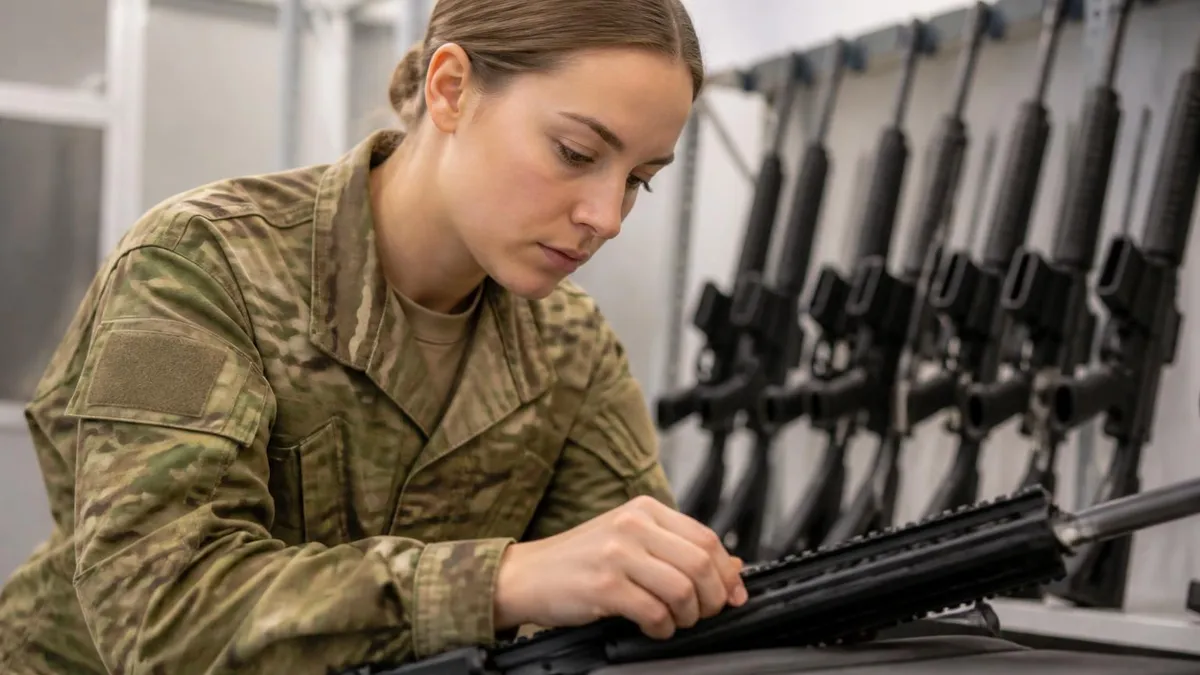
Australian Defence Force: Complete Training Guide & Entry Requirements
About the Author

Educational Psychologist & Academic Test Preparation Expert
Columbia University Teachers CollegeDr. Lisa Patel holds a Doctorate in Education from Columbia University Teachers College and has spent 17 years researching standardized test design and academic assessment. She has developed preparation programs for SAT, ACT, GRE, LSAT, UCAT, and numerous professional licensing exams, helping students of all backgrounds achieve their target scores.
Join the Discussion
Connect with other students preparing for this exam. Share tips, ask questions, and get advice from people who have been there.
View discussion (9 replies)