
What ADF Means in Australia: The Defence Force Explained 2026
ADF meaning explained: the Australian Defence Force is Army, Navy and Air Force combined. Learn what ADF stands for, history and how to join. ⏳

Ask any Australian what the three letters ADF stand for and most will give the same answer without hesitation—the Australian Defence Force. It is the umbrella name for the country's military, and it gathers three uniformed services under one command: the Australian Army, the Royal Australian Navy and the Royal Australian Air Force. The phrase itself is shorthand. The full name is rarely shouted in headlines, yet the acronym turns up in news bulletins, recruitment posters, parliamentary debates and, more recently, social media campaigns aimed at school leavers. So that is the short answer. The longer one is more interesting.
Why does the meaning still confuse people? Two reasons. The same three letters get reused across other fields. Accountants write ADF for after deductions. Office workers see it on photocopier menus as automatic document feeder. Scientists in a lab might be talking about adenosine diphosphate. Plenty of overlap—and yet, when an Australian says "my brother is in the ADF," nobody assumes he prints invoices. Context fixes the meaning. This article sticks with the military sense. If you landed here looking for the printer feature, you are in the wrong place; we will not be discussing paper trays.
Define ADF properly and you get something layered. It is a legal entity created by Commonwealth legislation. It is a workforce of roughly 60,000 permanent members plus a reserve component. It is a brand the federal government uses to recruit. And it is a daily presence—from cyclone clean-ups in Queensland to peacekeeping rotations in the Middle East. Knowing that, the question "what does ADF stand for" stops feeling like trivia and starts feeling like a doorway into how Australia organises its defence policy.
Free ADF - Australian Defence Force Study Tools
Interactive ADF - Australian Defence Force resources on PracticeTestGeeks, free to start:
- ADF - Australian Defence Force practice test — 100+ questions with instant scoring and answer explanations
- ADF - Australian Defence Force flashcards — review key terms and concepts card by card
- ADF - Australian Defence Force study guide — topic-by-topic overview of what the exam covers
- ADF - Australian Defence Force cheat sheet — one-page printable summary for last-minute review
ADF by the Numbers
Before 1976, Australia's three services ran themselves—largely. The Army answered to its own minister-equivalent, the Navy to another, and the Air Force followed suit. Coordination happened, but it was patchy. The Defence Act 1903 had set the legal scaffolding, and reforms after the Second World War tried to pull things tighter, yet the branches kept their independent flavour. The result? Procurement headaches, joint-operations friction, three separate chains of command pointing toward the Prime Minister. Workable, but not modern.
Then came the Tange Review. Sir Arthur Tange, a senior public servant with little patience for duplicated effort, argued for a single, unified force. His report landed in 1973. Parliament agreed. On 9 February 1976, the Australian Defence Force came into being—one entity, one Chief of the Defence Force, three branches still wearing their own uniforms but answering to a single command structure.
The change was administrative on paper. In practice it reshaped everything from joint training to overseas deployments. So when someone asks "what is the ADF," the honest reply is: a fifty-year experiment in joint command that, by most measures, worked.
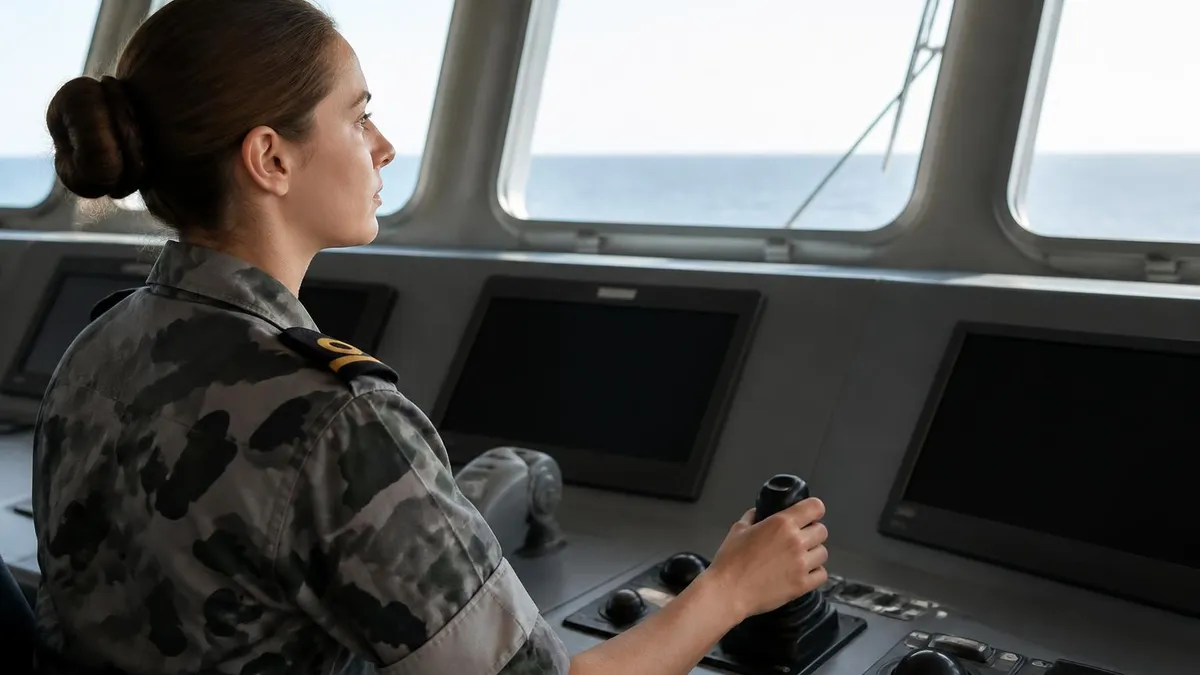
The acronym ADF means Australian Defence Force. It includes three services—the Australian Army, the Royal Australian Navy and the Royal Australian Air Force—plus their reserve components and the ADF Cadets youth program. The Chief of the Defence Force (CDF) commands all three branches, reporting to the Minister for Defence and ultimately to the Prime Minister of Australia. The ADF was formally unified on 9 February 1976 following the Tange Review, replacing a fragmented service-by-service command structure with a single joint headquarters in Canberra.
Three branches, three flavours of soldiering. Let us start with the Australian Army—the land force. Roughly 30,000 permanent members. Tanks, infantry, artillery, special forces, engineers, signals. The Army is the branch most Australians picture when they hear the word soldier. Brigades are spread across Darwin, Townsville, Brisbane, Sydney, Adelaide and Perth, with the regular force backed by an Army Reserve that trains part-time and stands ready for callout. Recent purchases include Boxer combat reconnaissance vehicles, redback infantry fighting vehicles and HIMARS rocket artillery—signs that Canberra expects the Army to fight, not just patrol.
Then the Royal Australian Navy. About 16,000 sailors. Submarines, frigates, destroyers, patrol boats, supply ships, amphibious landing craft. The fleet base splits between HMAS Kuttabul in Sydney and HMAS Stirling near Perth. The Navy trains its own pilots—yes, naval aviators—and operates helicopters from ship decks. If you have heard the phrase blue-water force, that is the Navy talking. Long-range, open-ocean capability is what the service is built for.
The Royal Australian Air Force—RAAF—closes the trio. Around 14,000 personnel. F-35A Lightning II fighters, Super Hornets, surveillance aircraft, transport jets, refuellers. Bases dot the continent: Williamtown, Amberley, Tindal, Pearce, Edinburgh. The RAAF flies, but it also handles air-traffic control, radar, intelligence, satellite work. Modern air power is no longer just pilots and planes; the support tail is huge.
Three Branches of the Australian Defence Force
Land force with around 30,000 permanent and 15,000 reserve soldiers. Capabilities include infantry, armour, artillery, special forces, combat engineers, signals and aviation. Brigades are based in Darwin, Townsville, Brisbane, Sydney, Adelaide and Perth, with the Special Operations Command headquartered in Sydney. The Chief of Army (CA) reports to the CDF.
Sea force of approximately 16,000 sailors operating submarines, Hobart-class destroyers, Anzac and Hunter-class frigates, patrol boats, amphibious landing ships and supply vessels. Fleet bases sit at HMAS Kuttabul in Sydney and HMAS Stirling near Perth, with smaller bases in Darwin and Cairns. The Navy also operates naval aviation squadrons.
Air force of roughly 14,000 personnel flying F-35A Lightning II, F/A-18F Super Hornet, P-8A Poseidon, C-17 Globemaster, C-130J Hercules and KC-30A refuelling aircraft. Major bases include Williamtown, Amberley, Tindal, Pearce and Edinburgh, plus the bare base network across northern Australia for forward operations.
You join the ADF either as a full-time permanent member or as a reservist. The distinction matters—pay, lifestyle, obligations all differ—so it is worth knowing the difference before walking into a recruiting centre.
Permanent service is what most people imagine. It is a full-time job. You move where the ADF posts you, you train year-round, you deploy when ordered. Initial enlistment periods vary by branch and trade but usually span four to six years. After the minimum return of service, you can re-engage, transfer between trades or, in some cases, switch between services. Pay sits above many comparable civilian roles when you factor in housing, healthcare, allowances and superannuation. Bored at twenty-four? Probably not. Tired? Almost certainly.
The Reserve is different. Reservists hold civilian jobs and train part-time—weekend parades, annual continuous training, sometimes voluntary callouts during natural disasters. The Army Reserve, Navy Reserve and Air Force Reserve each maintain units around the country. Many reservists are former permanent members who left the full-time force but wanted to keep one foot in. Others are students or tradespeople looking for extra income, structure or a taste of service. Reserve callouts during the 2019–2020 bushfires showed just how much weight the part-time force can pull when the country needs it.
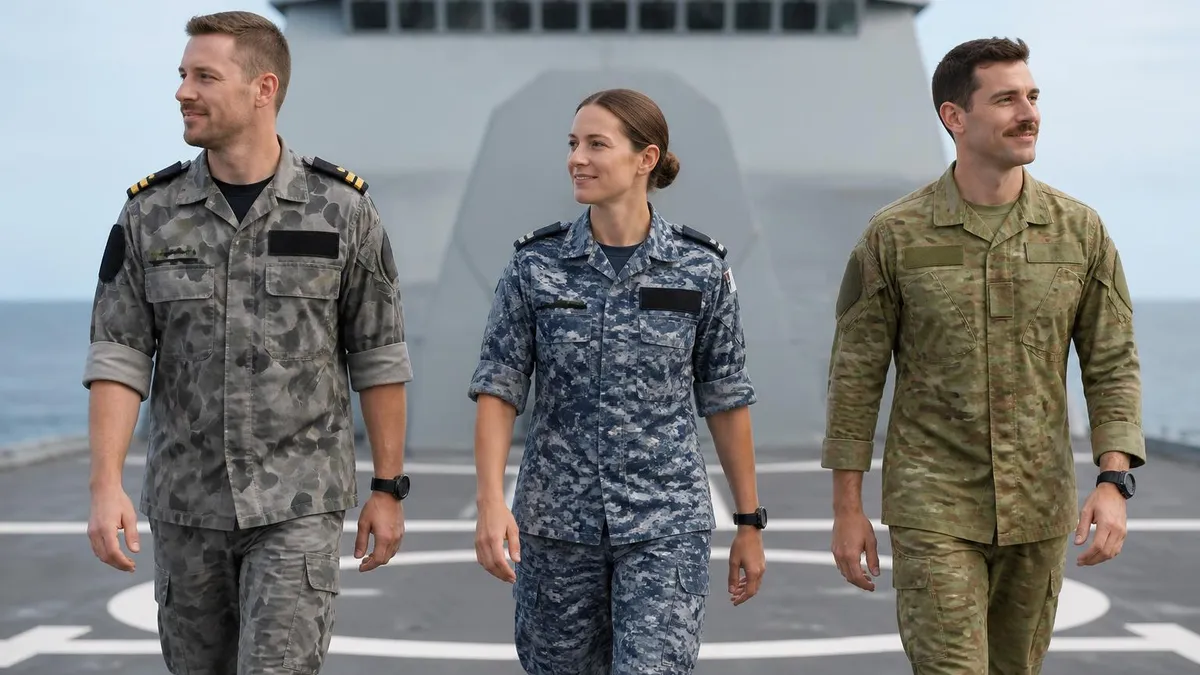
ADF Service Categories at a Glance
Full-time service. You live the job, train year-round, and accept postings wherever the ADF sends you. Initial periods run four to six years depending on trade. Pay, housing, healthcare and superannuation are bundled together. Most overseas deployments are filled by permanent members. Career planning support helps members transition between specialisations and ranks over time, and Defence pays for further education when it aligns with service needs.
What does the ADF actually do day to day? More than fight wars, that much is certain. Combat operations grab the headlines—Afghanistan, Iraq, the South China Sea patrols—but the bulk of the work is quieter. Border patrols. Search and rescue. Disaster relief. Training partner militaries in the Pacific. Hydrographic surveys. Cyber defence. Antarctic resupply runs. The list keeps stretching.
Operation Bushfire Assist in early 2020 put 6,500 ADF personnel into fire-affected communities. They evacuated Mallacoota by sea, ran water purification plants and cleared roads. A year later, Operation COVID-19 Assist saw soldiers running hotel quarantine and helping deliver vaccines. When floods hit New South Wales and Queensland in 2022, the green trucks turned up again. None of those missions involve firing a shot, yet they are core ADF business now—and probably will be for the foreseeable future, given the trajectory of climate-driven weather events.
Look further afield and the picture widens again. ADF personnel rotate through training missions in Papua New Guinea, Fiji, Tonga and Solomon Islands under the Defence Cooperation Program. They serve as observers and trainers with the United Nations in places like South Sudan. They join coalition deployments—Operation Manitou in the Middle East maritime space, Operation Highroad in Afghanistan when that was still running.
Closer to home, the AUKUS pact with the United Kingdom and United States, signed in 2021, will see Australian sailors training alongside the Royal Navy and US Navy for the next decade as the nuclear-powered submarine fleet is built. The ADF is not a quiet institution and 2026 looks busier than most years on record.
The acronym ADF is reused outside the military and the overlap occasionally causes confusion. In finance, ADF can mean after deductions or average daily flow. In office equipment, ADF means automatic document feeder—the tray on top of a scanner or photocopier. In biochemistry, ADF can be adenosine diphosphate, while in aviation ADF stands for automatic direction finder, a radio navigation aid. This article is about the Australian Defence Force only. Context, as always, decides the meaning.
Joining the ADF is a process, not an event. The first step for most candidates is a quick online check called the YOU Session—short for Your Options Unlimited. It is essentially a guided conversation with a Defence Force Recruiting representative. You talk through your interests, qualifications, fitness level and any medical considerations. The recruiter outlines roles that fit. No commitment yet. You walk away with a shortlist of jobs to research.
If you are still keen, the next step is the aptitude test. Verbal reasoning, abstract reasoning, numerical reasoning—the kind of testing common in graduate recruitment, though calibrated for military trades. Scores decide which jobs you can shortlist for; a low score for a technical trade does not bar you from everything, but it narrows the menu. Medical assessment follows, then a fitness test—beep test, push-ups, sit-ups—then an interview, then security clearances. Allow several months. Sometimes a year. Patience is part of the test, honestly.
Citizenship matters. To enlist, you generally need to be an Australian citizen, although permanent residents from Five Eyes countries (UK, US, Canada, New Zealand) can apply with extra paperwork and a pathway to citizenship. Age limits sit at 17 for enlistment—with parental consent for under-18s—and the upper limit varies by trade. Medical standards are strict. Past injuries, mental health history, certain medications: all flagged for review. Be honest. Recruiters work with what you give them, and lying tends to surface later.
ADF Enlistment Checklist for New Applicants
- ✓Australian citizen, or permanent resident from a Five Eyes country (UK, US, Canada, New Zealand) with a clear pathway to citizenship within prescribed timeframes
- ✓At least 17 years old at the date of enlistment, with signed parental or guardian consent if you are under 18
- ✓Completed a YOU Session conversation with a Defence Force Recruiting representative to discuss your role preferences and shortlist trades
- ✓Passed the General Ability Test (the ADF aptitude assessment covering verbal, numerical and abstract reasoning sections)
- ✓Medical assessment cleared or graded appropriately for the specific trade you are applying for, including vision, hearing and mental health screening
- ✓Fitness assessment passed: beep test (multi-stage shuttle run), push-ups and sit-ups, with standards varying by age, gender and chosen trade
- ✓Completed a structured interview with a recruiting officer covering your motivation, suitability and any conduct or background concerns
- ✓Security clearance application submitted and progressing, with referees and background details provided in full
- ✓Reviewed and signed your initial period of service contract, with a clear understanding of return-of-service obligations and trade-specific bonds
Plenty of school leavers ask: should I sign up? Honest answer—depends. The ADF rewards people who thrive in structure, like teamwork, and do not mind being told where to live. It punishes people who hate routine or who picked the job for the uniform pictures. So let us be candid about the trade-offs. The good is genuinely good.
Paid training, no student debt for trades, generous leave, postings around Australia and overseas, a clear promotion ladder. Friendships forged in basic training tend to last decades. Skills transfer to civilian work—mechanics, logisticians, nurses, pilots, IT specialists all leave the ADF with employer-ready experience.
The less-good is real too. Postings move you and your family on short notice. Deployments separate you from loved ones for months. Some trades carry physical wear and tear that shows up years later. Mental health support exists—Open Arms, the DVA, in-service psychologists—but PTSD and moral injury are not abstract concerns. The work can be boring (long sea voyages, repetitive drills) or violently intense within the same fortnight. Sleep, when you get it, is treasured.
A useful question to sit with: how do you feel about giving up some control over your own decisions? In the ADF, someone else decides which city you live in, when you take leave, who you train with and how long your hair can be. Most members make peace with that quickly because the structure brings clarity. Civilian life dumps a thousand small decisions on your plate every week; the ADF removes many of them. For some people that is a relief. For others it is suffocating. Knowing which camp you fall into is half the recruiting process, really.
Joining the ADF: Honest Trade-Offs to Weigh
- +Paid trade training and recognised civilian qualifications with no student debt for tradespeople
- +Stable salary plus housing, comprehensive healthcare and generous superannuation contributions
- +Travel across Australia and frequent opportunities for overseas exercises and deployments
- +Strong camaraderie and lifelong professional networks formed during initial training
- +Clear promotion structure with career planning support and Defence-funded further study
- +Access to subsidised mortgages, vehicle leasing and other serving-member financial benefits
- −Frequent postings can disrupt family life and partner careers, often at short notice
- −Deployments separate you from home and loved ones for months at a time
- −Physical demands and mental health risks vary significantly by trade and operational tempo
- −Less day-to-day autonomy than most civilian workplaces, with strict dress and conduct rules
- −Initial recruit training is demanding, mentally and physically, and not everyone completes it
- −Reintegration into civilian life after long service can be challenging without preparation
Pros and Cons at a Glance
| Pros | Cons |
|---|---|
| Paid trade training and recognised civilian qualifications with no student debt for tradespeople | Frequent postings can disrupt family life and partner careers, often at short notice |
| Stable salary plus housing, comprehensive healthcare and generous superannuation contributions | Deployments separate you from home and loved ones for months at a time |
| Travel across Australia and frequent opportunities for overseas exercises and deployments | Physical demands and mental health risks vary significantly by trade and operational tempo |
| Strong camaraderie and lifelong professional networks formed during initial training | Less day-to-day autonomy than most civilian workplaces, with strict dress and conduct rules |
| Clear promotion structure with career planning support and Defence-funded further study | Initial recruit training is demanding, mentally and physically, and not everyone completes it |
| Access to subsidised mortgages, vehicle leasing and other serving-member financial benefits | Reintegration into civilian life after long service can be challenging without preparation |
Cadets are not the ADF—worth saying again, because the confusion is common. The Australian Defence Force Cadets program is a youth development scheme for kids aged 12 or 13 through 18. Three streams: Australian Army Cadets, Australian Navy Cadets, Australian Air Force Cadets. Volunteers run most units, often serving or former ADF members. Activities include fieldcraft, abseiling, sailing, gliding, ceremonial parades and leadership courses. Some cadets go on to enlist. Many do not. Both outcomes are fine—the program exists for the development, not the recruitment funnel.
The cadet movement matters for another reason: it gives teenagers a low-stakes way to test whether military culture suits them before signing any enlistment paperwork. A school leaver who has spent two years polishing brass, sleeping in army-disposal tents and getting yelled at by a corporal-instructor knows a lot more about themselves than one who has only watched recruitment ads. The dropout rate at basic training is lower, anecdotally, among ex-cadets. That is not a guarantee—plenty of recruits with no cadet background sail through—but it is a fair signal.
So, drawing the threads together: the ADF is Australia's tri-service military, born in 1976, run by a Chief of the Defence Force, employing tens of thousands of permanent members and reservists, supported by a youth cadet movement. It defends the country, helps when disasters strike, trains regional partners and contributes to coalition operations abroad. "What does ADF stand for" is the easy part.
The harder, more useful question is: what does the ADF do, who joins it, and why does it matter? Hopefully this guide cleared some of that up. If you are seriously considering enlistment, the next move is straightforward—book a YOU Session and start asking questions of your own.
One last note on the acronym itself. Older Australians sometimes write ADF when they really mean the older term Defence Forces—plural—because that is how the services were referred to before 1976. The singular Force matters; it reflects the unified command structure introduced after the Tange Review.
Inside Defence, you will also hear CDF (Chief of the Defence Force), VCDF (Vice Chief), CN (Chief of Navy), CA (Chief of Army) and CAF (Chief of Air Force). The acronyms multiply quickly. But the anchor stays the same: ADF means the Australian Defence Force, and the three letters describe one of the country's biggest, most visible institutions.
If you want to dig further—history buffs, this one is for you—the ADF's family tree goes back further than 1976. The Royal Australian Navy was founded in 1911, three years before the First World War. The Australian Flying Corps, the precursor to the RAAF, formed in 1912 and flew in Palestine and on the Western Front.
The Army traces its lineage to the colonial militias of the 1800s, federated into the Australian Military Forces in 1901. Three services, three long stories, finally pulled together under a single banner in the late twentieth century. The acronym is recent. The institutions behind it are not.
Today the ADF sits inside the wider Defence portfolio, which also includes the Department of Defence (civilian policy and procurement), the Australian Submarine Agency (running the AUKUS submarine program) and the Defence Science and Technology Group. When you read about a multi-billion dollar frigate contract or a new fighter base in the Top End, you are reading about the ADF's tools being acquired by Defence's civilian arm on behalf of the uniformed force. The two are connected but not identical. Mixing them up is a common journalistic slip; now you will spot it.
Sample ADF - Australian Defence Force Practice Questions
Try these questions from our free ADF - Australian Defence Force practice tests. The correct answer and an explanation follow each question.
A force of 10 N is applied at the rim of a wheel with a radius of 0.5 m. What is the torque produced?
- A. 0.5 Nm
- B. 5 Nm
- C. 10 Nm
- D. 20 Nm
Answer: B. 5 Nm
Torque = Force × perpendicular distance from pivot; 10 N × 0.5 m = 5 Nm.
Which of the following lists correctly identifies the core values of the Australian Defence Force?
- A. Honesty, Loyalty, Duty, Mateship
- B. Service, Courage, Respect, Integrity, Excellence
- C. Pride, Commitment, Honour, Strength
- D. Professionalism, Leadership, Teamwork, Dedication
Answer: B. Service, Courage, Respect, Integrity, Excellence
The ADF's core values are officially stated as Service, Courage, Respect, Integrity, and Excellence. These values guide the conduct, character, and decision-making of all members.
Which of the following is NOT one of the three services that constitute the Australian Defence Force?
- A. Royal Australian Navy (RAN)
- B. Australian Army
- C. Australian Border Force (ABF)
- D. Royal Australian Air Force (RAAF)
Answer: C. Australian Border Force (ABF)
The Australian Defence Force is comprised of three services: the Royal Australian Navy (RAN), the Australian Army, and the Royal Australian Air Force (RAAF). The Australian Border Force is a separate federal law enforcement agency responsible for border control and is part of the Home Affairs portfolio, not the Defence portfolio.
A system uses one fixed pulley and one movable pulley. By what factor does this reduce the force needed to lift a load?
- A. Force is unchanged
- B. Force is reduced by half
- C. Force is reduced by one quarter
- D. Force is doubled
Answer: B. Force is reduced by half
A compound pulley with one fixed and one movable pulley gives a mechanical advantage of 2, halving the required effort force.
ADF Questions and Answers
About the Author

Educational Psychologist & Academic Test Preparation Expert
Columbia University Teachers CollegeDr. Lisa Patel holds a Doctorate in Education from Columbia University Teachers College and has spent 17 years researching standardized test design and academic assessment. She has developed preparation programs for SAT, ACT, GRE, LSAT, UCAT, and numerous professional licensing exams, helping students of all backgrounds achieve their target scores.
Join the Discussion
Connect with other students preparing for this exam. Share tips, ask questions, and get advice from people who have been there.
View discussion (9 replies)