
ACLS Questions and Answers PDF: Complete Practice Test Guide for 2026 September Certification
Master your ACLS exam with free questions and answers PDF. 📝 Practice 150+ questions covering ECG rhythms, algorithms & drugs.
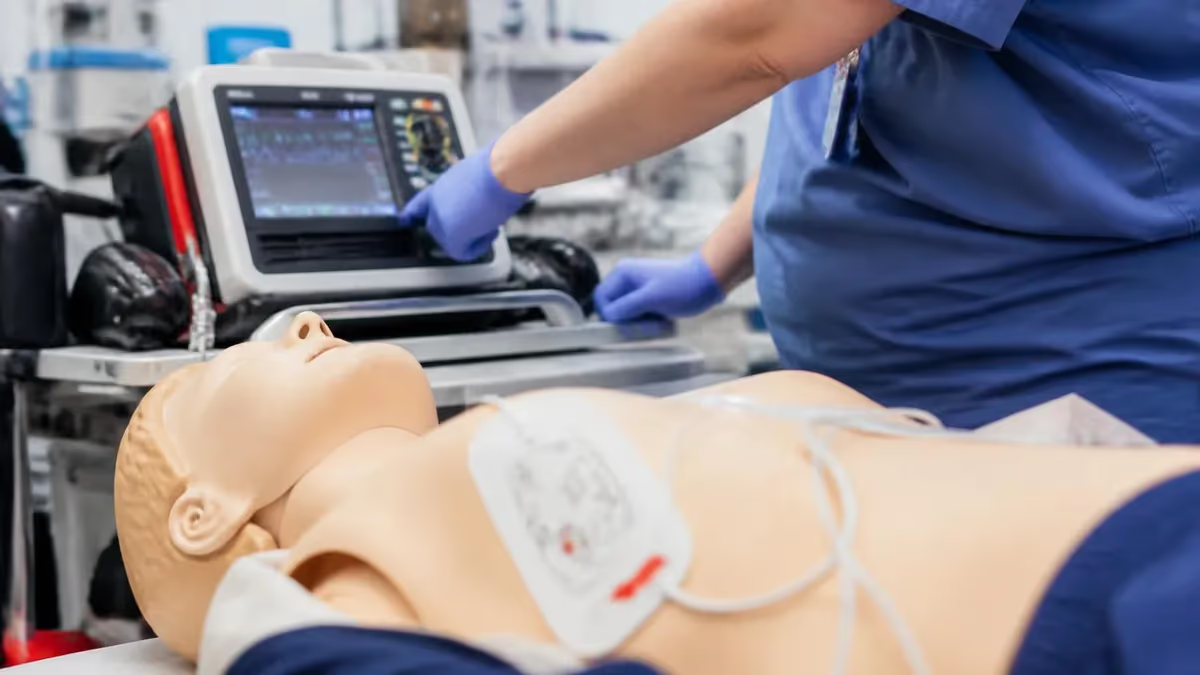
If you are preparing for your ACLS certification or recertification exam, finding reliable acls questions and answers pdf resources is one of the most effective ways to build confidence and close knowledge gaps before test day. The American Heart Association's Advanced Cardiovascular Life Support course demands mastery of complex algorithms, drug dosing protocols, and rhythm interpretation skills — all of which require repeated, active practice rather than passive reading. Free and paid PDF question banks give you a portable, flexible way to drill these concepts on your own schedule.
ACLS certification is a requirement for nurses, physicians, respiratory therapists, and many allied health professionals working in emergency departments, intensive care units, operating rooms, and cardiac catheterization labs across the United States. The exam is administered in a two-part format: a written cognitive evaluation and a hands-on skills station assessment. Most candidates find the written portion challenging because it tests not just memorization but the ability to apply algorithms under timed pressure and make quick clinical decisions when patient conditions change rapidly.
The core content domains tested on the ACLS written exam include cardiac rhythm recognition and ECG interpretation, the management of acute coronary syndromes, stroke recognition and the Cincinnati Prehospital Stroke Scale, the ACLS algorithms for pulseless arrest including VF, pVT, PEA, and asystole, the bradycardia and tachycardia algorithms, advanced airway management, and pharmacology covering drugs such as epinephrine, amiodarone, adenosine, atropine, and lidocaine. Each of these domains is heavily represented in practice question banks.
Using a structured ACLS questions and answers PDF as a study tool offers several concrete advantages over reading the provider manual alone. First, questions force active recall, which research in cognitive psychology consistently shows produces stronger long-term retention than re-reading. Second, seeing answer explanations in writing helps you understand why a particular intervention is correct or incorrect in a given clinical scenario, reinforcing the reasoning behind each algorithm step. Third, PDF formats are easily printable, making them ideal for study sessions away from screens.
When evaluating any ACLS practice question resource, look for content that is explicitly aligned with the most current AHA guidelines, which were updated in 2020 and have received interim supplements since. Outdated resources may reference deprecated drug doses or obsolete algorithm steps that could actually harm your performance if you memorize them and then encounter current-standard questions on the real exam. Always verify the publication year and guidelines version before investing significant study time in any question bank.
The best practice question sets present questions in NCLEX-style or AHA-style scenario formats rather than simple recall prompts. Scenario-based questions describe a patient's presenting signs, vital signs, and rhythm strip findings, then ask you what intervention to perform next. This format closely mirrors the actual cognitive exam experience and prepares you to think through clinical decisions in sequence, which is exactly what the AHA examiners want to see from certified providers who may one day lead a resuscitation team.
This guide walks you through everything you need to know about using ACLS practice questions effectively — from understanding the exam format and high-yield content areas, to specific study strategies that help you pass on the first attempt. You will find free practice quizzes embedded throughout, along with detailed explanations of the most commonly tested concepts and a comprehensive FAQ section addressing the questions that ACLS candidates ask most often.
ACLS Certification by the Numbers

ACLS Exam Format Overview
| Section | Questions | Time | Weight | Notes |
|---|---|---|---|---|
| Cardiac Rhythms & ECG Interpretation | 12 | ~22 min | 24% | VF, VT, PEA, asystole, bradycardias, tachycardias |
| ACLS Algorithms & Protocols | 14 | ~25 min | 28% | Arrest, post-arrest, ACS, stroke algorithms |
| Pharmacology & Medications | 10 | ~18 min | 20% | Dosing, routes, contraindications |
| Airway Management | 7 | ~13 min | 14% | BVM, intubation, waveform capnography |
| Team Dynamics & Communication | 7 | ~12 min | 14% | Roles, closed-loop communication, debriefs |
| Total | 50 | 90 minutes | 100% |
Understanding which content areas carry the most weight on the ACLS exam allows you to allocate your study time strategically rather than spending equal hours on every topic. The two highest-yield domains are cardiac rhythm recognition and ACLS algorithm application, which together account for more than half of all written exam questions. This means that a candidate who can reliably identify and respond to the six core shockable and non-shockable rhythms — ventricular fibrillation, pulseless ventricular tachycardia, pulseless electrical activity, asystole, bradycardias, and unstable tachycardias — is already in a strong position.
Rhythm interpretation starts with a systematic approach to every ECG strip you encounter in practice. Begin by determining the rate: count the number of R waves in a six-second strip and multiply by ten, or use the 300-150-100-75-60-50 method for regular rhythms. Next, assess regularity by measuring R-to-R intervals. Then evaluate the P wave morphology and its relationship to each QRS complex. Determine QRS width — narrow complexes under 120 milliseconds suggest a supraventricular origin, while wide complexes suggest ventricular origin or aberrant conduction. Finally, assess the ST segment and T wave for signs of ischemia or infarction.
The ACLS pulseless arrest algorithm is the most heavily tested protocol on the exam. After confirming unresponsiveness and calling for help, you initiate CPR with a compression-to-ventilation ratio of 30:2 for a single rescuer or continuous compressions at 100-120 per minute with asynchronous ventilations once an advanced airway is placed.
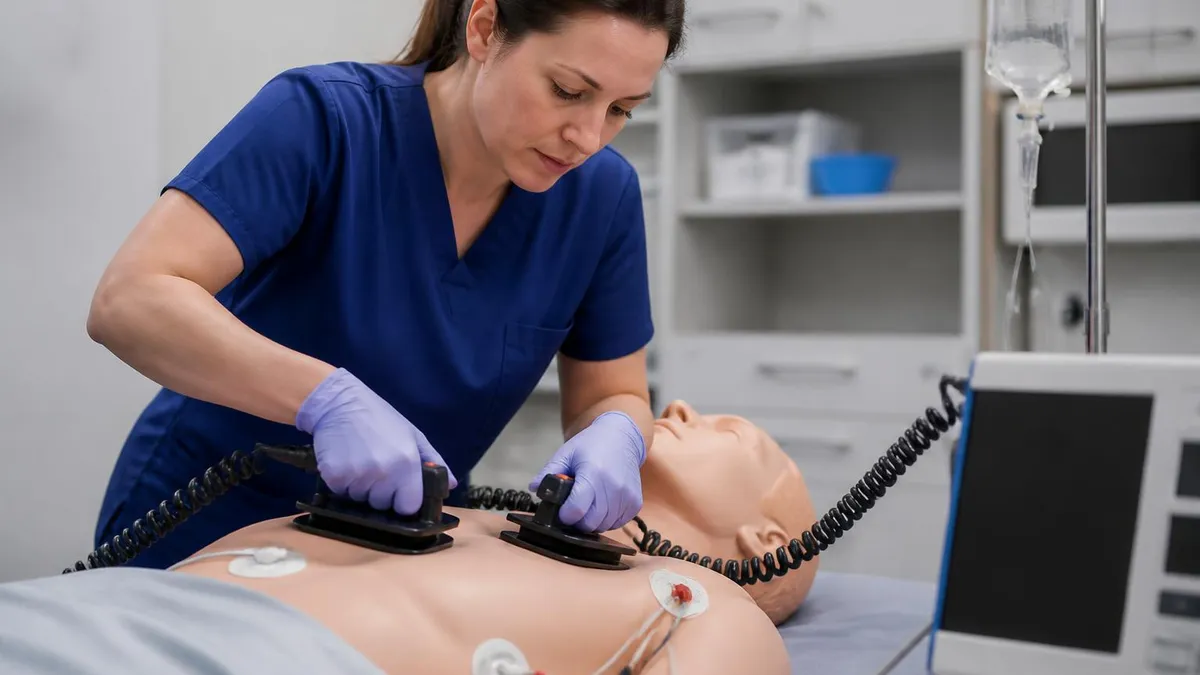
The defibrillator is applied as soon as it arrives. For VF and pVT, you deliver an unsynchronized shock, resume CPR immediately for two minutes, then recheck the rhythm. Epinephrine 1 mg IV or IO is administered every three to five minutes. Amiodarone 300 mg IV is the first antiarrhythmic given for shock-refractory VF or pVT, with a second dose of 150 mg if needed.
The post-cardiac arrest care algorithm is increasingly tested and represents a content area that many candidates underestimate. Following return of spontaneous circulation (ROSC), priorities include targeted temperature management for comatose survivors, coronary angiography if STEMI or high suspicion of cardiac etiology is present, ventilation targeting a PaCO2 of 35-45 mmHg and SpO2 of 92-98%, and hemodynamic optimization with a mean arterial pressure goal of at least 65 mmHg. Understanding the rationale for avoiding both hypoxia and hyperoxia after ROSC is a common exam topic.
Pharmacology is the third major domain and arguably the one where candidates most often lose points. The ACLS drug list includes epinephrine, vasopressin (which has been removed from the updated algorithm but still appears on some practice tests), amiodarone, lidocaine, adenosine, atropine, dopamine, norepinephrine, magnesium sulfate, sodium bicarbonate, calcium chloride, and fibrinolytic agents.
For each drug, you need to know the indication, dose, route, mechanism of action, and key contraindications. Adenosine, for example, is the first-line drug for stable SVT — given as a rapid 6 mg IV bolus followed immediately by a 20 mL saline flush — and understanding why the fast push and flush technique is required is the kind of mechanistic knowledge that differentiates a high scorer.
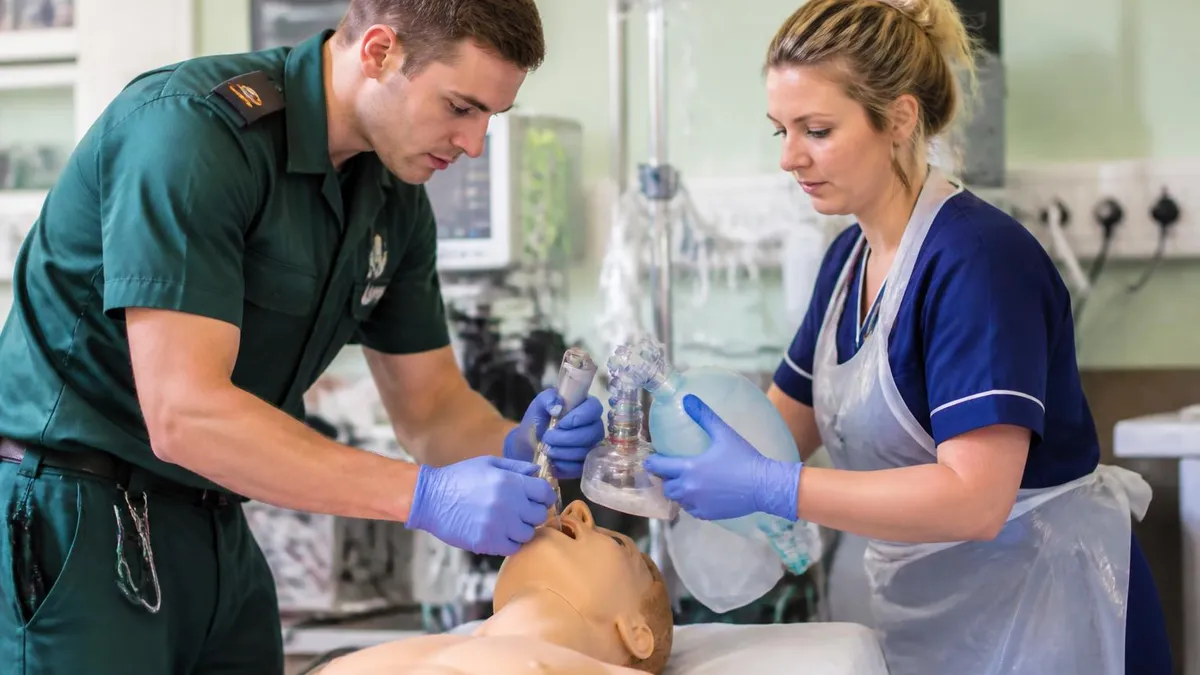
Airway management questions on the ACLS exam test your understanding of the hierarchy of interventions: initial BVM ventilation, followed by supraglottic airways such as the LMA or King airway, and then endotracheal intubation as the definitive airway. Waveform capnography is the gold standard for confirming and continuously monitoring correct ETT placement, with a target ETCO2 of 35-40 mmHg during CPR. A sudden rise in ETCO2 during CPR — for example, from 15 mmHg to 35 mmHg — is a reliable early indicator of ROSC before a pulse is palpable, a classic exam question.
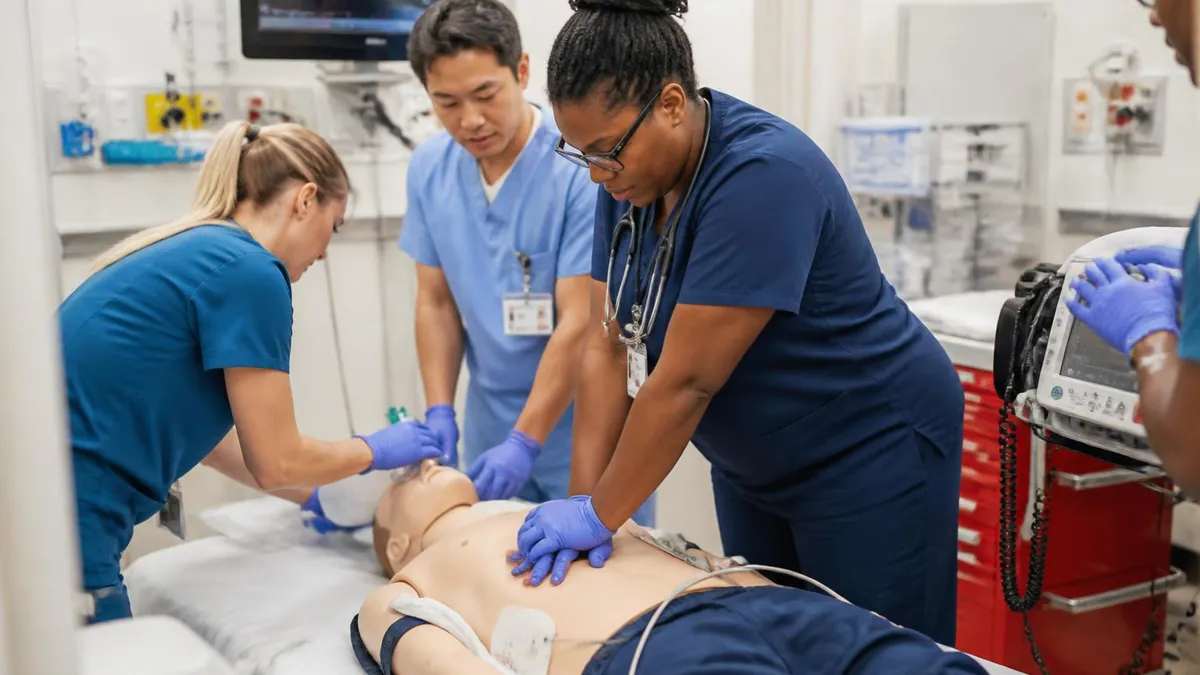
Team dynamics and communication may seem like the softest domain, but the AHA tests it explicitly because resuscitation outcomes are significantly improved by structured team performance. Key concepts include the role of the team leader versus team members, closed-loop communication where a team member verbally acknowledges every order and reports back when completed, mutual respect and situation awareness, and the concept of constructive intervention when a team member observes a potential error. These principles are directly assessed in both the written exam and the megacode skills evaluation.
Study Strategies for ACLS Questions and Answers
The most effective way to use an ACLS questions and answers PDF is to simulate exam conditions by timing yourself and committing to answers before reading explanations. Set a target of 1.5 minutes per question, work through a 20-question block without interruption, then review every item — not just the ones you missed. For correct answers, read the explanation to confirm your reasoning was sound, not just lucky. For missed questions, write the key teaching point in your own words to reinforce encoding.
After each timed block, categorize your errors by domain: rhythm recognition, algorithm sequencing, drug dosing, or airway management. This error-tracking approach tells you exactly where to focus additional study time. Candidates who track errors systematically improve roughly twice as fast as those who simply repeat practice tests without structured review. Aim to complete at least 200 practice questions across all domains in the two weeks before your exam date, spacing sessions across multiple days rather than cramming in one or two marathon sessions.
PDF Practice Tests vs. Online ACLS Practice Quizzes
- +Printable and portable — study anywhere without needing internet access or a device
- +Easily annotatable — write notes, circle key terms, and highlight answer explanations on paper
- +Consistent formatting allows you to track progress across multiple practice sessions
- +PDF archives preserve the question set so it cannot change or disappear between study sessions
- +Useful for group study sessions where a team reviews questions together from a shared printout
- +Some candidates retain information better from paper than from screens due to reduced digital distraction
- −Static format cannot adapt question difficulty based on your performance the way adaptive online quizzes can
- −No immediate score feedback or performance analytics without manual tracking
- −PDF resources can become outdated quickly when AHA guidelines are updated between editions
- −Printing costs and logistics add friction compared to instantly loading a free online quiz
- −Cannot simulate the timed, sequential exam environment as naturally as a well-designed online test platform
- −Risk of using an outdated PDF with deprecated drug doses or obsolete algorithm steps if publication date is not verified
ACLS Exam Day Preparation Checklist
- ✓Complete at least 150 practice questions across all ACLS content domains before your exam date.
- ✓Review the H's and T's reversible causes of cardiac arrest until you can list all 10 from memory.
- ✓Memorize epinephrine, amiodarone, adenosine, and atropine doses and indications without reference materials.
- ✓Practice drawing the pulseless arrest algorithm from memory, including defibrillation energy levels.
- ✓Review the bradycardia algorithm decision tree: atropine first, then transcutaneous pacing or dopamine.
- ✓Study the tachycardia algorithm, distinguishing stable versus unstable presentations and the role of cardioversion.
- ✓Review waveform capnography interpretation, including ETCO2 targets during CPR and the ROSC spike pattern.
- ✓Understand post-cardiac arrest care priorities: targeted temperature management, coronary angiography, ventilation targets.
- ✓Review the ACS algorithm including the 12-lead ECG interpretation criteria for STEMI versus NSTEMI.
- ✓Practice closed-loop communication scenarios so you can demonstrate correct team leader and team member behaviors.
The 84% Passing Threshold Means You Can Miss 8 Questions
Many candidates approach the ACLS exam with anxiety about perfection, but the AHA requires only a score of 84% — meaning you can miss up to 8 of 50 questions and still pass. Focus your energy on eliminating errors in the two highest-weight domains: rhythm interpretation and algorithm application. If you achieve 90%+ accuracy in those domains across your practice tests, you have significant margin on the lower-yield sections.
The ACLS algorithms are the backbone of the certification exam, and deep fluency with their decision logic is what separates candidates who pass comfortably from those who scrape by or require a retest. Each algorithm is designed as a clinical decision support tool — a sequence of assessments and interventions that a well-trained provider should be able to execute automatically under the stress of a real resuscitation. On the exam, algorithm questions test whether you understand the sequence and the rationale, not just whether you can recite the steps.
The pulseless arrest algorithm begins the moment you confirm that a patient is unresponsive and pulseless. Immediate high-quality CPR is the non-negotiable first action — compressions at 100-120 per minute, depth of at least two inches in adults, full chest recoil between compressions, and minimizing interruptions to less than ten seconds. The compression fraction, defined as the proportion of total resuscitation time during which compressions are being performed, should exceed 80%. These CPR quality metrics are increasingly tested because they reflect the current AHA emphasis on compression quality as the primary determinant of survival outcomes.
Defibrillation for shockable rhythms should be delivered as soon as the defibrillator is available, but CPR should not be paused for more than ten seconds to deliver the shock. Biphasic defibrillators are used at the manufacturer-recommended energy level, typically 120-200 joules for VF, or at maximum energy if that recommendation is unknown. Monophasic defibrillators, which are less common in modern practice, use 360 joules. After shock delivery, CPR is resumed immediately without pausing to check the rhythm — the rhythm check happens after the next two-minute CPR cycle is complete.
Epinephrine timing in the pulseless arrest algorithm is a common exam topic. For non-shockable rhythms such as PEA and asystole, epinephrine should be given as soon as IV or IO access is established. For shockable rhythms, epinephrine is given after the second shock has been delivered — that is, after two shocks and two CPR cycles. This sequence is based on evidence suggesting that vasopressors given too early in VF resuscitation may increase coronary perfusion pressure but do not improve survival outcomes compared to delaying until after initial defibrillation attempts.
The bradycardia algorithm applies when a patient has a heart rate below 60 beats per minute and is symptomatic with signs of poor perfusion such as hypotension, altered mental status, ischemic chest pain, or acute heart failure. The first intervention is atropine 0.5 mg IV, repeated every three to five minutes to a maximum of 3 mg.
If atropine is ineffective or the patient is severely symptomatic, the next steps are transcutaneous pacing and dopamine infusion at 2-20 mcg/kg/min or epinephrine infusion at 2-10 mcg/min. Transcutaneous pacing requires confirmation of electrical capture — the appearance of a wide QRS complex after each pacing spike — followed by confirmation of mechanical capture by assessing the pulse.
The tachycardia algorithm branches based on two sequential assessments: first, is the patient stable or unstable; and second, is the QRS narrow or wide. An unstable patient with any tachycardia — defined by presence of serious signs and symptoms caused by the tachycardia — requires immediate synchronized cardioversion regardless of the rhythm type.
A stable patient with narrow QRS tachycardia is treated medically: vagal maneuvers first, then adenosine 6 mg IV for suspected SVT. A stable patient with wide complex tachycardia of uncertain origin should be treated as VT until proven otherwise, and adenosine is reasonable if the rhythm is regular and the diagnosis is uncertain.
Post-cardiac arrest care has grown substantially as an exam topic over the past decade as evidence has accumulated that what happens in the first hour after ROSC significantly affects neurological outcomes. Targeted temperature management — maintaining core temperature at 32-36 degrees Celsius for at least 24 hours in comatose ROSC survivors — is a key intervention.
Avoiding fever above 37.5 degrees Celsius in the 72 hours post-arrest is equally important. Coronary angiography should be performed emergently when STEMI is present on the post-ROSC 12-lead ECG, and should be considered in patients without ST elevation when a cardiac cause is suspected but the cause is unclear.
ACLS certification is valid for exactly two years from the date of course completion. Many hospitals require proof of current certification for credentialing, and an expired ACLS card can affect your ability to work in clinical areas that require it. Most providers begin the recertification process 90 days before expiration. If your card has lapsed by more than 30 days, you may be required to retake the full initial provider course rather than the shorter renewal course — check your institution's policy before scheduling.
Building a realistic study schedule in the weeks before your ACLS exam makes the difference between feeling prepared and feeling overwhelmed on test day. Most candidates who pass on their first attempt report studying for a total of fifteen to twenty-five hours across a two-to-four-week preparation period. This time is most efficiently divided into three phases: content review, practice question drilling, and simulated exam conditions. Skipping the third phase is one of the most common preparation mistakes, as many candidates read extensively but never practice answering questions under time pressure.
During the content review phase, focus on reading the AHA ACLS Provider Manual with particular attention to the algorithm flowcharts and the pharmacology tables. Do not attempt to memorize every sentence — instead, identify the ten to fifteen facts per chapter that are most likely to appear as exam questions. The AHA writes exam questions directly from the provider manual, so understanding its structure helps you prioritize. Pay special attention to bolded terms, algorithm decision points, and drug dosing tables, as these are the most frequently tested elements.
The practice question phase should begin no later than one week before your exam. This is when your ACLS questions and answers PDF resources become most valuable. Work through questions in topic-specific blocks first — for example, complete a 30-question block on pharmacology before moving to rhythm interpretation. This domain-focused approach helps you identify weak areas while there is still time to address them. Once you have completed domain-specific blocks for every topic, switch to mixed-format practice tests that simulate the actual exam's varied content distribution.
Simulated exam practice in the final two to three days before your test should involve sitting down for 50 questions in 90 minutes with no reference materials and no interruptions. This dress rehearsal builds the pacing awareness and mental endurance you need to perform well in the actual testing environment. After completing the simulated exam, calculate your score, identify any remaining weak areas, and do one final targeted review of those specific topics. Avoid cramming new material in the final 24 hours — at that point, rest and confidence are more valuable than additional content exposure.
One underutilized but highly effective study strategy is teaching back. After you learn a concept or algorithm step, explain it out loud as if you were teaching a colleague who has no prior ACLS knowledge. The act of articulating a concept in plain language forces you to identify gaps in your own understanding — places where you thought you knew something but actually only recognized it when you saw it.
Teach-back is particularly powerful for algorithm sequencing, drug mechanisms, and the rationale behind clinical decision points such as why you do not give atropine for second-degree type II or third-degree heart block.
Group study with colleagues who are also preparing for ACLS certification can accelerate preparation significantly when structured correctly. The most productive format is a question-and-answer rotation where one person reads a scenario question aloud, each participant commits to an answer independently, and then the group discusses the correct reasoning together. This format prevents the common pitfall of group think, where everyone converges on the most confident person's answer without individual reasoning. It also creates the kind of low-stakes verbal performance practice that translates well to the real team dynamics expectations of the ACLS skills evaluation.
Finally, do not neglect the skills evaluation component of ACLS certification when preparing with written practice questions. The megacode evaluation requires you to demonstrate — not just describe — your ability to manage a simulated cardiac arrest scenario as the team leader. This includes correctly identifying rhythms on a monitor, verbally ordering appropriate interventions in the correct sequence, managing airway decisions, and directing team members using closed-loop communication. Practice the verbal components of the megacode out loud, narrating your clinical reasoning as you work through scenarios, so that the skills station feels familiar rather than foreign.
The final days before your ACLS exam should focus on consolidation rather than new learning. At this stage, your goal is to reinforce the connections between concepts you have already studied — tying together rhythm recognition, algorithm selection, drug choices, and team communication into a unified mental model of how resuscitations unfold. Candidates who think of ACLS as an integrated system rather than a collection of isolated facts consistently outperform those who treat it as a memorization exercise.
One practical technique for final-day consolidation is to run through each major algorithm in your head from start to finish while commuting, exercising, or doing routine tasks. Mental rehearsal activates the same neural pathways as physical or verbal rehearsal, and it is an efficient way to use otherwise unproductive time. If you can walk through the pulseless arrest algorithm, the bradycardia algorithm, and the tachycardia algorithm completely from memory — including drug doses, timing, and decision branch points — you are genuinely prepared for the exam.
On the day of your exam, arrive at the testing site with enough time to settle in without rushing. Bring your government-issued photo identification and your AHA course confirmation if required. If you are taking a course-based exam at an AHA training center, the written test is typically administered before the skills stations, so arriving mentally fresh for the written component is important. Eat a balanced meal beforehand — blood glucose levels affect cognitive performance more than most candidates realize, and arriving hungry increases the likelihood of careless errors on questions you actually know.
During the exam itself, read every question stem carefully before looking at the answer choices. The stem contains all of the information you need to select the correct answer, and looking at choices first can introduce anchoring bias that leads you toward a plausible but incorrect option. After reading the stem, form your own answer before reading the choices. If your pre-formed answer matches one of the options, that is a strong signal you are on the right track. If none of the options matches what you expected, re-read the stem for details you may have missed.
For questions you are uncertain about, use a process of elimination to narrow the choices. In ACLS exam questions, distractors typically include interventions that are clinically appropriate in general but wrong for the specific scenario described — for example, giving adenosine for a rhythm that is actually VT rather than SVT. Identifying why each wrong answer is wrong is just as important as knowing why the right answer is right, and this skill is built directly through careful review of practice question explanations.
After the exam, regardless of outcome, take time to identify which topic areas felt most uncertain and document them for future study or recertification preparation. If you pass — congratulations: your two-year certification period begins immediately, and you should calendar a reminder at the 18-month mark to begin recertification planning. If you do not pass on the first attempt, most AHA training centers allow a retest, and a targeted two-week study plan focused exclusively on your weakest domains will typically be sufficient for a successful second attempt.
Remember that ACLS certification is not just a credential — it is a commitment to maintaining the clinical skills to save lives during the most critical patient emergencies. Every practice question you answer correctly, every algorithm you rehearse, and every drug dose you memorize contributes directly to your readiness to perform when a real patient needs you. Use the free practice resources throughout this page to build your confidence, and approach your exam with the knowledge that thorough preparation produces consistent results.
ACLS Questions and Answers
ACLS Bradycardia Algorithm: Complete 2026 Guide to Recognition, Treatment Steps & Drug Doses

ACLS CPR Certification: Complete Training Guide for Healthcare Professionals
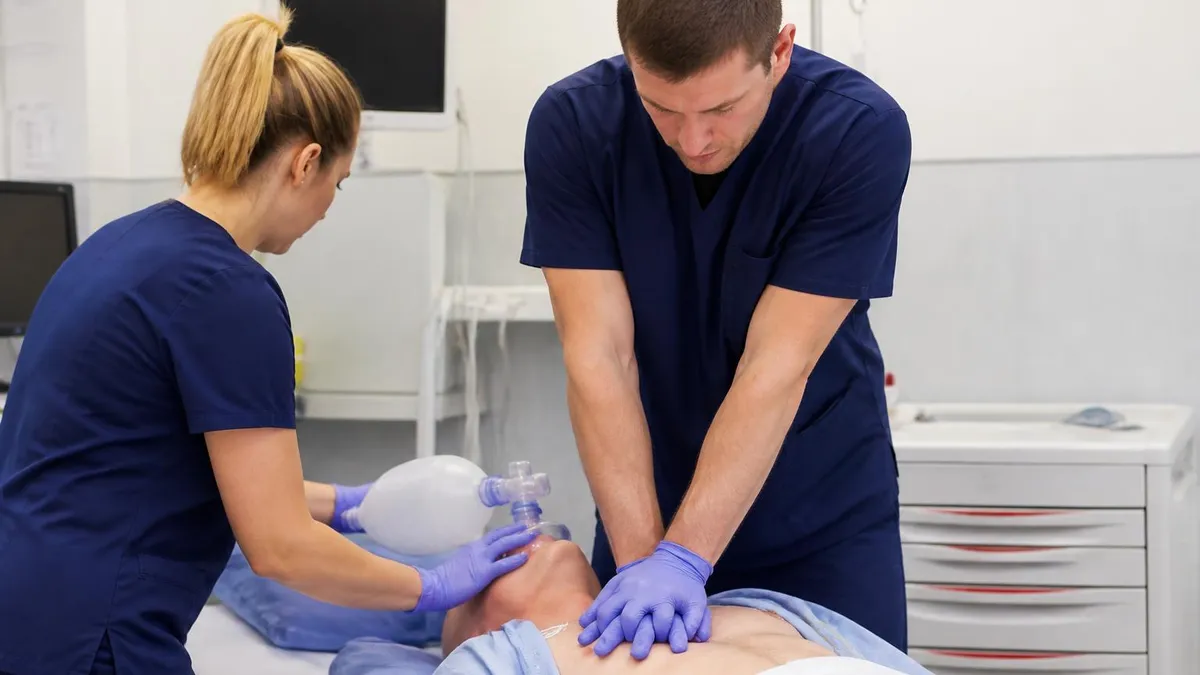
ACLS Study Guide: Complete 2026 Certification Prep with Algorithms, Drugs & Practice Tests

ACLS BLS Course: Complete Training Guide for Healthcare Providers

ACLS Guidelines 2026: Complete AHA Update on Algorithms, Drugs, CPR Quality & Post-Arrest Care
About the Author

Registered Nurse & Healthcare Educator
Johns Hopkins University School of NursingDr. Sarah Mitchell is a board-certified registered nurse with over 15 years of clinical and academic experience. She completed her PhD in Nursing Science at Johns Hopkins University and has taught NCLEX preparation and clinical skills courses for nursing students across the United States. Her research focuses on evidence-based exam preparation strategies for healthcare certification candidates.