
How Long Does an ACLS Class Take? Complete Duration Guide for 2026 September
How long does ACLS class take? ⏳ Initial courses run 12–16 hrs; renewal 6–8 hrs. See formats, schedules & what affects your total time.
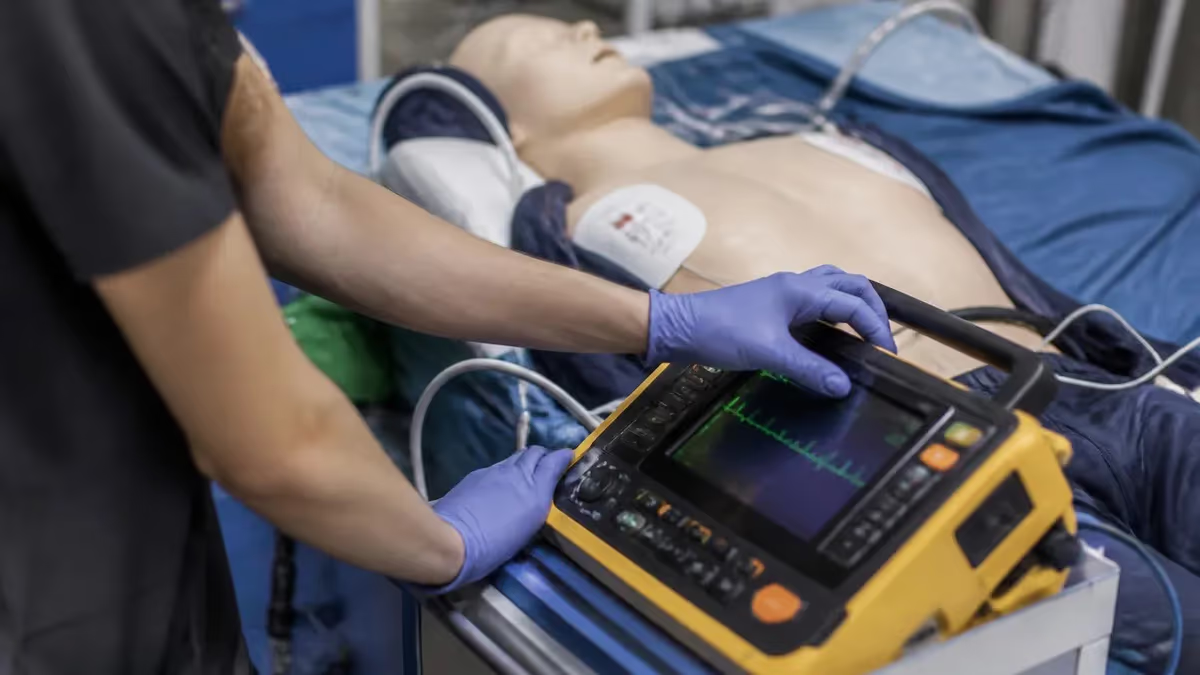
If you are planning to earn your Advanced Cardiovascular Life Support credential, one of the first questions you will face is: how long does an ACLS class take? For most healthcare providers taking an initial certification course, you should budget between 12 and 16 hours of total instruction and skills practice spread across one or two full days.
Renewal candidates who already hold a valid certification can typically complete an accelerated recertification course in 6 to 8 hours, often in a single day. Understanding exactly where those hours go helps you plan your schedule, request the right time off from your employer, and arrive fully prepared to succeed on your first attempt.
The precise duration of an ACLS course depends on several variables that are worth understanding before you register. Course format is the biggest driver — traditional in-person instructor-led programs tend to run longer because they include real-time debriefs after every simulation, while blended HeartCode options let you complete the cognitive portion online at your own pace before arriving for a shorter hands-on skills session. Your local training center, hospital education department, or freestanding AHA training site may structure their schedule differently, so always confirm the specific schedule when you register and ask whether pre-course work is required.
Provider type and professional background can also influence how much time you spend in class. Physicians, nurses, paramedics, and respiratory therapists who use ACLS skills daily may move through simulations faster than providers who encounter cardiac arrest less frequently. Most training centers run small cohorts of 6 to 12 participants per instructor, which keeps feedback personal and skill stations efficient. Larger groups can extend the day because each learner must rotate through every megacode scenario and receive individual hands-on assessment before the instructor can sign off their card.
Preparation before class is not just encouraged — it is often required. The American Heart Association publishes a pre-course self-assessment covering ECG rhythm recognition, pharmacology, and basic airway management. Providers who complete this self-assessment honestly and then study their weak areas typically spend less remediation time during the live session, which keeps the group on pace. Skipping pre-course work is one of the most common reasons students find themselves scrambling to absorb too much information during an already full day of instruction and practice scenarios.
Recertification timelines follow a two-year cycle set by the AHA. If your card expires, you may be required to repeat the full initial course rather than the shorter renewal program, adding significant time back to your schedule. Many employers track expiration dates and send reminders 90 days in advance, but ultimately it is your responsibility as a licensed provider to maintain a current credential. Planning your renewal at least 60 days before your card expires gives you buffer room in case a class is fully booked or you need to reschedule due to a shift conflict.
The acls class duration you experience will also be shaped by the quality of your practice test preparation. Providers who drill ACLS scenarios through practice questions and algorithm review arrive with stronger conceptual frameworks, which means they spend less class time asking foundational questions and more time refining hands-on technique. The combination of solid pre-course study and confident skills execution is the fastest path through any ACLS program, regardless of format or delivery site.
This guide breaks down every format, timing variable, and preparation strategy you need to approach your ACLS class with a clear picture of what to expect. Whether you are a first-time candidate or a veteran provider scheduling your third renewal, the information below will help you choose the right course option, prepare efficiently, and walk out with your AHA card in hand on day one.
ACLS Class Duration by the Numbers

How a Typical Two-Day Initial ACLS Course Unfolds
Pre-Course Self-Assessment (1–2 hrs, done at home)
Day 1 Morning: Core Didactics and Algorithm Review (3–4 hrs)
Day 1 Afternoon: Skills Stations and Megacode Practice (4–5 hrs)
Day 2 Morning: Megacode Testing and Written Exam (3–4 hrs)
Card Issuance and Course Wrap-Up (30–60 min)
Understanding what fills those 12 to 16 hours is essential for managing your energy and expectations on class day. The curriculum is divided into two broad categories: cognitive learning and psychomotor skill practice. Cognitive content — the algorithms, drug dosages, and rhythm recognition frameworks — is delivered through AHA-produced video modules that your instructor will pause periodically for group discussion and clarification. These modules are professionally produced and closely aligned with the most current AHA guidelines, so paying close attention is important even if you have taken the course before, because recommendations do change between guideline cycles.
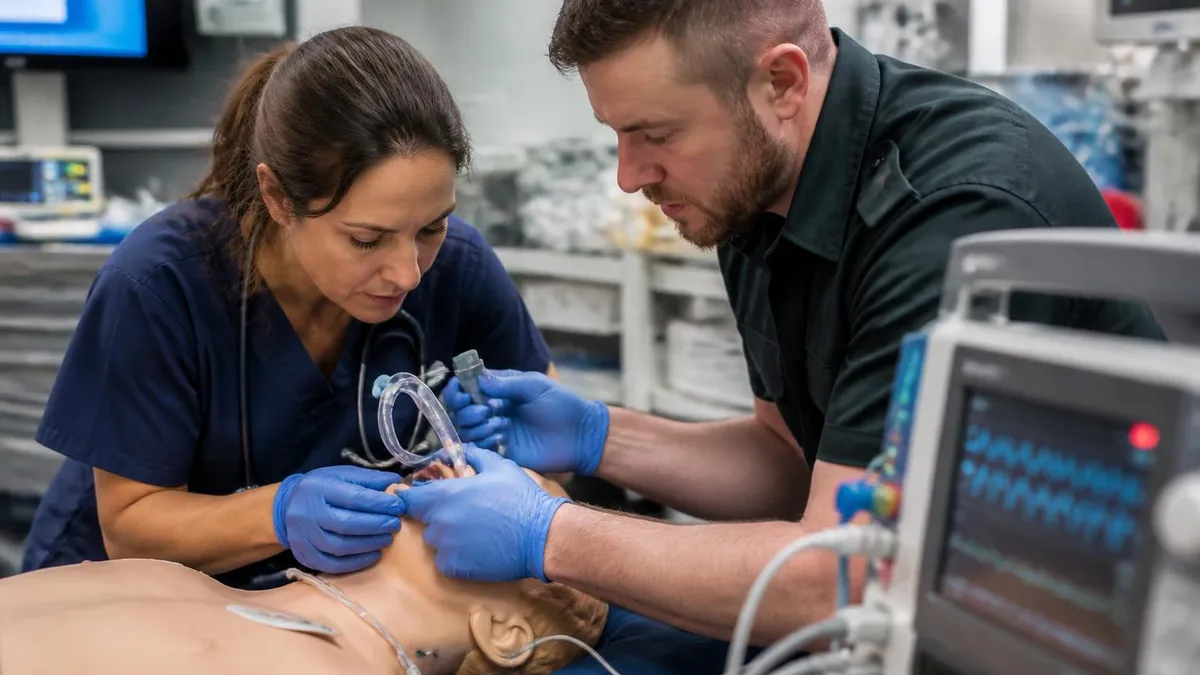
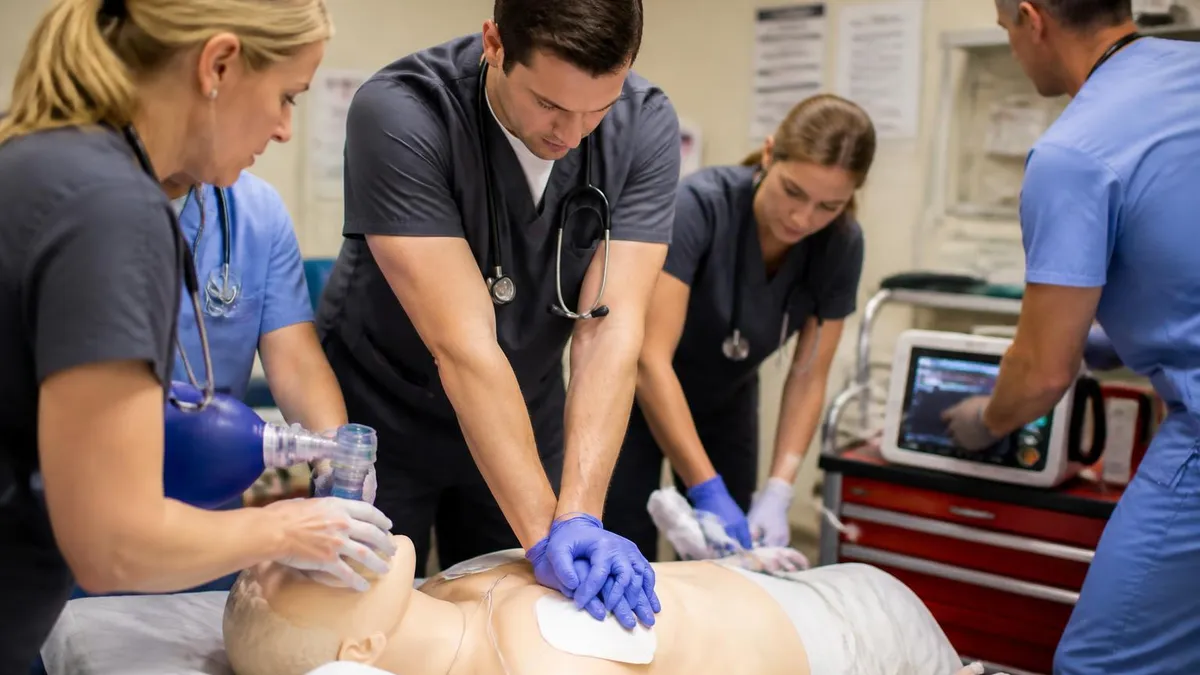
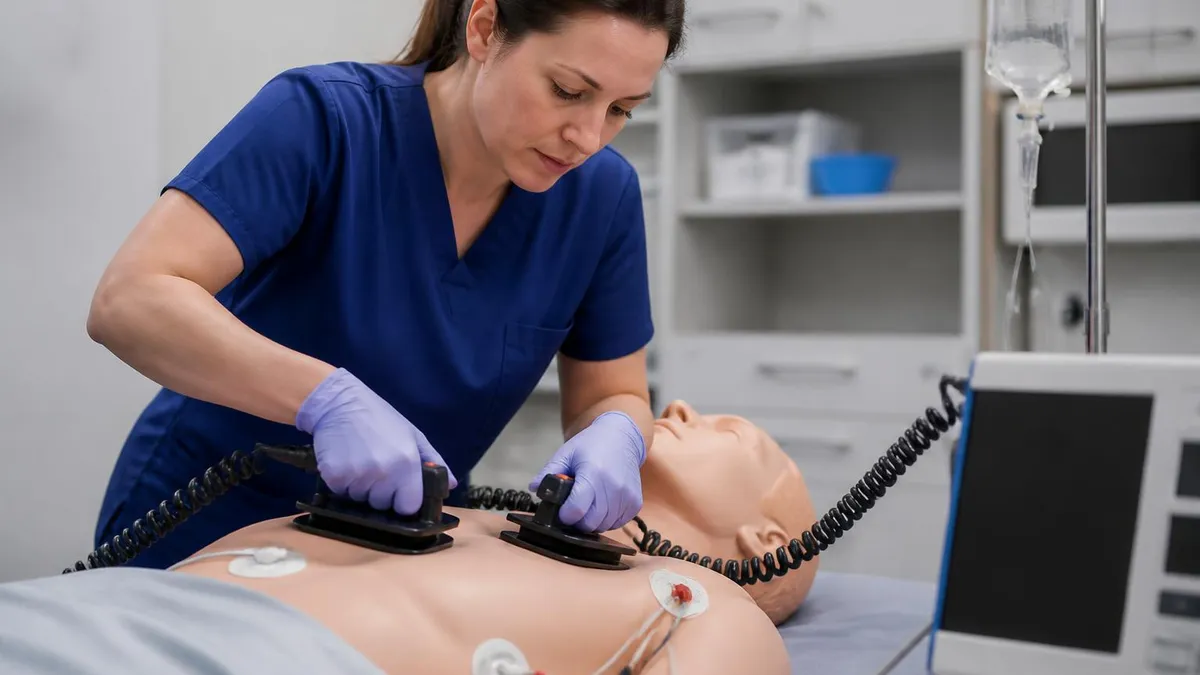
Psychomotor skill practice is where most of your class time goes, and for good reason. ACLS competency is fundamentally about performance under pressure, not just knowing the right answer on paper. You will rotate through multiple stations covering high-quality CPR with real-time feedback devices, bag-mask ventilation and advanced airway insertion, intravenous and intraosseous access, manual defibrillation and synchronized cardioversion, and transcutaneous pacing. Each station is staffed by an instructor who observes your technique and provides immediate corrective feedback, which is something no online module or practice test can fully replicate.
The megacode simulation is the centerpiece of the ACLS course experience. In this scenario, you are assigned the role of team leader and must manage a simulated cardiac arrest or periarrest emergency from recognition through intervention. You call for CPR, interpret the rhythm, direct drug administration, decide on defibrillation timing, and communicate with your team — all while the manikin's rhythm changes based on your interventions. Instructors evaluate both your clinical decision-making and your communication skills, since ineffective team leadership is recognized as a key contributor to poor resuscitation outcomes in real-world settings.
The written examination component typically consists of 50 questions drawn from a validated AHA question bank. Questions cover rhythm identification, algorithm sequencing, drug indications and dosing, post-cardiac-arrest care priorities, and acute stroke and coronary syndrome management. The passing threshold is 84%, meaning you must answer at least 42 out of 50 questions correctly. Candidates who have used quality ACLS practice tests before the class consistently report that the exam format feels familiar and that the question difficulty is comparable to what they encountered in their preparation materials.
Remediation is a built-in feature of the AHA curriculum, not a penalty. If you do not pass a skills station or the megacode on your first attempt, your instructor will provide targeted coaching and allow you to retry the specific component you missed. This is why class schedules build in some buffer time — the day does not end the moment the last student finishes; it ends when everyone has had a fair opportunity to demonstrate competency. Understanding this structure helps you approach the class with a growth mindset rather than treating every station as a high-stakes pass-fail moment.
Breaks, transitions between stations, and equipment setup time also contribute to total course duration. A well-run training center will have manikins cleaned, defibrillators charged, and IV arm trainers stocked between rotations, but logistical delays do happen. Arriving 10 to 15 minutes early, reading any posted instructions at each station before the instructor calls time, and volunteering to go early in rotation sequences are practical ways to make your class day feel smoother and less rushed than it might otherwise be.
Lunch breaks in a two-day format are typically 30 to 60 minutes. Some training centers provide a working lunch with informal Q&A, while others give participants a full break. Either way, using that time to review algorithm cards or flip through quick drug reference summaries is a strategy that top performers consistently use. The rhythm of study, practice, rest, and review that characterizes an effective class day mirrors the same discipline that will serve you well when you sit down for any proctored examination.
Initial Certification, Renewal, and Online Blended Formats Compared
A first-time ACLS candidate who has never held an AHA ACLS Provider card must complete the full initial certification course, which runs 12 to 16 hours depending on the training center and class size. This course covers every algorithm, every skill station, and both megacode and written evaluations in full. Most providers complete this over two consecutive days, though some training centers offer intensive single-day formats that run eight or more hours without a break between modules.
The initial course is the most comprehensive format because it assumes no prior ACLS experience and builds from foundational BLS review through advanced algorithm integration. Providers with strong critical care backgrounds often move through the cognitive modules quickly, but they still must complete all required skill station rotations and megacode evaluations. Skipping any component is not permitted under AHA guidelines, so plan your schedule for the full duration regardless of your clinical experience level.
Traditional Classroom vs. Blended Online: Which Format Fits Your Schedule?
- +Traditional classroom provides real-time instructor feedback during every skill station rotation
- +Immersive two-day schedule minimizes context-switching compared to spreading study across weeks
- +Immediate clarification of algorithm questions during live group discussion sessions
- +Strong team dynamics practice with real peers running megacode simulations together
- +HeartCode online modules can be paused and revisited, allowing deeper review of difficult content
- +Blended format lets you separate cognitive study from skills practice to match your energy level
- −Traditional courses require blocking 1 to 2 full days, which is difficult for night-shift providers
- −Large class sizes in traditional formats can slow rotation through skill stations significantly
- −HeartCode online portion requires self-discipline to complete without a structured classroom deadline
- −Blended learners may feel less prepared for team megacode dynamics having studied alone online
- −Traditional training centers may offer limited scheduling options in rural or underserved areas
- −Technical issues with HeartCode platform can delay course completion and skills-session scheduling
ACLS Class Preparation Checklist: What to Do Before Day One
- ✓Complete the AHA ACLS pre-course self-assessment and honestly identify your weak content areas
- ✓Review the five major ACLS algorithms (cardiac arrest, bradycardia, tachycardia, post-arrest, ACS) until you can recite the sequence from memory
- ✓Practice identifying at least 10 core ACLS rhythms including VF, pVT, asystole, PEA, and stable SVT
- ✓Memorize drug dosing for epinephrine, amiodarone, adenosine, atropine, and lidocaine before class day
- ✓Confirm your training center's start time, parking, and whether meals are provided or should be brought
- ✓Bring your current BLS Provider card since most ACLS courses require proof of valid BLS certification
- ✓Dress in comfortable, layered clothing since skills stations require kneeling at manikin level for CPR
- ✓Get a full night of sleep the evening before each class day — cognitive performance drops sharply with fatigue
- ✓Download the AHA ACLS Provider Manual or pocket reference card to review during breaks and lunch
- ✓Take at least one full-length ACLS practice test the evening before class to activate your recall under timed conditions
Pre-Course Study Cuts Your Effective Class Time by Up to 30%
Providers who complete the AHA pre-course self-assessment and study their identified weak areas spend significantly less time on remediation during class, allowing instructors to move the group through skill stations more efficiently. In practice, this means well-prepared cohorts often finish both evaluation components 60 to 90 minutes earlier than underprepared groups — a meaningful difference when you are working a shift the same evening.
Several factors beyond your control can extend the time you spend in an ACLS class, and knowing them in advance helps you set realistic expectations. Class size is the most significant variable. Training centers that cap enrollment at six to eight participants per instructor can move through skill station rotations in roughly 20 minutes each, while larger groups of 12 or more may spend 30 to 40 minutes per station waiting for each member to receive hands-on assessment and coaching. If you have flexibility in choosing a training center, ask about typical enrollment before you register.
Equipment availability and manikin-to-participant ratios matter more than most candidates realize. A training center with one high-fidelity manikin for every three participants can run simultaneous megacode evaluations, compressing the testing portion of the day significantly. Sites with only one or two manikins must run candidates sequentially, which can add an hour or more to the afternoon testing block. This is particularly relevant at hospital-based education departments that may share equipment across multiple certification programs running on the same day.
Participant mix also affects pace. A cohort of experienced critical care nurses and paramedics who use ACLS rhythms and drugs daily will move through algorithm review much faster than a mixed group that includes providers from outpatient or non-acute settings who encounter cardiac arrest rarely. Neither group is more deserving of the credential — the course is designed to certify competency across the full spectrum of healthcare roles — but the pace difference is real and can add 60 to 90 minutes to a class day when the group has widely varying baseline experience.
Geographic location influences course availability and scheduling in ways that can extend your total time investment beyond the class itself. Rural providers may need to drive one to three hours each way to reach the nearest AHA training site, adding half a day of travel to each class day.
For those providers, the HeartCode blended format reduces the number of in-person days required from two to one, which makes the total time commitment significantly more manageable. Telemedicine-enabled rural health systems have also begun offering internal ACLS refresher programs that count toward renewal requirements in some jurisdictions, though this varies by state and employer policy.
Remediation needs, while never punitive in intent, do extend class time for individual participants and sometimes for the group. If a participant struggles with the megacode on the first attempt, the instructor will typically pull them aside for a focused coaching session while the rest of the group completes their evaluations.
Most participants who need a second megacode attempt succeed on retry, but this buffer must be accounted for in the schedule. Training centers that do not build this time into their agenda often end classes late, which can create downstream scheduling problems for providers who have commutes or childcare commitments.
Written exam scoring and card processing also add time that candidates frequently underestimate. After the last written exam is submitted, the instructor must score all exams, record results, and complete the AHA course roster before cards can be issued. At a large site processing 20 candidates, this administrative step alone can take 30 to 45 minutes.
Some training centers use AHA's digital card system, which allows eCards to be issued on the same day via email, while others still process physical cards through a regional training center that may take one to two weeks to mail the card. Confirm which system your training center uses, particularly if you need to present your card to an employer by a specific date.
Finally, technical issues with AHA's online platforms — including the HeartCode learning management system and the digital card portal — occasionally cause delays. These issues are more common during periods of peak enrollment such as hospital credential renewal cycles or following a new AHA guideline release when many providers are seeking updates simultaneously. Registering early in a renewal cycle and completing the online HeartCode modules during off-peak hours reduces the likelihood that platform instability will interrupt your progress.
If your AHA ACLS Provider card expires before you complete a renewal course, most training centers and employers require you to repeat the full 12 to 16 hour initial certification course rather than the shorter 6 to 8 hour renewal program. This doubles your time commitment and may create a gap in your employment eligibility if your hospital requires current ACLS certification as a condition of practice. Schedule your renewal class at least 60 days before your expiration date to protect against scheduling conflicts or fully booked classes.
Maximizing the value of your ACLS class hours starts well before you walk through the training center door. The single most effective preparation strategy is algorithm mastery — the ability to move through the pulseless arrest, bradycardia, tachycardia, and post-arrest care sequences without hesitation. When you internalize these pathways, class time that might otherwise be spent frantically reviewing reference cards becomes available for genuine skill refinement and the nuanced team dynamics coaching that instructors excel at delivering in person.
Rhythm recognition is the second pillar of effective ACLS preparation, and it is one that benefits enormously from repeated exposure to varied strip examples. The class will present you with strips that require rapid classification — is this a shockable or non-shockable rhythm? Is this tachycardia narrow or wide complex? Is this bradycardia symptomatic? Providers who have drilled these classifications through high-volume practice question sets arrive with pattern-recognition reflexes that make the ECG station feel straightforward rather than stressful. A disciplined approach to practice tests in the days before class is one of the highest-return investments of your preparation time.
Drug dosing memorization is the third essential area. The ACLS written exam tests your ability to recall specific dosing parameters: epinephrine 1 mg IV/IO every 3 to 5 minutes during cardiac arrest, amiodarone 300 mg IV for shockable rhythms, adenosine 6 mg followed by 12 mg for stable SVT, atropine 0.5 mg for symptomatic bradycardia up to a maximum of 3 mg.
Candidates who rely on looking these up during the written exam waste time and introduce uncertainty into their answers. Flash cards, mnemonic devices, and spaced repetition apps are all effective tools for converting these numbers from short-term to long-term memory in the week before class.
Team dynamics is an aspect of ACLS that surprises many first-time candidates because it is assessed as formally as clinical decision-making. The AHA's emphasis on closed-loop communication, clear role assignment, and respectful real-time feedback is grounded in decades of resuscitation research showing that team dysfunction is a leading cause of preventable cardiac arrest deaths.
During the megacode evaluation, your instructor will be watching not just what you order but how you say it — whether you make eye contact with the team member you are directing, whether you confirm that your order was heard and executed, and whether you create an environment where team members feel safe speaking up about concerns.
Rest and physical readiness matter more than most providers acknowledge when planning their ACLS week. The course involves significant physical activity — performing quality CPR at the correct rate and depth of 100 to 120 compressions per minute with full chest recoil is genuinely tiring, and doing it across multiple simulation rotations while staying mentally sharp requires a baseline of physical fitness and adequate sleep.
Providers who arrive exhausted from a long night shift consistently report that the afternoon skill stations feel harder than the morning sessions, which is partly circadian and partly cumulative fatigue from hands-on work. If you have any flexibility in scheduling your class day, choosing a day after rest days rather than directly after a run of night shifts is a meaningful advantage.
After class is over and your card is in hand, the most effective way to preserve your ACLS competency over the two-year certification period is to stay engaged with the clinical content. Read the published updates when the AHA releases new guidelines, participate in your hospital's code team debriefs, and use your employer's simulation lab if one is available.
Providers who treat ACLS as a skill to maintain rather than a box to check every two years consistently perform better at renewal, complete their renewal courses faster, and report higher confidence during real resuscitation events — which is ultimately the purpose of the entire certification system.
For additional depth on specific ACLS algorithms and pharmacology that will be tested both in class and on the written exam, exploring targeted practice resources in the weeks before your course is one of the most time-efficient study strategies available. Resources that replicate the AHA's question format and difficulty level help you identify remaining knowledge gaps and address them before class day, rather than discovering them during the instructor's debrief of your megacode performance.
Practical time management on the day of your ACLS class begins with logistics that many candidates overlook until they are already stressed. Confirm the exact address of your training site — hospital education departments are notoriously difficult to find within large medical campuses, and arriving 20 minutes late to a tightly scheduled class can mean missing the opening algorithm review or, worse, losing your spot if the training center has a late-arrival policy.
Map the parking situation the day before, identify a backup parking option, and give yourself a buffer of at least 20 to 30 minutes beyond your estimated arrival time.
Nutrition and hydration have a direct, measurable impact on cognitive performance during a full day of ACLS instruction. A high-protein breakfast with complex carbohydrates — eggs, whole grain toast, fruit — provides more sustained energy than a quick coffee and pastry, which can cause a mid-morning focus drop that coincides with the most content-dense portion of the algorithm review. Bring a water bottle and healthy snacks for the break between morning and afternoon sessions. Caffeine in moderation is fine, but providers who consume large amounts early in the day often experience an energy crash during afternoon megacode simulations.
During skill station rotations, take every opportunity to practice even when it is not your assigned turn at the manikin. Observing how other participants handle each scenario and mentally running through what you would do differently is a form of active learning that reinforces your own decision pathways. When an instructor offers feedback to a classmate, treat it as equally applicable to yourself — the most common errors in megacode leadership (failing to call for rhythm checks at two-minute intervals, forgetting to confirm drug administration, losing track of CPR cycle timing) are universal, not individual.
For providers who plan to serve as ACLS team leaders in their clinical setting, the class is also an opportunity to observe which leadership behaviors draw the best team performance. Instructors who debrief effectively will highlight the specific verbal cues that reduce resuscitation errors: announcing the rhythm aloud before calling for a shock, confirming that compressions are paused before rhythm check, explicitly assigning a timekeeper at the start of the resuscitation. These behaviors can be practiced during the simulation but only become automatic through deliberate application in your real clinical environment over time.
Connecting with classmates during the course is an underrated benefit of the in-person format. Healthcare providers who meet during ACLS training often work in the same system or specialty area, and the shared experience of running megacode simulations together creates a foundation for effective real-world teamwork. Some training centers intentionally assign participants from the same unit or service to work together in megacode teams, which gives providers the added benefit of practicing their specific team communication patterns in a low-stakes simulation environment before applying them in a real resuscitation.
If you do not pass a component of the course on your first attempt, treat the feedback as precisely the information you needed to improve. Instructors who work within the AHA curriculum are trained to give specific, behaviorally anchored feedback that identifies exactly what to correct — not just that something went wrong, but what the correct action should have been and why. Providers who absorb this feedback and apply it on the retry attempt consistently demonstrate the kind of learning agility that characterizes excellent resuscitation practitioners. The goal of the course is competency, not perfection on attempt one.
When planning your ACLS study schedule in the weeks before class, consider distributing your preparation across multiple short sessions rather than cramming everything into the day before. The research on spaced repetition in medical education is clear: information reviewed across multiple sessions separated by 24 to 48 hours is retained significantly better than the same material reviewed in a single marathon session.
A schedule of 20 to 30 minutes of algorithm review and 15 to 20 practice questions per day for the two weeks before your class day is more effective — and less exhausting — than a five-hour study session the night before. This approach leaves you arriving at class with confident, durable knowledge rather than fragile short-term recall that fades under the cognitive load of a full day of hands-on simulation.
ACLS Questions and Answers
ACLS Bradycardia Algorithm: Complete 2026 Guide to Recognition, Treatment Steps & Drug Doses

ACLS CPR Certification: Complete Training Guide for Healthcare Professionals

ACLS Study Guide: Complete 2026 Certification Prep with Algorithms, Drugs & Practice Tests

ACLS BLS Course: Complete Training Guide for Healthcare Providers

ACLS Guidelines 2026: Complete AHA Update on Algorithms, Drugs, CPR Quality & Post-Arrest Care
About the Author

Registered Nurse & Healthcare Educator
Johns Hopkins University School of NursingDr. Sarah Mitchell is a board-certified registered nurse with over 15 years of clinical and academic experience. She completed her PhD in Nursing Science at Johns Hopkins University and has taught NCLEX preparation and clinical skills courses for nursing students across the United States. Her research focuses on evidence-based exam preparation strategies for healthcare certification candidates.