
What Is the Dose of Atropine in ACLS? Complete 2026 September Guide to Dosing, Indications & Administration
What is the dose of atropine in ACLS? 💡 Learn the 0.5 mg IV dose, max limits, indications & administration steps for bradycardia treatment.
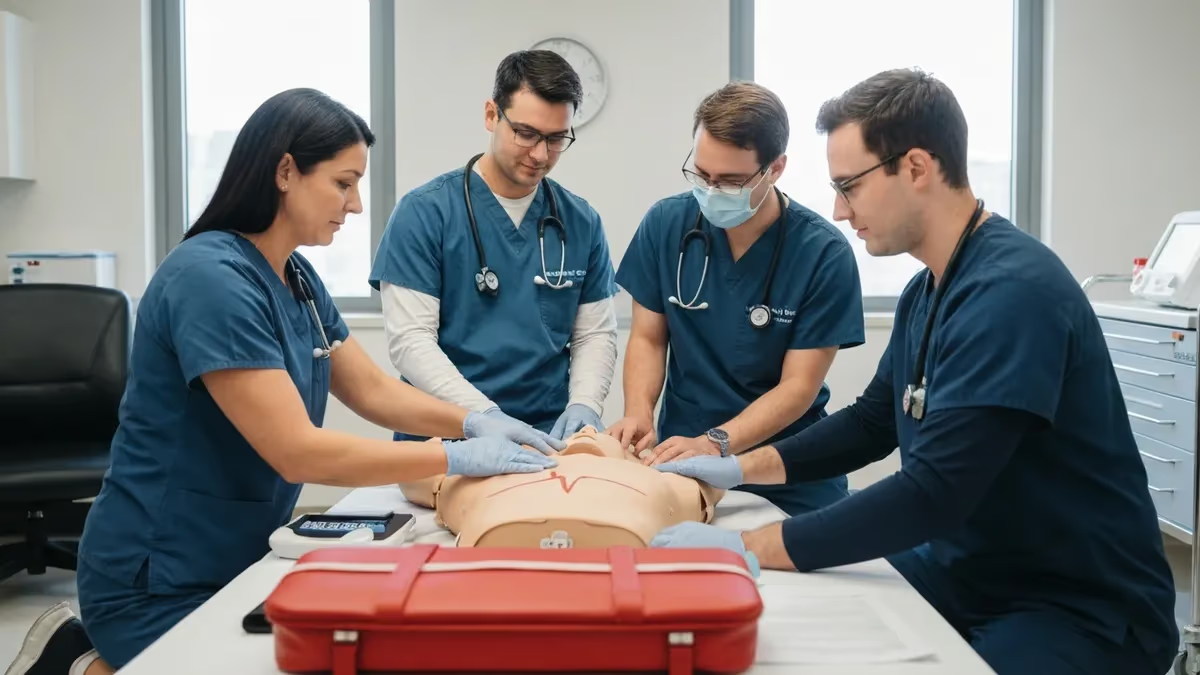
Understanding what is the dose of atropine in ACLS is one of the most critical knowledge points for any healthcare provider preparing for Advanced Cardiovascular Life Support certification. Atropine is the first-line pharmacological intervention for symptomatic bradycardia — a heart rate below 50 beats per minute accompanied by hemodynamic compromise — and knowing the precise dose, timing, and maximum cumulative limit can mean the difference between life and death at the bedside.
The standard recommended dose is 0.5 mg administered intravenously, and this can be repeated every 3 to 5 minutes as needed. For a deep dive into how this fits into the broader treatment algorithm, review the complete acls atropine dose protocol guide.
Atropine works by competitively blocking muscarinic acetylcholine receptors in the heart, specifically at the sinoatrial (SA) node and atrioventricular (AV) node. This blockade reduces vagal tone, which in turn increases the rate of SA node firing and speeds up conduction through the AV node. The result is a faster heart rate and, ideally, improved cardiac output and blood pressure.
Because atropine targets the parasympathetic nervous system directly, it is most effective in bradycardias that are mediated by excessive vagal tone — such as vasovagal syncope, inferior wall myocardial infarction affecting the right coronary artery, or sinus bradycardia caused by medications like beta-blockers or calcium channel blockers.
The ACLS protocol specifies a maximum total cumulative dose of 3 mg of atropine per resuscitation event. This ceiling exists because doses beyond 3 mg can cause complete vagal blockade, leading to paradoxical effects including extreme tachycardia, which is dangerous in patients who may already have compromised coronary circulation.
Clinicians must count every dose administered and communicate clearly with the resuscitation team to avoid accidental overdose. In practice, this means atropine can be repeated up to six times at the 0.5 mg dose before the maximum is reached, with each dose spaced at least 3 to 5 minutes apart to allow time for the drug to take effect.
Not all bradycardias respond to atropine, and recognizing the exceptions is just as important as knowing the standard dose. High-degree AV block — including complete heart block (third-degree AV block) and Mobitz Type II second-degree AV block — typically do not respond reliably to atropine because the block occurs below the level of the AV node, in the bundle of His or the bundle branches.
Atropine accelerates impulse generation at the SA node, but if conduction through the infranodal system is blocked, that increased rate cannot be transmitted to the ventricles. In these situations, ACLS guidelines recommend moving quickly to transcutaneous pacing rather than continuing to administer atropine.
Atropine's onset of action is rapid when given intravenously — typically within 60 seconds — making it well-suited for emergency situations requiring quick correction of bradycardia. The drug is cleared primarily by the kidneys, with a half-life of approximately 2 to 3 hours in adults, though this can be extended in patients with renal impairment.
Healthcare providers should also be aware that certain patient populations may respond differently: older patients may show prolonged effects, while patients with denervated hearts — such as cardiac transplant recipients — will not respond to atropine at all, because the transplanted heart has no intact vagal innervation to block. For these patients, epinephrine or dopamine infusions are the appropriate alternative.
When atropine fails to restore an adequate heart rate, or when it is contraindicated, the ACLS algorithm provides a clear pathway for escalation. Transcutaneous pacing is the next step and should be initiated without delay in unstable patients. Simultaneously, providers can consider dopamine infusion at 2 to 20 mcg/kg/min or epinephrine infusion at 2 to 10 mcg/min as bridge therapies while preparing for transvenous pacing or addressing the underlying cause. Understanding where atropine fits within this stepped approach is essential for ACLS certification exams and, more importantly, for effective real-world resuscitation.
This article will walk you through every aspect of atropine dosing in ACLS — from the pharmacology and mechanism of action, to specific clinical scenarios, administration techniques, potential adverse effects, and exam preparation strategies. Whether you are studying for your initial ACLS certification, preparing for a renewal, or simply brushing up on pharmacology fundamentals, mastering atropine dosing will strengthen your clinical confidence and improve patient outcomes during cardiac emergencies.
ACLS Atropine Dose by the Numbers

How Atropine Works: Step-by-Step Mechanism
Vagal Tone Detected
Atropine Administered IV
Muscarinic Receptor Blockade
SA Node Firing Rate Increases
AV Conduction Improves
Clinical Response Assessed
Within the ACLS bradycardia algorithm, atropine occupies a precisely defined position: it is the first pharmacological intervention attempted after the provider has confirmed that the bradycardia is symptomatic and is causing hemodynamic instability.
The algorithm distinguishes between adequate and inadequate perfusion, and atropine is reserved for patients who demonstrate at least one sign of clinical compromise — such as acute altered mental status, ischemic chest discomfort, acute heart failure, or hypotension with a systolic blood pressure below 90 mmHg. Patients who are bradycardic but fully asymptomatic and hemodynamically stable require monitoring and investigation of the underlying cause, but do not need immediate atropine.
The sequence in which atropine is used relative to other interventions matters greatly for ACLS certification examinations. According to current AHA guidelines, the provider should first identify the bradycardia on ECG and confirm it is symptomatic. Next, the cause should be assessed — common reversible causes include hypoxia, hypothermia, increased intracranial pressure, medication toxicity (beta-blockers, calcium channel blockers, digoxin), electrolyte imbalances such as hyperkalemia, and myocardial ischemia particularly of the right coronary artery territory. While these causes are being investigated and treated, atropine 0.5 mg IV is given as the initial pharmacological measure.
If atropine produces an adequate response — defined as a heart rate that rises enough to resolve the patient's symptoms and restore hemodynamic stability — the algorithm allows for continued observation and treatment of underlying causes. However, if the initial 0.5 mg dose does not produce improvement within 3 to 5 minutes, the dose should be repeated. The critical teaching point here is that the provider must not wait longer than 5 minutes before reassessing and re-dosing or escalating, as delays in treating hemodynamically significant bradycardia can lead to cardiac arrest or end-organ damage from prolonged low output states.
Transcutaneous pacing (TCP) is the escalation step when atropine fails or when the rhythm is unlikely to respond to atropine. The ACLS algorithm makes this very clear: if the patient has high-degree AV block (Mobitz II or third-degree/complete heart block), TCP should be initiated promptly, and atropine should not be relied upon as the primary treatment.
The reason is physiological — these blocks occur below the AV node, in the His-Purkinje system, and vagal blockade cannot overcome infranodal conduction failure. Waiting to see if multiple doses of atropine will work in this setting wastes critical time and may allow the patient to deteriorate further.
Alongside TCP, the ACLS algorithm permits the use of chronotropic infusions as a bridge or alternative. Dopamine at doses of 2 to 20 mcg/kg/min stimulates both dopaminergic and beta-adrenergic receptors depending on the dose range, increasing heart rate and contractility. Epinephrine at 2 to 10 mcg/min acts directly on beta-1 adrenergic receptors to increase heart rate and cardiac output.
These infusions are particularly useful when TCP is not immediately available or when patients cannot tolerate pacing due to chest wall discomfort. Understanding the comparative roles of atropine, TCP, dopamine, and epinephrine within the bradycardia algorithm is frequently tested on ACLS written examinations and scenario stations.
One nuanced area of the algorithm involves the specific scenario of symptomatic sinus bradycardia in the context of an acute inferior wall myocardial infarction. Right coronary artery occlusion frequently causes ischemia of the SA node and AV node due to their shared blood supply, producing sinus bradycardia or first-degree and second-degree Wenckebach AV block. In this scenario, atropine is appropriate for initial management, but the team must remain alert to the fact that reperfusion therapy — either thrombolytics or primary percutaneous coronary intervention — is the definitive treatment, and the bradycardia may resolve spontaneously once blood flow is restored.
Mastering the position of atropine within the broader ACLS bradycardia algorithm requires understanding not just the drug itself, but the clinical reasoning behind every decision point. Certification exams frequently present case scenarios in which the test-taker must select whether to give atropine, initiate pacing, or start an infusion — and the correct answer depends on identifying the rhythm, assessing symptoms, and recognizing which block locations will and will not respond to atropine. Practice quizzes and scenario-based questions are among the most effective ways to internalize this algorithm so that it becomes second nature during both the exam and real resuscitations.
Atropine Dose Scenarios: First-Dose, Repeat, and Maximum
The initial atropine dose in ACLS is always 0.5 mg administered as a rapid intravenous push. The drug should be drawn up in a 10 mL syringe and given quickly, followed by a 20 mL normal saline flush to ensure the drug reaches central circulation. Onset of action is typically within 60 seconds via IV, and the provider should observe the cardiac monitor for a measurable increase in heart rate. If peripheral IV access is the only available route, the flush technique is critical because atropine administered slowly or diluted in a large volume will have a delayed and unpredictable effect. The provider must clearly call out the dose and time of administration so the resuscitation team can track cumulative dosing.
A common mistake seen on ACLS skills stations is administering atropine at a dose lower than 0.5 mg. Doses below this threshold — specifically doses of 0.1 to 0.4 mg — can paradoxically slow the heart rate by causing a peripheral muscarinic effect that stimulates the vagus nerve before central blockade is established. This is a well-documented adverse effect and is one reason the 0.5 mg minimum dose exists. Exam questions frequently test whether candidates know that sub-therapeutic atropine doses are not just ineffective — they can actively worsen bradycardia.
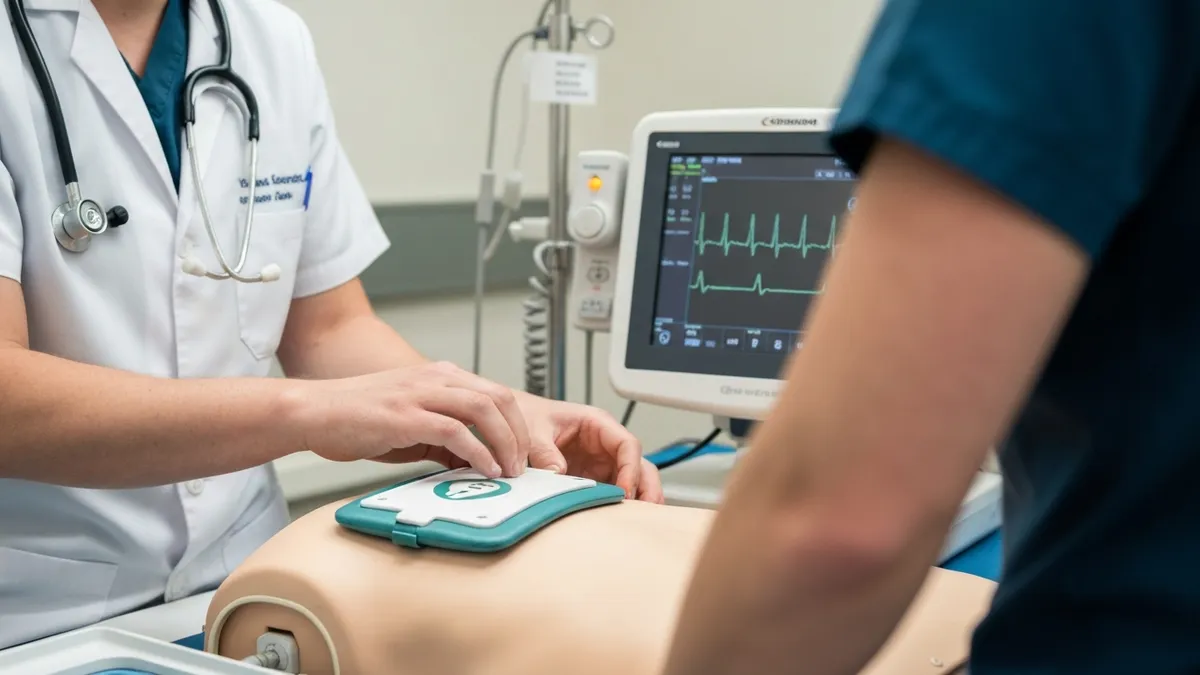
Atropine in ACLS: Advantages and Limitations
- +Rapid onset within 60 seconds via IV push, allowing quick response in symptomatic bradycardia
- +Non-invasive pharmacological intervention compared to transcutaneous or transvenous pacing
- +Highly effective for vagally mediated bradycardias including sinus bradycardia and Wenckebach AV block
- +Familiar dosing regimen (0.5 mg IV, max 3 mg) that is easy to recall under emergency conditions
- +First-line recommendation in AHA ACLS guidelines with strong clinical evidence base
- +Can be repeated multiple times with predictable dosing intervals until maximum is reached
- −Ineffective for high-degree infranodal AV block (Mobitz II, third-degree AV block) — may delay appropriate pacing
- −Sub-therapeutic doses below 0.5 mg can paradoxically worsen bradycardia via peripheral vagal stimulation
- −Completely ineffective in cardiac transplant patients with denervated hearts lacking vagal innervation
- −Maximum dose of 3 mg limits the number of repeat doses available before escalation is required
- −Risk of adverse effects including tachycardia, urinary retention, confusion, and hyperthermia at higher doses
- −Does not address the underlying cause of bradycardia — reversible causes must be identified and treated simultaneously
ACLS Atropine Administration Checklist
- ✓Confirm the patient is symptomatic — look for hypotension, altered mental status, ischemic chest pain, or acute heart failure.
- ✓Identify the rhythm on a 12-lead or continuous cardiac monitor before administering atropine.
- ✓Determine whether the bradycardia is likely vagally mediated or caused by infranodal AV block (avoid atropine for Mobitz II and third-degree AV block).
- ✓Draw up exactly 0.5 mg of atropine in a 10 mL syringe and confirm the concentration (atropine 1 mg/mL is standard).
- ✓Administer the 0.5 mg dose as a rapid IV push — not a slow infusion — followed by a 20 mL normal saline flush.
- ✓Call out the dose and time clearly to the team leader and document in the resuscitation record.
- ✓Observe the cardiac monitor for heart rate response within 60 seconds of IV administration.
- ✓Reassess the patient's symptoms, blood pressure, and level of consciousness after each dose.
- ✓If no response in 3 to 5 minutes, repeat the 0.5 mg dose and ensure transcutaneous pacing is ready.
- ✓Track the cumulative dose and stop atropine at 3 mg total — escalate to TCP, dopamine, or epinephrine infusion as needed.
Never Use Sub-Therapeutic Doses — 0.5 mg Minimum
Atropine doses below 0.5 mg (such as 0.1 mg or 0.25 mg) can paradoxically worsen bradycardia by stimulating peripheral muscarinic receptors before central vagal blockade is established. This is one of the most commonly tested ACLS pharmacology facts. Always give the full 0.5 mg dose as a rapid IV push, and never dilute or slow the infusion rate when treating symptomatic bradycardia.
Special patient populations present unique challenges when applying the standard ACLS atropine dosing protocol, and understanding these nuances is essential for both clinical practice and exam success. The most important exception involves cardiac transplant recipients — patients who have received a donor heart have a surgically denervated myocardium that lacks all autonomic nerve connections, including the vagal fibers that atropine targets.
Since there is no parasympathetic tone to block, atropine has no effect on the heart rate of a transplant patient and should not be administered. Instead, ACLS guidelines recommend direct-acting sympathomimetic agents such as epinephrine, or immediate preparation for transcutaneous pacing.
Elderly patients represent another population requiring careful consideration. Older adults often have reduced renal clearance, which can prolong atropine's half-life and increase the duration of its effects. The anticholinergic properties of atropine can also cause confusion, agitation, and urinary retention more readily in the elderly — effects that may be misinterpreted as neurological deterioration in the resuscitation setting. Providers should document atropine administration clearly in elderly patients so that post-resuscitation teams are aware of potential anticholinergic effects that could complicate the clinical picture in the hours following stabilization.
Patients with suspected or confirmed medication toxicity present another important clinical scenario. Bradycardia caused by beta-blocker overdose, calcium channel blocker overdose, or digoxin toxicity may not respond adequately to atropine alone because these drugs act through mechanisms separate from the vagal pathway.
Beta-blocker toxicity causes bradycardia by blocking sympathetic beta-1 receptors, not by increasing vagal tone, so vagal blockade with atropine will not fully restore the heart rate. In these cases, high-dose insulin-euglycemia therapy, calcium gluconate (for calcium channel blocker overdose), digoxin-specific antibody fragments (Fab) for digoxin toxicity, or glucagon (for beta-blocker overdose) are the definitive treatments, with atropine serving only as a temporizing measure.
Patients with hypoxia-induced bradycardia — such as those with severe respiratory failure, airway obstruction, or pulseless electrical activity with a bradycardic rate — require oxygen delivery and airway management as the primary intervention. Atropine may be given in these situations, but if hypoxia is the driver of bradycardia, restoring oxygenation will be far more effective than pharmacological vagal blockade. The ACLS Hs and Ts framework for identifying reversible causes of cardiovascular collapse includes hypoxia as a top priority, and providers should always ask whether the patient's airway and breathing are adequate before attributing bradycardia purely to a cardiac cause.
Patients with acute inferior myocardial infarction who develop bradycardia or AV block present a nuanced scenario where both atropine and rapid reperfusion therapy play critical roles. Inferior wall ischemia commonly affects the SA node and the AV node because these structures are supplied by branches of the right coronary artery in approximately 80% of individuals.
Atropine may temporarily improve heart rate and AV conduction in these patients, but the ultimate treatment is restoring coronary blood flow through percutaneous coronary intervention or thrombolysis. Providers must be careful not to allow repeated atropine dosing to delay transfer to the catheterization laboratory or initiation of reperfusion therapy.
Pediatric ACLS dosing is entirely different from adult dosing and falls outside the scope of standard adult ACLS protocols. While this article focuses on adult ACLS, it is worth noting that the atropine dose in pediatric resuscitation is weight-based — typically 0.02 mg/kg with a minimum dose of 0.1 mg and a maximum single dose of 0.5 mg.
This contrast with the fixed 0.5 mg adult dose is a frequent source of confusion on certification examinations that cover both adult and pediatric emergency scenarios. Providers who work in settings where they may treat patients of any age should be familiar with both dosing frameworks.
Athletes and individuals with high baseline fitness levels frequently have resting heart rates in the 40s to 50s due to physiological adaptations from aerobic conditioning, including increased vagal tone and enhanced cardiac stroke volume. This athlete's heart bradycardia is entirely benign and asymptomatic, and it does not require atropine or any other intervention.
ACLS examiners sometimes include athlete scenarios to test whether candidates can distinguish between symptomatic pathological bradycardia requiring treatment and asymptomatic physiological bradycardia that should be left untreated. The key discriminator is always the presence or absence of symptoms and hemodynamic compromise — the heart rate number alone does not determine whether treatment is needed.

Denervated transplanted hearts have no intact vagal connections, making atropine completely ineffective for bradycardia in this population. Do not waste time on atropine in a transplant patient — proceed directly to epinephrine infusion (2–10 mcg/min) or transcutaneous pacing. This is a high-yield ACLS exam point that frequently appears in written and scenario-based assessments.
Preparing for the ACLS pharmacology section of both written examinations and hands-on megacode skills stations requires a systematic approach that goes beyond simply memorizing the 0.5 mg atropine dose. Certification candidates who perform best in ACLS assessments understand not just the numbers, but the clinical reasoning that connects each drug to its specific indication, mechanism, and contraindications. Atropine is one of the cornerstone drugs in ACLS, and it appears in multiple algorithm contexts — the bradycardia algorithm being the primary one, but also potentially in scenarios involving post-cardiac arrest care and toxicological emergencies.
One of the most effective study strategies for ACLS pharmacology is to learn drugs in the context of the complete algorithm rather than as isolated facts. For atropine, this means understanding the entire bradycardia decision tree: recognize symptomatic bradycardia, give atropine 0.5 mg IV, repeat every 3 to 5 minutes up to 3 mg, and escalate to TCP or infusions if atropine fails or is contraindicated.
Practicing this sequence verbally — narrating your clinical reasoning aloud as you would during a megacode — reinforces memory pathways far more effectively than silent reading. Many ACLS instructors recommend having a study partner play the role of team leader and patient while you verbalize your pharmacological decisions in real time.
Written ACLS examination questions about atropine commonly take one of three forms. The first is a straightforward knowledge question asking the correct dose or maximum total dose. The second is a clinical scenario requiring the candidate to identify whether atropine is appropriate for a given rhythm (e.g., third-degree AV block versus sinus bradycardia). The third is a sequencing question asking what step comes next after atropine has failed or the maximum dose has been reached.
Being prepared for all three question types requires understanding the drug at the pharmacological, clinical, and algorithmic levels simultaneously — not just knowing one number in isolation.
Hands-on megacode stations present additional challenges because providers must communicate dosing decisions clearly and concisely under simulated pressure. Instructors evaluating ACLS megacode performance look for confident, accurate drug ordering, correct dose verbalization, appropriate sequencing relative to other interventions (such as ensuring oxygen and IV access are established before giving atropine), and timely escalation when initial treatment fails.
Hesitation or uncertainty about the dose or maximum limit can result in a failure on the skills component even if the candidate performed well on the written examination. Regular practice with ACLS scenario simulations, including pharmacology decision points, is the best preparation for this component.
Practice tests are among the highest-yield study resources available for ACLS certification preparation, and multiple studies examining adult learner performance on certification exams have shown a strong correlation between the number of practice questions completed and final examination scores.
The reason is not simply familiarity with questions — it is that practice questions force active recall, require the learner to apply knowledge rather than passively recognize it, and expose gaps in understanding that re-reading notes cannot reveal. When a practice question asks about atropine and the candidate gets it wrong, the explanation provides a targeted opportunity to reinforce the correct information in a memorable context.
When reviewing practice questions on atropine, pay particular attention to distractor answer choices that involve plausible but incorrect doses or scenarios.
Common wrong answers in ACLS atropine questions include dosing atropine at 1 mg (the correct dose for atropine in asystole per older protocols, now de-emphasized in current guidelines), selecting atropine for a Mobitz II AV block (where pacing is the correct answer), or failing to recognize that 3 mg has been reached and continuing to dose (which would exceed the maximum). Understanding why the wrong answers are wrong — not just memorizing the right answer — is what distinguishes candidates who truly master the material from those who simply pass.
The relationship between atropine and the broader ACLS drug formulary is another important area for exam preparation. Atropine addresses the parasympathetic (vagal) component of bradycardia through muscarinic receptor blockade. Dopamine and epinephrine address bradycardia through sympathomimetic receptor stimulation. Pacing bypasses the pharmacological pathway entirely by delivering electrical stimulation directly to the myocardium.
Understanding these mechanistic differences — and knowing when each approach is preferred based on the rhythm and the clinical scenario — is the foundation of ACLS pharmacology mastery. Consistent practice with quiz questions that integrate rhythm recognition, clinical assessment, and drug selection will build the integrated knowledge base needed to excel on every component of ACLS certification.
Translating textbook knowledge of atropine dosing into confident clinical action requires deliberate practice and a commitment to understanding the drug in the full context of patient care. One of the most practical tips for ACLS candidates is to create a simple mental framework that links the three key atropine numbers — 0.5 mg per dose, 3 to 5 minutes between doses, and 3 mg maximum total — into a single memorable statement: half a milligram, every three to five minutes, never more than three total.
Repeating this formula aloud while visualizing the clinical scenario of a bradycardic patient on a monitor helps create a durable memory trace that will be available under the cognitive pressure of both the examination and the actual resuscitation.
Beyond memorization, clinical preparation involves understanding the physical steps of atropine administration in an emergency setting. Providers should know that atropine sulfate is commercially available in concentrations of 0.05 mg/mL, 0.1 mg/mL, 0.4 mg/mL, and 1 mg/mL, and that confusion about concentration can lead to dosing errors.
The most common preparation used in emergency settings is the 1 mg/mL concentration in a 10 mL prefilled syringe, from which 0.5 mL is drawn to deliver the 0.5 mg dose. During resuscitation, clearly confirming the concentration with a second provider before drawing up the drug is a safety practice that reduces medication errors under high-stress conditions.
Simulation-based learning has become a cornerstone of ACLS education precisely because it bridges the gap between knowing and doing. Research in medical education consistently shows that skills learned in simulation environments transfer more effectively to real clinical performance than knowledge acquired through passive study alone. If your institution or training center offers high-fidelity simulation as part of ACLS preparation, take full advantage of it. Request scenarios that specifically include pharmacological decision points — bradycardia with atropine administration, escalation to pacing, and alternative drug selection — so that your hands and voice practice the actions as well as your mind.
Keeping current with AHA guideline updates is another important aspect of ACLS preparation, particularly for providers who are renewing certification after two years. The most recent comprehensive AHA updates were published in 2020, with focused updates released in subsequent years addressing specific clinical scenarios and populations.
Atropine dosing for symptomatic bradycardia has remained consistent in these guidelines, but other aspects of ACLS protocols — including post-cardiac arrest care targets, approaches to pulseless electrical activity, and the de-emphasis of certain previously recommended drugs such as sodium bicarbonate as a routine measure — have evolved. Reviewing the most current guideline summary ensures that your knowledge base reflects current best practice rather than outdated protocols.
Team dynamics and communication during resuscitation are evaluated as part of ACLS megacode performance, and pharmacological decisions about atropine provide concrete opportunities to demonstrate effective team leadership and closed-loop communication.
When ordering atropine, the team leader should clearly state the drug name, dose, and route; the provider administering the drug should verbally confirm the order by repeating it back; and after administration, the administering provider should call out that the drug has been given and note the time. This closed-loop communication sequence ensures that all team members are synchronized on what pharmacological interventions have been completed and when the next dose window opens.
Documentation of atropine administration — including dose, time, route, and patient response — is both a clinical and legal obligation. In real resuscitations, a designated recorder should track every drug given, every dose, and every assessment point on a resuscitation record.
This documentation allows the post-arrest team to understand exactly what interventions were performed and in what sequence, supports quality improvement review, and provides essential information for ongoing care decisions including whether additional rate control or pacing management is needed. ACLS certification candidates should be aware that documentation practices are part of the overall assessment of resuscitation quality in educational settings as well as real clinical environments.
Ultimately, becoming confident in ACLS atropine dosing is not just about passing a certification test — it is about being the kind of healthcare provider who can act decisively and correctly when a patient's life depends on the next two minutes of care. The patient in front of you who is bradycardic, hypotensive, and deteriorating needs a provider who knows the dose without hesitation, knows when not to give it, and knows exactly what to do when it does not work.
That kind of confidence comes from disciplined study, consistent practice with real and simulated scenarios, and a genuine commitment to understanding the science behind every clinical decision. Practice tests, simulation sessions, and algorithm review are the tools that build that confidence — use all of them.
ACLS Questions and Answers
ACLS Bradycardia Algorithm: Complete 2026 Guide to Recognition, Treatment Steps & Drug Doses

ACLS CPR Certification: Complete Training Guide for Healthcare Professionals

ACLS Study Guide: Complete 2026 Certification Prep with Algorithms, Drugs & Practice Tests

ACLS BLS Course: Complete Training Guide for Healthcare Providers

ACLS Guidelines 2026: Complete AHA Update on Algorithms, Drugs, CPR Quality & Post-Arrest Care
About the Author

Registered Nurse & Healthcare Educator
Johns Hopkins University School of NursingDr. Sarah Mitchell is a board-certified registered nurse with over 15 years of clinical and academic experience. She completed her PhD in Nursing Science at Johns Hopkins University and has taught NCLEX preparation and clinical skills courses for nursing students across the United States. Her research focuses on evidence-based exam preparation strategies for healthcare certification candidates.