

ACE Practice Test
Updated October 2026Facts verified Oct 25, 2026 against American Council on Exercise
The ACE has 150 questions, takes about 3 hours and costs $499[1][2] (American Council on Exercise, verified Oct 25, 2026).
- The ACE Personal Trainer exam has 150 multiple-choice questions, of which 125 are scored and 25 are experimental.[1]
- Candidates have three hours to complete the ACE Personal Trainer exam.[1]
- A passing score on the ACE Personal Trainer exam is at least 500 on a scale of 800.[1]
- The ACE Personal Trainer exam registration fee is $99 with any Personal Trainer Study Program and $499 if purchased without one.[2]
- The ACE Personal Trainer exam can be retaken at a discounted rate of $249.[1]
- The soonest a candidate may retake the ACE exam is four days after a failed attempt, and the discounted retake rate is available for up to one year from the first attempt.[1]
- ACE certifications run on a two-year renewal cycle.[3]
- The ACE Personal Trainer exam is offered at proctored testing centers or online through live remote proctoring.[2]
- ACE Personal Trainer exam results are available immediately after the exam is submitted.[1]
Numbers in brackets link to the official sources listed under Sources & last verified. Dates that have passed are removed automatically.
ACE Exam at a Glance
| Item | Detail | Source · Verified |
|---|---|---|
| Number of questions | 150 multiple-choice questions (125 scored, 25 experimental)[1] | American Council on Exercise · Oct 25, 2026 |
| Time limit | 3 hours[1] | American Council on Exercise · Oct 25, 2026 |
| Passing score | At least 500 out of 800[1] | American Council on Exercise · Oct 25, 2026 |
| Exam fee | $99 with a Study Program; $499 without[2] | American Council on Exercise · Oct 25, 2026 |
| Retake fee | $249 discounted retake[1] | American Council on Exercise · Oct 25, 2026 |
| Retake policy | Retake as soon as 4 days after a failed attempt; discounted within 1 year[1] | American Council on Exercise · Oct 25, 2026 |
| Validity | 2 years (renewal cycle)[3] | American Council on Exercise · Oct 25, 2026 |
| Delivery | Proctored test center or online live remote proctoring[2] | American Council on Exercise · Oct 25, 2026 |
| Score release | Immediately on submission[1] | American Council on Exercise · Oct 25, 2026 |
| Registration deadline | At least 10 days before the exam date (in-person)[1] | American Council on Exercise · Oct 25, 2026 |
| Testing window | 60-day window for live remote proctoring[1] | American Council on Exercise · Oct 25, 2026 |
What changed for ACE in 2026
- Oct 25, 2026: Number of questions changed to 150 multiple-choice questions (125 scored, 25 experimental) (previously 150 multiple-choice questions (125 scored, 25 unscored)).[1]
- Oct 25, 2026: Passing score changed to At least 500 out of 800 (previously 500 or higher (scaled)).[1]
- Oct 25, 2026: Registration deadline changed to At least 10 days before the exam date (in-person) (previously At least 10 days before the exam date (15–30 days for accommodations)).[1]
- Oct 25, 2026: Testing window changed to 60-day window for live remote proctoring (previously Online: any time, 24/7, within a 60-day window after registering).[1]
- Oct 25, 2026: Retake fee changed to $249 discounted retake (previously $249 (discounted retake, within 1 year)).[1]
- Oct 25, 2026: Retake policy changed to Retake as soon as 4 days after a failed attempt; discounted within 1 year (previously Retake allowed 10 days after the first attempt).[1]
- Oct 25, 2026: Validity changed to 2 years (renewal cycle) (previously 2 years).[3]
- Oct 25, 2026: Delivery changed to Proctored test center or online live remote proctoring (previously Test center (1,300+ Meazure Learning sites) or online live remote proctoring).[2]
- Oct 25, 2026: Exam fee changed to $99 with a Study Program; $499 without (previously $99 with an ACE Study Program; $499 without one).[2]
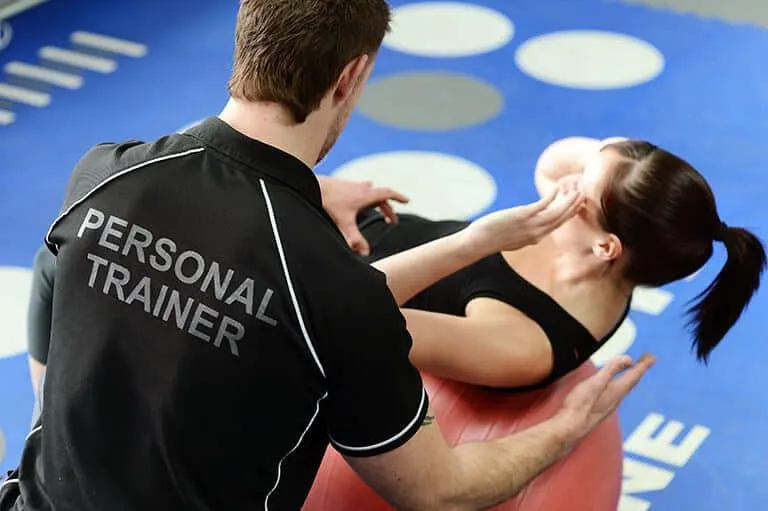
ACE Personal Trainer Exam Pass Rate
The ACE personal trainer exam is well-known for being one of the most difficult certifications to pass in the fitness industry. With only a 70% passing rate, it is important to study properly. Fortunately, there are many different ways to prepare for the ACE CPT exam. Using a combination of study techniques like virtual exams, flashcards, and mnemonic phrases can make all the difference. Moreover, it is a good idea to own the course textbook so that you can review the material on your own. Practice with the free ACE - Personal Trainer practice test on PracticeTestGeeks (7 questions with answer explanations).
Unlike other fitness certifications, the ACE personal trainer program focuses on changing people’s mindsets towards exercise and health. This is why it places a huge emphasis on change psychology. Moreover, it also focuses on delivering practical knowledge to clients. This is why it is recommended that prospective candidates spend time studying several knowledge-specific texts, such as the ACE Personal Trainer Manual and our study guide. Taking practice tests is also a great way to gauge your progress and find out what areas you need to work on before the exam.
Free ACE - Personal Trainer Exam Study Tools
Interactive ACE - Personal Trainer Exam resources on PracticeTestGeeks, free to start:
- ACE - Personal Trainer Exam flashcards — review key terms and concepts card by card
- ACE - Personal Trainer Exam study guide — topic-by-topic overview of what the exam covers
- ACE - Personal Trainer Exam cheat sheet — one-page printable summary for last-minute review
According to American Council on Exercise, “Each ACE Certification Exam consist of 150 multiple choice questions.”[1]
ACE Practice Test Questions
Prepare for the ACE - Personal Trainer Exam exam with our free practice test modules. Each quiz covers key topics to help you pass on your first try.
ACE - Personal Trainer Anatomy and Biomech...
ACE Exam Questions covering ACE - Personal Trainer Anatomy and Biomechanics. Master ACE Test concepts for certification prep.
ACE - Personal Trainer Nutrition and Weigh...
Free ACE Practice Test featuring ACE - Personal Trainer Nutrition and Weight Management. Improve your ACE Exam score with mock test prep.
ACE Exercise Physiology
Free ACE Quiz on Exercise Physiology. ACE Exam prep questions with detailed explanations.
ACE - Personal Trainer Behavior Change and...
Free ACE Test covering - Personal Trainer Behavior Change and Motivation. Practice and track your ACE exam readiness.
ACE - Personal Trainer Cardiorespiratory P...
ACE Exam Questions covering - Personal Trainer Cardiorespiratory Program Design. Master ACE Test concepts for certification prep.
ACE - Personal Trainer Client Interview an...
Free ACE Practice Test featuring - Personal Trainer Client Interview and Screening. Improve your ACE Exam score with mock test prep.
ACE - Personal Trainer Emergency Procedure...
ACE Test Prep for - Personal Trainer Emergency Procedures and Safety. Practice ACE Quiz questions and boost your score.
ACE - Personal Trainer Exercise Program Pr...
ACE Questions and Answers on - Personal Trainer Exercise Program Progression. Free ACE practice for exam readiness.
ACE - Personal Trainer Functional Fitness ...
ACE Mock Test covering - Personal Trainer Functional Fitness Assessments. Online ACE Test practice with instant feedback.
ACE - Personal Trainer Muscular Training P...
ACE Practice Questions for - Personal Trainer Muscular Training Principles. Build confidence for your ACE certification exam.
ACE - Personal Trainer Professional and Le...
ACE Test Online for - Personal Trainer Professional and Legal Standards. Free practice with instant results and feedback.
Worked examples: how to reason through ACE questions
These are practice questions written for this site, not questions from the real exam. Each explanation shows why the right answer is right and why the others are wrong.
Example 1
Question: Which muscle is considered the prime mover during a conventional barbell deadlift?
- Quadriceps
- Gluteus maximus
- Erector spinae
- Hamstrings
Answer: B. Gluteus maximus
Explanation:
Gluteus maximus is correct. The deadlift is mainly a hip extension movement, and the gluteus maximus is the largest and strongest hip extensor, so it is the prime mover as the bar passes the knees and the hips drive forward. Quadriceps help break the bar off the floor by extending the knees, but they are not the main driver of the lift. Erector spinae work mostly as stabilisers, holding the spine in a neutral position while the load moves. Hamstrings assist hip extension, yet they are a helper to the glutes here, not the leading muscle. The rule to remember: name the dominant joint action first, then pick the muscle that produces most of that action. Stabilisers and assistors can be tempting, but they are not the prime mover.
Example 2
Question: A 65-year-old postmenopausal client has been diagnosed with osteoporosis in her spine and hips. Which of the following exercises would be MOST beneficial for increasing her bone mineral density (BMD)?
- Water aerobics
- Seated leg extensions
- Dumbbell goblet squats
- Stationary cycling
Answer: C. Dumbbell goblet squats
Explanation:
Dumbbell goblet squats are correct. Bone responds to mechanical load, so weight-bearing and resistance exercise that load the spine and hips give the strongest stimulus for bone mineral density in the areas this client is worried about. Water aerobics is supported by the water, so bones see little load, even though it is gentle on joints and good for the heart. Seated leg extensions are resistance work, but they are non-weight-bearing for the hips and spine and train a single joint. Stationary cycling is also supported and gives cardiovascular benefit without much bone loading. The rule to remember: for bone health, choose exercises that put force through the skeleton, and scale load and technique to the client's condition and any medical guidance.
Example 3
Question: A client can bench press 200 lbs for one rep. According to standard guidelines, which load best targets muscular hypertrophy?
- 140–160 lbs (70–80% 1RM)
- 100–120 lbs (50–60% 1RM)
- 180–190 lbs (90–95% 1RM)
- 60–80 lbs (30–40% 1RM)
Answer: A. 140–160 lbs (70–80% 1RM)
Explanation:
140–160 lbs (70–80% 1RM) is correct. Hypertrophy training sits in a moderate-to-heavy band of the maximum, heavy enough to challenge the muscle and light enough to allow a useful amount of repetitions per set. The 50–60% option is too light to be the best target, and 30–40% is lighter still, better suited to endurance-style work or warm-ups. The 90–95% option is very heavy, which suits maximal strength training because it limits the repetitions you can complete. The rule to remember: convert each answer to a percentage of the stated maximum, then match it to the goal. Lower percentages lean toward endurance, the middle band toward muscle size, and the highest toward maximal strength.
How to use these practice tests
Start with the official American Council on Exercise exam page and any study material you have bought, and note the content areas they list. Our practice sets are not a substitute for that outline, so use it as your checklist.
Take a mixed set such as ACE Personal Trainer CPT cold, before you revise, to see where you stand. Then work through the topic sets that match your weak spots, for example Anatomy and Biomechanics, Client Interview and Screening and Special Population Considerations.
After each set, read the explanation for every question, including the ones you got right. For each miss, write the general rule in a sentence, go back to the official material, and re-read that section. Do not memorise answers; the real exam will word things differently.
In the last stretch before test day, switch to mixed sets and practise reading each question slowly, since the exam is timed and closed book. Use the full practice test to rehearse sitting for a long session without notes.
- ✓Confirm your exam appointment and location
- ✓Bring required identification documents
- ✓Arrive 30 minutes early to check in
- ✓Read each question carefully before answering
- ✓Flag difficult questions and return to them later
- ✓Manage your time — don't spend too long on one question
- ✓Review flagged questions before submitting

ACE Personal Trainer Questions and Answers
One of the hardest personal training certification exams to pass is the ACE CPT Exam. 150 questions from the nearly 800-page textbook must be answered within the allotted three hours. Because it might be difficult to decide what to study, this can be extremely stressful.
The three-hour ACE personal training certification exam has 150 questions in total and follows a certain framework. The multiple-choice questions emphasize application and analysis more than remembering and defining words.
The ACE Personal Trainer Study Program is adaptable and self-paced, taking most students no longer than three to six months to finish.
Three to four months is recommended by ACE for studying and preparing for certification exams. You may require more or less time based on your situation.
There are 150 multiple-choice questions on each ACE Certification Exam. To obtain certification, all candidates must acquire a passing score of 500 or above.
ACE offers a variety of packages, each featuring a selection of study resources. The ACE CPT exam-only option, for instance, costs $399 and does not include any study materials, including the major textbook.
The cost of the ACE Personal Trainer certification exam is between $219 and $249.
Obtaining your ACE Certification is a three-step process. The initial part consists of completing Infofit’s Fitness Theory Course and earning a course completion letter. The second step consists of finishing Infofit’s Personal Training Fundamentals (Weight Training Course) and Basic CPR and First Aid Course (8 hours). The final phase entails passing the ACE Trainer Certification Exam and maintaining your ACE Certification Registration. The ACE Requirements include being at least 18 years old and possessing CPR certification for adults. Initial Exam Fees are USD 399 and Retake Fees are USD 249. Passing the exam requires approximately 68%. Exam Specifics include anatomy, physiology, nutrition, client screening, assessment, and communication, exercise science, programming, instruction, spotting techniques, lifestyle change, and professional scope of practice.
The processes required to earn ACE personal trainer certification are outlined below:
- Ensure that you satisfy the minimum age requirement of 18 years and possess a valid CPR certification.
- Examine the material: Use ACE study materials and resources to acquaint yourself with exam material.
- Create an account on the ACE website and register for the certification exam for personal trainers. Pay the enrollment cost.
- Exam preparation: create a study plan, review the contents thoroughly, and take practice examinations.
- Perform the test: Schedule your examination at an authorized testing facility, attend on time, and carry the needed identification. To the best of your ability, answer the multiple-choice questions.
- Complete additional requirements: Get the ACE CPR/AED certification or a valid CPR/AED certification. Submit a completed CPR/AED form with an approved provider’s signature.
- Maintain certification: To keep your certification active, you must complete continuing education requirements by earning CEUs.
Take the test in the convenience of your home. We are glad to provide you with the option of using a live remote proctor for your ACE Certification Exam.
ACE receives a 9 and NASM receives a 9.4 on a scale from 1 to 10. Both of these certificates do an outstanding job of teaching all the skills necessary to be an effective personal trainer.
One of the toughest exams in the fitness business is the ACE CPT exam.
The 150 multiple-choice questions on the ACE Personal Trainer exam are divided into 4 subject categories.
The ACE Personal Trainer Certification Exam is an exam administered through the computer.
It is not an open-book exam, but the study materials you use can help you focus on the key concepts in the large (500-page) textbook and master the material you need to succeed as a certified personal trainer. One can study using a variety of methods.
Any fitness professional who has received certification from ACE, the American Council of Exercise, is referred to as an ACE-certified personal trainer.
The ACE certification exam for personal trainers consists of three hours and a total of 150 questions. Rather than recalling and defining terminology, the multiple-choice questions emphasize application and interpretation. This section contains questions about real-world client service scenarios.
To arrange the ACE (American Council on Exercise) personal trainer certification exam, you must visit an authorized testing center. PSI Services LLC and ACE have teamed to administer ACE’s tests. PSI offers multiple testing sites throughout the United States and in a few foreign countries.
PCA candidates often also prepare with our HHA practice test 2026 — both certify personal care aide and home health attendant competencies for community-based care.
Fitness professionals preparing for their NASM exam often also study the CNA Practice Test 2026 to understand foundational anatomy and patient care principles that overlap with personal training knowledge.
Physician practice managers broadening their medical billing knowledge often cross-prepare with the cpc exam, which covers CPT, HCPCS, and ICD-10 coding standards critical to accurate claims processing and revenue cycle management.
Optometry board candidates can complement their preparation with the Pharmacy Technician Practice Test 2026 to reinforce pharmacology and ocular drug knowledge tested across clinical licensing exams.
ACE: Pros and Cons
- +ACE exam preparation strengthens your knowledge across all domains
- +Passing the exam proves competency to employers and clients
- +Study materials and practice tests are widely available
- +Exam-based credentials are portable across states and employers
- +Clear exam objectives help focus your study plan effectively
- −Exam anxiety can affect performance — practice tests help reduce it
- −Registration fees are non-refundable if you miss your test date
- −Limited retake opportunities may apply with waiting periods
- −Exam content updates periodically — use current study materials
- −Testing center availability may require advance scheduling
Pros and Cons at a Glance
| Pros | Cons |
|---|---|
| ACE exam preparation strengthens your knowledge across all domains | Exam anxiety can affect performance — practice tests help reduce it |
| Passing the exam proves competency to employers and clients | Registration fees are non-refundable if you miss your test date |
| Study materials and practice tests are widely available | Limited retake opportunities may apply with waiting periods |
| Exam-based credentials are portable across states and employers | Exam content updates periodically — use current study materials |
| Clear exam objectives help focus your study plan effectively | Testing center availability may require advance scheduling |
Sample ACE - Personal Trainer Exam Practice Questions
Try these questions from our free ACE - Personal Trainer Exam practice tests. The correct answer and an explanation follow each question.
A personal trainer is having a conversation with a friend at a coffee shop. The friend, who knows one of the trainer's clients, asks, "How is Sarah's weight loss going? She told me she hired you." How should the trainer respond to uphold professional ethical standards?
- A. Share general, positive details, saying "She's doing great and working really hard!"
- B. Provide a detailed update on the client's progress to help motivate the friend.
- C. Politely state, "Due to client confidentiality, I can't discuss any details about my clients."
- D. Acknowledge the client relationship but change the subject immediately.
Answer: C. Politely state, "Due to client confidentiality, I can't discuss any details about my clients."
Client confidentiality is a cornerstone of professional ethics. Personal trainers must protect all client information, including their identity, progress, and any health details they share. Discussing a client's information in a public place without their explicit consent is a breach of this trust, regardless of the context. The most appropriate response is to directly and politely explain that you cannot discuss client information due to confidentiality policies, which mirrors the principles of privacy acts like HIPAA, even if trainers are not always considered covered entities.
According to ACE guidelines, how should a personal trainer respond when a client's functional assessment reveals a possible orthopedic issue beyond the trainer's scope?
- A. Proceed with training while avoiding exercises that cause discomfort
- B. Immediately stop all assessment and refer the client to a physician
- C. Continue the assessment and document findings for later review
- D. Administer a sport-specific test to gather more data
Answer: B. Immediately stop all assessment and refer the client to a physician
When assessment findings suggest an orthopedic condition outside the trainer's scope, ACE guidelines require immediate referral to an appropriate healthcare professional.
A personal trainer is conducting a Thomas Test with a new client. During the assessment, the trainer observes that the back of the client's lowered thigh does not touch the table and the knee extends. What is the MOST likely cause of this observation?
- A. Tightness in the iliopsoas and rectus femoris
- B. Weakness in the gluteus maximus
- C. Tightness in the hamstrings
- D. Weakness in the abdominal muscles
Answer: A. Tightness in the iliopsoas and rectus femoris
The Thomas Test is used to assess hip flexor length. If the back of the lowered thigh does not touch the surface, it indicates a tight iliopsoas. If the knee of the lowered leg extends, it indicates tightness in the rectus femoris, which is a two-joint muscle that crosses both the hip and the knee.
An independent personal trainer is establishing their business and wants to protect their personal assets (e.g., house, car) from any potential business-related lawsuits. Which business structure would be the MOST effective at providing this liability protection?
- A. Limited Liability Company (LLC)
- B. General Partnership
- C. Sole Proprietorship
- D. Independent Contractor Agreement
Answer: A. Limited Liability Company (LLC)
A Limited Liability Company (LLC) is a legal structure that separates the business entity from the owner. This means if the business is sued or incurs debt, the owner's personal assets are generally protected. A sole proprietorship and a general partnership do not offer this protection, leaving the owner(s) personally liable for all business debts and legal actions. An independent contractor agreement defines a work relationship, but is not a business structure.
📝 How many questions are on the ACE Personal Trainer exam?
The NCCA-accredited ACE Certified Personal Trainer exam has 150 multiple-choice questions. You get 3 hours to finish, and you can test in person or online with a live remote proctor.
START ACE CPT PRACTICE TEST🎯 What score do you need to pass the ACE CPT exam?
ACE requires a scaled score of 500 or greater to earn the NCCA-accredited ACE Certified Personal Trainer credential. Results are delivered instantly at the end of the exam, along with a digital certificate if you pass.
START ACE CPT PRACTICE TEST✅ What are the requirements to take the ACE personal trainer exam?
For the NCCA-accredited exam you must be at least 18, have a high school diploma or equivalent, and hold a current CPR/AED certification with a live skills check. You also need a current government-issued photo ID with signature.
START ACE CPT PRACTICE TEST🔍 Is the ACE personal trainer exam open book?
The NCCA-accredited ACE CPT exam is proctored, not open book. ACE separately offers a non-proctored ACE Personal Training Certificate exam that is open book, with 100 questions and a 70% pass mark, but it is not the NCCA-accredited certification.
START ACE CPT PRACTICE TEST💻 Can I take the ACE personal trainer exam online?
Yes. ACE offers a Live Remote Proctored exam through Meazure Learning/ProctorU, in English only. After registering you have 60 days to test; no breaks are allowed, you need a webcam and a private room, and iPads, Chromebooks and tablets are not accepted.
START ACE CPT PRACTICE TEST⏳ How long does it take to study for the ACE CPT exam?
ACE says most candidates finish its Personal Trainer program within three to six months. The study program is self-paced, so your timeline depends on your schedule and how familiar you already are with exercise science.
START ACE CPT PRACTICE TEST🏋️ What is the ACE IFT Model?
The ACE Integrated Fitness Training (IFT) Model is the client-centered programming framework taught in the ACE course. Its two training components, cardiorespiratory training and muscular training, each have three phases, and every client is placed in a phase based on health, fitness and goals.
START ACE CPT PRACTICE TEST🔁 What happens if you fail the ACE personal trainer exam?
A retake is available. ACE suggests about one week of review for every 10 points you scored below 500, so a 480 means roughly two weeks of study. Use your score report to compare each domain against the Exam Content Outline.
START ACE CPT PRACTICE TEST📅 How do you renew an ACE personal trainer certification?
You renew every two years by completing 2.0 ACE-approved CECs, which equals 20 hours of continuing education. If you let your certification expire without completing those CECs, ACE requires you to retake the exam.
START ACE CPT PRACTICE TEST🏅 Is the ACE personal trainer certification NCCA accredited?
Yes, the ACE Certified Personal Trainer exam is accredited by the NCCA. Certified trainers are also recognized on the U.S. Registry of Exercise Professionals (USREPS), which many gyms and employers check when hiring.
START ACE CPT PRACTICE TESTACE Questions and Answers
Official Resources
- American Council on Exercise (ACE): Personal Trainer Certification is the official page for exam options, eligibility, pricing and renewal rules.
- Institute for Credentialing Excellence runs the NCCA, the body that accredits the ACE Certified Personal Trainer exam.
- U.S. Registry of Exercise Professionals (USREPS) lets employers and clients look up trainers who hold NCCA-accredited certifications.
Sources & last verified
- American Council on Exercise — number of questions, time limit, passing score, retake fee (official source). “Each ACE Certification Exam consist of 150 multiple choice questions.” Verified Oct 25, 2026 · source checked Oct 23, 2026.
- American Council on Exercise — exam fee, delivery (official source). “Registration fee of $99 with all Personal Trainer Study Programs ($499 if purchased without a Study Program).” Verified Oct 25, 2026 · source checked Oct 23, 2026.
- American Council on Exercise — validity (official source). “Renew "every two years."” Verified Oct 25, 2026 · source checked Oct 23, 2026.
How we verify: editorial & fact-checking policy. Report an error: contact us.
How this page was made: written with AI tools and published by Nathan Beja, founder of Practice Test Geeks, who is responsible for its content. Exam facts are checked against the official sources listed below. Not reviewed by a subject-matter expert. Editorial policy
Sources & references
Exam facts on this page (fees, format, dates, passing scores) are checked against these official sources; the date is our last check. Editorial policy
- acefitness.org — Score validity, exam format, passing score, registration deadline, retake fee, retake policy, score release, test dates, time limit, test delivery · verified Oct 2026