
AAPPL Exam Complete Guide: ACTFL Assessment of Performance Towards Proficiency in Languages
Master the AAPPL exam 🎯 — learn test format, scoring levels, login steps, and practice strategies to boost your language proficiency score.

The AAPPL exam — short for ACTFL Assessment of Performance towards Proficiency in Languages — is one of the most widely recognized language proficiency assessments in the United States. Administered by ACTFL (the American Council on the Teaching of Foreign Languages), the AAPPL test measures how well students can actually use a language in real-world situations, rather than simply testing grammar rules or vocabulary memorization.
Schools, districts, bilingual programs, and dual-language immersion programs across the country rely on AAPPL scores to document student language achievement, guide instructional decisions, and award Seal of Biliteracy distinctions. If you are preparing to take the aappl, understanding what the assessment covers and how it works is your essential first step.
Unlike many standardized tests, the AAPPL is an adaptive, technology-enhanced assessment delivered online. It is designed for students in grades K–12 and measures proficiency in four language domains: Interpersonal Listening/Speaking, Presentational Writing, Interpretive Reading, and Interpretive Listening. Each domain is scored separately on the ACTFL proficiency scale, which spans from Novice Low all the way through Distinguished, giving educators and students granular insight into language strengths and areas for growth. The assessment is available in more than 120 languages, making it one of the broadest-reaching language tests in the world.
Preparation for the AAPPL test matters more than many students initially assume. Because the assessment is performance-based — asking students to complete authentic communication tasks rather than select from multiple-choice options — rote memorization strategies fall short. Effective AAPPL preparation involves practicing real communicative tasks: listening to audio passages and responding, reading authentic texts, and writing extended responses that convey meaning clearly and accurately. Students who practice under realistic conditions consistently outperform those who only review vocabulary lists.
One of the most common questions students have before test day is how the AAPPL test login process works. The assessment is accessed through an online portal provided by ACTFL or the school's testing coordinator. Students typically receive a unique username and password from their teacher or district testing coordinator in advance of the scheduled testing window. It is critical to verify login credentials at least 24 hours before the exam, because technical issues on test day can disrupt the entire testing session and may require rescheduling through the school coordinator.
The AAPPL scoring system is anchored to ACTFL's globally recognized proficiency guidelines. Rather than reporting a single overall score, AAPPL test scores are reported by domain, allowing students and teachers to identify specific strengths and areas needing additional development. A student might score at Intermediate High in Interpretive Reading but only at Intermediate Low in Presentational Writing, prompting targeted instruction in that weaker area. This granularity makes the AAPPL especially valuable for dual-language and heritage language programs where differentiated instruction is already a priority.
Students preparing for the AAPPL should also take advantage of the AAPPL test demo and AAPPL practice test resources made available through ACTFL and third-party prep platforms. These demo materials introduce the interface, question types, and task formats students will encounter on exam day, reducing test anxiety and improving performance. Familiarity with how tasks are presented — including audio playback controls, writing input fields, and timing indicators — gives students a meaningful advantage over peers who walk in cold. The more authentic your practice environment, the better prepared you will feel.
Throughout this guide, you will find a thorough breakdown of the AAPPL language test format, scoring levels, login procedures, preparation strategies, and frequently asked questions. Whether you are a student aiming to earn your state's Seal of Biliteracy, a heritage language learner looking to officially document your skills, or a dual-language program participant preparing for end-of-year assessment, this resource will equip you with everything you need to approach the AAPPL exam with confidence and achieve your best possible result.
AAPPL Exam by the Numbers

AAPPL Exam Format & Structure
| Section | Questions | Time | Weight | Notes |
|---|---|---|---|---|
| Interpersonal Listening/Speaking | — | ~20 min | 25% | Adaptive spoken conversation tasks; microphone required |
| Presentational Writing | — | ~25 min | 25% | Extended writing tasks responding to prompts |
| Interpretive Reading | — | ~25 min | 25% | Authentic texts; comprehension and inference tasks |
| Interpretive Listening | — | ~20 min | 25% | Audio passages; comprehension and main idea tasks |
| Total | — | ~90 minutes | 100% |
Understanding AAPPL test scores is fundamental to interpreting your results and setting realistic preparation goals. The AAPPL reporting system is built on the ACTFL Proficiency Guidelines, a hierarchical framework that describes language ability at twelve distinct levels: Novice Low, Novice Mid, Novice High, Intermediate Low, Intermediate Mid, Intermediate High, Advanced Low, Advanced Mid, Advanced High, Superior, Distinguished, and a special Novice level for the youngest learners.
Each level describes what a speaker can do communicatively, not merely what grammar points they know, reflecting the ACTFL's performance-based philosophy. When you receive your aappl test scores, you will see a separate level designation for each of the four domains tested.
The Novice range is where most early language learners begin. At Novice Low, students can produce isolated words and memorized phrases. By Novice High, they can manage simple lists, memorized expressions, and highly predictable exchanges. These levels are typical for students in their first year or two of language study, or for young children in early dual-language immersion programs. Teachers working with Novice-range students focus primarily on building vocabulary, basic sentence patterns, and high-frequency communicative chunks that allow students to handle familiar daily situations.
The Intermediate range represents the most critical growth zone for K-12 students. Intermediate Low learners can ask and answer simple questions, handle straightforward transactional exchanges, and create with language using mostly learned material. By Intermediate High, students demonstrate the ability to narrate and describe across major time frames, handle unexpected complications in conversation, and produce paragraph-length discourse. Many states' Seal of Biliteracy programs require students to demonstrate at least Intermediate High proficiency in each AAPPL domain, making this level a concrete and meaningful target for high school students in dual-language programs.
Advanced-level proficiency on the AAPPL indicates a significant milestone in language development. Advanced Low speakers can narrate and describe with detail and precision, handle a variety of communicative situations including some that are unfamiliar, and maintain discourse over extended stretches. Advanced Mid and Advanced High add the ability to discuss abstract topics, support opinions, and hypothesize. These levels are rare among K-12 students who learned the language entirely in school, but heritage language learners — students who grew up speaking the language at home — often test into the Advanced range, particularly in Interpersonal Listening/Speaking and Interpretive skills.
Scores in the Superior and Distinguished range are reserved for speakers with near-native or native-equivalent proficiency. These levels are rarely the target of K-12 AAPPL testing, though they may appear in the results of particularly advanced heritage speakers or students who have spent extensive time in an immersion environment abroad. For most K-12 purposes, the meaningful benchmarks are Intermediate Mid through Advanced Low, which represent the range where most bilingual and dual-language program graduates land after 12 years of instruction in a target language alongside English.
One practical implication of domain-level scoring is that students and teachers can develop targeted intervention plans based on AAPPL results. A student who scores Intermediate High in Interpretive Reading but Intermediate Low in Presentational Writing, for instance, would benefit from focused extended writing practice: journaling, structured paragraph construction, and timed writing responses to authentic prompts. This precision is impossible with holistic single-score assessments, which is one reason educators across the country have adopted the AAPPL as their go-to language proficiency measurement tool for program evaluation and individual student tracking over time.
It is also worth understanding how AAPPL scores factor into broader educational contexts. Many universities and scholarship programs now accept AAPPL domain scores as documentation of language proficiency for placement, honors recognition, or dual-enrollment credit. State education agencies that award the Seal of Biliteracy frequently list AAPPL Intermediate High as the qualifying threshold, though a growing number of states now require Advanced Low in at least one domain for the highest designation. Reviewing your state's specific requirements before the test is an important strategic step, as it helps you set a clear target score and allocate your preparation time accordingly.
AAPPL Test Preparation Strategies by Domain
Interpretive Reading and Interpretive Listening tasks on the AAPPL test require students to engage with authentic materials — newspaper articles, announcements, conversations, and broadcasts — not simplified textbook passages. The best preparation strategy is regular exposure to real-world target-language media: podcasts, news clips, articles, and social media content. Practice identifying the main idea, supporting details, and the implied meaning of authentic texts without translating every word, because fluent comprehension relies on context inference, not word-for-word decoding.
For Interpretive Listening specifically, students should practice listening to audio at native speaker pace, resisting the urge to pause and replay every few seconds. The AAPPL testing interface allows limited replays, so training yourself to capture key information on the first or second listen is critical. Strategies like listening for signal words (first, however, most importantly), focusing on speaker tone and emphasis, and predicting content from context clues can all dramatically improve performance. Setting aside 15–20 minutes daily for authentic listening practice in the six to eight weeks before the AAPPL exam is a high-return investment.
AAPPL Test: Strengths and Limitations to Know
- +Performance-based scoring reflects real-world language ability, not just grammar knowledge
- +Available in over 120 languages, making it accessible for nearly any target language program
- +Domain-level reporting pinpoints specific strengths and weaknesses for targeted instruction
- +Adaptive technology adjusts task difficulty to match the student's demonstrated proficiency
- +Widely accepted by states for Seal of Biliteracy qualification documentation
- +Online delivery eliminates paper logistics and allows flexible scheduling within testing windows
- −Requires reliable internet and functional audio equipment — technical issues can disrupt testing
- −No offline or paper-based option, limiting access in low-bandwidth school environments
- −Speaking tasks require a quiet environment and microphone, which can be hard to guarantee in busy schools
- −Scoring timelines can take several weeks, reducing immediate instructional feedback utility
- −Test fees may create equity challenges for underfunded schools and districts
- −Students unfamiliar with the interface may be disadvantaged without prior AAPPL test demo access
AAPPL Test-Day Preparation Checklist
- ✓Confirm your AAPPL test login credentials (username and password) at least 48 hours before exam day.
- ✓Test your microphone, speakers, and internet connection using the AAPPL test demo before your scheduled date.
- ✓Locate a quiet, private testing space where you will not be interrupted during the speaking tasks.
- ✓Charge all devices fully the night before and have a backup power source available if possible.
- ✓Review the four AAPPL domains — Interpersonal Speaking, Presentational Writing, Interpretive Reading, and Interpretive Listening — and recall your target proficiency level for each.
- ✓Complete at least one full timed AAPPL practice test session in the week before the exam to simulate test conditions.
- ✓Eat a balanced meal and get adequate sleep the night before — cognitive performance is directly tied to physical readiness.
- ✓Arrive at your testing location at least 15 minutes early if testing at school or a testing center.
- ✓Read every on-screen prompt and task instruction carefully before beginning your response.
- ✓Do not rush through the Presentational Writing tasks — budget your time so you can produce organized, extended written responses.
AAPPL Reports Skills Separately — Use This to Your Advantage
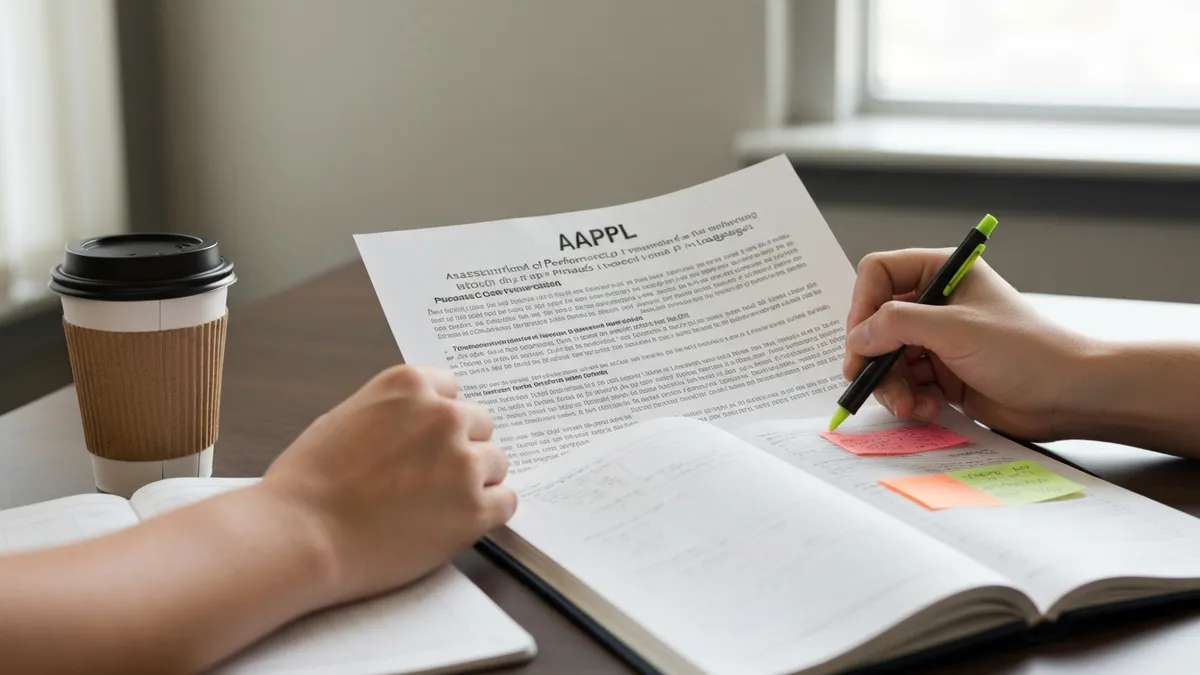
Because AAPPL scores each of the four language domains independently, a single weak domain can disqualify a student from a Seal of Biliteracy even if their other domains are strong. Focus your final preparation weeks on your lowest domain, not on polishing your strongest — that targeted effort produces the greatest overall score gain and protects your eligibility for biliteracy recognition programs.
The AAPPL test login and testing logistics process is an area where many students and families feel uncertainty, particularly if they are taking the assessment for the first time. The AAPPL is administered through ACTFL's online testing platform, and access is always initiated through the student's school or district testing coordinator.
Unlike SAT or ACT registration, individual students cannot register directly for the AAPPL — the assessment is school- or program-administered, meaning your teacher or coordinator will schedule the testing window, set up student accounts, and distribute login credentials in advance of the test date. If you have not received your login information at least three days before your scheduled test, contact your teacher or testing coordinator immediately.
The AAPPL testing login page is accessed through ACTFL's designated testing portal. Students enter their unique username and password, confirm their identity, and are then routed to the assessment interface for their specific language and domains.
The platform is browser-based and compatible with most modern devices — Chromebooks, Windows laptops, and Macs — but mobile devices such as smartphones and tablets are generally not supported or recommended due to the typing and audio requirements of the assessment. Before the official test day, students should use the aappl test login page to access any available demo materials that their coordinator has enabled.
Technical readiness is a frequently overlooked element of AAPPL preparation. Schools that administer the assessment in a computer lab need to ensure that all microphones are functioning properly, particularly for the Interpersonal Listening/Speaking domain, which requires audio recording. Students who have never used a headset-style microphone during a language task often find the experience unfamiliar and slightly distracting, which can affect fluency. If your school allows it, request a brief practice session in the actual testing room with the actual equipment so that the recording environment feels familiar and comfortable before the official exam begins.
Scheduling and timing logistics also deserve attention. Schools typically schedule AAPPL testing within a designated window provided by ACTFL, often spanning two to four weeks. Within that window, individual testing sessions are arranged by the coordinator, and students may test different domains on different days depending on how the school has structured the administration.
Some schools administer all four domains in a single extended session; others spread them across multiple shorter sessions. Knowing your school's schedule in advance allows you to plan your preparation accordingly — ramping up Interpersonal Speaking practice in the days before that domain is tested, for example.
For students who experience technical difficulties during the AAPPL test — a microphone failure, internet dropout, or browser crash — the protocol is to immediately alert the testing proctor or coordinator. ACTFL has procedures for resuming interrupted sessions in many circumstances, but the ability to recover depends on when the disruption occurred and what data was already saved by the platform.
This is another strong argument for performing a thorough equipment check and internet speed test before the testing window opens. Connectivity speeds below 5 Mbps can cause audio streaming issues that disrupt both the Interpretive Listening and Interpersonal Speaking domains.
Make-up testing for students who were absent or who experienced unresolvable technical disruptions is handled at the school or district level, within the constraints of ACTFL's testing window. Not all disruptions qualify for make-up testing, and the decision is typically made by the testing coordinator in consultation with ACTFL's customer support team. Students with documented disabilities who require testing accommodations — extended time, screen readers, or alternative formats — must submit accommodation requests through their school's special education or 504 coordinator well in advance of the testing window, as ACTFL requires advance notice to implement most accommodations.
One final logistical note: AAPPL score reports are typically delivered electronically to the school or district within two to four weeks of test completion, depending on the volume of assessments being scored. Students do not automatically receive their scores directly from ACTFL; instead, scores are released to the school and then shared with students and families according to the district's policies. If you are hoping to use your AAPPL scores for a college application, Seal of Biliteracy award, or other external purpose, plan your testing date so that scores are available well before any submission deadlines.
Failing to verify your AAPPL test login credentials and equipment before exam day is one of the most common and preventable sources of test disruption. Microphone malfunctions, forgotten passwords, and browser compatibility issues are all solvable problems — but only if you discover them before the clock starts. Run the AAPPL test demo at least 48 hours before your scheduled test session, and report any technical issues to your coordinator immediately.
Effective AAPPL practice test preparation is about quality of engagement, not just quantity of hours studied. Many students make the mistake of reviewing vocabulary lists and grammar exercises in isolation, then feeling unprepared when they encounter the AAPPL's performance-based task formats.
The single most valuable shift you can make is to restructure your practice around communicative tasks — completing reading comprehension exercises with authentic texts, recording spoken responses to conversation prompts, and writing extended paragraphs on unfamiliar topics under timed conditions. Each of these activities directly mirrors what the AAPPL actually asks you to do. Reviewing an aappl test scoring rubric alongside your practice responses is another powerful technique for self-directed improvement.
Building a structured six to eight week study plan significantly increases the likelihood of meaningful score gains. In the first two weeks, focus on understanding the ACTFL proficiency levels and where your current performance falls on that spectrum. Take a diagnostic practice assessment — many are available through PracticeTestGeeks and ACTFL's own demo resources — and analyze your domain-level results honestly. Which domain is your strongest? Which exposes the most gaps? Use that diagnostic data to weight your remaining preparation weeks, spending proportionally more time on your weaker areas while maintaining your stronger domains through regular practice.
In weeks three and four, shift your focus to task-specific practice for your two weakest domains. For most students, this means Presentational Writing and Interpersonal Speaking, which require active production rather than passive comprehension. Set a daily writing target — one extended paragraph or response every day, timed at fifteen minutes — and a daily speaking target — two to three impromptu recorded responses of sixty to ninety seconds each.
At the end of each week, review your recorded speaking responses and written samples against the ACTFL rubric criteria for your target proficiency level, noting specific gaps in vocabulary range, grammatical accuracy, or discourse organization.
Weeks five and six should introduce simulation testing under realistic conditions. Set a timer, use the actual AAPPL interface through the available demo, and complete full domain-length practice sessions without stopping. The goal is not perfection but stamina and pacing — learning to sustain performance quality across an extended testing session is a skill that requires deliberate practice. Many students who perform well in short practice bursts experience fatigue and declining performance quality in the second half of a full testing session. Building mental endurance through realistic simulation is the best countermeasure.
Vocabulary development remains a foundation of AAPPL preparation even within a communicative-task framework. At the Intermediate level, students need a working vocabulary of approximately 2,000–3,000 high-frequency words to handle the range of topics that appear on the AAPPL. At the Advanced level, the vocabulary demand expands significantly, particularly for abstract and academic topics. Rather than memorizing isolated word lists, build vocabulary through extensive reading and listening — encountering words repeatedly in context accelerates retention and improves the spontaneous retrieval that speaking and writing tasks demand. Flashcard apps are useful supplements, but they should never be the primary tool.
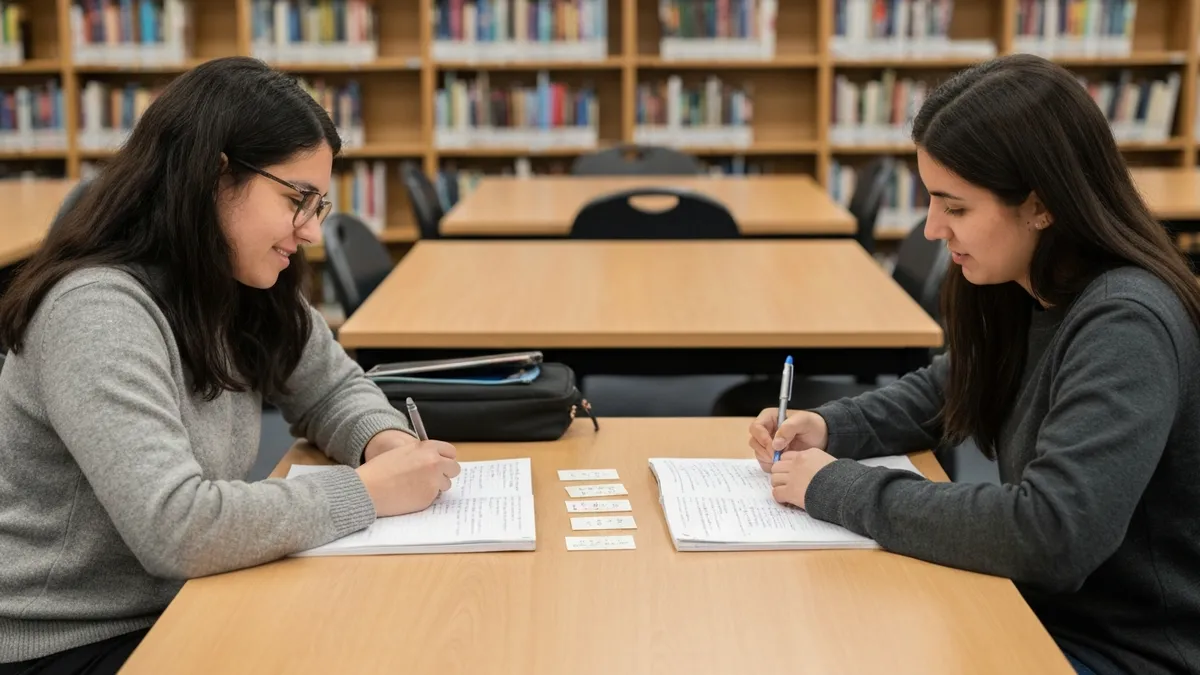
Peer practice and language exchange partnerships are dramatically underutilized preparation resources. If you have classmates who speak the target language or are preparing for the same AAPPL test, schedule regular thirty-minute conversation sessions focused on AAPPL-style topics: describing personal experiences, comparing and contrasting options, narrating past events, or discussing current events. The improvised nature of peer conversation builds exactly the spontaneous communicative fluency that the Interpersonal domain rewards. If in-person partners are unavailable, video call language exchange platforms connect you with speakers worldwide, providing authentic communicative practice at no cost.
Finally, do not underestimate the value of reviewing official ACTFL Can-Do statements for your target proficiency level in the weeks before the test. Can-Do statements describe, in plain language, the specific communicative tasks a speaker at each level can accomplish. Reading the Can-Do statements for Intermediate High, for example, gives you a precise picture of what AAPPL raters are looking for when they score at that level.
Posting these statements where you can review them daily — next to your desk, as a phone wallpaper, or at the top of your study notes — keeps your preparation anchored to the actual scoring criteria and prevents the aimless practice that produces frustration rather than growth.
As your test date approaches, practical test-day strategies become as important as the content preparation you have been doing for weeks. The night before your AAPPL exam is not the time for intensive studying — it is the time for consolidation, rest, and logistical preparation.
Review your login credentials one final time, confirm your testing location and start time, and lay out any materials you might need (headphones, charger, water). A full night of sleep — at least seven to eight hours for adolescents — has a measurably positive impact on memory retrieval, language processing speed, and the kind of flexible thinking that performance-based language tasks require.
On the morning of the exam, avoid the temptation to cram new vocabulary or review complex grammar rules. Your working memory is most accessible when it is not overloaded with last-minute input. Instead, spend ten to fifteen minutes in your target language doing something low-stakes and enjoyable: listening to a favorite podcast, reading a short article on a topic you know well, or having a brief conversation with a family member or friend in the language. This activates your language processing circuits and warms up the mental pathways you will need during the test, without creating additional cognitive load.
During the test itself, pacing and strategic awareness are critical. Read each task prompt carefully and completely before beginning your response — missing a key instruction word can cause you to respond off-topic, which significantly lowers your score even if your language quality is high.
In the Presentational Writing domain, take thirty seconds to mentally outline your response before typing: identify your main point, two or three supporting details, and a brief conclusion. This thirty-second investment produces dramatically more organized writing than jumping directly into composition, and organization is one of the explicit criteria AAPPL raters use to assign proficiency levels.
In the Interpersonal Speaking domain, if you are temporarily unsure how to respond to a prompt, use filler strategies naturally rather than going silent. Native speakers routinely use phrases like that is a great question, let me think about that for a moment, or I would say that... to buy a few seconds of processing time without dropping out of the conversation.
Using these discourse management strategies fluently is itself a mark of higher proficiency — it demonstrates that you can maintain communicative flow even when the content is challenging. Going silent for more than a few seconds, by contrast, signals a breakdown in communicative ability and is interpreted by raters as an indicator of lower proficiency.
After completing each domain, resist the urge to mentally replay your responses and second-guess yourself. Rumination between domains consumes cognitive resources that you need for the next section. Develop a brief transition ritual — take three slow breaths, drink some water, briefly stretch — that signals to your brain that one section is complete and the next is beginning.
Athletes call this compartmentalization, and it is a validated performance strategy that language test-takers can adapt with excellent results. Focus entirely on the domain in front of you, not on what you may or may not have done well in a domain that is already submitted.
Post-test, when your AAPPL scores are released to your school and subsequently shared with you, approach the results analytically rather than emotionally. A score that falls below your target level is data, not a verdict. It tells you exactly where your language development currently stands and points toward what the next phase of learning should prioritize.
Many students use their initial AAPPL results to set a concrete goal for the following year, working intentionally on specific domain weaknesses and retesting to document growth. The AAPPL is designed not just as a one-time measurement but as a longitudinal tool for tracking language development across years of study.
The AAPPL exam is ultimately a snapshot of your communicative ability at a specific point in your language learning journey. The preparation strategies, scoring frameworks, and logistical insights covered in this guide give you a comprehensive foundation for approaching that snapshot with confidence.
Whether you are targeting Intermediate Mid for a school program requirement, Intermediate High for a state Seal of Biliteracy, or Advanced Low to document heritage language proficiency, the path forward is the same: consistent, authentic, communicative practice in the days and weeks before test day. Use every resource available — practice tests, demo environments, speaking partners, ACTFL Can-Do statements — and walk into your AAPPL testing session knowing that your preparation has positioned you to perform at your best.
AAPPL Questions and Answers



About the Author

Educational Psychologist & Academic Test Preparation Expert
Columbia University Teachers CollegeDr. Lisa Patel holds a Doctorate in Education from Columbia University Teachers College and has spent 17 years researching standardized test design and academic assessment. She has developed preparation programs for SAT, ACT, GRE, LSAT, UCAT, and numerous professional licensing exams, helping students of all backgrounds achieve their target scores.
Join the Discussion
Connect with other students preparing for this exam. Share tips, ask questions, and get advice from people who have been there.
View discussion (8 replies)