
AAPPL Test Scores: Understanding Levels, Results & Performance 2026 September
🟢 Free AAPPL practice test with questions and answer explanations. Prepare for the 2026 September exam with instant scoring.
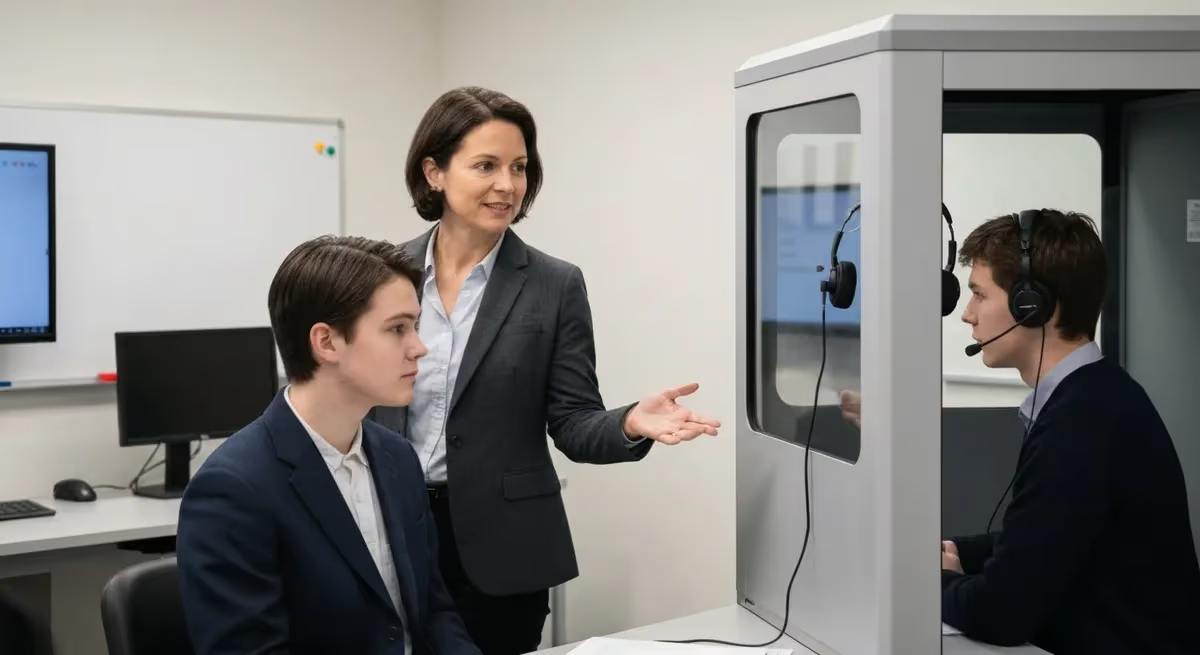
The ACTFL Assessment of Performance toward Proficiency in Languages (AAPPL) is a widely recognized language proficiency test used by schools across the United States and globally to assess K-12 students' abilities in languages within real-world, standards-based contexts. AAPPL test scores play a pivotal role for language learners, educators, and institutions, particularly because they serve for program placement, awarding the Seal of Biliteracy, and credit by examination. Understanding AAPPL scores is essential for accurately evaluating language proficiency and designing targeted plans to help students reach their academic and career goals.
AAPPL Practice Test Questions
Prepare for the AAPPL - ACTFL Assessment of Performance towards Proficiency in Languages exam with our free practice test modules. Each quiz covers key topics to help you pass on your first try.
AAPPL Proficiency Levels and Scoring
AAPPL Exam Questions covering AAPPL Proficiency Levels and Scoring. Master AAPPL Test concepts for certification prep.
AAPPL Test Format and Structure
Free AAPPL Practice Test featuring AAPPL Test Format and Structure. Improve your AAPPL Exam score with mock test prep.
AAPPL Cultural Competence
AAPPL Mock Exam on Cultural Competence. AAPPL Study Guide questions to pass on your first try.
AAPPL Discourse Management
AAPPL Test Prep for Discourse Management. Practice AAPPL Quiz questions and boost your score.
AAPPL Grammar Accuracy
AAPPL Questions and Answers on Grammar Accuracy. Free AAPPL practice for exam readiness.
AAPPL Interpersonal Communication
AAPPL Mock Test covering Interpersonal Communication. Online AAPPL Test practice with instant feedback.
AAPPL Interpretive Listening
Free AAPPL Quiz on Interpretive Listening. AAPPL Exam prep questions with detailed explanations.
AAPPL Interpretive Reading
AAPPL Practice Questions for Interpretive Reading. Build confidence for your AAPPL certification exam.
AAPPL Language Strategies
AAPPL Test Online for Language Strategies. Free practice with instant results and feedback.
AAPPL Presentational Speaking
AAPPL Study Material on Presentational Speaking. Prepare effectively with real exam-style questions.
AAPPL Presentational Writing
Free AAPPL Test covering Presentational Writing. Practice and track your AAPPL exam readiness.
AAPPL Vocabulary in Context
AAPPL Exam Questions covering Vocabulary in Context. Master AAPPL Test concepts for certification prep.

AAPPL Test Scores Explained and Score Interpretation Guidelines
AAPPL scores reflect a learner's proficiency in each test component based on the ACTFL Performance Scale. Each of the four test modes receives a separate score ranging from N-1 (Novice Low) through A-1 (Advanced Low). Understanding these scoring levels is crucial for students and parents alike to recognize achievements and set realistic goals:
Novice Level: N-1 (Low), N-2 (Mid), N-3 (Mid+), N-4 (High)
Intermediate Level: I-1 (Low), I-2 (Mid), I-3 (Mid+), I-4 (Mid/High), I-5 (High)
Advanced Level: A-1 (Low)
Students receive an official AAPPL Score Report for each mode, accompanied by narratives and recommendations for improvement. These detailed reports provide valuable insights into specific strengths and weaknesses across the four language domains.
AAPPL scores are instrumental for academic placement and, notably, earning the Seal of Biliteracy. For instance, many programs require scores of I-5 (Intermediate High) for certification. AAPPL scores are never averaged—each domain (speaking, writing, reading, listening) must meet the threshold separately. This approach ensures that students demonstrate balanced proficiency across all communication modes.
Understanding these scores helps set clear targets, recognize strengths, and identify improvement areas. Working with teachers and tutors to develop targeted practice plans based on score reports accelerates progress toward higher proficiency levels.
For detailed explanations, refer to official guides or reach out to the test provider or educators.
AAPPL Exam Components and Structure for Each Language Mode
The AAPPL exam comprises four main sections, each designed to assess distinct communication skills essential for real-world language proficiency. Knowing the structure of each section helps students manage their time effectively and prepare targeted strategies:
Interpretive Listening: Listening to authentic audio and text materials to answer comprehension questions that test understanding of main ideas, supporting details, and cultural context.
Interpretive Reading: Reading short passages, articles, and authentic materials followed by multiple-choice or open-ended questions to evaluate reading comprehension and vocabulary retention.
Interpersonal Listening and Speaking: Simulated conversations with an on-screen avatar where students respond verbally, demonstrating the ability to engage in realistic dialogue and negotiate meaning.
Presentational Writing: Responding to writing prompts and creating coherent written responses, showcasing grammar, vocabulary, organization, and cultural awareness.
Each section takes approximately 30–40 minutes, with writing generally requiring more time. The test is designed for classroom environments, proctored online or in schools. Practice and demo tests, including sample items, are essential for familiarizing students with the structure and expectations. To maximize outcomes, candidates should review aappl testing materials and focus on their weaker language skills.
Scores for the Interpretive Listening and Reading sections are calculated instantly, providing immediate feedback to test takers. Meanwhile, Presentational Writing and Interpersonal Listening/Speaking are rated by certified evaluators, with results returned within two weeks of test completion. This two-tiered scoring system ensures accuracy and allows for detailed feedback on productive skills.
AAPPL candidates often also benchmark with our APTIS practice test for the interpersonal and presentational language proficiency skills both world language proficiency assessments measure.

AAPPL: Pros and Cons
- +AAPPL exam preparation strengthens your knowledge across all domains
- +Passing the exam proves competency to employers and clients
- +Study materials and practice tests are widely available
- +Exam-based credentials are portable across states and employers
- +Clear exam objectives help focus your study plan effectively
- −Exam anxiety can affect performance — practice tests help reduce it
- −Registration fees are non-refundable if you miss your test date
- −Limited retake opportunities may apply with waiting periods
- −Exam content updates periodically — use current study materials
- −Testing center availability may require advance scheduling
AAPPL Practice Test Questions and Answers

Conclusion
AAPPL test scores are more than numbers—they represent a student's real-world language application skills and can set the stage for educational advancement and global opportunities. Understanding each section's significance and regularly evaluating individual strengths and weaknesses allows learners to set clear goals. Embracing official demo resources, instructional support, and a strategic practice regimen ensures candidates are well-prepared to maximize their testing outcomes and confidently pursue their linguistic dreams.
- ✓Confirm your exam appointment and location
- ✓Bring required identification documents
- ✓Arrive 30 minutes early to check in
- ✓Read each question carefully before answering
- ✓Flag difficult questions and return to them later
- ✓Manage your time — don't spend too long on one question
- ✓Review flagged questions before submitting
About the Author

Commercial Pilot & FAA Certification Specialist
Embry-Riddle Aeronautical UniversityCaptain Jennifer Walsh graduated with honors in Aerospace Engineering from Embry-Riddle Aeronautical University and holds FAA Airframe & Powerplant and Airline Transport Pilot certificates. With 11 years of commercial aviation experience and 6 years as a ground school instructor, she guides aviation mechanics and student pilots through FAA written exams and practical tests.
Join the Discussion
Connect with other students preparing for this exam. Share tips, ask questions, and get advice from people who have been there.
View discussion (8 replies)