
Your Comprehensive Guide to Trauma Nursing Certification Success 2026
📗 Prepare for the Your Comprehensive Guide to Trauma certification. Practice questions with answer explanations covering all exam domains.

The Trauma Certified Registered Nurse (TCRN) test is an important certification exam for registered nurses who specialize in trauma care. As healthcare professionals working in emergency settings, trauma nurses are required to be prepared for any situation, as they are often the first line of defense in treating critically injured patients. Earning a TCRN certification demonstrates a nurse's ability to provide high-level care in trauma settings, showcasing their knowledge and skills in emergency trauma nursing. Practice with the free Trauma Nursing Core Course Certified practice test on PracticeTestGeeks (7 questions with answer explanations).
This article will provide an overview of the TCRN test, including what it entails, how to prepare for it, and the benefits of becoming a Trauma Certified Registered Nurse.
- To pass the TNCC online exam you need a score of at least 80 percent. You must also show every critical step at the skill station test. (Emergency Nurses Association)
- Each TNCC learner gets two attempts at the online exam, and both must be taken within seven days of the last day of the course. (Emergency Nurses Association)
- Completing the Trauma Nursing Core Course earns a four-year TNCC provider verification that is recognized internationally. (Emergency Nurses Association)
- RNs whose TNCC provider status expired less than 180 days ago can take the one-day TNCC Renewal Course, which earns 13.50 CNE hours. Non-RNs cannot take the renewal course. (Emergency Nurses Association)
- TNCC usually runs over one and a half days as an in-person, hybrid or virtual course with skill stations, and it ends with an electronic open-book online exam. (Emergency Nurses Association)
- Both registered nurses and non-RNs can earn the four-year TNCC provider verification. Only RNs can use the Challenger or Renewal options. (Emergency Nurses Association)
Facts verified Oct 20, 2026 against Emergency Nurses Association. Dates that have passed are removed automatically.
TNCC Exam at a Glance
| Item | Detail | Official source |
|---|---|---|
| Passing score | 80% on the online exam | Emergency Nurses Association |
| Retake policy | 2 attempts within 7 days of the course | Emergency Nurses Association |
| Validity | 4-year provider verification | Emergency Nurses Association |
| Renewal | 1-day Renewal Course (RNs, expired <180 days) | Emergency Nurses Association |
| Delivery | In-person, hybrid or virtual course + online open-book exam | Emergency Nurses Association |
| Eligibility | RNs and non-RNs | Emergency Nurses Association |
| Testing window | Courses offered year-round | Emergency Nurses Association |
Facts verified Oct 20, 2026 against Emergency Nurses Association. Dates that have passed are removed automatically.
Free Trauma Nursing Core Course Certified Study Tools
Interactive Trauma Nursing Core Course Certified resources on PracticeTestGeeks, free to start:
- TNCC Thoracic Trauma 1 — 7 questions with answer explanations
- Trauma Nursing Core Course Certified flashcards — review key terms and concepts card by card
- Trauma Nursing Core Course Certified study guide — topic-by-topic overview of what the exam covers
- Trauma Nursing Core Course Certified cheat sheet — one-page printable summary for last-minute review
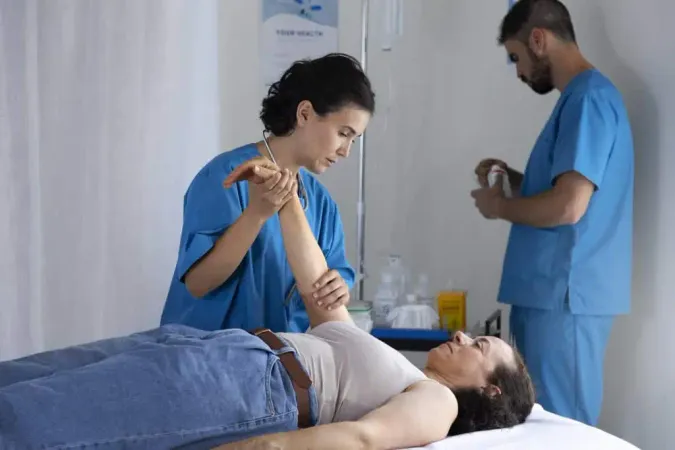
What is the TCRN Test?
The TCRN test is designed for registered nurses who have specialized in trauma care. It is offered by the Board of Certification for Emergency Nursing (BCEN) and is recognized as a mark of excellence in trauma nursing. To qualify for the test, candidates must meet certain eligibility criteria, including having at least two years of experience in trauma care or emergency nursing, as well as completing a minimum number of trauma-related patient care hours.
The exam is designed to assess a nurse's knowledge in trauma care across multiple domains, such as trauma assessment, emergency management, and patient stabilization. The TCRN exam consists of 175 multiple-choice questions, covering a range of topics relevant to trauma nursing. To pass, candidates must achieve a minimum score based on the exam's scoring system, which evaluates both knowledge and the ability to apply that knowledge in a real-world clinical setting.
The Blog exam uses a multiple-choice format with questions covering all major domains. Most versions allow 2-3 hours for completion.
Questions test both knowledge recall and application skills. A score of 70-75% is typically required to pass.
TCRN Exam Breakdown
The TCRN exam is divided into several key areas of knowledge. Below is a breakdown of the core content areas that the exam covers:
Trauma Nursing Assessment: This section tests a nurse's ability to quickly and accurately assess the severity of a patient's injuries. Nurses must be able to prioritize life-threatening conditions and identify injuries that require immediate intervention.
Trauma Care Management: Nurses must be skilled in managing patients through the various phases of trauma care, including pre-hospital care, stabilization, and post-trauma care.
Emergency and Critical Care: Trauma nurses need to understand critical care concepts, including airway management, fluid resuscitation, and shock management. This section evaluates the nurse's ability to handle severe trauma situations.
Trauma Interventions and Procedures: Nurses are tested on their knowledge of common trauma-related interventions such as wound care, splinting, and emergency surgeries.
Patient and Family Education: Trauma nurses need to effectively communicate with patients and families about injury prevention, trauma care procedures, and recovery plans. This section evaluates communication and education skills.
Trauma and Surgical Procedures: Nurses must understand the surgical procedures commonly required in trauma care, including emergency surgeries such as thoracotomy and laparotomy.
Ethical and Legal Considerations: Nurses must be able to handle the ethical and legal aspects of trauma care, such as informed consent, patient rights, and the scope of practice.
The TCRN test is designed to evaluate a nurse's proficiency across all these domains and ensure they are prepared for the challenges of trauma nursing.
PHTLS candidates often also prepare with our ITLS practice test — both are prehospital trauma life support certifications covering patient assessment, airway management, and hemorrhage control.
Trauma registry specialists preparing for the CSTR exam can also review the CNA Practice Test 2026 to reinforce clinical documentation and patient data fundamentals.
Gastroenterology nurses preparing for SGNA certification can reinforce their clinical knowledge with our nclex practice test, covering patient care and procedural safety topics.
Infection control professionals preparing for the CIC exam can supplement their study with our nclex practice test, which covers infection prevention and patient safety protocols.
How to Prepare for the TCRN Test
Preparation for the TCRN exam requires both knowledge and practical experience in trauma nursing. Here are some steps you can take to ensure you’re ready:
Gain Experience in Trauma Care: As mentioned earlier, candidates are required to have two years of experience in trauma or emergency nursing. This hands-on experience is critical to developing the skills necessary for the exam.
Review the Test Content Outline: The BCEN provides a detailed test content outline that outlines the areas covered on the exam. Familiarize yourself with these topics and ensure you have a solid understanding of each one.
Take Practice Tests: One of the best ways to prepare is by using TCRN practice test. Practice tests help you familiarize yourself with the exam format and give you a sense of the types of questions that will be asked. They also allow you to assess your strengths and weaknesses, enabling you to focus your study efforts on areas where you need the most improvement.
Study with a Guide or Review Course: Many candidates choose to enroll in review courses or use study guides designed for the TCRN exam. These resources often provide comprehensive coverage of the material, including practice questions and tips for success.
Study in Groups: Joining a study group with other nurses who are preparing for the TCRN exam can provide support and allow you to share insights, study techniques, and resources.

Benefits of Becoming TCRN Certified
Earning the TCRN certification provides numerous benefits for both nurses and their patients. Here are some of the key advantages of obtaining this credential:
Professional Recognition: The TCRN certification is a recognized and respected credential in the nursing field. It demonstrates your expertise in trauma nursing and can make you a more competitive candidate in the job market.
Increased Career Opportunities: TCRN certification can open doors to more advanced career opportunities in trauma and emergency nursing. Many healthcare organizations prefer or require trauma nurses to be certified, and TCRN certification may be a prerequisite for certain leadership or management roles.
Higher Earning Potential: Nurses with specialized certifications often earn higher salaries than those without certification. By becoming TCRN certified, you may increase your earning potential and have more job security.
Enhanced Patient Care: By obtaining this certification, you demonstrate a commitment to providing high-quality care to trauma patients. It ensures that you are equipped with the knowledge and skills needed to handle complex trauma cases.
Personal Satisfaction: Achieving certification can be personally rewarding. It is an acknowledgment of your hard work and expertise in the trauma nursing field. It can also enhance your confidence in delivering patient care during traumatic events.
Helpful Resources for TCRN Exam Preparation
ATLS Practice Test Exam: Another valuable resource, especially for trauma nurses looking to deepen their knowledge of advanced trauma life support.
TNCC Practice Test: TNCC certification is often a requirement for nurses looking to work in trauma care units, and this practice test will further solidify your trauma knowledge.
By utilizing these resources and studying consistently, you will be well on your way to passing the TCRN exam and becoming a certified trauma nurse.
- +Validates your knowledge and skills objectively
- +Increases job market competitiveness
- +Provides structured learning goals
- +Networking opportunities with other certified professionals
- −Study materials can be expensive
- −Exam anxiety can affect performance
- −Requires dedicated preparation time
- −Retake fees apply if you don't pass
Pros and Cons at a Glance
| Pros | Cons |
|---|---|
| Validates your knowledge and skills objectively | Study materials can be expensive |
| Increases job market competitiveness | Exam anxiety can affect performance |
| Provides structured learning goals | Requires dedicated preparation time |
| Networking opportunities with other certified professionals | Retake fees apply if you don't pass |
Sample Blog Practice Questions
Try these questions from our free Blog practice tests. The correct answer and an explanation follow each question.
What is the primary benefit of maintaining an editorial calendar for a blog?
- A. It automatically generates new blog post ideas without any planning
- B. It ensures consistent publishing and organized content planning aligned with goals
- C. It eliminates the need for keyword research before writing
- D. It guarantees higher search engine rankings over competitors
Answer: B. It ensures consistent publishing and organized content planning aligned with goals
An editorial calendar helps bloggers plan topics in advance, maintain a consistent schedule, and align content with seasonal trends and business objectives.
Which writing style is generally most effective for blog content?
- A. Formal academic language with complex, discipline-specific vocabulary
- B. Passive voice used consistently throughout the post
- C. Conversational, clear language written in the second person (addressing 'you')
- D. Third-person narrative that avoids any direct address to the reader
Answer: C. Conversational, clear language written in the second person (addressing 'you')
Conversational, second-person writing creates a personal connection with the reader and is easier to understand than formal or passive styles.
Which blog post format is most commonly shared on social media platforms?
- A. Long-form, academic-style research reports
- B. Listicles (numbered or bulleted list-based posts)
- C. Technical documentation and how-to reference guides
- D. Commentary pieces responding to recent news events
Answer: B. Listicles (numbered or bulleted list-based posts)
Listicles are highly shareable because their structured, easy-to-scan format lets social media users quickly grasp the value before clicking or sharing.
Which element is most effective for hooking readers in a blog post introduction?
- A. Opening with a dictionary definition of the main topic
- B. Listing every subtopic the post will cover in bullet points
- C. Starting with a compelling question, anecdote, or surprising statistic
- D. Beginning with a lengthy description of the author's credentials
Answer: C. Starting with a compelling question, anecdote, or surprising statistic
A strong hook — such as a question, story, or startling fact — captures the reader's attention and motivates them to keep reading.

Conclusion
Becoming a Trauma Certified Registered Nurse (TCRN) is a significant achievement for any nurse working in trauma care. It demonstrates a high level of expertise and dedication to patient care in the emergency setting. To prepare for the exam, use comprehensive study resources such as practice tests to improve your knowledge and test-taking skills. Preparing for the TCRN test may be challenging, but with the right resources, dedication, and study plan, you can increase your chances of success and take your nursing career to the next level.
How this page was made: written with AI tools and published by Nathan Beja, founder of Practice Test Geeks, who is responsible for its content. Exam facts are checked against the official sources listed below. Not reviewed by a subject-matter expert. Editorial policy
Sources & references
Exam facts on this page (fees, format, dates, passing scores) are checked against these official sources; the date is our last check. Editorial policy
- ena.org — Test delivery, eligibility, passing score, renewal, retake policy, test dates, score validity · verified Oct 2026