
WPPSI-IV Fluid Reasoning: What It Measures and Why It Matters 2026 September
Master WPPSI-IV Fluid Reasoning — what it measures, age ranges, subtests, and how to prepare. 🎯 Full guide for parents and examiners.

The wppsi — Wechsler Preschool and Primary Scale of Intelligence — is one of the most widely used individually administered intelligence assessments for young children in the United States. Within the WPPSI-IV framework, the Fluid Reasoning Index stands out as a particularly important composite score, measuring a child's ability to detect abstract relationships, solve novel problems, and apply logic in situations where prior knowledge provides little direct advantage. Understanding wppsi iv fluid reasoning helps parents, school psychologists, and early childhood specialists make sense of cognitive evaluation results and plan appropriate educational support.
Fluid reasoning refers to the capacity to think flexibly and solve new problems without relying heavily on previously learned facts or cultural knowledge. Unlike crystallized intelligence — which reflects accumulated learning — fluid reasoning taps into raw cognitive processing power. For children between the ages of two years six months and seven years seven months, which is the wppsi age range covered by the fourth edition, this domain captures some of the earliest signs of higher-order thinking and abstract problem-solving ability, making it a clinically meaningful measure even in very young children.
The WPPSI-IV was published by Pearson in 2012 and represents a significant update over the WPPSI-III, which had an age range of two years six months to seven years three months. The fourth edition extended coverage slightly while also restructuring the index scores to align more closely with contemporary psychometric and neuropsychological theory. The Fluid Reasoning Index is one of five primary index scores in the WPPSI-IV, alongside Verbal Comprehension, Visual Spatial, Working Memory, and Processing Speed composites.
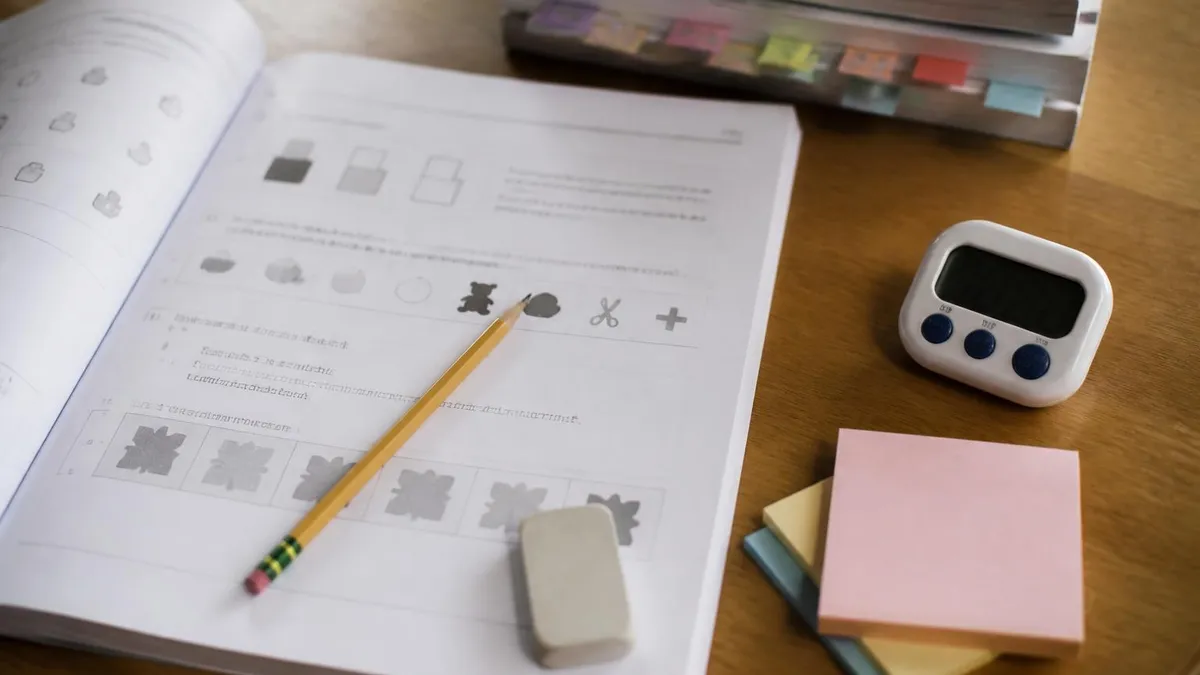
Two core subtests drive the Fluid Reasoning Index in the WPPSI-IV: Matrix Reasoning and Picture Concepts. Matrix Reasoning asks children to look at an incomplete matrix and select the piece that best completes the pattern, requiring pattern recognition and visual analogical reasoning. Picture Concepts presents rows of objects and asks children to identify one object from each row that shares a common characteristic, testing categorical and abstract thinking. Both subtests are carefully normed across the full wppsi-iv age range so that scores are developmentally appropriate and directly comparable across age cohorts.
Performance on the Fluid Reasoning Index carries meaningful implications for academic placement, gifted program eligibility, and the identification of learning disabilities. A high score may support eligibility for advanced or gifted programming, while a significant discrepancy between fluid reasoning and verbal comprehension scores can provide diagnostic information about specific learning profiles, including twice-exceptionality, language-based learning disabilities, and developmental delays. School psychologists routinely examine these inter-index discrepancies as part of a comprehensive evaluation.
Parents who receive a WPPSI-IV report for their child often have many questions about what fluid reasoning scores mean in practical terms. A scaled score of 10 represents average performance for a child's specific age group, with scores ranging from 1 to 19 across subtests and composite scores expressed as standard scores with a mean of 100 and a standard deviation of 15.
A Fluid Reasoning Index score of 115 or above places a child in the above-average range, while a score below 85 may prompt additional diagnostic investigation. Context, clinical history, and behavioral observations always accompany numerical scores in professional reporting.
Preparation for a WPPSI-IV evaluation is not about drilling a young child on test items — that would compromise the validity of the assessment. However, ensuring children are well-rested, comfortable with the testing environment, and accustomed to engaging with puzzles and visual reasoning tasks can help them perform at their true ability level. The sections below explore the Fluid Reasoning Index in greater depth, explaining the subtests, score interpretation, developmental considerations, and practical steps caregivers can take to support children through the evaluation process.
WPPSI-IV Fluid Reasoning by the Numbers

WPPSI-IV Fluid Reasoning Subtests Explained
Children view an incomplete matrix of abstract designs and select the best-fitting piece from five options. This subtest measures visual analogical reasoning, pattern recognition, and the ability to identify relationships among abstract shapes — core components of nonverbal fluid intelligence.
Rows of colorful pictured objects are presented, and children choose one item from each row that belongs to the same conceptual category. This task assesses abstract categorical reasoning, requiring children to identify shared attributes beyond simple perceptual similarity.
Though primarily a Verbal Comprehension subtest, Information can provide supplemental context when interpreting fluid reasoning profiles. It taps general knowledge acquisition and crystallized intelligence, helping examiners understand the crystallized-fluid ability gap.
While not part of the Fluid Reasoning Index, Picture Memory often correlates with fluid reasoning performance. Strong working memory supports novel problem-solving, and examiners frequently analyze these scores together when building a comprehensive cognitive profile.
Interpreting a child's Fluid Reasoning Index score on the wppsi iv requires familiarity with the standard score system used throughout the Wechsler battery. Each subtest is scaled so that a score of 10 represents average performance for a child's exact age group, with one standard deviation spanning three scaled score points in either direction. The Fluid Reasoning Index composite is expressed as a standard score with a mean of 100 and a standard deviation of 15, meaning that roughly 68 percent of children in a given age cohort will score between 85 and 115 under normal distribution assumptions.
Score classifications used in WPPSI-IV reporting follow a standardized nomenclature. A composite score of 130 or above falls in the Very Superior range and is often used as part of the criteria for gifted program eligibility, though individual districts and states vary in their specific requirements.
Scores between 120 and 129 are classified as Superior, while 110 to 119 is High Average. The Average range spans 90 to 109, encompassing approximately 50 percent of all children. Low Average covers 80 to 89, Borderline spans 70 to 79, and scores below 70 fall in the Extremely Low range, which may signal the need for more intensive evaluation and support services.
Critically, no single index score tells the complete story of a child's intellectual functioning. Examiners are trained to examine the pattern of scores across all five primary indices, as well as the three ancillary index scores available in the WPPSI-IV: the Vocabulary Acquisition Index, the Nonverbal Index, and the General Ability Index. The General Ability Index, which combines Verbal Comprehension, Visual Spatial, and Fluid Reasoning composites, is particularly useful when Working Memory or Processing Speed scores are suppressed by motor difficulties, attention issues, or language barriers.
Subtest-level analysis provides an even finer-grained picture. A child might earn a Fluid Reasoning Index of 105 — solidly average — but show a significant discrepancy between Matrix Reasoning (scaled score 13) and Picture Concepts (scaled score 7). This kind of within-index variability is clinically meaningful and may suggest differences in visual-spatial pattern recognition versus categorical abstract reasoning. Examiners note such discrepancies and factor them into their interpretive narrative, often connecting them to classroom behaviors, teacher observations, and parent-reported developmental history.
Confidence intervals and percentile ranks accompany every composite score in a formal WPPSI-IV report, providing important context for interpretation. A Fluid Reasoning Index of 108, for example, falls at approximately the 70th percentile, meaning the child performed as well as or better than about 70 out of 100 same-age peers. The 95 percent confidence interval for a score of 108 might span from 100 to 115, reflecting the inherent measurement error in any standardized assessment. Reports should always present scores within their confidence intervals rather than treating a single number as a definitive, fixed measure of ability.
Cultural and linguistic factors also influence Fluid Reasoning Index performance, though the WPPSI-IV's nonverbal subtests were specifically designed to minimize language demands. Matrix Reasoning and Picture Concepts are considered among the least linguistically loaded tasks in the battery, making the Fluid Reasoning Index particularly valuable when assessing children who are English language learners or who come from homes where English is not the primary language. Even so, examiners must consider acculturation, test-taking familiarity, and socioeconomic context when interpreting any standardized score.
Scores should never be interpreted in isolation from behavioral observations made during the testing session itself. A child who approaches Matrix Reasoning impulsively, selecting the first visually similar option without carefully examining all choices, will likely earn a lower score than their actual reasoning capacity would predict under ideal conditions. Examiners document response styles, level of effort, frustration tolerance, and attention during testing, and these qualitative observations form an essential part of the interpretive foundation alongside the numerical scores.
WPPSI-IV Fluid Reasoning Across the Age Range
For the youngest children in the wppsi age range — those between two years six months and three years eleven months — the WPPSI-IV uses a more limited battery that emphasizes simpler tasks suited to their developmental stage. Fluid reasoning at this age is assessed primarily through Picture Memory and Object Assembly rather than the full Matrix Reasoning and Picture Concepts subtests, which are introduced at age four. The scores generated still contribute meaningfully to understanding early cognitive development and can help identify children who may benefit from early intervention services.
Examiners working with toddlers and young preschoolers must be especially skilled at rapport-building, since young children's performance is highly sensitive to comfort level, familiarity with the examiner, and environmental factors such as noise, lighting, and the presence or absence of caregivers. Standardized administration requires that all children receive identical instructions, but experienced clinicians understand how to create a warm testing atmosphere within those constraints. Fluid reasoning scores for this youngest cohort are interpreted with particular caution, and re-evaluation at a later age is frequently recommended when questions remain.

Strengths and Limitations of WPPSI-IV Fluid Reasoning Assessment
- +Minimally language-dependent subtests are accessible to English language learners and children with expressive language delays
- +Normed on a large, nationally representative U.S. standardization sample stratified by age, sex, ethnicity, and parent education
- +Provides developmentally appropriate items across a wide age span from age 2:6 through 7:7
- +Strong psychometric properties including high reliability coefficients for the Fluid Reasoning Index composite
- +Allows comparison with the General Ability Index to separate fluid and crystallized cognitive contributions
- +Valuable for early identification of giftedness, intellectual disability, and learning disability profiles
- −Only two core subtests contribute to the Fluid Reasoning Index, limiting the composite's breadth of coverage
- −Performance can be influenced by visual-motor difficulties even though motor demands were intentionally minimized
- −Young children's scores show greater measurement error than older children's, requiring wide confidence intervals
- −Cultural familiarity with pictured objects in Picture Concepts may introduce mild bias despite norming efforts
- −The assessment requires trained, licensed examiners — it cannot be administered by parents or teachers independently
- −Single testing session results may underestimate true ability in children who were ill, fatigued, or anxious on test day
Fluid Reasoning Evaluation Preparation Checklist
- ✓Schedule the evaluation during your child's typical peak alertness window — usually mid-morning for most preschoolers.
- ✓Ensure your child gets a full night of sleep before the testing appointment.
- ✓Provide a light, nutritious meal or snack approximately one hour before the session begins.
- ✓Familiarize your child with puzzle and pattern activities at home in the weeks before testing — not to teach answers but to build comfort with visual tasks.
- ✓Inform the examiner in advance about any vision concerns, attention challenges, or recent stressors affecting your child.
- ✓Bring any prior evaluation reports, IEPs, or developmental histories that provide relevant background information.
- ✓Discuss the testing process with your child in age-appropriate, positive terms — frame it as a chance to play games and solve puzzles.
- ✓Avoid scheduling the evaluation during a period of illness, significant family disruption, or major life transitions.
- ✓Ask the examiner whether a practice trial or warm-up period is available to help your child acclimate to the testing room.
- ✓Plan for adequate rest and low-key activities immediately after the evaluation, as the cognitive demands can leave young children fatigued.
Fluid Reasoning Is Not Fixed — It Responds to Rich Learning Environments
Research consistently shows that fluid reasoning abilities in early childhood are sensitive to environmental enrichment. Children who engage regularly with puzzles, pattern games, sorting activities, and open-ended problem-solving tasks tend to develop stronger analogical and categorical reasoning skills. While the WPPSI-IV measures current performance rather than potential, high-quality early learning experiences can meaningfully support the cognitive capacities that fluid reasoning subtests assess.
The clinical and educational applications of WPPSI-IV Fluid Reasoning scores extend well beyond a single test session. School psychologists use these scores as one critical data point in a multi-method, multi-source evaluation framework that also includes standardized achievement testing, behavioral rating scales, classroom observations, teacher interviews, and developmental history review. In gifted identification, a strong Fluid Reasoning Index score — particularly one that exceeds performance on more language-dependent composites — can identify children whose intellectual strengths might otherwise go unrecognized in traditional academic settings that emphasize verbal and reading skills.
For children with suspected intellectual disabilities, the Fluid Reasoning Index contributes to the comprehensive intellectual functioning assessment required for eligibility determination under IDEA (Individuals with Disabilities Education Act). Federal and state eligibility criteria typically require both significantly below-average intellectual functioning (generally defined as a Full Scale IQ or similar composite two or more standard deviations below the mean) and concurrent deficits in adaptive behavior. The Fluid Reasoning Index does not alone determine eligibility, but it is a required component of the comprehensive intellectual assessment that feeds into that determination.
Twice-exceptional learners — children who are simultaneously gifted and have a disability — often show distinctive WPPSI-IV profiles. A child with a specific language impairment, for example, might show a Fluid Reasoning Index in the Superior range alongside a Verbal Comprehension Index in the Average or Below Average range. This profile can help clinicians explain why a child who clearly demonstrates strong problem-solving abilities in visual and hands-on contexts appears to struggle with language-based academic tasks. Identifying this pattern early allows educators to build on cognitive strengths while providing targeted support for areas of difficulty.
Autism spectrum disorder (ASD) evaluations frequently incorporate the WPPSI-IV when children are in the preschool age range. Research has documented characteristic cognitive profiles associated with ASD, including relative strengths on visual-spatial and fluid reasoning tasks compared to social comprehension and language-dependent measures. However, these are group-level tendencies rather than diagnostic criteria, and individual profiles vary enormously. The WPPSI-IV's Fluid Reasoning Index provides one piece of the larger puzzle that clinicians assemble when formulating a diagnostic impression and planning intervention.
Developmental language disorder (DLD), formerly called specific language impairment, is another clinical population for whom Fluid Reasoning Index scores are particularly informative. Children with DLD often show a distinctive profile where nonverbal cognitive abilities — including fluid reasoning — are within the average range or above, while verbal comprehension and processing speed scores may be depressed. This pattern supports the diagnosis of DLD and distinguishes it from global intellectual delay, which would be characterized by uniformly below-average performance across all cognitive domains including fluid reasoning.
Traumatic brain injury (TBI) in young children is another context where fluid reasoning assessment becomes especially important. Post-injury evaluations using the WPPSI-IV can help document changes in fluid reasoning capacity relative to pre-injury baselines when prior testing is available, or establish current functioning for treatment planning and educational accommodation purposes when prior scores do not exist. Fluid reasoning is often among the cognitive domains most sensitive to the effects of frontal lobe injury, making it a clinically relevant target in pediatric neuropsychological evaluation.
Beyond diagnostic applications, WPPSI-IV Fluid Reasoning scores inform individualized educational planning in concrete ways. Teachers and specialists who understand that a child has strong fluid reasoning but weaker working memory, for example, can design instruction that capitalizes on the child's pattern-detection strengths while building in scaffolds that reduce memory load — such as visual organizers, step-by-step written instructions, and extended time for multi-step tasks. This kind of strength-based, data-informed instructional planning represents the highest and best use of cognitive assessment data in educational settings.
When you receive a WPPSI-IV evaluation report, ask the examiner to walk you through the Fluid Reasoning Index scores alongside the other composites, not just the Full Scale IQ. Request an explanation of any significant discrepancies between index scores, what those discrepancies mean for your child's learning profile, and what specific instructional or therapeutic recommendations follow from the pattern of results. A thorough examiner will also explain confidence intervals and why the score is best understood as a range rather than a fixed number.
The transition from the WPPSI-III to the WPPSI-IV marked a significant reconceptualization of how fluid reasoning is measured in young children. The wppsi iii age range was two years six months to seven years three months, and its structure did not include a dedicated Fluid Reasoning Index.
Instead, the third edition organized subtests into Verbal IQ, Performance IQ, and a Full Scale IQ, with a General Language Composite available as an optional ancillary score. The Fluid Reasoning Index was introduced in the fourth edition, reflecting advances in CHC (Cattell-Horn-Carroll) theory that had become the dominant framework for understanding human cognitive abilities in the decade between the two editions.
CHC theory distinguishes between Gf (fluid intelligence) and Gc (crystallized intelligence) as separable broad cognitive abilities, each comprising a cluster of more specific narrow abilities. Fluid intelligence encompasses inductive reasoning, sequential reasoning, quantitative reasoning, and visualization — all of which manifest in the visual matrix and categorical reasoning tasks that make up the WPPSI-IV Fluid Reasoning Index. By explicitly organizing the fourth edition around CHC constructs, Pearson aligned the wppsi test with the broader landscape of contemporary cognitive assessment instruments, including the WJ IV (Woodcock-Johnson, Fourth Edition) and the KABC-II (Kaufman Assessment Battery for Children, Second Edition).
For practitioners who trained with the WPPSI-III and are transitioning to the fourth edition, several practical differences matter. The Performance IQ of the third edition included subtests such as Block Design, Matrix Reasoning, Picture Concepts, and Picture Completion that measured a blend of visual-spatial and fluid reasoning abilities.
The fourth edition separates these into distinct Visual Spatial and Fluid Reasoning indices, providing finer diagnostic resolution. This means that a child who was described as having a strong Performance IQ under the old framework might now show a nuanced profile with, for example, high Visual Spatial but average Fluid Reasoning performance — a distinction with real implications for educational planning.
Normative differences between the WPPSI-III and WPPSI-IV are also clinically important. The Flynn Effect predicts that any child tested on the older WPPSI-III norms today would receive an artificially inflated score compared to what they would earn on the more recently normed WPPSI-IV. The WPPSI-IV standardization sample was collected between 2010 and 2011, providing a more contemporary normative reference than the WPPSI-III norms from the late 1990s. Practitioners should never compare scores across different editions of the test, and re-evaluations should use the same edition unless there is a specific clinical reason to switch instruments.
The wppsi-iv age range of two years six months through seven years seven months represents a four-month extension beyond the WPPSI-III's upper limit.
While this may seem modest, it has practical importance: children who turn seven years four months through seven months old during the evaluation window can now be assessed with a Wechsler preschool-level instrument rather than being bumped immediately to the WISC-V. For children with developmental delays whose cognitive functioning resembles younger children, this age extension provides greater flexibility in instrument selection and ensures that floor effects — where a test is too hard to detect meaningful variation at the low end — are less likely to truncate a child's score.
Research published since the WPPSI-IV's release has examined the validity of the Fluid Reasoning Index across diverse populations. Studies have found that the Fluid Reasoning Index demonstrates strong convergent validity with other established measures of fluid intelligence, including Ravens Progressive Matrices and the fluid reasoning clusters of the WJ IV Cognitive.
Discriminant validity studies confirm that the Fluid Reasoning Index is distinct enough from the Verbal Comprehension Index to justify its status as a separate composite, particularly for children with language-based learning differences. These findings support the theoretical coherence of the fourth edition's structure and give practitioners confidence in interpreting Fluid Reasoning Index scores as reflecting a genuinely distinct cognitive construct.
Ongoing research continues to examine how WPPSI-IV Fluid Reasoning scores predict later academic outcomes, including reading comprehension, mathematics achievement, and executive function development. Preliminary longitudinal findings suggest that early fluid reasoning — even as measured at age four or five — is a meaningful predictor of academic trajectories in elementary school, independent of socioeconomic status and parental education. This predictive validity underscores the importance of early identification and intervention for children whose fluid reasoning profiles suggest they may benefit from targeted cognitive enrichment or support.
Supporting a young child's cognitive development in the domain of fluid reasoning does not require expensive programs or specialized equipment. Research on early cognitive development consistently points to the power of everyday interactions and play-based activities in building the foundational reasoning skills that WPPSI-IV subtests like Matrix Reasoning and Picture Concepts are designed to measure. Parents and caregivers who engage children in thoughtful, open-ended play are laying the neurological groundwork for abstract thinking, pattern recognition, and categorical reasoning — all key components of fluid intelligence.
Puzzle activities are among the most powerful and accessible fluid reasoning supports available to families. Jigsaw puzzles, pattern blocks, tangrams, and shape-sorting toys all challenge young children to mentally rotate objects, detect visual relationships, and work through trial-and-error problem-solving in a low-stakes context. These activities build precisely the visual analogical reasoning that Matrix Reasoning measures. The key is to encourage the child's independent thinking rather than immediately providing answers — saying things like "I wonder which piece might fit there" rather than pointing to the correct option supports metacognitive awareness alongside the content reasoning itself.
Sorting and categorization games build the abstract categorical reasoning that Picture Concepts assesses. Sorting buttons by color, then by size, then by shape teaches children that objects can belong to multiple categories depending on the relevant dimension — a conceptually sophisticated insight that underpins the categorical abstraction required for Picture Concepts performance. Board games that involve matching, classification, or pattern completion (such as SET, Spot It!, or simple memory card games) similarly build categorical reasoning in a socially engaging format that young children find naturally motivating.
Reading aloud with young children supports fluid reasoning development in less obvious ways. When caregivers pause during picture book reading to ask "What do you think will happen next?" or "Why do you think the character did that?", they are prompting the same inferential and analogical reasoning processes that fluid intelligence tasks measure. Sequencing stories — asking children to arrange picture cards in the order that tells a story — directly parallels the sequential reasoning demands of some matrix pattern tasks. These language-rich, reasoning-focused interactions complement the more visual-spatial activities described above and build a broader cognitive foundation.
For children who have already received a WPPSI-IV evaluation with fluid reasoning scores in the below-average range, intervention planning should involve the school psychologist, classroom teacher, and family working collaboratively. Research-supported intervention approaches for building fluid reasoning skills in young children include cognitive training programs that target working memory and attention (since these capacities support fluid reasoning), problem-based learning environments that present children with genuine puzzles to solve, and play-based curricula that emphasize exploration, experimentation, and flexible thinking over rote memorization and drill practice.
Children with high Fluid Reasoning Index scores — those in the Superior or Very Superior range — also benefit from intentional planning. Gifted preschoolers who score extremely high on fluid reasoning are sometimes described by teachers as "already knowing everything" in a classroom that does not provide sufficient cognitive challenge. These children benefit from curriculum compacting (moving quickly past mastered material), open-ended enrichment projects, and exposure to age-appropriate logic puzzles, coding activities, and STEM exploration that keeps their fluid reasoning abilities actively engaged rather than underutilized.
Ultimately, the most powerful thing any adult can do to support a child's fluid reasoning development is to model curiosity, persistence, and a positive orientation toward challenge. When a child sees a trusted adult approach a difficult puzzle with enthusiasm rather than frustration — or hears them think aloud about how to solve a problem — they internalize the belief that effortful thinking is worthwhile and enjoyable. This motivational foundation shapes not only how children perform on assessments like the WPPSI-IV but how they engage with intellectual challenges across their entire educational journey and beyond.
WPPSI Questions and Answers



About the Author

Licensed Psychologist & Mental Health Licensing Exam Expert
Northwestern UniversityDr. Nicole Warren holds a PhD in Clinical Psychology from Northwestern University and is licensed as both a Professional Counselor (LPC) and Clinical Social Worker (LCSW). She has 14 years of clinical practice in cognitive-behavioral therapy and trauma-informed care, and coaches psychology and counseling graduates through the EPPP, ASWB, NCE, and state mental health licensing examinations.
Join the Discussion
Connect with other students preparing for this exam. Share tips, ask questions, and get advice from people who have been there.
View discussion (8 replies)