
USPS 955 Test & VEA 474 475 476 477 Assessment: Complete 2026 September Guide
USPS covid test, 955 exam & VEA 474–477 assessment explained. Drug testing, free kits, prep tips & practice tests. ✅ Pass on your first try.

The usps covid test program and the USPS 955 test are two of the most searched topics among job applicants and current postal workers alike. Whether you want to know about free COVID test kits distributed through the mail, how the USPS assessment test works, or what the hiring process looks like from start to finish, this guide covers every angle. Understanding each element of USPS testing requirements before you apply can save you weeks of confusion and dramatically improve your odds of landing one of the most stable government jobs in the United States.
The USPS VEA (Virtual Entry Assessment) series — exams 474, 475, 476, and 477 — replaced the older Postal Exam 473 and now serves as the primary gateway for entry-level postal careers. Often called the USPS 955 test in older documentation and some job listings, these exams evaluate personality traits, work styles, customer service aptitude, and behavioral tendencies rather than traditional knowledge or math skills. This means preparation looks very different from studying for a written test, and most applicants who fail do so because they underestimated the behavioral science behind the questions.
The COVID-19 pandemic added a new layer to USPS testing conversations. The United States Postal Service partnered with the federal government to distribute free rapid COVID test kits directly to American households, making the phrase usps covid test a household search term. Millions of Americans used USPS to receive at-home antigen tests at no cost, and many still search for updates on whether that program continues. We address both topics — the COVID test distribution program and the employment assessment — because they represent the two largest information needs tied to USPS testing.
From a career perspective, passing the USPS assessment test is non-negotiable. USPS receives hundreds of thousands of applications each year, and the VEA exams are used to filter candidates before any background check, drug screening, or interview takes place. Applicants who score in the top percentile receive conditional job offers far faster than those who score near the passing threshold. Knowing how the scoring works, which traits USPS values most, and how to answer situational judgment questions with consistency is the foundation of a successful application strategy.
Drug testing is another area that generates enormous search volume. Many applicants ask whether the USPS drug tests its employees, whether marijuana use disqualifies candidates, and at what stage of hiring the test occurs. These are legitimate and important questions, especially as cannabis legalization spreads across the country. The short answer is yes — USPS does conduct drug testing for safety-sensitive positions, and the timing and scope of that testing matters enormously depending on the specific role you are applying for within the organization.
Throughout this article, you will find detailed breakdowns of the VEA exam format, proven preparation strategies, a realistic study schedule, and clear answers to the most common questions applicants ask. We also link to free USPS practice test resources and topic-specific quizzes so you can benchmark your readiness before test day. The goal is simple: give you everything you need in one place so your USPS hiring journey is as smooth and well-informed as possible.
Whether you are a first-time applicant exploring career options, a current federal employee transferring to USPS, or simply someone curious about the free COVID test kits still available through USPS channels, this guide will answer your questions with accurate, up-to-date information grounded in real USPS hiring data and test-taker experiences from across the country.
USPS 955 Test & VEA Assessment by the Numbers

USPS VEA 474–477 Exam Format
| Section | Questions | Time | Weight | Notes |
|---|---|---|---|---|
| Work Scenarios (Situational Judgment) | 40 | ~25 min | 27% | Choose most/least effective response |
| Tell Us Your Story (Work History) | 30 | ~20 min | 20% | Past behavior and reliability indicators |
| Describe Your Approach (Personality) | 50 | ~25 min | 33% | Likert-scale trait statements |
| Demonstrate Your Abilities (Aptitude) | 30 | ~20 min | 20% | Only on VEA 474 and 476 versions |
| Total | 150 | ~90 minutes | 100% |
The USPS assessment test — officially called the Virtual Entry Assessment — is a personality-based screening tool built on decades of occupational psychology research. Unlike traditional civil service exams that tested geography, math, and memory, the modern VEA series is designed to predict on-the-job performance using behavioral indicators. USPS's internal research showed that attitude, reliability, teamwork, and customer orientation were stronger predictors of employee success than raw academic ability, which is why the exam pivots so heavily toward situational and personality-based questions. For a deeper breakdown of exam content and video walkthroughs, check out the usps assessment test resource library.
The four VEA exams each target different job families. Exam 474 is used for City Carrier Assistant (CCA) and similar city delivery roles. Exam 475 covers Mail Handler Assistant positions in processing and distribution centers. Exam 476 is used for Sales, Service, and Distribution Associate roles at retail counters. Exam 477 screens applicants for Rural Carrier Associate (RCA) positions, which differ from city routes in scheduling, pay structure, and daily responsibilities. Understanding which exam applies to your target job is the first step in your preparation strategy.
One of the most misunderstood aspects of the VEA is that it does not have a traditional pass/fail score in the way most tests do. Instead, USPS uses a scoring algorithm that compares your responses against a validated profile of high-performing employees. Your score determines your position on the applicant register — the ranked list USPS uses when extending conditional job offers. Applicants who score 90 or above are typically contacted within days. Applicants who score between 70 and 80 may wait months or never receive a call, depending on how many higher-scoring candidates exist in their area.
The Work Scenarios section is where most applicants lose the most points. These situational judgment questions present a realistic postal workplace scenario and ask you to rate four possible responses from most effective to least effective. The trap is that multiple answers often seem reasonable. What differentiates high scorers is understanding USPS's specific values: safety first, customer service second, efficiency third, and personal preference last. When in doubt, always choose the answer that involves following established protocol, communicating with a supervisor, and prioritizing customer satisfaction over convenience.
The Describe Your Approach section contains Likert-scale statements like "I prefer to work at a steady, consistent pace rather than rushing to finish early." Test-takers are asked to rate their agreement on a five-point scale from Strongly Disagree to Strongly Agree. The challenge here is that there are no trick questions — but there are clearly preferred answers. USPS wants employees who are conscientious, reliable, team-oriented, and comfortable with physical demands. Answering honestly while understanding which traits USPS values gives you the best strategic positioning.
The Tell Us Your Story section is essentially a structured self-report of your work history. You will describe past jobs, attendance records, reasons for leaving, and examples of handling difficult situations. USPS uses this section to verify consistency between your personality responses and your actual behavioral history. If you claim to be highly reliable in the personality section but report multiple instances of unexcused absences, the algorithm will flag the inconsistency and lower your score accordingly.
Preparation matters more than most applicants realize. Studies of VEA test-takers consistently show that those who spend at least five to ten hours reviewing the exam format, practicing situational judgment questions, and understanding the USPS value framework score significantly higher than those who take the exam cold. The exam is available online, can be taken at home, and must be completed within a 72-hour window after the invitation link is sent. Missing that window means restarting the entire application process, so scheduling your preparation time before the link arrives is a smart move.
USPS Practice Test Strategies by Exam Section
Work Scenario questions are the heart of the USPS VEA and the section with the steepest learning curve. Each question presents a realistic situation — a difficult customer, a missed delivery, a conflict with a coworker — and asks you to rank four responses. The key strategy is to internalize USPS's priority hierarchy: safety, then compliance with policy, then customer service, then personal efficiency. Practice 20 to 30 scenarios before your test date to build pattern recognition for what USPS considers ideal versus acceptable responses.
A common mistake is choosing the answer that feels most natural or fastest. For example, if a customer is angry about a late package, the "natural" response might be to apologize and move on quickly. But USPS's preferred response also involves documenting the complaint, offering a specific resolution timeline, and following up through the correct channel. Train yourself to always look for the answer that involves communication, documentation, and protocol — even when a faster shortcut seems obvious. That systematic thinking is exactly what the algorithm rewards.

Is the USPS VEA 474–477 Assessment Worth Preparing For?
- +Higher scores directly translate to faster job offers and better position on the applicant register
- +The exam can be retaken after a 120-day waiting period, so preparation reduces wasted time
- +Understanding the USPS value framework helps throughout the entire hiring process, not just the exam
- +Free USPS practice test resources are widely available online and cover all four VEA versions
- +Strong VEA scores can compensate for less impressive work history in borderline cases
- +Preparation builds confidence that reduces test anxiety and improves answer consistency
- −No official USPS study guide exists, so applicants must rely on third-party preparation materials
- −The 72-hour test window means poor scheduling can force an unprepared attempt
- −High-scoring applicants still face geographic limitations — some areas have longer hiring queues
- −The exam cannot be paused once started, requiring a dedicated 90-minute block of uninterrupted time
- −Retake restrictions mean a poor score locks you out for 120 days regardless of how much you improve
- −Exam content varies slightly by VEA version, so preparation must match your specific target role
Pros and Cons at a Glance
| Pros | Cons |
|---|---|
| Higher scores directly translate to faster job offers and better position on the applicant register | No official USPS study guide exists, so applicants must rely on third-party preparation materials |
| Understanding the USPS value framework helps throughout the entire hiring process, not just the exam | High-scoring applicants still face geographic limitations — some areas have longer hiring queues |
| Free USPS practice test resources are widely available online and cover all four VEA versions | Exam content varies slightly by VEA version, so preparation must match your specific target role |
Pre-Exam USPS Assessment Readiness Checklist
- ✓Complete at least 3 full-length USPS practice test sessions before receiving your exam invitation link
- ✓Study the USPS Core Values — safety, customer service, integrity, commitment — and internalize their priority order
- ✓Review your complete work history and prepare 5 concrete examples of reliability, teamwork, and customer service
- ✓Set up a quiet, distraction-free testing environment with stable internet before the 72-hour window opens
- ✓Practice Likert-scale personality questions to develop a consistent, coherent response pattern
- ✓Read at least 20 Work Scenario questions with answer explanations to build situational judgment instincts
- ✓Confirm your specific VEA exam number (474, 475, 476, or 477) matches your target USPS job posting
- ✓Plan your exam session for a time of day when you are mentally sharp — avoid late nights or rushed lunch breaks
- ✓Do not rush through the exam — thoughtful, consistent answers consistently outperform fast, impulsive ones
- ✓After completing the exam, note your score range and plan a 120-day study schedule if a retake is needed
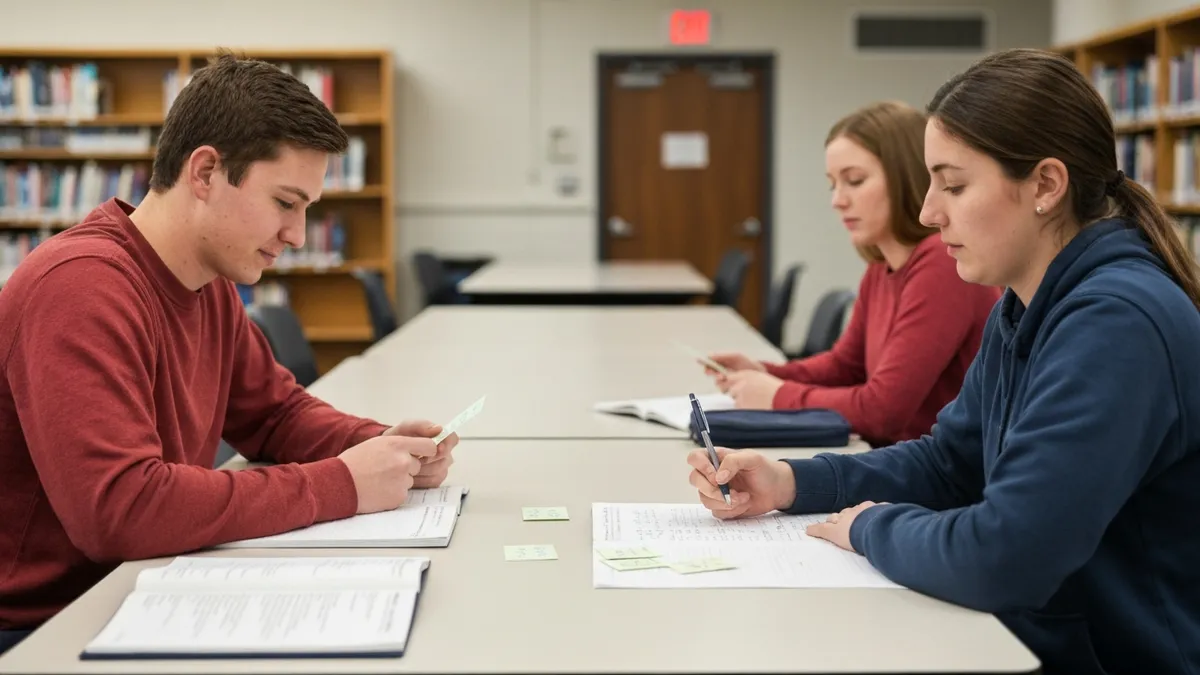
Why Your VEA Score Determines Everything
USPS applicants who score 90 or above on the VEA are typically contacted for conditional job offers within one to four weeks. Those scoring between 70 and 80 may sit on the register for six months or longer without a call. The difference between a 78 and a 91 often comes down to just 15 to 20 better-answered questions — exactly the number you can improve with focused practice on Work Scenarios and Personality consistency.
USPS drug testing policy is one of the most frequently misunderstood aspects of the hiring process. Yes, USPS does conduct drug testing — but not for every position, and not at the same stage for every applicant. Federal law requires pre-employment drug screening for safety-sensitive positions, which include driving roles such as City Carrier Assistant and Rural Carrier Associate. These roles require a valid driver's license and the operation of USPS vehicles, which places them squarely within Department of Transportation drug testing requirements.
The drug test typically occurs after a conditional job offer has been extended but before the final offer is confirmed. Applicants receive a specific window — usually five business days — to complete the test at an authorized testing facility. The standard panel tests for marijuana, cocaine, opiates, amphetamines, and PCP. Marijuana remains on the USPS prohibited list even in states where recreational use is legal, because USPS is a federal agency and federal law still classifies cannabis as a Schedule I controlled substance. This is a point of significant confusion for applicants in legal marijuana states.
The USPS COVID test program is an entirely separate topic from employment testing. During the height of the pandemic, the federal government partnered with USPS to deliver free at-home rapid antigen test kits to American households. At its peak, the program distributed over 750 million free tests across all 50 states through a dedicated website where households could order up to eight kits at a time. USPS leveraged its universal delivery network — the only carrier that delivers to every residential and business address in the country — to make last-mile COVID test distribution possible at scale.
Many people still search for free covid test usps or usps free covid test to find out if they can still order kits. As of 2026, the primary federal COVID test distribution website has wound down its universal free kit ordering program. However, some state health departments and community health centers continue to distribute tests through USPS-partnered channels. The USPS website at usps.com sometimes updates its health resources page with current availability, and COVIDtests.gov remains the official federal portal for any active distribution programs.
For applicants wondering whether the COVID testing history or any prior positive test affects USPS employment eligibility, the answer is no. COVID-19 test results — whether positive, negative, or previously reported — have no bearing on USPS hiring decisions. The drug screening program and the COVID test distribution program are completely separate systems with no data overlap. Your medical history, including any COVID-19 diagnosis, is protected health information that USPS cannot consider in its hiring process.
The intersection of postal employment, drug policy, and public health programs reflects the unique dual role USPS plays in American life. It is simultaneously one of the largest federal employers in the country and a critical public logistics infrastructure. Its ability to distribute COVID tests at scale in 2020 and 2021 demonstrated why a functioning national postal service matters beyond everyday mail delivery. For job seekers, this context is useful: working for USPS means being part of a mission-driven organization with both federal accountability and a genuine public service mandate.
For a complete breakdown of the drug testing timeline, what substances are screened, and how marijuana policies apply to specific USPS roles, the does usps drug test guide provides role-by-role clarity. Understanding the full hiring sequence — VEA exam, conditional offer, background check, drug screening, final offer — helps you plan your preparation and personal compliance timeline so nothing catches you off guard during the process.
USPS is a federal agency and follows federal drug policy regardless of your state's marijuana laws. Even in fully legal recreational marijuana states, a positive THC result on the pre-employment drug screen will disqualify you from safety-sensitive positions including City Carrier, Rural Carrier, and Mail Handler roles. Plan accordingly — THC can remain detectable in urine for 30 to 60 days depending on frequency of use and metabolism.
Scoring high on the USPS 955 test — the legacy name still used in many job listings and older USPS documentation — requires a clear strategy that goes beyond simple test-taking tips. The foundation is understanding that the VEA algorithm is measuring fit, not just performance. USPS is not looking for the smartest applicant or the most educated one. It is looking for the applicant whose behavioral profile most closely matches its model of a successful, long-tenure postal employee. That profile is consistent, safety-conscious, customer-oriented, and comfortable with physical, routine, and schedule-driven work.
One of the highest-leverage preparation activities is reviewing real Work Scenario questions with detailed answer explanations. When you read why a particular response is ranked highest — not just which response is correct — you start to internalize the USPS decision-making framework at a deeper level. After 30 to 40 explained examples, most applicants begin to see the pattern clearly: USPS always prefers the option that involves following protocol, communicating proactively, and putting customer and safety needs above personal preference or short-term convenience.
Timing your exam attempt strategically is also important. Because USPS sends exam invitations in batches as positions open, applicants who have already completed preparation materials are at a huge advantage when the 72-hour window arrives. Do not wait until you receive the invitation to start studying. Build your preparation into the weeks after you submit your application so that when the link arrives, you are ready to perform at your best within the first 24 hours — giving yourself buffer time in case of technical issues.
Another underrated strategy is taking USPS practice tests under realistic conditions. Sit down at the same time of day you plan to take the real exam, use the same device, and eliminate all distractions. This trains your focus and prevents the common experience of performing well on untimed practice but struggling under the mild pressure of a real exam session. Many applicants report that their first realistic, timed practice session reveals gaps in their preparation that casual review missed entirely.
The usps covid test kits resource section also covers the broader USPS study landscape, including which preparation formats — video explanations, written practice tests, or interactive quizzes — tend to produce the best score improvements for different learning styles. Matching your preparation format to your learning style can reduce the total hours needed to reach exam readiness by 20 to 30 percent compared to using a single format that does not align well with how you naturally process information.
Understanding the Demonstrate Your Abilities section is particularly important for VEA 474 and 476 applicants. These versions include a cognitive aptitude component with basic math, address checking, and coding speed tasks. The address checking section presents pairs of addresses and asks you to identify whether they are identical or different. Speed matters here — the section is timed and rewards quick, accurate comparisons. Practice with printed address lists, timing yourself over 5-minute intervals, to build the combination of accuracy and speed the section demands.
Finally, remember that your VEA score is valid for the exam version you took but does not automatically transfer between different VEA numbers. If you score well on VEA 474 and later apply for a Rural Carrier position requiring VEA 477, you will need to take VEA 477 separately. This is a point many applicants miss when they apply to multiple USPS roles simultaneously. Keep track of which exam corresponds to which job family and organize your preparation accordingly to avoid duplicating effort or taking the wrong exam for your target position.
Final preparation for the USPS VEA should focus on three things: consistency, confidence, and context. Consistency means your answers across the personality, work history, and scenario sections should reflect a single coherent individual — not three different versions of yourself depending on what you think each section is measuring. Confidence means trusting the preparation you have done and not second-guessing answers midway through. Context means remembering that every question is asking: what would a great USPS employee do in this situation? Keep that frame active throughout your entire exam session.
The week before your exam, shift from heavy practice to light review. Spend 20 to 30 minutes per day reinforcing key principles — USPS priority hierarchy, your strongest examples from work history, the traits associated with high VEA scores — rather than grinding through new material. Cognitive performance on test day is heavily influenced by sleep quality, pre-exam anxiety, and mental freshness. Over-preparation in the final 48 hours often backfires by increasing anxiety rather than improving recall.
On exam day, eat a real meal before starting, have water nearby, and set your phone to Do Not Disturb for the duration. Because the exam is taken at home, environmental distractions are a genuine risk. A roommate walking in, a delivery notification, or a phone call mid-exam can break your concentration and push you toward inconsistent answers in later sections. Setting up your environment with the same care you would give a formal proctored exam signals to your own brain that this session matters — and that psychological framing genuinely affects performance.
After the exam, USPS typically notifies applicants of their score within 24 to 48 hours via email. The score will appear in your USPS candidate profile on usps.com. If your score places you high on the register, expect a conditional job offer within one to six weeks depending on your geographic area and the volume of open positions.
If your score is lower than expected, use the 120-day waiting period productively — many applicants who retake the exam after structured preparation improve their score by 10 to 15 points, which can move them from the bottom third to the top third of their local applicant register.
The long-term career benefits of a strong start with USPS are substantial. City Carrier Assistants convert to career status — with full benefits, paid leave, and union protections — after approximately one year of service, sometimes faster depending on attrition. Career USPS employees earn competitive wages that increase through a structured step system, with top-step carriers earning over $30 per hour in many markets. Health insurance, dental, vision, Federal Employees Retirement System (FERS) pension, and Thrift Savings Plan (TSP) access make the full compensation package one of the strongest available at the entry level in the United States.
Beyond the exam itself, USPS offers significant opportunities for advancement. Supervisory, management, and technical roles are regularly filled from within, and employees with strong performance records are actively encouraged to apply for promotional opportunities. Starting as a City Carrier Assistant with a strong VEA score puts you on a direct path to a career that can span decades, offering stability and growth that few private-sector entry-level jobs can match. The investment of 10 to 20 hours of focused preparation before your VEA exam is, by any measure, one of the highest-return uses of your time as a job seeker.
Use the free practice quizzes linked throughout this article to benchmark your readiness in each key area. Focus extra time on the sections where your practice scores are weakest, and review the explanations for every question you answer incorrectly — not just the right answer, but the reasoning behind it. With consistent preparation, a clear understanding of USPS values, and a well-organized exam environment, you are giving yourself every possible advantage going into one of the most important tests of your postal career journey.
Usps Vea 474 475 Questions and Answers



About the Author

Public Administration Expert & Civil Service Exam Specialist
Harvard Kennedy SchoolDr. Margaret Chen holds a PhD in Public Administration and an MPA from Harvard Kennedy School. With 17 years of federal and state government experience and 8 years of civil service exam preparation coaching, she specializes in helping candidates navigate postal service exams, USPS assessments, government employment tests, and public sector civil service examinations.
Join the Discussion
Connect with other students preparing for this exam. Share tips, ask questions, and get advice from people who have been there.
View discussion (4 replies)