
USABO Finalists: How to Become One and What Happens Next 2026
Learn how USABO finalists are selected, what training they receive, and how to qualify. Includes 2026 finalist data & prep tips. 🎯

The usabo — the USA Biology Olympiad — is one of the most prestigious science competitions available to American high school students. Each year, thousands of students compete through a series of increasingly challenging rounds, but only a small group reaches the pinnacle: finalist status.
The usabo 2021 finalists represented the very best biology minds in the nation that year, earning the right to attend the intensive residential training camp and compete for spots on the US team at the International Biology Olympiad (IBO). Understanding how these finalists are chosen, what the process looks like, and how you can work toward that goal is the focus of this guide.
The pathway to becoming a USABO finalist begins with the Open Exam, a multiple-choice test administered in January each year. Students who score in the top percentiles advance to the Semifinal Exam, a more rigorous assessment that tests deep conceptual knowledge across all major areas of biology including cell biology, genetics, plant physiology, ecology, animal anatomy, and more. Only the top 20 scorers nationwide on the Semifinal are invited to the national finalist training camp, making this one of the most selective academic competitions in the United States for any subject area.
Being named a USABO finalist is not simply an honor — it is the gateway to significant educational experiences. Finalists attend a multi-week residential program at a major university where they receive intensive mentorship from leading research biologists. The training covers laboratory techniques, experimental design, and advanced theoretical content far beyond what is taught in even the most rigorous high school Advanced Placement or International Baccalaureate courses. The experience is immersive, collaborative, and intellectually demanding in ways that genuinely prepare students for undergraduate and graduate-level science.
Looking at the historical record of USABO finalists reveals important patterns about the type of preparation that leads to success. Most finalists began serious preparation at least one to two years before reaching that level, working through college-level textbooks in molecular biology, genetics, and biochemistry. They typically used a combination of structured self-study, past exam practice, biology clubs, and sometimes mentorship from university professors or graduate students. This sustained, deep engagement with biology at an advanced level is what distinguishes finalists from other talented competitors.
The 2021 USABO competition cycle was unique because it took place during the COVID-19 pandemic, which forced significant adjustments to the traditional format. The Open Exam and Semifinal were administered remotely, and the training camp had to adapt its structure accordingly. Despite these challenges, the 2021 finalists demonstrated exceptional resilience and academic achievement. Their results — and the paths that led them there — offer useful lessons for students aiming to reach finalist status in current and future competition cycles.
This article provides a comprehensive guide to everything prospective finalists need to know: the selection criteria, what the training camp experience involves, how past finalists prepared, and the most effective strategies for reaching this elite level of competition. Whether you are just beginning your USABO journey or are already competing at the Semifinal level, the information here will help you understand what it truly takes to become a USABO finalist and represent the United States at the international level.
USABO Finalists by the Numbers
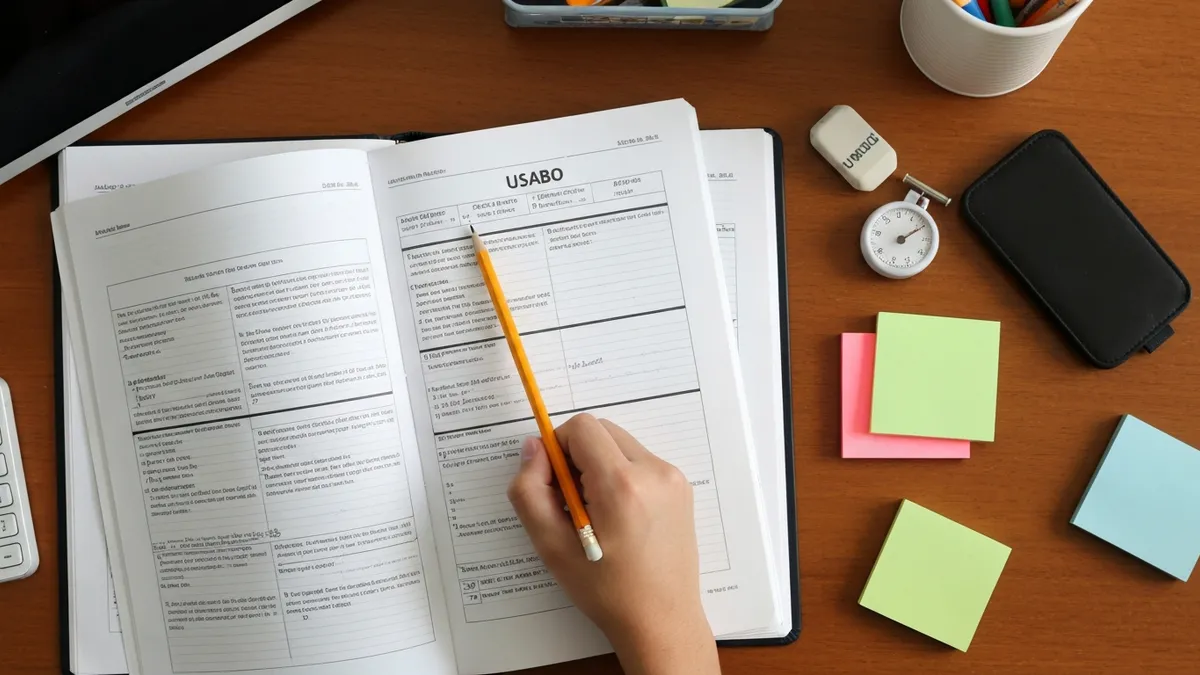
USABO Finalist Selection: Step-by-Step Timeline
USABO Registration Opens (Fall)
Open Exam (January)
Semifinal Exam (March)
Finalist Notification (April)
USABO Training Camp (May–June)
International Biology Olympiad (July)
The USABO Training Camp is the defining experience for every finalist, and understanding what it involves is essential for any student who wants to reach that level. The camp is hosted at a university campus and runs for approximately three to four weeks, typically in late May and early June.
Finalists live together in dormitories, attend morning lectures and afternoon lab sessions, and spend evenings studying together. The intensity of the program is intentional — it is designed to prepare students for the demands of international competition while also exposing them to the kind of rigorous scientific environment they will encounter in college and beyond.
Lectures at camp are delivered by prominent research biologists and cover topics at a depth far beyond the standard high school curriculum. Students engage with primary research literature, discuss experimental methodology, and tackle complex problems in areas including molecular genetics, evolutionary biology, neuroscience, ecology, and biochemistry. These sessions are not passive — finalists are expected to participate actively, ask questions, and demonstrate deep understanding. The learning environment rewards intellectual curiosity and persistence, qualities that are characteristic of every successful USABO finalist.
Laboratory work is a central feature of the camp experience and accounts for a significant portion of the final evaluation used to select the four-member IBO team. Students perform hands-on experiments in areas like microscopy, gel electrophoresis, enzyme kinetics, plant physiology, and behavioral ecology. The lab sessions are graded, and performance in them contributes meaningfully to a student's overall standing at camp. This is why preparation that includes actual laboratory experience — not just book study — is so valuable for students aiming to reach and succeed at the finalist level.
Many past finalists have noted that the social dimension of camp is as valuable as the academic component. Living and working alongside 19 other extremely talented biology students creates a unique intellectual community. Collaborative problem-solving, peer teaching, and friendly competition all contribute to an environment where everyone improves rapidly. Friendships formed at camp often last for years, and many former finalists cite these connections as among the most important benefits of participating in USABO at the highest level.
To help you get a sense of the preparation required for the camp's practical component, trying a usabo practice test covering laboratory-relevant topics like anatomy and physiology, genetics, and cell biology is a smart strategy. These practice resources simulate the type of conceptual depth expected from finalists and help you identify which content areas need more focused attention before you reach the Semifinal or camp levels of competition.
At the conclusion of the training camp, a series of theoretical and practical evaluations determine which four finalists will represent the United States at the International Biology Olympiad. These students are typically announced during the final days of camp in a ceremony that recognizes all 20 finalists for their extraordinary achievement. Even students who are not selected for the IBO team leave camp with exceptional skills, experiences, and connections that set them apart in college applications and future scientific careers.
It is worth noting that the 2021 camp, like many aspects of that year's competition, required significant adaptation due to the pandemic. Some components were delivered in modified or virtual formats, yet the core intellectual experience remained intact. Students who participated in the 2021 cycle consistently reported that the program remained rigorous and significant despite the unusual circumstances, which speaks to the resilience of both the organizers and the finalists themselves.
USABO Past Exams, Practice Tests & Study Resources
Working through usabo past exams is the single most effective preparation strategy endorsed by virtually every past finalist. Official past exams are available through the USABO website and cover Open and Semifinal rounds going back many years. Each exam reflects the actual difficulty, format, and topic distribution of the real test, making them far more valuable than generic biology review materials. Serious competitors aim to complete every available past exam under timed conditions before the Open Exam in January.
When reviewing past exams, avoid the common mistake of simply checking whether your answers are correct and moving on. Instead, analyze every question you missed and every question you were uncertain about, even if you got it right by guessing. Look up the underlying concept, trace it back to its source material in a textbook, and make sure you understand it deeply enough to answer a related question phrased differently. This active, analytical approach to past exam review is what separates students who plateau from those who keep improving toward finalist-level scores.

Is Aiming for USABO Finalist Status Worth the Effort?
- +Extremely strong differentiator for top university admissions, including Ivy League and MIT
- +Access to a 3-4 week intensive residential training camp with world-class research biologists
- +Opportunity to compete at the International Biology Olympiad and earn global recognition
- +Builds genuine advanced biology knowledge that accelerates success in college science courses
- +Creates a lifelong network of exceptionally talented peers in the sciences
- +Finalist status opens doors to research internships and lab opportunities at top institutions
- −Requires 1-2 years of intensive preparation using college-level textbooks and past exams
- −Competition is extremely selective — only 20 students nationwide reach finalist status each year
- −Time investment may crowd out other extracurricular activities and social commitments
- −Preparation materials (textbooks, resources) can be expensive without library or school support
- −The Open and Semifinal exams cover an enormous breadth of biology, requiring truly comprehensive study
- −Even excellent students may not advance past the Open Exam in their first attempt, which can be discouraging
Pros and Cons at a Glance
| Pros | Cons |
|---|---|
| Extremely strong differentiator for top university admissions, including Ivy League and MIT | Time investment may crowd out other extracurricular activities and social commitments |
| Opportunity to compete at the International Biology Olympiad and earn global recognition | Preparation materials (textbooks, resources) can be expensive without library or school support |
| Builds genuine advanced biology knowledge that accelerates success in college science courses | The Open and Semifinal exams cover an enormous breadth of biology, requiring truly comprehensive study |
| Creates a lifelong network of exceptionally talented peers in the sciences | Even excellent students may not advance past the Open Exam in their first attempt, which can be discouraging |
USABO Finalist Preparation Checklist
- ✓Complete all available USABO past Open Exam papers under timed conditions before January.
- ✓Complete all available USABO past Semifinal papers under timed conditions after earning gold on the Open.
- ✓Study Campbell Biology (AP Edition or higher) cover-to-cover, focusing on weak topic areas.
- ✓Read Molecular Biology of the Cell by Alberts et al. for deep molecular and cell biology coverage.
- ✓Practice lab techniques including gel electrophoresis, microscopy, and enzyme assay interpretation.
- ✓Join the AoPS USABO community forum and study the recommended textbook lists from past finalists.
- ✓Take subject-specific practice tests in immunology, plant physiology, genetics, and ecology weekly.
- ✓Build a spaced-repetition flashcard deck for high-yield vocabulary, pathways, and processes.
- ✓Identify your three weakest content areas after each practice session and dedicate extra review time.
- ✓Simulate full exam conditions at least three times before each competition round to build stamina.
Depth Over Breadth: The Single Most Important Preparation Principle
Past USABO finalists consistently report that the biggest mistake they see in other competitors is studying too many topics too shallowly. The Semifinal Exam rewards genuine mastery — the ability to apply core concepts to novel experimental scenarios — far more than surface-level familiarity with a wide range of subjects. Prioritize understanding the mechanisms behind biological processes, not just memorizing facts and definitions.
Reaching USABO finalist status requires a preparation strategy that is both comprehensive and strategically focused. The most successful competitors do not try to review every possible biology topic with equal intensity. Instead, they analyze the distribution of questions across past exams, identify which content areas appear most frequently and at the highest difficulty levels, and allocate their study time accordingly. This data-driven approach to preparation is one of the key habits that distinguishes students who reach the Semifinal and finalist levels from those who plateau at the Open Exam stage.
Textbook selection is one of the most consequential decisions a USABO competitor makes. The standard recommendation among the AoPS community and past finalists is to use Campbell Biology as a foundational text, supplemented by more advanced resources in specific content areas. For molecular biology and genetics, Molecular Biology of the Cell by Alberts et al. is widely regarded as essential. For plant biology, Taiz and Zeiger's Plant Physiology provides the depth needed for top Semifinal performance. Having the right books and working through them systematically — not just using them as reference lookups — is critical.
Active recall and spaced repetition are the most effective learning techniques for retaining the large volume of content required for USABO success. Rather than re-reading textbook chapters passively, successful finalists create their own notes, draw diagrams from memory, and quiz themselves on key mechanisms and processes. Anki flashcard decks built around USABO-relevant content can be powerful tools, especially for memorizing biochemical pathways, anatomical structures, and classification hierarchies. The goal is always to reach a level of mastery where you can generate explanations from first principles, not simply recognize correct answers.
Laboratory preparation is often neglected by students who focus exclusively on the theoretical components of USABO. This is a significant strategic error. The Semifinal includes questions that require interpreting experimental data, graphs, and laboratory results. More importantly, the finalist camp includes graded lab evaluations that directly determine IBO team selection. Students who have genuine hands-on laboratory experience — through school courses, science fairs, or university lab internships — have a meaningful advantage at the camp level. Seek out any opportunity to work in a biology lab before attending camp.
Time management during the Open and Semifinal exams is a skill that must be developed through deliberate practice. Both exams are timed, and running out of time before completing all questions is a common problem for students who are not accustomed to exam pressure. Practicing under strict time limits — even when it feels uncomfortable — is the only way to build the pacing skills needed for peak performance. Students should aim to complete all past exams in their entirety without pausing, then review missed questions separately afterward.
Connecting with past finalists and current competitors is another strategy that can accelerate preparation significantly. The USABO community is relatively small and generally supportive, and many past finalists are willing to share advice about what worked for them. Online forums, school biology clubs, and regional science competitions can all be avenues for finding mentors and study partners who are working toward similar goals. Collaborative study, when done with appropriately advanced peers, can help you encounter and work through concepts you might never confront on your own.
Understanding the past usabo exams registration process and timeline is also important for strategic planning. Missing the registration deadline means missing an entire year of competition, which represents a significant setback for students who are aiming to compete multiple times before graduating. Build a preparation calendar that works backward from competition dates, ensuring you have adequate time for each phase of study before each round of the competition.
For a fuller set of questions on this topic, see our usabo practice test resource.

USABO registration typically closes in November, several weeks before the Open Exam in January. Late registrations are not accepted under any circumstances. If your school has never participated in USABO before, a teacher or administrator must create a new school account before any student can register, which can take additional time. Plan accordingly and initiate the registration process at least four to six weeks before the deadline.
After the USABO Training Camp, the four students selected for the IBO team enter an additional preparation phase before representing the United States on the international stage. This period typically involves continued study with USABO mentors, additional laboratory practice, and coordination with team coaches. The IBO itself consists of two major components: a theoretical exam covering all major areas of biology, and a series of practical laboratory examinations. Both components require the same depth of knowledge and applied skills that finalists developed throughout the entire USABO preparation and camp experience.
Historically, the United States has been one of the strongest nations at the International Biology Olympiad, consistently earning multiple gold and silver medals. This track record reflects both the quality of the students selected as finalists and the effectiveness of the USABO training program. Students who participate in the camp, regardless of whether they make the final IBO team, consistently report that the experience gave them a decisive head start in their college biology coursework, often allowing them to place out of introductory courses or to perform at an exceptional level in upper-division classes.
The long-term career benefits of USABO finalist status are substantial and well-documented. Many former finalists have gone on to careers in academic research, medicine, biotechnology, and public health. The combination of deep scientific knowledge, competitive problem-solving experience, and elite credentialing that USABO finalist status provides creates a strong foundation for any biology-related career path. Universities take notice of USABO achievement at every level, but finalist status in particular signals a level of scientific talent and dedication that is extremely rare among high school applicants.
For students who do not reach finalist status on their first attempt, the experience of competing at the Open and Semifinal levels is still enormously valuable. Many students who eventually become finalists did not earn gold on their first Open Exam. The key is to treat each attempt as a learning opportunity, analyze what went wrong, adjust your preparation strategy, and return the following year better prepared. Persistence and the ability to learn from failure are themselves qualities that distinguish the most successful USABO competitors — and the most successful scientists.
It is also worth considering that USABO participation at any level — including earning a bronze or silver medal on the Open Exam — is a meaningful academic achievement that strengthens college applications and demonstrates genuine passion for biology. Students should not feel that any outcome short of finalist status represents failure. The knowledge gained, the study habits developed, and the competitive experience accumulated through USABO preparation all have lasting value regardless of where a student's score ultimately falls on the national ranking.
For students who are currently at the high school level and are interested in pursuing USABO at the highest levels, the message from past finalists is consistent: start early, go deep, practice deliberately, and do not underestimate the importance of laboratory skills. The combination of strong theoretical knowledge and practical experimental ability is what characterizes every USABO finalist, and building both requires time and sustained effort that cannot be compressed into a few weeks of last-minute cramming.
The USABO finalist experience ultimately does more than prepare students for a single competition. It shapes the way students approach scientific problems, builds their confidence in tackling advanced material, and connects them to a community of like-minded individuals who share their passion for biology. These outcomes persist long after the competition ends, influencing how former finalists approach their college coursework, their research careers, and their contributions to the scientific community at large.
Building a realistic and effective study schedule is one of the most practical things you can do to improve your chances of reaching USABO finalist status. Most successful finalists begin their serious preparation at least 12 to 18 months before the Open Exam in January.
During the first phase of preparation — typically the summer and early fall of the year before competing — the focus should be on broad content coverage using a comprehensive biology textbook like Campbell. The goal during this phase is to ensure that you have at least a working familiarity with every major topic area that appears on USABO exams.
The second phase of preparation, typically running from October through December, should shift toward active practice with past Open Exam papers. By this point, you should have covered enough content to attempt past exams meaningfully, and your performance on these exams will reveal the specific areas where you still need to deepen your knowledge.
Use your scores on practice exams as diagnostic data, not as measures of your worth as a student. A low score on a past exam in October is information — it tells you exactly where to focus your energy over the remaining months before the real exam.
After the Open Exam in January, students who earn gold medals have approximately six weeks before the Semifinal in March. This period requires a significant intensification of preparation. The Semifinal is substantially harder than the Open, and students who prepare for it as though it were simply a more difficult version of the same test often underperform. The Semifinal rewards the ability to apply biological principles to novel experimental contexts, so practice should shift toward interpreting experimental data, analyzing graphical information, and reasoning through multi-step problems rather than simply reviewing factual content.
Laboratory preparation deserves dedicated time in any serious USABO study plan. Even if your school has a well-equipped biology lab, seek out additional opportunities to practice techniques that appear in USABO practical exams. Many universities host programs for advanced high school students that include laboratory components, and summer research internships can provide exposure to real research environments. Understanding not just how laboratory procedures work but why they work at a mechanistic level is essential for performing well in the practical evaluations that determine IBO team selection at the finalist camp.
Mental and physical preparation should not be overlooked. Long preparation campaigns for competitions like USABO can be mentally draining, and burnout is a real risk. Building regular breaks, physical activity, and social time into your preparation schedule is not a luxury — it is a strategic necessity. Students who push themselves to exhaustion in the months before the exam often perform worse than those who maintain a sustainable pace. Adequate sleep in the nights leading up to the Open and Semifinal exams has a measurable impact on performance and should be treated as a non-negotiable part of your preparation protocol.
Finally, approaching the USABO competition with genuine curiosity and love for biology — rather than purely as a credentialing exercise — is itself a preparation strategy. Students who find the material genuinely fascinating tend to engage with it more deeply, retain it more durably, and perform better under pressure.
The questions on the Open and Semifinal exams reward students who think like biologists, not just students who have memorized a lot of biological facts. Cultivating that scientific mindset, through reading biology news, watching research lectures, or following your curiosity into areas beyond the standard curriculum, is one of the most powerful things you can do to reach the finalist level.
Sample USABO - USA Biology Olympiad Practice Questions
Try these questions from our free USABO - USA Biology Olympiad practice tests. The correct answer and an explanation follow each question.
In the logistic growth model, represented by the equation dN/dt = rN((K-N)/K), what happens to the population growth rate (dN/dt) as the population size (N) approaches the carrying capacity (K)?
- A. The growth rate increases exponentially.
- B. The growth rate approaches zero.
- C. The growth rate becomes negative.
- D. The growth rate remains constant at the maximum rate (r).
Answer: B. The growth rate approaches zero.
In the logistic growth equation, the term (K-N)/K represents environmental resistance. As the population size (N) gets closer to the carrying capacity (K), the numerator (K-N) approaches zero. [3, 4] This causes the entire expression for the growth rate (dN/dt) to approach zero, meaning the population size stabilizes. [26]
What is the primary function of the Casparian strip in the root endodermis?
- A. Providing structural support to cortical cells during drought
- B. Blocking apoplastic water movement and forcing symplastic passage
- C. Facilitating apoplastic flow of water into the xylem
- D. Actively pumping minerals from the cortex toward the epidermis
Answer: B. Blocking apoplastic water movement and forcing symplastic passage
The hydrophobic suberin lamellae of the Casparian strip block the apoplastic pathway, forcing water and ions to cross the endodermal plasma membrane where selective transport can occur.
Telomerase is a ribonucleoprotein that adds telomeric repeat sequences to the ends of chromosomes. What is the direct template used by the reverse transcriptase component of telomerase for this synthesis?
- A. The lagging strand of the DNA
- B. An integrated RNA molecule within the enzyme complex
- C. A free-floating small nuclear RNA (snRNA)
- D. The 3' overhang of the parental DNA strand
Answer: B. An integrated RNA molecule within the enzyme complex
Telomerase is a unique reverse transcriptase that carries its own RNA template (known as TER or TR) as a core component of the enzyme complex. This RNA molecule contains a sequence that is complementary to the telomeric repeat, and the reverse transcriptase (TERT) subunit uses this internal RNA as a template to synthesize the G-rich DNA repeats at the 3' end of the chromosome.
In USA Biology Olympiad, what role does continuing education play in immunology and disease?
- A. To keep professionals current with evolving standards, technologies, and best practices
- B. To prevent professionals from advancing in their careers
- C. To replace initial certification requirements
- D. To increase testing frequency for compliance purposes
Answer: A. To keep professionals current with evolving standards, technologies, and best practices
Continuing education ensures professionals stay current with new developments, evolving standards, and emerging best practices in their field, maintaining competence throughout their careers.
USABO Questions and Answers

USABO Study Guide: How to Prepare for the Biology Olympiad

USABO Cutoffs: Score Requirements, Historical Data & How to Qualify
USABO USA Biology Olympiad Practice Test PDF (Free Printable 2026)
USABO Registration: Complete Guide, Deadlines & Requirements
USABO Camp: USA Biology Olympiad Training Program Guide
About the Author

Educational Psychologist & Academic Test Preparation Expert
Columbia University Teachers CollegeDr. Lisa Patel holds a Doctorate in Education from Columbia University Teachers College and has spent 17 years researching standardized test design and academic assessment. She has developed preparation programs for SAT, ACT, GRE, LSAT, UCAT, and numerous professional licensing exams, helping students of all backgrounds achieve their target scores.
Join the Discussion
Connect with other students preparing for this exam. Share tips, ask questions, and get advice from people who have been there.
View discussion (8 replies)