
AP World History Modern Practice Test — Complete Study Guide & Exam Prep
🔎 Master your ap world history modern practice test with free quizzes, study schedules, exam format breakdowns, and expert prep tips for AP and US History.

If you are preparing for your ap world history modern practice test, you have landed in the right place. This guide covers everything from the exam's structure and scoring to targeted study strategies that work for students at every level. Whether you are brushing up on the worst president in us history debates or tackling complex document-based questions, consistent practice with realistic test simulations is the single most effective way to raise your score before exam day arrives.
AP World History: Modern spans roughly 1200 CE to the present day, covering major civilizations, trade networks, political revolutions, industrialization, and global conflicts across six periods. The College Board designs the exam to measure your ability to analyze primary sources, evaluate historical arguments, and synthesize evidence across time periods. Students who treat this course as a memorization exercise typically struggle, while those who practice argumentation and contextualization consistently outperform their peers on the actual AP exam.
One of the most important things to understand about this exam is that it rewards historical thinking skills over rote recall. The College Board explicitly tests causation, continuity and change over time, comparison, and contextualization. A student who understands why the Industrial Revolution reshaped global power dynamics will score higher than one who can merely list its dates. This is why using a high-quality ap world history modern practice test repeatedly — and reviewing every wrong answer in depth — is the gold standard of preparation.
Many students wonder how this exam compares to other standardized history tests. AP US History focuses exclusively on American history from colonization to the present, while AP World History: Modern requires you to think across continents and centuries simultaneously. Students who have experience with the us history regents exam in New York State will find some overlap in essay structure, but the global scope of AP World History demands a broader analytical frame and stronger comparative thinking skills throughout the entire assessment.
Beyond exam mechanics, this guide connects your AP World History preparation to broader US history contexts. Topics like the youngest president in us history, the expansion of American influence in the 20th century, and debates about presidential legacy all appear in the modern period content the AP exam covers. Understanding how American history fits into the global story helps you contextualize documents, write stronger arguments, and earn more points on both the short-answer and free-response sections of the exam.
Scoring a 3, 4, or 5 on this exam can earn you college credit at hundreds of universities, saving you time and tuition money. Some institutions accept a score of 3, while more selective schools require a 4 or 5 for credit. Knowing the credit policies at your target schools before exam day can sharpen your motivation and help you set a clear target score. Check each college's AP credit policy directly on their admissions website to understand exactly what score you need to achieve for your specific situation.
Throughout this guide you will find practice questions, study schedules, exam format breakdowns, and topic-by-topic coverage aligned to the official College Board curriculum. Use the free quizzes embedded in this page to test yourself under timed conditions, review the explanations carefully, and track your progress week by week. Consistent, structured practice is what separates students who earn top scores from those who walk into exam day hoping for the best without adequate preparation.
AP World History Modern by the Numbers
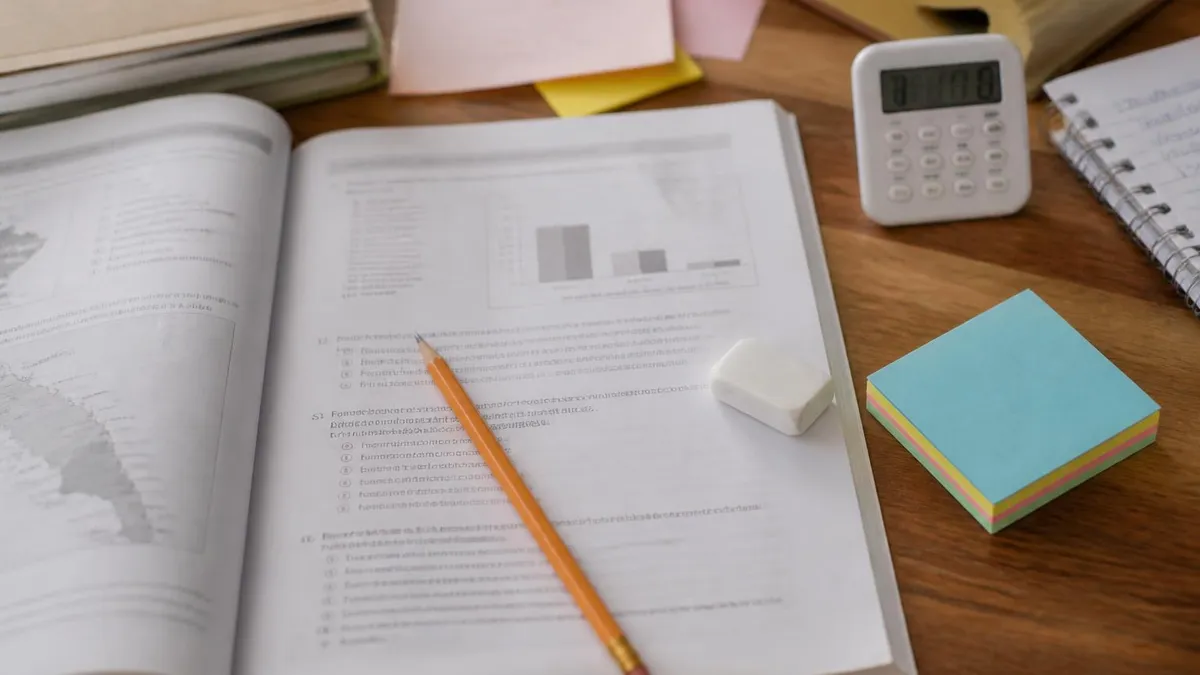
AP World History Modern Exam Format
| Section | Questions | Time | Weight | Notes |
|---|---|---|---|---|
| Section I-A: Multiple Choice | 55 | 55 min | 40% | Sets of 3-4 questions based on stimuli |
| Section I-B: Short Answer | 3 | 40 min | 20% | Choose between questions 3 and 4 |
| Section II-A: Document-Based Question | 1 | 60 min | 25% | Includes 15-min reading period |
| Section II-B: Long Essay Question | 1 | 40 min | 15% | Choose 1 of 3 prompts |
| Total | 55 | 3 hr 15 min | 100% |
AP World History: Modern is organized into nine units that progress chronologically from approximately 1200 CE to the present. Unit 1 covers the global tapestry of civilizations in the period before European expansion, exploring how Dar al-Islam, the Mongol Empire, and Song Dynasty China formed interconnected trade and cultural networks. Understanding these foundations is critical because later units repeatedly return to themes of cross-cultural exchange, economic interdependence, and the shifting balance of global power that defines the modern era the exam tests.
Units 2 and 3 cover networks of exchange and land-based empires from roughly 1200 to 1750. The Silk Roads, trans-Saharan routes, and Indian Ocean networks appear heavily in document-based questions because they illustrate how goods, ideas, religions, and diseases moved across continents before the age of industrialization.
The Ottoman, Safavid, Mughal, and Qing empires are major comparative topics, and students who can identify their similarities in administrative structure while explaining differences in religious policy consistently earn higher scores on essay questions. For deeper essay practice aligned to these themes, exploring resources about the us history regents essay format can help you structure arguments more clearly.
Unit 4 shifts to transoceanic interconnections from 1450 to 1750, covering European colonialism, the Columbian Exchange, and the Atlantic slave trade. This period connects directly to US history content and requires students to analyze how colonial economies in the Americas depended on enslaved African labor while simultaneously enriching European metropoles. The economic systems of mercantilism and the plantation complex transformed global demographics, agricultural production, and cultural exchange in ways that still shape the modern world. College Board documents show this unit is heavily weighted in both the multiple-choice and document-based sections of the exam.
Units 5 and 6 address revolutions and industrialization from 1750 to 1900. The Age of Revolution saw political upheavals in North America, France, Haiti, and Latin America that fundamentally altered ideas about sovereignty, citizenship, and human rights. The Industrial Revolution then transformed production, urbanization, migration, and labor relationships worldwide. Students should be able to compare these revolutions across regions and explain how industrialization created new forms of imperialism. Understanding why certain nations industrialized earlier while others remained agricultural helps you write nuanced comparative essays that earn full credit.
Unit 7 covers global conflict from 1900 to 1945, including World War I, the Great Depression, World War II, and the rise of fascism and communism. This period generates rich primary source material for document-based questions because leaders, soldiers, propagandists, and ordinary people left extensive written records.
Students who can analyze the perspective, purpose, and limitations of sources — not just summarize their content — will earn the document analysis points that distinguish 4s and 5s from lower scores. Debates about presidential decisions during these crises, including questions about who might rank among the worst presidents in us history by historical judgment, illustrate how the AP curriculum connects global and national history.
Units 8 and 9 bring the story forward from 1945 to the present, covering the Cold War, decolonization, globalization, and contemporary challenges. The Cold War created proxy conflicts across Asia, Africa, and Latin America that reshaped borders, economies, and political systems in ways students must understand to analyze modern geopolitics. Decolonization movements used both peaceful and violent means to achieve independence, and comparing these approaches across different regions is a frequent essay topic. Environmental change, economic inequality, and cultural exchange in the era of globalization complete the curriculum with contemporary relevance students find engaging.
Across all nine units, the College Board emphasizes six historical thinking skills: argumentation, contextualization, causation, continuity and change over time, comparison, and sourcing. Every question on the exam — whether multiple choice, short answer, or essay — tests one or more of these skills. The most effective ap world history modern practice test sessions focus not just on content knowledge but on explicitly identifying which skill each question tests, then practicing that skill deliberately until it becomes second nature before the actual exam date arrives.
AP World History Study Strategies
Multiple choice questions on the AP World History Modern exam always appear in stimulus-based sets of three to four questions tied to a primary source, map, image, or data table. The key strategy is to read the stimulus carefully before looking at the questions, identifying the time period, geographic region, and historical context. This 30-second investment prevents misreading and typically eliminates two answer choices immediately, improving your odds significantly even when the content feels unfamiliar during the actual exam.
Process of elimination is your most powerful tool in the multiple choice section. Wrong answers on AP exams are specifically designed to include one that is historically accurate but irrelevant to the stimulus, one that is a common misconception, and one that is partially correct but misses the central argument. When you practice with realistic questions, annotate why each wrong answer fails — not just why the right answer works. This active review habit builds pattern recognition that translates directly into faster, more accurate responses on test day under timed conditions.

AP World History Modern: Is It Worth Taking?
- +Earning a 3+ score can grant college credit worth hundreds or thousands of dollars in saved tuition
- +Develops analytical writing and critical thinking skills valued in every college major and career field
- +Broadens global perspective beyond US-centric curricula, preparing you for international studies and careers
- +Strong performance demonstrates academic rigor to college admissions committees reviewing your transcript
- +Course content overlaps with AP US History, Geography, Economics, and Government, reinforcing knowledge across subjects
- +Free College Board resources including past exams, sample essays, and scoring guidelines are publicly available online
- −The breadth of 800 years of global history across nine units demands significantly more study time than most electives
- −Document-based question writing is a skill that takes months to develop and cannot be crammed in the final week
- −Pass rates hover around 54%, meaning nearly half of test-takers do not earn college credit despite taking the course
- −Some colleges require a 4 or 5 for credit, making a score of 3 insufficient for the schools students most want to attend
- −The global scope makes it harder to identify which specific facts and dates to prioritize when time is limited
- −Weak essay writing skills from middle school can significantly hold back otherwise knowledgeable students on the free-response sections
AP World History Modern Exam Prep Checklist
- ✓Download the official College Board AP World History: Modern Course and Exam Description and read the unit overviews
- ✓Complete at least two full-length ap world history modern practice tests under timed conditions before exam day
- ✓Review every wrong answer on practice tests by reading the College Board explanation and identifying the skill tested
- ✓Write at least one timed DBQ per week for the final six weeks before the exam, using past released prompts
- ✓Create a sourcing annotation habit by practicing HAPP analysis on every primary source document you encounter
- ✓Memorize the six AP historical thinking skills and identify which skill each practice question is measuring
- ✓Build a vocabulary list of period-specific terms for all nine units and review it with spaced repetition flashcards
- ✓Study the us history dbq rubric alongside the AP World History rubric to understand how scoring works across both exams
- ✓Form or join a study group to peer-review each other's thesis statements and essay outlines before writing full drafts
- ✓Check your target college's AP credit policy so you know exactly what score earns you the credit hours you need

Contextualization Is Worth More Than You Think
Contextualization is one of the hardest points to earn on the AP World History DBQ and LEQ rubrics, yet it is worth a full point that can be the difference between a 4 and a 5. To earn it, you must describe a broader historical context that is relevant to the prompt — not just mention a related event, but explain how it connects to your argument. Practice writing a dedicated contextualization paragraph before your thesis in every timed essay you attempt during your preparation period.
Understanding how the AP World History Modern exam is scored helps you allocate your study time efficiently and set realistic expectations for test day. The exam is scored on a 1–5 scale, with 5 being the highest possible score. Raw points from the multiple choice section, short answer questions, document-based question, and long essay question are combined and converted to the 1–5 scale using a process the College Board adjusts each year to maintain consistent standards. The exact conversion varies by year, but understanding the weight of each section helps you prioritize where to invest your preparation time most strategically.
In 2023, approximately 54% of students who took the AP World History: Modern exam earned a score of 3 or higher. About 12% earned a 5, which places this exam in the middle range of AP exam difficulty.
By comparison, some AP exams have pass rates above 70%, while others fall below 40%. The relatively moderate difficulty means consistent, structured preparation genuinely moves the needle — this is not an exam where natural talent dominates and preparation barely matters. Students who take three or more full-length practice tests typically score significantly higher than those who only read content without testing themselves under timed conditions.
The multiple choice section accounts for 40% of your total score, making it the single largest section. Each of the 55 questions is worth the same number of points, and there is no penalty for guessing, so you should always mark an answer even when unsure.
The stimulus-based format means questions reward inference and analysis over pure memorization, which is why practicing with real College Board materials is so much more effective than studying from summary sheets alone. Spend at least half of your multiple choice practice time reviewing wrong answers rather than simply taking more tests without reflection or analysis.
Short answer questions collectively represent 20% of your score and are often the easiest points to improve with targeted practice. Unlike essays, SAQs have a predictable structure and clear scoring criteria that reward specific evidence and direct responses. Many students leave SAQ points on the table by writing vague generalities instead of naming specific events, people, dates, or places. Reviewing the College Board's scoring guidelines for past SAQ prompts reveals exactly what level of specificity earns each point, giving you a clear target to aim for in every practice session you complete during your preparation period.
The document-based question carries 25% of your score and consistently separates average scores from high scores. The rubric awards points for thesis quality, contextualization, evidence use from documents, sourcing analysis, evidence beyond the documents, and complex understanding. Students who earn all seven points consistently practice writing under timed conditions rather than just studying content. The 15-minute reading period is essential — students who skip outlining during this window consistently produce weaker, less organized essays than those who invest those minutes planning their argument's structure before writing their opening paragraph.
The long essay question represents 15% of your total score and offers three prompt choices covering different time periods. Choosing wisely among the three options is itself a skill. The safest strategy is to spend two minutes brainstorming specific evidence for each option, then write the essay on whichever topic yields the most concrete examples, not necessarily the one that sounds most familiar at first glance. A student who has deep knowledge of 19th-century industrialization should choose that prompt over a 20th-century globalization prompt even if the latter sounds more contemporary and approachable on the surface.
Score interpretation matters when applying for college credit. A score of 3 generally represents the threshold of passing, equivalent to a grade of C or higher in a comparable college course. Scores of 4 and 5 suggest stronger mastery, equivalent to B and A performance respectively. Many flagship state universities accept a 3 for credit in introductory world history, while selective private universities often require a 4 or 5. Checking your target schools' AP credit policies before exam day helps you set a specific target score rather than studying vaguely toward a generic passing grade without a clear personal benchmark.
AP exam registration deadlines vary by school and are typically set in November for the following May exam administration. Missing your school's deadline can result in a late fee of $40 or more per exam, and in some cases you may be locked out of testing entirely. Confirm your school's specific registration window with your AP coordinator early in the fall semester to avoid any last-minute surprises that could affect your ability to sit for the exam and earn college credit.
Effective study planning for AP World History Modern should begin at least twelve to sixteen weeks before the exam date in May. Students who start reviewing in September or October — rather than cramming in April — consistently report higher confidence and better scores on the actual exam. The key is to distribute content review evenly across all nine units rather than spending the first month on Units 1 and 2 and then rushing through Units 7, 8, and 9 in the final two weeks when time pressure peaks and retention suffers from overload and fatigue.
A practical weekly study structure for the first eight weeks involves spending two sessions per week on content review using your course notes, textbook, or College Board study materials, and one session per week on practice questions. Use the first session to read actively — not just highlight, but annotate margins with questions, connections, and comparisons to other units. The second session should involve creating or reviewing flashcards for key vocabulary, people, and events. The third session should consist entirely of timed practice questions followed by careful answer review to identify and address knowledge gaps immediately.
For students preparing to sit for the youngest president in us history style content alongside World History material, integrating US history practice into your weekly routine creates useful reinforcement. Topics like industrialization, imperialism, and Cold War foreign policy appear in both curricula, so studying them together builds stronger conceptual understanding and reduces total study time compared to treating the two courses as completely separate subjects. Cross-referencing events in both courses also deepens your historical thinking skills, which transfer directly to better essay writing on both exams.
Document analysis practice deserves dedicated weekly time starting from the first month of preparation. Spend twenty minutes each week reading a primary source document — a treaty, a speech, a letter, or a political cartoon — and writing a one-paragraph HAPP analysis that addresses the document's historical context, the author's audience, the author's purpose, and the author's historical situation or point of view. This weekly habit builds the automatic analytical instincts that make sourcing feel natural rather than forced during the high-pressure DBQ section of the actual exam.
During weeks nine through twelve, shift your focus from content review to exam skill practice. This means writing at least one full DBQ per week under strict time conditions: 15 minutes of reading and outlining, 45 minutes of writing, and no looking at your notes or textbook. Submit each essay to your teacher or study group for feedback using the official College Board rubric. The feedback loop is essential — practicing writing essays in isolation without rubric-aligned feedback is significantly less effective than getting specific, targeted comments on thesis quality and document integration.
In the final two weeks before the exam, avoid introducing new content and focus entirely on review and confidence-building. Re-read your annotated notes for each unit, review your flashcard deck for terms you still find difficult, and complete one final full-length practice test under simulated exam conditions.
The night before the exam, avoid studying entirely — sleep and nutrition matter more at that stage than any additional content review. Arrive at the testing site early, bring multiple pencils and pens, and remember that careful time management during the exam itself is the final skill you have been training throughout your entire preparation period.
Community resources and online study tools can supplement your individual preparation significantly. College Board's AP Classroom platform provides free practice questions, progress checks, and past free-response questions with sample scored essays. Khan Academy's AP World History course aligns directly to the College Board curriculum and offers video lessons and practice exercises for every unit. Study groups — whether in person or virtual — add accountability and expose you to different analytical perspectives that strengthen your comparative and argumentative thinking skills beyond what solo studying alone can provide to even the most dedicated and disciplined individual student.
On exam day itself, time management is your most critical skill and the one most students underestimate until they are sitting in the testing room watching the clock. For the 55-minute multiple choice section, aim to spend no more than one minute per question.
If a question stumps you after 30 seconds, mark your best guess, circle the question number, and move on. Return to flagged questions only if time allows after you have answered every other question. This strategy ensures you never miss an easy question later in the section because you spent four minutes on a difficult one near the beginning.
During the 15-minute reading period for the DBQ, resist the temptation to start writing immediately. Instead, read all seven documents, annotate each one with a brief HAPP note in the margin, and sketch a three-point outline for your essay. Group documents that support each of your three body paragraph claims, and identify which documents you plan to use for sourcing analysis. Students who complete this planning step consistently write more coherent, better-organized essays than those who begin writing immediately without a structured roadmap to follow through the entire essay response.
Essay writing under AP exam conditions rewards clarity over complexity. Use short, declarative topic sentences that clearly state the argument of each paragraph before you provide evidence. Avoid long, winding sentences that obscure your argument in subordinate clauses. Graders read hundreds of essays and score quickly — a clear, direct thesis earns more credit than an ornate, convoluted one that requires the reader to search for the actual claim. Practice writing thesis statements that take a defensible position and preview the line of reasoning you will develop in the body paragraphs of your essay response.
The short answer section benefits from a strict time discipline of 13 minutes per question with two minutes reserved as a buffer. Within each 13-minute window, spend two minutes reading and planning, nine minutes writing, and two minutes reviewing for completeness. Each SAQ part (a, b, c) should receive exactly one focused paragraph of three to four sentences.
If you finish a question in under ten minutes, use the extra time to add a more specific piece of evidence rather than moving on immediately — upgrading a vague claim to a specific one is often the difference between earning and losing a point.
Mindset during the exam matters more than most students acknowledge. Anxiety about difficult questions can cascade into wasted time and poor decision-making if you allow a single challenging stimulus to derail your confidence for the rest of the section. Build a reset habit during practice: when you encounter a question that stumps you completely, take one slow breath, remind yourself that you have prepared thoroughly, and make your best-informed guess before moving forward. This mental reset technique takes less than ten seconds and prevents the anxiety spiral that is responsible for many preventable score drops below students' actual ability levels.
After the exam, regardless of how you feel about your performance, avoid extensive discussion with classmates about specific questions or answers. Different students fixate on different questions, and post-exam comparisons rarely provide accurate information about your actual score — they typically just create unnecessary anxiety during the weeks-long wait for results. Instead, focus forward: if you are taking other AP exams in the same week or the following week, immediately redirect your energy to that preparation rather than replaying AP World History questions you can no longer change.
AP score reports are typically released in early July. When your score arrives, take time to review the score report carefully — it includes a breakdown of your performance by section and skill that can guide future history coursework and exam preparation. If you earned a 2, consider whether retaking a relevant college course or AP exam in a future year makes sense for your academic plan.
If you earned a 3, 4, or 5, research your target colleges' credit policies and begin the process of claiming any credits you have earned before your freshman year orientation, so they are applied before you need to register for your first semester courses.
US Questions and Answers


About the Author

Educational Psychologist & Academic Test Preparation Expert
Columbia University Teachers CollegeDr. Lisa Patel holds a Doctorate in Education from Columbia University Teachers College and has spent 17 years researching standardized test design and academic assessment. She has developed preparation programs for SAT, ACT, GRE, LSAT, UCAT, and numerous professional licensing exams, helping students of all backgrounds achieve their target scores.