
US Citizenship Test 2026
Get ready for your US Citizenship certification. Practice questions with step-by-step answer explanations and instant scoring.
USMLE: upcoming dates and official changes
- Updated Oct 17, 2026: Number of questions (Step 1) is now About 280 MCQs in 14 blocks (previously Approx. 280 MCQs in 14 blocks).
- Updated Oct 17, 2026: Delivery is now Prometric test centers, year-round within a 3-month eligibility period (previously Computer-based at Prometric test centers, year-round within a 3-month eligibility period).
- Updated Oct 17, 2026: Eligibility (Step 3) is now Passed Step 1 and Step 2 CK, plus an MD or DO degree from an LCME- or COCA-accredited US school (previously Passed Step 1 and Step 2 CK, plus MD/DO degree or equivalent).
Facts verified Oct 20, 2026 against USMLE. Dates that have passed are removed automatically.
- USMLE Step 1 has approximately 280 multiple-choice questions divided into fourteen 30-minute blocks. (USMLE)
- USMLE Step 2 CK has approximately 316 multiple-choice questions divided into sixteen 30-minute blocks. (USMLE)
- USMLE Step 1 is a one-day exam of approximately 8 hours. (USMLE)
- USMLE Step 2 CK is a one-day exam of approximately 9 hours. (USMLE)
- A fourth USMLE attempt must be at least 12 months after the first attempt at that exam and at least six months after the most recent attempt. (USMLE)
- Most US medical licensing authorities require completion of USMLE Steps 1, 2, and 3 within a seven-year period, counted from the first Step passed. (USMLE)
- The USMLE Step 1 and Step 2 CK are administered at Prometric centers around the world, and Step 3 is administered in the United States only. (USMLE)
- USMLE Step 3 eligibility requires passing scores on Step 1 and Step 2 CK and an MD or DO degree from an LCME- or COCA-accredited U.S. medical school. (USMLE)
- USMLE results are typically available within four weeks of the test date, but examinees should allow at least eight weeks to be notified that the score report is available. (USMLE)
Facts verified Oct 20, 2026 against USMLE. Dates that have passed are removed automatically.
USMLE Exam at a Glance
| Item | Detail | Official source |
|---|---|---|
| Number of questions (Step 1) | About 280 MCQs in 14 blocks | USMLE |
| Number of questions (Step 2 CK) | About 316 MCQs in 16 blocks | USMLE |
| Time limit (Step 1) | One day, approx. 8 hours | USMLE |
| Time limit (Step 2 CK) | One day, approx. 9 hours | USMLE |
| Time limit (Step 3) | Two days: Day 1 approx. 7 hours, Day 2 approx. 9 hours | USMLE |
| Retake policy (fourth attempt) | 4th attempt ≥12 months after 1st and ≥6 months after most recent | USMLE |
| Validity | Most licensing authorities require Steps 1, 2 and 3 within 7 years | USMLE |
| Delivery | Prometric test centers, year-round within a 3-month eligibility period | USMLE |
| Eligibility (Step 3) | Passed Step 1 and Step 2 CK, plus an MD or DO degree from an LCME- or COCA-accredited US school | USMLE |
| Score release | Typically within 4 weeks; allow at least 8 weeks | USMLE |
Facts verified Oct 20, 2026 against USMLE. Dates that have passed are removed automatically.
Free USMLE Study Tools
Interactive USMLE resources on PracticeTestGeeks, free to start:
- USMLE Exam 1 — 30 questions with instant scoring and answer explanations
- USMLE flashcards — review key terms and concepts card by card
- USMLE study guide — topic-by-topic overview of what the exam covers
- USMLE cheat sheet — one-page printable summary for last-minute review
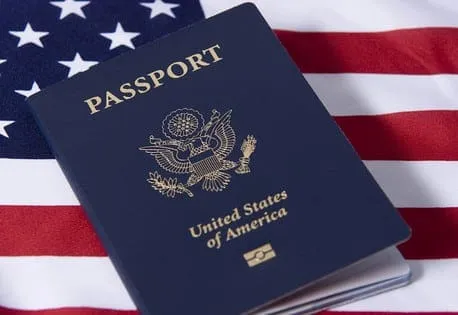
Latest Updates (September 2026): USCIS now uses two civics tests depending on when your Form N-400 was filed. If you filed on or after October 20, 2025, you take the 2025 civics test: the USCIS officer asks 20 questions from a public bank of 128, and you must answer at least 12 correctly (the interview stops once you have clearly passed or failed). If you filed before October 20, 2025, the older 2008 civics test still applies: 10 questions from a bank of 100, and you need 6 correct. Applicants age 65 or older with 20+ years as a lawful permanent resident may study a shorter 20-question subset (still need 6 of 10 correct) under either version. Source: USCIS.gov.
- ✓Review the exam content outline
- ✓Take a diagnostic practice test
- ✓Create a study schedule
- ✓Focus on weak areas
- ✓Complete full practice exams
What should you expect during the real test?
The naturalization interview includes three parts: a civics test on U.S. history and government, an English reading test, and an English writing test (speaking ability is assessed by the USCIS officer throughout the interview). Which civics test you take depends on your N-400 filing date: applications filed on or after October 20, 2025 use the 2025 civics test (20 questions asked from a 128-question bank, 12 correct needed to pass); applications filed before that date use the 2008 civics test (10 questions asked from a 100-question bank, 6 correct needed to pass). For the English test, you must read one of three sentences correctly and write one of three sentences correctly, in addition to the officer assessing your speaking ability during the interview. Always confirm current requirements on the official USCIS website, as test content and procedures can change. Practice with the free USMLE practice test on PracticeTestGeeks (30 questions with answer explanations).
Sample USMLE Practice Questions
Try these questions from our free USMLE practice tests. The correct answer and an explanation follow each question.
A patient sustains a stab wound to the posterior triangle of the neck and subsequently develops shoulder droop with difficulty elevating the arm above 90 degrees. Which nerve was most likely injured?
- A. Phrenic nerve
- B. Accessory nerve (CN XI)
- C. Long thoracic nerve
- D. Dorsal scapular nerve
Answer: B. Accessory nerve (CN XI)
The accessory nerve (CN XI) traverses the posterior triangle of the neck and innervates the trapezius; its injury causes shoulder droop and impairs full arm elevation.
A patient with cirrhosis develops jaundice, ascites, and confusion. Asterixis is noted on exam. Serum ammonia is elevated. What is this complication called?
- A. Hepatic encephalopathy
- B. Wernicke encephalopathy
- C. Spontaneous bacterial peritonitis
- D. Hepatorenal syndrome
Answer: A. Hepatic encephalopathy
Hepatic encephalopathy results from liver failure allowing ammonia and other toxins to reach the brain, causing asterixis (flapping tremor), confusion, and altered consciousness.
Which type of necrosis is characteristic of tuberculosis granulomas?
- A. Caseous necrosis
- B. Liquefactive necrosis
- C. Coagulative necrosis
- D. Fat necrosis
Answer: A. Caseous necrosis
Caseous necrosis is characteristic of granulomatous inflammation in TB, producing a cheese-like gross appearance due to incomplete digestion of cellular debris.
A patient with type 2 diabetes develops lactic acidosis. Which medication is most likely responsible?
- A. Metformin
- B. Glipizide
- C. Sitagliptin
- D. Pioglitazone
Answer: A. Metformin
Metformin can cause lactic acidosis, particularly in patients with renal insufficiency, hepatic disease, or conditions causing tissue hypoperfusion.
US Citizenship Test Questions and Answers
How this page was made: written with AI tools and published by Nathan Beja, founder of Practice Test Geeks, who is responsible for its content. Exam facts are checked against the official sources listed below. Not reviewed by a subject-matter expert. Editorial policy
Sources & references
Exam facts on this page (fees, format, dates, passing scores) are checked against these official sources; the date is our last check. Editorial policy