

Train Driver Practice Test
Updated for October 2026Train Driver Question and Answers
Note: becoming a train driver is not governed by one universal exam or license — requirements, training length, and qualifying age vary by country and by individual railway operator. The points below are general guidance; always confirm exact requirements with the specific employer or national rail authority you are applying to.
- Education: The majority of firms will now want their train drivers to show proof of C+ marks in GCSE English and Math. Knowledge in mechanics or electricity will also be very beneficial.
- Age: Minimum age requirements vary by country and by railway operator. In the UK, for example, most train operating companies (TOCs) require drivers to be at least 20 or 21 years old to begin training, though this differs by employer and country.
- Medical needs: For their own health and safety, TOCs attach great importance to medical criteria. You must pass a number of medical and fitness examinations, including hearing, sight, and drug and alcohol tests, in order to become a train driver.
- Finish secondary education Although there are no formal educational requirements in the UK to become a train driver, it can be advantageous to complete secondary school before you begin seeking for employment.
- Ascertain your age. Because minimum age requirements differ between employers and countries, it is worth confirming the exact age requirement with the specific railway operator you want to apply to.
- Obtain a medical assessment Before applying to work for the national rail system in the UK, train drivers frequently need to receive a medical evaluation. Your hearing, eyesight, and color perception are crucial tests that a doctor can perform to determine whether you are fit to drive a train.
- Schedule a psychometric test with a licensed psychologist. Train drivers often need to pass both a psychiatric screening and a physical examination.
- Obtain a train driver’s license One of the most crucial elements to become a train driver is obtaining a railway driving license.
- Look for a trainee driver job online. The majority of people who want to become train drivers start out as trainees, which is an entry-level position in the rail industry.
- Finish your training For their new trainee driver recruitment, railway companies frequently provide training. This includes giving the students practical guidance and information that will improve their ability to manage the position after they are hired as train drivers.
- Engage in training as a driver You can start working as a trainee driver as soon as you pass the certification exam set by your employer.
- Submit a resume and begin working as a train driver. You can start looking for positions as a train driver once you’ve finished the training and gained some work experience as a trainee.
- MEET THE MINIMUM AGE TO BECOME A TRAIN DRIVER.
- You must, first and foremost, be at least the minimum age required for qualifying.
- THE QUALITIES NEEDED TO BECOME A TRAIN DRIVER IS NUMBER 2 The second piece of advice on what credentials are required to become a train driver is that you must possess the necessary traits.
- A FLEXIBLE APPROACH TO WORKING AS A TRAIN DRIVER IN TRAINING
- A flexible approach to work is the third requirement in terms of the skills required to become a train driver.
Train Driver Practice Test Questions
Prepare for the Train Driver exam with our free practice test modules. Each quiz covers key topics to help you pass on your first try.
Train Driver Rail Safety and Signages
Train Driver Exam Questions covering Rail Safety and Signages. Master Train Driver Test concepts for certification prep.
Train Driver Situational Train Driver Safety
Free Train Driver Practice Test featuring Situational Train Driver Safety. Improve your Train Driver Exam score with mock test prep.
Train Driver Braking Systems and Train Dyn...
Train Driver Mock Exam on Braking Systems and Train Dynamics. Train Driver Study Guide questions to pass on your first try.
Train Driver Crew Communication and Protocols
Train Driver Test Prep for Crew Communication and Protocols. Practice Train Driver Quiz questions and boost your score.
Train Driver Emergency Procedures
Train Driver Questions and Answers on Emergency Procedures. Free Train Driver practice for exam readiness.
Train Driver FRA Regulations and Compliance
Train Driver Mock Test covering FRA Regulations and Compliance. Online Train Driver Test practice with instant feedback.
Train Driver Track and Infrastructure Know...
Free Train Driver Quiz on Track and Infrastructure Knowledge. Train Driver Exam prep questions with detailed explanations.
Train Driver Train
Train Driver Practice Questions for Train. Build confidence for your Train Driver certification exam.
Pro Tip: Focus your Train Driver study time on areas where you score lowest. Most exam questions test application of knowledge, not memorization.
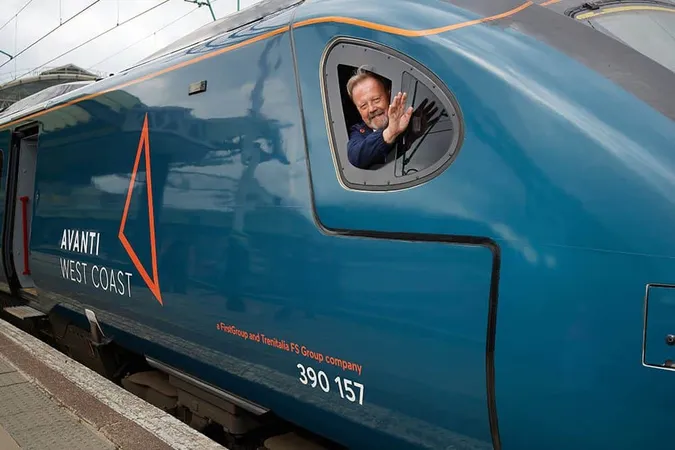

How to be a Train Driver
Train Driver: Pros and Cons
- +Train driver qualifications are recognized by the railway operator that issues them
- +Higher earning potential compared to non-credentialed peers
- +Expanded career opportunities and professional advancement
- +Structured learning path builds comprehensive knowledge
- +Professional development that stays current with industry standards
- −Preparation requires significant time and study commitment
- −Associated costs for exams, materials, and renewal fees
- −Continuing education needed to maintain credentials
- −Competition for advanced positions can be challenging
- −Licensing requirements, training length, and minimum age vary by country and by railway operator
Pros and Cons at a Glance
| Pros | Cons |
|---|---|
| Train driver qualifications are recognized by the railway operator that issues them | Preparation requires significant time and study commitment |
| Higher earning potential compared to non-credentialed peers | Associated costs for exams, materials, and renewal fees |
| Expanded career opportunities and professional advancement | Continuing education needed to maintain credentials |
| Structured learning path builds comprehensive knowledge | Competition for advanced positions can be challenging |
| Professional development that stays current with industry standards | Licensing requirements, training length, and minimum age vary by country and by railway operator |
Sample Train Driver Practice Questions
Try these questions from our free Train Driver practice tests. The correct answer and an explanation follow each question.
You notice your cab's windscreen is dirty as you wait to board the train at the station. You attempt to use the built-in wash system to clean the windows, but it doesn't seem to be working. How would you respond?
- A. Avoid action. This kind of thing occurs frequently. Rain is expected to fall during the trip, so cleaning the screen is still necessary.
- B. Inform the train attendant so that they can wash the windshield.
- C. Try cleaning it yourself with a dry rag outside the cab.
- D. Obey the rules and your training. Inform the appropriate party(ies) right away so that, before you leave, the window can be cleaned and the built-in wash system may be fixed.
Answer: D. Obey the rules and your training. Inform the appropriate party(ies) right away so that, before you leave, the window can be cleaned and the built-in wash system may be fixed.
Clear visibility through the windscreen is critical for a train driver's safety. If the built-in wash system is faulty and the window is dirty, the train must not be operated until the issue is resolved. Informing the appropriate parties immediately ensures the problem is fixed and visibility is restored before departure, adhering to essential safety regulations.
What should a train driver do if smoke is detected in the locomotive cab?
- A. Stop the train at the nearest safe location, evacuate, and contact the dispatcher
- B. Increase speed to ventilate the cab and continue to the next terminal
- C. Shut down all electrical systems and continue at reduced speed
- D. Ask the conductor to investigate while maintaining speed
Answer: A. Stop the train at the nearest safe location, evacuate, and contact the dispatcher
Smoke in the cab indicates a potential fire; the engineer must stop the train safely, evacuate, and notify the dispatcher immediately.
Which nation built the first high-speed tracks that allowed trains to travel at speeds of up to 150 mph (240 kph)?
- A. Japan
- B. The United States
- C. South Korea
- D. Hong Kong
Answer: A. Japan
A coupler is a mechanical device located at the ends of railway rolling stock that forms a connection between two cars or between a locomotive and a car. Its primary function is to securely link the individual units of a train, allowing them to be pulled or pushed as a single coherent unit. This essential component ensures the train remains connected during operation.
What is the standard radio communication protocol when a train driver receives a track authority?
- A. Repeat back the entire authority verbatim to confirm understanding before proceeding
- B. Acknowledge with 'Roger' and proceed immediately
- C. Write the authority down and confirm at the next signal
- D. Accept the authority and read it back only if requested
Answer: A. Repeat back the entire authority verbatim to confirm understanding before proceeding
A complete read-back of track authority is required to confirm accuracy before any movement is made.
About the Author

ASE Master Technician & Automotive Certification Trainer
Universal Technical InstituteTony Garza is an ASE Master Technician certified across all eight automotive service areas, with a Bachelor of Science in Automotive Technology from Universal Technical Institute. He has 22 years of shop experience and 9 years teaching ASE certification prep courses. Tony specializes in engine performance, electrical systems, and transmission diagnostics for certification candidates.