
TOEFL Practice Test PDF 2026 September: Free Exam Questions & Answers
Free TOEFL practice test with questions and answer explanations. Prepare for the 2026 September exam with instant scoring. 🟢

TOEFL Practice Test PDF 2026: Free Exam Questions & Answers
If you're preparing for the TOEFL iBT and want something you can print, annotate, and study offline, this free TOEFL practice test PDF is a solid starting point. The TOEFL iBT (Internet-Based Test) is the world's most widely accepted English proficiency exam — administered by ETS (Educational Testing Service) and recognized by more than 12,000 universities, employers, and immigration agencies across 160+ countries.
The test measures four skills: Reading, Listening, Speaking, and Writing. Total testing time runs roughly two hours, and scores are reported on a 0–120 scale (30 points per section). Most North American universities require a total score between 80 and 100, though selective programs often set the bar at 100 or higher.
Who takes TOEFL? Primarily international students applying to universities in the US, Canada, Australia, the UK, and New Zealand — plus applicants seeking skilled-worker visas and academic professionals certifying their English proficiency. If English isn't your first language and you want to study at an English-medium institution, there's a very good chance TOEFL is on your list.
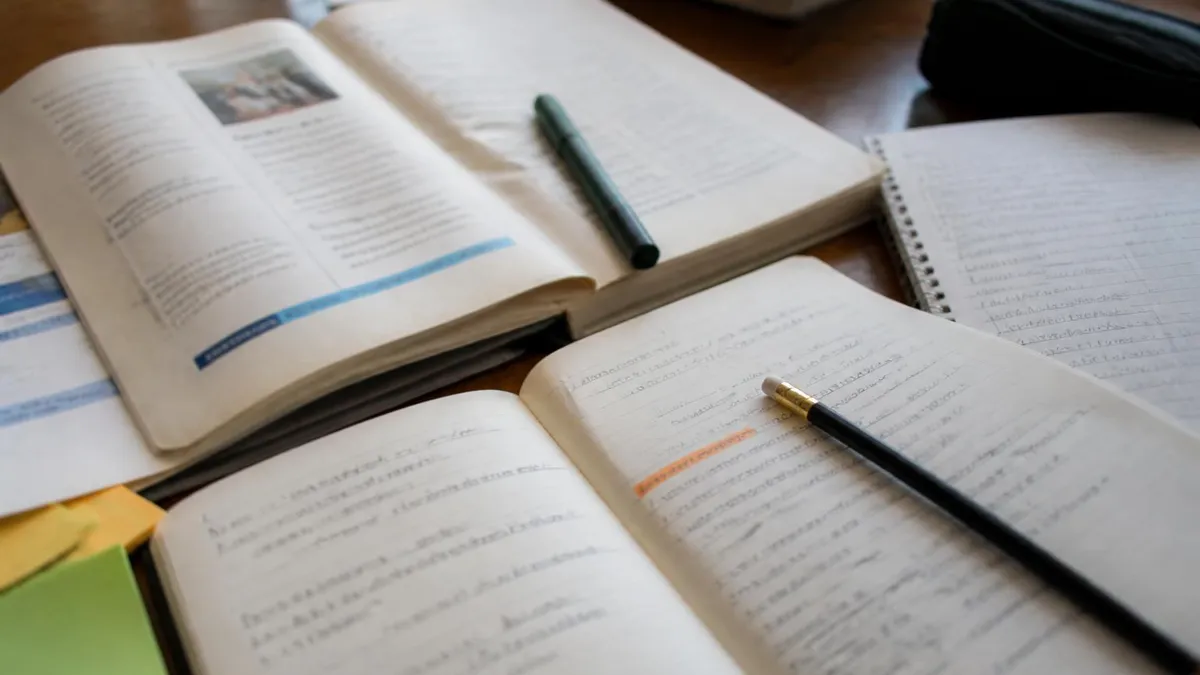
Using a PDF for practice is especially valuable for the Reading section (where you're working through dense academic passages under time pressure) and the Language Use questions that appear in Writing tasks. Printing practice passages lets you annotate directly — underlining topic sentences, circling key transitions, marking evidence for your written responses. That active reading habit is exactly what the real test rewards.
Did You Know? Passing the TOEFL exam on your first attempt saves both time and money. Start with diagnostic practice tests to identify weak areas.
TOEFL iBT Section-by-Section Breakdown & Strategy
The TOEFL iBT has four sections delivered in a fixed order: Reading, Listening, Speaking, and Writing. Each section tests a different skill, and each rewards a slightly different preparation approach. Here's what to expect and how to practice smarter.
Reading (20 minutes, 2 passages, ~28 questions)
The Reading section presents two academic passages of roughly 700 words each — the kind you'd encounter in university textbooks. Topics span natural science, social science, and humanities. You'll answer approximately 14 questions per passage within a strict 20-minute window, so pacing matters: that's under 45 seconds per question once you factor in reading time.
TOEFL Reading includes 10 distinct question types you need to recognize on sight: factual information, negative factual information, inference, rhetorical purpose, vocabulary in context, reference, sentence simplification, text insertion, prose summary, and fill-in-a-table. The last two — prose summary and fill-in-a-table — are worth 2–3 points each and require you to identify the main supporting ideas of the whole passage, not just a single sentence. Practice those disproportionately; they're high-value and often underprepped.
Strategy: Read the introduction and first sentence of each paragraph before tackling questions. The topic sentence structure of academic writing is consistent enough that this two-minute investment saves time on most question types. On vocabulary questions, always go back to the sentence in context — TOEFL rarely tests simple dictionary definitions and almost always tests contextual meaning.
Listening (36 minutes, 3 lectures + 2 conversations)
The Listening section includes three academic lectures (each 4–5 minutes) and two conversations (3 minutes each). You hear each audio once — no replay. Every recording plays with a visual scene on screen, but you're expected to take notes. ETS provides scratch paper specifically for this. Use it.
Most Listening questions test your understanding of the main idea, supporting details, organization, and the speaker's attitude or purpose. "Speaker's attitude" questions are the trickiest: they ask you to identify tone, certainty level, or emotional stance — things conveyed through intonation and word choice rather than explicit statement. In your practice listening sessions, pause after lectures and ask yourself: Was the professor enthusiastic or skeptical about this idea? Did the student sound confident or confused? Training that instinct is half the battle.
For note-taking, focus on signpost language: "the key point here is," "however," "in contrast," "this matters because." These transitions signal the organizational skeleton of the lecture and map directly to the structure questions TOEFL loves to ask.
Speaking (16 minutes, 4 tasks)
TOEFL Speaking has four tasks. Task 1 is fully independent: you give a 45-second response (15-second prep) to a personal preference question. Tasks 2–4 are integrated — you read and/or listen to material first, then speak for 60 seconds (30-second prep for Tasks 2–3; 20-second prep for Task 4).
Integrated speaking tasks test whether you can synthesize information from multiple sources under time pressure — a core academic skill. Task 2 presents a campus-related reading and a conversation about it. Tasks 3 and 4 present academic content (reading + lecture, or lecture only). Your job is to summarize and connect, not offer personal opinions.
Responses are recorded and scored by ETS-trained raters on four criteria: Delivery (pronunciation, fluency, pacing), Language Use (vocabulary range, grammatical accuracy), Topic Development (coherence, completeness), and General Description. A 15–30 second prep time sounds short but is enough to jot two or three bullet points — and a two-point structure (main idea + one supporting detail) is all you need for a score-4 response on integrated tasks.
Writing (29 minutes, 2 tasks — Academic Discussion + Integrated)
The Writing section now has two tasks after ETS updated the format in 2023. The Integrated Writing task (20 minutes) gives you a reading passage, plays a lecture, and asks you to summarize how the lecture information relates to — and often contradicts — the reading. The Academic Discussion task (10 minutes) presents a professor's question and two student responses; you write a contribution to the discussion (150+ words).
Both tasks are AI-scored by ETS's automated scoring engine (e-rater), with human oversight for borderline scores. This matters for preparation: e-rater rewards lexical diversity, grammatical accuracy, organization, and essay length within the time limit. For the Integrated task, structure your response as: intro sentence (what the lecture does), body paragraph 1 (Point 1 from reading → how lecture counters it), body paragraph 2 (Point 2), body paragraph 3 (Point 3). That three-point parallel structure is the format the scoring rubric is built around. Don't deviate unless you're extremely confident in an alternative approach.
For the Academic Discussion task, read both student posts before writing. Reference at least one of them explicitly in your response — saying "I agree with Maria that..." or "While Carlos raises a valid point, I think..." signals to the scorer that you're participating in a discussion, not just writing a solo essay. Aim for 180–220 words in 10 minutes. That's doable with practice.


- ✓Set your target score before studying — research the minimum TOEFL requirement for every program you're applying to, then add 5–10 points as your buffer target.
- ✓Download and review ETS's official TOEFL iBT Free Practice Test — it's the closest simulation of real test conditions and available directly from ETS.org.
- ✓Download this practice PDF — use it for offline Reading and Writing Language Use practice; annotate directly on the printed pages.
- ✓Build a note-taking system for Listening — develop shorthand symbols for 'contrast,' 'cause/effect,' 'example,' and 'main point' before your first listening practice session.
- ✓Practice Speaking daily — record yourself on Tasks 1–4 formats and play back the audio. Most test-takers are shocked by their actual delivery vs. how they sound in their head.
- ✓Learn all 10 TOEFL Reading question types by name — you need to recognize the question type within 5 seconds to allocate the right amount of time to each one.
- ✓Time every practice session — Reading at 20 min, Listening at 36 min, Speaking tasks at 15/30/30/20 sec prep + 45/60/60/60 sec response, Writing at 20+10 min.
- ✓Study the Writing scoring rubrics — ETS publishes official rubrics for both Writing tasks on TOEFL.ETS.org; knowing what a score-4 vs. score-3 response looks like is invaluable.
- ✓Take at least one full-length timed simulation — all 4 sections back-to-back. Stamina is a real factor in a 2-hour test; train for it.
- ✓Register early — TOEFL test centers book up fast in major cities. Register at least 3–4 weeks before your target date; 6–8 weeks before high-demand windows like October–December.
TOEFL vs. IELTS: Which Should You Take?
If you're weighing TOEFL against IELTS, the honest answer is: it depends on your target destination and your own test-taking strengths. Both are accepted at most major universities worldwide, so the choice is rarely about eligibility — it's about which format plays to your strengths.
TOEFL iBT is fully computer-based (including speaking — you speak into a microphone, not to a human examiner). IELTS Academic has a face-to-face speaking interview. If you're more comfortable speaking into a microphone and prefer a standardized, impersonal format, TOEFL has an edge. If you freeze up without a human conversation partner, IELTS may suit you better.
TOEFL Reading passages are longer and more academic than IELTS Academic reading texts. IELTS Writing includes a graph/chart description task (Task 1) with no equivalent in TOEFL. TOEFL Listening includes academic lectures from university contexts; IELTS Listening includes more everyday conversations alongside academic material.
On score requirements: US, Canadian, and Australian university programs typically specify TOEFL minimums. Common thresholds — undergraduate admissions: 61–79 total; graduate programs: 80–100; top-ranked graduate programs: 100–110+; MBA programs: 100+. Check each program's website — requirements vary significantly even within the same university.
Using this PDF as Reading and Writing practice is effective regardless of which test you ultimately take. Academic reading comprehension and organized writing under time pressure are skills that transfer directly. For more practice materials and section-specific drills, visit our TOEFL practice tests page.
How to Use This TOEFL Practice Test PDF
Don't just print it and skim through once. A structured approach gets real results. Start with a cold diagnostic: answer every question without notes or references. Time yourself. When you're done, score against the answer key and sort your errors by section. Which section gave you the most trouble? That's where you spend the next week.
For Reading errors, go back to the passage and find the specific sentence or paragraph where the answer is located. Ask yourself: Did I miss it because I ran out of time? Because the vocabulary tripped me up? Or because I misidentified the question type? Each failure mode has a different fix.
For Language Use errors (vocabulary and grammar in context), build a vocabulary log. Every time you miss a TOEFL vocabulary question, write down the word, the sentence it appeared in, and the correct answer with its definition. Academic word lists (like the Academic Word List, AWL) are useful supplements — most TOEFL vocabulary comes from that register.
Run at least two timed passes through the PDF before test day. The second pass should feel easier; if it doesn't, your weak section needs more focused drilling before you're ready.
🧩 What does a full TOEFL iBT practice test PDF actually cover?
A complete TOEFL practice test PDF mirrors the real exam's four sections — Reading, Listening, Speaking, and Writing — with the same passage lengths and question types. Working through a printed toefl practice test pdf lets you annotate directly on the page, which most test-takers find easier than screen-only review during early prep.
START TOEFL PRACTICE TEST📊 What is the TOEFL iBT score scale?
TOEFL iBT scores run from 0–120 total, combining four section scores of 0–30 each (Reading, Listening, Speaking, Writing). Most graduate programs ask for 80–100 total, while top-ranked programs often require 100–110+, so check each target school's minimum before you set a study goal.
START TOEFL PRACTICE TEST⏱️ How long is the TOEFL iBT and how is time split?
The TOEFL iBT runs about 2 hours: Reading takes 20 minutes, Listening 36 minutes, Speaking 16 minutes (four short tasks), and Writing 30 minutes. Timing yourself with a printed toefl sample test pdf during practice builds the pacing instinct you need on test day.
START TOEFL PRACTICE TEST📅 How long are TOEFL scores valid?
TOEFL iBT scores are valid for 2 years from your test date. ETS automatically removes older scores from your account after that window, so if a program's deadline falls outside that range, you'll need to retest.
START TOEFL PRACTICE TEST🔁 Can you retake the TOEFL, and how soon?
Yes — you can retake the TOEFL iBT once every 3 days, up to 5 times within any rolling 12-month period. Each attempt requires a fresh registration fee, so it pays to work through a full toefl practice test pdf free download before you book a second sitting.
START TOEFL PRACTICE TEST💳 How much does the TOEFL iBT cost to register?
TOEFL iBT registration runs around $220 in most markets, though the exact fee varies by country. Late registration, rescheduling, and additional score reports all carry separate fees, so budget for at least one retake if this is your first time testing.
START TOEFL PRACTICE TEST📖 How many question types appear in TOEFL Reading?
TOEFL Reading uses 10 distinct question types — including factual information, inference, vocabulary-in-context, and the higher-value prose summary and fill-in-a-table questions. Recognizing the type within a few seconds is what separates fast, accurate scorers from test-takers who run out of time.
START TOEFL PRACTICE TEST🎤 What are the four TOEFL Speaking tasks?
TOEFL Speaking has one independent task (your own opinion, 15 sec prep / 45 sec response) and three integrated tasks that combine reading and/or listening with speaking (20–30 sec prep / 60 sec response). All four are recorded and scored by a mix of AI and human raters.
START TOEFL PRACTICE TEST🌍 TOEFL or IELTS — which do US universities prefer?
Most US and Canadian university programs list a TOEFL minimum, while UK, Australian, and European admissions lean more toward IELTS — though both are widely accepted. TOEFL is fully computer-based, including a microphone-recorded Speaking section, versus IELTS Academic's face-to-face speaking interview.
START TOEFL PRACTICE TEST📝 What's the best way to use a TOEFL practice test PDF before test day?
Start with a cold, timed diagnostic run using this practice pdf to find your weak sections, then drill those sections individually before repeating a full timed run. Reviewing every wrong answer — not just the score — is what actually moves your number between attempts.
START TOEFL PRACTICE TESTOfficial Resources
- ETS TOEFL Official Site — the exam publisher's homepage, with the latest test format updates, score information, and links to every official prep tool.
- ETS Official TOEFL iBT Preparation Hub — ETS's own free and paid practice materials, including sample questions and scoring rubrics straight from the test maker.
- ETS TOEFL iBT Registration — book your official test date, check current fees for your country, and find test center availability directly through ETS.
About the Author

Applied Linguist & Language Proficiency Exam Specialist
Georgetown UniversityDr. Yuki Tanaka holds a PhD in Applied Linguistics and an MA in TESOL from Georgetown University. A former language examiner with the British Council, she has 18 years of experience designing and teaching language proficiency preparation courses for TOEFL, IELTS, CELPIP, Duolingo English Test, JLPT, Cambridge FCE/CAE, and Versant assessments worldwide.
Join the Discussion
Connect with other students preparing for this exam. Share tips, ask questions, and get advice from people who have been there.
View discussion (4 replies)