
TEAS Exam Prep 2026: How to Prepare for the ATI TEAS Test
Complete ATI TEAS exam prep guide for 2026: TEAS sections, scoring, study strategies, official ATI practice tests, and free TEAS practice questions.

TEAS Exam Overview
The ATI TEAS — Test of Essential Academic Skills — is the standardized admissions exam used by nursing and allied health programs across the United States to assess applicants' academic readiness for healthcare education. ATI TEAS is developed and administered by Assessment Technologies Institute (ATI), and is required for admission to the large majority of nursing school programs — including associate degree nursing (ADN), bachelor of science in nursing (BSN), and many practical nursing (PN/LPN) programs. The test is also used by some allied health programs in dental hygiene, radiography, and other fields.
The TEAS measures foundational academic competencies in four content areas: Reading, Mathematics, Science, and English and Language Usage. These subjects reflect the core academic skills students need to succeed in rigorous nursing curricula. The exam does not test clinical knowledge or healthcare-specific content — it assesses pre-nursing academic readiness in science and English-language skills. Nursing programs use TEAS scores as one component of their admissions process alongside GPA, prerequisite course completion, letters of recommendation, and personal statements.
The current version is ATI TEAS 7, released in June 2022. TEAS 7 brought changes to the Science section (with updates to the biology, chemistry, anatomy, and physiology content distribution) and the English and Language Usage section. Some questions in TEAS 7 are 'scenario-based' — multiple questions drawn from a single shared scenario or passage. Older TEAS 6 preparation materials are partially compatible but should be supplemented with TEAS 7-specific resources that reflect the updated content distribution.

TEAS Sections
The ATI TEAS 7 consists of four content areas totaling 170 questions (150 scored + 20 unscored pretest questions) with a total testing time of 209 minutes (3 hours and 29 minutes). Understanding the weight and content of each section is essential for allocating study time effectively.
Reading (45 questions, 55 minutes)
The Reading section is the largest in terms of time allocation and covers: key ideas and details (identifying main ideas, supporting details, inferences, and the purpose of a passage); craft and structure (author's purpose, text structure, word meaning in context, distinguishing fact from opinion); and integration of knowledge and ideas (evaluating evidence, comparing information across texts, understanding how arguments are constructed). Passages include academic, informational, and persuasive texts at the college-level reading difficulty that nursing students encounter in textbooks and professional literature.
Mathematics (38 questions, 57 minutes)
The Mathematics section covers: numbers and algebra (arithmetic operations, fractions, decimals, percentages, ratios and proportions, algebraic expressions and equations — this is the largest subsection); measurement and data (unit conversion, geometric measurement, data interpretation from tables and graphs, statistical reasoning). A four-function calculator is provided for the Mathematics section. Healthcare-relevant contexts appear in many math questions — medication dosing calculations, unit conversions, and data interpretation from clinical scenarios. Fractions, proportions, and unit conversion are particularly heavily weighted and clinically relevant skills.
Science (50 questions, 63 minutes)
The Science section is the most content-intensive and often the most challenging for applicants. Content areas: human anatomy and physiology (the largest subsection — body systems, structure-function relationships, physiological processes); biology (cell biology, genetics, microbiology); chemistry (atomic structure, chemical reactions, acids and bases, solution chemistry); and scientific reasoning (scientific method, experimental design, data interpretation). Anatomy and physiology knowledge is the single most important preparation area for the Science section — applicants who have taken and performed well in an A&P course will have a significant advantage. For those without prior A&P exposure, building foundational knowledge of the major body systems is the highest-impact preparation investment.
English and Language Usage (37 questions, 34 minutes)
The English and Language Usage section covers: conventions of standard English (grammar, punctuation, sentence structure, subject-verb agreement, pronoun reference, modifier placement); knowledge of language (effective word choice, clarity, revision of ineffective sentences, understanding connotation vs. denotation); and vocabulary acquisition (using context clues to determine word meaning, understanding roots, prefixes, and suffixes). The English section is the shortest in terms of time and is generally considered the most manageable for native English speakers with strong writing backgrounds, though grammar conventions can be surprisingly tricky under exam conditions.

TEAS Scoring
The ATI TEAS is scored as a percentage — from 0 to 100 percent. This score represents the percentage of scored questions answered correctly (the 20 pretest questions do not count toward scoring). There is no penalty for wrong answers — every question should be answered, even if guessing is necessary.
Composite and Section Scores
You receive a composite TEAS score (the overall percentage) plus individual section scores for Reading, Mathematics, Science, and English and Language Usage. Most nursing programs set their minimum TEAS score requirements based on the composite score, though some also set minimum section score requirements — particularly for Science or Mathematics. Your ATI score report also includes performance data by content category within each section, which is useful for identifying specific content gaps to address if you retake the exam.
What Is a Good TEAS Score?
Competitive TEAS scores depend entirely on the programs you are applying to. Highly competitive BSN programs at major universities may require composite scores of 75% to 80% or higher for competitive consideration. Less selective ADN programs at community colleges may have minimums of 55% to 65%. ATI classifies scores by performance level: Developmental (below approximately 58%), Basic (58–78%), Proficient (79–87%), Advanced (88–93%), and Exemplary (94–100%). Most competitive nursing programs seek applicants in the Proficient or above range. Research each program's specific TEAS minimum and competitive score range before setting your target.
TEAS Retake Policy
Most nursing programs allow applicants to retake the TEAS, but policies vary — some limit the number of attempts, some require a waiting period between attempts (commonly 30 days), and some require the program to approve retakes. ATI itself allows retakes, but individual program policies may be more restrictive. Check with each program you are applying to for their specific TEAS retake policy before retaking.
TEAS Study Strategy
Effective TEAS preparation is targeted and systematic. The following strategy applies whether you have 4 weeks or 4 months before your test date.
Step 1: Take a Diagnostic Practice Test
Before beginning content review, take a full-length TEAS practice test under timed conditions to establish a baseline. Your diagnostic score identifies which sections and content categories need the most work. Do not study general content across all four sections equally — your time is limited and should be concentrated on the areas with the highest gap between your current performance and your target score. If your Science score is 55% but your English score is 82%, invest the majority of your study time in Science.
Step 2: Prioritize Science Anatomy and Physiology
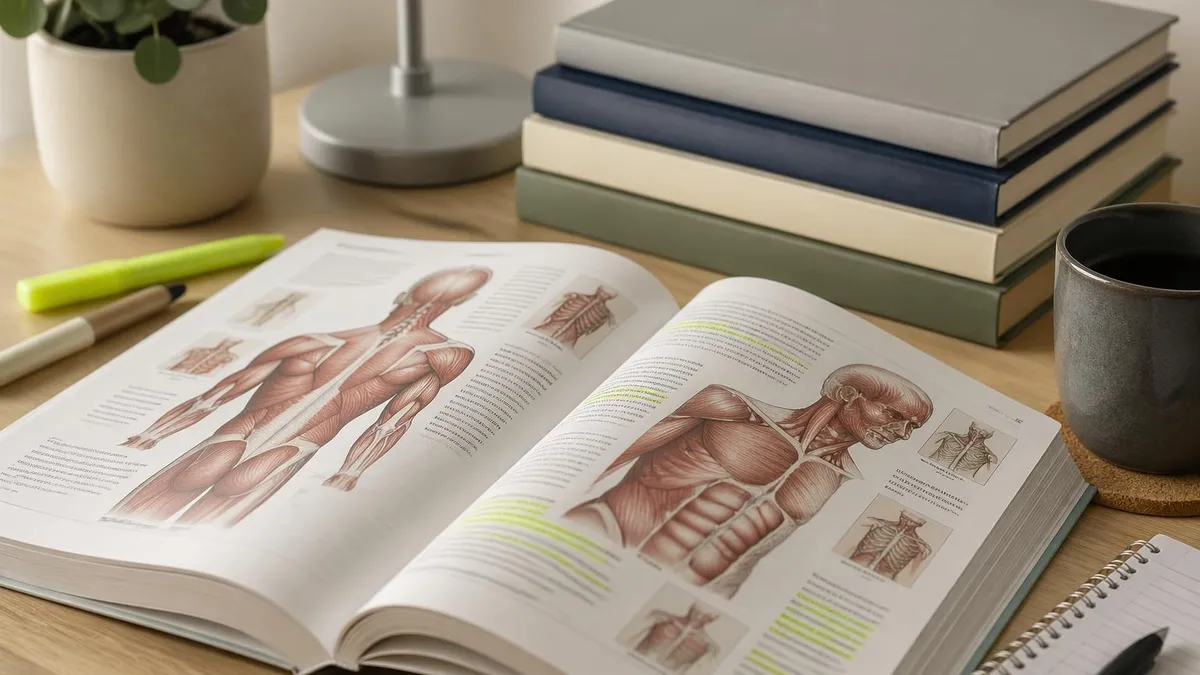
For most TEAS test-takers, the Science section — and particularly Anatomy and Physiology — is the highest-impact study area. A&P content is the largest subsection of Science and requires genuine content mastery, not just test-taking strategy. Study the major body systems: integumentary, skeletal, muscular, nervous, endocrine, cardiovascular, lymphatic and immune, respiratory, digestive, urinary, and reproductive. For each system, understand the organs and structures involved, their functions, key physiological processes, and how systems interact. This content is learned, not intuited — allocate the most clock hours to A&P review.
Step 3: Mathematics Practice with Healthcare Context
TEAS Mathematics is not advanced — it covers arithmetic, fractions, proportions, percentages, and basic algebra. However, these must be applied quickly and accurately, often in healthcare dosing contexts. Common study gaps: fraction operations, converting between fractions and decimals, proportion-based dosing calculations (if a medication comes in 250mg/5mL, how many mL are needed for a 300mg dose?), and percentage calculations. Drill these calculation types until they are automatic.
Step 4: Reading Comprehension Practice
TEAS Reading requires identifying main ideas, inferences, and text structure quickly across multiple passages within a 55-minute window. The best preparation is regular practice with academic and informational texts — reading dense non-fiction and practicing active annotation (marking main ideas, thesis, supporting evidence, author's purpose) builds the reading fluency needed for timed performance. Practice specifically with TEAS-format reading questions to learn how questions are phrased and what they are looking for.
Step 5: English Grammar Review
English and Language Usage tests grammar conventions that may not be intuitive even to fluent English speakers. Study the conventions most commonly tested: subject-verb agreement (especially with collective nouns and inverted sentences), pronoun reference and case, comma use (comma splices, serial commas, introductory clauses), modifier placement, parallel structure, and apostrophe use. Grammar rule review with practice questions — not just general writing — is the most efficient preparation for this section.
Official ATI TEAS Preparation Resources
Using official ATI materials is strongly recommended because they are the only resources guaranteed to reflect the exact format, difficulty, and content distribution of the actual TEAS.
ATI TEAS Study Manual
The official ATI TEAS Study Manual — available from ATI at atitesting.com — provides content review aligned directly to TEAS 7 content categories, with practice questions at the end of each chapter. The study manual is the primary official review resource and is available in print and digital formats. Editions are labeled by TEAS version — ensure you purchase the TEAS 7 edition, as earlier versions have different content distributions.
Official ATI TEAS Practice Tests
ATI offers two official TEAS practice tests (Form A and Form B) for purchase at atitesting.com. These practice tests use the actual TEAS question format and are the closest available simulation of the real exam. They provide scaled scores and performance feedback by content category. Taking both official practice tests under timed conditions — and thoroughly reviewing wrong answers — is the most valuable test preparation activity. Third-party TEAS practice materials are useful for additional practice but should supplement, not replace, the official ATI practice tests.
Accessing Official ATI Resources
Your nursing school may provide free or discounted access to ATI resources if you are already admitted to a program. Some programs purchase ATI preparation packages for their admitted students. If you are applying to nursing school and not yet admitted, purchase ATI's official preparation bundle directly from atitesting.com. The bundle typically includes the Study Manual and both practice tests at a reduced combined price compared to purchasing individually.
Anatomy and Physiology Is the Highest-Impact Science Study Area
About the Author
Attorney & Bar Exam Preparation Specialist
Yale Law SchoolJames R. Hargrove is a practicing attorney and legal educator with a Juris Doctor from Yale Law School and an LLM in Constitutional Law. With over a decade of experience coaching bar exam candidates across multiple jurisdictions, he specializes in MBE strategy, state-specific essay preparation, and multistate performance test techniques.