
Forklift Jobs in Australia 2026 October: Salary, Career Paths & How to Get Hired
Forklift jobs in Australia: 2026 October salary data, in-demand industries, top hiring states, TLILIC0003 licence requirements, and how to land your first 🎯
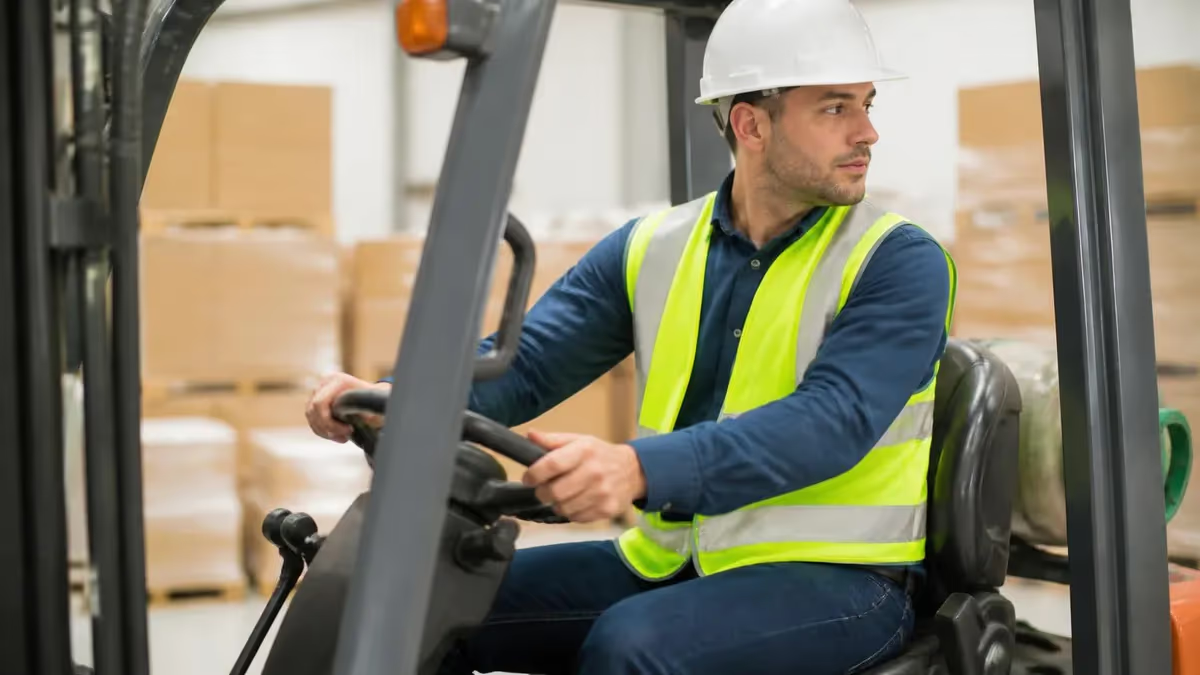
Forklift jobs are one of the most accessible skilled trades in Australia, with more than 18,000 active vacancies posted across SEEK, Indeed, and Jora at any given time in 2026. Whether you want full-time warehouse work, casual shifts through a labour-hire agency, or a long-term career in logistics supervision, holding a current TLILIC0003 licence opens doors in nearly every industry — from cold-storage distribution and steel manufacturing to retail giants like Bunnings, Woolworths, and Coles. The pathway is short, the wages are competitive, and demand keeps climbing.
Australia's e-commerce boom has fundamentally reshaped warehouse hiring. Post-pandemic supply-chain investment poured billions into automated distribution centres in Western Sydney, South-East Melbourne, and Brisbane's Logan corridor. Each new mega-DC needs hundreds of high-reach, counterbalance, and reach-truck operators. Amazon alone opened three new fulfilment centres between 2023 and 2025, and each one employs upwards of 1,500 forklift-certified staff. That demand cascades down to suppliers, third-party logistics providers, and freight forwarders.
The licensing barrier is genuinely low. A TLILIC0003 high-risk work licence costs between $350 and $650 depending on the RTO and state, takes three to five days of training, and is recognised nationally under the WHS Act framework. Once you pass the assessment and lodge your application with WorkSafe (or SafeWork NSW), the photo card typically arrives within ten business days. From that moment, you can legally operate any LF-class forklift up to the rated capacity of the truck.
Pay rates have risen sharply. The current 2026 national median for a base-grade warehouse forklift operator sits at $32.40 per hour under the Storage Services and Wholesale Award, with experienced operators on enterprise agreements at major DCs earning $38–$45 per hour. Add penalty rates for afternoon, night, and weekend shifts, and a full-time operator regularly clears $90,000 a year before overtime. Specialist roles — container yards, ports, hazardous-goods sites — push above $110,000.
The career ladder is real, too. Many warehouse managers, transport supervisors, and operations leaders started as forklift drivers and worked their way up. Certificate III in Warehousing Operations, Certificate IV in Logistics, and the Diploma of Logistics are stackable qualifications that employers actively subsidise. After three to five years of solid driving experience, the move into 2IC, leading hand, or shift supervisor roles becomes a natural next step with salaries jumping into the $95K–$130K range.
This guide walks through everything you need to know to find, win, and grow in a forklift role in Australia. We cover where the jobs are, what employers actually screen for, how to write a CV that survives applicant-tracking systems, what to expect in interviews and trade tests, and how to negotiate pay once you have offers in hand. We'll also flag the red-flag employers and unsafe sites you should avoid — because not every operation is worth your time.
If you don't yet hold a TLILIC0003 ticket, start with our complete forklift licence Australia guide which explains training providers, costs, eligibility, and the assessment process step by step. If you're licensed but rusty, the practice tests linked throughout this article are the fastest way to refresh your knowledge of load charts, stability triangles, and pre-start checks before a trade test.
Free Forklift Licence Study Tools
Interactive Forklift Licence resources on PracticeTestGeeks, free to start:
- Forklift Licence practice test — 300+ questions with instant scoring and answer explanations
- Forklift Licence flashcards — review key terms and concepts card by card
- Forklift Licence study guide — topic-by-topic overview of what the exam covers
- Forklift Licence cheat sheet — one-page printable summary for last-minute review
Forklift Jobs in Australia by the Numbers
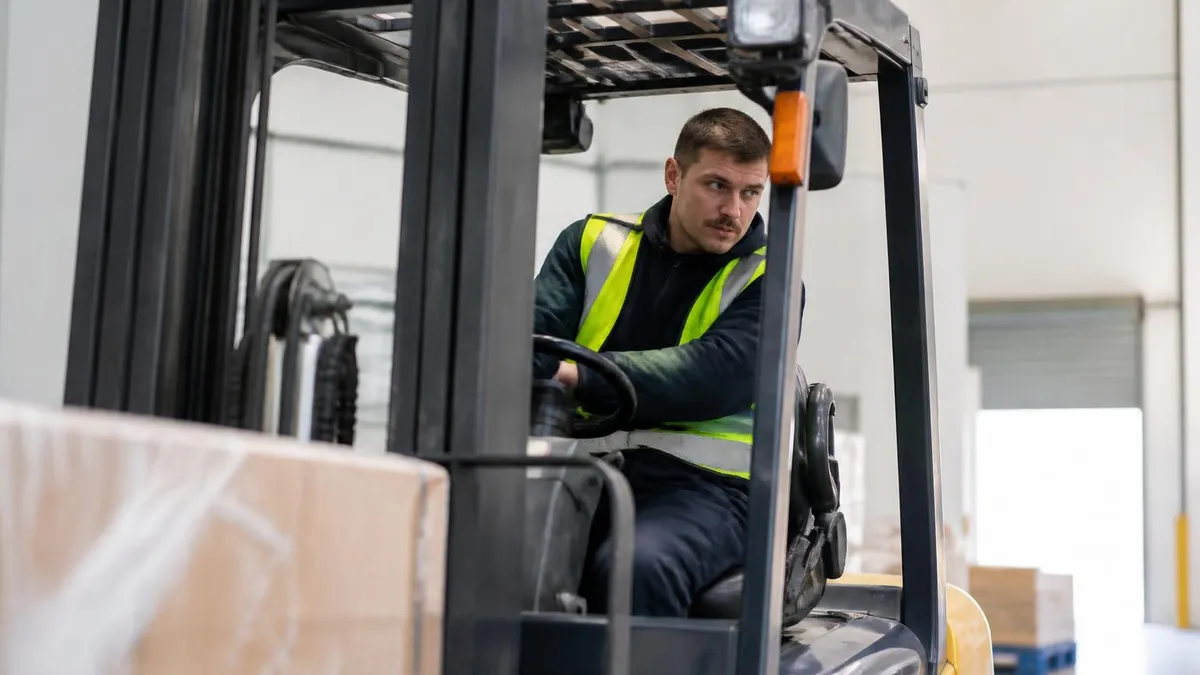
Top Industries Hiring Forklift Operators in 2026
Third-party logistics providers like Toll, Linfox, DHL, and CEVA hire the largest share of forklift operators. Roles cover inbound receiving, picking, loadout, and replenishment across grocery, retail, and industrial supply chains.
Woolworths, Coles, Bunnings, Kmart, and Aldi each operate multiple regional DCs employing 300–1,500 forklift staff per site. Shifts run 24/7 with strong penalty loadings and significant overtime opportunities during peak trading periods.
Steel, glass, food processing, and chemical plants need experienced operators for production-line feeding and finished-goods despatch. Pay is typically higher than warehousing because of attachment use and hazardous-goods handling complexity.
Builders' merchants, plasterboard yards, and prefab construction sites use rough-terrain and counterbalance forklifts daily. Roles often combine forklift duties with customer service, loading utes, and yard organisation responsibilities.
Patrick, DP World, Hutchison, and Qube hire reach-stacker and heavy-lift operators at major Australian ports. These specialist roles require additional tickets but pay $45–$60 per hour with strong EBA-protected conditions and progression pathways.
Understanding pay structures is essential before you accept any forklift job offer. Australian forklift operators are paid under one of three main frameworks: the Storage Services and Wholesale Award, the Manufacturing and Associated Industries Award, or an enterprise bargaining agreement (EBA) that supersedes the relevant award. EBAs almost always pay more than the award minimum, sometimes 25–40% more, and typically include guaranteed annual pay rises, redundancy entitlements, and stronger sick-leave provisions.
Under the Storage Services Award in 2026, a Grade 2 storeworker (typical forklift role) earns a base of $26.18 per hour ordinary time, climbing to $27.95 for Grade 3 and $29.42 for Grade 4. However, the actual market rate has moved significantly above award minimums due to operator shortages. SEEK salary data shows the true median for an experienced operator is $32.40 per hour, with many enterprise sites offering $35–$42 per hour for permanent full-time roles. Casual loading adds 25% on top.
Shift penalties dramatically change weekly earnings. Afternoon shift typically pays a 15% loading, night shift 30%, Saturday 50%, Sunday 100%, and public holidays 150% or 250%. A full-time operator on $35 per hour working Tuesday-to-Saturday afternoons can take home over $1,900 net per week. Add a few overtime shifts during peak season and gross annual earnings of $105,000–$120,000 are realistic without doing anything exotic. This is why night-shift roles, while tougher on your circadian rhythm, are often the best-paying entry point.
Labour hire pays a premium hourly rate to compensate for the lack of permanent benefits. Programmed, Workpac, Adecco, and Recruit Shop pay $34–$40 per hour for entry-level temp assignments at major DCs. The trade-off is no paid leave, no sick pay, and potentially inconsistent shifts. That said, around 60% of labour-hire forklift placements convert to permanent within twelve months, so it's a legitimate way to audition employers and let them audition you. Many operators prefer the labour-hire route specifically because it gives them exposure to multiple sites before committing.
Specialist tickets stack on top of TLILIC0003 to unlock higher-paying niches. A Verification of Competency on reach trucks, order pickers, or container handlers can lift pay by $2–$5 per hour. Dangerous-goods handling certification, confined-spaces tickets, and elevated work platform (EWP) licences (TLILIC0005) all add earning potential. Cold-storage operators (working at -25°C) usually receive a freezer allowance of $2–$4 per hour on top of their base rate, recognising the physical demands of the environment.
Geographic location matters more than people expect. A forklift operator in Western Sydney earns 8–12% more than one doing identical work in regional Victoria, mainly because rents and competition for labour are higher. Mining-adjacent areas in WA (Perth's industrial north, Karratha, Port Hedland) pay the strongest premium — entry-level operators on mine-site logistics can earn $45–$55 per hour with rotating swings. If you're geographically mobile, chasing the premium markets can add $20,000–$40,000 to your annual income compared with metro Adelaide or Brisbane base rates.
Finally, don't accept the first offer. Once you have a TLILIC0003, an Australian Industry Group survey published in early 2026 found 71% of operators who negotiated received a higher starting rate, with the average bump being $2.40 per hour. That's almost $5,000 a year. Have at least one comparable competing offer in hand, mention it politely, and ask for the top of the band. If you want a complete background on the licence itself, our forklift safety guide covers everything operators need to know before stepping onto a site.
TLILIC0003 Practice Test Questions
Prepare for the Forklift Licence Australia - TLILIC0003 exam with our free practice test modules. Each quiz covers key topics to help you pass on your first try.
TLILIC0003 Forklift Licence Australia Atta...
TLILIC0003 Exam Questions covering Forklift Licence Australia Attachments and Modifications. Master TLILIC0003 Test concepts for certification prep.
TLILIC0003 Forklift Licence Australia Batt...
Free TLILIC0003 Practice Test featuring Forklift Licence Australia Battery and Fuel Safety. Improve your TLILIC0003 Exam score with mock test prep.
TLILIC0003 Forklift Licence Australia Emer...
TLILIC0003 Mock Exam on Forklift Licence Australia Emergency Procedures. TLILIC0003 Study Guide questions to pass on your first try.
TLILIC0003 Forklift Licence Australia Fork...
TLILIC0003 Test Prep for Forklift Licence Australia Forklift Pre-Operational Checks. Practice TLILIC0003 Quiz questions and boost your score.
TLILIC0003 Forklift Licence Australia Haza...
TLILIC0003 Questions and Answers on Forklift Licence Australia Hazard Identification. Free TLILIC0003 practice for exam readiness.
TLILIC0003 Forklift Licence Australia Load...
TLILIC0003 Mock Test covering Forklift Licence Australia Load Centre Calculations. Online TLILIC0003 Test practice with instant feedback.
TLILIC0003 Forklift Licence Australia Load...
Free TLILIC0003 Quiz on Forklift Licence Australia Load Handling and Capacity. TLILIC0003 Exam prep questions with detailed explanations.
TLILIC0003 Forklift Licence Australia Oper...
TLILIC0003 Practice Questions for Forklift Licence Australia Operating in Different Environments. Build confidence for your TLILIC0003 certification exam.
TLILIC0003 Forklift Licence Australia Oper...
TLILIC0003 Test Online for Forklift Licence Australia Operating Techniques. Free practice with instant results and feedback.
TLILIC0003 Forklift Licence Australia Pede...
TLILIC0003 Study Material on Forklift Licence Australia Pedestrian Safety. Prepare effectively with real exam-style questions.
Forklift Jobs by Role Type
The standard warehouse forklift operator role involves inbound unloading from trucks, putaway into racking, replenishment to pick faces, and despatch loading. You'll typically operate counterbalance trucks for yard work and reach trucks for high-bay racking up to 11 metres. Most warehouses run Radio Frequency (RF) scanners or voice-pick systems, so basic literacy and number recognition are essential. Expect to lift, scan, and move 200–400 pallets per shift depending on site throughput.
Entry pay sits around $30–$34 per hour casual, $28–$32 permanent. Major employers include Woolworths, Coles, Toll Group, Linfox, DHL Supply Chain, Toll IPEC, Australia Post, and StarTrack. Standard shift patterns are 6am–2pm, 2pm–10pm, and 10pm–6am. Many sites offer compressed rosters like four-on-four-off twelve-hour shifts, which give you half the year off and pay extremely well due to penalty loadings on weekend coverage.
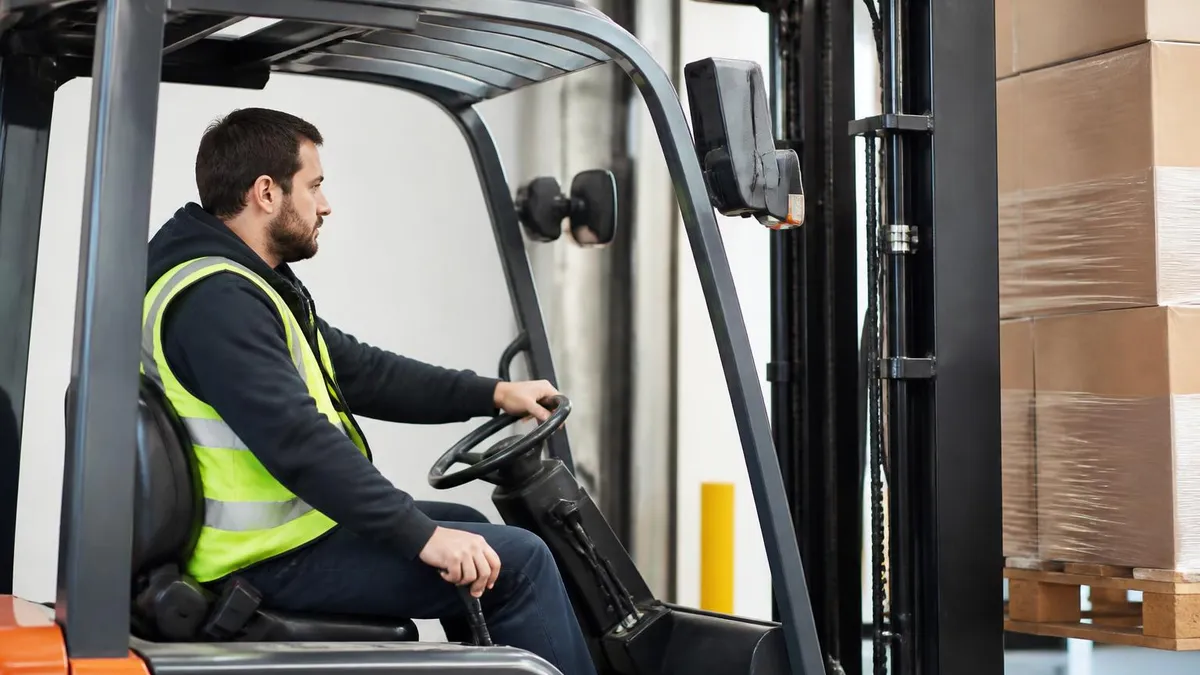
Is a Forklift Career Right for You? Pros and Cons
- +Low barrier to entry — TLILIC0003 takes under a week and costs less than $700
- +Strong, consistent demand across every Australian state and territory
- +Pay above the national median wage with clear penalty-rate uplift opportunities
- +Stackable qualifications open clear pathways into logistics supervision and management
- +Transferable across industries — warehouse, manufacturing, ports, construction, retail
- +Shift flexibility supports parents, students, and people balancing other commitments
- −Physical demands — long shifts seated, exposure to cold-storage or hot manufacturing environments
- −Night and weekend shifts can affect sleep, social life, and family time
- −Repetitive work in high-volume DCs can be mentally taxing once novelty wears off
- −Strict safety culture means small mistakes (no seatbelt, missed pre-start) can end employment
- −Automation threatens lower-skilled roles in highly mechanised distribution centres over 10–15 years
- −Casual and labour-hire roles offer no paid leave, sick pay, or guaranteed weekly hours
Pros and Cons at a Glance
| Pros | Cons |
|---|---|
| Strong, consistent demand across every Australian state and territory | Physical demands — long shifts seated, exposure to cold-storage or hot manufacturing environments |
| Pay above the national median wage with clear penalty-rate uplift opportunities | Night and weekend shifts can affect sleep, social life, and family time |
| Stackable qualifications open clear pathways into logistics supervision and management | Repetitive work in high-volume DCs can be mentally taxing once novelty wears off |
| Transferable across industries — warehouse, manufacturing, ports, construction, retail | Strict safety culture means small mistakes (no seatbelt, missed pre-start) can end employment |
| Shift flexibility supports parents, students, and people balancing other commitments | Casual and labour-hire roles offer no paid leave, sick pay, or guaranteed weekly hours |
Forklift Job Application Checklist
- ✓Valid TLILIC0003 high-risk work licence card (photo ID format) ready to upload
- ✓Current Australian driver's licence (most sites require it for yard work)
- ✓100 points of ID for police-check submission if required by the employer
- ✓Up-to-date resume highlighting hours of forklift experience and equipment types operated
- ✓Two professional references (preferably previous supervisors) with current phone numbers
- ✓Right-to-work documentation: passport, visa grant notice, or citizenship certificate
- ✓Steel-cap boots, hi-vis shirt, and basic PPE ready for trade test day
- ✓Optional VOCs on reach truck, order picker, or container handler if applicable
- ✓White Card (CPCCWHS1001) for any construction-adjacent role or builders' merchant
- ✓Drug-and-alcohol declaration — most major DCs require pre-employment testing
- ✓Pre-employment medical or functional capacity assessment booked if requested
- ✓Bank, super fund, and tax file number details ready for fast onboarding
Talk about pre-starts in your interview — every time.
Hiring managers consistently report that candidates who proactively describe their pre-operational check routine win offers ahead of equally qualified applicants. Mention seatbelt use, horn test, hydraulic-leak inspection, tyre check, mast operation, and data-plate verification. It signals genuine safety culture, not memorised slogans.
The forklift trade test is where most jobs are actually won or lost. Almost every major employer — Woolworths, Coles, Toll, Linfox, DHL, Bunnings DCs — requires a practical assessment before extending an offer. The test typically takes 20–45 minutes and is conducted by a trainer or senior leading hand. They watch how you mount the truck, complete the pre-start, drive through a defined course, retrieve and place a pallet at height, and exit the machine safely. Small details matter enormously.
Common test mistakes that fail candidates include forgetting the seatbelt before any movement, failing to tilt the mast back when travelling, raising forks above 150mm while moving, looking in the direction of travel only sometimes, and skipping the horn before turning blind corners. Assessors are explicitly trained to fail candidates who breach any of these fundamentals because they're the same behaviours WorkSafe investigators look for after an incident. Treat the trade test like the LF assessment — every action narrated mentally as you go.
Preparation matters even for experienced operators. If you haven't driven a reach truck in twelve months, find an RTO that offers a 90-minute familiarisation session before any trade test that involves high-bay work. The cost is around $120 and prevents you walking in cold to a machine you haven't touched since training. Some labour-hire agencies offer free refresher sessions to their books because placing a competent driver is worth far more to them than the time invested.
Behavioural interview questions follow predictable patterns. Expect scenarios like "Tell me about a time you noticed a hazard before anyone else," "Describe a near-miss you've been involved in and what you did," and "What would you do if your supervisor asked you to operate a forklift that hadn't passed pre-start?" The expected answer to the last one is always the same: refuse, report it, and escalate if pressured. Saying anything else marks you as a future workplace incident.
Personality matters too. Warehouse managers consistently say they hire for attitude and train for skill. Show up early, listen more than you talk, ask questions about the site's safety priorities, and demonstrate genuine curiosity about how the operation runs. A candidate who asks about the throughput targets, racking layout, or fleet age sounds invested. One who only asks about pay, parking, and breaks signals short-term thinking. Both candidates will get hired somewhere — but the curious one gets first pick.
Reference checks are scrutinised more than candidates realise. Hiring teams call previous supervisors and ask specific questions: "Did they take direction well?" "Were they punctual?" "Any safety incidents on your watch?" "Would you rehire?" If you've burned a previous employer, expect that to follow you. Most operators don't realise the warehouse community is small — leading hands move between sites, and reputation travels faster than a written resume ever could. Leave every job on professional terms even if the role wasn't right for you.
Finally, applicant tracking systems (ATS) screen out 60–75% of CVs before a human ever sees them. Use the exact phrases from the job ad in your resume. If the ad says "high-reach experience," make sure your resume says "high-reach forklift operator" verbatim. If it says "RF scanning," use that phrase. Generic resumes fail ATS filters and never reach the hiring manager. Tailor each application — it takes ten minutes and triples interview rates according to SEEK's 2025 candidate-success report.
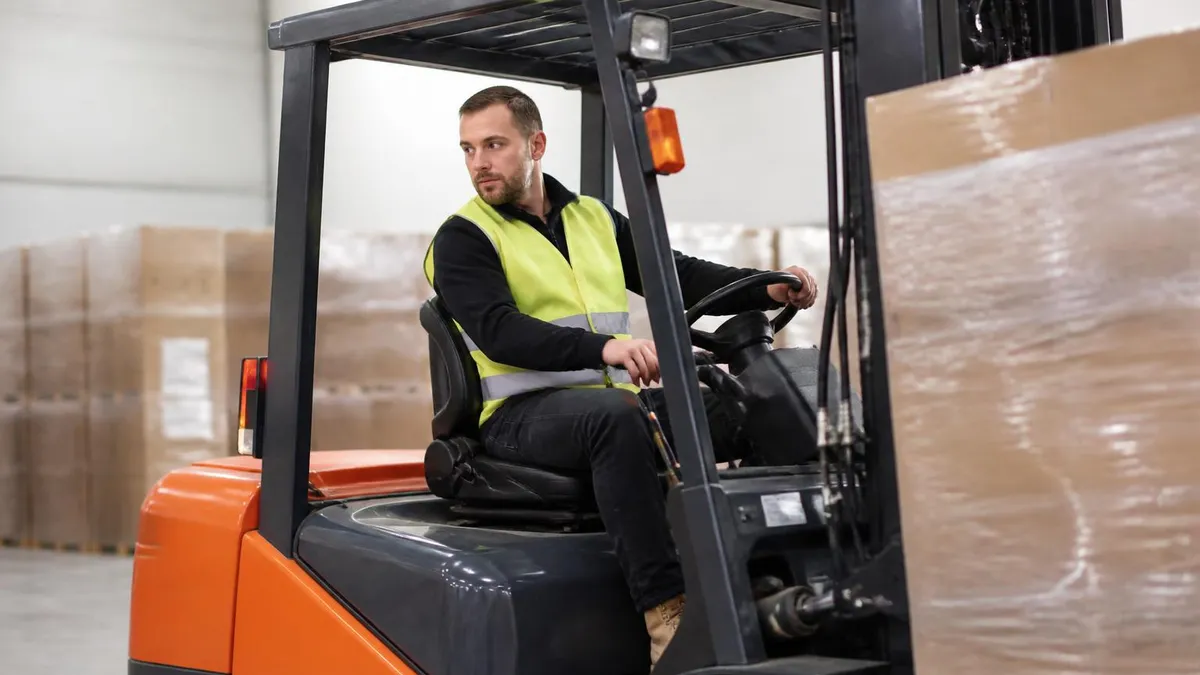
Operating any LF-class forklift in Australia without a current TLILIC0003 high-risk work licence is a criminal offence under WHS regulations. Penalties exceed $10,000 for individuals and $50,000 for employers. Always check your card's expiry — high-risk work licences must be renewed every five years and lapse on the day of expiry, not the end of the month.
Career progression from a forklift seat is real, structured, and well-trodden. Most warehouse managers, transport supervisors, and even operations directors in Australian 3PL companies started on the floor. The transition typically follows a five-stage pattern: operator, leading hand, shift supervisor, operations coordinator, then operations manager or warehouse manager. Each step adds roughly $10,000–$15,000 to base salary, with most progressing through stages over a five-to-eight-year timeframe given the right opportunities and willingness to move sites.
The first meaningful promotion is to leading hand — a working forklift role that also coordinates two-to-eight operators on a shift, allocates tasks, and reports to the shift supervisor. Leading hands earn roughly $4–$7 per hour above standard operator rates. Employers look for operators who voluntarily mentor new starters, who suggest process improvements, and who never have safety strikes. If you want this promotion, make it visible: ask to train new starters, run inductions, or help build pick paths. Initiative is the differentiator.
Stackable qualifications accelerate progression dramatically. Certificate III in Warehousing Operations (TLI31616) is offered nationally as a traineeship — your employer typically pays for it and you study one day a week or via blended online learning. Certificate IV in Logistics (TLI42116) is the gateway into supervision and is heavily subsidised under most state government funding programs. The Diploma of Logistics opens doors into corporate operations roles and is the standard entry point for Toll, Linfox, and DHL graduate-style internal pathways.
Specialist technical pathways pay extremely well. Forklift trainers and assessors (working for RTOs or in-house at major DCs) earn $90,000–$120,000 plus vehicle and are in chronic shortage. The qualification required is the TAE40122 Certificate IV in Training and Assessment, which costs around $1,800 and takes three-to-six months part-time. Combined with your TLILIC0003 and five-plus years of operating experience, you become highly employable in a niche where the average trainer is in their late fifties — the demographic transition is creating sustained demand.
Cross-functional moves into transport, planning, and inventory open further options. Many forklift operators move into yard coordination, slotting analysis, or transport planning after demonstrating systems literacy. These roles use the same warehouse-floor knowledge but apply it to optimisation and scheduling. Pay sits around $80,000–$105,000, working hours are typically Monday-to-Friday office-style, and the work is physically much lighter. For operators who want longevity in the industry without the physical toll, these roles are gold.
Self-employment is another viable pathway. Owner-operators with their own truck, forklift, and gate-pass can contract directly to manufacturers, builders' merchants, and event logistics companies. Day rates of $700–$1,200 are common, and a well-managed sole-trader operation can clear $150,000–$200,000 in revenue with one truck and one forklift. The catch is the capital required ($80K–$150K to set up), the administration burden, and the variability of work. Most successful owner-operators spend three-to-five years building client relationships while still employed before going solo.
If you want to map out your path systematically, our free forklift practice test series is the fastest way to sharpen the underlying knowledge that supports every promotion conversation — from load charts and stability to attachments and modification rules. Operators who can articulate the theory behind safe practice consistently outperform peers who only know what to do, not why.
Practical job-hunting strategy beats raw application volume every time. Most newly licensed operators spray 50–80 applications across SEEK and Indeed and wonder why response rates sit below 5%. The smarter approach is targeting 8–12 ideal employers, researching them thoroughly, and customising each application with site-specific knowledge. A candidate who mentions the recent expansion of a specific Woolworths regional DC, or who knows the brand of high-reach truck used at a Toll site, immediately stands out from the noise.
Direct outreach to warehouse managers outperforms portal applications. Find the operations or warehouse manager on LinkedIn, send a short, polite message expressing interest in forklift work at their site, and attach a one-page resume. Roughly 15–20% reply, and many will refer you to their hiring coordinator with an internal recommendation. This skips the ATS entirely and bypasses 80% of competing candidates. The trick is to be specific, brief, and professional — generic copy-paste messages are immediately filtered out.
Labour-hire agencies are an underrated entry point. Programmed, Workpac, Adecco, Hays, and Sidekicker all run dedicated industrial divisions placing thousands of forklift operators each month. The recruitment process is fast (sometimes a phone interview and a trade test within a week), and you start earning quickly. Many operators use a six-to-twelve-month labour-hire stint to build site experience and decide which employers to target for permanent roles. The downside is variable work, no paid leave, and limited training investment from the agency.
Industry-specific job boards consistently miss the radar. MyCareer Logistics, Trade Jobs Australia, and the Australian Logistics Council job board surface roles that never appear on SEEK. Industry associations like the Supply Chain and Logistics Association of Australia (SCLAA) post graduate and entry roles via their member networks. Joining as an associate member is free or very cheap and gives access to networking events where hiring managers meet candidates informally — a far more effective channel than online portals for permanent salaried roles.
Cold-storage and chilled distribution roles are easier to enter and often pay better than dry warehousing. The reason is simple: working at -25°C is uncomfortable, so employers struggle to retain staff and pay a freezer allowance to compensate. If you can tolerate the cold (proper thermal PPE provided), cold-storage roles at companies like Americold, Lineage Logistics, and Newcold offer entry pay $4–$6 per hour above comparable dry-goods roles, with much shorter recruitment timelines. It's a smart hack for fast-tracking your first year of earnings.
Finally, treat your first 90 days at any new role as a probationary audition for the next role. Build relationships with the leading hand, the shift supervisor, and the warehouse manager. Volunteer for stocktakes, training opportunities, and end-of-month overtime. Stay off your phone on the floor. Always wear the right PPE and complete your pre-start fully every shift. The operators who get noticed in their first 90 days are the operators who get pulled into the better shifts, the higher-paying sites, and the leading-hand conversations within their first year.
The Australian forklift jobs market in 2026 rewards prepared, professional, safety-conscious operators with stable, well-paid, long-term careers. Whether you stay on the floor for thirty years or use it as a launchpad into logistics management, the licence is the door — and it's wide open right now. Get your TLILIC0003, build your application kit, target the right employers, ace the trade test, and the rest takes care of itself.
Sample Forklift Licence Practice Questions
Try these questions from our free Forklift Licence practice tests. The correct answer and an explanation follow each question.
What penalties apply for non-compliance with Hazard Identification regulations in Australia?
- A. No penalties
- B. Significant fines (up to millions of AUD for corporations) and potential imprisonment for serious offences
- C. A verbal warning only
- D. A small administrative fee
Answer: B. Significant fines (up to millions of AUD for corporations) and potential imprisonment for serious offences
Australian WHS penalties are severe, with Category 1 offences carrying fines up to AUD 3 million and potential imprisonment.
Under Australian law, what rights do workers have regarding Forklift Pre-Operational Checks safety?
- A. No specific rights
- B. Rights to information, training, consultation, representation through HSRs, and to cease unsafe work
- C. Only the right to complain
- D. Rights depend on seniority
Answer: B. Rights to information, training, consultation, representation through HSRs, and to cease unsafe work
Workers have specific legal rights under WHS legislation including information, training, consultation, representation, and refusal of unsafe work.
What is the role of a WHS inspector regarding Forklift Pre-Operational Checks compliance?
- A. To do the work themselves
- B. To monitor compliance, investigate incidents, provide guidance, and issue improvement or prohibition notices
- C. To manage the project
- D. To provide insurance
Answer: B. To monitor compliance, investigate incidents, provide guidance, and issue improvement or prohibition notices
WHS inspectors enforce legislation through monitoring, investigation, guidance, and enforcement notices.
Under Australian regulations, who bears primary responsibility for Forklift Pre-Operational Checks compliance?
- A. Workers only
- B. The PCBU (Person Conducting a Business or Undertaking)
- C. Equipment suppliers
- D. The general public
Answer: B. The PCBU (Person Conducting a Business or Undertaking)
The PCBU has the primary duty under the WHS Act to ensure compliance with all safety requirements.
TLILIC0003 Questions and Answers


About the Author

Certified Crane Operator & Skilled Trades Exam Specialist
Ferris State UniversityRobert Martinez is a Journeyman Ironworker, NCCCO-certified crane operator, and forklift trainer with a Bachelor of Science in Construction Technology from Ferris State University. He has 21 years of ironworking, rigging, and heavy equipment operation experience across high-rise and industrial construction sites. Robert prepares candidates for crane operator, rigger, forklift, and skilled trades certification examinations.