
TLC License 2026 September: NYC Taxi and Limousine Commission Guide
Free TLC License 2026 September: NYC Taxi and practice test with questions and answer explanations. Prepare for the 2026 September exam with instant scoring. 🧠

What Is TLC? New York City Taxi and Limousine Commission
TLC stands for the New York City Taxi and Limousine Commission. The TLC is a New York City government agency responsible for licensing and regulating all for-hire transportation in New York City, including yellow taxis (medallion cabs), green borough taxis (boro taxis), black cars, limousines, commuter vans, paratransit vehicles, and app-based rideshare services (FHVs — For-Hire Vehicles) from platforms such as Uber, Lyft, and Via. The TLC was established in 1971 to create a unified regulatory framework for the city's fragmented taxi industry.
In the context of driving and transportation, 'TLC' most commonly refers to the TLC Driver License — the credential that all for-hire vehicle drivers in New York City must obtain before picking up passengers for compensation. A TLC Driver License is different from a standard New York State driver's license and is specific to professional for-hire transportation. Drivers using Uber, Lyft, or any other rideshare app in New York City must hold both a valid NYS driver's license and a TLC Driver License. Operating a for-hire vehicle without a c license is illegal and subject to significant fines.
The TLC also licenses vehicles — a vehicle used for commercial passenger transportation must be TLC-licensed separately from the driver. Yellow medallion taxi licenses, also called medallions, are among the most regulated vehicle licenses — they permit operation as metered street-hail taxis within Manhattan and other designated areas. FHV (For-Hire Vehicle) licenses cover rideshare, black car, and limousine vehicles dispatched through apps or base stations.
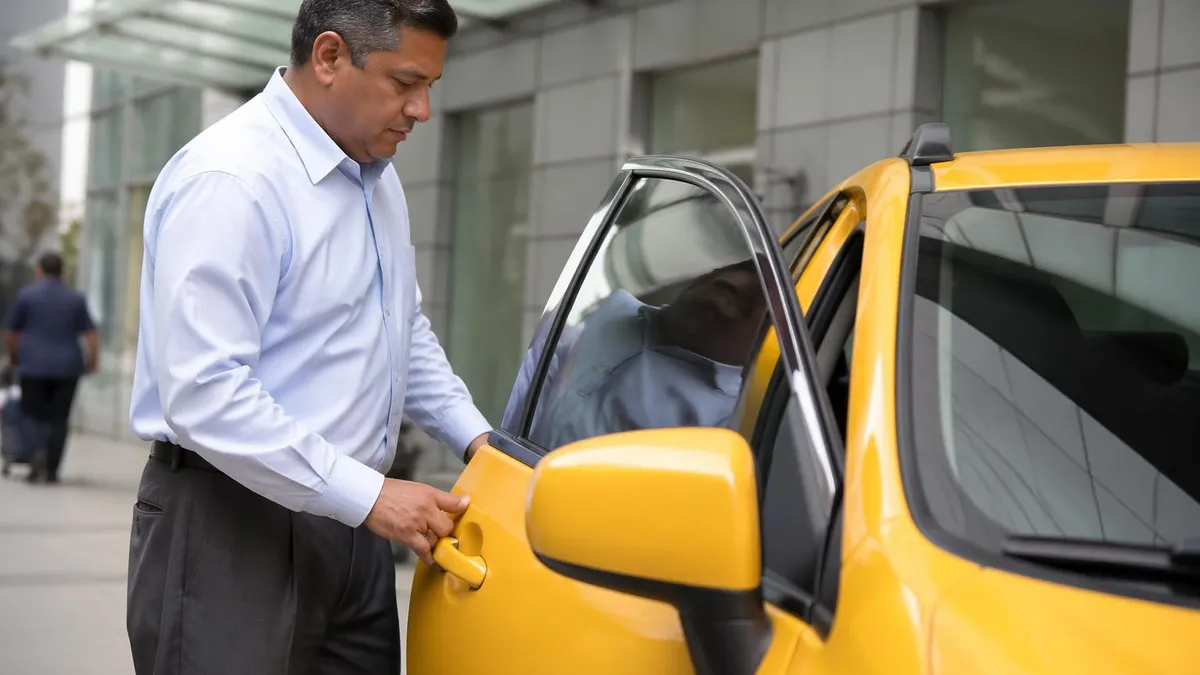
How to Get a TLC Driver License
Obtaining a TLC Driver License in New York City requires completing several steps, including meeting eligibility requirements, submitting an application, completing a defensive driving course, and passing the TLC Licensing Exam. The full process takes several weeks to complete.
Eligibility Requirements
To apply for a TLC Driver License, you must: be at least 19 years old; hold a valid, unrestricted driver's license (New York State or out-of-state); have a clean driving record that meets TLC standards (TLC checks your DMV record and may deny applicants with certain convictions or too many violations); submit to a fingerprint-based background check through the TLC and the FBI; not have certain criminal convictions — TLC performs an individualized assessment and may deny applicants with felony or misdemeanor convictions related to violent crimes, sexual offenses, or drug trafficking; and have legal authorization to work in the United States (TLC requires proof of eligibility to work).
Application Process
The TLC driver license application is submitted online through the TLC's application portal. Required documents include: government-issued photo ID, Social Security card or employment authorization document, proof of legal work authorization, vehicle insurance information (if you will be using your own vehicle), and payment of the application fee (fees are updated periodically — check the TLC website at nyc.gov/tlc for current amounts). After submitting your application, you will be assigned a date for fingerprinting and document verification at a TLC facility.
Defensive Driving and Drug Test
TLC requires all applicants to complete a TLC-approved 24-hour defensive driving course before taking the licensing exam. TLC-approved course providers are listed on the TLC website. These courses cover defensive driving techniques, TLC regulations, accessibility requirements for passengers with disabilities, and passenger safety. You must also pass a drug test as part of the licensing process — drug testing is coordinated through TLC-approved testing sites. Applicants who test positive for prohibited substances are denied a TLC license.

The TLC Licensing Exam
After completing the defensive driving course, TLC applicants must pass the TLC Licensing Exam — a written test covering TLC regulations, New York City geography and street knowledge, consumer protection rules, driver safety, and accessibility requirements. Passing the exam is required before the TLC will issue a driver license.
Exam Format and Content
The TLC Licensing Exam is a multiple-choice test administered in English or (with accommodation) other languages. It covers several content areas: TLC rules and regulations (the rules governing how TLC-licensed drivers must operate, passenger handling, vehicle standards, and prohibited activities), New York City geography (streets, bridges, tunnels, landmarks, and major routes — this section tests your knowledge of navigating the five boroughs), consumer protection and service quality (how drivers must treat passengers, ADA accessibility requirements, discrimination prohibitions, and complaint procedures), and driver safety (defensive driving principles, accident procedures, and reporting requirements). The geography section requires specific preparation — studying a NYC street map and familiarizing yourself with the city's layout is essential if you are not already familiar with all five boroughs.
Passing the Exam
The TLC does not publicly disclose the exact passing score for the licensing exam, but applicants who fail can retake the exam after a waiting period. Preparation resources include TLC study guides available on the TLC website, the TLC dmv practice test nebraska study guide, and online TLC practice tests. Taking multiple practice tests covering all exam topic areas is the most effective preparation strategy. The geography and regulations sections are most often cited by applicants as requiring the most study time.
TLC Vehicle Licensing
In addition to a driver license, vehicles used for commercial passenger transportation in New York City must be separately licensed by the TLC. The vehicle license type depends on the nature of the service.
FHV (For-Hire Vehicle) License
For-Hire Vehicle licenses cover rideshare vehicles (Uber, Lyft, Via), black cars, luxury limousines, and commuter vans that are dispatched through a licensed FHV base. To operate through Uber or Lyft in New York City, both you and your vehicle must be TLC-licensed. The vehicle must meet TLC vehicle standards including age requirements (most FHV vehicles must be less than a specified number of model years old), insurance minimums, and vehicle condition requirements. TLC-licensed vehicles carry a distinctive TLC license plate.
Yellow Medallion Taxis
Yellow taxis are licensed through the medallion system — historically one of the most valuable limited licenses in New York City. Medallions permit the holder to operate a metered street-hail taxi in certain zones (primarily Manhattan and airports). The number of medallions is capped by the TLC. Yellow taxi drivers may be medallion owners or lease their vehicles from medallion owners through TLC-approved lease arrangements. The rise of rideshare apps has significantly impacted medallion values, which peaked at over $1 million in the early 2010s before declining sharply.
Green Borough Taxis
Green boro taxis — officially called Street Hail Liveries — are licensed to pick up street hail passengers in the four outer boroughs (Brooklyn, Queens, the Bronx, Staten Island) and northern Manhattan. They cannot pick up street hails in southern Manhattan below 96th Street on the East Side and 110th Street on the West Side, where yellow taxis have exclusive street hail rights. Green boro taxis provide street hail taxi service to underserved outer borough neighborhoods that historically had limited access to yellow taxi service.

TLC Rules and Driver Compliance
TLC-licensed drivers must comply with a comprehensive set of rules governing conduct, vehicle standards, and service quality. Violations can result in fines, license suspension, or license revocation.
Key Driver Rules
TLC drivers must: accept all legal trip requests without discrimination (refusal to serve passengers based on destination or perceived characteristics is a serious violation); provide accessible service to passengers with disabilities including those using wheelchairs or assistive devices; not use a cell phone while driving (hands-free only); maintain vehicle cleanliness standards; display required identification in the vehicle; and not overcharge passengers. TLC drivers are required to carry a TLC Driver License and must present it upon request from any law enforcement officer, TLC inspector, or passenger.
Drug and Alcohol Policy
TLC-licensed drivers are subject to drug and alcohol testing requirements, including pre-licensure testing, random testing, and post-accident testing. The BAC limit for TLC drivers while on duty is 0.0% — zero tolerance for any alcohol. A positive drug or alcohol test results in immediate license suspension and may result in permanent revocation depending on circumstances. TLC also conducts sting operations to enforce compliance with passenger service rules.