
TABC Certification Texas: Seller-Server Guide 2026 September
Free TABC Certification Texas: ❓ Seller Test practice test with instant feedback and detailed answer explanations. Prepare for your exam.

What Is the TABC Seller-Server Certification?
If you work in Texas selling or serving alcohol — whether at a bar, restaurant, convenience store, or event venue — you're required by the Texas Alcoholic Beverage Commission (TABC) to hold a seller-server certificate. This credential proves you've completed state-approved training on responsible alcohol service, Texas alcohol laws, how to identify intoxicated customers, and what to do when someone's had too much.
The TABC certification Texas requirement isn't just an employer preference. State law ties it directly to liability protection: if you're certified and follow your training, you gain significant legal protection if a customer you served later causes an alcohol-related incident. Without certification, both you and your employer face substantially greater liability exposure.
The good news is that getting certified is straightforward, affordable, and now available entirely online — which is why it's become routine for anyone entering the Texas hospitality industry to get their cert before or immediately after starting a new position.
Who Needs TABC Seller-Server Certification?
Texas law requires certification for anyone whose job involves selling or serving alcoholic beverages in a licensed establishment. That includes:
- Bartenders and bar backs
- Servers and waitstaff at restaurants that serve alcohol
- Retail clerks at liquor stores or convenience stores selling beer and wine
- Event staff who serve or sell alcohol at catered events
- Managers who supervise alcohol service (even if they don't personally serve)
If your job involves any direct interaction with alcohol sales — taking orders, ringing up purchases, or physically handing drinks to customers — you need certification. Employers who allow uncertified staff to serve alcohol face significant fines and risk losing their liquor license.
How to Get Your TABC Seller-Server Certificate
The process is simple. TABC doesn't run the certification program itself — instead, it approves third-party providers who deliver the training. Here's the standard path:
- Choose a TABC-approved provider. Several online providers offer the course, including TABC On The Fly, Learn2Serve, and others. All TABC-approved courses cover the same required content — the difference is usually in interface, price, and completion time.
- Complete the training course. Most courses take 2 to 3 hours to complete. They're self-paced, so you can finish in one sitting or spread it across a few days. Content covers Texas alcohol law, signs of intoxication, ID verification, and responsible service procedures.
- Pass the final exam. After completing the course material, you'll take a final exam. Most providers require a score of 70% or higher to pass. The exam is typically 20-30 questions, multiple choice.
- Receive your certificate. Once you pass, you'll receive a certificate valid for two years. Most providers issue digital certificates immediately — you can print a copy for your employer or store the digital version on your phone.
Total cost typically runs $8 to $20 depending on the provider. Some employers cover this cost for new hires, so check before you pay out of pocket.
What the TABC Course Covers
Every TABC-approved seller-server course covers a standardized set of topics required by the Texas Alcoholic Beverage Commission. You'll spend time on:
- Texas alcohol laws: Legal sale hours, where alcohol can and can't be served, BYOB rules, and what types of establishments require what licenses
- Identifying intoxication: Behavioral cues, physical signs, and how alcohol affects people differently based on body weight, food intake, and medication interactions
- ID verification: How to check IDs correctly, spot fakes, understand which forms of ID are acceptable, and what to do when you're unsure
- Refusing service: How to deny service professionally and safely, when to call a manager, and how to handle escalating situations
- Liability and legal consequences: What happens to you and your employer if you over-serve a customer who then causes harm
The TABC On The Fly platform is one of the most popular choices for online certification — it's fast-loading and designed to get you through the material efficiently. But regardless of which approved provider you use, the course content covers the same ground.
TABC Exam: What to Expect
The TABC certification exam isn't designed to trip you up — it's designed to confirm that you paid attention during the training. Most candidates who work through the course material pass on their first attempt. Here's what typically shows up on the final exam:
- Scenarios where you identify whether a customer is intoxicated
- Questions about which ID types are legally acceptable in Texas
- Situations where you decide whether to serve or refuse a customer
- Texas law questions about hours of service and legal age requirements
- Questions about server liability and employer responsibility
The passing threshold is usually 70%. If you don't pass on the first attempt, most providers allow you to retake the exam. Some include unlimited retakes in the base price; others charge a small retake fee.
Before your exam, practice with scenario-based questions similar to what you'll see. The basic TABC quiz here covers fundamental concepts, and introduction to TABC materials help you get oriented before you dive into a paid course.
Renewing Your TABC Certification
TABC seller-server certificates are valid for two years from the date you pass the exam. To stay certified, you need to complete a renewal course before your certificate expires. The renewal process is identical to initial certification — complete an approved course, pass the exam, receive a new certificate.
Letting your certificate lapse puts you and your employer in violation of TABC regulations. Most employers track their staff's expiration dates, but don't assume someone else is monitoring yours. Set a calendar reminder 30 days before your expiration date — most online courses can be completed in an afternoon, so there's no reason to let it lapse. Check how long TABC certification lasts for details on renewal timelines.

- +Industry-recognized credential boosts your resume
- +Higher earning potential (10-20% salary increase on average)
- +Demonstrates commitment to professional development
- +Opens doors to advanced career opportunities
- −Exam preparation requires significant time investment (4-8 weeks)
- −Certification fees can be $100-$400+
- −May require continuing education to maintain
- −Some employers may not require certification


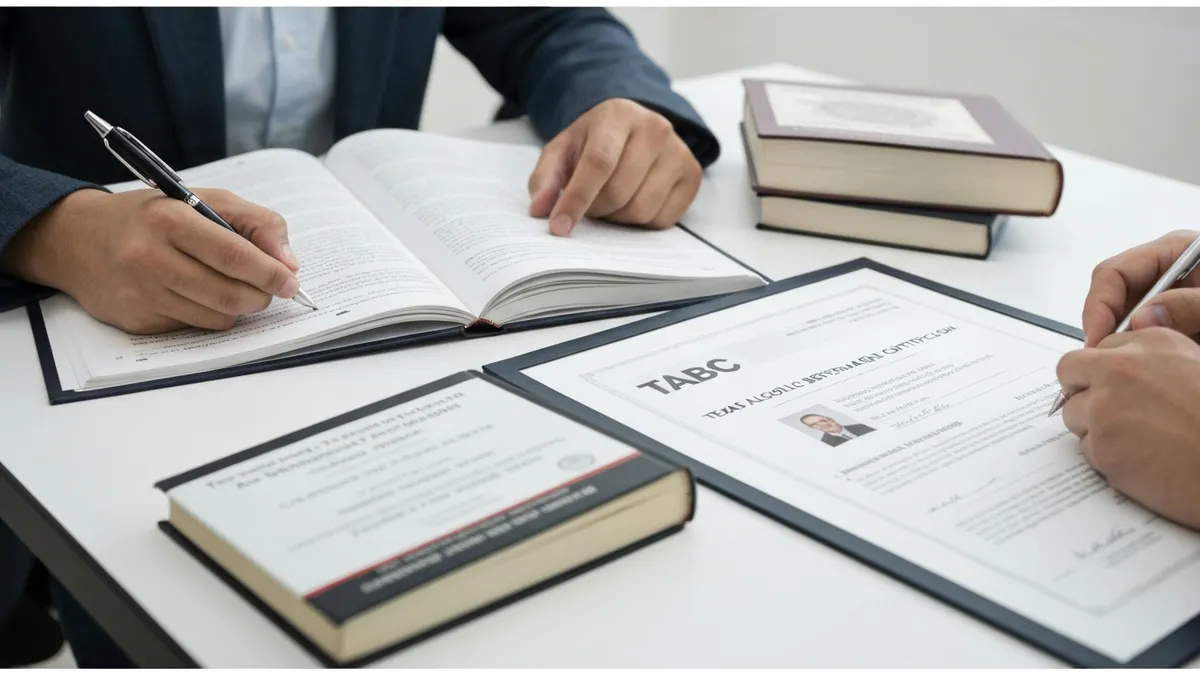


Choosing the Right TABC Course Provider
Since TABC doesn't run the training itself, you'll pick from several approved providers. A few things to consider when choosing:
Interface and experience. Some platforms are smoother than others. If you're going to spend 2-3 hours working through material, a clean interface matters. Read a few recent reviews before committing — slow loading times and buggy quiz interfaces are common complaints about some older platforms.
Exam retake policy. If passing on the first attempt isn't guaranteed (for anyone, really), know the retake policy before you pay. Some providers include unlimited retakes; others charge per attempt.
Certificate delivery. Make sure the certificate format works for your employer. Digital PDFs are standard, but some employers want a physical card or a certificate they can verify through a TABC lookup system. Ask your employer before you start.
Language options. If English isn't your first language, check whether the provider offers the course in Spanish. TABC certification en español is available through several approved providers, and TABC allows testing in Spanish as well.
Once you've completed your training and passed, you're ready to work. Keep your certificate accessible — employers, managers, and TABC inspectors can ask to see it at any time. A screenshot on your phone is usually sufficient, but having the PDF saved somewhere you can pull up quickly is good practice.
About the Author

Educational Psychologist & Academic Test Preparation Expert
Columbia University Teachers CollegeDr. Lisa Patel holds a Doctorate in Education from Columbia University Teachers College and has spent 17 years researching standardized test design and academic assessment. She has developed preparation programs for SAT, ACT, GRE, LSAT, UCAT, and numerous professional licensing exams, helping students of all backgrounds achieve their target scores.
Join the Discussion
Connect with other students preparing for this exam. Share tips, ask questions, and get advice from people who have been there.
View discussion (8 replies)