
State Trooper Salary by State: Texas, Florida, Ohio, NC & More (2026 September Guide)
State trooper salary by state: ✅ Texas, Florida, Ohio, NC, Illinois & Arkansas pay scales, benefits, overtime, and how to maximize your trooper career

State trooper ohio salary figures sit near the middle of the national pay scale, but the broader question of state trooper compensation is far more nuanced than a single dollar amount. Pay varies dramatically by jurisdiction, with base salaries ranging from roughly $42,000 in lower-paying southern states to well over $100,000 in California and New Jersey after a few years of service. Cost of living, union strength, overtime opportunities, and retirement formulas all shape what a trooper actually takes home over a 25-year career.
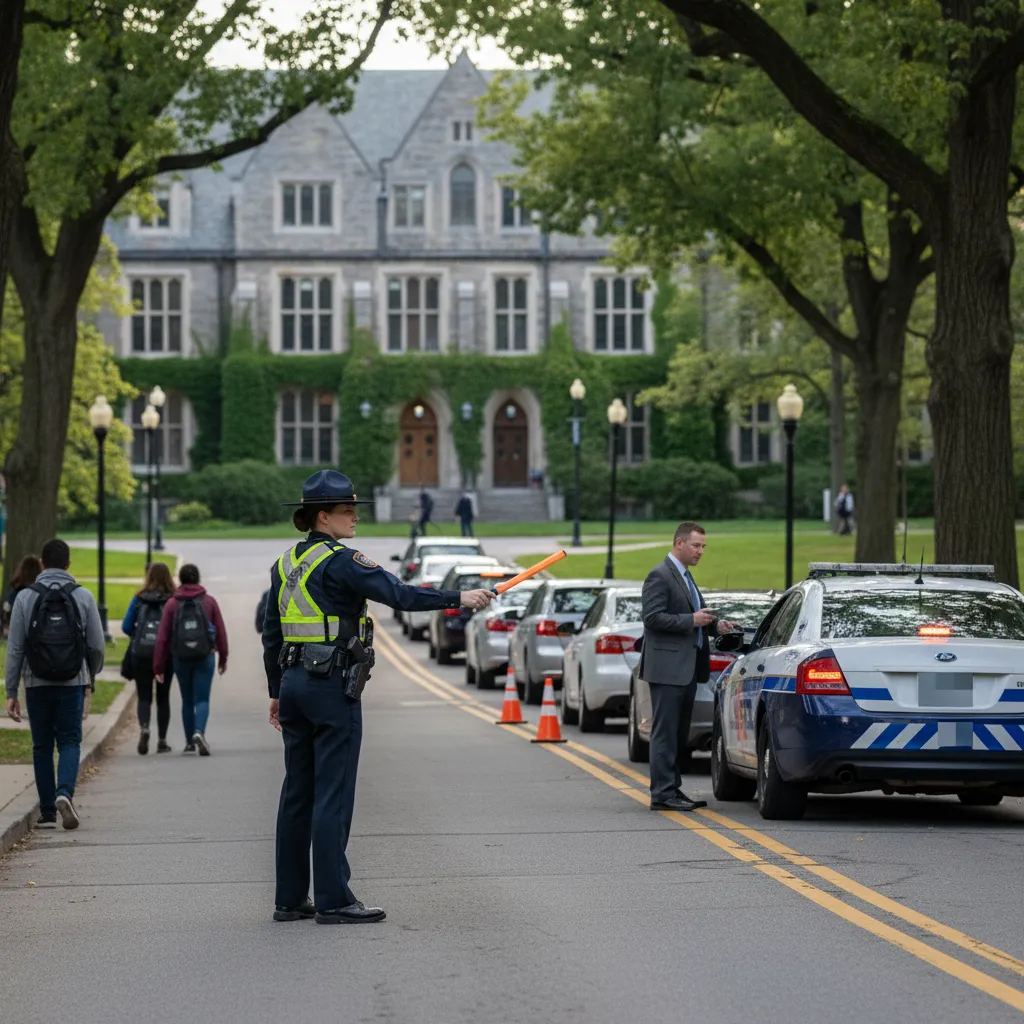
This guide breaks down trooper pay across every major state agency, including the high-volume searches around state trooper texas a recruitment classes, Florida Highway Patrol entry-level wages, Illinois State Police step increases, and the North Carolina Highway Patrol pay structure. We will also cover the specialized assignments at universities, the Arkansas State Police EUP (Enhanced Uniform Patrol) supplements, and how lateral transfers can boost a mid-career trooper's salary by $15,000 or more annually.
If you are weighing a career in state law enforcement, salary is rarely the only factor, but it matters. The difference between earning $55,000 and $85,000 over a 30-year pension cycle adds up to more than $1.2 million in lifetime compensation before benefits and retirement multipliers. Understanding which states pay the most, which have the fastest promotion timelines, and where overtime is plentiful can shape your application strategy and long-term financial outlook.
We pulled numbers directly from official agency pay scales published by the Texas Department of Public Safety, Florida Highway Patrol, Illinois State Police, Ohio State Highway Patrol, North Carolina State Highway Patrol, and the Arkansas State Police. We also incorporated U.S. Bureau of Labor Statistics data on patrol officer wages and reviewed collective bargaining agreements where they apply. Numbers reflect 2025-2026 budget cycles and recently approved legislative pay raises.
You will see that geography is destiny when it comes to trooper pay. A rookie in Mississippi may earn $36,000 while a peer in California crosses $90,000 in year one. But the gap narrows once you factor in housing, taxes, and benefits. A trooper assigned to rural Arkansas might bank a higher percentage of gross income than a counterpart paying $3,500 monthly rent in coastal California, even with a smaller paycheck.
Beyond base salary, this article covers shift differentials, hazard pay, K-9 stipends, motorcycle unit premiums, college incentive pay, and the lump-sum bonuses many states now offer to combat recruiting shortfalls. We will also explain how the famous state trooper at Texas A&M football game viral moment shaped public perception of trooper visibility and overtime work at large-scale events.
By the end, you will have a clear picture of which states reward troopers most generously, which agencies are hiring aggressively in 2026, and how to position yourself for the highest-paying assignments. Bookmark this page if you are comparing offers or planning a multi-year career path across jurisdictions.
State Trooper Salary by the Numbers

State Trooper Salary Ranges by Region
New Jersey, New York, Connecticut, and Massachusetts lead the nation with starting salaries between $65,000 and $86,000 and senior trooper pay topping $110,000. Strong unions, high cost of living, and aggressive collective bargaining drive these numbers.
California Highway Patrol offers the highest top-end pay at roughly $117,000 after seven years, plus generous overtime. Oregon and Washington follow with $70,000–$95,000 ranges, supplemented by housing allowances in high-cost metro assignments.
Texas, Florida, Georgia, and the Carolinas cluster between $48,000 starting and $75,000 senior pay. Lower cost of living improves real purchasing power, and recent legislative raises in Texas and Florida narrowed the gap with northern states.
Ohio, Illinois, Michigan, and Indiana offer mid-tier compensation. Illinois State Police lead the region at $86,000 mid-career, while Ohio State Highway Patrol starts cadets near $55,000 with steady step increases.
Colorado and Utah pay competitively at $58,000–$80,000, while Wyoming, Montana, and the Dakotas range from $45,000 to $70,000. Rural assignments often include take-home patrol vehicles and housing stipends.
The top-paying state trooper agencies in 2026 are concentrated on both coasts, with the California Highway Patrol, New Jersey State Police, and Massachusetts State Police consistently leading national rankings. CHP officers start at approximately $86,000 and reach $117,000 after the standard seven-year progression. New Jersey troopers earn $69,000 entering the academy and exceed $115,000 within nine years. Massachusetts State Police pair high base pay with generous detail and overtime opportunities, pushing many senior troopers above $150,000 in total compensation.
Texas state trooper pay has climbed sharply since the 2023 legislative session, which approved a 13 percent across-the-board raise and created a new senior trooper classification. A Texas DPS trooper now starts at roughly $69,000 during the academy and earns approximately $80,000 after one year on patrol. With longevity pay, college incentive, and shift differential, a 10-year Texas trooper commonly earns $95,000 to $105,000 annually. The agency also offers a take-home vehicle policy and one of the most respected training academies in the country.
Florida state trooper salaries received a major boost under the Florida Highway Patrol's 2022 recruitment initiative, which raised starting pay from $44,760 to $52,000. With supplements for shift work, motor units, and bilingual qualifications, a five-year FHP trooper typically earns $63,000 to $70,000. Florida's lack of state income tax effectively adds 5 to 7 percent to net take-home compared to states like Illinois or California.
Illinois state trooper compensation is driven by a strong collective bargaining agreement. Cadets earn approximately $79,476 during training, jumping to $87,000 after graduation. By year five, an Illinois trooper earns more than $100,000 base, with senior master troopers exceeding $115,000. The Illinois pension formula, while strained by state budget pressures, still pays 75 percent of final salary after 30 years.
North Carolina state trooper pay is set by a step plan that begins at $54,055 for probationary troopers and climbs to approximately $79,000 at step 10. The 2024 legislative budget added a market-rate adjustment that raised top-step pay by 8 percent. NC state trooper recruits also receive a sign-on bonus of up to $7,500 paid in installments through the first 18 months. For more detail on day-to-day operations, see our overview of the carolina state trooper field office structure.
Ohio State Highway Patrol troopers start at approximately $55,640 and progress to $82,000 after seven years of service. Ohio offers strong benefits including a defined-benefit pension through OPERS, generous longevity pay, and a 12 percent employer contribution to retirement on top of the employee share. Mid-career Ohio troopers commonly clear $90,000 with shift differential and overtime.
Arkansas State Police troopers benefit from the EUP (Enhanced Uniform Patrol) supplement program, which adds up to $5,500 annually for troopers assigned to high-priority interdiction corridors. Base pay starts at $54,000 and reaches $72,000 at the senior level. Arkansas State Police also offer take-home vehicles and one of the lowest housing cost ratios in the country, meaning real purchasing power often exceeds nominally higher-paying states.

State Trooper Practice Test Questions
Prepare for the State Trooper exam with our free practice test modules. Each quiz covers key topics to help you pass on your first try.
State Trooper Criminal and Traffic Law
State Trooper Exam Questions covering Criminal and Traffic Law. Master State Trooper Test concepts for certification prep.
State Trooper General
Free State Trooper Practice Test featuring General. Improve your State Trooper Exam score with mock test prep.
State Trooper MCQ
State Trooper Mock Exam on MCQ. State Trooper Study Guide questions to pass on your first try.
State Trooper Patrol and Investigation Pro...
State Trooper Test Prep for Patrol and Investigation Procedures. Practice State Trooper Quiz questions and boost your score.
State Trooper
State Trooper Questions and Answers on State Trooper. Free State Trooper practice for exam readiness.
State Trooper Random
State Trooper Mock Test covering Random. Online State Trooper Test practice with instant feedback.
State Trooper Reading Comprehension and Re...
Free State Trooper Quiz on Reading Comprehension and Reasoning. State Trooper Exam prep questions with detailed explanations.
State Trooper Report Writing and Grammar
State Trooper Practice Questions for Report Writing and Grammar. Build confidence for your State Trooper certification exam.
State Trooper Situational Judgment and Ethics
State Trooper Test Online for Situational Judgment and Ethics. Free practice with instant results and feedback.
State Trooper Trivia
State Trooper Study Material on Trivia. Prepare effectively with real exam-style questions.
State Trooper Use of Force Principles
Free State Trooper Test covering Use of Force Principles. Practice and track your State Trooper exam readiness.
State Trooper Ultimate State Trooper
State Trooper Exam Questions covering Ultimate State Trooper. Master State Trooper Test concepts for certification prep.
State Trooper Community Relations and Comm...
Free State Trooper Practice Test featuring Community Relations and Communication. Improve your State Trooper Exam score with mock test prep.
State Trooper Constitutional Rights and Ci...
State Trooper Mock Exam on Constitutional Rights and Civil Liberties. State Trooper Study Guide questions to pass on your first try.
State Trooper Criminal Law Fundamentals
State Trooper Test Prep for Criminal Law Fundamentals. Practice State Trooper Quiz questions and boost your score.
State Trooper Emergency Response and Crisi...
State Trooper Questions and Answers on Emergency Response and Crisis Management. Free State Trooper practice for exam readiness.
State Trooper Emergency Vehicle Operations
State Trooper Mock Test covering Emergency Vehicle Operations. Online State Trooper Test practice with instant feedback.
State Trooper Ethics and Professional Conduct
Free State Trooper Quiz on Ethics and Professional Conduct. State Trooper Exam prep questions with detailed explanations.
State Trooper Firearms Safety and Use of F...
State Trooper Practice Questions for Firearms Safety and Use of Force. Build confidence for your State Trooper certification exam.
State Trooper Incident Report Writing
State Trooper Test Online for Incident Report Writing. Free practice with instant results and feedback.
State Trooper Investigation Procedures
State Trooper Study Material on Investigation Procedures. Prepare effectively with real exam-style questions.
State Trooper Map Reading and Navigation
Free State Trooper Test covering Map Reading and Navigation. Practice and track your State Trooper exam readiness.
State Trooper Patrol Operations and Proced...
State Trooper Exam Questions covering Patrol Operations and Procedures. Master State Trooper Test concepts for certification prep.
State Trooper Patrol Procedures and Tactics
Free State Trooper Practice Test featuring Patrol Procedures and Tactics. Improve your State Trooper Exam score with mock test prep.
State Trooper Physical Fitness and Wellnes...
State Trooper Mock Exam on Physical Fitness and Wellness Standards. State Trooper Study Guide questions to pass on your first try.
State Trooper Reading Comprehension and Logic
State Trooper Test Prep for Reading Comprehension and Logic. Practice State Trooper Quiz questions and boost your score.
State Trooper Report Writing and Documenta...
State Trooper Questions and Answers on Report Writing and Documentation. Free State Trooper practice for exam readiness.
Texas, Florida & Illinois State Trooper Pay Compared
Texas state trooper salary structure begins at $69,000 during the 27-week academy in Austin, jumping to roughly $80,000 upon graduation and field assignment. After one year as a probationary trooper, pay rises to $84,540, then increases through annual step adjustments. By year five, most Texas troopers earn between $92,000 and $98,000 base, with senior troopers and corporals exceeding $105,000.
Beyond base, Texas DPS offers longevity pay at $20 monthly per year of service, hazardous duty pay, bilingual stipends of up to $200 monthly, and overtime opportunities at events like SXSW, Texas A&M football games, and border operations. The famous viral moment of a state trooper at a Texas A&M game highlighted the visibility — and overtime earnings potential — of these high-profile details.
Is State Trooper Pay Worth It?
- +Defined-benefit pensions still exist in most states, paying 50–75% of final salary
- +Take-home patrol vehicles save $400–$700 monthly in personal transportation costs
- +Generous overtime opportunities at events, holidays, and emergency deployments
- +Strong health insurance with low premiums for trooper and family coverage
- +Annual step increases plus cost-of-living adjustments compound over a career
- +Retirement eligibility as early as age 50 with 25 years of service in many states
- +Sign-on bonuses up to $10,000 in states facing recruiting shortages
- −Starting pay in southern and plains states can lag private-sector careers
- −Mandatory overtime and weekend shifts disrupt family schedules
- −Pension contributions of 7–11% reduce net take-home pay
- −Geographic assignments may require relocating to rural posts initially
- −Promotion to corporal or sergeant can take 7–12 years in competitive agencies
- −Health and physical demands accumulate over decades on patrol
- −Some state pension systems face long-term funding pressures

How to Maximize Your State Trooper Salary
- ✓Complete a bachelor's degree before applying — most states pay $1,800–$3,600 annual incentive
- ✓Apply to states with the strongest pension multipliers like New Jersey, Illinois, or California
- ✓Pursue specialty assignments such as K-9, motor unit, SWAT, or aviation for monthly stipends
- ✓Maintain bilingual certification — Spanish proficiency adds $100–$200 monthly in most agencies
- ✓Volunteer for overtime details at sporting events, festivals, and holiday traffic enforcement
- ✓Earn field training officer (FTO) certification for additional hourly supplements
- ✓Pursue lateral transfers to higher-paying agencies after 3–5 years of patrol experience
- ✓Maximize deferred compensation contributions to capture employer matches
- ✓Document all training hours for promotion eligibility to corporal and sergeant ranks
- ✓Avoid disciplinary action — most agencies freeze step increases during active investigations
$80,000 in Arkansas Buys More Than $110,000 in California
When evaluating state trooper salary offers, look beyond gross pay. After taxes, housing, and commuting costs, a $78,000 Arkansas trooper salary often produces higher disposable income than a $112,000 California Highway Patrol salary in coastal counties. Run real-world cost-of-living math on every offer.
Benefits, pensions, and overtime often outweigh base salary when evaluating state trooper compensation over a full career. Most state police agencies still offer defined-benefit pensions — increasingly rare in the private sector — that pay 50 to 75 percent of final average salary after 25 to 30 years of service. For a trooper retiring at 55 with a final salary of $95,000, that translates to $47,500 to $71,250 in annual pension income, often with cost-of-living adjustments and survivor benefits for spouses.
Health insurance for state troopers is typically a high-quality PPO with low employee premiums. Family coverage that would cost $1,800 monthly on the private market often costs a trooper $300 to $500 per month. Dental, vision, and life insurance are usually bundled at little or no additional cost. Many states also offer retiree health insurance bridging from retirement to Medicare eligibility — a benefit worth $100,000 to $200,000 over a typical retirement.
Overtime is where state trooper salary numbers can balloon. Holiday traffic enforcement, sporting events, dignitary protection, hurricane and disaster response, and federal task force assignments all generate time-and-a-half or double-time pay. In high-overtime years, troopers in states like New Jersey, Massachusetts, and New York commonly earn 30 to 50 percent above base. The famous viral state trooper at Texas A&M football game moment is a real example — game-day details routinely pay $400 to $700 per shift.
Take-home patrol vehicles, fuel cards, and vehicle maintenance are an underappreciated benefit. The IRS values a take-home vehicle for personal commuting at $1.50 to $3.00 per one-way mile. For a trooper with a 20-mile commute, that is $7,800 to $15,600 in untaxed equivalent compensation annually. Add free fuel, maintenance, tires, and insurance, and the total benefit easily exceeds $20,000 per year in many jurisdictions.
Deferred compensation plans such as 457(b) accounts allow troopers to save pre-tax income beyond the pension. Many states offer employer matches of 2 to 5 percent, and the contribution limits in 2026 reach $23,500 with additional catch-up provisions for troopers over 50. Combined with the pension, a disciplined trooper can retire with seven-figure deferred savings on top of guaranteed pension income.
Hazard pay, shift differentials, and uniform allowances add steady supplements to base salary. Most agencies pay an additional 6 to 10 percent for evening and overnight shifts. Uniform and equipment allowances typically range from $1,000 to $2,500 annually. K-9 handlers, motor unit officers, dive team members, and pilots receive monthly stipends ranging from $150 to $800 in addition to base pay.
Workers' compensation and disability benefits are stronger for state troopers than nearly any other occupation. Job-related injuries are typically covered at 70 to 100 percent of regular pay, often tax-free, for extended periods. Catastrophic injury and death benefits are also significantly higher than civilian workers' compensation schedules, providing critical financial security for trooper families.
Leaving a state trooper job before vesting (typically 5–10 years) can forfeit the pension entirely. Calculate the true cost of leaving before vesting — it often exceeds $500,000 in lifetime retirement income. Always check vesting schedules before accepting a lateral offer.
Career progression and lateral transfers can dramatically change a trooper's lifetime earnings. Most state police agencies use a step-and-grade system in which base salary increases annually for the first seven to ten years, then progresses through promotional ranks: trooper, senior trooper, corporal, sergeant, lieutenant, captain, major, and colonel. The jump from trooper to corporal typically adds 8 to 12 percent. Sergeant adds another 10 to 15 percent. Lieutenants and captains commonly earn $110,000 to $140,000, with majors and colonels at executive-level compensation.
Lateral transfers — moving from one state agency to another or from a municipal department to a state police force — can significantly boost mid-career earnings. A trooper with five years in Arkansas who laterals to Illinois State Police may see base pay rise from $66,000 to $95,000 overnight. However, lateral candidates typically lose seniority for promotion purposes and may not transfer pension service credit, so the math requires careful evaluation. Some states offer formal lateral programs with credit for prior service.
Specialty assignments are the fastest path to top-tier trooper compensation. K-9 handlers, motor unit officers, bomb technicians, dive team members, helicopter pilots, and SWAT operators all earn monthly stipends ranging from $150 to $1,200 above base. These assignments often come with additional overtime opportunities for high-profile events, executive protection, and federal task force details that further multiply earnings.
Education incentives compound over time. Most agencies pay $1,200 to $3,600 annually for a bachelor's degree and an additional $1,800 to $3,000 for a master's. Over a 25-year career, that is $75,000 to $165,000 in additional gross income, plus the higher pension multiplier on the increased final salary. For a trooper considering whether to finish a degree, the lifetime return on tuition investment is typically 1,000 percent or more.
Federal task force assignments — working with the DEA, FBI, ATF, or U.S. Marshals — often add overtime premiums and federal supplements. Troopers assigned to joint terrorism task forces or major case squads commonly clear $130,000 to $160,000 with federal overtime authority. These assignments also build resumes for post-retirement second careers in federal contracting or corporate security. For more on the career path and study materials, see our state trooper at texas a exam prep guide.
Promotion timing matters enormously. Most agencies require time-in-grade before promotion eligibility — typically three to five years as a trooper before applying for corporal, and another three to five before sergeant. Aggressive promotion can compress the path to lieutenant in 12 to 15 years, while passive troopers may remain at the patrol rank for full careers. Both paths are valid; the financial difference is substantial but so are the responsibilities and stress levels.
Post-retirement second careers are common and financially rewarding. Retired state troopers frequently move into corporate security, federal contracting, private investigation, or law enforcement training. With a state pension already paying $60,000 to $80,000 annually, a $90,000 second-career salary effectively produces a total household income exceeding $150,000 while accumulating Social Security and 401(k) savings on top. Some retired troopers become elected sheriffs or run for state legislature, leveraging their reputation for additional compensation and influence.
Practical tips for maximizing your state trooper career earnings start with the application stage. Apply to multiple agencies simultaneously — there is no rule against holding offers from Texas DPS, Florida Highway Patrol, and the North Carolina State Highway Patrol at the same time. Comparing offers gives leverage and clarity. Some agencies will accelerate hiring or offer relocation packages when they know you have competing options.
Negotiate sign-on bonuses and lateral credit aggressively. Many states facing recruiting shortages offer $5,000 to $15,000 sign-on bonuses, relocation reimbursement, and credit for prior military or law enforcement service that translates directly into accelerated step placement. A trooper who negotiates two-step credit at hiring effectively skips two years of progression — worth $20,000 to $40,000 in cumulative early-career earnings.
Use the academy period strategically. Cadet pay is lower than field pay, but academy time counts toward pension service and step progression. Living frugally during the academy — many cadets share apartments or live in agency-provided housing — builds an emergency fund and lets you avoid lifestyle inflation when the first full trooper paycheck arrives. Set up automatic 457(b) contributions before you ever see the higher net pay.
Take care of your physical and mental health early. Disability retirement at low percentages can devastate long-term earnings. The troopers who reach senior ranks and maximum pension multipliers tend to be those who maintained fitness, sleep, and stress management from the academy through retirement. Many agencies now offer free gym memberships, peer support programs, and mental health resources — use them.
Build a financial plan that bridges pension and Social Security. Most state troopers retire in their early 50s with pensions but no immediate Social Security eligibility. Saving aggressively in deferred compensation plans, paying off mortgages before retirement, and avoiding lifestyle creep during peak earning years all combine to create financial freedom rather than forced second-career work.
Document everything for promotion. Promotional boards reward officers who can demonstrate specialized training, leadership in major incidents, community engagement, and continued education. Keep a running professional portfolio with commendations, training certificates, case clearances, and community service. The trooper who walks into a sergeant's board with a well-organized record outperforms peers with equal years of service.
Finally, network across agencies and the federal system. Strong relationships with FBI, DEA, and federal partners create task force opportunities, training invitations, and post-retirement employment leads. Attend FBI National Academy if selected — graduates routinely earn 15 to 20 percent more over their remaining careers due to expanded promotional eligibility and visibility in the law enforcement community. Investment in relationships pays for decades.
State Trooper Questions and Answers



About the Author

Educational Psychologist & Academic Test Preparation Expert
Columbia University Teachers CollegeDr. Lisa Patel holds a Doctorate in Education from Columbia University Teachers College and has spent 17 years researching standardized test design and academic assessment. She has developed preparation programs for SAT, ACT, GRE, LSAT, UCAT, and numerous professional licensing exams, helping students of all backgrounds achieve their target scores.
Join the Discussion
Connect with other students preparing for this exam. Share tips, ask questions, and get advice from people who have been there.
View discussion (3 replies)