
How Hard Is the SQE? A Complete Difficulty Guide for Aspiring Solicitors
How hard is the SQE? 🎯 Discover pass rates, difficulty levels, study timelines, and expert tips to help you pass the SQE on your first attempt.

How hard is the SQE? It is one of the first questions every aspiring solicitor asks, and the honest answer is: considerably challenging, but absolutely achievable with the right preparation. The Solicitors Qualifying Examination replaced the old LPC route and was designed to create a single, standardized gateway into the legal profession in England and Wales. Since its launch in 2021, first-attempt pass rates have hovered around 53–60% for SQE1, meaning roughly four in ten candidates do not pass on their first sitting. That figure alone tells you this is not a test you can wing.
The SQE is split into two distinct stages. SQE1 is a purely written, multiple-choice assessment covering Functioning Legal Knowledge across twelve practice areas. SQE2 tests practical legal skills — drafting, advocacy, interviewing, and legal research — through a series of oral and written tasks graded by trained assessors. Together, they demand both academic depth and professional competence, a combination that has caught many candidates off-guard who trained under the old LPC model where coursework carried significant weight.
What makes the SQE particularly demanding is its breadth. Candidates must demonstrate competence across criminal law, property law, business law, wills and probate, tort, and several other areas simultaneously. Unlike a university degree where you can specialize and avoid weaker subjects, the SQE forces you to reach a minimum standard in every tested domain. A brilliant commercial law mind who neglects family law can still fail SQE1 because of that single gap.
Preparation time matters enormously. Most successful candidates invest between 300 and 500 hours of structured study before sitting SQE1 alone. That is the equivalent of working full-time for three months, or studying part-time for six to nine months alongside a job or other commitments. Candidates who underestimate this requirement and squeeze study into a few weeks consistently report poor results, while those who build a systematic schedule and stick to it tend to pass comfortably.
The examination is also commercially significant. Exam fees, preparatory courses, and living costs during study can add up to tens of thousands of dollars in total investment. That financial reality puts pressure on candidates to pass efficiently, ideally first time. Understanding the true difficulty level upfront helps you plan your finances, timeline, and mental approach before you register — not after you receive a disappointing result.
Practice testing is the single most effective tool in any SQE candidate's arsenal. Repeated exposure to SQE-style multiple-choice questions builds pattern recognition, reinforces legal rules, and dramatically reduces exam-day anxiety. If you want to understand how hard is sqe in practice, the fastest way is to sit a full mock paper under timed conditions and see exactly which areas need the most attention.
This guide breaks down the SQE's difficulty from every angle: pass rates, subject coverage, time demands, skills assessment, common failure patterns, and the study strategies that consistently produce first-time passes. Whether you are just starting to research the qualification or are weeks away from your first sitting, the information here will help you calibrate your preparation and walk into the exam room with genuine confidence.
SQE Difficulty by the Numbers

SQE Exam Format & Structure
| Section | Questions | Time | Weight | Notes |
|---|---|---|---|---|
| SQE1 — Session A | 90 | 3 hrs | 50% | Functioning Legal Knowledge: business, property, wills |
| SQE1 — Session B | 90 | 3 hrs | 50% | Functioning Legal Knowledge: criminal, tort, ethics |
| SQE2 — Written Skills | 8 | Variable | 50% | Drafting, research, case and matter analysis |
| SQE2 — Oral Skills | 8 | Variable | 50% | Client interviewing, advocacy, attendance notes |
| Total | 180 | 6 hours (SQE1) + variable (SQE2) | 100% |
The SQE is demanding for reasons that go beyond sheer volume of content, though that volume is itself substantial. At its core, the exam tests whether you can think like a practicing solicitor under time pressure — not whether you can recall rules in a relaxed academic setting. This distinction matters enormously. Many candidates who performed well in law school find the SQE unexpectedly difficult because the assessment style rewards applied reasoning over rote memorization, and the time constraints leave little room for second-guessing.
SQE1 questions are written in a scenario format. Each question presents a client situation and asks what the solicitor should advise, what the legal position is, or what the next procedural step should be. The four or five answer choices are deliberately close to each other — two of them will often seem defensible to someone with partial knowledge. You need to know the rule precisely, apply it to the specific facts, and eliminate the distractors confidently. Candidates who have a vague understanding of a topic consistently choose the almost-right answer rather than the correct one.
The breadth of SQE1 is what most candidates cite as its most overwhelming feature. You are tested on business law and practice, property practice, wills and intestacy, criminal law and practice, dispute resolution, contract law, tort law, constitutional law, legal services regulation, and more. These are not introductory surveys — the questions probe detailed procedural knowledge, including court timelines, prescribed forms, and regulatory thresholds that require deliberate study of the current rules.
SQE2 introduces a completely different type of difficulty. Instead of selecting the right answer from a list, you must produce professional-quality work under time pressure: draft a contract clause, conduct a simulated client interview, make an oral submission to an assessor playing the role of a judge, or write a detailed attendance note.
The skills being assessed — communication, analysis, drafting precision, professional conduct — are the skills of a qualified solicitor, not a student. That gap between student mindset and professional mindset is real, and candidates who do not bridge it through practice tend to underperform regardless of their academic knowledge.
Timing is another hidden source of difficulty. SQE1 gives you two minutes per question on average, which sounds generous until you are on question 70 of 90 and your brain is fatigued. Many candidates report running out of time on at least one session, leaving several questions unanswered. Unanswered questions score zero, so time management is a skill you must develop through repeated timed practice, not something you can improvise on exam day.
The standard-setting process used by the SRA means the pass mark can vary slightly between sittings depending on overall cohort performance and question difficulty. This introduces a layer of uncertainty that many candidates find psychologically unsettling. You cannot target a specific percentage score and assume you are safe — you must aim to genuinely understand the law across all tested areas well enough to handle whatever difficulty level the examiners set for your particular sitting.
One often-overlooked factor is the emotional toll of preparing for a high-stakes professional exam while managing work, finances, and personal commitments. The SQE is not a short sprint — it is a sustained effort measured in months. Candidates who build in recovery time, vary their study methods, and use practice questions to measure real progress tend to sustain motivation far better than those who rely solely on reading and note-taking, which can feel productive without generating the active recall that leads to genuine exam-ready knowledge.
SQE1 vs SQE2 vs Qualifying Work Experience: How Hard Is Each?
SQE1 is an objective, multiple-choice exam covering twelve areas of Functioning Legal Knowledge. With 180 questions spread across two three-hour sessions, the primary challenge is breadth combined with precision. Candidates must know procedural details — court deadlines, regulatory thresholds, prescribed notice periods — well enough to distinguish the correct answer from four closely worded alternatives. A pass rate of roughly 55% means the exam eliminates a significant proportion of underprepared candidates each sitting.
Most successful SQE1 candidates spend 300–500 hours studying across a period of four to nine months. They use a combination of substantive review materials, condensed revision notes, and — most critically — large banks of practice questions to build the pattern recognition the exam rewards. Candidates who study passively by reading textbooks without testing themselves consistently score below the pass threshold, while those who integrate weekly mock sessions from early in their preparation tend to improve steadily and pass with confidence.

Is the SQE Right for You? Weighing the Difficulty Against the Benefits
- +Single standardized gateway that is genuinely accessible to non-law graduates with a conversion course
- +QWE flexibility allows you to qualify while working, reducing financial pressure compared to the old training contract model
- +Pass marks are criterion-referenced, so you compete against a standard rather than being ranked against other candidates
- +Resits are permitted — you can retake individual assessments without starting over from the beginning
- +Wide range of prep providers means you can find courses tailored to your learning style and budget
- +Qualification is recognized across England and Wales with full solicitor status equivalent to any other route
- −First-attempt pass rates around 55% for SQE1 mean most candidates should budget for the possibility of a resit
- −Total costs including course fees, exam fees, and living expenses can exceed $15,000–$25,000 over the full qualification period
- −Breadth of SQE1 content requires sustained study across twelve practice areas simultaneously — no option to specialize
- −SQE2 oral assessments are unfamiliar to most academic law students and require dedicated skills practice beyond content revision
- −QWE sign-off depends on individual supervisors who may not fully understand the SRA competency framework
- −Exam dates are set by Kaplan on behalf of the SRA, offering limited flexibility for candidates with work or personal conflicts
SQE Study Checklist: 10 Actions That Lead to a First-Time Pass
- ✓Map out all twelve SQE1 subject areas and assign study weeks to each before you begin any content review.
- ✓Set a weekly practice question target of at least 50 SQE-style MCQs from the very first week of preparation.
- ✓Review every incorrect practice answer immediately and write a one-sentence rule summary in your own words.
- ✓Complete at least two full 90-question timed mock sessions before your actual SQE1 sitting date.
- ✓Identify your three weakest subject areas by week four and allocate double revision time to those topics.
- ✓For SQE2, record yourself conducting a mock client interview and listen back critically for clarity and structure.
- ✓Practise legal drafting exercises weekly and compare your output against model answers from your prep provider.
- ✓Study the SRA Competency Statement so you understand exactly what assessors are looking for in SQE2 stations.
- ✓Build in one full rest day per week to prevent burnout during a preparation period that spans many months.
- ✓Register for your exam date at least eight weeks before sitting to ensure you have a confirmed deadline to work toward.
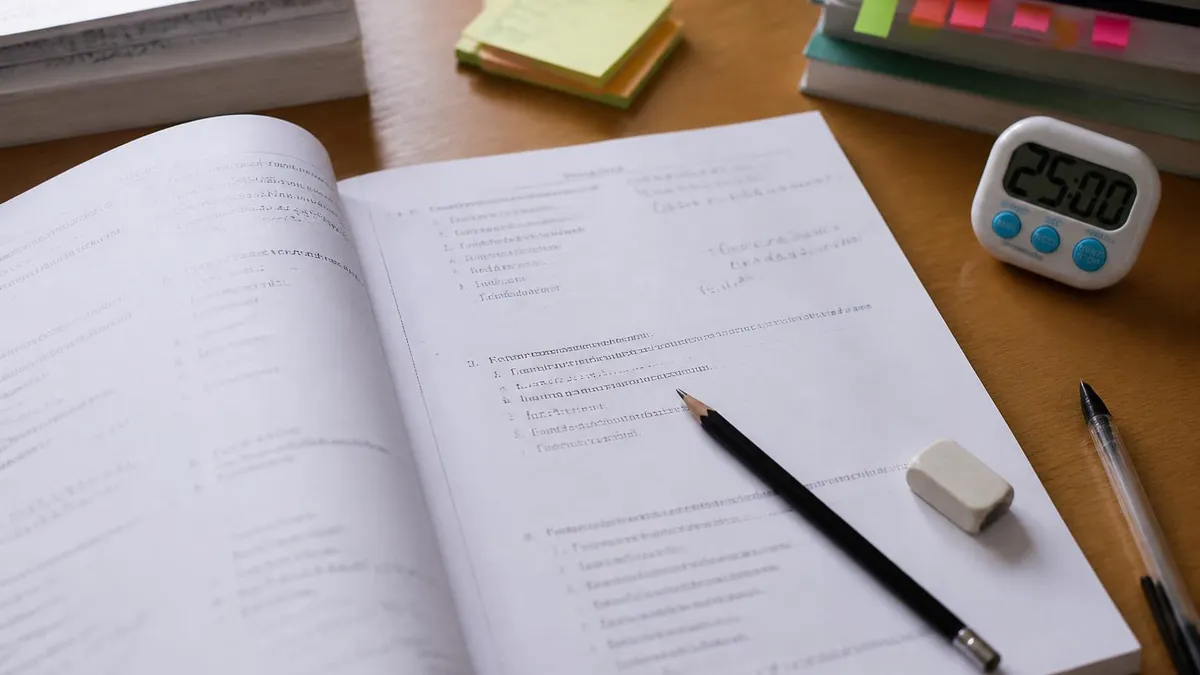
Practice Questions Predict SQE1 Results More Reliably Than Study Hours Alone
Research from multiple SQE preparation providers consistently shows that candidates who complete 1,000 or more practice questions before sitting SQE1 pass at significantly higher rates than those who focus primarily on reading and note-taking. The exam rewards active recall and applied reasoning — skills that only develop through repeated question practice, not passive content review. If you have limited study time, prioritize question banks over textbooks every time.
Looking at the published data gives a clearer picture of just how difficult the SQE really is in practice. The Solicitors Regulation Authority publishes outcome statistics after each assessment window, and the pattern is consistent: SQE1 first-attempt pass rates have ranged from approximately 53% to 62% since the exam launched in 2021. This means that in any given sitting, somewhere between four and five out of every ten candidates who sit the exam do not pass. Those are meaningful odds that every candidate should take seriously.
Breaking the data down further reveals important patterns. Candidates who completed a preparatory course — particularly those offered by recognized providers with large question banks — pass at higher rates than self-study candidates. This does not necessarily mean self-study cannot work, but it suggests that structured guidance, regular feedback, and access to high-quality practice materials make a measurable difference to outcomes. Candidates who invest in preparation tend to see that investment reflected in their results.
Graduate background also appears in the data. Law graduates who have studied all or most of the SQE1 subject areas tend to perform better on first attempt than non-law graduates who relied solely on a Graduate Diploma in Law to cover the gap. However, non-law candidates who used a comprehensive SQE prep course specifically designed to build legal knowledge from the ground up have achieved pass rates comparable to law graduates. The exam does not reward having a law degree — it rewards knowing the law well enough to apply it correctly under time pressure.
SQE2 pass rates tell a somewhat different story. At approximately 68–73% first-attempt success, SQE2 appears more passable than SQE1. However, this comparison is misleading for two reasons. First, only candidates who have passed SQE1 can sit SQE2, so the SQE2 cohort is already a filtered, higher-performing group. Second, the consequences of failing SQE2 at a late stage — after years of study, QWE, and exam fees — are psychologically and financially severe. The stakes feel higher, which increases the pressure even for well-prepared candidates.
Resit rates are also instructive. A significant proportion of SQE1 candidates resit the exam after an initial failure, and resit pass rates are broadly similar to first-attempt rates. This indicates that many candidates who fail their first attempt are not fundamentally unprepared — they were close to the pass mark and needed only modest improvement. Targeted revision of weak areas between sittings, combined with additional practice question exposure, frequently produces a pass on the second attempt.
One data point that often surprises candidates is the relatively high rate of SQE2 failures attributable to professional conduct and ethics rather than substantive legal knowledge. The SRA's competency framework places ethics and professional responsibility at the center of every assessed station. Candidates who treat ethics as a secondary consideration and focus purely on legal analysis can find themselves failing a station they believed they had answered correctly. Ethical awareness must be integrated into your preparation from day one, not added as an afterthought in the final weeks.
Understanding these statistics helps you set realistic expectations. A 55% first-attempt pass rate means passing is very much achievable — the majority of well-prepared candidates do pass. It also means that treating the exam casually or underinvesting in preparation is genuinely risky. The data supports a simple conclusion: candidates who prepare systematically and thoroughly pass; candidates who prepare inadequately or inconsistently tend not to. The exam is a reliable test of preparation quality.
Each SQE1 resit costs approximately £1,600 (around $2,000) in assessment fees alone, on top of any additional course or preparation costs. Candidates who sit multiple times can easily spend $5,000–$8,000 in exam fees before qualifying. Building a thorough, structured study plan before your first sitting is not just academically smart — it is the most financially efficient approach to the qualification.
The most effective study strategies for the SQE share a common feature: they treat the exam as a skills-based test rather than a knowledge-storage exercise. This means building active recall through practice questions, not simply consuming content. Candidates who read a textbook chapter and then immediately attempt 20 questions on that topic consistently retain far more than candidates who read the same chapter twice. The testing effect is well-documented in cognitive psychology and it applies powerfully to SQE preparation.
Spacing your revision is equally important. Returning to a topic after a gap — even a gap of just five days — is significantly more effective for long-term retention than reviewing the same material repeatedly within a single study session. Build a revision calendar that cycles back through earlier topics regularly. By the time you reach your final revision weeks before the exam, you should be reinforcing knowledge you first studied months ago, not encountering it again for the first time in a desperate last-minute cram.
For SQE1, the most efficient study sequence most preparation providers recommend is: first, get an overview of each subject area using condensed materials; second, work through a large bank of practice questions with detailed explanations; third, review your weak areas using more detailed resources; and fourth, complete full mock papers under timed conditions. This four-stage cycle, repeated across all twelve subject areas, represents the approach that consistently produces pass results among candidates who follow it diligently.
For SQE2, the preparation approach must shift fundamentally. Content knowledge is still required — you cannot draft a valid will clause without knowing succession law — but the primary focus must be on skill execution. Seek out opportunities to practise every station type: conduct mock client interviews with a partner, write practice attendance notes and compare them to model answers, and rehearse oral submissions aloud rather than just planning them mentally. Skills that feel awkward in practice become natural under exam conditions only if you practise them enough times to build genuine fluency.
Time management during study sessions matters as much as during the exam itself. Candidates who study in long, unfocused blocks without tracking their actual progress tend to overestimate how much they have learned. Breaking study into 90-minute focused blocks separated by genuine breaks, tracking the number of practice questions completed each week, and reviewing your performance data honestly gives you an accurate picture of where you stand. This data-driven approach to preparation is what separates candidates who arrive at their exam date genuinely ready from those who arrive hoping for the best.
Peer study groups can be valuable for SQE2 preparation in particular. Running mock client interviews with fellow candidates, debating the correct legal position on a complex scenario, and explaining a rule to someone else in plain English all deepen understanding in ways that solo study cannot replicate. If you can find a small group of candidates at a similar stage of preparation, a weekly practice session covering SQE2 skills can accelerate your development significantly — particularly for the advocacy and interviewing stations that feel most unfamiliar to those without prior courtroom or client-facing experience.
Finally, approach your mental preparation as seriously as your content preparation. The SQE is a high-stakes exam taken after months of sustained effort, often under financial and professional pressure. Building in regular exercise, protecting sleep, and maintaining social connections during your study period are not indulgences — they are performance factors.
Candidates who burn out in the final weeks before their exam consistently underperform relative to their actual knowledge level. Sustainable preparation beats heroic but exhausting last-minute cramming every time, and the statistics on resit rates suggest that many candidates who fail could have passed on their first attempt with a more balanced and strategic approach to the months of study that preceded their sitting.
Practical preparation tips can make the difference between a borderline fail and a comfortable pass. Start by downloading the SRA's official SQE1 and SQE2 assessment specifications and reading them carefully. These documents list every topic that can be examined and describe the competency standards assessors apply. Treating these specifications as your master revision checklist ensures you do not overlook any tested area — a surprisingly common mistake among candidates who rely solely on commercially produced materials that occasionally have gaps or outdated content.
Build a subject-by-subject tracking spreadsheet from day one of your preparation. Rate your confidence in each topic on a simple 1–5 scale and update it after every study session and every practice question block. This living document becomes an early warning system: topics that are not improving despite study time may need a different approach, such as watching a video explanation, working through a case study, or getting a tutor to walk you through the rule in a different way. Passive re-reading of the same material rarely fixes a persistent gap.
Seek out the most recent SRA sample questions and any candidate reports published after each assessment window. The SRA and Kaplan occasionally release guidance notes explaining common errors and areas where candidates underperformed. These documents are gold: they tell you exactly where candidates who failed lost marks, which means they tell you where to concentrate your hardest revision effort. Spending an hour reading post-assessment feedback from the examining body is often more valuable than three hours of generic content review.
For SQE2, investigate whether your preparation provider offers assessed mock stations with feedback from qualified solicitors. Generic practice is helpful, but there is no substitute for having an experienced practitioner watch you conduct a mock client interview and give you specific, actionable feedback on your communication, structure, and legal accuracy. This kind of formative assessment, repeated several times before your actual exam, builds the calibration between what you think professional quality looks like and what a trained assessor actually considers a pass-standard performance.
Manage your exam-day logistics as carefully as your revision schedule. Know exactly where the exam centre is and how long the journey takes. Arrive early — not just on time. Bring all required identification documents. Eat a proper breakfast and bring water. These mundane details matter because anything that adds stress or uncertainty on exam day consumes cognitive resources that should be entirely available for answering questions.
Experienced candidates and preparation coaches consistently emphasize that the candidates who perform below their preparation level on exam day are almost always those who let logistical anxiety compound the normal pressure of sitting a high-stakes assessment.
Celebrate milestones during preparation, not just at the end. Completing a full mock paper, finishing a subject area's practice question bank, or getting through a particularly difficult topic all represent genuine progress. Building small rewards and acknowledgments into your study calendar sustains motivation over a preparation period that can stretch many months. The SQE is a marathon, not a sprint, and experienced marathon runners know that pacing, fueling, and mental management are just as important as raw training volume.
The final practical tip is perhaps the most important: start earlier than you think you need to. Almost every candidate who has sat the SQE reports wishing they had begun their preparation sooner. The content volume is larger than it looks on paper, the skills development for SQE2 takes more time than most candidates anticipate, and life has a way of creating unexpected disruptions — illness, work demands, family events — that eat into study time.
Building a comfortable buffer into your timeline transforms these disruptions from catastrophes into manageable inconveniences and gives you the headspace to do your best work right up to exam day.
Sample SQE - Solicitors Qualifying Examination Practice Questions
Try these questions from our free SQE - Solicitors Qualifying Examination practice tests. The correct answer and an explanation follow each question.
Which notice at HMLR protects an estate contract such as an option to purchase registered land?
- A. Unilateral notice
- B. Agreed notice
- C. Restriction
- D. Caution against first registration
Answer: A. Unilateral notice
A unilateral notice can be entered without the registered proprietor's consent to protect an estate contract or option on registered land.
What is the duty of 'confidentiality' owed by a solicitor to their client?
- A. A duty to keep all information relating to the client's matter confidential, even after the retainer ends
- B. A duty that ends when the client matter is closed
- C. A duty to share client information with the court on request
- D. A duty applicable only to privileged information
Answer: A. A duty to keep all information relating to the client's matter confidential, even after the retainer ends
The duty of confidentiality is permanent and survives the end of the retainer — solicitors must not disclose client information without authority, even years later.
Under the Police and Criminal Evidence Act 1984, what is the maximum period a person can be detained without charge before a Superintendent's extension is required?
- A. 24 hours
- B. 36 hours
- C. 48 hours
- D. 96 hours
Answer: A. 24 hours
PACE s.41 provides that detention without charge must not exceed 24 hours, after which a Superintendent must authorise a further period up to 36 hours.
Which form is filed at Companies House to notify a change of registered office address?
- A. AD01
- B. CH01
- C. AP01
- D. TM01
Answer: A. AD01
Form AD01 is used to notify Companies House of a change to a company's registered office address.
Take the full SQE - Solicitors Qualifying Examination practice test
SQE Questions and Answers

SQE Course: The Complete Study Guide for Aspiring Solicitors

SQE Exam Dates: The Complete Guide to Registration, Scheduling, and Preparation

SQE vs BPTC: Which One Should You Choose?

SQE 1 Exam: The Complete Study Guide for Aspiring Solicitors

SQE Fees: The Complete Guide to Costs, Funding, and Saving Money on Your Qualification
About the Author

Educational Psychologist & Academic Test Preparation Expert
Columbia University Teachers CollegeDr. Lisa Patel holds a Doctorate in Education from Columbia University Teachers College and has spent 17 years researching standardized test design and academic assessment. She has developed preparation programs for SAT, ACT, GRE, LSAT, UCAT, and numerous professional licensing exams, helping students of all backgrounds achieve their target scores.
Join the Discussion
Connect with other students preparing for this exam. Share tips, ask questions, and get advice from people who have been there.
View discussion (9 replies)