

SWP Practice Test
Updated for September 2026The Space Weather Professional Certification Exam is a highly specialized credential designed for individuals working in the field of space weather forecasting, monitoring, and analysis. As the impacts of solar flares, geomagnetic storms, and cosmic radiation continue to influence both terrestrial and space-based technologies, the need for certified space weather professionals has grown. This certification helps validate expertise in understanding, predicting, and mitigating the risks posed by space weather events.
For those aiming to work in government agencies, research institutions, or private aerospace firms, earning the Space Weather Professional Certification provides an essential career advantage. It ensures that professionals have mastered key knowledge areas such as solar-terrestrial interactions, forecasting techniques, operational impacts, and regulatory considerations.
SWP Practice Test Questions
Prepare for the SWP - Space Weather Professional Certification Exam exam with our free practice test modules. Each quiz covers key topics to help you pass on your first try.
SWP Geomagnetic Storms & Magnetosphere Dyn...
SWP Exam Questions covering Geomagnetic Storms & Magnetosphere Dynamics. Master SWP Test concepts for certification prep.
SWP Ionospheric Disturbances & Impacts
Free SWP Practice Test featuring Ionospheric Disturbances & Impacts. Improve your SWP Exam score with mock test prep.
SWP Solar Physics & Radiation
SWP Mock Exam on Solar Physics & Radiation. SWP Study Guide questions to pass on your first try.
SWP Space Weather Forecasting & Mitigation...
SWP Test Prep for Space Weather Forecasting & Mitigation Strategies. Practice SWP Quiz questions and boost your score.
SWP Cosmic Rays, Energetic Particles & Rad...
SWP Questions and Answers on Cosmic Rays, Energetic Particles & Radiation Belt Dynamics. Free SWP practice for exam readiness.
SWP Power Grid & Ground-Based Infrastructu...
SWP Mock Test covering Power Grid & Ground-Based Infrastructure Impacts. Online SWP Test practice with instant feedback.
SWP Radio Wave Propagation & HF Communicat...
Free SWP Quiz on Radio Wave Propagation & HF Communication Systems. SWP Exam prep questions with detailed explanations.
SWP Satellite Operations & Space Weather E...
SWP Practice Questions for Satellite Operations & Space Weather Effects. Build confidence for your SWP certification exam.
Key Takeaways
Free Space Weather Practice Test Online
The Space Weather Professional Certification Exam is essential for those working in aerospace, defense, and scientific research sectors.
The exam covers topics like solar activity, geomagnetic storms, and radiation effects.
Certification validates technical expertise in space weather prediction and operational impact assessment.
Successful candidates must demonstrate strong skills in risk mitigation and forecasting models.
Space weather impacts critical infrastructure such as GPS systems, satellite communications, and power grids.
Preparation involves studying space weather forecasting models, operational procedures, and emergency response plans.
Certified professionals improve their career prospects in both government and private aerospace sectors.
Understanding Space Weather and Its Operational Impact
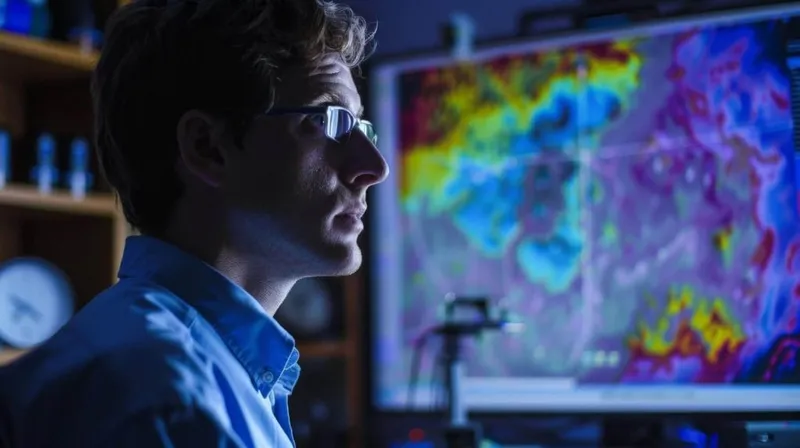
Space weather refers to the changing environmental conditions in space, primarily driven by solar activities like solar flares and coronal mass ejections. These events can cause significant disruptions to satellites, communication systems, and even terrestrial power grids. The Space Weather Professional Certification Exam assesses your ability to understand these phenomena and their operational consequences.
Professionals working in this field must identify and forecast the potential effects of space weather, ensuring that mitigation strategies are in place to protect critical systems. This includes interpreting data from solar observation satellites and ground-based monitoring stations.
SWP Study Tips
What's the best study strategy for SWP?
Focus on weak areas first. Use practice tests to identify gaps, then study those topics intensively.
How far in advance should I start studying?
Most successful candidates begin 4-8 weeks before the exam. Create a structured study schedule.
Should I retake practice tests?
Yes! Take each practice test 2-3 times. Focus on understanding why answers are correct, not memorizing.
What should I do on exam day?
Arrive 30 min early, bring required ID, read questions carefully, flag difficult ones, and review before submitting.
Key Components of the Certification Exam
The exam focuses on multiple domains of knowledge essential to space weather operations. Candidates should expect questions about:
Solar-terrestrial physics
Geomagnetic activity indicators
Radiation belt modeling
Forecasting methodologies
Emergency response planning
Understanding these components allows professionals to provide timely and accurate space weather advisories to minimize operational risks.
Forecasting Models and Analytical Tools
Space weather forecasting relies on both observational data and predictive models. Candidates pursuing the Space Weather Professional Certification must become familiar with these forecasting techniques. This includes understanding how solar imagery, radio burst alerts, and geomagnetic indices are used in real-time decision-making.
Analytical tools such as radiation dose models and satellite anomaly databases play a critical role in diagnosing and predicting space weather impacts. Mastery of these tools is crucial for anyone seeking certification.
Mitigation Techniques for Space Weather Effects
Operational procedures for managing space weather risks involve a combination of early warning systems, system hardening, and operational adjustments. Certified professionals are expected to advise stakeholders on protective measures, including spacecraft re-orbiting, satellite payload shutdowns, and aviation route adjustments.
The Space Weather Professional Certification Exam evaluates knowledge in these areas to ensure that certified individuals can develop effective mitigation strategies during space weather events.
Understanding Regulatory Requirements
Space weather has gained increased attention from government agencies and international bodies. Certification candidates must understand regulations and policies that address space weather risk management. These requirements influence how satellite operators, aviation authorities, and utility companies respond to geomagnetic storms and solar radiation storms.
A thorough understanding of these frameworks ensures that certified professionals remain compliant and contribute to operational continuity.
Career Opportunities for Certified Space Weather Professionals
Earning the Space Weather Professional Certification opens doors to careers in aerospace agencies, national laboratories, research institutions, and commercial satellite firms. Certified individuals are highly sought after for roles such as space weather analysts, forecasters, risk mitigation consultants, and systems engineers.
With space weather effects becoming increasingly relevant due to the growing number of satellites and crewed space missions, the demand for qualified professionals is expected to rise steadily.
Conclusion
The Space Weather Professional Certification Exam represents a vital step for professionals aiming to establish credibility and expertise in this niche but critical discipline. By covering key areas such as space weather forecasting, operational risk assessment, and regulatory compliance, the certification ensures that candidates are well-equipped to manage the challenges posed by solar-terrestrial interactions.
As satellite communication networks, power grids, and aviation systems become more susceptible to space weather events, certified experts play a crucial role in safeguarding these infrastructures. This certification not only enhances individual career prospects but also contributes to broader operational safety and national security.
Preparation for the Space Weather Professional Certification requires a well-rounded study plan, including a review of forecasting models, analytical tools, and emergency response protocols. By dedicating time to mastering these subjects, candidates position themselves for success on the exam and in the field.
- +Validates your knowledge and skills objectively
- +Increases job market competitiveness
- +Provides structured learning goals
- +Networking opportunities with other certified professionals
- −Study materials can be expensive
- −Exam anxiety can affect performance
- −Requires dedicated preparation time
- −Retake fees apply if you don't pass
(SWP) Space Weather Professional Certification Exam Questions and Answers
About the Author

Certified Professional Development Expert & Niche Certification Advisor
University of Pennsylvania Graduate School of EducationDr. Alexandra Kim holds a PhD in Professional Studies from the University of Pennsylvania and is a Certified Professional in Learning and Performance (CPLP) and Certified Professional in Talent Development (CPTD). With 17 years of corporate training and professional certification advisory experience, she helps professionals navigate specialized, emerging, and cross-industry certification programs.