
Security Office Roles in the UK: What SIA Guards Do, Where They Work, and How to Succeed
What does a security office role involve? ✅ Learn SIA guard duties, workplace types, skills needed, and how to build a rewarding UK security career.

Working in a security office is one of the most common and varied roles available to SIA-licensed guards in the United Kingdom. Whether you are protecting a corporate headquarters in central London, monitoring access points at a distribution warehouse, or overseeing a busy shopping centre, the security office serves as the operational nerve centre for everything that happens on site. Understanding what this environment involves — and how to excel within it — is essential for anyone pursuing an SIA Door Supervisor or Security Guard licence.
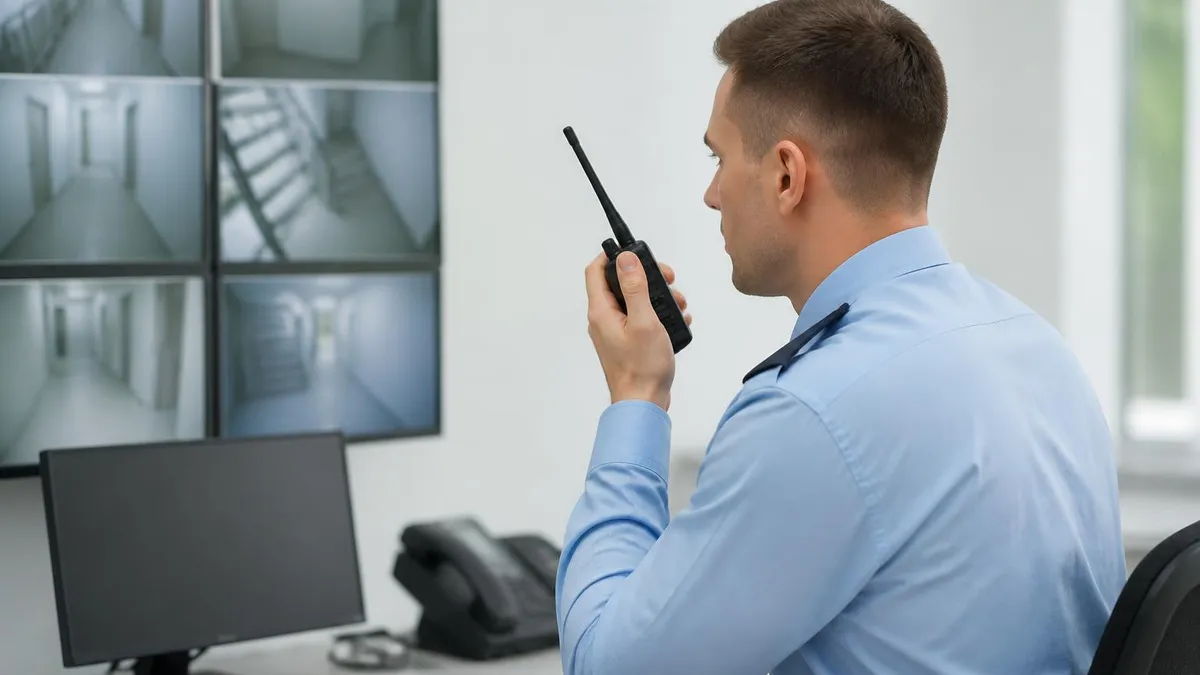
The security office is typically a dedicated room or control point where guards manage CCTV systems, log incidents, communicate via radio, and coordinate responses to emergencies. It is not a passive role. Guards working from a security office must maintain constant situational awareness, keep accurate written records, and make rapid decisions when incidents unfold. The quality of information captured in that room can determine the outcome of criminal investigations and insurance claims months or even years after an event occurs.
SIA licensing requirements in the UK recognise the importance of security office competencies. The Level 2 Award for Door Supervisors and the Level 2 Award for Security Guards both include modules covering conflict management, communication skills, and emergency response — all of which are directly relevant to someone based in or operating out of a security office environment. These qualifications are awarded by regulated awarding organisations such as Highfield, NOCN, and Pearson, and they form the foundation of any professional security career.
Employers who hire security personnel specifically for office-based and control room positions increasingly look for candidates who understand not just the physical aspects of guarding, but also the administrative and technological components. Familiarity with access control software, incident reporting platforms, and integrated CCTV management systems can make a significant difference when competing for higher-paying positions in corporate or government security environments.
The role has evolved considerably over the past decade. Digital reporting has largely replaced paper-based logging in many organisations, and guards now frequently interact with building management systems, lone worker monitoring platforms, and visitor management software. This technological shift means that candidates who invest time in understanding modern security office tools are better positioned to advance into supervisory or control room operator roles that command higher salaries and greater responsibility.
Preparation matters enormously. Many candidates who sit the SIA-linked qualifications underestimate the breadth of knowledge required, particularly around documentation, legal powers, and emergency procedures. Using practice tests — especially those focused on access control and professional practice — is one of the most effective ways to consolidate learning and identify gaps before the formal assessment. This article walks through everything you need to know about the security office environment, the skills and qualifications involved, and how to build a successful career in this sector.
UK Security Office Work by the Numbers

Types of Security Office Environments
Security guards in corporate settings manage visitor access, monitor CCTV, control entry to restricted floors, and liaise with building management. These roles often require smart presentation, strong communication skills, and familiarity with electronic access control systems.
Retail security offices coordinate loss prevention, manage radio communications across the site, log incidents, and support floor guards. Guards must handle high footfall environments while maintaining accurate documentation and responding swiftly to theft or disturbance incidents.
Warehouses, factories, and distribution hubs require guards to manage vehicle and personnel access, conduct perimeter checks, oversee loading bay security, and maintain detailed gatehouse logs. Health and safety awareness is particularly important in these environments.
Hospitals, council buildings, and government offices employ security guards to manage patient and visitor flow, prevent unauthorised access to sensitive areas, and support staff during confrontational situations — all from a central security office base.
Concierge-style security roles in apartment blocks and mixed-use buildings blend customer service with access control. Guards operate from a front-desk security office, manage key logs, monitor cameras, and ensure residents and visitors are handled professionally.
The daily duties of a guard working in a security office span a remarkably broad range of tasks, and no two shifts are ever quite identical. At the start of each shift, a guard will typically conduct a handover briefing with the outgoing officer. This involves reviewing the incident log from the previous shift, checking that all access control systems are functioning correctly, confirming that CCTV cameras are operational and recording, and noting any outstanding actions or site-specific concerns that need to be monitored during the incoming shift.
Incident logging is one of the most critical responsibilities in any security office. Every event — no matter how minor it appears — must be recorded accurately and promptly. This includes details such as the time and location of the incident, the individuals involved, any witnesses present, the actions taken by security personnel, and the outcome. Well-maintained logs protect the site operator legally, support police investigations, and provide an evidence trail that insurers and courts can rely upon. Guards who develop strong written communication skills and disciplined logging habits are consistently rated more highly by employers and supervisors.
Access control management forms another pillar of security office work. Guards operating electronic access control systems must understand how to grant and revoke access permissions, issue and collect visitor passes, monitor door-held-open alarms, and respond when tailgating or forced-entry alerts are triggered. Many modern systems integrate with HR databases so that employees who have left the organisation have their access automatically revoked — but this process still requires human oversight to catch edge cases and anomalies.
Radio communications are a constant feature of security office life. Guards must maintain clear, professional, and concise communication with colleagues on patrol, with reception staff, and occasionally with emergency services. The phonetic alphabet, correct radio protocols, and channel discipline are all essential skills that SIA-linked qualifications specifically address. Poor radio communication during an incident can create dangerous confusion, so this competency is taken seriously by both trainers and employers.
CCTV monitoring requires sustained concentration and a methodical approach. Rather than watching every screen passively, experienced security office guards develop a scanning pattern that prioritises high-risk areas and alarm zones while maintaining awareness of broader site activity. Recognising suspicious behaviour — loitering, concealment, unusual vehicle movements — requires a trained eye and a thorough knowledge of the site's normal baseline activity. When something deviates from that baseline, the guard must respond quickly and appropriately.
Emergency response coordination is another core function. When a fire alarm activates, a medical emergency occurs, or a bomb threat is received, the security office becomes the command point for the initial response. Guards must know the site evacuation plan, the location of assembly points, how to communicate with emergency services, and how to account for all personnel — including visitors and contractors — during an evacuation. These procedures are not theoretical; they are practised regularly and must be executed under pressure.
Key Skills for Security Office Roles
Effective communication is the single most important skill for anyone working in a security office environment. Guards must be able to write clear, accurate incident reports; convey urgent information over radio without ambiguity; and speak professionally to site visitors, contractors, employees, and emergency services. The SIA qualification framework dedicates significant time to communication competencies because poor communication is a leading cause of security incidents escalating unnecessarily. Candidates who take time to practise report writing and radio procedures before their assessment consistently perform better and transition into the workplace more smoothly.
Beyond formal reports, security office guards communicate through body language, tone of voice, and active listening — particularly when dealing with confrontational individuals. De-escalation techniques taught within the conflict management modules of SIA courses are directly applicable here. Understanding when to assert authority firmly and when to adopt a calming, empathetic approach can prevent a minor disagreement at the front desk from becoming a reportable incident. Guards who develop strong interpersonal communication skills are often fast-tracked into supervisory and control room operator positions.

Pros and Cons of Working in a Security Office Role
- +Stable, structured working environment with a clear operational base rather than constant outdoor patrolling
- +Exposure to a wide range of security technologies including CCTV, access control systems, and alarm monitoring platforms
- +Opportunities for career progression into control room operator, supervisor, or security manager positions
- +Consistent demand from employers across all sectors including retail, corporate, healthcare, and government
- +Shift patterns — including nights and weekends — typically attract premium pay rates on top of the base salary
- +Legal and procedural knowledge gained in the role is transferable to police, prison service, and other law enforcement careers
- −Long shift hours — typically 10 to 12 hours — can be physically and mentally demanding, especially overnight shifts
- −Monitoring CCTV systems for extended periods can lead to attention fatigue if guards do not use structured scanning techniques
- −The role can feel isolated, particularly on night shifts at low-footfall sites with minimal colleague interaction
- −Starting salaries in many security office positions are modest, often near the National Living Wage without additional allowances
- −Guards can face verbal abuse or confrontational behaviour from individuals refused entry or challenged on site
- −Administrative and reporting demands have increased with digital systems, requiring stronger IT literacy than older recruits may initially possess
Pros and Cons at a Glance
| Pros | Cons |
|---|---|
| Stable, structured working environment with a clear operational base rather than constant outdoor patrolling | Monitoring CCTV systems for extended periods can lead to attention fatigue if guards do not use structured scanning techniques |
| Exposure to a wide range of security technologies including CCTV, access control systems, and alarm monitoring platforms | The role can feel isolated, particularly on night shifts at low-footfall sites with minimal colleague interaction |
| Opportunities for career progression into control room operator, supervisor, or security manager positions | Starting salaries in many security office positions are modest, often near the National Living Wage without additional allowances |
| Consistent demand from employers across all sectors including retail, corporate, healthcare, and government | Guards can face verbal abuse or confrontational behaviour from individuals refused entry or challenged on site |
| Shift patterns — including nights and weekends — typically attract premium pay rates on top of the base salary | Administrative and reporting demands have increased with digital systems, requiring stronger IT literacy than older recruits may initially possess |
Security Office Daily Compliance Checklist
- ✓Complete a thorough handover briefing with the outgoing guard and review the previous shift's incident log in full
- ✓Confirm all CCTV cameras are recording correctly and that no blind spots have developed overnight
- ✓Test all access control entry points and verify that alarm panels show no outstanding faults or bypassed zones
- ✓Check that the visitor management log is up to date and that all temporary passes issued yesterday have been returned
- ✓Confirm communication equipment — radios, intercoms, and emergency phones — are fully charged and functioning
- ✓Review any site notices, staff briefings, or management instructions relevant to today's security priorities
- ✓Conduct a perimeter check or review overnight patrol logs to identify any physical security concerns requiring follow-up
- ✓Ensure all emergency contact numbers, evacuation plans, and first aid information are current and accessible in the security office
- ✓Log all incidents, near-misses, and suspicious observations in the incident management system before the end of each shift
- ✓Brief the incoming guard fully during handover and ensure all outstanding actions are clearly communicated and recorded
Documentation Quality Is Your Most Valuable Professional Asset
Employers, lawyers, and courts judge security professionals primarily on the quality of their written records. A guard who responds perfectly to an incident but fails to document it accurately has created a liability rather than an asset. Practise writing clear, factual, time-stamped incident reports as part of your SIA exam preparation — this skill pays dividends throughout your entire career in the security industry.
The SIA licensing pathway is the formal route into security office employment in the United Kingdom. To work legally as a frontline security officer — whether in a static guarding role, a door supervisor position, or a control room — you must hold a valid SIA licence issued by the Security Industry Authority. The licensing process begins with completing an approved qualification, most commonly the Level 2 Award for Security Guards or the Level 2 Award for Door Supervisors, both of which are delivered by SIA-approved training providers across the country.
These qualifications cover a comprehensive syllabus that directly maps to the demands of security office work. Core units include the role and responsibilities of the security officer, conflict management and personal safety, health and safety in the workplace, fire safety awareness, emergency procedures, crime scene preservation, and importantly, communication and recording skills. Each of these subjects is assessed through a formal written examination, and candidates must achieve a pass grade in all units to receive their qualification certificate and become eligible to apply for their SIA licence.
Exam preparation is a critical phase that many candidates underestimate. The assessments test not only factual recall but also the ability to apply knowledge to realistic scenarios. For example, a question may describe a situation at a security office desk and ask the candidate to identify the legally correct response when an individual refuses to provide identification. These scenario-based questions require a firm grasp of both procedural and legal knowledge, which is why practice tests are such an effective preparation tool for SIA candidates at every stage of their study.
The SIA application process itself requires candidates to submit proof of identity, proof of the right to work in the UK, their qualification certificate, and the applicable licence fee — currently £190 for a three-year licence. The SIA conducts criminal record checks through the Disclosure and Barring Service (DBS) as part of the application. Certain convictions will result in an application being refused, so candidates with any criminal history should review the SIA's published rehabilitation periods before investing in training.
Continuing professional development (CPD) is increasingly important in the security industry. While the SIA currently requires licence renewal every three years — with a new criminal record check and payment of the renewal fee — many employers and professional bodies encourage guards to pursue additional qualifications such as the Level 3 Award in Door Supervision, the BTEC Level 3 Certificate in Security Management, or vendor-specific certifications in CCTV operation and access control systems. Guards who invest in CPD are better positioned for promotion into senior security officer and control room supervisor roles.
For those sitting the SIA-related exams, it is worth noting that the questions on documentation, professional practice, and emergency response are frequently cited as the areas where candidates lose the most marks. These are also the areas most directly relevant to security office work on a day-to-day basis.
Allocating additional study time to these modules — and reinforcing learning through regular practice quizzes — is a highly effective strategy for achieving a strong pass and entering the workforce with confidence. The SIA Guard Documentation and Professional Practice practice test is particularly valuable for candidates who want to test themselves on these exam-critical topics before their formal assessment.

Under the Private Security Industry Act 2001, it is illegal to carry out licensable security activities in the UK without holding a valid SIA licence. This applies to security office roles that involve guarding property or controlling access. Individuals found working without a licence — and employers who knowingly use unlicensed guards — face prosecution, fines, and potential imprisonment. Always verify your licence is current before starting any new security role.
Building a long-term career in the security sector starts with the decisions you make during your earliest roles. Guards who treat their first security office position as a learning environment — rather than simply a job — develop the competencies that distinguish them from peers when supervisory and management opportunities arise. Every shift spent in a security office is an opportunity to deepen your understanding of access control systems, sharpen your incident documentation skills, and build the situational awareness that makes senior security professionals genuinely valuable to their employers.
Networking within the industry is an underappreciated career development tool. Professional associations such as the British Security Industry Association (BSIA) and the Security Institute offer membership options for frontline guards as well as managers. Engagement with these bodies provides access to industry news, training resources, and events where you can meet peers and potential employers. The security sector in the UK is relatively close-knit, and a reputation for professionalism and reliability — built through consistent performance in roles like the security office — travels further than many candidates realise.
Specialist roles within the security office environment offer compelling career pathways. Control room operators who manage CCTV systems and access control for large sites command salaries significantly above those of general security guards. Alarm receiving centre (ARC) operators who monitor remote sites from centralised hubs work in highly specialised environments that require substantial technical training. Security systems technicians who install and maintain the access control and CCTV infrastructure used in security offices represent another well-paid adjacent career path for guards with an aptitude for technology.
Management progression is achievable for guards who combine operational experience with formal qualifications. The progression route typically runs from Security Officer to Senior Security Officer to Shift Supervisor to Site Manager to Regional Security Manager. At each stage, additional qualifications — such as a Level 3 or Level 4 award in security management, or a management qualification such as an ILM Level 3 Certificate in Leadership — strengthen your candidacy significantly. Many security companies offer internal training programmes for employees who demonstrate supervisory potential early in their careers.
Salary expectations are a practical consideration for anyone planning a career pathway through the security office environment. Entry-level security officer roles typically pay between £22,000 and £26,000 per annum for full-time positions, with night and weekend premiums boosting effective earnings. Senior officers and shift supervisors in corporate environments can earn £30,000 to £38,000, while experienced control room operators and site security managers in London and other major cities can command £40,000 or above. Specialist roles in government, critical infrastructure, and financial services often pay at the top end of these ranges and may include additional benefits.
Reviewing your career goals periodically and mapping them against available qualifications and roles is a practice that the most successful security professionals adopt from early in their careers. The security industry has evolved dramatically over the past two decades, and it will continue to do so as technology advances and threat landscapes shift. Guards who remain curious, keep their skills current, and take advantage of every learning opportunity — including the practice tests and study resources available for SIA licensing exams — are the individuals who build genuinely rewarding and well-compensated careers in this dynamic sector.
Practical preparation for a career in security office roles begins well before you take your SIA exam or attend your first interview. One of the most effective things you can do is to familiarise yourself with the technology you will encounter on the job. Many CCTV and access control manufacturers publish free user guides, tutorial videos, and demonstration software online. Spending time with these resources gives you a genuine advantage over candidates who arrive with only their SIA qualification and no hands-on familiarity with the systems they will be expected to operate from day one.
Interview preparation for security office roles should focus on demonstrating specific competencies rather than generic responses. Interviewers in the security sector consistently report that the strongest candidates can give concrete examples of how they have handled a difficult situation, communicated under pressure, or maintained accurate records in a previous role. If you are transitioning into security from another background — such as retail, customer service, the military, or the emergency services — identify the transferable skills from that experience and prepare to articulate them clearly in security-specific terms.
Physical and mental fitness are both relevant to security office roles, though the demands differ from those of a patrolling or door supervisor position. The ability to remain alert and focused during long shifts — particularly nights — is a genuine professional skill. Developing good sleep hygiene practices for shift workers, maintaining moderate physical fitness, and managing stress effectively are habits that protect long-term career performance. Many experienced guards report that the mental discipline required in a security office environment is as demanding as any physical aspect of the role.
Understanding the wider security risk landscape for your industry sector makes you a more effective guard and a more impressive job candidate. If you are working — or hoping to work — in a retail security office, understanding the tactics used by organised retail crime gangs gives you context for the incidents you will encounter. If your target environment is a corporate office, understanding insider threat indicators and social engineering techniques makes you better at identifying suspicious behaviour that a less informed guard might miss.
Mentorship is a powerful accelerator for professional development in the security industry. If you have the opportunity to work alongside an experienced guard or supervisor, treat that relationship as a learning opportunity. Ask questions about how they approach incident assessment, how they structure their log entries, how they manage difficult access control situations, and how they have navigated their own career decisions. The tacit knowledge held by experienced practitioners is not captured in any training manual and cannot be acquired from practice tests alone — it comes from time served and from learning actively from those who have accumulated it.
Finally, maintain professional standards in every aspect of your conduct — not just during formal assessments or inspections. The security industry is built on trust, and that trust is established through consistent behaviour over time. Arriving punctually for shifts, maintaining your uniform and equipment in good order, completing documentation to a high standard, and treating every person on site with respect and professionalism are the habits that build your reputation. In a sector where word-of-mouth recommendations and references from supervisors matter enormously, your daily conduct in the security office is your most important career asset.
SIA Guard Questions and Answers
Security Guard Salary UK: How Much Do SIA Guards Really Earn in 2026?
SIA Badge Checker: How to Verify an SIA Licence in the UK (2026)
Security Industry Authority: Complete UK SIA Licensing Guide

SIA Security Guard Licence Practice Test PDF (Free Printable 2026)

Private Security Guard Jobs: Your Complete Guide to Starting an SIA Career in the UK
About the Author

Certified Protection Professional & Security Licensing Expert
John Jay College of Criminal JusticeMarcus Rivera is a Certified Protection Professional (CPP) and Physical Security Professional (PSP) with a Master of Science in Security Management from John Jay College of Criminal Justice. With 16 years of corporate security, loss prevention, and executive protection experience, he coaches security professionals through ASIS CPP, PSP, PCI, and state security guard licensing examinations.