
Can the Sheriff Evict You? Complete Guide to the Sheriff Eviction Process in 2026 October
🗨️ Can the sheriff evict you? Complete 2026 October guide to the deputy sheriff eviction process, timelines, tenant rights, and what to expect on lockout day.
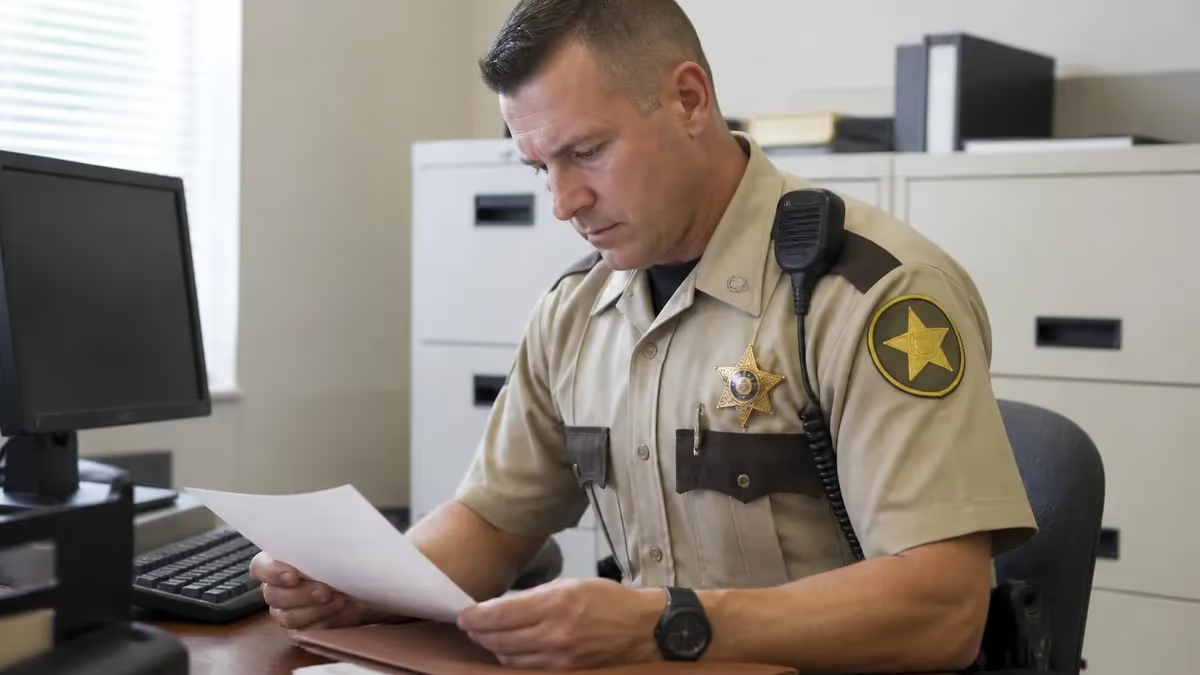
Can the sheriff evict you? The short answer is yes, but only after a landlord wins a court case, obtains a writ of possession, and schedules a lockout through the civil division of the local sheriff's office. The deputy sheriff who arrives at your door is not making the decision to remove you — that decision was made weeks or months earlier by a judge. Understanding this chain of authority is the single most important thing a tenant can learn when facing eviction, because it determines what rights remain and how much time is actually left.
Across the United States, the eviction process follows a remarkably consistent pattern even though state laws differ on timelines and notice periods. A landlord must serve a written notice, file an unlawful detainer or summary ejectment case in court, win a judgment, and then request that a sheriff deputy enforce the order. Only after this full sequence does the deputy gain legal authority to remove a tenant, change the locks, and turn possession of the property back to the landlord.
Many tenants confuse the role of the deputy sheriff with that of the landlord or a private process server. Landlords cannot legally remove a tenant themselves in any state — no shut-off utilities, no padlocks, no piles of belongings on the curb. These self-help evictions are illegal and can result in damages owed to the tenant. The deputy sheriff is the only authorized officer who can perform the physical lockout, and they do so under strict written orders from the court.
The timing of a sheriff eviction varies widely by jurisdiction. In some states, the entire process from first notice to lockout takes as little as 21 days. In others, particularly tenant-protective states like New York, New Jersey, California, and Massachusetts, the timeline can stretch six months to over a year. The deputy sheriff's role only begins at the very end, typically with 24 hours to 7 days of notice before the actual lockout occurs.
For tenants, the most dangerous misconception is that ignoring court papers will delay the process. The opposite is true. Failing to respond to an unlawful detainer summons results in a default judgment, which actually accelerates the path to a sheriff lockout. The deputy who eventually arrives is enforcing a judgment that the tenant could have contested, negotiated, or stayed had they appeared in court within the response window — usually five to thirty days depending on the state.
This guide walks through every stage of the sheriff eviction process: how it starts, what triggers deputy involvement, what happens on lockout day, what rights tenants retain, and how to respond if you receive notice. It also explains the difference between civil eviction enforcement and the deputy's broader law enforcement duties, since the same uniform appears in very different contexts.
Whether you are a tenant trying to understand a notice taped to your door, a landlord preparing to file a case, or a future deputy studying for the civil process portion of your exam, the principles below apply in nearly every county in America. The details change, but the structure does not.
Sheriff Eviction Process by the Numbers

The Five Stages of a Sheriff Eviction
Written Notice to Quit
Unlawful Detainer Filed
Court Hearing and Judgment
Writ of Possession Issued
Sheriff Lockout Executed
The sheriff becomes legally involved in an eviction only after a court has ruled in the landlord's favor and issued a writ of possession. This writ — sometimes called a writ of restitution, writ of eviction, or warrant of removal depending on the state — is the document that transforms a private dispute into an enforceable civil order. Without it, no deputy can legally touch the property, the tenant, or the locks. The writ is, in essence, the deputy's permission slip to act.
Once the writ reaches the civil division of the sheriff's office, it enters a queue. Larger counties process hundreds of writs per week, and most have a standard turnaround of 5 to 15 business days. The landlord typically pays a service fee ranging from $150 to $400, which covers the deputy's time, vehicle costs, and administrative processing. This fee is added to the judgment against the tenant and becomes part of the debt collected later.
The civil deputy assigned to the case is usually a sworn officer who specializes in process service, including evictions, repossessions, and the service of subpoenas. In smaller jurisdictions, the same sheriff and deputy staff may rotate between civil and patrol duties. Either way, the deputy reviews the writ for accuracy — correct address, correct names, valid signatures — before scheduling the lockout. Any defect in the paperwork can cause the writ to be returned to the court for correction.
Before the lockout itself, deputies typically post a notice on the door. This notice states the date and time of the scheduled removal and gives the tenant a final window — often 24 to 72 hours, sometimes longer — to vacate voluntarily. In some states, this posting is mandatory; in others, it is a courtesy. Tenants who vacate during this window avoid the embarrassment and disruption of a forced removal, but they should always confirm the move-out with the landlord in writing.
On the day of the lockout, the deputy arrives at the scheduled time, usually with the landlord or the landlord's agent present. The deputy knocks, announces, and gives the tenant a brief opportunity — typically minutes, not hours — to gather essential personal items like medication, identification, wallets, phones, and pets. The deputy then directs the tenant outside, supervises while a locksmith changes the locks, and provides the new keys to the landlord. The deputy's job is complete the moment possession is transferred.
Deputies do not move, store, or sell a tenant's belongings. State laws vary on what landlords must do with abandoned property: some require storage for 15 to 60 days, others allow immediate disposal after a brief notice period. Tenants should ask the deputy at the scene about local rules and request information on how to retrieve possessions. Many lockouts now happen with belongings still inside, and tenants are scheduled to return later under landlord supervision.
It is critical to understand that the deputy is not a mediator. Once a writ is in hand, the deputy cannot grant extensions, accept partial rent, or negotiate move-out terms. Those decisions belong to the landlord or the court. The deputy enforces the order as written, neutrally and without discretion, which is exactly the role civil process is designed to fill.

Sheriff Practice Test Questions
Prepare for the Sheriff - Deputy Sheriff Exam exam with our free practice test modules. Each quiz covers key topics to help you pass on your first try.
Sheriff Applicable Laws and Regulations
Sheriff Exam Questions covering Applicable Laws and Regulations. Master Sheriff Test concepts for certification prep.
Sheriff Basic Mathematics Application
Free Sheriff Practice Test featuring Basic Mathematics Application. Improve your Sheriff Exam score with mock test prep.
Sheriff Community Policing Principles
Sheriff Mock Exam on Community Policing Principles. Sheriff Study Guide questions to pass on your first try.
Sheriff Correctional Officer Practices
Sheriff Test Prep for Correctional Officer Practices. Practice Sheriff Quiz questions and boost your score.
Sheriff Criminal Investigation Procedures
Sheriff Questions and Answers on Criminal Investigation Procedures. Free Sheriff practice for exam readiness.
Sheriff Deductive and Inductive Reasoning
Sheriff Mock Test covering Deductive and Inductive Reasoning. Online Sheriff Test practice with instant feedback.
Sheriff Evidence Collection and Preservation
Free Sheriff Quiz on Evidence Collection and Preservation. Sheriff Exam prep questions with detailed explanations.
Sheriff First Aid and Emergency Response
Sheriff Practice Questions for First Aid and Emergency Response. Build confidence for your Sheriff certification exam.
Sheriff Observation and Memory Recall
Sheriff Test Online for Observation and Memory Recall. Free practice with instant results and feedback.
Sheriff Officer Duties and Responsibilities
Sheriff Study Material on Officer Duties and Responsibilities. Prepare effectively with real exam-style questions.
Sheriff Patrol Procedures and Techniques
Free Sheriff Test covering Patrol Procedures and Techniques. Practice and track your Sheriff exam readiness.
Sheriff Professional Ethics and Situationa...
Sheriff Exam Questions covering Professional Ethics and Situational Judgment. Master Sheriff Test concepts for certification prep.
Sheriff Reading Comprehension Skills
Free Sheriff Practice Test featuring Reading Comprehension Skills. Improve your Sheriff Exam score with mock test prep.
Sheriff Report Writing and Grammar
Sheriff Mock Exam on Report Writing and Grammar. Sheriff Study Guide questions to pass on your first try.
Sheriff Report Writing and Written Communi...
Sheriff Test Prep for Report Writing and Written Communication. Practice Sheriff Quiz questions and boost your score.
Sheriff Situational Judgment Scenarios
Sheriff Questions and Answers on Situational Judgment Scenarios. Free Sheriff practice for exam readiness.
State-by-State Differences in Deputy Sheriff Eviction Authority
States like Arkansas, Tennessee, Georgia, and Texas move quickly. From the first notice to the day a sheriff's deputy executes the lockout, the entire process can take 21 to 45 days. Texas allows landlords to file as soon as a 3-day notice expires, and judgments can be enforced within a week of the hearing if the tenant does not appeal. Arkansas has the most landlord-friendly framework, with criminal penalties still on the books for nonpayment.
In these states, deputies typically post lockout notices 24 to 48 hours before removal. Tenants who want to slow the process must file appeals quickly and may need to post bonds equivalent to back rent. Public defenders rarely handle eviction cases, so tenants usually appear without counsel. Understanding the speed is critical because by the time many tenants seek help, the writ has already been issued and the deputy is on the way.
Cooperating With the Deputy on Lockout Day: Pros and Cons of Voluntary Compliance
- +Avoids physical confrontation and possible arrest for obstruction or trespass
- +Allows you to gather essential items like medication, ID, and electronics with dignity
- +Protects your record — no civil contempt or criminal trespass charges added
- +Reduces the chance that belongings are damaged or lost during forced removal
- +Preserves a more professional reference for future rental applications
- +Gives you time to secure transportation, pet carriers, and storage arrangements
- +Keeps neighbors and bystanders from witnessing a forced, public removal
- −You lose any remaining hope of negotiating with the landlord at the scene
- −Voluntary departure may waive certain defenses if the case is later reopened
- −Limited time to inventory belongings increases risk of disputes over property
- −You may feel pressured to sign documents you have not read carefully
- −Children and pets may not have time to adjust to the sudden move
- −Storage and relocation costs become immediate, out-of-pocket expenses
- −Emotional stress of leaving on a deputy's timeline rather than your own
Pros and Cons at a Glance
| Pros | Cons |
|---|---|
| Avoids physical confrontation and possible arrest for obstruction or trespass | You lose any remaining hope of negotiating with the landlord at the scene |
| Allows you to gather essential items like medication, ID, and electronics with dignity | Voluntary departure may waive certain defenses if the case is later reopened |
| Protects your record — no civil contempt or criminal trespass charges added | Limited time to inventory belongings increases risk of disputes over property |
| Reduces the chance that belongings are damaged or lost during forced removal | You may feel pressured to sign documents you have not read carefully |
| Preserves a more professional reference for future rental applications | Children and pets may not have time to adjust to the sudden move |
| Gives you time to secure transportation, pet carriers, and storage arrangements | Storage and relocation costs become immediate, out-of-pocket expenses |

Tenant Rights Checklist When Facing a Sheriff Eviction
- ✓Read every document served on you — note the deadline to respond on the summons
- ✓File a written answer with the court before the response deadline, even if you cannot pay
- ✓Request a continuance in writing if you need more time to gather evidence or counsel
- ✓Contact local legal aid immediately — many cities offer free eviction defense
- ✓Document any habitability issues with dated photos, repair requests, and inspection reports
- ✓Keep proof of every rent payment, money order receipt, and bank statement
- ✓Never hand cash to a landlord without a signed, dated receipt naming the property
- ✓Verify that the deputy serving you presents a valid writ with your correct name and address
- ✓Ask the deputy in writing about local rules for retrieving personal belongings
- ✓Apply for emergency rental assistance through 211, ERAP, or local nonprofit programs
- ✓Save all communication with the landlord in writing — texts and emails count as evidence
- ✓Show up to every hearing, even by phone, to preserve all available defenses and appeals
The deputy at your door is the last step, not the first
By the time a uniformed deputy posts a lockout notice on your door, the legal fight is almost entirely over. The decisions that matter — answering the summons, attending the hearing, requesting a payment plan, claiming defenses like habitability or retaliation — all happen in court weeks or months earlier. If you want to change the outcome, you must engage with the process long before the sheriff's deputy is involved.
The day a sheriff's deputy executes a lockout is brief, structured, and often emotionally intense for everyone involved. Understanding the choreography in advance reduces fear and confusion. Most deputies aim to complete a residential lockout in 15 to 30 minutes. They arrive in marked vehicles, in uniform, usually accompanied by the landlord or their property manager, and sometimes by a locksmith who is contracted in advance to change the locks the moment possession transfers.
Deputies typically begin by knocking and announcing their presence loudly. If no one answers, they may force entry under the authority of the writ. If a tenant answers, the deputy explains the purpose of the visit, presents the writ, and gives a short window — usually 5 to 30 minutes — to collect essential items. This window is not negotiable in most jurisdictions, though deputies often exercise reasonable discretion for medication, pets, and small children. The presence of a vulnerable occupant generally slows but does not stop the process.
Tenants sometimes ask whether they can refuse to leave. Legally, refusal does not stop the lockout. It transforms a civil enforcement action into a potential criminal matter. A tenant who physically blocks a deputy or refuses to vacate can be arrested for trespassing, obstruction, or contempt of court. None of these outcomes help the tenant's housing situation, and a criminal record can make finding the next apartment significantly harder. Cooperation is almost always the better path.
Belongings left inside the unit at the moment of lockout fall under state-specific abandonment laws. Some states, like California, require landlords to send a written notice listing items and giving 15 days to claim them, plus payment of reasonable storage fees. Others, like Florida, allow landlords to dispose of personal property immediately after the lockout if proper notice was given in the original eviction filing. The deputy is not responsible for storage but should be able to direct tenants to local rules.
Pets present a particularly difficult challenge on lockout day. Deputies will not transport animals, and most landlords do not want them left inside. Tenants facing eviction should arrange in advance for a friend, family member, or temporary shelter to take pets. Local humane societies sometimes operate eviction-prevention programs that include short-term boarding. Planning for pets before the lockout day prevents the heartbreak of last-minute surrender at a shelter.
Vehicles and large items create another complication. Deputies do not move cars, boats, or trailers. Tenants must drive their own vehicles off the property or arrange for towing. Furniture and appliances often remain inside and become subject to abandonment procedures. Renters who anticipate eviction should rent a storage unit and begin moving valuable items in the days leading up to the scheduled lockout, well before the deputy arrives.
After the lockout, the deputy completes a return of service — a sworn statement filed with the court confirming when, where, and how the writ was executed. This document becomes part of the public court record. Tenants who later believe the lockout was improper, retaliatory, or executed in violation of a stay can use this return of service as evidence in subsequent legal action. The deputy's documentation is, ironically, often the strongest tool a wrongfully evicted tenant has.
If a landlord changes your locks, removes your door, shuts off utilities, or piles your belongings on the curb without a deputy and a valid writ, that is an illegal self-help eviction. You may be entitled to damages of two to three times the monthly rent, plus restoration of possession. Call the police, document everything, and contact legal aid immediately. Only a sworn deputy with a court-issued writ can lawfully remove you.
Deputy sheriffs who handle evictions are trained extensively in civil process, de-escalation, and constitutional law before they ever post a lockout notice. The civil process curriculum at most state academies includes 40 to 80 hours dedicated specifically to service of process, writ enforcement, and the limits of civil authority. Recruits study landlord-tenant law in their state, federal protections under the Servicemembers Civil Relief Act, fair housing rules, and the procedural requirements for executing each type of writ.
The role is distinct from patrol work even though the uniform looks identical. A civil deputy spends their days in courts, government offices, and at the doors of homes and businesses serving papers — subpoenas, summonses, restraining orders, garnishments, repossessions, and evictions. The compensation reflects this specialization. National data on deputy sheriff salary figures shows civil deputies generally earn the same base pay as patrol deputies, with the same benefits, pension, and overtime opportunities, though they typically work daytime hours on a regular schedule.
Training emphasizes officer safety. Evictions are among the highest-risk civil contacts deputies perform because they involve emotionally distressed people, often in their own homes, sometimes with firearms present and almost always without warning until the final notice is posted. Deputies are trained to scan for threats, position themselves near exits, communicate clearly, and use the minimum force necessary. Most departments require body cameras during lockouts, both to protect deputies from false claims and to document the scene for the court return.
De-escalation is the single most-emphasized skill in modern civil process training. Deputies learn to acknowledge the tenant's emotions without engaging in the substance of the dispute. Phrases like "I understand this is difficult" or "I am only here to enforce the court's order" are taught explicitly. Yelling matches, debates about the underlying lease, and arguments about fairness almost never end well. The deputy's mission is narrow: enforce the writ, transfer possession, document the action, and leave safely.
Constitutional training covers the Fourth Amendment limits of civil entry. A writ of possession authorizes deputies to enter the named premises and remove the named occupants. It does not authorize searches of vehicles, neighboring units, locked safes, or persons not named on the writ. Deputies who exceed these limits expose themselves and the department to civil liability under federal civil rights statutes, and exclusionary evidence rules can defeat related criminal charges that might otherwise arise.
Mental health and crisis intervention training has expanded significantly in the past decade. Many counties now embed mental health professionals or social workers in civil units, recognizing that evictions disproportionately affect people experiencing crisis. When a deputy encounters a tenant in acute mental distress, suicidal ideation, or a domestic situation involving children, the response shifts. Removals may be delayed, social services contacted, and shelter placements arranged before the lockout proceeds.
Aspiring deputies often underestimate how much of the job involves civil work rather than dramatic enforcement. News stories like the pima county sheriff's deputy shot and killed an armed man incident capture public attention, but the daily reality for most deputies includes far more paperwork, court appearances, and difficult conversations on porches than violent confrontations. Anyone studying for a sheriff exam should expect significant testing on civil process, eviction law, and writ enforcement procedures.
If you have just received an eviction notice or believe one is coming, the next 72 hours matter more than any other period in the process. The first step is to identify exactly what type of notice you received. A pay-or-quit notice gives you a chance to cure by paying the back rent. A cure-or-quit notice asks you to fix a lease violation. An unconditional quit notice — used for serious offenses like illegal activity — does not allow cure. Each type triggers different defenses and timelines.
Contact a local legal aid office on the same day you receive notice. Most cities now have eviction defense projects, right-to-counsel programs, or volunteer attorney panels that handle these cases at no cost. The Legal Services Corporation, 211 helplines, and state bar lawyer referral services can connect you within hours. Even a single phone consultation can identify defenses you would otherwise miss, including improper notice, retaliation, discrimination, or breaches of the warranty of habitability.
Apply for emergency rental assistance immediately. Federal ERAP funds were exhausted in many areas after the pandemic, but state and local programs still operate, particularly through community action agencies, churches, and nonprofits. Many landlords will accept full back rent and dismiss the case if payment arrives before judgment. Some courts pause eviction proceedings when a tenant produces documentation that assistance has been applied for and is pending approval.
Document everything about the rental and the dispute. Photograph the unit's condition, especially any defects that might support a habitability defense — mold, broken heating, pest infestations, leaks, unsafe wiring. Save text messages, emails, and letters with the landlord. Pull bank records or money order receipts that prove rent payments. The court hearing is your one chance to present this evidence, and tenants who arrive prepared dramatically outperform those who do not.
Show up to every court date in person. Default judgments are the leading cause of fast sheriff lockouts. Even if you have no defense and expect to lose, appearing in court allows you to negotiate a move-out date — often two to four weeks instead of a few days — through a stipulated judgment. Judges and landlords routinely agree to these arrangements because they avoid the cost and uncertainty of a sheriff lockout. Your physical presence is your use.
If a judgment is entered against you and a writ issues, you still have options. Many states allow tenants to file for a stay of execution — additional time, usually 7 to 90 days, granted for hardship reasons like a school-aged child, a medical condition, or a pending housing placement. File the request immediately after judgment. Once the deputy arrives, it is too late. The window between judgment and lockout is short and unforgiving.
Finally, plan for life after the eviction whether or not you can stop it. Begin researching housing options, save for moving costs, and identify storage solutions before the lockout date. An eviction on your record makes finding a new apartment harder, but many landlords will still rent to applicants who explain the situation honestly and provide strong recent references. Some states are also expanding eviction record sealing laws, particularly for cases that ended in dismissal or settlement.
Sample Sheriff - Deputy Sheriff Exam Practice Questions
Try these questions from our free Sheriff - Deputy Sheriff Exam practice tests. The correct answer and an explanation follow each question.
Which of the following is NOT a typical duty of a Deputy Sheriff?
- A. Enforcing traffic laws and issuing citations
- B. Conducting criminal investigations
- C. Resolving disputes and maintaining public order
- D. Serving as a personal bodyguard for private individuals
Answer: D. Serving as a personal bodyguard for private individuals
Serving as a personal bodyguard for private individuals is not a typical duty of a Deputy Sheriff, as their role is to uphold public law and order. While they enforce laws, conduct investigations, and maintain public peace, providing private security falls outside their official public service responsibilities. This type of service is usually handled by private security firms or off-duty officers hired for specific events.
Under which legal doctrine can a Deputy Sheriff be held liable for violating an individual's constitutional rights?
- A. Sovereign immunity
- B. Qualified immunity
- C. Absolute immunity
- D. Diplomatic immunity
Answer: B. Qualified immunity
Under the legal doctrine of qualified immunity, a Deputy Sheriff can be held liable for violating an individual's constitutional rights if their conduct violates clearly established statutory or constitutional rights, and a reasonable officer would have known about that right. This doctrine protects government officials from liability in civil lawsuits unless their conduct was objectively unreasonable in light of clearly established law.
What is the primary responsibility of a Deputy Sheriff Correctional Officer?
- A. Conducting criminal investigations
- B. Enforcing traffic laws
- C. Maintaining the safety and security of the correctional facility
- D. Serving civil process papers
Answer: C. Maintaining the safety and security of the correctional facility
The primary responsibility of a Deputy Sheriff Correctional Officer is to maintain the safety and security of the correctional facility. This includes supervising inmates, preventing escapes, responding to emergencies, and ensuring a secure environment for both inmates and staff. Their role is critical for the orderly operation of the detention center.
What action should a Deputy Sheriff take upon arriving at a crime scene?
- A. Secure the scene to preserve evidence
- B. Immediately arrest any individuals present
- C. Begin interviewing witnesses without securing the scene
- D. Call the media to report the incident
Answer: A. Secure the scene to preserve evidence
Upon arriving at a crime scene, the immediate priority for a Deputy Sheriff is to secure the area. This action prevents contamination, destruction, or removal of crucial evidence, which is vital for a successful investigation. Securing the scene ensures that all potential evidence is preserved in its original state for forensic analysis.
Sheriff Questions and Answers
Deputy Sheriff Salary 2026: Real Pay Numbers by State, Rank, and Years of Service

How to Become a Deputy Sheriff: Requirements, Training, and Career Path 2026
What Is a Deputy Sheriff? Complete Guide to the Role, Duties, and Career Path in 2026

Sheriff Deputy Exam: Complete Guide to the Written Test, Fitness, and Interview 2026
Sheriff Practice Test Video Answers
About the Author

Law Enforcement Trainer & Civil Service Exam Specialist
John Jay College of Criminal JusticeMarcus B. Thompson earned his Master of Arts in Criminal Justice from John Jay College of Criminal Justice and served 12 years as a law enforcement officer before transitioning to full-time academy instruction. He is a POST-certified instructor who has prepared candidates for police entrance exams, firefighter assessments, and civil service examinations across dozens of agencies.
Join the Discussion
Connect with other students preparing for this exam. Share tips, ask questions, and get advice from people who have been there.
View discussion (7 replies)