
Does New York City Have a Sheriff's Department? Deputy Sheriff Roles, Salaries & How to Join
Does NYC have a sheriff's department? Learn what a deputy sheriff does, salary ranges, deputy vs sheriff differences, and how to pass the exam. 🏆

If you have ever wondered does New York City have a sheriff's department, the answer is yes — but it operates very differently from the county sheriffs most Americans picture. The NYC Sheriff's Office sits under the Department of Finance, not an elected sheriff as in most jurisdictions. It handles civil enforcement, warrants, and courthouse security rather than street patrol. A sheriff's deputy working in this system carries full peace officer powers yet focuses on a narrower mission than a county deputy in rural America.
The distinction matters enormously if you are weighing a career in law enforcement. The term deputy sheriff covers a remarkably wide range of roles across the country — from rural Texas deputies who are the only law enforcement for hundreds of square miles to urban civil-process specialists in New York. Understanding which version of the job you are pursuing will shape every decision you make, from which exam to sit to which skills you sharpen during your academy training years.
Across the United States there are more than 3,000 sheriff's offices employing roughly 350,000 full-time sworn personnel, according to the Bureau of Justice Statistics. That workforce includes both elected sheriffs and appointed deputies, and the distinction between those two roles is one of the most commonly misunderstood points in American policing. Most citizens encounter a sheriff deputy rather than the elected sheriff, yet they often use the titles interchangeably in conversation.
Compensation varies just as widely as job duties. A newly hired deputy in a small midwestern county might start below $40,000 per year, while a senior deputy in Los Angeles County can clear six figures with overtime and specialty pay. Researching deputy sheriff salary data before you commit to an application is critical — cost of living in the jurisdiction, shift differentials, retirement benefits, and union agreements all affect your real take-home pay in ways that the base salary figure never reveals on its own.
This article walks you through everything you need to know about the sheriff department structure in the United States, with special attention to the unique New York City model, the difference between elected sheriffs and career deputies, salary benchmarks by region, and the steps you need to take to become a competitive candidate on your local exam. Whether you are a first-time applicant or a lateral hire from another agency, the information here will save you hours of research and help you prepare strategically.
We also cover the deputy sheriff association landscape — the professional organizations and unions that advocate for deputies nationwide — because joining the right association after hire can accelerate your career development, connect you to training resources, and protect your labor rights. Professional networks in law enforcement are just as valuable as they are in any other field, and knowing which organizations exist before you start the hiring process signals the kind of engaged candidate most agencies want to recruit.
Finally, we will tie all of this background to the practical matter of exam preparation. Sheriffs' offices use written civil service exams, physical agility tests, polygraphs, psychological evaluations, and extensive background investigations. The written portion tests reading comprehension, applied mathematics, deductive reasoning, situational judgment, and knowledge of laws and regulations. Building strong test-taking skills alongside your knowledge of how sheriff departments actually function gives you a genuine competitive advantage when hiring lists are ranked by score.
Deputy Sheriff in the U.S. — By the Numbers

How Sheriff Departments Are Structured Across the U.S.
In most U.S. counties, the sheriff is a constitutional officer elected by voters. This elected status makes the sheriff politically independent from city councils and county commissioners, though the department budget still flows through county government. The sheriff sets department policy and serves at the pleasure of the electorate, not an appointed chief.
Deputies are career civil servants hired through a competitive process that typically includes a written exam, physical agility test, background investigation, and psychological evaluation. They serve under the elected sheriff and can be organized under a collective bargaining agreement or deputy sheriff association depending on state law.
Most mid-to-large sheriff's offices divide operations into patrol (responding to calls in unincorporated areas), civil process (serving court papers and eviction notices), court services (courthouse security and prisoner transport), and corrections (running the county jail). Deputies may rotate across divisions or specialize early in their careers.
Larger departments also staff detective bureaus, K-9 units, marine patrol, SWAT, gang units, and school resource officers. Support roles such as crime analyst, forensic technician, and public information officer round out the workforce. Many of these positions require additional certification or competitive transfer after initial patrol experience.
Many sheriff's offices contract patrol services to smaller cities that lack their own police departments. A deputy working a city contract wears the sheriff's badge but provides municipal-style patrol in an incorporated area. This arrangement is common in California, Florida, and Washington State and can create unique jurisdictional complexities.
Understanding what is a deputy sheriff requires separating the title from the badge, because the two can mean vastly different things depending on state law and county policy. At its core, a deputy sheriff is a sworn law enforcement officer who derives authority from the elected or appointed sheriff rather than from a municipal police chief or state director. That distinction has real consequences — deputies in most states can operate across the entire county, including inside incorporated city limits, even when a city police department exists.
The deputy vs sheriff distinction goes beyond just rank. The elected sheriff is accountable directly to voters and cannot be fired by the county manager or mayor without due process. A deputy, by contrast, serves at the will of the sheriff within whatever civil service protections exist under state law. When a new sheriff is elected, deputies typically remain in their positions, but policy shifts, reassignments, and cultural changes in the department follow quickly as the new executive sets priorities.
Deputies perform the vast majority of day-to-day enforcement work that most people associate with a sheriff's department. When a caller dials 911 and a sheriff's unit responds, it is almost certainly a sheriff's deputy who arrives at the door — not the elected sheriff. The sheriff attends budget hearings, press conferences, and community meetings while deputies handle the operational load across patrol zones, jails, and courthouses around the clock.
The relationship between sheriff and deputy is sometimes compared to that of a principal and their agent. The sheriff grants authority and sets parameters; the deputy exercises discretion within those parameters on every individual call, arrest, or court service. That layered accountability is part of what makes sheriff's departments politically distinctive in American governance — voters hold the principal directly accountable in a way they cannot with an appointed police chief buried inside a city administration.
Professional associations play a major role in this environment. The deputy sheriff association in any given state typically lobbies for officer safety legislation, negotiates collective bargaining agreements, provides legal representation in disciplinary hearings, and organizes continuing education conferences. Joining your state's association shortly after hire is considered standard practice in the profession, and many associations offer scholarship programs for deputies pursuing advanced degrees in criminal justice or public administration.
A notable real-world example of deputies in action: when pierce county sheriff's deputies are searching for two shooting suspects, they coordinate across patrol, detective, and SWAT units while potentially requesting assistance from neighboring agencies under mutual aid agreements. These high-profile incidents illustrate how deputies function as the operational backbone of the department, deploying specialized resources and making split-second decisions that shape public trust in the entire institution.
Career progression for deputy sheriffs typically follows a structured promotional track: recruit deputy, deputy, senior deputy, corporal or detective, sergeant, lieutenant, captain, and undersheriff. Each step usually requires a combination of time in grade, a promotional exam score, supervisor recommendations, and in some agencies, college credit or degree completion. The promotional exam often covers leadership principles, department policy, labor law, and scenario-based management questions that differ substantially from entry-level testing content.
Deputy Sheriff Salary: What to Expect by Region
California sets the national benchmark for deputy sheriff salary figures. Los Angeles County deputies start around $79,000 and can reach $130,000 or more with longevity pay and specialty assignments. The la sheriff deputy salary data reflects the high cost of living in Southern California but also strong union bargaining that has pushed compensation well above the national median. Oregon and Washington State deputies typically earn $60,000–$90,000 depending on county size and urban proximity.
Benefits packages on the West Coast are notably generous — most California sheriff's deputies participate in defined-benefit pension plans that guarantee retirement income at 2–3 percent of final salary per year of service. A 25-year deputy retiring at 50 with a $100,000 final salary might receive $62,500 per year for life. Health insurance, dental, vision, and tuition reimbursement further strengthen the total compensation picture beyond what base salary figures alone suggest.

Deputy Sheriff Career: Advantages and Challenges
- +Strong job security through civil service protections and union contracts that insulate deputies from political firing
- +Defined-benefit pension plans in most states guarantee retirement income after 20–25 years of service
- +Diverse career paths including detective work, K-9, SWAT, marine patrol, and school resource officer roles
- +Authority to operate county-wide rather than being limited to a single city's jurisdiction
- +Consistent demand for new hires as departments face retirements across the baby boomer generation
- +Professional association support — deputy sheriff associations provide legal representation, training, and scholarships
- −Shift work including nights, weekends, and holidays is unavoidable for most patrol deputies for the first several years
- −Exposure to traumatic incidents, violent crime scenes, and emotionally distressing situations accumulates over a career
- −Starting salaries in rural or small counties can be genuinely difficult to live on, especially with student loan debt
- −Political dynamics tied to the elected sheriff can shift department culture significantly after each election cycle
- −Physical demands of the job require continuous fitness maintenance — academy standards do not disappear after hire
- −Lengthy hiring timelines — background investigations, psychological evaluations, and medical exams can take 6–18 months
Pros and Cons at a Glance
| Pros | Cons |
|---|---|
| Strong job security through civil service protections and union contracts that insulate deputies from political firing | Shift work including nights, weekends, and holidays is unavoidable for most patrol deputies for the first several years |
| Authority to operate county-wide rather than being limited to a single city's jurisdiction | Exposure to traumatic incidents, violent crime scenes, and emotionally distressing situations accumulates over a career |
| Consistent demand for new hires as departments face retirements across the baby boomer generation | Starting salaries in rural or small counties can be genuinely difficult to live on, especially with student loan debt |
| Professional association support — deputy sheriff associations provide legal representation, training, and scholarships | Political dynamics tied to the elected sheriff can shift department culture significantly after each election cycle |
How to Become a Deputy Sheriff: 10-Step Action Checklist
- ✓Verify the minimum requirements for your target county — age, citizenship, education, and driver's license requirements vary by state.
- ✓Request or download the official exam announcement and study the list of tested subject areas before purchasing any prep materials.
- ✓Complete at least 60 hours of focused written-exam practice covering reading comprehension, applied mathematics, and deductive reasoning.
- ✓Prepare your physical fitness to exceed — not merely meet — the agility test standards, since passing minimums do not impress oral boards.
- ✓Obtain certified copies of every document you will need: birth certificate, high school diploma or GED, all transcripts, and DD-214 if you are a veteran.
- ✓Draft a complete and honest personal history statement before the background investigation packet arrives — gaps and inconsistencies delay hiring.
- ✓Schedule and complete any required pre-hire certifications your state mandates, such as first aid, CPR, or emergency vehicle operation.
- ✓Research the department's organizational structure, current leadership, recent news, and community initiatives before your oral board interview.
- ✓Contact your county's deputy sheriff association or union local to ask about ride-alongs, mentorship programs, or candidate information nights.
- ✓Submit your application before the announced deadline and follow up proactively — civil service hiring lists expire and positions fill from the ranked list.
Your Exam Score Determines Your Entire Starting Position
In jurisdictions that use ranked eligibility lists, a one-point difference in your written exam score can place you dozens of positions above or below a competitor. Agencies hire from the top of the list down — candidates ranked 300th on a list of 1,200 may never receive a conditional offer before the list expires. Treat the written exam like a final exam worth a full semester of your career, because in practical terms, it is.
New York City's approach to sheriff functions stands apart from every other major American jurisdiction, and understanding that difference helps answer the persistent question of does New York City have a sheriff's department once and for all.
The NYC Sheriff's Office was established in 1626 — older than the United States itself — but its modern incarnation is a civil law enforcement agency rather than a traditional county law enforcement body. The five boroughs that make up New York City are each nominally a county under state law, yet the NYPD handles criminal patrol across all five, leaving the Sheriff's Office with a focused mandate centered on civil enforcement.
The primary duties of NYC Sheriff's deputies include enforcing civil court judgments, executing income executions against wages and bank accounts, levying against business assets, conducting warrant enforcement operations, and managing certain licensing and inspection functions. Deputies also work tobacco and cigarette tax enforcement, and the office coordinates with state agencies on financial crimes investigation. This civil-enforcement focus means a New York City deputy operates in a fundamentally different environment from a Los Angeles County or Cook County deputy handling felony arrests and jail intake every shift.
Beyond New York, several other large cities have similarly unusual sheriff arrangements. In San Francisco, the Sheriff's Department is indeed a traditional law enforcement agency with its own jail and patrol authority, but it operates under a separately elected sheriff who has historically had a contentious relationship with city hall over policy.
In New Orleans, the Orleans Parish Sheriff operates the parish jail entirely independently from NOPD. These examples illustrate that urban sheriff's departments exist on a spectrum — some are essentially county jails with a sheriff's badge attached, others are full-service law enforcement agencies comparable to any city police department.
The question of how to become a sheriff deputy in an urban environment like New York City requires understanding which layer of government actually does the hiring. In New York City, the Department of Citywide Administrative Services administers civil service exams and maintains the eligible list from which the Sheriff's Office hires. The exam tests written communication, reasoning ability, and job-related situational judgment. Candidates who score well are certified to the list, interviewed, and vetted through the standard city background process before appointment.
One of the most distinctive features of urban sheriff's departments in states like New York is that deputies frequently develop deep expertise in civil law that their counterparts in traditional county agencies may never encounter. Understanding execution of judgments, marshaling of assets, and the procedural requirements for valid civil service of process requires specialized training that is simply not part of most criminal-law-focused academy curricula. This expertise makes urban civil-enforcement deputies valuable in ways that do not always show up in the salary comparisons that dominate online career forums.
The NYC model also differs significantly in terms of command structure. Because the office operates under the Department of Finance rather than as an independent constitutional office, the Sheriff serves at the pleasure of the Mayor rather than being independently elected. Policy decisions flow through mayoral administration priorities rather than through an independently elected official's agenda. For career deputies, this means the political dynamics shaping department culture are municipal rather than county-electoral in nature — a distinction that affects everything from overtime allocation to community relations programming.
Nationally, the growing awareness of how varied sheriff's department models are has sparked academic and policy interest in sheriff governance reform. Researchers at institutions including NYU's Brennan Center and the Urban Institute have published analyses of how sheriff accountability structures affect policing outcomes. Deputies who understand this larger governance context — who know why their department is structured the way it is — tend to be more effective advocates for their communities and more competitive candidates when promotional oral boards ask about departmental mission and organizational values.

Most sheriff's office eligibility lists remain active for only one to two years after the exam date. If the list expires before your name is reached, you must re-take the exam and re-qualify on a new list — there is no carryover of your previous score. Monitor your county's civil service commission website closely after your exam, and respond immediately to any conditional offer to avoid forfeiting your position.
Preparing for the deputy sheriff written exam is a structured process that rewards consistent daily practice over cramming. Most civil service exams for sheriff's deputies include four to six major subject areas: reading comprehension and written communication, applied mathematics and data analysis, deductive and inductive reasoning, situational judgment and ethics, knowledge of laws and regulations, and in some jurisdictions, memory and observation skills tested through photo recall exercises. Each subject area demands a different study approach, and treating all topics identically wastes your preparation time.
Reading comprehension sections typically present a passage — often a department policy excerpt, incident report, or legal summary — followed by multiple-choice questions testing whether you can identify the main idea, draw logical inferences, and detect details accurately under time pressure. The mistake most candidates make is reading for general understanding rather than precision. Train yourself to read official documents expecting to be tested on every detail, because exam writers deliberately include answer choices that are partially correct but miss a critical qualifier in the passage text.
Applied mathematics on sheriff's exams tends to focus on practical scenarios: calculating dosage for chemical agents, determining patrol response time given speed and distance variables, computing percentages for budget allocations, and reading data tables for crime statistics. These are not abstract algebra problems — they are real-world math tasks that deputies perform on the job. If your algebra skills are rusty, a few weeks of targeted practice with civil service math workbooks will produce measurable score improvements without requiring you to relearn calculus or advanced statistics.
Situational judgment questions present a brief scenario — a citizen complaint, an officer misconduct allegation, a use-of-force decision point — and ask you to select the most appropriate response from four choices. These questions measure your values alignment with department expectations as much as your knowledge. Study the department's published core values, code of conduct, and any recent policy changes before your exam, because situational judgment answers reflect the specific ethical framework the hiring agency has adopted, which varies across departments.
Many candidates underestimate the deductive and inductive reasoning sections, assuming that these are IQ tests you cannot prepare for. In fact, practice substantially improves performance on these sections by familiarizing you with the logical structures that recur across questions. Pattern recognition, syllogistic reasoning, and sequence completion all follow predictable formats. Working through 200–300 practice reasoning questions before exam day means you will recognize the question type instantly and spend your time on the content rather than decoding the format.
Physical preparation deserves equal attention. The physical agility test used by most sheriff's offices includes a timed obstacle run, a body drag simulation, a fence climb, a trigger pull test, and sometimes a swimming component for agencies with marine patrol responsibilities. Failure on any single component disqualifies you from that testing cycle regardless of your written exam score. Build a progressive training program that addresses your weakest physical category first, and test yourself under simulated conditions — timed, in appropriate clothing — at least two weeks before the official test date.
The oral board interview is where candidates who have prepared technically but not strategically often stumble. Oral boards typically last 20–30 minutes and include behavioral questions ("Tell me about a time you resolved a conflict"), situational questions ("How would you handle discovering a fellow officer falsifying a report?"), and motivational questions about why you want to work for that specific department. Prepare specific, concise stories from your personal, work, or volunteer history that demonstrate integrity, judgment, community orientation, and composure under pressure. Vague or generic answers consistently rank candidates lower than those who speak from specific, verifiable personal experience.
Once you have passed the written exam and cleared the physical agility test, the background investigation becomes the next major hurdle — and the one that eliminates the most candidates at larger agencies. Investigators typically spend four to eight weeks reviewing your employment history, financial records, criminal history (including juvenile records in some states), driving record, social media presence, and personal references. They conduct neighborhood canvasses, contact former supervisors, and in many agencies review school disciplinary records going back to middle school.
Financial responsibility receives heavy scrutiny during background investigations. Deputies have access to sensitive personal information, physical cash during civil levy operations, and controlled substances evidence. Agencies consider unpaid debts, bankruptcies, and histories of financial mismanagement as risk factors. This does not mean a past bankruptcy disqualifies you automatically — context matters — but unexplained credit problems or evidence of financial dishonesty typically end candidacies at the background stage. Review your credit report and address any errors or outstanding collections before you apply rather than trying to explain them reactively during the investigation.
Social media screening is now standard practice at virtually every sheriff's office conducting background investigations. Investigators review public posts, check for deleted content using archival tools, and may ask about posts that surface during the review. Content that depicts drug use, promotes excessive alcohol consumption, expresses racist or extremist views, or demeans any protected group is grounds for disqualification. Audit your social media presence thoroughly before applying — not just the past year, but as far back as investigators are likely to search, which in practice means everything publicly visible.
The psychological evaluation typically follows a background investigation clearance and consists of a written standardized assessment (often the MMPI-2 or PAI) followed by a clinical interview with a licensed psychologist. The evaluation assesses for personality disorders, impulse control issues, extreme stress responses, and attitudes toward authority and diversity. You cannot meaningfully study for a personality inventory — attempts to present as better-adjusted than you are typically produce inconsistent response patterns that flag for follow-up. Approach the evaluation honestly; the psychologist is not looking for perfection but for stability, self-awareness, and fitness for the unique stressors of the job.
Medical evaluations assess cardiovascular fitness, vision, hearing, musculoskeletal health, and absence of conditions that would prevent safe performance of duty. Most agencies follow standards established by the Commission on Peace Officer Standards and Training in their state. Vision requirements often allow corrective lenses, and some agencies have updated policies to allow certain previously disqualifying conditions. If you have a medical concern, research your target agency's specific medical standards rather than self-disqualifying based on general assumptions about law enforcement requirements.
Academy training length varies significantly by state and agency — from a compressed 16-week program in some smaller jurisdictions to 26 weeks or more in California, New York, and Illinois. During academy, recruits are evaluated continuously on academic performance, physical fitness, defensive tactics competency, firearms qualification, and professional conduct.
Academic washouts are less common than physical or conduct washouts at most agencies. If you struggle academically during the academy, seek help immediately from training officers — most agencies have support mechanisms in place because they have already invested substantial resources in your recruitment and do not want to lose candidates who are otherwise qualified.
Field training after academy assignment places you with a certified Field Training Officer (FTO) for 12 to 24 weeks depending on agency policy. FTOs evaluate every aspect of your performance against a daily observation report, and your scores during this period determine whether you complete probation successfully. The most common failure points in field training are not tactical — they are communication skills, report writing accuracy, and the ability to accept critical feedback constructively. Deputies who treat FTO criticism as a learning resource rather than a personal attack consistently advance through field training faster and with stronger evaluations.
Sample Sheriff - Deputy Sheriff Exam Practice Questions
Try these questions from our free Sheriff - Deputy Sheriff Exam practice tests. The correct answer and an explanation follow each question.
A deputy works a total of 46 hours in one week. The department pays overtime at a rate of 1.5 times the regular hourly wage for any hours worked over 40. If the deputy's regular hourly wage is $28.00, what is the deputy's total gross pay for the week?
- A. $1,288.00
- B. $1,372.00
- C. $1,932.00
- D. $1,120.00
Answer: B. $1,372.00
First, calculate the regular pay for the first 40 hours: 40 hours * $28.00/hour = $1,120.00. Next, determine the number of overtime hours: 46 total hours - 40 regular hours = 6 overtime hours. Then, calculate the overtime pay rate: $28.00 * 1.5 = $42.00/hour. Calculate the total overtime pay: 6 hours * $42.00/hour = $252.00. Finally, add the regular pay and overtime pay together: $1,120.00 + $252.00 = $1,372.00.
A department policy states: 'Any deputy who discharges their firearm in the line of duty must submit a use-of-force report within 24 hours.' Deputy Miller discharged her firearm during a call. Based on this policy, which of the following is a logically certain conclusion?
- A. Deputy Miller must submit a use-of-force report within 24 hours.
- B. An investigation into the incident will be launched immediately.
- C. Deputy Miller was justified in using her firearm.
- D. Deputy Miller will be placed on administrative leave.
Answer: A. Deputy Miller must submit a use-of-force report within 24 hours.
This is an example of deductive reasoning, which involves applying a general rule to a specific case. The policy is the general rule, and Deputy Miller's action is the specific case. The policy directly mandates the report, making that the only conclusion that is logically certain from the information provided.
You are off-duty in a department store, not carrying your firearm, when you witness an individual conceal a small item and walk past the registers toward the exit. What is the most appropriate immediate action for you to take?
- A. Physically detain the individual and call 911 from your cell phone.
- B. Immediately identify yourself as a deputy sheriff and order them to stop.
- C. Observe the individual, note their description and direction of travel, and contact the on-duty authorities to report the incident.
- D. Ignore the incident as you are off-duty and it is a minor offense.
Answer: C. Observe the individual, note their description and direction of travel, and contact the on-duty authorities to report the incident.
The primary duty of any law enforcement officer, even when off-duty, is to ensure safety. Confronting a suspect alone and unarmed creates unnecessary risk. The most professional and safest course of action is to be an excellent witness, gather details, and report the incident to on-duty officers who are equipped to handle it.
A sheriff's department seizes 450 grams of a suspicious powder. After a lab analysis, it is determined that 60% of the powder is an illegal substance. Of that illegal portion, 15% is identified as pure fentanyl. How many grams of pure fentanyl were seized?
- A. 270 grams
- B. 67.5 grams
- C. 40.5 grams
- D. 27 grams
Answer: C. 40.5 grams
This is a two-step percentage problem. First, calculate the weight of the illegal substance: 450 grams * 60% (or 0.60) = 270 grams. Next, calculate the weight of the fentanyl from the illegal substance portion: 270 grams * 15% (or 0.15) = 40.5 grams.
Sheriff Questions and Answers
Ace the Sheriff (Deputy Sheriff Exam): Your Guide

What Happens When a Sheriff Comes to Evict You: A Complete Guide to the Eviction Process

Deputy vs Sheriff vs Officer: Key Differences Explained

How Does a Sheriff Serve Papers? Civil Process, Cost, and What to Expect

Philadelphia Deputy Sheriff Recruit: Complete Hiring Process & Training Guide
About the Author
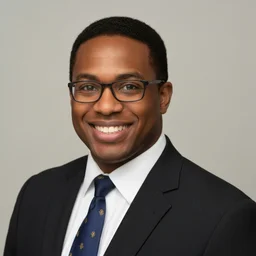
Law Enforcement Trainer & Civil Service Exam Specialist
John Jay College of Criminal JusticeMarcus B. Thompson earned his Master of Arts in Criminal Justice from John Jay College of Criminal Justice and served 12 years as a law enforcement officer before transitioning to full-time academy instruction. He is a POST-certified instructor who has prepared candidates for police entrance exams, firefighter assessments, and civil service examinations across dozens of agencies.
Join the Discussion
Connect with other students preparing for this exam. Share tips, ask questions, and get advice from people who have been there.
View discussion (7 replies)