

SFST Practice Test
Updated October 2026Facts verified Oct 15, 2026 against National Highway Traffic Safety Administration (NHTSA) and International Association of Chiefs of Police (IACP); SFST ce
The NHTSA SFST curriculum is the gold standard for impaired driving enforcement in the United States. Passing the SFST instructions and proficiency exams certifies you to administer these tests during traffic stops. Practice with the free Standardized Field Sobriety Testing Certified practice test on PracticeTestGeeks (7 questions with answer explanations).
- The NHTSA/IACP SFST training written examination requires a passing grade of 80%. (National Highway Traffic Safety Administration (NHTSA) and International Association of Chiefs of Police (IACP); SFST ce)
- The SFST standards require a retest to take place 15–30 days after completion of classroom training. (National Highway Traffic Safety Administration (NHTSA) and International Association of Chiefs of Police (IACP); SFST ce)
- The SFST standards leave the methods and frequency of refresher/update training to individual states. (theiacp.org)
- The NHTSA/IACP SFST training includes a written examination. (National Highway Traffic Safety Administration (NHTSA) and International Association of Chiefs of Police (IACP); SFST ce)
Facts verified Oct 15, 2026 against National Highway Traffic Safety Administration (NHTSA) and International Association of Chiefs of Police (IACP); SFST ce. Dates that have passed are removed automatically.
SFST Exam at a Glance
| Item | Detail | Official source |
|---|---|---|
| Passing score | 80% | National Highway Traffic Safety Administration (NHTSA) and International Association of Chiefs of Police (IACP); SFST ce |
| Retake policy | Retest 15–30 days after classroom training | National Highway Traffic Safety Administration (NHTSA) and International Association of Chiefs of Police (IACP); SFST ce |
| Renewal | Refresher requirements determined by individual states | theiacp.org |
| Delivery | Written examination | National Highway Traffic Safety Administration (NHTSA) and International Association of Chiefs of Police (IACP); SFST ce |
Facts verified Oct 15, 2026 against National Highway Traffic Safety Administration (NHTSA) and International Association of Chiefs of Police (IACP); SFST ce. Dates that have passed are removed automatically.
Free Standardized Field Sobriety Testing Certified Study Tools
Interactive Standardized Field Sobriety Testing Certified resources on PracticeTestGeeks, free to start:
- Standardized Field Sobriety Testing Certified flashcards — review key terms and concepts card by card
- Standardized Field Sobriety Testing Certified study guide — topic-by-topic overview of what the exam covers
- Standardized Field Sobriety Testing Certified cheat sheet — one-page printable summary for last-minute review
SFST Practice Test Questions
Prepare for the SFST - Standardized Field Sobriety Testing Certified exam with our free practice test modules. Each quiz covers key topics to help you pass on your first try.
SFST Alcohol Influence and Physiological E...
SFST Exam Questions covering Alcohol Influence and Physiological Effects. Master SFST Test concepts for certification prep.
SFST Court Testimony
Free SFST Practice Test featuring Court Testimony. Improve your SFST Exam score with mock test prep.
SFST Documentation
SFST Mock Exam on Documentation. SFST Study Guide questions to pass on your first try.
SFST Evaluation Factors
SFST Test Prep for Evaluation Factors. Practice SFST Quiz questions and boost your score.
SFST Legal and Ethical Considerations
SFST Mock Test covering Legal and Ethical Considerations. Online SFST Test practice with instant feedback.
SFST Legal Standards
Free SFST Quiz on Legal Standards. SFST Exam prep questions with detailed explanations.
SFST Observation Skills
SFST Practice Questions for Observation Skills. Build confidence for your SFST certification exam.
SFST One Leg Stand
SFST Test Online for One Leg Stand. Free practice with instant results and feedback.
SFST Renewal and Professional Development
SFST Study Material on Renewal and Professional Development. Prepare effectively with real exam-style questions.
SFST Test Administration
Free SFST Test covering Test Administration. Practice and track your SFST exam readiness.
SFST Flashcards
Quick review of SFST clues and procedures
👁️How many clues are in HGN?
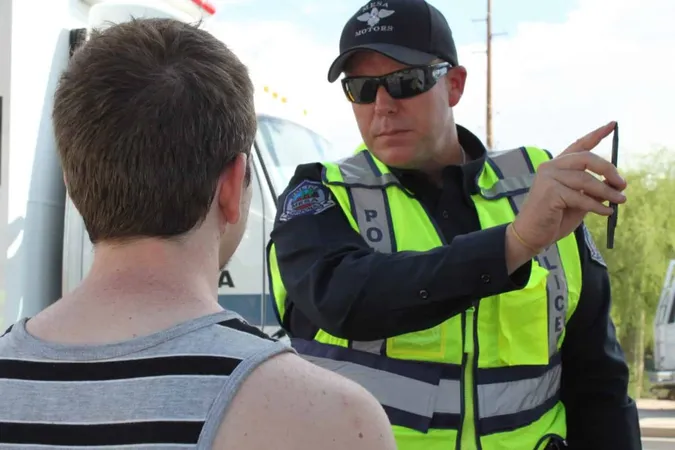
The HGN SFST test has 6 total clues (3 per eye): Lack of Smooth Pursuit, Max Deviation, and Onset Prior to 45 Degrees.
START SFST PRACTICE TEST🚶What are the WAT Stages?
The Walk and Turn test has two stages: the Instruction Stage (divided attention) and the Walking Stage.
GET SFST EXAM PREP🦵Clues for One Leg Stand?
There are 4 clues: Sways while balancing, Uses arms to balance, Hops, and Puts foot down (PUSH).
REVIEW SFST QUESTIONS📊HGN Accuracy Rate?
According to the San Diego Study, the HGN test is 88% accurate at detecting BAC above 0.08%.
TRY SFST MOCK EXAM🔦Stimulus Distance?
The stimulus should be held approximately 12-15 inches from the subject's nose and slightly above eye level.
ACCESS SFST STUDY GUIDE📜WAT Clues to Fail?
Observing 2 or more clues on the Walk and Turn test indicates a BAC of 0.08% or higher with 79% reliability.
PRACTICE SFST TEST NOWSFST Exam Study Guide
The NHTSA SFST curriculum is broken down into specific modules. Understanding the mechanics of the Horizontal Gaze Nystagmus (HGN), Walk and Turn (WAT), and One Leg Stand (OLS) is critical for passing the SFST written test.
- Topics: Real impairment detection
- Questions: 2 Practical Apps
The most critical part of the SFST test is giving the instructions exactly as written in the NHTSA SFST manual. Deviating from the script can invalidate the test results in court.
SFST Score Calculator
Total Scored Questions
50
35 out of 50 correct
70%
Required to Pass: ~80% (Estimated)
Almost all sworn officers receive SFST certification for free as part of their employment training. Agencies also typically cover the cost of the SFST refresher course.

SFST Test Day Checklist
- ✓Valid Law Enforcement ID
- ✓Pen Light / Stimulus
- ✓Notepad for Clues
- ✓NHTSA SFST Manual
- ✓Comfortable Uniform
- ✓Review HGN Clues
- ✓Review WAT/OLS Demos
- ✓Practice Report Writing
Ready to Pass Your SFST Exam?
Join thousands of officers who have used our free SFST practice test questions to master the NHTSA standards and ace their certification.
SFST Renewal Requirements
Refresher Every
2 Years
Course Length
4-8 Hours
Regular SFST refresher training is crucial not just for certification, but for maintaining credibility during cross-examination in court.
- +Validates your knowledge and skills objectively
- +Increases job market competitiveness
- +Provides structured learning goals
- +Networking opportunities with other certified professionals
- −Study materials can be expensive
- −Exam anxiety can affect performance
- −Requires dedicated preparation time
- −Retake fees apply if you don't pass
Pros and Cons at a Glance
| Pros | Cons |
|---|---|
| Validates your knowledge and skills objectively | Study materials can be expensive |
| Increases job market competitiveness | Exam anxiety can affect performance |
| Provides structured learning goals | Requires dedicated preparation time |
| Networking opportunities with other certified professionals | Retake fees apply if you don't pass |
Sample Standardized Field Sobriety Testing Certified Practice Questions
Try these questions from our free Standardized Field Sobriety Testing Certified practice tests. The correct answer and an explanation follow each question.
How often must SFST practitioners typically renew their certification to remain authorized to administer standardized field sobriety tests?
- A. Every 6 months
- B. Every year
- C. Every 2 years
- D. Every 3 years
Answer: C. Every 2 years
Most SFST certifications require renewal every 2 years to ensure practitioners remain current with updated protocols and legal standards.
What is the NHTSA-standardized count duration for the One-Leg Stand test?
- A. 20 seconds
- B. 25 seconds
- C. 30 seconds
- D. 45 seconds
Answer: C. 30 seconds
The subject is instructed to count aloud while standing on one leg for 30 seconds per NHTSA protocol.
An officer whose SFST certification has lapsed should do which of the following before testifying as an SFST expert?
- A. Testify anyway since prior training is valid indefinitely
- B. Complete recertification training before testifying
- C. Submit a written waiver to the court
- D. Rely on a partner's certification
Answer: B. Complete recertification training before testifying
Lapsed certification undermines an officer's qualification as an expert witness; recertification must be completed before resuming formal SFST testimony.
When cross-examined about HGN testing, which foundational point should an SFST officer be prepared to establish first?
- A. The defendant's prior DUI history
- B. Scientific validity of HGN as an impairment indicator
- C. The officer's opinion of the defendant's guilt
- D. The weather conditions at the time of the stop
Answer: B. Scientific validity of HGN as an impairment indicator
Before HGN evidence is admitted, the officer must establish that the test is based on sound scientific principles linking nystagmus to alcohol impairment.
Take the full Standardized Field Sobriety Testing Certified practice test
SFST Questions and Answers
How this page was made: written with AI tools and published by Nathan Beja, founder of Practice Test Geeks, who is responsible for its content. Exam facts are checked against the official sources listed below. Not reviewed by a subject-matter expert. Editorial policy
Sources & references
Exam facts on this page (fees, format, dates, passing scores) are checked against these official sources; the date is our last check. Editorial policy
- nhtsa.gov — Retake policy, test delivery, passing score · verified Oct 2026
- theiacp.org — Renewal · verified Oct 2026