
ServSafe Alcohol Certification: Complete Guide to Responsible Beverage Service Training
🧠 ServSafe Alcohol covers ID checking, intoxication signs, and liability. Learn exam format, passing score, costs, and where the certification is required.
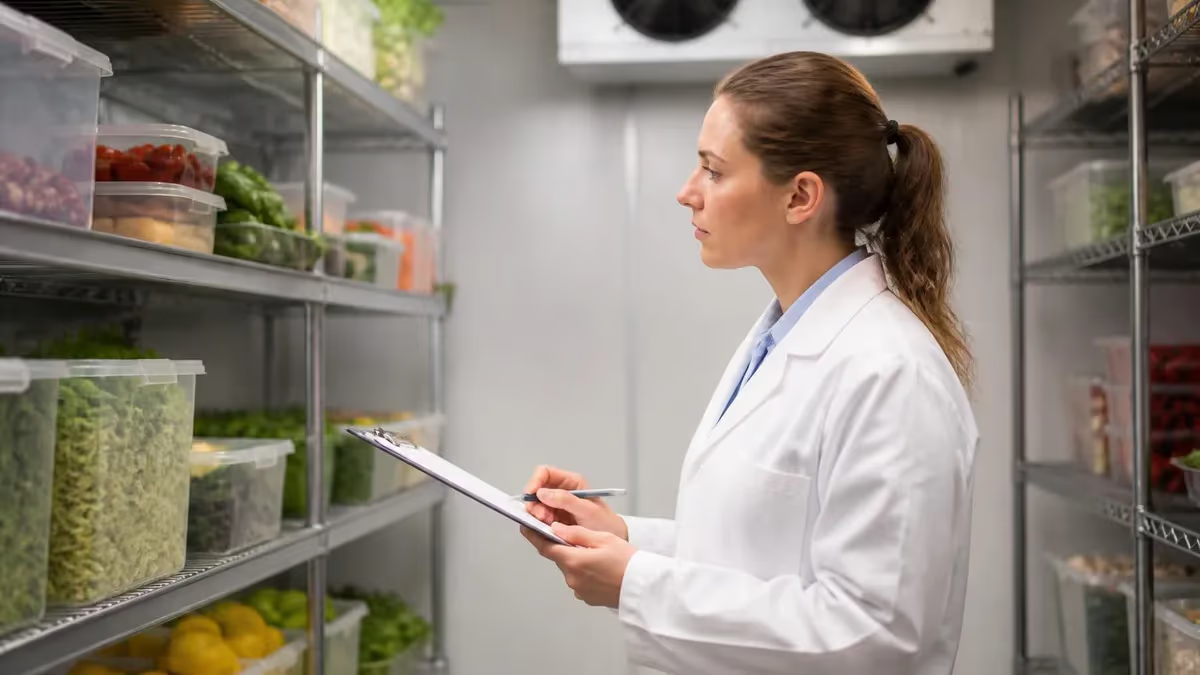
You pour drinks for a living. Or maybe you check IDs at the door, manage a tasting room, or run the front of house at a busy steakhouse on a Friday night. Either way — if alcohol crosses your bar, your training matters. ServSafe Alcohol is the credential that tells your employer, your insurer, and (sometimes) the state regulator that you actually know what you're doing when someone orders that third cocktail.
The program comes from the National Restaurant Association. Same group behind ServSafe Manager and the food handler credentials you've probably seen tacked up behind a kitchen wall. ServSafe Alcohol, though, is its own beast. It focuses on responsible beverage service — not food safety. Two different exams. Two different certificates. Don't confuse them.
Here's what makes this credential useful: it covers liability. The legal kind. The kind that can sink a restaurant after one bad night. When a server keeps pouring for someone who shouldn't be served, lawsuits follow. Insurance rates climb. Licenses get pulled. ServSafe Alcohol teaches you how to spot trouble before it becomes a court case.
This guide walks through everything. The exam structure, the topics, the passing score, the cost, the states that require it, and the way the test actually feels when you sit for it. By the end you'll know whether you need Primary or Advanced, what to study, and how to pass on the first try.
ServSafe Alcohol by the Numbers
Key Facts at a Glance
| Item | Value | Details |
|---|---|---|
| Multiple-choice questions on the Primary exam, drawn from four core topic areas | 40 | |
| Multiple-choice questions on the Advanced exam for managers and supervisors | 90 | |
| Minimum passing score on both Primary and Advanced versions of the exam | 70% | |
| Certificate validity period in most states before full re-certification is required | 3 years | |
| Total time allowed on the Primary exam — Advanced allows 120 minutes for 90 items | 90 min |
What ServSafe Alcohol Actually Covers
The training is built around one core idea — preventing alcohol-related harm. That sounds simple. In practice it splits into four big topic areas, and each one shows up on the exam.
First, alcohol law. Every state writes its own rules about who can serve, who can be served, and how much liability falls on the server versus the establishment. ServSafe Alcohol covers the federal framework and gives you the lens to read your own state's rulebook. Dram shop laws. Social host liability. Statutory minimum ages. The stuff that sounds dry until someone hands you a subpoena.
Second, recognizing intoxication. Not just "this person is slurring." The training drills into behavioral cues, physical signs, and the predictable progression as Blood Alcohol Concentration climbs. You'll learn how factors like body weight, food intake, medications, and pace of drinking change what intoxication looks like in the real world. Two people can drink the same amount and present completely differently — and you need to read both.
Third, checking identification. Sounds basic. It isn't. Fake IDs have gotten frighteningly good. The training covers what to look for, how to handle a suspected fake, the legal protection you get from refusing service, and the right scripts for awkward situations. Looking at the photo isn't enough. You need the whole protocol.
Fourth, intervention. The hardest part of the job. Cutting someone off — politely, firmly, and without escalating the situation. Refusing service to a regular. Calling a cab for someone who's insisting they're fine to drive. The training gives you actual phrases, actual decision trees, and a framework for documenting everything so you're covered later.
The Four Core Topic Areas
Dram shop liability, statutory minimum ages, social host laws, federal frameworks, and your state's specific Alcoholic Beverage Control rules. Covers the legal consequences for the server and the establishment when an over-served guest causes harm — including civil suits, criminal liability, and license revocation actions taken by state regulators after an incident.
Behavioral cues, physical signs, and BAC progression from sober through severely impaired. Covers how body weight, food intake, medication interactions, pace of drinking, and tolerance change what intoxication looks like in practice. Trains servers to read the room and identify pre-impairment cues before guests reach a level where refusal becomes contentious or unsafe.
Identifying real versus fake credentials, the visual and tactile cues on a legitimate driver's license or passport, handling refusals with awkward customers, and the legal protection servers receive from following correct ID-check procedure. Covers state-issued IDs, military IDs, passports, and the rejection scripts that defuse confrontations at the door or behind the bar.
Cutting off service politely, scripts for awkward refusals, documenting incidents in incident logs, calling cabs or rideshares, and partnering with managers when a situation escalates. Provides a decision-tree framework for the moment a guest crosses the line, along with language that maintains hospitality while protecting both the guest and the establishment from harm.
Primary vs Advanced: Which One Do You Need?
ServSafe Alcohol comes in two flavors. Most people only need one. Picking the wrong version wastes money and time, so let's break it down.
The Primary course is for servers, bartenders, and front-of-house staff. It's roughly 4 hours of training and covers everything described above at the operational level. If you're the one pouring drinks or checking IDs, Primary is your version. The exam has 40 questions and you need 70% to pass.
Advanced is for managers, owners, and anyone who supervises alcohol service. It builds on Primary content with deeper coverage of staff training, policy development, and operational risk management. The course runs about 8 hours. The exam has 90 questions. Same 70% threshold. Some states require Advanced for any role with managerial authority over a licensed premises.
Quick guide. Server, bartender, host? Primary. Bar manager, GM, owner of a licensed venue? Advanced. Brand-new venue with no specific role yet? Take Advanced — it covers Primary content and more, and it'll save you from re-certifying when you get promoted.
Pick the right tier
Primary is for servers, bartenders, and front-of-house staff (4 hours, 40 questions). Advanced is for managers and supervisors (8 hours, 90 questions). When in doubt, take Advanced — it covers both and saves a re-certification later.
The Exam Itself — What to Expect
Here's where most candidates get tripped up. Not by the content. By the format. ServSafe Alcohol exams are administered online (proctored) and in-person at approved testing centers. Both versions use multiple-choice questions with four answer options each. There's no penalty for guessing. Pace matters — you've got 90 minutes for Primary, 120 minutes for Advanced.
The questions lean situational. You won't see "What is the legal BAC limit in California?" as often as you'll see "A guest at the bar appears flushed, has slowed speech, and orders another beer. What should you do?" That second style requires you to apply the framework, not just memorize a number. Study accordingly.
The proctored online version uses webcam monitoring. You'll need a quiet, well-lit room, a working camera, and a government-issued ID. The proctor checks in periodically. Suspicious behavior — phones, second monitors, other people in the room — ends the session and voids the attempt. Read the rules before you start.
Results are immediate. You either pass or you don't, right after submitting the last question. Pass and the certificate downloads from your ServSafe account within 1–2 business days. Fail and you can retake — though many states require a wait period and you'll pay the exam fee again.
Pre-Exam Day Checklist
- ✓Read every course module from start to finish — don't skim past the BAC progression tables or state-specific law section
- ✓Score 80 percent or higher on every knowledge check inside the course before you schedule the proctored exam
- ✓Eat a real meal an hour before exam time — hungry brains miss subtle wording on situational questions
- ✓Pick a quiet, well-lit room with no other people present, no second monitor visible, and no phone within reach
- ✓Have your government-issued photo ID — driver's license, passport, or state ID — ready to show the proctor on camera
- ✓Block out 90 minutes (Primary) or 120 minutes (Advanced) of uninterrupted time, plus 15 minutes for proctor check-in
- ✓Test your webcam, microphone, and internet connection the day before — not five minutes before the exam starts
- ✓Keep your ServSafe account login handy so you can download the certificate within 1 to 2 business days after passing
Cost, Certificate Validity, and State Requirements
The Primary course and exam together typically runs $30 to $40 depending on whether you go online or through an instructor-led class. Advanced is roughly $75 to $100. Some employers cover it. Many don't — especially if you're applying for a server job before you're hired.
The certificate is valid for 3 years in most states. A few jurisdictions accept it for longer. A handful (Utah, for example) have stricter rules and require additional state-specific training on top of ServSafe Alcohol. Always check your state's Alcoholic Beverage Control board before assuming national certification is enough.
States that explicitly accept or require ServSafe Alcohol include Arizona, California (under the RBS program), Florida, Illinois, Massachusetts, Michigan, Nevada (in most counties), New Mexico, Pennsylvania, Texas (as an approved seller-server program), Virginia, and Washington. The list shifts year to year. Bookmark your state ABC's website and check it annually.
Don't assume your previous training transfers. Reciprocity rules are inconsistent. A TIPS certificate from Ohio may or may not satisfy New Mexico's requirements. ServSafe Alcohol from California may need a state-specific RBS add-on. Verify before you start the new job.
ServSafe Alcohol expires 3 years from pass date. There's no shortened renewal exam — you re-take the full course and exam. Put the expiration in your calendar 30 days before it lapses.
How the Test Compares to Other Alcohol Certifications
TIPS, TABC, RBS, ServSafe Alcohol. The alphabet soup is real. Here's the short version of what differentiates them.
TIPS (Training for Intervention ProcedureS) is the oldest and most widely recognized program. It's accepted in nearly every state and has been around since 1982. Content is similar to ServSafe Alcohol — intoxication recognition, ID checking, intervention. The exam is shorter (typically 40 questions for off-premise, 65 for on-premise) and the pass rate tends to be a bit higher because the questions are more direct.
TABC is Texas-specific. The Texas Alcoholic Beverage Commission approves a list of programs, and ServSafe Alcohol is one of them. If you're working in Texas, you need a TABC-approved certificate, but you can satisfy that requirement with ServSafe Alcohol.
RBS (Responsible Beverage Service) is California's mandatory program. Every alcohol server in the state must complete RBS training and pass a state-administered exam. ServSafe Alcohol counts as approved training for the course portion — but you still take California's state exam separately.
ServSafe Alcohol's edge — broader national acceptance and a more comprehensive treatment of liability than most state-only programs. Its weakness — slightly more dense than TIPS and a touch more expensive. Pick based on your state's requirements first. Then employer preference. Then personal preference last.
Comparing Alcohol Server Certifications
Broadest national acceptance among programs from the National Restaurant Association. Strong coverage of liability and intervention. 40-question Primary exam, 75% pass mark, $30 to $40 typical cost. Online proctored or in-person testing available. Three-year validity in most states. Recognized as approved training across most regulated jurisdictions and frequently preferred by national restaurant chains for its operational liability focus.
How to Actually Pass on the First Try
You can pass without breaking a sweat if you do three things. Read the course material — don't skim. Take the practice questions seriously. And give yourself uninterrupted time for the real exam.
The course content is well organized. ServSafe breaks each topic into modules with knowledge checks after each one. Treat those checks like the real thing. If you miss a question, go back and re-read the section — don't just move on. The exam pulls from the same conceptual pool, often with slightly reworded scenarios.
Practice with a structured set of ServSafe practice questions and target the topic areas where you're weakest. Most candidates struggle with two areas — state-specific law and the precise BAC progression timeline. Both are memorization-heavy. Flash cards work. So does writing the BAC stages out by hand a couple of times.
For the exam itself, eat first. Sounds obvious. Plenty of people don't. Hungry brains miss subtle wording on situational questions. Hydrate. Use the restroom before you log in to the proctor. Have your ID, a quiet space, and 90–120 minutes blocked off with no interruptions.
Read every question twice. The wrong answers on ServSafe exams are designed to look right at first glance. The framework matters — if a question describes a guest with a single sign of intoxication, the right answer probably isn't "refuse service immediately." It's probably "monitor and offer water." Apply the principles, don't react to the first plausible option.
Career Impact and Pay
Holding ServSafe Alcohol opens doors. Most bars, restaurants, hotels, and event venues prefer (or require) certified staff. Many will reimburse the cost after a successful first 30–60 days. Some pay a slight wage premium — typically $0.50 to $1.50 per hour for certified bartenders compared to uncertified peers. It varies by market, but the math works out fast.
For managers, the credential is closer to non-negotiable. Liquor liability insurance often requires that all managers and a percentage of front-of-house staff hold an approved certification. Without it, premiums climb. Some carriers won't even quote a policy.
And if you want to move up — say, from server to floor manager, or floor manager to GM — Advanced ServSafe Alcohol on your resume signals that you're serious. Combined with ServSafe Manager for food, the two credentials together cover the major operational liability areas of a restaurant. It's a clear professional package.
ServSafe Alcohol — Honest Tradeoffs
- +Broadest national acceptance among alcohol server programs
- +Comprehensive liability and intervention content
- +Approved in major regulated states (CA, TX, FL, IL, MA, NV)
- +Immediate exam results — pass/fail at the last question
- +Cheaper than TABC-only or RBS-only training stacks
- −Doesn't satisfy state-only requirements alone in Utah and a few others
- −Slightly more dense than TIPS, with a steeper question style
- −Three-year renewal requires a full re-test (no shortened renewal exam)
- −Proctored online version is strict — small infractions void the attempt
- −California still requires the separate state RBS exam on top
What Happens If You Fail?
You can retake the exam. The exact rules depend on which version and the delivery method. For Primary online, you can typically retake after a 24-hour cool-down period. Advanced requires a slightly longer wait — usually 72 hours. There's no cap on retakes, but every attempt costs the full exam fee.
If you fail, look at the score report. It breaks performance down by topic area. Spend your study time on the lowest-scoring sections rather than re-reading the whole book. Most second-attempt candidates pass after focusing on their two weakest areas for an hour or two.
And don't beat yourself up. The pass rate isn't 100% — it's lower than people think. Roughly 75–80% pass on the first attempt nationally. Failing once doesn't mean you can't do the job. It usually just means you needed another pass through the BAC tables.
Renewal — How to Stay Current
Renewal isn't automatic. Three years after you pass, the certificate expires. You'll need to retake the course and exam to renew — there's no shortened "renewal exam" for ServSafe Alcohol the way some other certifications offer.
The good news. If you've been actively serving alcohol for those three years, the material won't feel new. Most renewal candidates breeze through in well under the allotted time. The bad news. You pay the full fee again. Budget accordingly.
Some employers track expirations in their HR systems and remind you ahead of time. Smaller operations don't. Put it in your phone calendar the day you pass — three years out, 30 days before the expiration date. Letting it lapse means you're (technically) not legally allowed to serve alcohol in many states until you re-certify.
Common Mistakes That Cost Candidates the Exam
A few patterns show up over and over among first-attempt failures. Knowing them helps you avoid them.
Skipping the state-specific module. The course has a section that varies based on the state you select when you start. Candidates rush through it because the rest of the course feels universal. That section is heavily weighted on the exam. Read it carefully even if you've worked in the industry for years.
Memorizing instead of applying. The exam doesn't want regurgitated facts. It wants you to apply principles to scenarios. If you can recite the four stages of intoxication but can't pick the right intervention in a sample scenario, you'll struggle. Practice with situational questions, not flashcards.
Underestimating the BAC math. Several questions involve estimating BAC based on drink count, body weight, and time elapsed. The formulas aren't complex but they're easy to forget under exam pressure. Work through 10 or 15 example calculations the day before the test. Muscle memory carries you through.
Letting the proctor unsettle you. The online proctor will ask you to show the room, hold up your ID, and possibly tilt the camera. People get nervous and rush. Take the extra minute. Move slowly. The proctor isn't trying to trip you up — they're documenting that the conditions are valid.
Final Word
ServSafe Alcohol isn't the most exciting certification you'll earn. It's not the hardest either. But it's one of the most practical — every shift you work after passing it, you'll catch yourself applying the framework. Reading the room. Checking IDs without being awkward. Knowing when to switch a guest to water without making a scene.
That's the real value. Not the certificate. The instincts it builds. Pass the exam, get the certificate, and treat the training as the floor — not the ceiling — of what good service looks like. Your guests will be safer. Your venue will be safer. And you'll go home knowing you didn't pour the drink that put someone in a hospital.
ServSafe Questions and Answers
About the Author
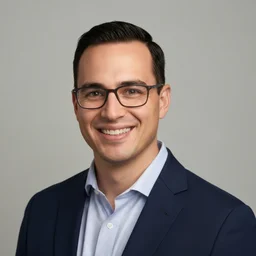
Registered Sanitarian & Food Safety Certification Expert
Cornell University College of Agriculture and Life SciencesThomas Wright is a Registered Sanitarian and HACCP-certified food safety professional with a Bachelor of Science in Food Science from Cornell University. He has 17 years of experience in food safety auditing, regulatory compliance, and foodservice management training. Thomas prepares food industry professionals for ServSafe Manager, HACCP certification, and state food handler examinations.
Join the Discussion
Connect with other students preparing for this exam. Share tips, ask questions, and get advice from people who have been there.
View discussion (7 replies)