

SPRAT Practice Test
Updated for September 2026The Society of Professional Rope Access Technicians (SPRAT) certification is a globally recognized qualification for individuals in the rope access industry. This certification provides technicians with the essential skills and knowledge to perform tasks in high-altitude or hazardous environments safely. Whether you're exploring the career path of a rope access technician or seeking to advance in the industry, understanding the certification process is crucial. This article delves into the details of SPRAT certification, what rope access technicians do, salary expectations, and more, to help you navigate your career in this rewarding field.
SPRAT Practice Test Questions
Prepare for the SPRAT - Society of Professional Rope Access Technicians Certification exam with our free practice test modules. Each quiz covers key topics to help you pass on your first try.
SPRAT Equipment Inspection & Maintenance
SPRAT Exam Questions covering Equipment Inspection & Maintenance. Master SPRAT Test concepts for certification prep.
SPRAT Risk Assessment & Hazard Management
Free SPRAT Practice Test featuring Risk Assessment & Hazard Management. Improve your SPRAT Exam score with mock test prep.
SPRAT Rope Access Safety & Procedures
SPRAT Mock Exam on Rope Access Safety & Procedures. SPRAT Study Guide questions to pass on your first try.
SPRAT Rope Access Techniques & Applications
SPRAT Test Prep for Rope Access Techniques & Applications. Practice SPRAT Quiz questions and boost your score.
SPRAT Applied Methods and Techniques
SPRAT Questions and Answers on Applied Methods and Techniques. Free SPRAT practice for exam readiness.
SPRAT Assessment and Evaluation
SPRAT Mock Test covering Assessment and Evaluation. Online SPRAT Test practice with instant feedback.
SPRAT Communication and Documentation
Free SPRAT Quiz on Communication and Documentation. SPRAT Exam prep questions with detailed explanations.
SPRAT Continuing Education Requirements
SPRAT Practice Questions for Continuing Education Requirements. Build confidence for your SPRAT certification exam.
SPRAT Core Concepts and Principles
SPRAT Test Online for Core Concepts and Principles. Free practice with instant results and feedback.
SPRAT Industry Best Practices
SPRAT Study Material on Industry Best Practices. Prepare effectively with real exam-style questions.
SPRAT Professional Standards and Ethics
Free SPRAT Test covering Professional Standards and Ethics. Practice and track your SPRAT exam readiness.
Key Takeaways
Free SPRAT Practice Test Online
SPRAT Certification: The SPRAT certification ensures rope access technicians are qualified to perform work safely at height. The certification process includes practical and theoretical exams at three levels: Level 1, Level 2, and Level 3.
Salary Outlook: Salaries for rope access technicians can range from $30,000 to $100,000 annually, depending on experience and certification level.
Insurance: Due to the risks associated with working at height, life, accident, disability, and health insurance are essential for rope access technicians.
Demand Across Industries: Rope access technicians are needed in various industries, including oil and gas, construction, and telecommunications, providing ample career opportunities.

What Do Rope Access Technicians Do?
Rope access technicians are skilled professionals who use ropes, harnesses, and other specialized equipment to access hard-to-reach locations. Their primary role is to perform maintenance, inspections, repairs, and other tasks in locations that traditional methods, like scaffolding or ladders, cannot reach.
Rope access technicians are often called upon for tasks such as:
Inspections and maintenance on tall structures like buildings, bridges, wind turbines, and telecommunication towers.
Installation of equipment such as antennas, signage, or lights at great heights.
Rescue operations, where they are trained to perform emergency rescues from difficult or dangerous situations.
Cleaning and repairs in locations where there is limited access, including gutters, windows, and roofs.
The work of a rope access technician requires a high level of physical fitness, mental focus, and an understanding of safety protocols. The SPRAT certification ensures that technicians are fully trained to operate in these challenging environments while minimizing the risks involved.
Rope Access Technicians Salary
The salary of a rope access technician varies widely depending on factors like experience, certification level, location, and the specific industry they work in. Generally, rope access technicians can expect competitive salaries due to the specialized skills and risks associated with the job.
Entry-Level Salary: A newly certified Level 1 technician can expect to earn anywhere from $30,000 to $45,000 annually, depending on the location and industry.
Mid-Level Salary: For those who hold a Level 2 SPRAT certification and have some field experience, salaries can range from $50,000 to $70,000 per year.
Experienced Technician Salary: Technicians with a Level 3 SPRAT certification and several years of experience can earn between $70,000 and $100,000 annually. Level 3 technicians are often responsible for overseeing teams and handling more complex operations.
Industries like oil and gas, telecommunications, construction, and energy typically offer higher salaries due to the technical and often hazardous nature of the work. Moreover, the demand for skilled rope access technicians continues to rise, which may lead to increased salary expectations.
Rope Access Technicians Certification
The SPRAT certification is a comprehensive program designed to ensure that technicians possess the necessary skills and knowledge to work safely and effectively. There are three levels of certification: Level 1, Level 2, and Level 3. Each level requires technicians to pass both written and practical exams, demonstrating their competency in various rope access techniques.
Level 1 Certification: This is the entry-level certification and focuses on basic skills, including rope handling, knot tying, and the use of personal protective equipment (PPE). Technicians at this level are expected to perform basic tasks under supervision.
Level 2 Certification: A more advanced certification that requires knowledge of rope access rigging, rescues, and advanced rope systems. Level 2 technicians are often expected to work independently and may take on more responsibility on site.
Level 3 Certification: The highest level of certification, which is typically for those who have extensive experience in the field. Level 3 technicians are responsible for supervising teams, conducting risk assessments, and ensuring compliance with safety standards.
Earning SPRAT certification not only boosts a technician’s credibility but also opens up more job opportunities, as many industries require this qualification for access at height.
Industrial Rope Access Technicians
Industrial rope access technicians are critical in various industries where traditional access methods are impractical. These professionals are employed in fields such as:
Oil and Gas: Rope access is frequently used in offshore oil rigs, gas platforms, and refineries where technicians need to reach elevated areas for inspection, maintenance, and repair.
Telecommunications: Technicians work on communication towers and rooftops to install and maintain antennas and communication devices.
Construction: Rope access is used in construction to access high-rise buildings, bridges, and other structures for maintenance and inspection purposes.
Energy: In the energy sector, rope access technicians maintain wind turbines and other energy infrastructure, performing tasks such as cleaning, inspections, and repairs.
Due to the versatility and cost-effectiveness of rope access techniques, industrial rope access technicians are in demand across many high-risk industries. Their ability to access remote or hazardous locations safely makes them an indispensable part of the workforce.
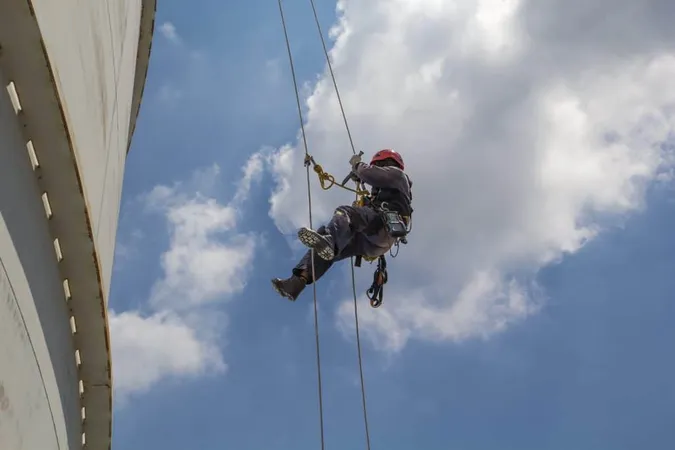
Life Insurance for Rope Access Technicians
Life insurance is a crucial consideration for rope access technicians due to the inherent risks involved in their work. Given the nature of the job, which often requires working at great heights or in hazardous environments, technicians must have adequate coverage to protect themselves and their families in case of an accident.
Technicians may consider the following types of insurance:
Life Insurance: Provides financial protection for the technician’s beneficiaries in case of fatal accidents while working at height.
Accident Insurance: Covers medical expenses and lost wages if the technician is injured on the job, including long-term rehabilitation.
Disability Insurance: Offers financial compensation if the technician becomes temporarily or permanently disabled and is unable to work.
Health Insurance: Covers general health expenses, including hospital stays, medical treatments, and preventive care.
While some employers may provide insurance benefits, technicians are encouraged to review their insurance policies and ensure they have adequate coverage for the risks involved in their line of work.

Conclusion
The Society of Professional Rope Access Technicians (SPRAT) certification is a valuable credential that enhances the skills and safety of rope access professionals. By earning the certification, technicians demonstrate their competence and commitment to working safely in hazardous environments. The diverse career opportunities and competitive salaries make this field appealing to many, while life insurance and other safety measures provide the necessary protection for professionals working in high-risk conditions. For anyone looking to pursue a career as a rope access technician, obtaining the SPRAT certification is the first step toward ensuring safety, credibility, and success in this exciting and dynamic industry.
SPRAT: Pros and Cons
- +SPRAT certification validates expertise recognized by employers nationwide
- +Certified professionals typically earn 15-20% higher salaries
- +Opens doors to advanced positions and leadership roles
- +Demonstrates commitment to professional standards and ethics
- +Builds a strong professional network through certification communities
- −Exam preparation typically requires 2-4 months of dedicated study
- −Certification and exam fees can range from $150-$500+
- −Must complete continuing education to maintain active certification
- −Pass rates vary — thorough preparation is essential for success
- −Some certifications require prerequisite experience or education
(SPRAT) Society of Professional Rope Access Technicians Certification Questions and Answers
About the Author

Certified Professional Development Expert & Niche Certification Advisor
University of Pennsylvania Graduate School of EducationDr. Alexandra Kim holds a PhD in Professional Studies from the University of Pennsylvania and is a Certified Professional in Learning and Performance (CPLP) and Certified Professional in Talent Development (CPTD). With 17 years of corporate training and professional certification advisory experience, she helps professionals navigate specialized, emerging, and cross-industry certification programs.