

Remixing & Mashups Practice Test
Updated for September 2026Remixing & Mashups Questions and Answers
- Launch Snapchat.
- To the left of the screen, swipe left or tap the second icon from the top.
- Tap to open the tale of your friend.
- Next, tap the three dots in the display’s upper right corner.
- Choose Remix Snap as your option.
- Select one of the five options in the screen’s center-left.
- Click or narrate your response.
- Include stickers, text, etc., and click “Send.”
- If you’re seeking opportunities to create remixes for hire, reach out to other musicians first. The simplest way to ask for a remix opportunity is to get in touch with other musicians.
- One of the best ways to profit from a remix is to get in touch with record labels. The majority of the time, record companies own the rights to the songs they sign, making this one of the finest ways to obtain legal authorization for an official remix. Use the contact page on a record label’s website to learn how to get in touch with them and check to see if there is a means for musicians to do so.
- Entering remix competitions is another approach to be compensated for remixing a song. Remix competitions are a terrific way to hear your music from influential musicians and business people. These contests are typically organized by musicians, record labels, radio stations, or other businesses looking for up-and-coming musicians.
- Start with a reliable audio editing program. Most of the work is done here. You can import audio recordings that include beats, instrumental tracks, vocals, sound effects, etc., into your digital audio workstation or DAW. You can perform sophisticated procedures using some applications, including pitch correction or tempo matching. With almost all, you can time stretch, reverse, transpose, and slice within the confines of your editing program.
- Decide which song to remix. Remixing is a type of derivative art that directly draws inspiration from another piece of art. The decision to the track to remix is crucial to the process.
- Include original audio. Here is where you leave your mark on the song. This can involve destroying or modifying the feel by introducing new rhythm tracks.
- If you intend to sell or give live performances of your music, be mindful of the copyright regulations in your region. You risk legal repercussions if you use an author’s songs without permission.
- Analyze the song. You should isolate the rhythmic elements in addition to the melodic ones to make the remixing process simpler.
- Test each effect in your DAW or audio editing program to hear how it affects the sound of each part. Delay, phaser, chorus, flanger, filters and other EQ, reverb, amplitude modulation, ring modulation, frequency modulation, time stretching, pitch shifting or correction, vocoder, and other effects are only a few options available. Train your ear by experimenting with these styles and determining what you like. Keep in mind that a track with less production value is always preferable to one with more; keep it basic but enjoyable.
- Rebuild the track. Set your looping software’s BPM (tempo—beats per minute) and time signature (often 4/4 in popular music, but occasionally 3/4). Import your loops next. You should be able to choose any tempo you want after they have been imported and time adjusted with very little quality loss. You can now begin to rebuild the track.
- Publish your work (mastering). You should export your remix whenever you are satisfied with it, and it has a beginning and an end. Prevent encoding an MP3, save everything or export to a WAV or AIFF file. Use your audio editing program to import this and normalize it to 99%. By doing this, you can be confident that your levels will be close to their maximum volume at their peak. Additionally, you can increase the perceived importance of your remix by adding a compressor effect before normalizing.
- It’s advised to go back and “master” your track. However, it’s not required. This entails using effects to highlight particular components of your mix. Suppose you want overall harsher bass or more emotional highs. The quality of the mastering is what sets a professional studio apart from a home recording.
- Choose your music. The two main audio files in every song mashup are an instrumental track without vocals and a cappella vocal track, which only includes the singer’s voice. An alternative to using an instrumental version of a song is to loop together a sample of the beginning of a drum beat from the original track in your DJ software to create a new instrumental track.
- Align the rhythms. Make sure the beats per minute (BPM) of your two primary tracks match to keep them in time after choosing them (a technique called beatmatching). Determine each track’s BPM using your digital audio workstation (DAW) or DJ software, and then use the warping or time-stretching features to slow down or speed up each one so that the rhythms are in sync.
- Reconcile the keys. In a mashup, each song’s musical keys should match in addition to the beatmatching. To assist you in reaching keys, use the key-analyzing features of your DAW or DJ program.
- Set the tracks in place. Play the instrumental track first, then sync the vocal recording to combine the two songs. To ensure smooth transitions between vocal and instrumental tracks, it may be necessary to perform additional editing on Waveform Audio File Format (WAV) files.
- Make one last adjustment. Vocals should be equalized (EQ) to ensure they are in the right volume and are in harmony with other frequencies in the track. Add effects like filters, extra samples, or reverb to increase the mashup’s sound palette.
- You need a Sparta base and a source to get going. A base is simple to find on SoundCloud or SpartaBaseReuploads.
- Make sure Vegas Pro has been downloaded and installed before moving on to this stage. Start by launching Vegas Pro. Check the Timing page for more information since there are numerous procedures to follow to have proper timing for a Sparta Remix.
- An image of the Chorus pattern. You may create the template for your Sparta Remix if you don’t know how to match the clips according to this screenshot.
- Tap a track header to make it active, tap it once more and select Merge.
- Tap the circles next to the additional tracks you want to merge in the track header section.
- Press the Merge button in the top-right corner.
- Include several YouTube videos. Click the blue icon above to begin.
- Rearrange and reduce the chronology. Drag and drag the video files onto the timeline in the appropriate order.
- Since your YouTube videos are now included in your project, you can save them as a single video.
- Analyze your favorite MP3 files. F
- Add your first track.
- Find the best match.
- Choose your pair.
- Set the tempo.
- Zoom in to edit.
- Mix using volume and EQs.
- Save your Mashup to MP3.
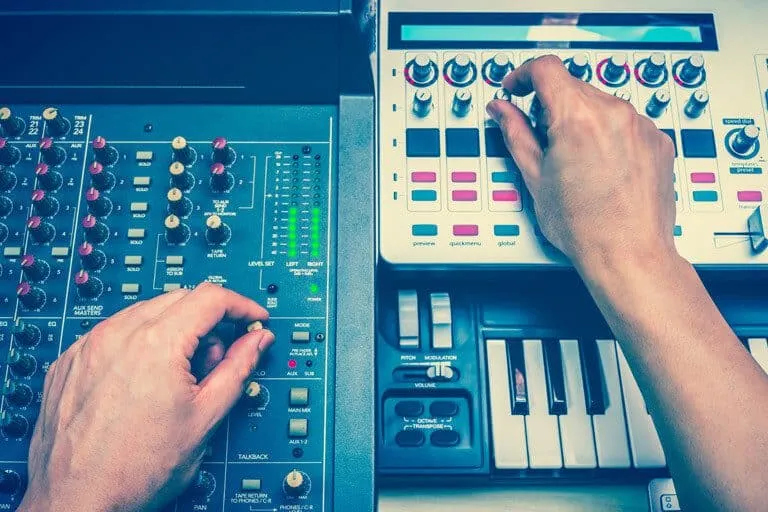
Remixing & Mashups Practice Test Questions
Prepare for the Remixing & Mashups exam with our free practice test modules. Each quiz covers key topics to help you pass on your first try.
Remixing & Mashups MCQ
Remixing & Mashups Exam Questions covering MCQ. Master Remixing & Mashups Test concepts for certification prep.
Remixing & Mashups
Free Remixing & Mashups Practice Test featuring Remixing & Mashups. Improve your Remixing & Mashups Exam score with mock test prep.
Remixing & Mashups Ultimate Remixing & Mas...
Remixing & Mashups Mock Exam on Ultimate Remixing & Mashups. Remixing & Mashups Study Guide questions to pass on your first try.
Remixing & Mashups DJ Tools & Software for...
Remixing & Mashups Test Prep for DJ Tools & Software for Remixing. Practice Remixing & Mashups Quiz questions and boost your score.
Remixing & Mashups Genre-Specific Remixing...
Remixing & Mashups Questions and Answers on Genre-Specific Remixing Styles. Free Remixing & Mashups practice for exam readiness.
Remixing & Mashups Mashup Production Workf...
Remixing & Mashups Mock Test covering Mashup Production Workflows. Online Remixing & Mashups Test practice with instant feedback.
Remixing & Mashups Music Theory for Remixers
Free Remixing & Mashups Quiz on Music Theory for Remixers. Remixing & Mashups Exam prep questions with detailed explanations.
Remixing & Mashups
Remixing & Mashups Practice Questions for Remixing & Mashups. Build confidence for your Remixing & Mashups certification exam.
Remixing & Mashups MCQ
Remixing & Mashups Test Online for Remixing & Mashups MCQ. Free practice with instant results and feedback.
- ✓Review the official Remixing & Mashups exam content outline
- ✓Take a diagnostic practice test to identify weak areas
- ✓Create a study schedule (4-8 weeks recommended)
- ✓Focus on your weakest domains first
- ✓Complete at least 3 full-length practice exams
- ✓Review all incorrect answers with detailed explanations
- ✓Take a final practice test 1 week before exam day
Remixing & Mashups Key Concepts
What is the passing score for the Remixing & Mashups exam?
Most Remixing & Mashups exams require 70-75% to pass. Check the official exam guide for exact requirements.
How long is the Remixing & Mashups exam?
The Remixing & Mashups exam typically allows 2-3 hours. Time management is critical for success.
How should I prepare for the Remixing & Mashups exam?
Start with a diagnostic test, create a 4-8 week study plan, and take at least 3 full practice exams.
What topics does the Remixing & Mashups exam cover?
The Remixing & Mashups exam covers multiple domains. Review the official content outline for the complete list.

How To Start Remixing Music
- +Industry-recognized credential boosts your resume
- +Higher earning potential (10-20% salary increase on average)
- +Demonstrates commitment to professional development
- +Opens doors to advanced career opportunities
- −Exam preparation requires significant time investment (4-8 weeks)
- −Certification fees can be $100-$400+
- −May require continuing education to maintain
- −Some employers may not require certification
About the Author

Certified Professional Development Expert & Niche Certification Advisor
University of Pennsylvania Graduate School of EducationDr. Alexandra Kim holds a PhD in Professional Studies from the University of Pennsylvania and is a Certified Professional in Learning and Performance (CPLP) and Certified Professional in Talent Development (CPTD). With 17 years of corporate training and professional certification advisory experience, she helps professionals navigate specialized, emerging, and cross-industry certification programs.