
Open Psychometrics Character Test: Complete Guide to Psychometric Testing & Personality Assessment
Master the open psychometrics character test 🎯 Learn what psychometric testing is, how it works, and practice free with real questions.

The psychometric test is one of the most widely used tools in modern hiring, academic admissions, and personal development. Whether you are preparing for a corporate recruitment process, applying to a graduate program, or simply curious about your own cognitive and personality profile, understanding what psychometric testing involves is an essential first step. The open psychometrics character test, in particular, has gained significant traction among job seekers and students who want a free, research-backed way to explore how their personality and character traits stack up against standardized models used by employers worldwide.
Psychometric tests are standardized instruments designed to measure psychological attributes — including cognitive ability, personality traits, emotional intelligence, and behavioral tendencies — in a consistent, objective way. Unlike an interview, where first impressions and unconscious bias can distort results, a well-designed psychometric assessment produces scores that can be compared across thousands of candidates using a common scale. This statistical rigor is exactly why employers, universities, and military organizations have relied on them for decades as a fair and predictive selection tool.
The open psychometrics character test specifically draws on the scientific literature around personality structure, most notably the Big Five (OCEAN) model and related frameworks like the HEXACO model. These models have been validated across cultures and languages, making them particularly useful for multinational companies screening candidates from diverse backgrounds. When you complete an open psychometrics character test, you receive a personality profile that situates you along dimensions such as Openness, Conscientiousness, Extraversion, Agreeableness, and Neuroticism — each of which has documented links to job performance, academic achievement, and long-term life outcomes.
One common misconception is that character tests are easy to game. In reality, well-constructed psychometric assessments include validity scales and response-consistency checks that flag attempts to present an overly favorable or socially desirable image. Employers who use these tools are trained to interpret validity indicators alongside the main scores, so authenticity is always the best strategy. Understanding the design logic behind these tests not only helps you approach them with greater confidence but also helps you recognize what employers are actually looking for in the results.
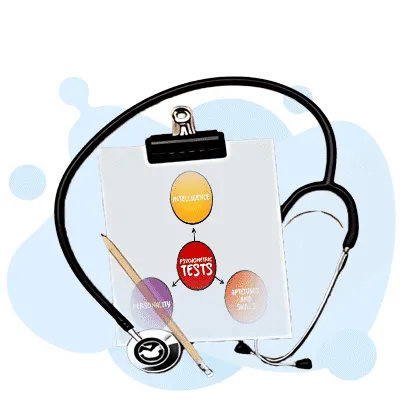
Psychometric testing is not a monolith. The term covers a broad family of instruments, including numerical reasoning tests, verbal reasoning assessments, abstract reasoning puzzles, situational judgment tests, and personality inventories. In a typical recruitment process, you might face two or three of these in sequence — first an online cognitive screen, then a personality questionnaire, and finally an in-depth assessment center exercise. Each layer adds predictive power, and together they give hiring managers a multidimensional view of a candidate that no resume or cover letter can provide.
If you are new to this world, the best place to start is with a structured overview of what each test type measures and why it matters. From there, deliberate practice with realistic sample questions — ideally timed to simulate actual test conditions — is the single most effective way to improve your scores on cognitive subtests.
For personality and character assessments, the goal is less about improving and more about understanding: knowing your profile helps you articulate your strengths in interviews and identify roles where you are most likely to thrive. This guide covers everything from test formats and scoring to study strategies, common pitfalls, and the best free practice resources available online.
Throughout this article you will find practical explanations, real data on score benchmarks, and links to free practice quizzes so you can start building familiarity today. Whether your goal is to ace a recruitment screen or simply to understand yourself better through a scientifically grounded lens, the open psychometrics character test and its broader family of assessments offer a powerful, evidence-based starting point for that journey.
Psychometric Testing by the Numbers

Common Psychometric Test Formats Explained
Tests your ability to interpret tables, graphs, and data sets under timed conditions. Scores predict performance in data-driven roles. Questions typically draw on percentages, ratios, and basic statistics — no advanced math required.
Measures comprehension of written passages and logical inference from text. Candidates must determine whether statements are true, false, or impossible to determine based solely on information provided in a short paragraph.
Uses sequences of shapes and patterns to assess logical and spatial thinking. Often called inductive reasoning, this format is considered a culture-fair measure of general cognitive ability and novel problem-solving capacity.
Measures stable traits like Conscientiousness, Agreeableness, and Emotional Stability using Likert-scale self-report items. The open psychometrics character test is one of the most accessible examples of this format available for free practice.
Presents realistic workplace scenarios and asks candidates to select the most and least effective response. SJTs measure practical intelligence, values alignment, and behavioral tendencies that personality questionnaires alone cannot capture.
Understanding how the open psychometrics character test works requires a brief look at the science behind personality measurement. The most influential framework is the Big Five, also called the Five-Factor Model (FFM). Decades of research using factor analysis — a statistical technique that identifies clusters of correlated behaviors — revealed that human personality can be reliably described along five broad dimensions.
These dimensions are not types or boxes but continuous spectra, meaning everyone falls somewhere along each axis rather than being definitively one thing or another. The psychometric assessment test platforms that use the Big Five generate percentile scores showing where you sit relative to a large normative population.
Openness to Experience is the first dimension, capturing the degree to which a person is curious, imaginative, and receptive to new ideas. High scorers tend to enjoy abstract thinking, artistic expression, and intellectual exploration. They often excel in roles that require creativity and strategic vision. Low scorers tend to be more conventional, practical, and focused on concrete realities — qualities that are equally valuable in execution-heavy, operational roles. Neither end is inherently better; fit depends on the demands of the specific role and organizational culture.
Conscientiousness is arguably the single strongest personality predictor of job performance across almost every occupational category studied. Highly conscientious individuals are organized, disciplined, and reliable. They set goals, follow through on commitments, and manage their time effectively. Research published in the Journal of Applied Psychology consistently shows that Conscientiousness correlates positively with supervisor ratings, salary growth, and career longevity. This is why employers pay close attention to this scale in recruitment character assessments, even when candidates are not aware that it is being measured.
Extraversion measures the degree to which a person draws energy from social interaction versus solitude. High extraverts are talkative, assertive, and stimulation-seeking. They typically thrive in sales, leadership, and client-facing roles. Introverts — those lower on the Extraversion scale — are not necessarily shy; they simply prefer deeper one-on-one conversations and may produce their best work in focused, independent settings. Understanding your own Extraversion score can help you choose environments where you are most likely to perform at your peak rather than constantly fighting against your natural tendencies.
Agreeableness reflects prosocial orientation — the tendency to be cooperative, empathetic, and trusting. High Agreeableness is associated with strong team dynamics and customer service excellence. However, very high scorers can sometimes struggle in adversarial negotiation or management situations that require delivering difficult feedback. Neuroticism, the fifth dimension, measures emotional reactivity and stress sensitivity. Lower scores (sometimes relabeled Emotional Stability in employer-facing reports) are generally preferred in high-pressure roles, though some degree of emotional sensitivity can be a functional asset in client-counseling or therapeutic contexts.
When you take an open psychometrics character test online, the platform computes your raw score on each dimension from your item responses and then converts that raw score into a standardized scale — often a T-score (mean 50, SD 10) or a percentile rank relative to a large normative sample.
Many free platforms like Open Psychometrics provide norm groups broken down by age, gender, and country, allowing a more precise interpretation of where your scores fall for people like you. Understanding how to read these norm tables is a skill in itself, and it is directly related to the psychometric test conversion table concepts that employers use when setting cut scores for candidate screening.
One important practical point: character tests used in employment settings are almost never pass/fail in the way cognitive ability tests are. Instead, employers use character profiles to assess fit — whether a candidate's personality aligns with the behavioral demands of a specific role profile built from data on high performers in that job.
A score that looks average on one dimension might be ideal for one role and less suitable for another. This is why comprehensive preparation for psychometric testing should include both practice for cognitive speed and accuracy and genuine self-reflection on the character dimensions being measured so you can articulate your profile confidently during interviews.
Psychometric Testing: Cognitive, Personality & Situational Approaches
Cognitive ability tests measure the mental horsepower a candidate brings to novel problems. They typically assess numerical reasoning, verbal comprehension, and abstract pattern recognition under strict time limits — usually 20 to 25 minutes per subtest. Research consistently shows that general cognitive ability (sometimes called g-factor) is the strongest single predictor of training success and job performance, with validity coefficients around 0.51 across occupational groups. These tests are scored against normative samples of candidates at the same job level, so understanding where your percentile falls relative to the right comparison group matters enormously.
Preparation for cognitive tests is genuinely effective. Studies show that targeted practice can improve raw scores by 0.3 to 0.5 standard deviations on average, equivalent to moving from the 50th to roughly the 65th percentile. The key is practicing under timed conditions, reviewing every error, and building mental shortcuts for common question types like percentage change, syllogistic reasoning, and series completion. Most employers source their cognitive screens from publishers like SHL, Korn Ferry, Talent Q, or Revelian, so using practice tests designed for these specific formats gives you the most targeted preparation advantage.

Advantages and Limitations of Psychometric Assessment Tests
- +Standardized scoring removes interviewer bias and creates a level playing field for all candidates regardless of background
- +Cognitive ability tests have among the highest predictive validity of any selection tool, with documented links to on-the-job performance
- +Personality and character inventories provide rich, multidimensional data that helps employers match candidates to culture and role requirements
- +Online administration makes psychometric testing scalable and cost-effective for high-volume recruitment across global candidate pools
- +Open psychometrics character test platforms provide free, research-backed tools for self-discovery and pre-employment preparation
- +Psychometric data gathered at hiring can serve as a baseline for ongoing talent development, coaching, and succession planning within organizations
- −Timed cognitive tests can disadvantage candidates with certain learning differences, test anxiety, or limited prior exposure to standardized testing formats
- −Self-report personality inventories are susceptible to impression management if validity checks are not sophisticated enough to detect response distortion
- −Cultural and language differences can affect item interpretation, introducing construct-irrelevant variance that reduces fairness for non-native speakers
- −Cut scores set too aggressively can screen out qualified candidates, reducing workforce diversity and narrowing the talent pipeline unnecessarily
- −Character tests measure stable traits, not skills or potential for growth — organizations that rely on them exclusively may miss high-potential candidates who are earlier in their development
- −Without proper norming and job relevance validation, a psychometric tool may be legally defensible in theory but practically unfair in application
Pros and Cons at a Glance
| Pros | Cons |
|---|---|
| Standardized scoring removes interviewer bias and creates a level playing field for all candidates regardless of background | Timed cognitive tests can disadvantage candidates with certain learning differences, test anxiety, or limited prior exposure to standardized testing formats |
| Cognitive ability tests have among the highest predictive validity of any selection tool, with documented links to on-the-job performance | Self-report personality inventories are susceptible to impression management if validity checks are not sophisticated enough to detect response distortion |
| Personality and character inventories provide rich, multidimensional data that helps employers match candidates to culture and role requirements | Cultural and language differences can affect item interpretation, introducing construct-irrelevant variance that reduces fairness for non-native speakers |
| Online administration makes psychometric testing scalable and cost-effective for high-volume recruitment across global candidate pools | Cut scores set too aggressively can screen out qualified candidates, reducing workforce diversity and narrowing the talent pipeline unnecessarily |
| Open psychometrics character test platforms provide free, research-backed tools for self-discovery and pre-employment preparation | Character tests measure stable traits, not skills or potential for growth — organizations that rely on them exclusively may miss high-potential candidates who are earlier in their development |
| Psychometric data gathered at hiring can serve as a baseline for ongoing talent development, coaching, and succession planning within organizations | Without proper norming and job relevance validation, a psychometric tool may be legally defensible in theory but practically unfair in application |
Psychometric Test Preparation Checklist
- ✓Identify which test publisher your target employer uses (SHL, Korn Ferry, Talent Q, Revelian, or Criteria Corp) and source publisher-specific practice materials.
- ✓Complete at least three timed practice sets per subtest type — numerical, verbal, and abstract — before your real assessment date.
- ✓Review every incorrect answer immediately after each practice session to diagnose whether errors stem from speed, formula gaps, or misreading questions.
- ✓Take the open psychometrics character test on a reputable platform and review your Big Five profile to understand which traits your scores emphasize.
- ✓Research your target employer's competency framework and values so you can align your situational judgment responses to their specific organizational culture.
- ✓Simulate real test conditions by practicing at the same time of day as your scheduled assessment, using only the tools (calculator, scratch paper) permitted in the actual test.
- ✓Ensure your testing environment is free from distractions — close unnecessary browser tabs, disable notifications, and use a wired internet connection where possible.
- ✓Read the test instructions fully before starting each module — timing, calculator permissions, and navigation rules vary across publishers and can cost marks if misunderstood.
- ✓Pace yourself using a per-question time budget: divide total time by total questions at the start of each subtest and check your pace every five questions.
- ✓After your assessment, note which question types felt most unfamiliar and schedule targeted practice on those areas before any follow-up assessment rounds.
Conscientiousness Predicts Performance Across All Job Types
Meta-analyses spanning more than 100 independent studies consistently show that Conscientiousness is the single strongest personality predictor of job performance, with validity coefficients between 0.20 and 0.31 across virtually every occupational category. Candidates who score high on organization, dependability, and goal-directedness are rated more highly by supervisors, earn more over their careers, and stay in roles longer — making this the one dimension employers scrutinize most carefully in character assessments.
Scoring on psychometric tests can feel opaque if you have never been exposed to the statistical concepts behind norm-referenced measurement. Unlike a classroom test where 70% correct means a C grade, psychometric scores are almost always reported relative to a reference group — typically a large sample of people who have previously taken the same instrument.
This means that your raw score (how many questions you answered correctly) matters far less than your percentile rank within the relevant comparison group. A score of 24/30 on a numerical reasoning test might place you at the 60th percentile against a general-population sample but only the 40th percentile against a graduate-level sample — which is the group you are actually competing against in most professional hiring contexts.
Standardized scoring systems translate raw percentiles into scales that are easier to use across tests with different numbers of items. The most common are Standard Scores (mean 100, SD 15), T-scores (mean 50, SD 10), Stanines (1-9 scale), and Sten scores (1-10 scale, commonly used by SHL and other UK-headquartered publishers). Many employers set cut scores at the 30th or 40th percentile for initial screening and raise the bar for later-round assessments.
Understanding which scale your test uses and what score corresponds to which percentile is exactly the kind of knowledge captured in a psychometric test conversion table — a reference tool that maps raw scores, standardized scores, and percentiles onto a single grid for easy cross-comparison.
Cognitive ability tests also report composite scores that combine performance across subtests. A General Ability score or General Mental Ability (GMA) index aggregates numerical, verbal, and abstract scores into a single estimate of overall cognitive horsepower. Some employers weight subtests differently depending on the role: a financial analyst position might double-weight numerical reasoning, while a communications manager role might emphasize verbal comprehension. Knowing how your target employer weights subtests allows you to prioritize your preparation time more strategically rather than spreading effort equally across all three areas.
For personality and character assessments, scoring works differently. There is no right or wrong answer on an item asking how strongly you agree that you prefer working alone versus in a group. Instead, your responses across multiple items that tap the same underlying trait dimension are aggregated into a scale score. That scale score is then compared to a norm group to produce a percentile or standardized score.
Importantly, most reputable personality instruments include reliability checks — pairs of similar items placed far apart in the questionnaire — to detect whether a candidate responded consistently. Inconsistent responding flags a result as potentially unreliable, which is almost as damaging as scoring poorly on the dimension itself.
One frequently asked question is whether it is possible to retake a psychometric test to improve your score. Policies vary by employer and test type. For cognitive tests, most employers impose a waiting period of three to twelve months between retakes to limit the benefit of test-specific familiarity. For personality assessments, retakes are generally less restricted because employers understand that mood, circumstances, and self-awareness can all influence responses. However, candidates who show dramatically different personality profiles across retakes may raise questions about authenticity, so consistency in self-presentation is generally advisable.
Understanding norms also means understanding the limits of norms. Norm groups are snapshots of historical populations, and they can become outdated as labor market demographics shift. A numerical reasoning norm built entirely on data from 2010 may not accurately represent the candidate pool for a role being filled in 2026.
Leading test publishers update their norms periodically, but this is an expensive process, and not all instruments are kept as current as best practice would suggest. When evaluating any open psychometrics character test or commercial assessment, checking the publication date of the norm group is a useful quality-assurance step that sophisticated candidates and HR professionals alike should make a habit of performing.
Finally, it is worth noting that psychometric testing is increasingly moving toward adaptive formats — computerized adaptive testing (CAT) — in which the difficulty of each question is adjusted in real time based on your running performance. If you answer correctly, the next question gets harder; if you answer incorrectly, it gets easier.
This allows the test to estimate your ability level with fewer questions than a fixed-format test would require, making it more efficient for both candidates and employers. Adaptive tests can feel disorienting at first because they deliberately present questions near the edge of your ability level, meaning a sustained sense of difficulty is actually a sign that you are performing well — not that you are failing.

Many employers impose strict retake windows of 6 to 12 months on cognitive psychometric tests — failing to perform at your best on the first attempt can lock you out of opportunities at that organization for a full year. Always complete thorough practice before your scheduled assessment, confirm what tools (calculator, scratch paper) are permitted, and test your internet connection and browser compatibility at least 24 hours before test day to avoid preventable technical disruptions.
Psychometric tests for recruitment are now standard practice across nearly every industry sector, from banking and consulting to healthcare, technology, and the public sector. The adoption of these tools accelerated sharply following the shift to remote hiring during and after 2020, as employers needed scalable, objective ways to screen large candidate pools without in-person assessment centers. Today, most mid-to-large organizations use psychometric screening at the application stage, before any human recruiter reviews a resume, meaning that your performance on these automated assessments is literally the gatekeeper that determines whether a human ever sees your application at all.
Different industries tend to emphasize different test types. Investment banks, management consulting firms, and technology companies heavily weight numerical and abstract reasoning because quantitative problem-solving is central to the work. Law firms and public relations agencies emphasize verbal reasoning and situational judgment. Military and emergency services organizations combine cognitive tests with personality inventories that specifically measure stress resilience, risk tolerance, and rule-following orientation. Understanding which test types dominate your target sector and preparing accordingly is a higher-use use of your study time than generic preparation spread equally across all formats.
The graduate recruitment market is particularly competitive, and psychometric cut scores at top-tier employers can be extremely high. At leading investment banks, for example, numerical reasoning scores below the 70th percentile on a graduate-level norm group are typically screened out automatically, regardless of academic credentials.
This means that a candidate with a first-class degree from a prestigious university can be rejected before a recruiter reads a word of their application if their test performance falls short. This reality underscores why deliberate, structured psychometric preparation is not optional but rather a fundamental component of a serious job search strategy in competitive markets.
Many candidates make the mistake of treating the personality component of a recruitment battery as an afterthought — something that does not require preparation because there are no right or wrong answers. While it is true that character assessments do not have a single correct answer per item, they absolutely have profiles that fit specific roles better than others, and employers are actively using your results to make that fit determination.
Understanding what profile a target role typically calls for — and being able to discuss your genuine character strengths in those terms during subsequent interview stages — is a meaningful competitive advantage. Resources like what is a psychometric test guides can help you build this foundational understanding quickly.
Feedback from psychometric results is increasingly being used not just for selection but for onboarding and development. Some employers share personality profiles with new hires as part of their induction program, using the data as a basis for coaching conversations about working style preferences, potential derailers under stress, and areas for professional growth.
Organizations that invest in this kind of feedback loop tend to see better engagement and retention among new employees, because those employees feel seen as whole people rather than simply as skill sets. This broader application of psychometric data points to a future in which the tools you practice for a job application become ongoing instruments of career management throughout your professional life.
For candidates navigating a multi-stage recruitment process that includes psychometric screening, the sequencing of assessments matters strategically. Cognitive tests almost always come first because they efficiently eliminate a large portion of applicants at low cost. Personality and situational judgment tests then add nuance for the candidates who make it past the cognitive screen.
Assessment centers — which combine group exercises, role plays, and in-tray simulations with further psychometric tools — come last and are the most expensive and time-intensive stage. Knowing this sequence helps you prioritize cognitive test preparation in the early weeks of a job search and shift your focus toward personality and interview preparation as you advance through the funnel.
The growing availability of free, high-quality psychometric practice resources online has democratized access to preparation that was once only available to candidates who could afford expensive coaching programs. Open psychometrics platforms, publisher-provided practice tests, and content from sites like PracticeTestGeeks make it possible for any motivated candidate to build genuine proficiency across all the major test formats at no cost. The gap between prepared and unprepared candidates has never been easier to close — but it requires deliberate effort, structured practice, and a willingness to review mistakes honestly rather than simply repeating attempts and hoping for different results.
Building an effective study plan for psychometric tests requires balancing cognitive practice with character test familiarization and situational judgment preparation. The most efficient approach treats the four to six weeks before an assessment as a structured training cycle rather than a cramming period. In week one, focus entirely on diagnostic: take one full untimed practice test in each format to identify your strongest and weakest areas. Record your accuracy rate and the types of errors you make — conceptual mistakes, careless calculation errors, and time-management failures each call for different remediation strategies.
In weeks two and three, shift to targeted skill building in your weaker areas. For numerical reasoning, this typically means reviewing percentage calculations, ratio interpretation, and data table reading techniques. For verbal reasoning, practice identifying the logical relationship between statements and resisting the temptation to draw on outside knowledge rather than the passage text.
For abstract reasoning, study common transformation rules — rotation, reflection, addition, subtraction of elements — and practice recognizing them quickly in unfamiliar pattern sequences. Aim for at least 30 minutes of focused practice per day, with full timed mock tests at least twice per week to build stamina and pace management.
In weeks four and five, pivot toward integration practice: take full-length simulated assessments covering all three cognitive subtests in the same session, as you will need to do in the actual recruitment battery. This is also the time to revisit the open psychometrics character test if you have not done so already, reviewing your Big Five profile and reflecting on how each dimension manifests in your real work behavior. Prepare two or three specific behavioral examples for each of your highest and lowest scoring dimensions, because competency-based interview questions that follow personality screening often probe exactly these areas.
In the final week before your assessment, shift to maintenance mode rather than intensive new learning. Complete one or two light practice sets per day to keep your mental processing speed sharp without inducing fatigue. Prioritize sleep, because cognitive performance degrades significantly after even modest sleep restriction. Research consistently shows that candidates who are well-rested outperform equally capable candidates who are fatigued, even on relatively short assessments. On the day before the test, review only your prepared behavioral examples and the basic logistics — test platform, login credentials, technical requirements — rather than attempting to learn new material.
One often overlooked aspect of psychometric test performance is the role of self-efficacy — your belief in your own ability to succeed on these assessments. Candidates who approach psychometric testing with anxiety and low confidence tend to perform below their actual capability because stress impairs working memory, which is precisely the cognitive resource most heavily taxed by timed reasoning tests.
Building genuine competence through structured practice is the most reliable way to reduce test anxiety organically, because confidence that is grounded in demonstrated ability is far more durable than reassurance without evidence. Every practice set you complete under timed conditions is an investment in this kind of authentic, performance-backed confidence.
Social support can also play a useful role in psychometric preparation. Study groups that share practice questions, discuss solution strategies, and quiz each other create an accountability structure that sustains effort over the multi-week preparation period.
Online communities and forums dedicated to specific employer assessment processes often share recent candidate experiences, which can give you valuable intelligence about which specific test publisher and format to expect, the approximate difficulty level relative to generic practice materials, and any unusual features of the assessment interface that might trip up an unprepared candidate. Combining individual deliberate practice with community knowledge sharing creates a preparation approach that is more comprehensive than either strategy alone.
Ultimately, success on psychometric tests reflects the same qualities that employers are trying to measure in the first place: structured thinking, persistence in the face of difficulty, honest self-assessment, and the ability to learn efficiently from feedback.
Candidates who approach their preparation with these qualities not only score higher on the tests themselves but tend to perform better in the interviews and assessment center exercises that follow, creating a compound advantage that amplifies throughout the selection process. The effort invested in psychometric preparation is, in this sense, its own demonstration of the very traits that the best employers most want to see.
Sample Psychometric Test Practice Questions
Try these questions from our free Psychometric Test practice tests. The correct answer and an explanation follow each question.
How do Big Five personality traits relate to psychometric assessment?
- A. They measure Openness, Conscientiousness, Extraversion, Agreeableness, and Neuroticism as stable personality dimensions
- B. They test the five senses
- C. They measure five types of intelligence
- D. They assess five communication styles
Answer: A. They measure Openness, Conscientiousness, Extraversion, Agreeableness, and Neuroticism as stable personality dimensions
The Big Five (OCEAN) model measures five broad personality dimensions: Openness to experience, Conscientiousness, Extraversion, Agreeableness, and Neuroticism, widely used in occupational psychology for selection and development.
An 'extraversion' scale on a personality test most directly measures a person's tendency to:
- A. Seek social interaction, stimulation, and energy from others
- B. Stay calm under emotional pressure
- C. Plan and organize tasks carefully
- D. Trust and cooperate with others
Answer: A. Seek social interaction, stimulation, and energy from others
Extraversion captures sociability, talkativeness, and energy in social settings.
How should candidates prepare for psychometric personality assessments?
- A. Be authentic, understand the competencies being assessed, and answer consistently
- B. Memorize ideal personality profiles
- C. Give the most extreme answers possible
- D. Copy responses from successful candidates
Answer: A. Be authentic, understand the competencies being assessed, and answer consistently
Preparation involves understanding what traits the role requires, being honest and consistent (inconsistency flags can invalidate results), and recognizing that there are no universally right or wrong answers in personality assessments.
Why do employers value personality tests alongside cognitive ability tests?
- A. They predict workplace behavior and cultural fit that ability tests do not capture
- B. They are faster to score than any other test
- C. They replace the need for interviews entirely
- D. They measure intelligence more accurately
Answer: A. They predict workplace behavior and cultural fit that ability tests do not capture
Personality measures add insight into behavior, motivation, and fit beyond raw cognitive ability.
Psychometric Questions and Answers


About the Author

Educational Psychologist & Academic Test Preparation Expert
Columbia University Teachers CollegeDr. Lisa Patel holds a Doctorate in Education from Columbia University Teachers College and has spent 17 years researching standardized test design and academic assessment. She has developed preparation programs for SAT, ACT, GRE, LSAT, UCAT, and numerous professional licensing exams, helping students of all backgrounds achieve their target scores.