
Probation Officer Requirements (Degree, Age, Background & State Rules)
Probation officer requirements explained: bachelor's degree, age 21+, citizenship, background check, plus CA, AZ, TX & NY state rules. 💯

So you are weighing a career as a probation officer. Smart move — it is one of the few criminal justice jobs that pays a real living wage, offers a pension, and lets you stay off graveyard shifts most weeks. But before you start picturing the badge, here is the truth: the probation officer requirements list is longer than most people expect, and it varies wildly between states.
What gets you hired in Texas might disqualify you in California, and the federal probation system runs by its own playbook entirely. Knowing exactly which boxes need checking, and in what order, separates the candidates who get an offer letter from the candidates who get a polite rejection email six months later.
This guide walks you through every box you need to check. Education, age, citizenship, the background check that can sink an application, psychological screening that surprises a lot of candidates, and the state-by-state quirks that nobody tells you about.
We will also tackle the questions people whisper but rarely Google honestly — can you become a PO with a record, do you need a master's, will your associate's degree open the door, what if your psychology major makes you nervous about competing with criminal justice grads? Stick around. By the end you will know exactly where you stand, what to fix before applying, and which agencies fit your profile best.
One more thing. Probation work is not parole work, and the requirements are not identical. We will untangle that, too. Ready? Let us start with the numbers, because the data tells a clearer story than any recruiter pamphlet. Pay attention to the median salary figure — that single number tells you why competition for these slots has tightened every year since 2019, even as agencies plead for more applicants.
Look at those numbers and you start to see why competition is real. Roughly nine in ten openings demand a bachelor's degree, and the federal government will not even glance at your application without one. The minimum age of 21 is nearly universal because federal firearms rules require you to be at least that old to carry a sidearm — and yes, most jurisdictions arm their officers now.
Background checks reject more applicants than the academy does, often two-to-one in heavily applied-to states. Translation? Get the paperwork right early, and you have already beaten half the field before the written exam.
Now, the requirements break down into five broad categories. Education sits at the top of every list, but it is not the only gatekeeper. There is a layered logic to how agencies build their screening process — degree first because it is the cheapest filter, then character because it weeds out the unsalvageable, then medical and psychological because those are expensive to run, then the academy because that is the most expensive step of all. Understanding the order helps you plan where to invest your time. Let us look at how they fit together.
One more piece of context. Probation work is fundamentally a community-facing job. You will spend more hours in homes, schools, courtrooms, and counseling offices than behind a desk. The qualifications reflect that reality. A degree alone does not predict success on the job — emotional steadiness, listening skill, sound judgment under pressure, and a clean personal life all carry equal weight in the hiring committee's mind. Keep that in the back of your head as you read on. The official checklist is the starting line, not the finish.

The Five Core Requirement Categories
Every U.S. probation agency screens applicants across five overlapping areas. Miss one and the application stalls.
- Education: bachelor's degree in a related field (criminal justice, psychology, social work, sociology, public administration)
- Age and citizenship: 21 or older, U.S. citizen or legal permanent resident
- Character: no felony convictions, no recent domestic violence misdemeanors, generally clean record
- Physical and mental fitness: medical clearance, vision and hearing standards, psychological evaluation
- Driving and credentials: valid driver's license, no major traffic record, ability to be insured under the agency policy
Most departments organize probation officer qualifications required into a stacked screening process. You meet the basics, you sit the written, you pass the panel interview, you survive the background investigation, you clear medical and psychological screening, then you go to the academy. Drop the ball anywhere — especially on the background — and you start over from the application stage. Some agencies will not let you reapply for a full year after a failed screening, and the federal system imposes a two-year wait. That waiting period is the single biggest reason to get this right the first time.
Here is the part candidates miss: the bachelor's degree is the entry ticket, but which degree matters too. A criminal justice degree is the obvious pick because the curriculum mirrors academy content — constitutional law, corrections theory, criminology, evidence handling. Psychology and social work are equally welcome, and in some states preferred because so much of the job is risk assessment and de-escalation.
Sociology, public administration, and even certain liberal arts majors qualify if you have relevant credit hours in behavioral science, statistics, or criminology. We will dig into the degree question more later because it is the single biggest source of confusion in the entire application process.
Underneath the degree question sits another quiet filter. Agencies want stability. They want applicants who can hold a job for years, manage their own finances, keep clean records, and show up on time. A spotty work history, a string of evictions, or unpaid debts in collection can sink an application even when every other box is ticked.
The background investigation pulls credit reports, tax filings, and even social media history going back ten years in some federal districts. Plan your application timeline around having at least three years of clean, verifiable employment behind you. That single move pushes more applications past the initial screening than any flashy degree.
Probation vs Parole Officer — Key Differences
Supervises offenders sentenced to community supervision in lieu of, or before, incarceration. Caseload includes misdemeanants and lower-level felons. Often handles juvenile cases.
Supervises offenders released from prison who are serving the remainder of a sentence in the community. Caseload skews toward serious felons and longer sentences.
Some states (WA, OR, AK) merge both functions into a Community Corrections Officer role. Requirements are nearly identical but training hours are higher.
U.S. Probation Officers handle both pretrial and post-conviction supervision in federal court. Highest entry standards, including age cap of 37 at appointment.
Probation is supervision before incarceration or in lieu of jail time. Parole supervises people who have served part of a sentence and been released early. The probation and parole officer qualifications usually overlap, but parole officers often need more experience or additional academy hours because they handle a higher-risk population and a smaller, more demanding caseload. Some states combine the roles into a single Community Corrections Officer position — Washington, Oregon, and Alaska do this. Others, like California and Texas, keep them strictly separate with different academies, different unions, and different pay scales.
If you want flexibility, train for both. If you want to specialize, pick the side that matches your temperament. Probation work skews younger and includes juvenile dockets, family court referrals, and pretrial supervision. The caseload is broader and often less intense day-to-day.
Parole work means dealing with felony-level releases and a heavier caseload of serious offenders — sex offenders, violent felons, gang-affiliated parolees on lifetime supervision. The work pays slightly more in most states but burns out more officers per capita. Talk to working officers in both worlds before you commit. The job descriptions look similar on paper but feel very different in a Tuesday afternoon home visit.

U.S. Probation Officer (USPO):
- Bachelor's degree required — master's strongly preferred
- One year of specialized experience or master's in related field
- Age 21 minimum, age 37 maximum at appointment (waiver possible for veterans)
- U.S. citizenship mandatory — no exceptions
- Background investigation: top-secret level for some districts
- Federal Probation Academy in Charleston, SC (8 weeks)
- Starting GS-09 to GS-11 depending on credentials
Heads up — the requirements get stricter once you step into federal work, and the timelines stretch out. The federal probation system, run through the U.S. Courts, has its own application portal, its own academy in Charleston, South Carolina, and an upper age limit you do not see in most state agencies.
The age cap exists because federal probation is classified as a covered law enforcement position for retirement purposes, and the system needs at least 20 years of service before mandatory retirement at 57. Do the math — that pushes the appointment ceiling to age 37 unless you have prior qualifying federal service.
Starting pay for a federal probation officer ranges from GS-09 step 1 (about $59K) up to GS-11 step 1 (about $71K) depending on your education and experience. Master's degree holders typically start at GS-11. Add locality pay and the actual numbers climb meaningfully — San Francisco officers see effective starting pay over $100K once locality adjustments hit. State pay never matches federal at the entry tier, but state pension benefits sometimes exceed federal FERS contributions, so compare the long-term math, not just the first-year paycheck.
The U.S. Probation system projects more than 1,200 retirements between 2026 and 2029. State agencies in California, Texas, and Florida are running rolling hiring waves to backfill caseloads. If you meet the requirements, the next 24 months are statistically the best hiring window in a decade. Apply to multiple agencies simultaneously — backgrounds take three to six months, and parallel applications cut your wait time in half.
Picture this: you have your bachelor's, you are 24, no record, clean credit, perfect health. You apply. Now what? You will sit through a written exam covering reading comprehension, judgment scenarios, basic math, and report-writing samples. You will face a structured panel interview where every candidate gets the same questions in the same order so scores can be compared fairly. You will hand over years of address history, employer history, neighbor references, and personal references for a deep background investigation.
You will sit a polygraph in some states — California and Florida among them — covering drug use, criminal activity, and integrity questions. You will take a psychological evaluation administered by a licensed clinician, often the MMPI-3 paired with a structured interview. You will pass a medical exam, including hearing and vision standards that vary by state. Then you start the academy.
The academy itself runs anywhere from six weeks to six months. You will learn firearms, defensive tactics, motor vehicle pursuit, evidence handling, court procedure, case management software, motivational interviewing, and crisis de-escalation. Most academies use a paramilitary structure — uniforms, inspections, physical training every morning.
Expect a probationary period of 12 to 18 months on the job before you are confirmed in your position. Burn out is real in year one — the caseload jumps fast, the paperwork is relentless, and the home visits can be unsettling for new officers. Veterans of the field will tell you the first year is the test. Survive it and you are very likely to make a 25-year career out of the badge.

- ✓Bachelor's degree completed in criminal justice, psychology, social work, sociology, or public administration
- ✓Age 21 or older at the time of appointment
- ✓U.S. citizen or lawful permanent resident with proof of status
- ✓No felony convictions, no domestic violence misdemeanors
- ✓Valid driver's license with clean recent record
- ✓Three to five years of stable address and employment history documented
- ✓Three professional references prepared, including one supervisor
- ✓Sealed or expunged misdemeanors disclosed on personal history statement
- ✓Updated DD-214 if claiming veteran's preference
- ✓Physical fitness baseline (run, push-ups, sit-ups) practiced to meet POST standards
- ✓Polygraph and psychological evaluation prepared for in target states
- ✓Fingerprint clearance card obtained where required (AZ in particular)
Time for the degree conversation in detail. What degree do I need to be a probation officer? A bachelor's in criminal justice is the safest bet because every agency recognizes it instantly and the coursework lines up neatly with academy curriculum — constitutional law, criminology, corrections theory, evidence handling, interview technique. But here is the surprise — psychology, social work, sociology, and public administration land you the same interview slot at most agencies.
Can you be a probation officer with a psychology degree? Absolutely. In fact, some departments actively prefer psychology majors because risk assessment, motivational interviewing, and mental health crisis response are core duties of the modern probation officer, and a four-year psychology program drills those skills harder than most criminal justice tracks.
What about the lower bar? Can you be a probation officer with an associate's degree? In some states yes, but only at the entry tier and usually only if you combine it with relevant work experience — correctional officer time, military service, or several years in social services. The associate's path typically caps your promotion ceiling because supervisory and specialty roles require a bachelor's. Federal positions and most major states (CA, NY, MA) still require a bachelor's at minimum, no exceptions.
Can you be a probation officer without a degree? Almost nowhere. A few rural counties in Texas and a couple of tribal jurisdictions accept candidates with significant law enforcement or military experience instead of a degree. Do not bank on it — those slots fill fast and are vanishing as agencies professionalize.
So how should you think about the trade-offs? Below is the honest breakdown so you can match your situation to the right degree path. Time-to-hire, cost of education, and ceiling on promotion are the three variables that matter most when you compare options. Read it twice if you are still picking a major.
- +Criminal justice degree: instantly recognized by every agency; coursework maps to academy material
- +Psychology degree: preferred for juvenile and mental health units; strong fit for risk assessment work
- +Social work degree: aligns with intensive supervision and family court roles; LSW credential adds use
- +Master's degree: bumps starting pay grade in federal system; required for senior positions
- +Associate's plus experience: accepted in some rural agencies and tribal courts
- −Generic liberal arts degree: requires extra justification on application
- −Non-related majors: agencies may ask for additional credit hours in criminology or behavioral science
- −Degree alone is not enough: experience, references, and clean background carry equal weight
- −Online-only degrees from non-accredited schools: rejected outright by federal and most state agencies
- −Associate's without experience: rarely sufficient outside of small rural jurisdictions
Pros and Cons at a Glance
| Pros | Cons |
|---|---|
| Criminal justice degree: instantly recognized by every agency; coursework maps to academy material | Generic liberal arts degree: requires extra justification on application |
| Psychology degree: preferred for juvenile and mental health units; strong fit for risk assessment work | Non-related majors: agencies may ask for additional credit hours in criminology or behavioral science |
| Social work degree: aligns with intensive supervision and family court roles; LSW credential adds use | Degree alone is not enough: experience, references, and clean background carry equal weight |
| Master's degree: bumps starting pay grade in federal system; required for senior positions | Online-only degrees from non-accredited schools: rejected outright by federal and most state agencies |
| Associate's plus experience: accepted in some rural agencies and tribal courts | Associate's without experience: rarely sufficient outside of small rural jurisdictions |
The takeaway: a bachelor's is the standard, but the major is flexible. If you are still picking, criminal justice gives you the broadest options. Psychology gives you the strongest specialty in juvenile and mental health caseloads. Social work plays best in family court and intensive supervision units.
One more nudge before we wrap. Probation work suits a certain temperament — firm but patient, structured but adaptable. Take another short quiz to check whether the rest of the job fits you, not just the paperwork.
Let us pull all of this together. The probation officer requirements are clear once you strip out the noise. Bachelor's degree, age 21, U.S. citizen, no felonies, clean recent record, valid driver's license, willing to relocate within a region, willing to be armed in most states. Pass the written, the interview, the background, the psych, the medical, and the academy.
That is the path, and roughly one in eight applicants makes it from initial application to confirmed appointment within a single calendar year. Long timelines are normal — expect six to nine months from submission to first day at the academy in most jurisdictions, longer for federal positions.
The hardest part for most people is not the academic side. It is the background and psychological evaluation. Be honest. Disclose early. Walk in with a record that can survive a microscope. If you do that, your odds are excellent — especially with the federal probation system hiring aggressively through 2026 to replace retiring officers, and several state systems running concurrent hiring waves for the same reason. The demographic squeeze that is hollowing out other law enforcement careers is creating real openings here too.
Save this page, follow the checklist, and you will move through the process with fewer surprises than 80 percent of applicants. Ready to test what you have learned? The FAQ below covers the rapid-fire questions you will hear in your panel interview, and the practice quizzes throughout this page will sharpen the details you will see on the entry exam itself.
Bookmark the page, share it with a study partner, and start prepping your personal history statement today — that single document is the longest piece of writing you will produce during the application, and the one investigators study most carefully.
Sample Probation Officer Practice Questions
Try these questions from our free Probation Officer practice tests. The correct answer and an explanation follow each question.
Is probation going to show up on a background check?
- A. A) No
- B. B) Yes
Answer: A. A) No
Probation itself is a sentence served in the community under supervision, not a conviction. While the underlying criminal conviction that led to probation will appear on a criminal background check, the ongoing status of being 'on probation' typically does not show up as a separate entry. Background checks primarily focus on arrests, charges, and convictions.
The 'risk principle' in evidence-based practice states that:
- A. All offenders need maximum supervision
- B. Higher-risk offenders should receive more intensive intervention
- C. Low-risk offenders benefit most from intensive programs
- D. Risk has no bearing on programming
Answer: B. Higher-risk offenders should receive more intensive intervention
The risk principle directs the most intensive resources toward higher-risk offenders.
Adult correctional institutions in the United States employ the most full-time personnel.
- A. custody and control of inmates.
- B. counseling and social work.
- C. education and counseling.
- D. health services and correctional administration.
Answer: A. custody and control of inmates.
Adult correctional institutions are primarily responsible for the secure housing and management of inmates. This core function requires the largest number of personnel for security, supervision, and daily operations, making custody and control the area with the most full-time employees. Other services, while important, typically involve fewer staff members.
Is it possible to transfer probation to another state?
- A. A) True
- B. B) False
Answer: A. A) True
Yes, probation can be transferred to another state. This process is managed through the Interstate Compact for Adult Offender Supervision (ICAOS), which allows states to supervise offenders who move across state lines. Specific conditions and approval from both the sending and receiving states are required.
Probation Officer Questions and Answers
About the Author
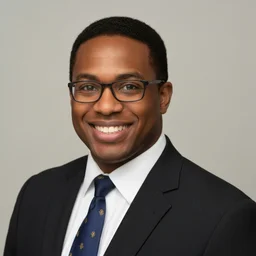
Law Enforcement Trainer & Civil Service Exam Specialist
John Jay College of Criminal JusticeMarcus B. Thompson earned his Master of Arts in Criminal Justice from John Jay College of Criminal Justice and served 12 years as a law enforcement officer before transitioning to full-time academy instruction. He is a POST-certified instructor who has prepared candidates for police entrance exams, firefighter assessments, and civil service examinations across dozens of agencies.